
All-purpose wheat flour
A refined common-wheat flour blended for a broad range of baking; its protein and behavior vary with wheat, milling and market.
 FermenteaWhere food goes to change
Mushrooms
Morchella cryptica, the cryptic yellow morel, is a true morel of North America's Great Lakes region that cannot be told apart from Morchella americana by appearance alone.
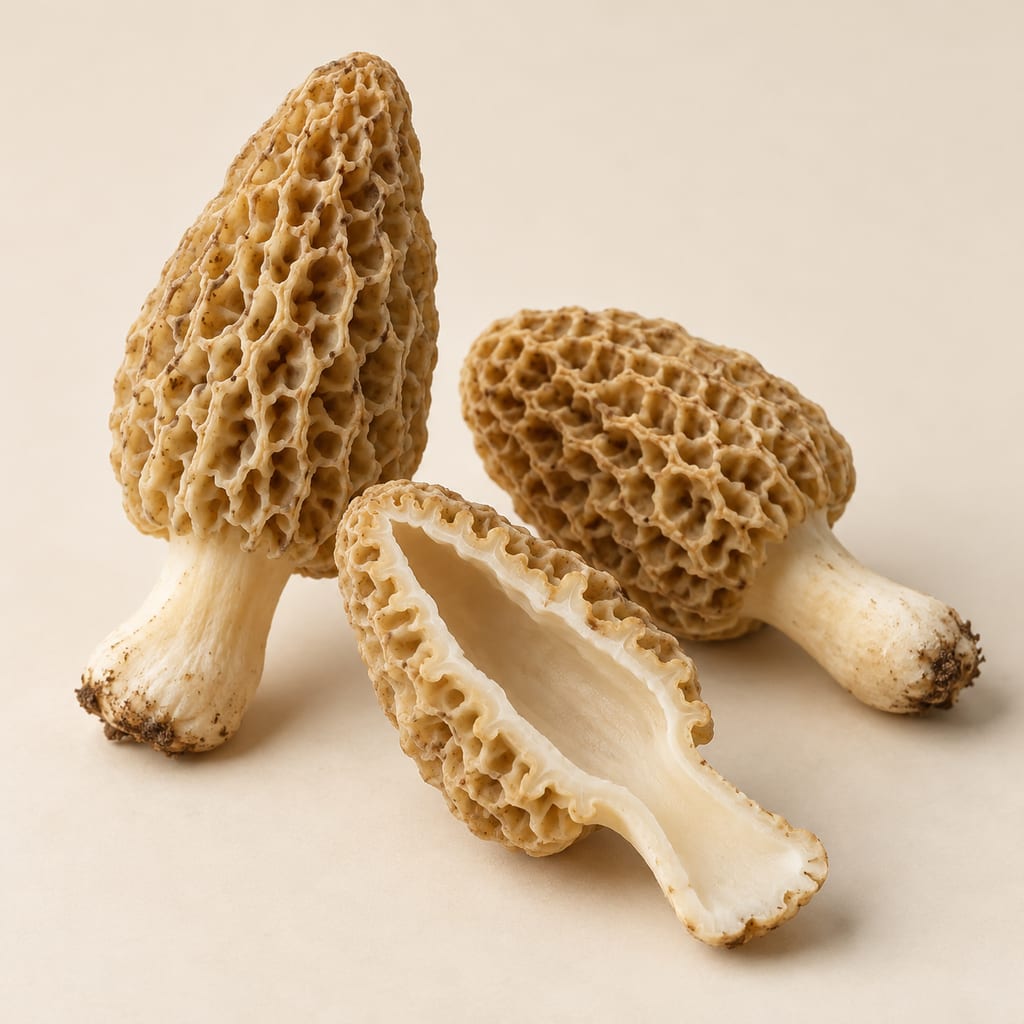
Morchella cryptica is a true morel recorded in the Great Lakes region of North America. Yellow morels were once grouped under several names, and DNA studies have reclassified many of them.
Midwest Mycology lists Morchella cryptica as one of two edible true morels that can be mistaken for Morchella americana, the other being Morchella prava. The page states that the two cannot be told apart by appearance alone.
Without DNA testing, it is unclear whether the yellow morels most often collected in the Great Lakes region are Morchella cryptica or Morchella americana. Morchella americana is also listed under the synonym Morchella esculentoides.
Midwest Mycology describes Morchella americana, the species that the cryptic morel is confused with, as often found under hardwoods, especially ash and recently dead elm, and under aspen, sycamore, tulip tree and apple trees. The species' ecology is still under study. The catalogue describes its ecology as forest or woodland, with lineage-dependent associations.
The catalogue records a culinary morel that requires cooking. Midwest Mycology states that all morels should be cooked thoroughly and never served raw, because cooking can destroy the gastro-irritant.
A 2024 CDC report on an outbreak in Montana linked to imported, cultivated morels from China described raw morels as more strongly associated with illness than cooked ones. That outbreak involved a different species, Morchella sextelata. The CDC recommended cooking morels before eating them.
Morels can cause serious gastrointestinal illness, and raw or undercooked morels are a documented risk. Morchella species can accumulate lead, so pickers are advised to avoid sites near highways, golf courses and industrial sites.
This page is not an identification or edibility verdict. A morel must be identified by a competent expert before it is eaten.
Catalogue record; the species here is not confirmed without DNA testing.
A refined common-wheat flour blended for a broad range of baking; its protein and behavior vary with wheat, milling and market.

Toasted almonds are whole sweet almond kernels dry-roasted until golden to brown. Heat replaces their marzipan note with a roasted, nutty one; they thicken and flavour romesco.
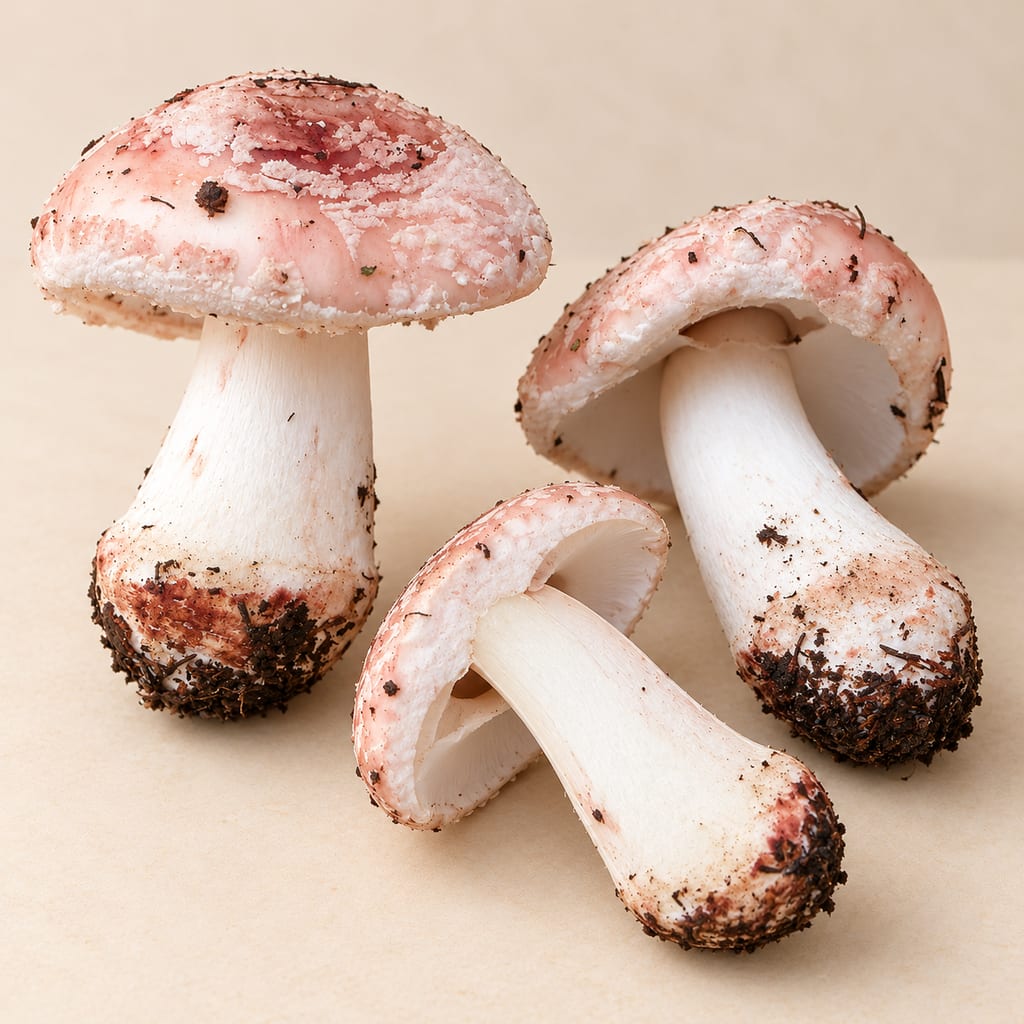
Amanita novinupta is a western North American blusher, a forest mushroom recorded as food in Mexico, and one that must be cooked because its raw flesh is toxic.
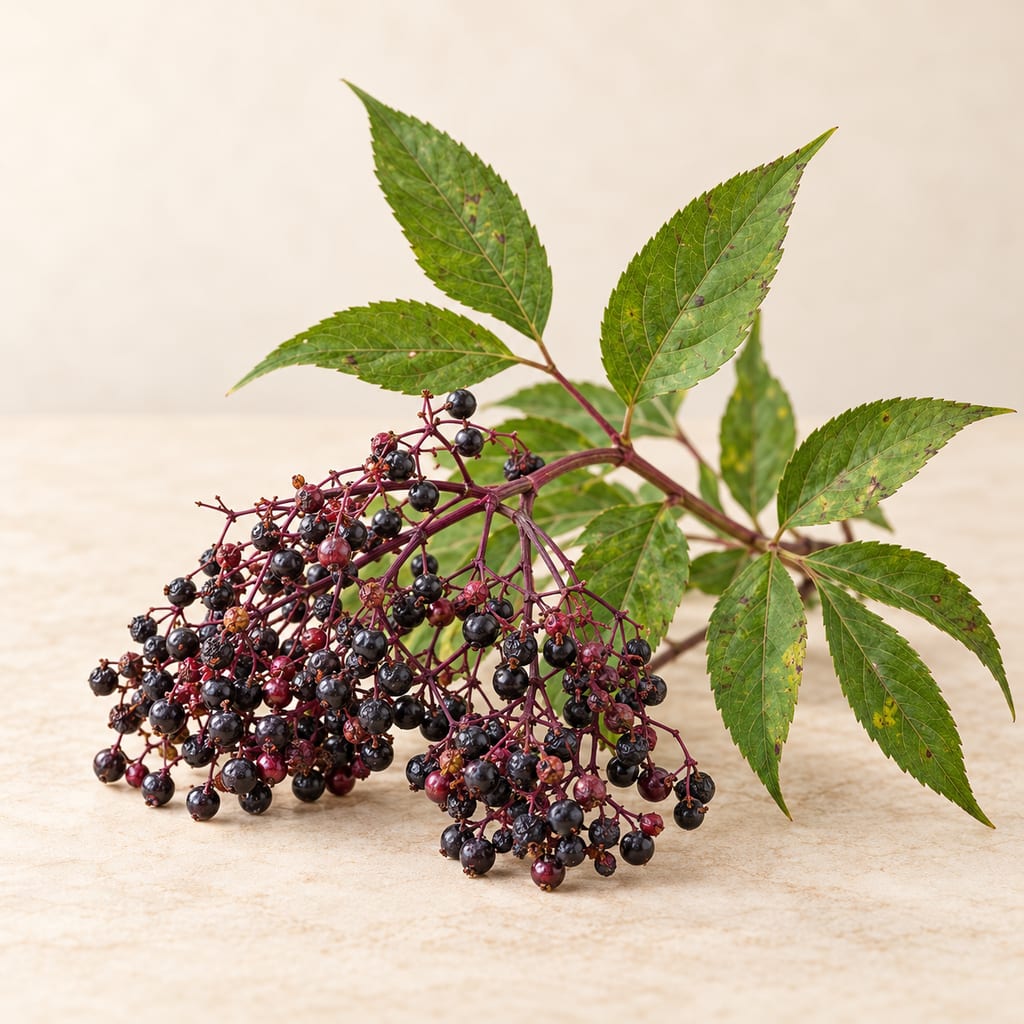
Sambucus canadensis is the accepted name used here for American elderberry. Missouri production guidance and named-cultivar studies give useful regional growing information, while food and analytical sources leave process questions open.
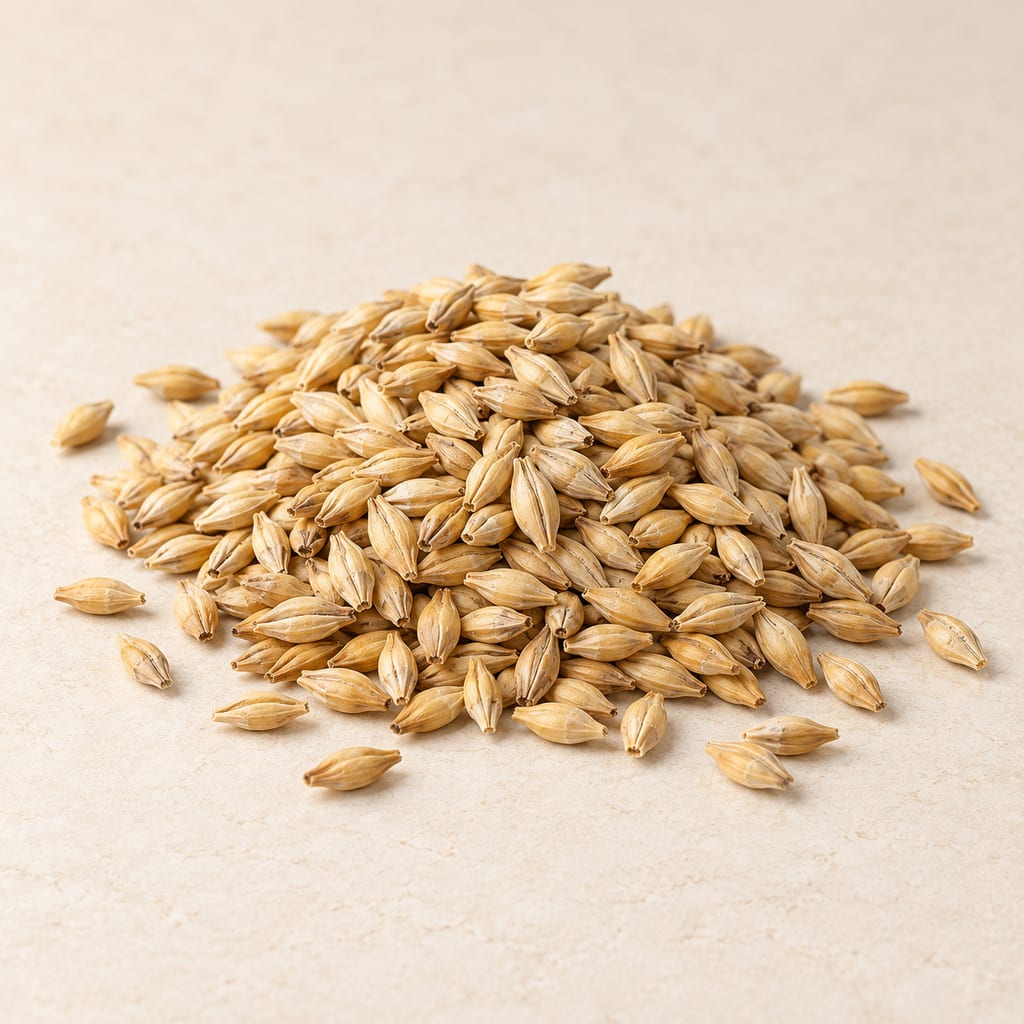
A lightly kilned brewing base made from two-row barley. It supplies starch and enzymes for the mash, with the maltster’s product and lot analysis defining its brewing properties.

Ripe avocado flesh is the soft, buttery, fat-rich pulp of Persea americana, eaten raw. It is low in acid, so it is a fresh ingredient that needs care in chilled dishes.
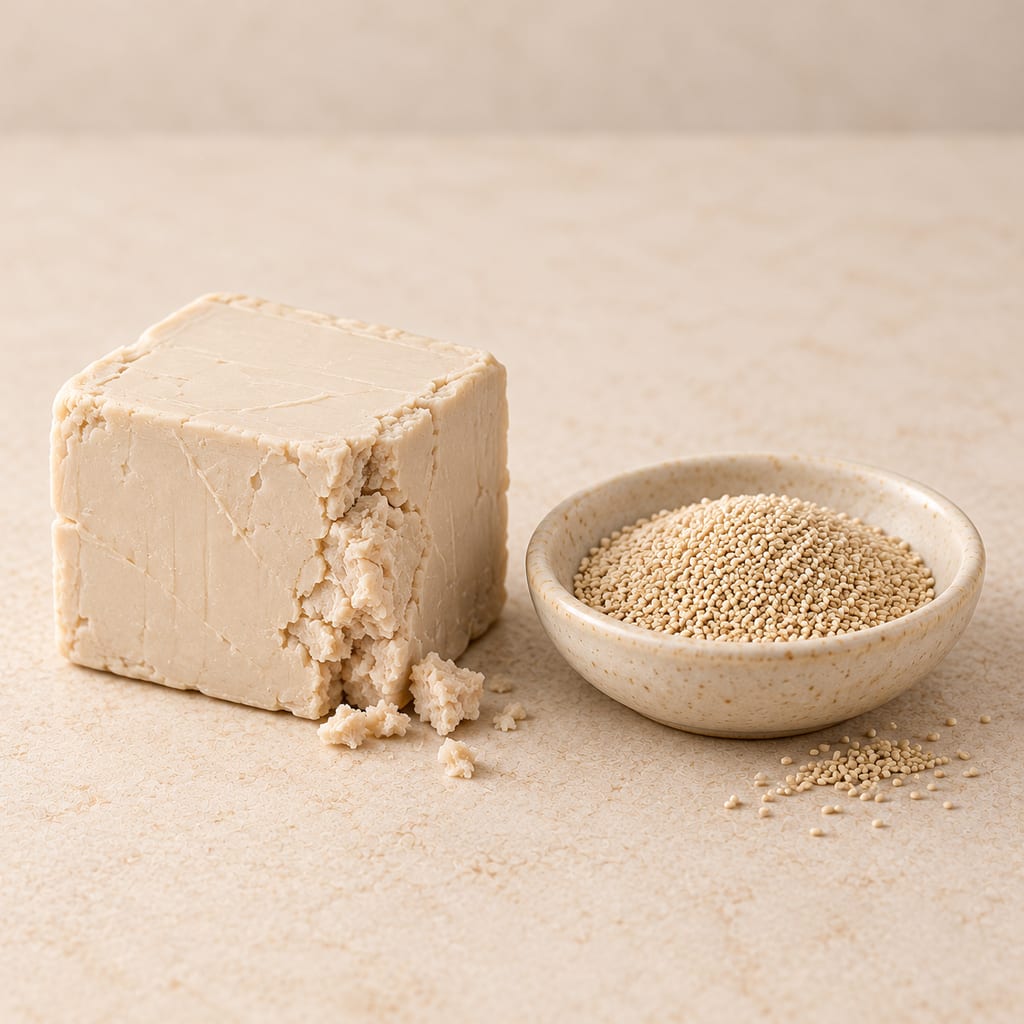
Baker's yeast is a cultivated living leavener, commonly sold fresh or dried. In dough, selected Saccharomyces cerevisiae cells make gas that can raise bread.
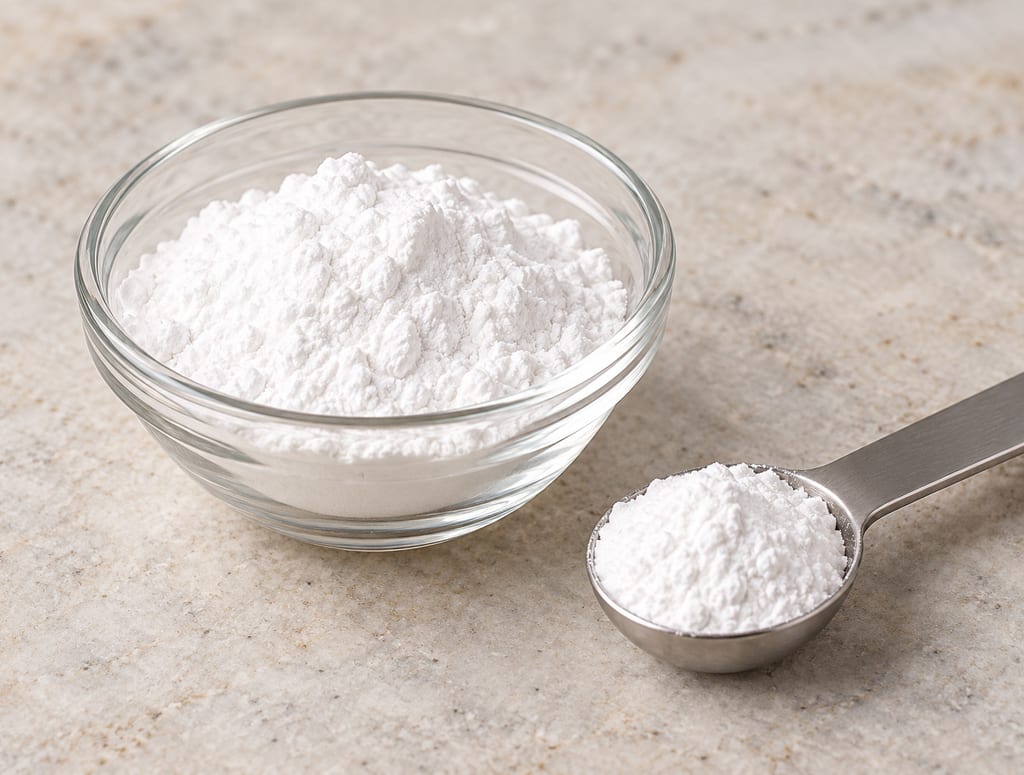
Baking powder is a dry chemical leavener that combines bicarbonate with acid-reacting ingredients and a carrier. Moisture and heat release carbon dioxide for quick breads, batters and griddle cakes.
No community contributions have been published for this entry yet.
Sign in to contribute. Published comments and photos are free to read.
Midwest MycologyIdentification · Safety · Taxonomy
Morchella americana (yellow morel): species notesLook-alike with M. cryptica and M. prava; DNA needed to separate
Cook thoroughly, never serve raw
Lead accumulation advice
Cited in: Overview; Identification; Habitat; Cooking; Safety
Morbidity and Mortality Weekly Report 73(10)Safety
Outbreak Linked to Morel Mushroom Exposure, Montana, 2023Raw morels more strongly associated with illness; species identified as M. sextelata; cook before eating
Cited in: Cooking; Safety