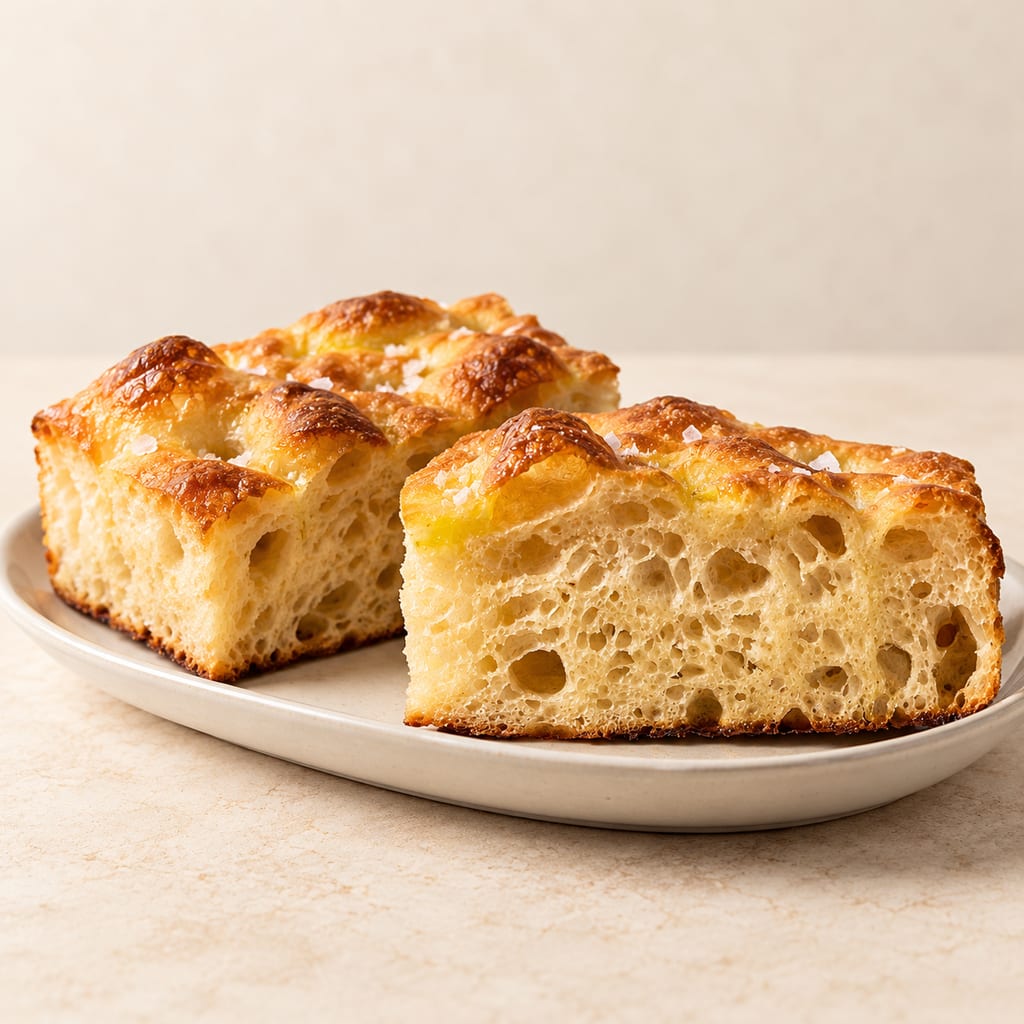
Sourdough focaccia
This sourdough focaccia uses ripe starter in place of commercial yeast. Olive oil enriches the folded dough and coats the pan before a long proof and a crisp, salted bake.
 FermenteaWhere food goes to change
Salt
Flaky sea salt consists of thin, brittle crystals used for surface seasoning and texture. Production methods and bulk density vary, so it is not a direct volume substitute for fine salt.
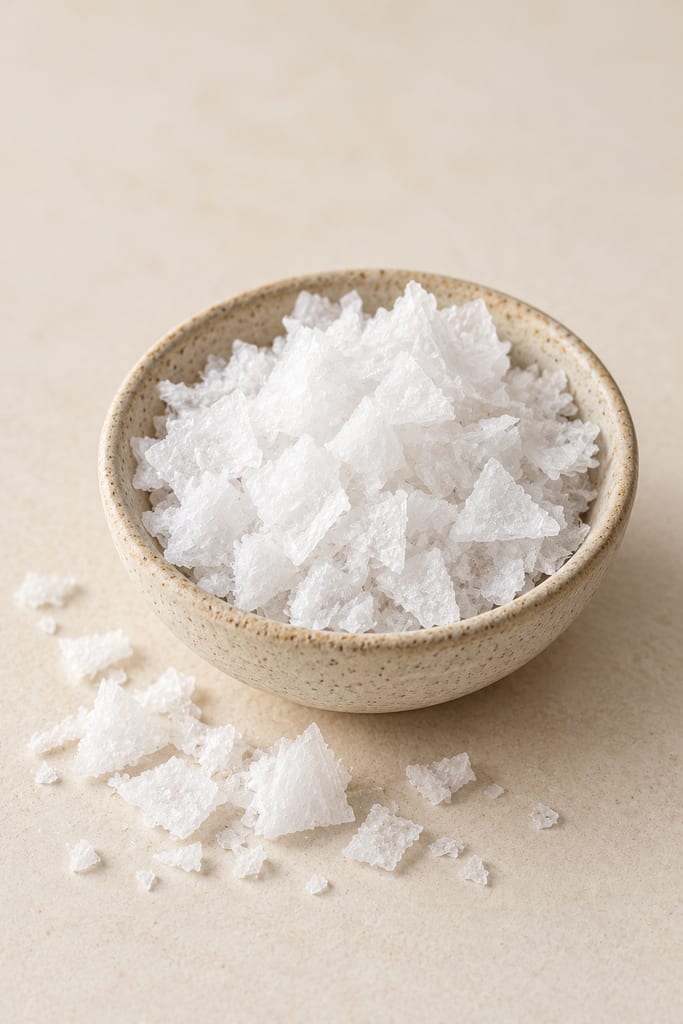
Flaky sea salt is food-grade salt crystallised into thin, light plates rather than the compact grains of ordinary table salt. The flakes may be irregular shards, delicate sheets, hollow pyramids or crumbled fragments, depending on the brine and the way it is crystallised and harvested. Held between the fingers, a good flake feels brittle and airy; pressed, it breaks easily. Its flavour is chiefly the clean, direct saltiness of sodium chloride. The reason to choose it is often its shape: on bread or another finished dish, flakes leave small, crisp points of salt and texture where fine grains would dissolve and disperse.
The name covers products from different waters and processes. A coastal origin does not by itself explain whether a salt is a broad surface flake, a pyramid, a coarse cube or the delicate salt skimmed from a salt pond. Read the label for the actual form and origin, and use a product whose size suits the job. This entry concerns flaky sea salt as a general ingredient; Maldon, Anglesey salt and Guérande fleur de sel are particular products or traditions, not interchangeable names for one thing.
Salt crystals form when water leaves a saline solution and the remaining brine can no longer hold all its dissolved sodium chloride. The ions arrange into a repeating crystal; the conditions of growth influence the crystal’s shape and size. In the kitchen, “flake salt” therefore tells you more about the resulting crystal than about one necessary source or production method. Sea water may be concentrated in open pans, solar ponds or through equipment that removes water before a later crystallisation stage. Each is a physical separation process, not a biological transformation.
The Maldon maker describes its own crystals as naturally formed pyramids, hand harvested in Essex, and says it has made salt in the coastal town since 1882. Its account of its method describes brine heated in pans and carefully controlled temperature and timing. Those are claims about that named producer and its product. They do not establish that every flake salt is made in open pans, that every salt made in Maldon has always had an identical shape, or that all modern sea salt is hand harvested.
A different documented route appears in an Australian producer’s specification: its sea salt is naturally evaporated, then specially recrystallised under controlled conditions to make a soft, crumbly flake. The product specification identifies Australian production and notes that the finished salt is mainly sodium chloride. That is a clear example of how a maker can begin with sea salt and create flakes in a subsequent crystallisation step. It should not be generalised to every Australian or every flake salt.
Solar saltworks offer another contrast. They concentrate seawater in shallow ponds, relying on evaporation before salt crystals are gathered. This method is most practical in suitable climates and landscapes; it is not identical to heating concentrated brine in pans. Nor should flakes be confused with rock salt, mined from ancient deposits, or with fine vacuum-evaporated salt, whose tightly controlled growth commonly yields compact grains. All may be food salt, but their appearance and behaviour in a measuring spoon differ.
“Fleur de sel” is a useful regional comparison, not a synonym. The European Union’s product specification for Paška sol describes a named ‘flower of salt’ from the early phase of its salt-making process. It describes that salt as brittle, crunchy and flake-shaped, while the protected Paška sol itself is described as regular cubes. The product name and specification make it a useful regional comparator, but its particular method and identity are not a universal definition of flakes. A pan-grown pyramid, a recrystallised flake and this protected product should not be collapsed into one supposedly universal tradition.
Salt-making predates the modern finishing-salt market by a very long margin, but that broad truth is not a license to attach an ancient origin story to a contemporary product. Historic England’s account of pre-industrial salterns defines the work plainly: crystalline salt was extracted from sea water or inland brine by evaporation until sodium chloride precipitated. The structures and evidence vary by place and period, and historical salt works did not necessarily produce the light flakes sold today.
In Essex, archaeological evidence documents a regional salt industry around the estuaries. P. M. Barford’s 1988 essay in the Colchester Archaeological Group Bulletin surveys late Roman, Saxon and medieval production, while cautioning that both archaeological and documentary evidence are limited. The familiar “red hills” are remains associated with salt making; they are not proof that a current commercial process has continued unchanged since antiquity. Maldon’s own account places its named production there from 1882, a much narrower and more testable claim about a company’s history.
Other producers tell other place-based stories. Halen Môn describes drawing water from the Menai Strait around Anglesey, concentrating it under vacuum, then allowing crystals to form in shallow crystallisation tanks and harvesting them by hand. This account helps show that the coastal water, plant and process can define a distinctive product. It is still the producer’s description of its own operation, not a recipe for all Welsh sea salt. More broadly, the value of salt historically lay in its ability to preserve and season food; the particulars of local production, labour, taxes and trade need local evidence rather than a single romantic story about “salt through the ages.”
Saltiness comes principally from sodium ions reaching taste receptors after the salt dissolves in saliva. A flake’s open, thin or irregular structure can expose more surface to moisture than a compact grain of the same mass. That changes how quickly a portion dissolves and how saltiness arrives. It is a physical difference in delivery, not proof that the salt contains a special flavour molecule or that it is nutritionally superior.
A sensory study by Marcela Quilaqueo, Lisa Duizer and José Miguel Aguilera compared five commercial salts and found that crystal morphology affected the timing of perceived saltiness. The non-cubic, agglomerated forms studied—including kosher and Maldon salts—dissolved faster and reached maximum saltiness sooner under the researchers’ test conditions. The result is useful for understanding why surface salt can seem vivid and immediate. It does not mean every flake tastes saltier in every food, or that one can safely reduce a recipe’s salt by a fixed amount. Food moisture, fat, temperature, particle size and where crystals land all alter the experience.
Flake shape also changes how the salt sits on a surface. Light pieces can remain visible and give a brief crunch before dissolving. A fine grain disappears more readily into dough or a wet sauce. If a dish needs even seasoning throughout, flakes may need to be crushed or dissolved; if the aim is a distinct finish, their intact form is the point. The choice is about distribution and texture as much as flavour.
Focaccia makes the difference easy to taste. Salt mixed into the dough dissolves in its water; it seasons the crumb as a whole. Flakes added on top remain local to the crust. They can meet the tongue as crisp crystals against an oily, browned surface and a soft interior. The dimpled surface catches oil and makes small ridges and pools; a final sprinkle gives those varied surfaces a few concentrated points of salt. The result is not merely “more salty” bread but a contrast between evenly seasoned crumb and a crisp, intermittent topping.
King Arthur Baking’s focaccia formula makes the two roles explicit: table salt is weighed into the dough, while flaky sea salt is listed separately as a topping. Its recipe names Cyprus flake salt as its preferred example. The exact type and amount are specific to that formula, but the structural distinction is broadly useful: a measured fine salt dissolves through the dough, whereas a topping flake is selected for its surface presence. The archive focaccia item similarly uses its fine table salt in the dough and flakes to finish the surface after dimpling and oiling. A reader should not treat the flakes as an automatic replacement for the fine dough salt.
If flakes go onto the bread before baking, the hot, damp surface may soften or partly dissolve them. That can leave a more integrated seasoning rather than a brittle crystal. A sprinkle after baking preserves more of the original crunch, although a dry loaf may not hold flakes as well as an oiled surface. Both approaches are choices of texture and adherence, not a safety step. The source recipe’s own order is the dependable guide for that particular bread.
Outside focaccia, flakes are useful when a dish benefits from a final, noticeable salt accent: a warm slice of bread, vegetables, eggs or a piece of chocolate. They are less efficient when a cook wants salt dissolved uniformly through a large pot of liquid or a dough. In those cases, an ordinary fine salt is easier to measure and distribute. Flakes can still be crushed between the fingers, but their value as a finishing crystal is then reduced.
Look at the crystal, label and intended use together. A tub of broad, thin flakes may crumble readily; a pyramid style can have a hollow centre and a more pronounced brittle bite; a crumbled product may be closer to coarse granules. The source water and any later processing also differ. One product specification may give a typical crystal range or density, but those values are tied to that item and its method. They cannot be transferred to another brand just because both labels say “flake.” Check the ingredients when choosing flavoured salt or a product with added iodine or anticaking agents; “sea salt” alone does not guarantee that every package contains nothing else.
Maldon’s product page says its original sea salt has been made in the town since 1882 and recommends storing it cool and dry. Cheetham’s product specification says its salt itself remains stable in storage, while atmospheric moisture can cause caking or lumping; its suggested stock rotation window is specific to that product and framed as a way to avoid caking, not as a universal expiration or food-safety limit. For a home jar, a closed container in a dry cupboard protects the flakes’ texture. Do not leave an open salt pig beside steam or a splashing sink. If flakes clump, the immediate loss is free-flow and crisp texture; the salt has not thereby become unsafe.
Fine table salt, flaky finishing salt and pickling salt are all salt, but not the same measuring tool. Table salt is usually fine-grained and may contain iodine or non-caking additives; pickling or canning salt is the form recommended in preservation guidance. The National Center for Home Food Preservation notes that additives in other salts can cloud brine. Flakes contain more air space between pieces in a spoon and vary in density with size and shape. The same volume scoop can therefore deliver different masses—and different salt concentrations—when changed from one form to another. If a recipe gives a weight, weigh the named salt. If it gives a volume, retain its specified salt form instead of swapping flakes by the teaspoon.
The National Center for Home Food Preservation recommends canning or pickling salt for its pickling directions. It says flake salt varies in density and is not recommended for use. This is a practical warning about using the right salt in a tested recipe; it is not a finding that flaky salt is intrinsically unsafe in ordinary food. The same institutional guidance explains that non-caking additives in table salt may make brine cloudy. Appearance is not the only reason to follow the named ingredient: salt form affects how much enters a volume measure.
Preservation recipes are not all alike. In a quick pickle, vinegar may supply the controlling acidity while salt chiefly seasons and affects texture; in fermented pickles or sauerkraut, salt concentration helps shape the fermentation and final texture. NCHFP cautions against changing the salt concentration in fermented pickle recipes. That distinction is why a cook should not take a broad idea—“flakes are just salt”—and use it to improvise a preserving formula. The tested recipe’s type and amount are part of its method. Use its stated salt, and do not reduce, replace or recalculate it by a volume guess.
The producer dates its own salt-making; this is not an origin claim for all flaky sea salt.
This sourdough focaccia uses ripe starter in place of commercial yeast. Olive oil enriches the folded dough and coats the pan before a long proof and a crisp, salted bake.
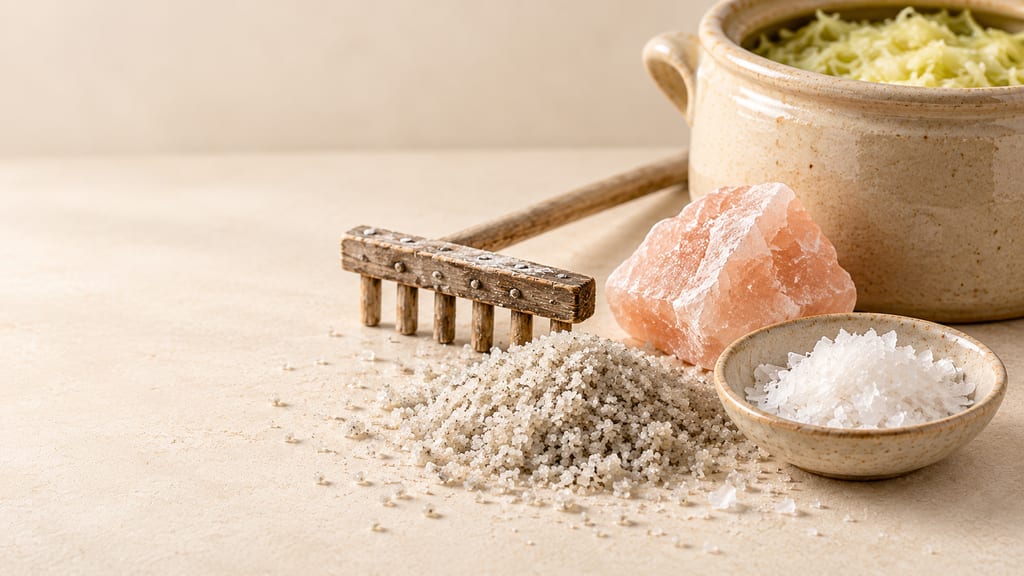
Salt seasons a meal, shapes fermentation and preserves food. Its history follows the people who mine, harvest, trade and transform it, and the choices hidden inside an ordinary packet.
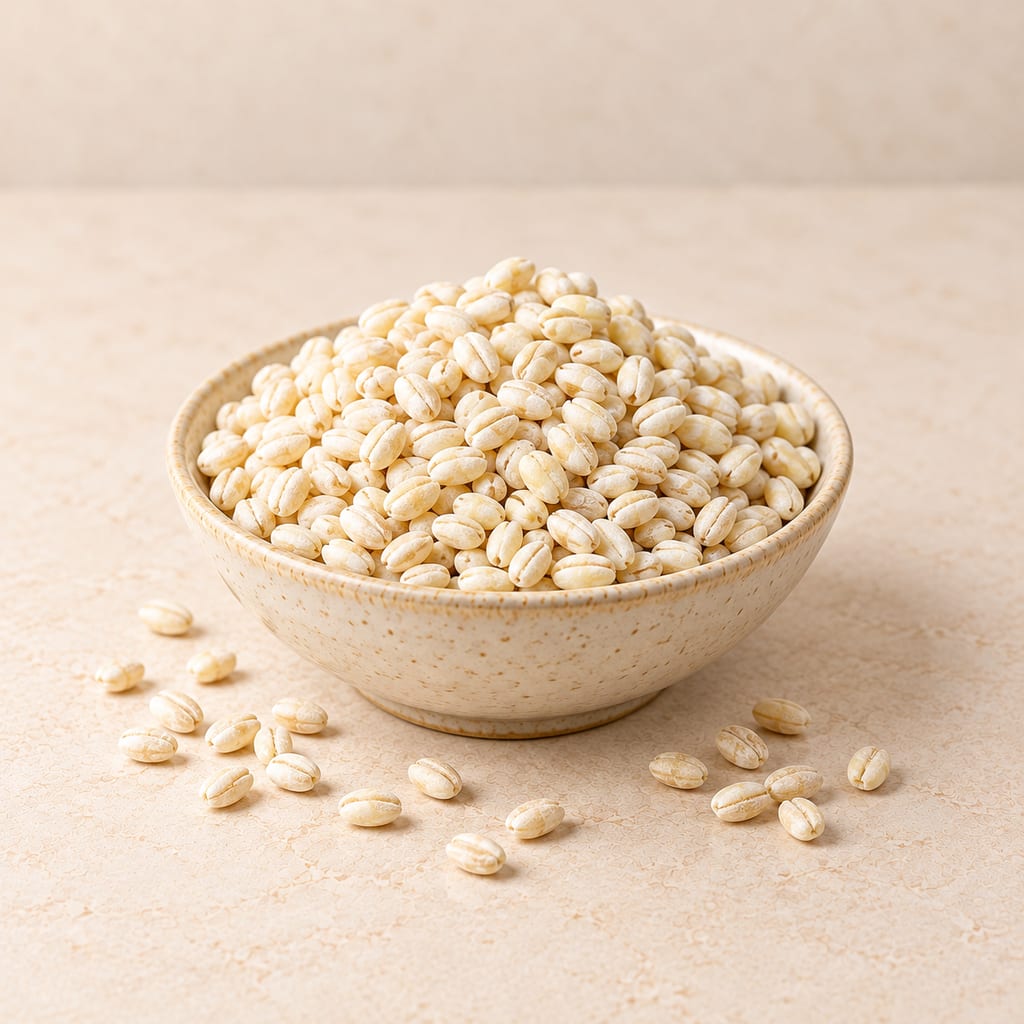
Barley is a hardy cereal, domesticated in the Middle East over 10,000 years ago, eaten whole, pearled or milled, malted for brewing, and grown with koji mold for barley miso.
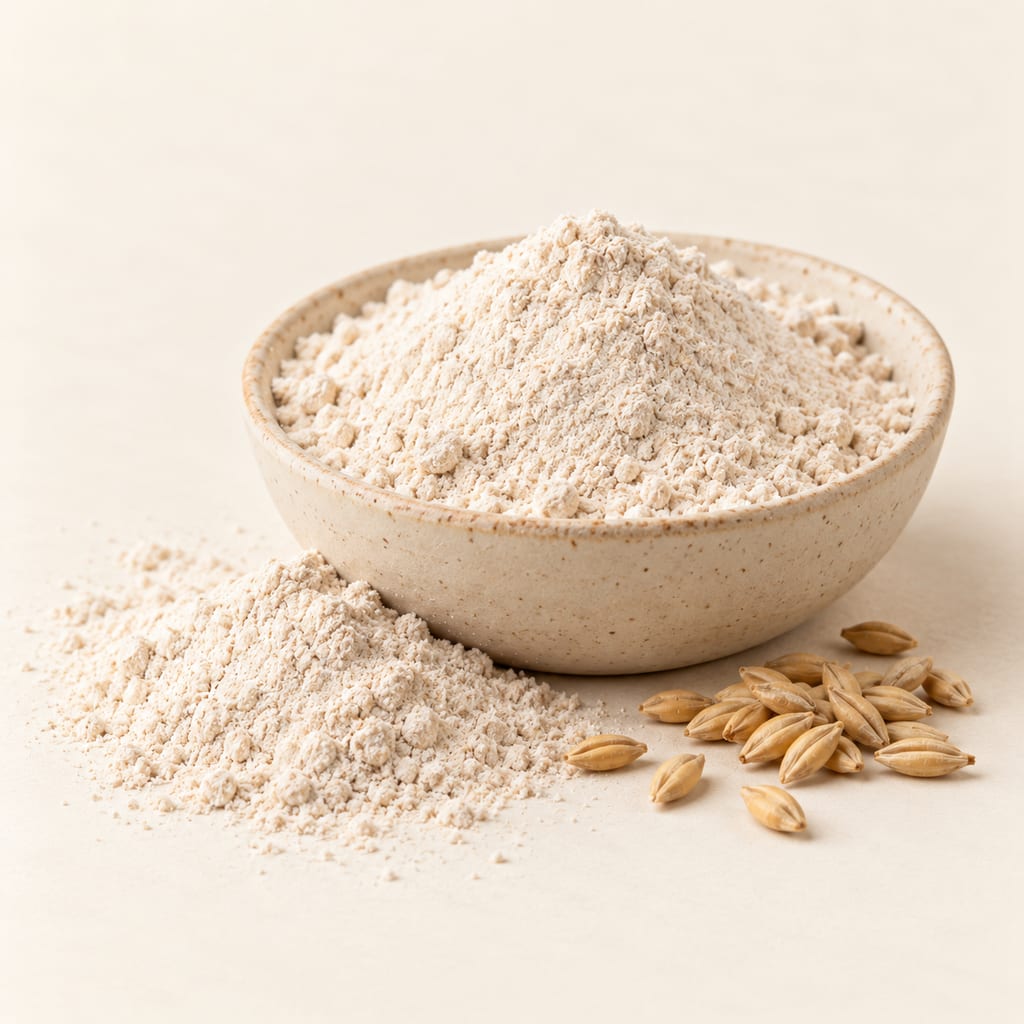
Barley flour is ground barley grain; whether it comes from pearled or hulless kernels, its milling and limited wheat-like gluten-forming ability shape the doughs and foods it can make.
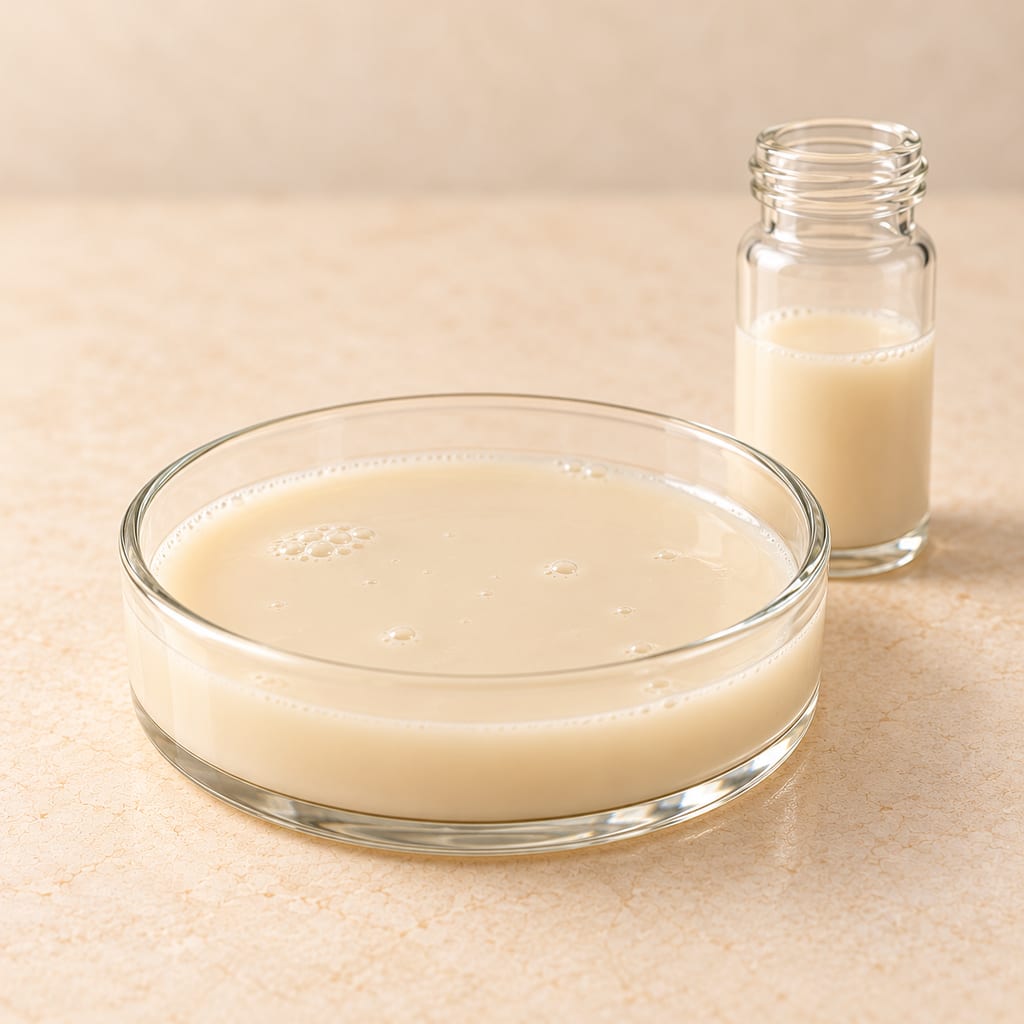
Brewer’s yeast is a working name for living cultures selected for brewing, not one strain or always one species. Ale and lager cultures differ, and older household books may use the term for foam or sediment from brewery beer.
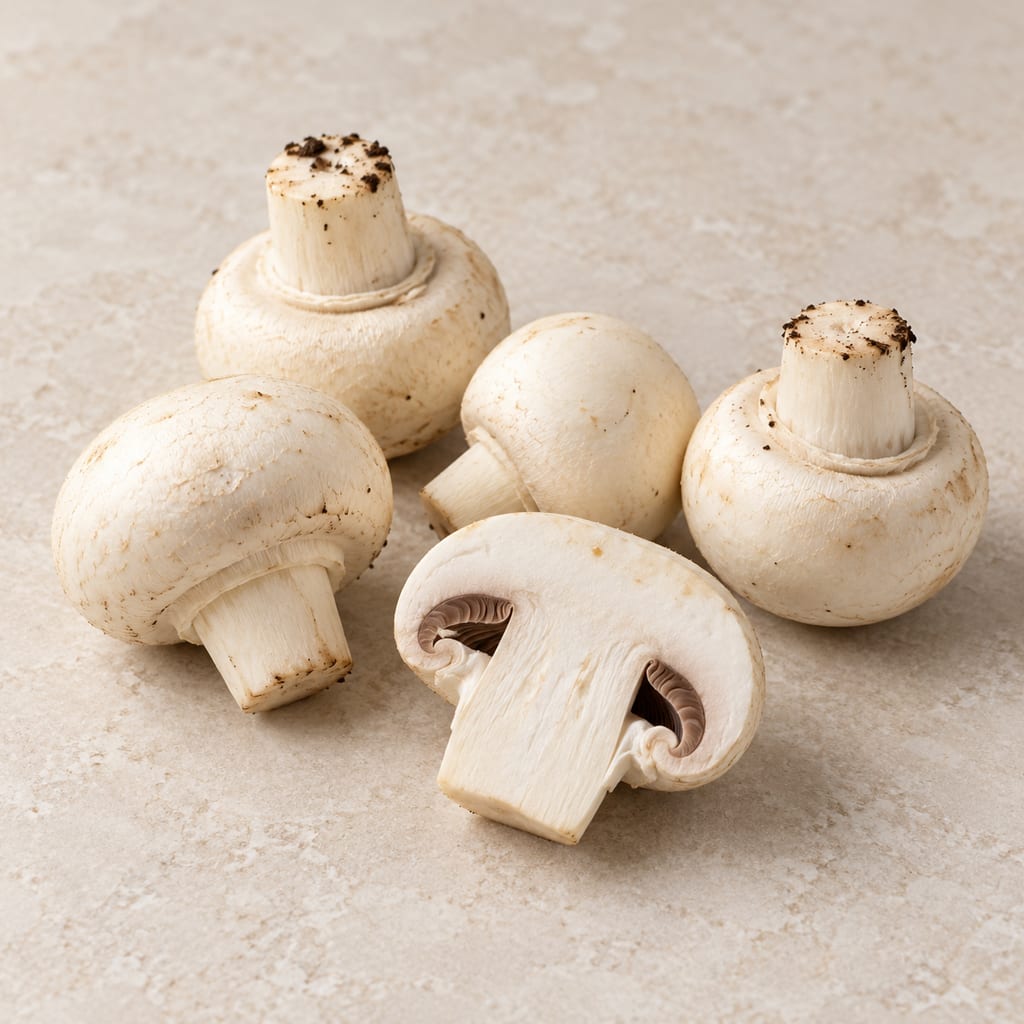
A cultivated form of Agaricus bisporus sold young as a button and at more mature stages as cremini or portobello, used fresh or preserved in everyday cooking.
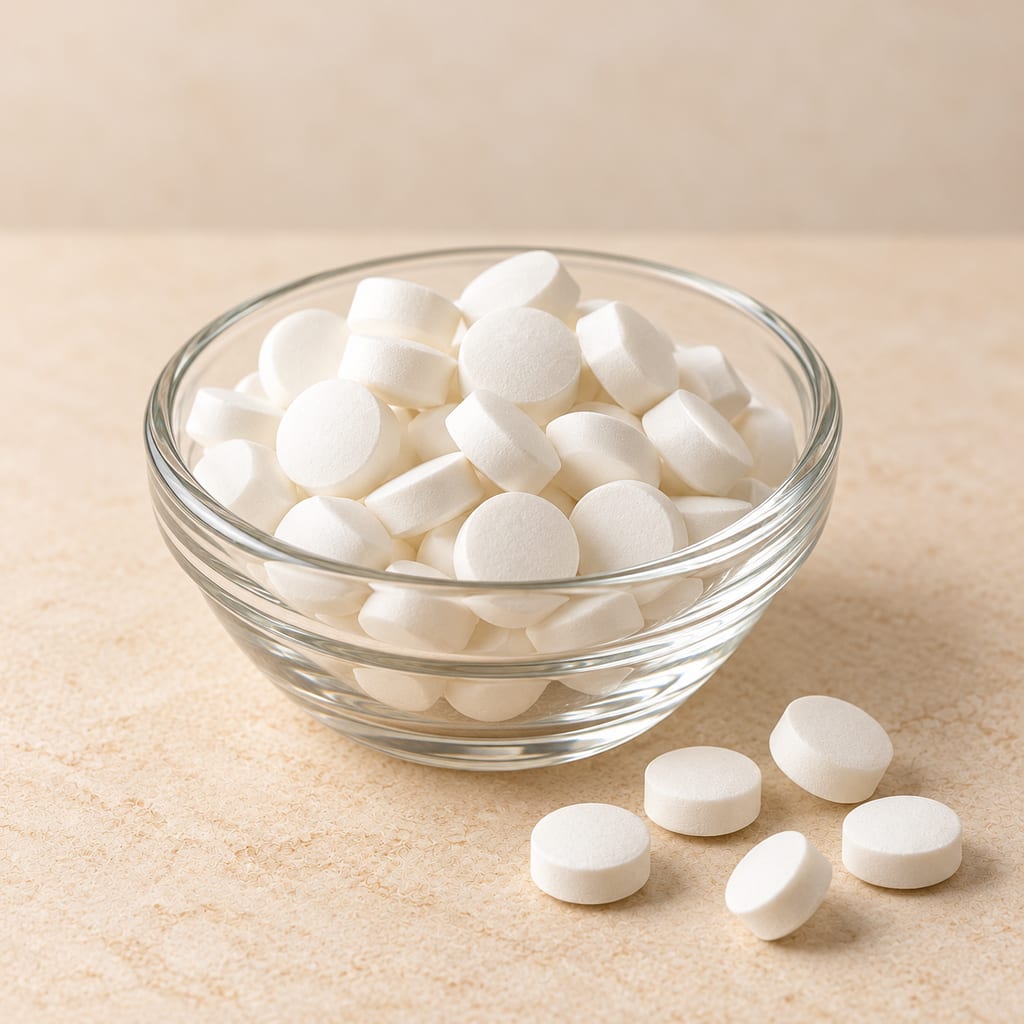
Campden tablets portion a metabisulfite salt for particular wine, cider or other fermentation uses. Tablet strength and the resulting free sulfur dioxide depend on the product and liquid.
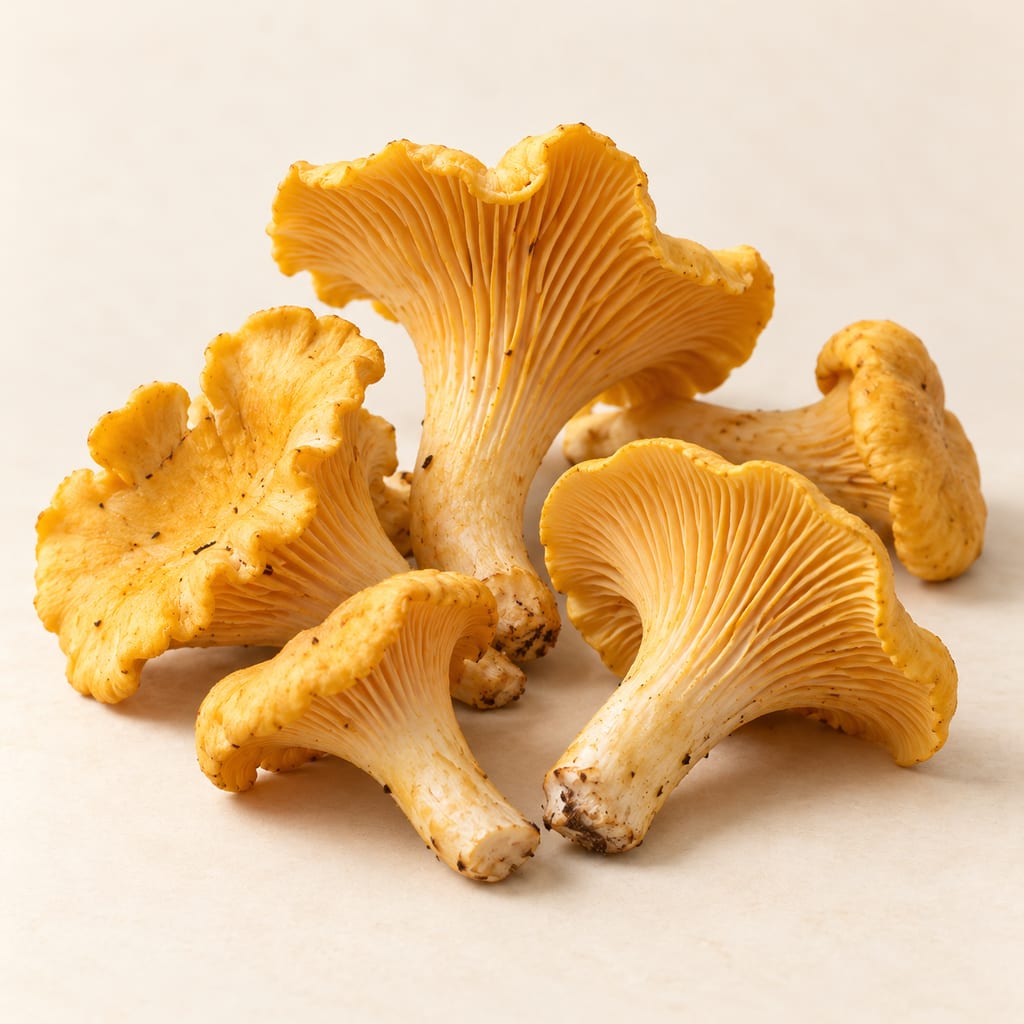
Chanterelles are wild, tree-associated edible mushrooms, particularly the European golden chanterelle Cantharellus cibarius, prized for their firm flesh, fruity aroma and use fresh, frozen, dried or pickled.
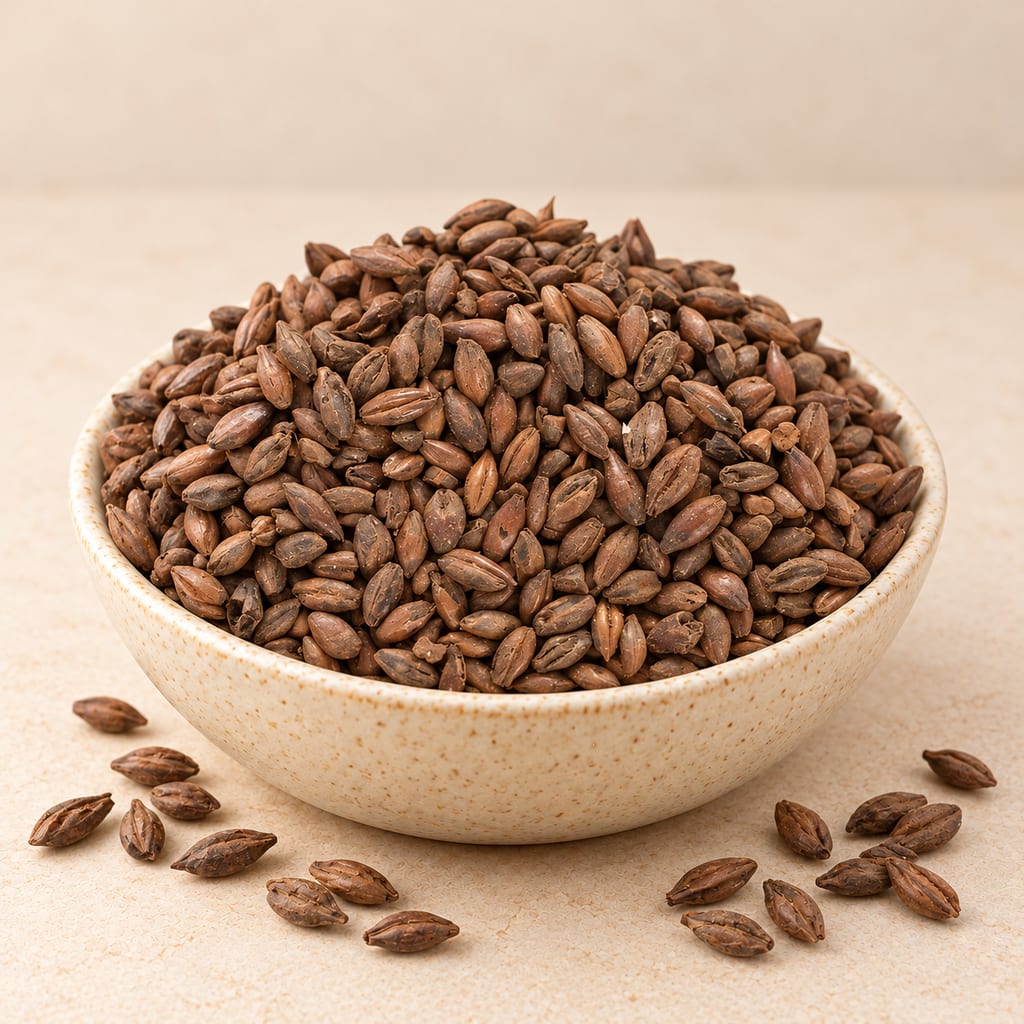
Chocolate malt is barley that has been malted and then roasted to a dark brown, used in porters, stouts and brown ales for colour and a bitter-cocoa, roasted-coffee flavour. It contains no cocoa.
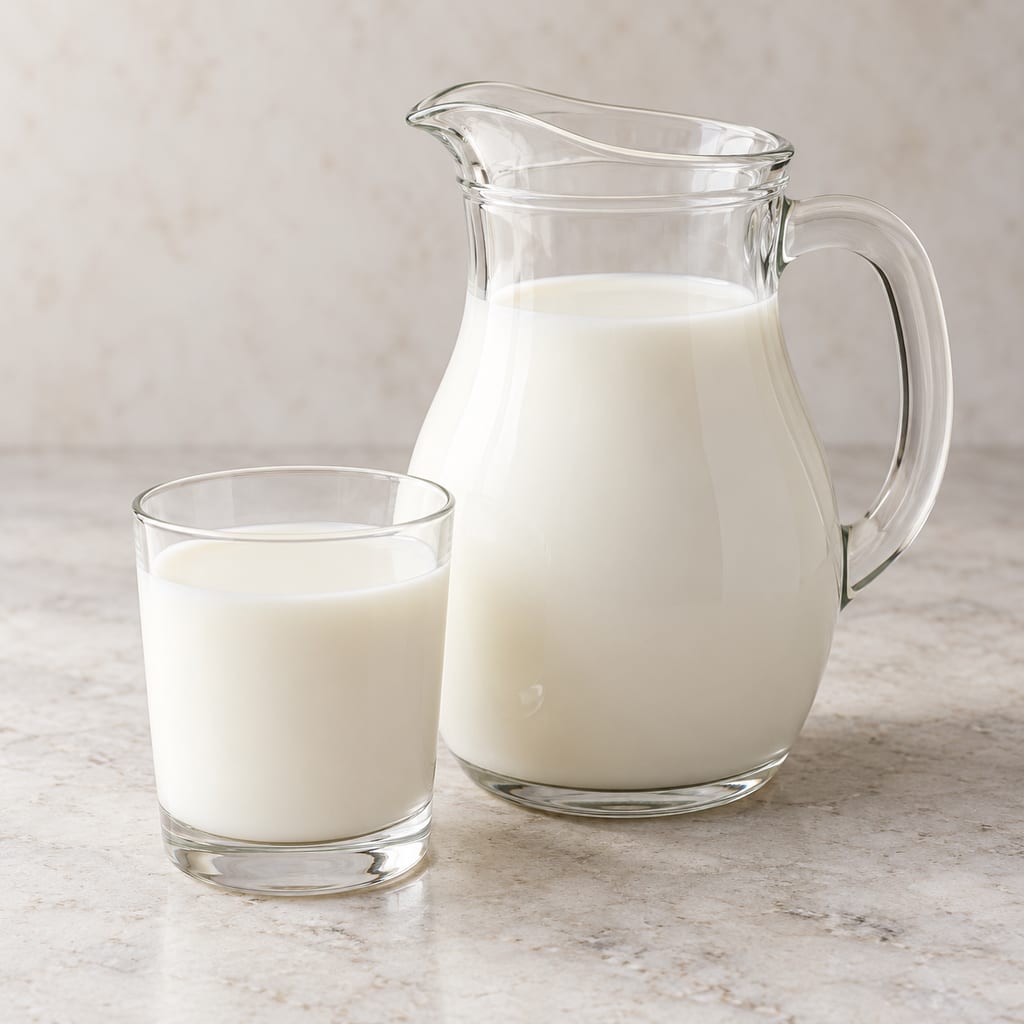
Cow milk and water-buffalo milk are distinct dairy substrates whose fat, protein and mineral balance affects cheese; this ingredient name preserves a choice rather than defining a blend.
No community contributions have been published for this entry yet.
Sign in to contribute. Published comments and photos are free to read.
Maldon SaltEditorial
Pyramid Flaky Sea Salt - Our Products & Story | Maldon SaltMaldon says it has made salt in coastal Maldon since 1882
company describes four generations hand harvesting pyramid crystals
maker recommends cool, dry storage
Cited in: The finishing crystal; A crystal form, not a single recipe; The coast and the record; Choosing among flaky salts
Maldon SaltEditorial
A Guide to Sea Salt: How it’s Made and Where it Comes Fromoverview of solar evaporation
Maldon's own description of its brine-pan process
Cited in: A crystal form, not a single recipe
Cheetham SaltEditorial
Sea Salt Flakes SpecificationAustralian product description: naturally evaporated sea salt specially recrystallised under controlled conditions
soft crumbly flakes, at least 97% NaCl on dry basis
moisture can cause caking/lumping
Cited in: The finishing crystal; A crystal form, not a single recipe; Why a thin crystal tastes different; Choosing among flaky salts
Historic EnglandEditorial
Pre-industrial Salterns: Introductions to Heritage Assetssalterns evaporated sea water or inland brine to precipitate sodium chloride
historical processes must be distinguished by place and evidence
Cited in: A crystal form, not a single recipe; The coast and the record
Colchester Archaeological Group Bulletin, vol. 31Editorial
After the Red Hills: Salt Making in Late Roman, Saxon and Medieval Essexregional archaeological and documentary record of salt production in Essex
author explicitly notes the evidence is sparse and documentation limited
Cited in: The coast and the record
Halen MônEditorial
Tide to Table (O’r Llanw i’r Llestri)producer states its water is drawn from Menai Strait
producer describes vacuum concentration, shallow crystallisation tanks, hand harvest and brine rinse
Cited in: The coast and the record
Official Journal of the European Union / EUR-LexEditorial
Publication of the communication of an approved standard amendment to a product specification of a geographical indication in accordance with Article 5(4) of Commission Delegated Regulation (EU) 2025/27product specification distinguishes Paška sol as regular cubes from a brittle, crunchy, flake-shaped flower-of-salt product described as arising in the early phase of production
Cited in: The finishing crystal; A crystal form, not a single recipe
Food Research International 76, part 3, 675–681; PubMed recordEditorial
The morphology of salt crystals affects the perception of saltinesstested crystal morphologies affected dissolution and timing of perceived saltiness
non-cubic/agglomerated samples including kosher and Maldon dissolved faster and reached maximum perceived saltiness earlier in study conditions
Cited in: Why a thin crystal tastes different
King Arthur BakingEditorial
Big and Bubbly Focacciaspecific focaccia formula lists table salt in dough and flaky sea salt as a separate topping
recipe identifies Cyprus flake salt as preferred example
Cited in: Flakes on bread, and salt inside it
Maldon SaltEditorial
Focaccia with Rosemarymaker's recipe demonstrates flakes as a finishing element on focaccia
Cited in: Flakes on bread, and salt inside it
University of GeorgiaEditorial
Salts Used in Picklingflake salt varies in density and is not recommended for the institution's pickling recipes
table salt anti-caking agents can cloud brine
Cited in: Choosing among flaky salts; Preservation is where measuring matters most
University of GeorgiaEditorial
General Information on Picklingquick pickles and fermented pickles rely on different controls
salt proportion matters for fermented pickles; do not alter tested proportions
Cited in: Preservation is where measuring matters most