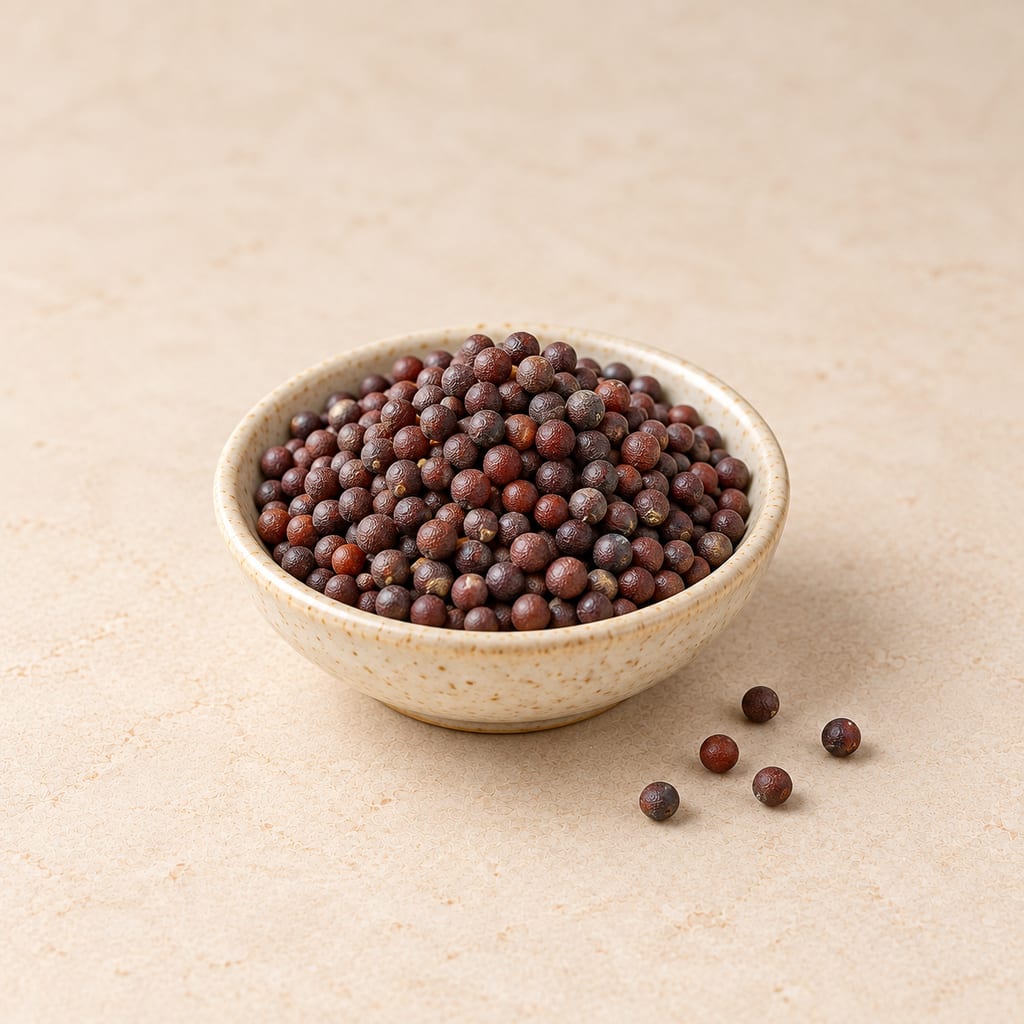
Black mustard seed
Black mustard seed is the small, dark, very pungent seed of Brassica nigra, the hottest of the three mustards. It gives its bite through sinigrin, which turns into allyl isothiocyanate when the crushed seed meets water.
 FermenteaWhere food goes to change
Cultures
Geotrichum candidum is the yeast-like fungus that forms the pale, velvety coat on many soft-ripened cheeses and lowers the rind's acidity so that other ripening microbes can grow.
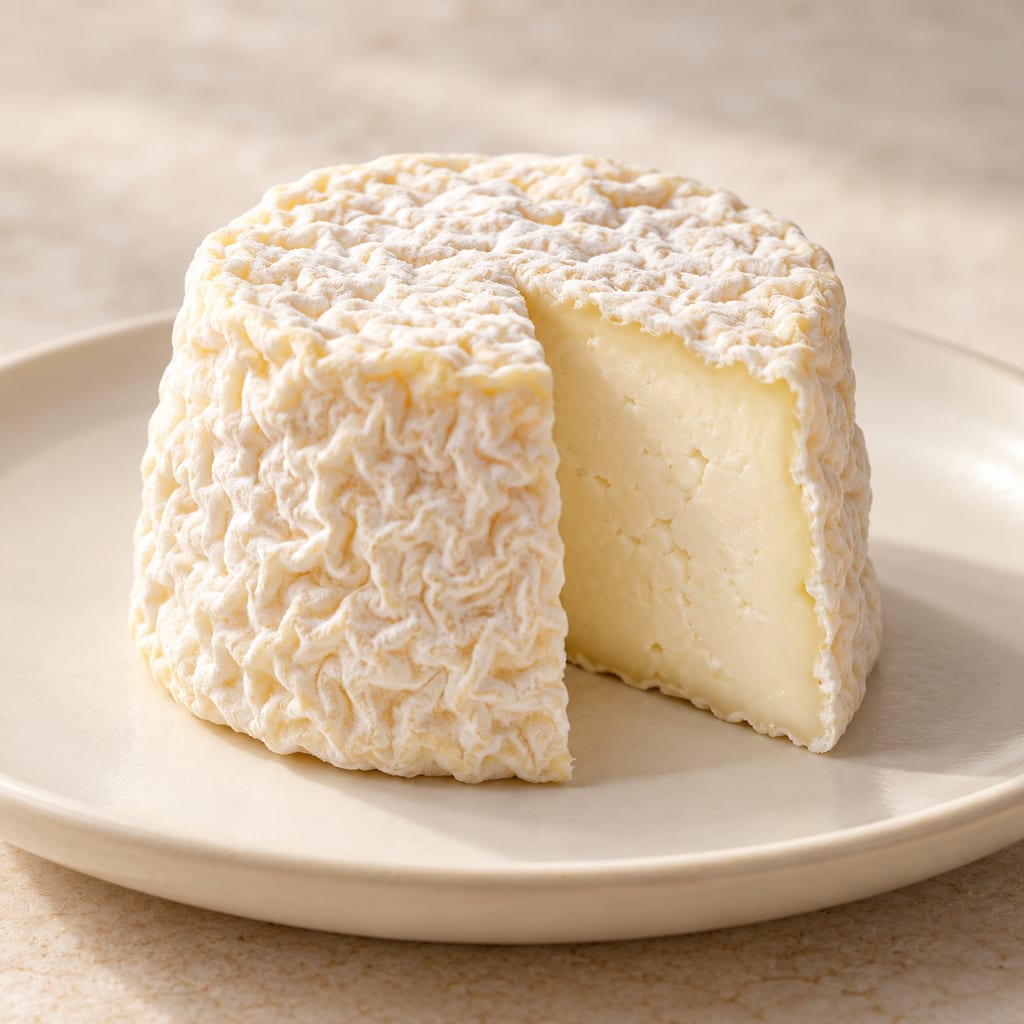
Geotrichum candidum is a filamentous fungus that also behaves like a yeast, growing as chains of cells that split into separate units. It is ubiquitous in the environment, and in food it is used as a deliberate culture rather than as a spoilage organism when it is controlled.
On cheese it forms the pale, velvety coat seen on many soft-ripened cheeses. Its appearance is the most visible sign of its work, but the change it makes is underneath the rind.
Geotrichum candidum deacidifies the rind. Lowering the acidity of the surface lets acid-sensitive bacteria grow, and its enzymes break down proteins. Its deamination reactions produce aldehydes, ammonia and organic acids that shape the flavour and aroma of the ripened cheese.
The mould-ripened cheeses named in the sources include Munster and Saint-Marcellin-type cheeses, and Camembert-type cheeses show extensive proteolysis at a surface with G. candidum. Excess growth can cause defects: on raw soft cheese, too much of it is linked to an unstable or slippery rind.
The 2023 review cited in the search results describes the species' biotechnological uses, including as a starter in the dairy industry and in brewing. Its industrial role in these fields is the subject of that review, and this page does not add process details the sources read did not establish.
The main sources for this page were read as search summaries and catalogue entries rather than full texts; the specific cheese claims need checking against the 2005 Boutrou and Guéguen review and the 2023 Foods review before a cheesemaking use is relied on. Strain identity matters: named culture products such as the C70 culture are separate records.
Named as a surface starter in French soft and smear-ripened cheeses in the sources read; the sources do not give a single origin for the species.
Black mustard seed is the small, dark, very pungent seed of Brassica nigra, the hottest of the three mustards. It gives its bite through sinigrin, which turns into allyl isothiocyanate when the crushed seed meets water.
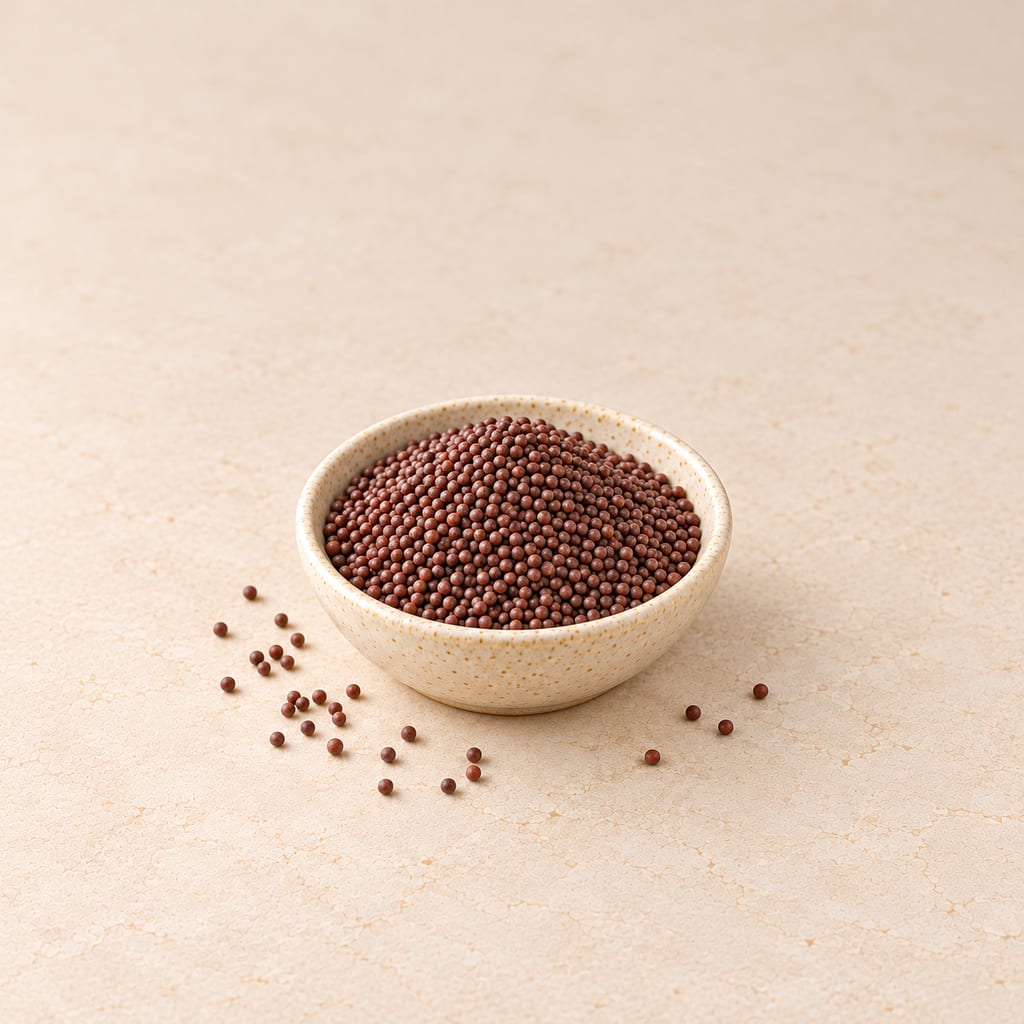
Brown or oriental mustard seed comes from Brassica juncea, a hybrid of black mustard and turnip rape. It is the hot, easily harvested seed behind Dijon, spicy brown mustards and much of the mustard oil of the Indian subcontinent.
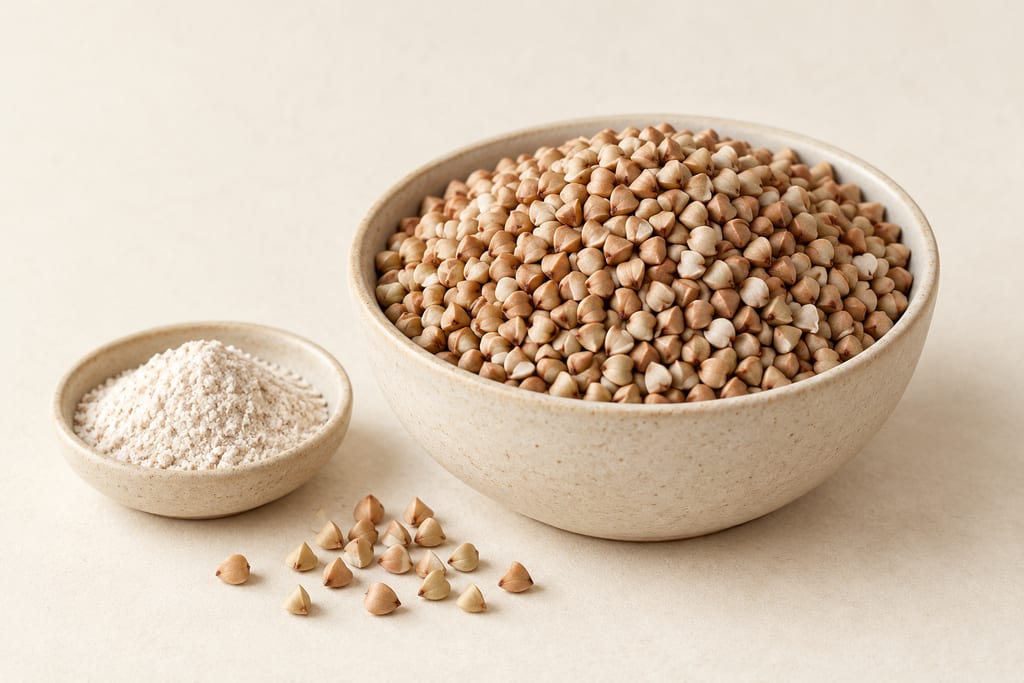
Buckwheat is a triangular-seeded flowering plant whose whole groats and flour cross regional food traditions, from porridge and pancakes to modern sourdough and gluten-free bread.
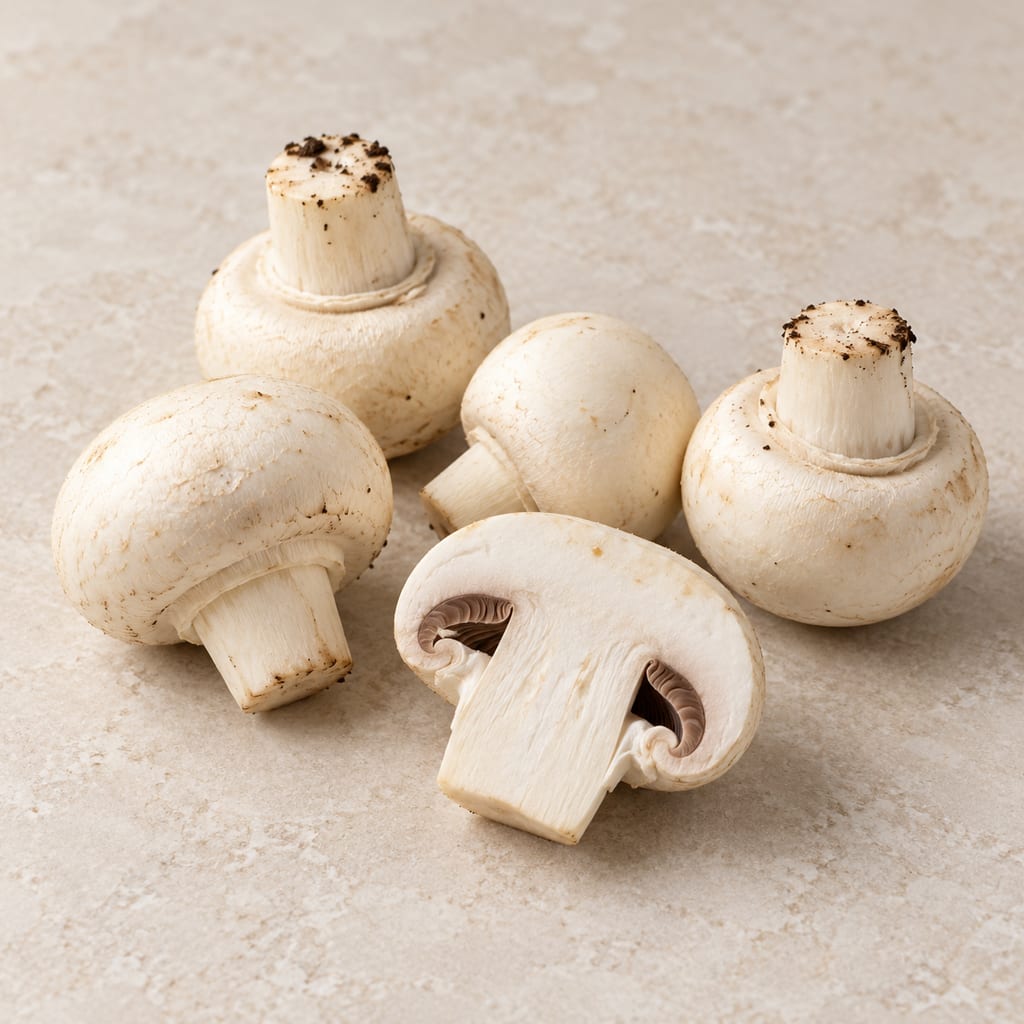
A cultivated form of Agaricus bisporus sold young as a button and at more mature stages as cremini or portobello, used fresh or preserved in everyday cooking.
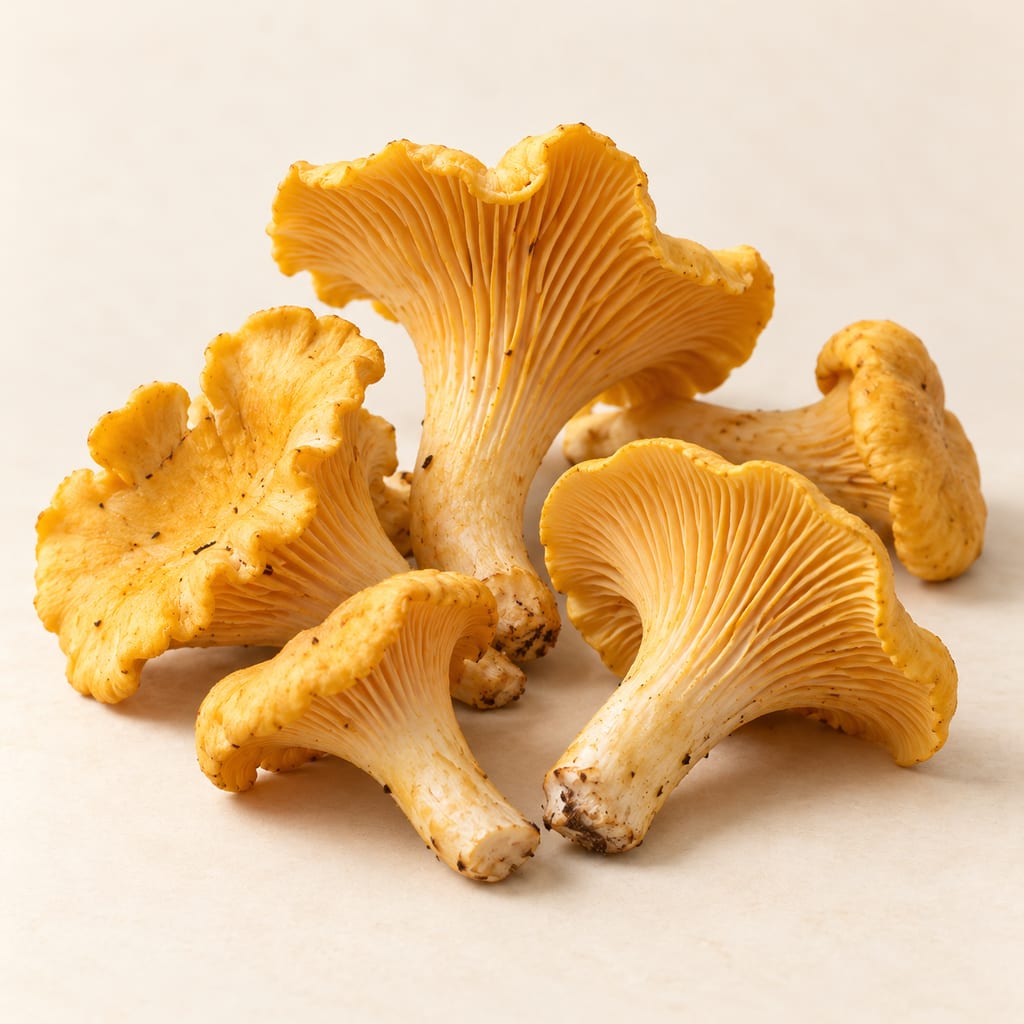
Chanterelles are wild, tree-associated edible mushrooms, particularly the European golden chanterelle Cantharellus cibarius, prized for their firm flesh, fruity aroma and use fresh, frozen, dried or pickled.

Chicken eggs supply proteins and yolk fats that set and emulsify. Atlas breads use them in enriched doughs, surface washes and a sourdough pancake batter mixed after fermentation.
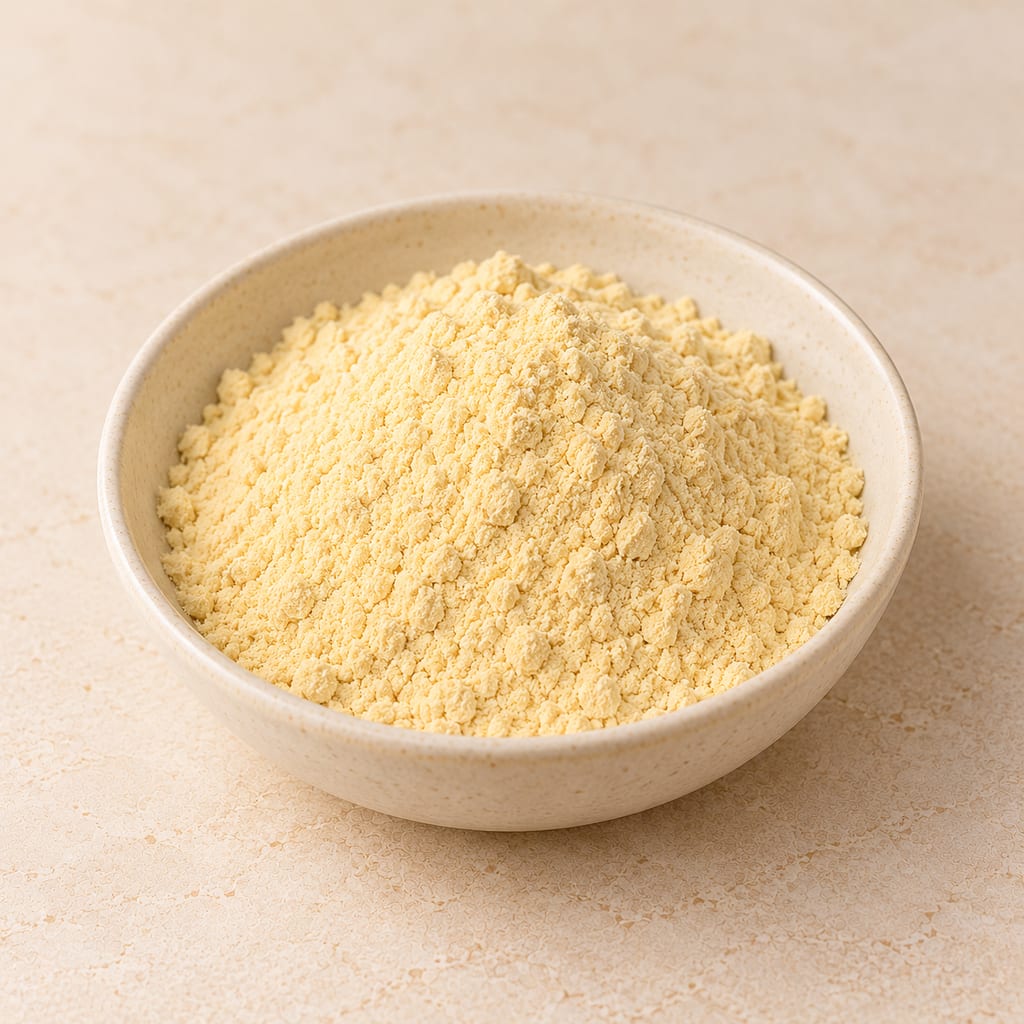
Chickpea flour is milled Cicer arietinum, used as besan in many Indian dishes and as the base of breads such as socca and farinata.
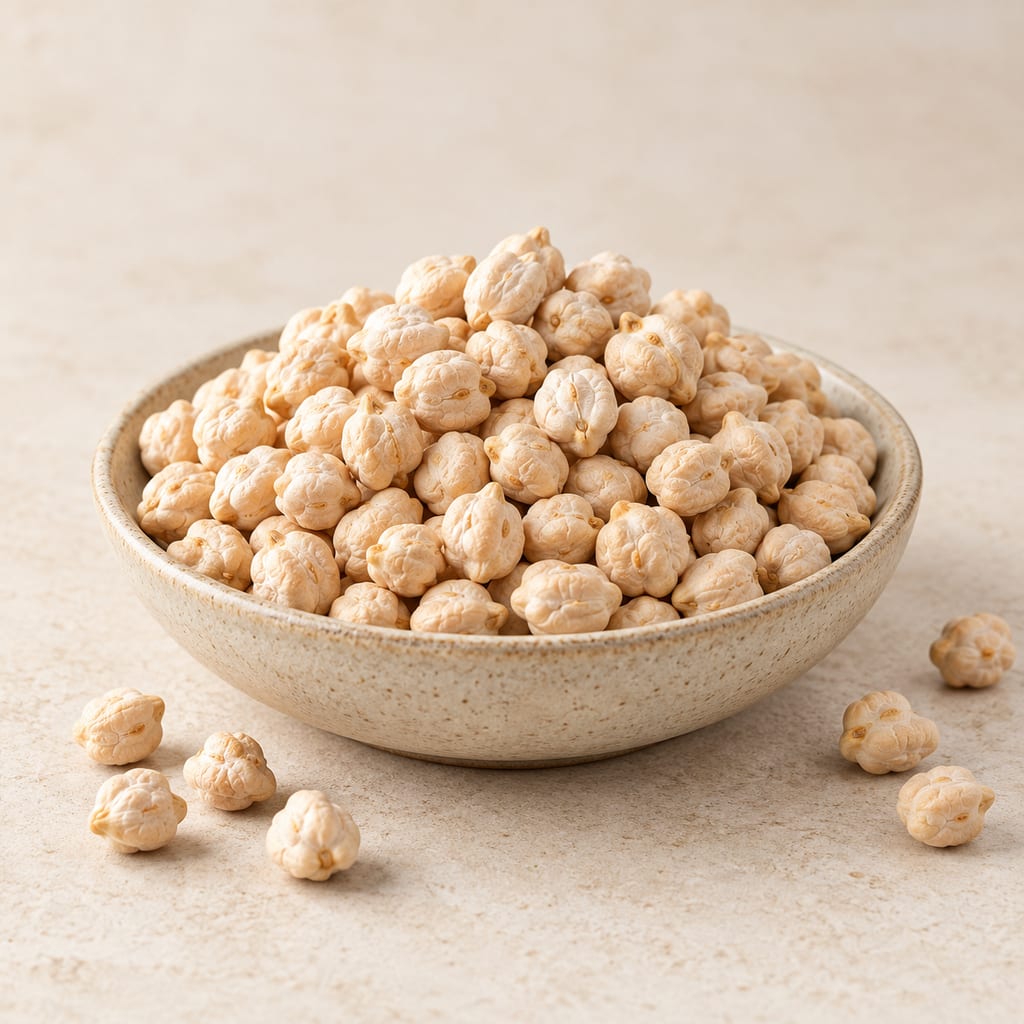
Chickpeas (Cicer arietinum) are dry pulses eaten whole or milled into flour, which gives socca, farinata and other breads a dense, nutty batter or dough.
No community contributions have been published for this entry yet.
Sign in to contribute. Published comments and photos are free to read.
PubMed CentralScience · Method
Uncovering the Biotechnological Importance of Geotrichum candidumG. candidum is a surface starter in dairy and in brewing; named in Munster and Saint-Marcellin-type mould-ripened cheeses (listed in search summary; full text not read)
Cited in: What the fungus is; What it does on cheese; Uses beyond cheese; Notes
FAO AGRISScience
Interests in Geotrichum candidum for cheese technologyRecord of a cheese-technology review on G. candidum (record read only as a catalogue entry)
Cited in: Notes
Taylor and Francis OnlineIdentity
Supplied catalogue source (Geotrichum candidum)Supplied catalogue source; not independently revalidated