Russula viridirubrolimata
Russula viridirubrolimata (绿边红菇) is a wild brittlegill that the 2026 Chinese catalogue of edible and medicinal fungi lists as edible. No preparation or habitat is documented.
 FermenteaWhere food goes to change
1086 articles on substrates, cultures and additives.
 Edible mushrooms319
 Brittlegills24
 Truffles19
 Milkcaps17
 Termite mushrooms17
 Morels4
 Stinkhorn fungi4
 Fungi3
Russula viridirubrolimata (绿边红菇) is a wild brittlegill that the 2026 Chinese catalogue of edible and medicinal fungi lists as edible. No preparation or habitat is documented.
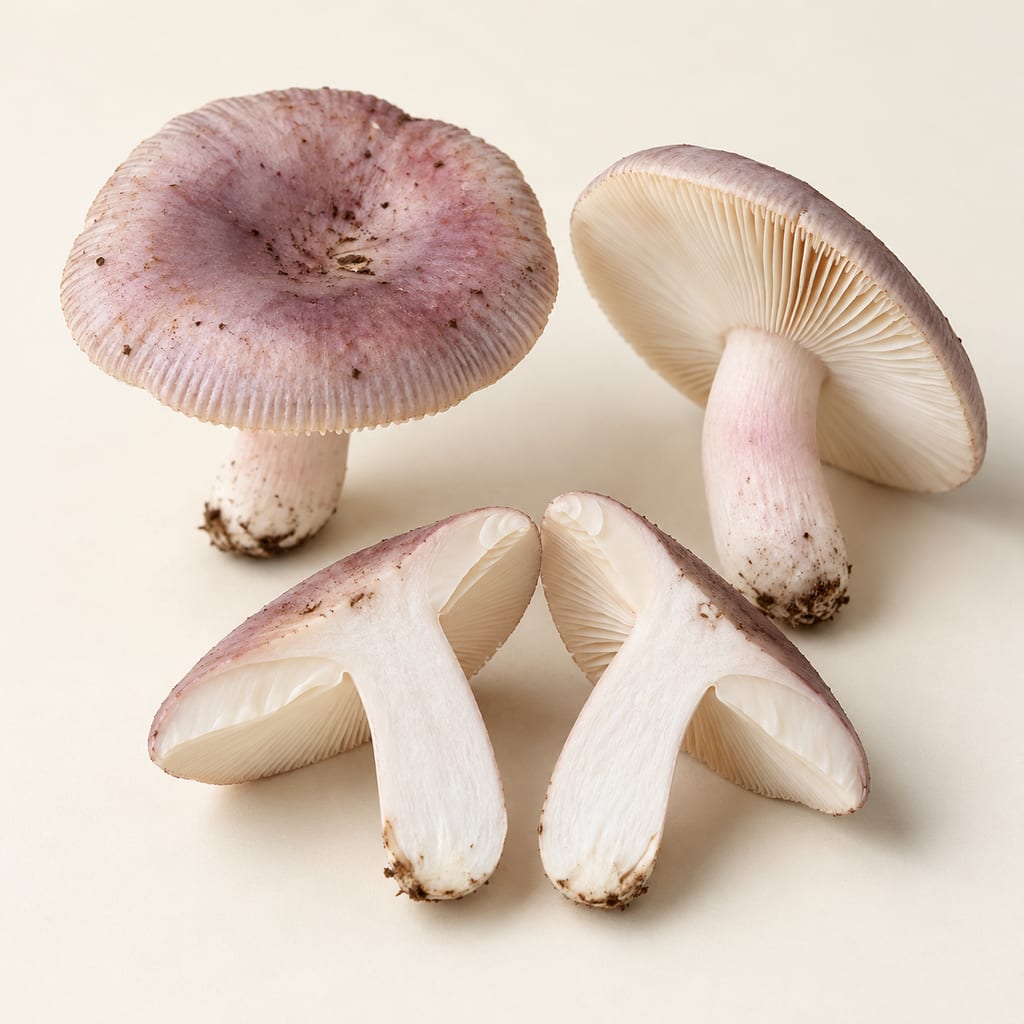
Russula hiemisilvae is a wild African brittlegill of miombo woodland, recorded in Burundi, DR Congo, Tanzania and Zambia. Sources document no preparation and no edibility verdict.
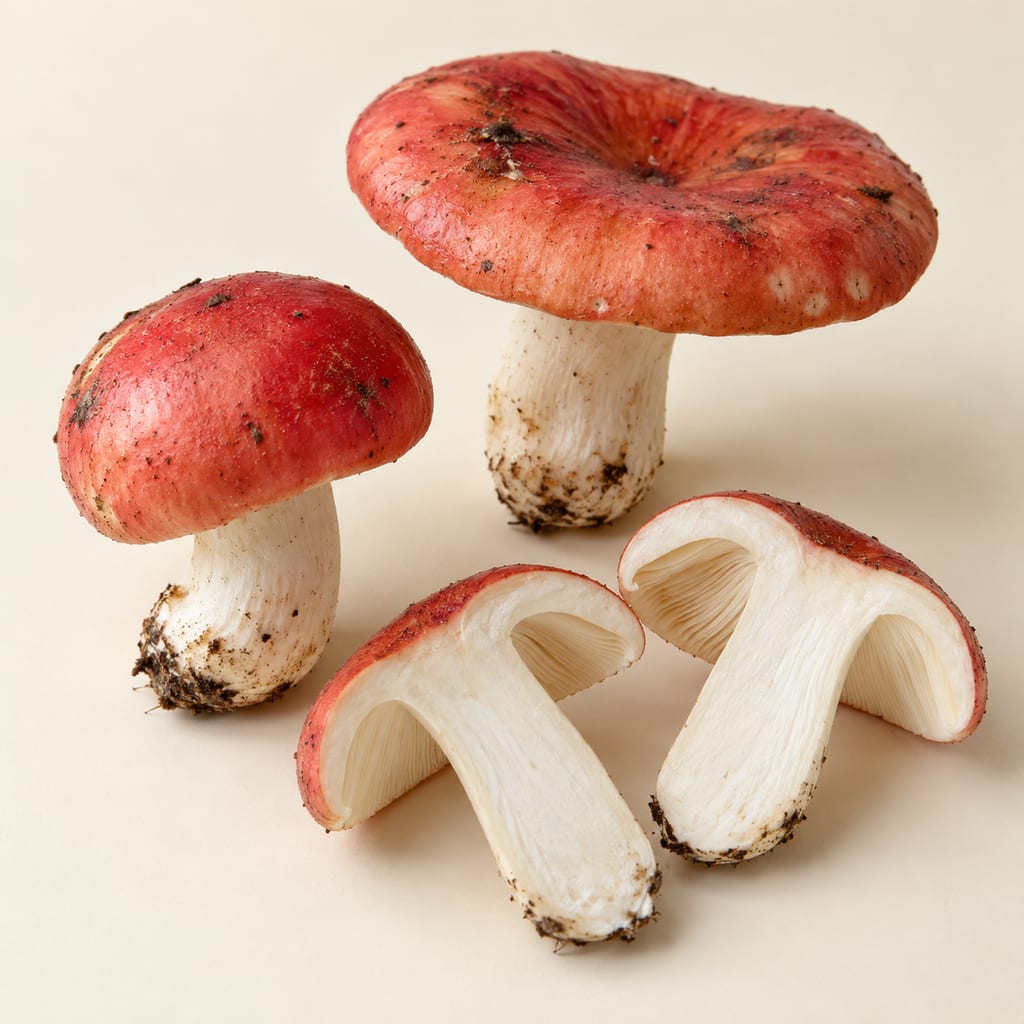
Russula compressa is a red-capped African brittlegill that grows with miombo trees. The institutional inventory records it as edible; the sources read do not give a preparation.
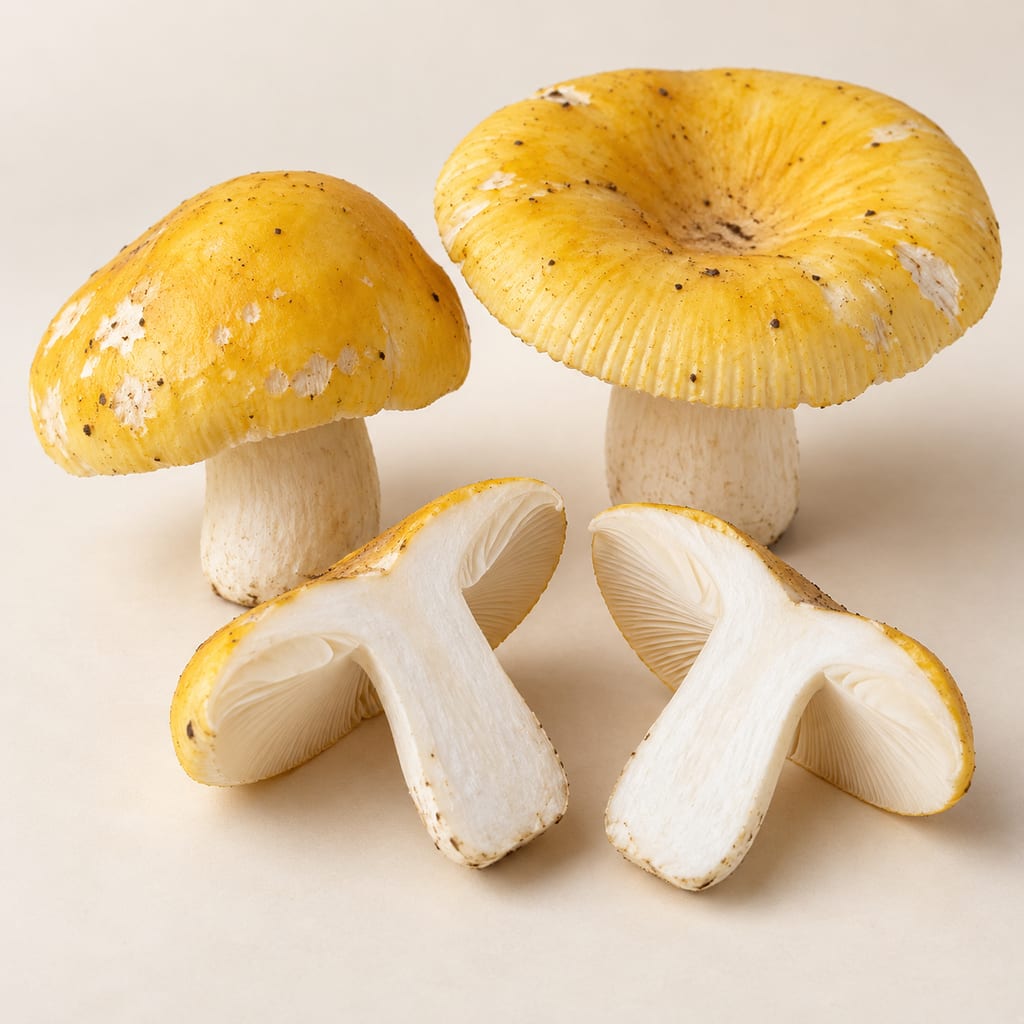
Yellow swamp brittlegill, Russula claroflava, is a wild brittlegill of damp ground under birch in northern Europe. Field guides call it mild and good to eat when cooked, and warn that cap colour alone does not identify it.
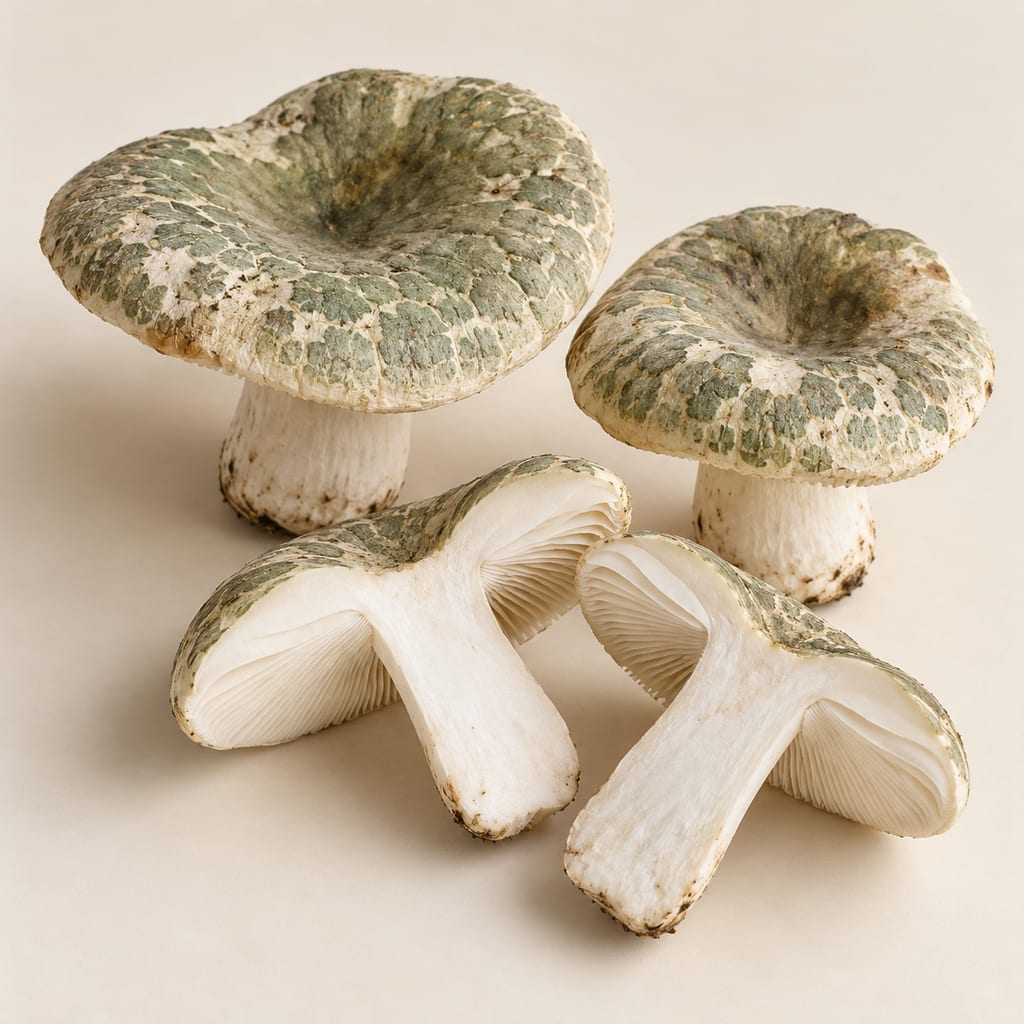
Greencracked brittlegill, Russula virescens, is a wild European brittlegill with a mottled green cap that is popular as a cooked mushroom. Several guides differ on its edibility, and green Russula are easily confused.
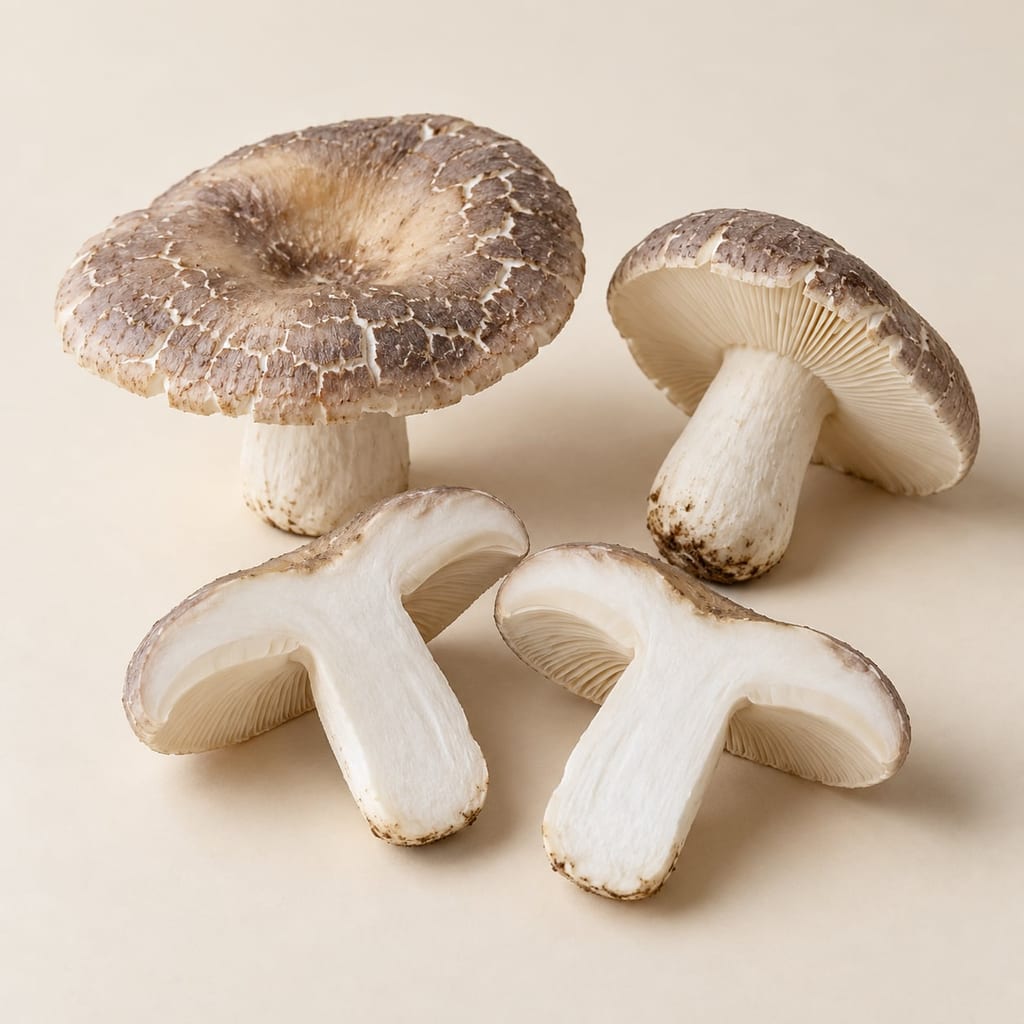
Russula pseudocrustosa is a wild brittlegill recorded in China, listed as edible in a 2026 Chinese catalogue, with its host and culinary use not yet established.
Russula acuminata, the African brittlegill, is a wild ectomycorrhizal mushroom of humid forest in Cameroon and DR Congo. An institutional inventory lists it as edible; its preparation and identity still need validation.
Russula sesemoindu is a wild ectomycorrhizal mushroom with a local name in Tshopo province, DR Congo. It is recorded as eaten by several informant groups, with no preparation or safety assessment.
Russula striatoviridis is a wild ectomycorrhizal mushroom recorded as locally eaten in Tshopo province, DR Congo. No preparation method or safety assessment is established for it.
The Malagasy brittlegill, catalogued as Russula edulis, is an ectomycorrhizal mushroom of Madagascar's central plateau that is locally eaten and sold; Russula is the genus most eaten in Madagascar.
Russula prolifica is an ectomycorrhizal brittlegill sold in Madagascar, where it grows under Eucalyptus plantations. It is a food-use record, not an identification guide.
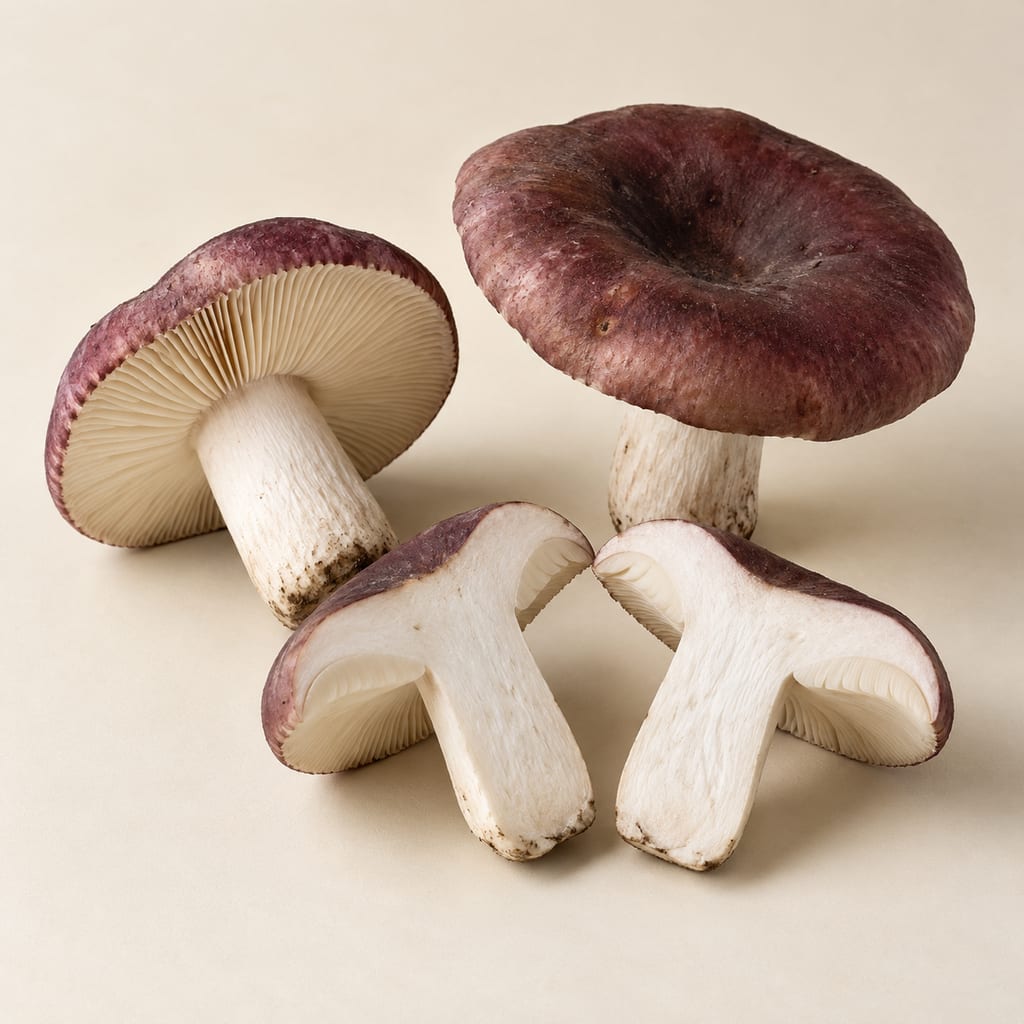
Darkening brittlegill, Russula vinosa, is a wine-red mycorrhizal mushroom of Northern European woods. Nordic field guides describe it as mild-tasting and edible, and warn that red Russulas are hard to tell apart.
Russula vesca, the bare-toothed brittlegill, a mild, nutty wild mushroom of European beech and conifer woodland. Field sources call it edible and cook it with onions and garlic, but regional identification must be confirmed.
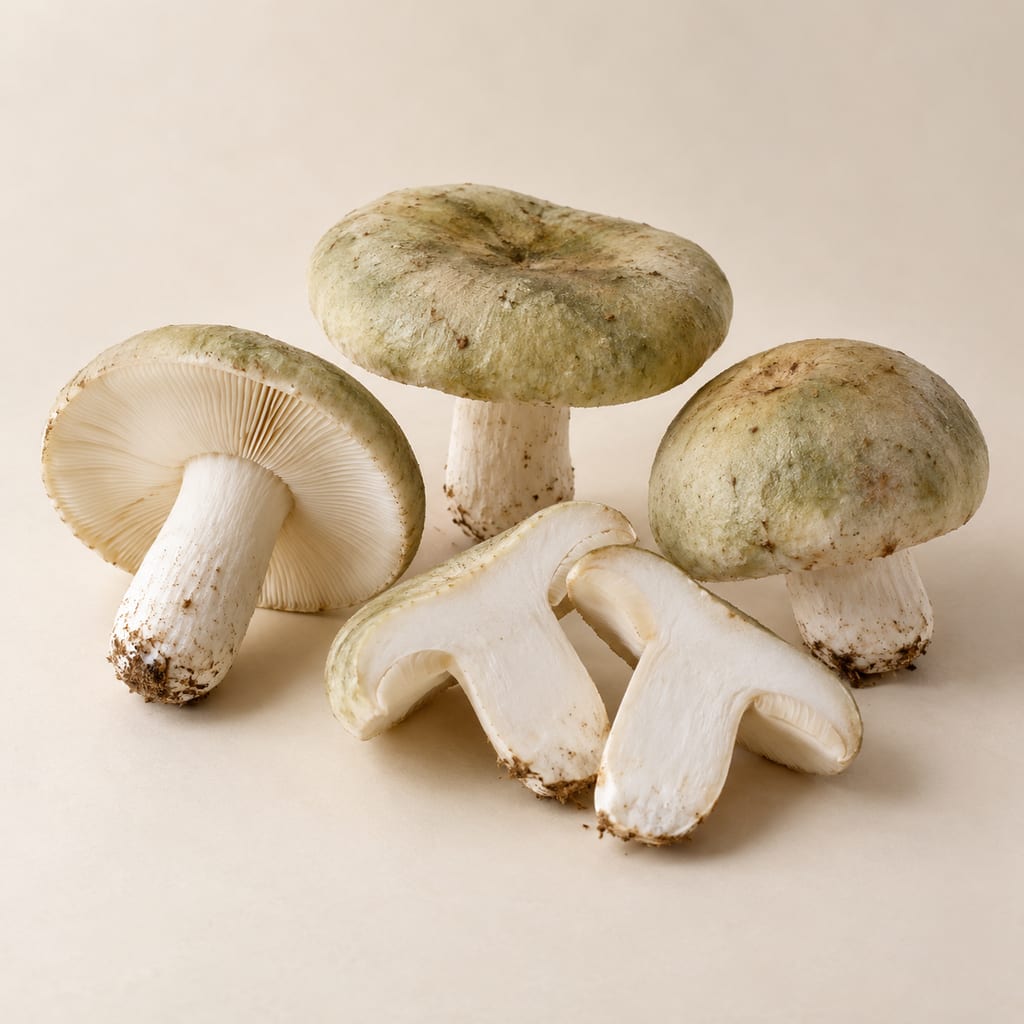
A green-capped brittlegill recorded from China as edible or edible-and-medicinal in a 2026 national species catalogue. Its culinary use, identity and safety are not yet established.
Russula cellulata is an ectomycorrhizal African brittlegill of dry forest, gallery forest and miombo. EFTA lists it in its edible-species inventory, but the entry gives no direct edibility statement and warns of confusion with R. liberiensis.
Russula pruinata is an ectomycorrhizal brittlegill of Congolese rainforest recorded as locally eaten in interview-based surveys in Tshopo province.
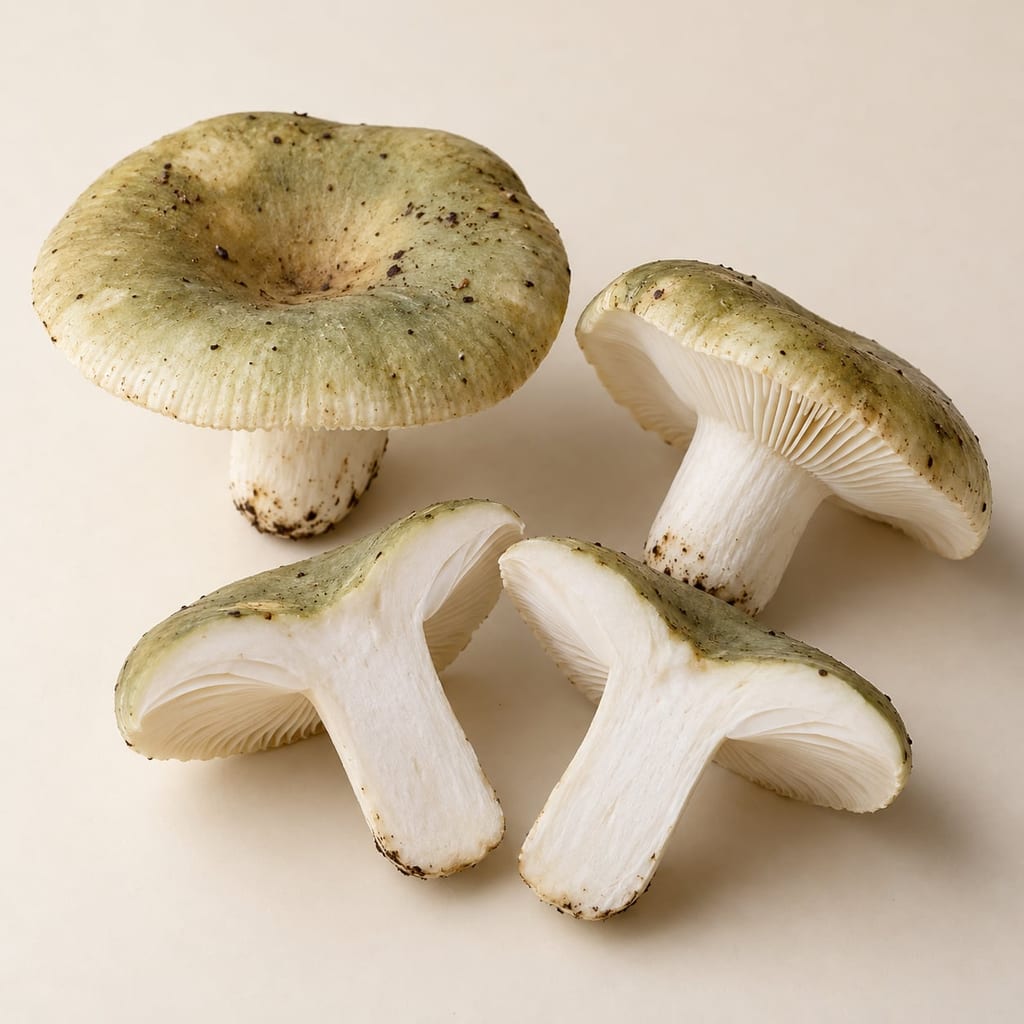
Russula viridicinnamomea is a brittlegill mushroom known by the regional name regional brittlegill in Yunnan, China. One forest survey lists it as edible. This page records that single food-use record and its limits.
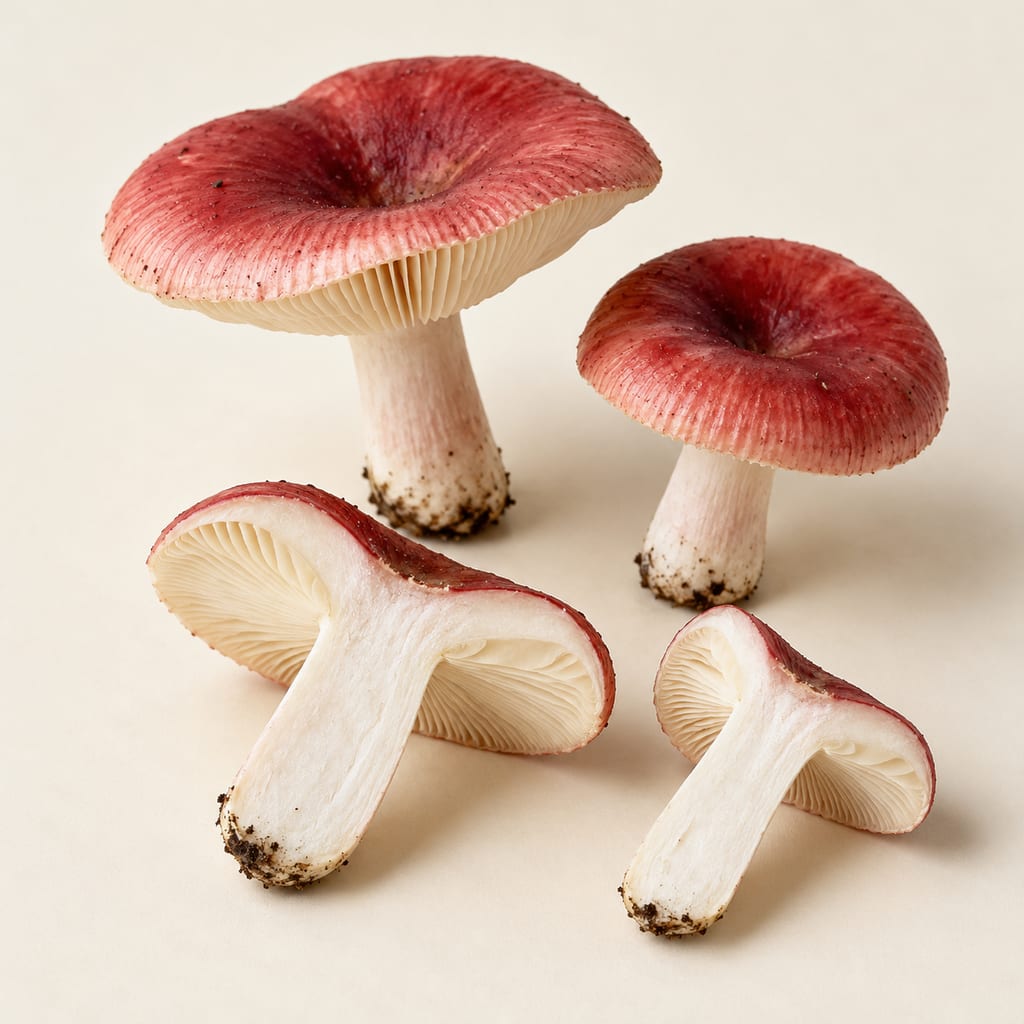
Russula congoana is an ectomycorrhizal brittlegill of miombo and savanna woodland in tropical Africa, recorded in an edible-fungi inventory. Preparation, identity and current safety still need validation.
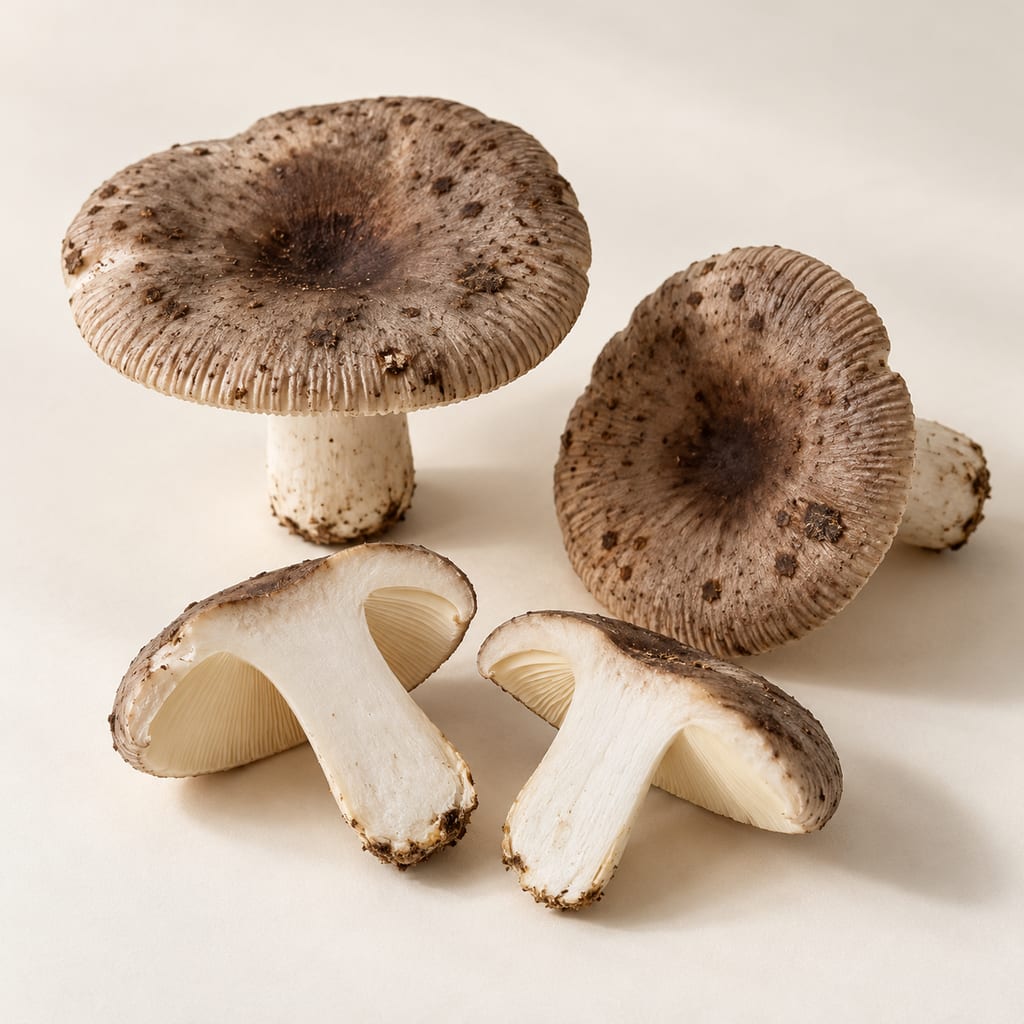
Russula meleagris is an ectomycorrhizal rainforest fungus recorded as locally eaten in Tshopo province, DR Congo, where some groups reject Russula as inedible. No species-level safety assessment exists.
Russula porphyrocephala is an ectomycorrhizal rainforest mushroom recorded as eaten by people in Tshopo, DR Congo. The record is an ethnomycological food-use record, not a toxicological assessment.
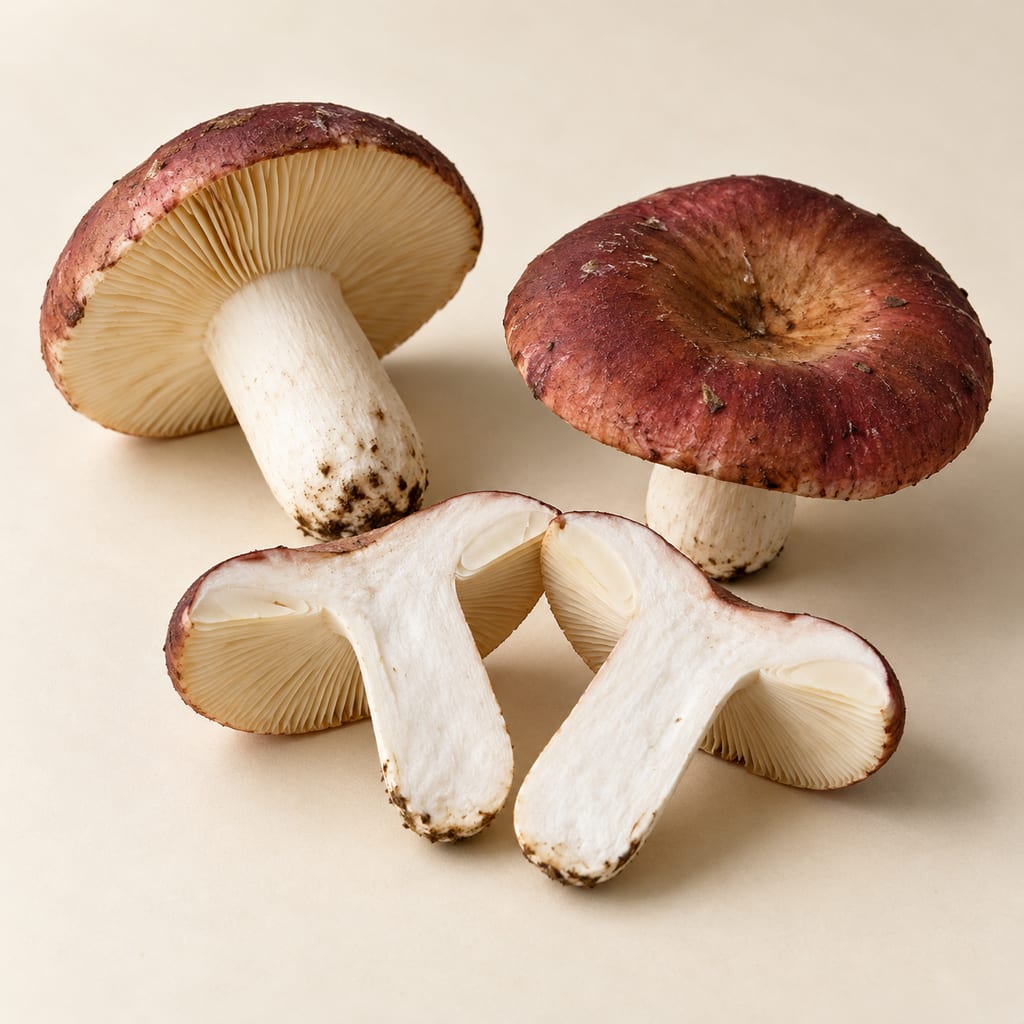
Nutty brittlegill (Russula integra) is a conifer-woodland mushroom with firm white flesh and a mild, nutty taste. Sources say it is edible when cooked thoroughly, and that quick cooking does not remove its toxins.
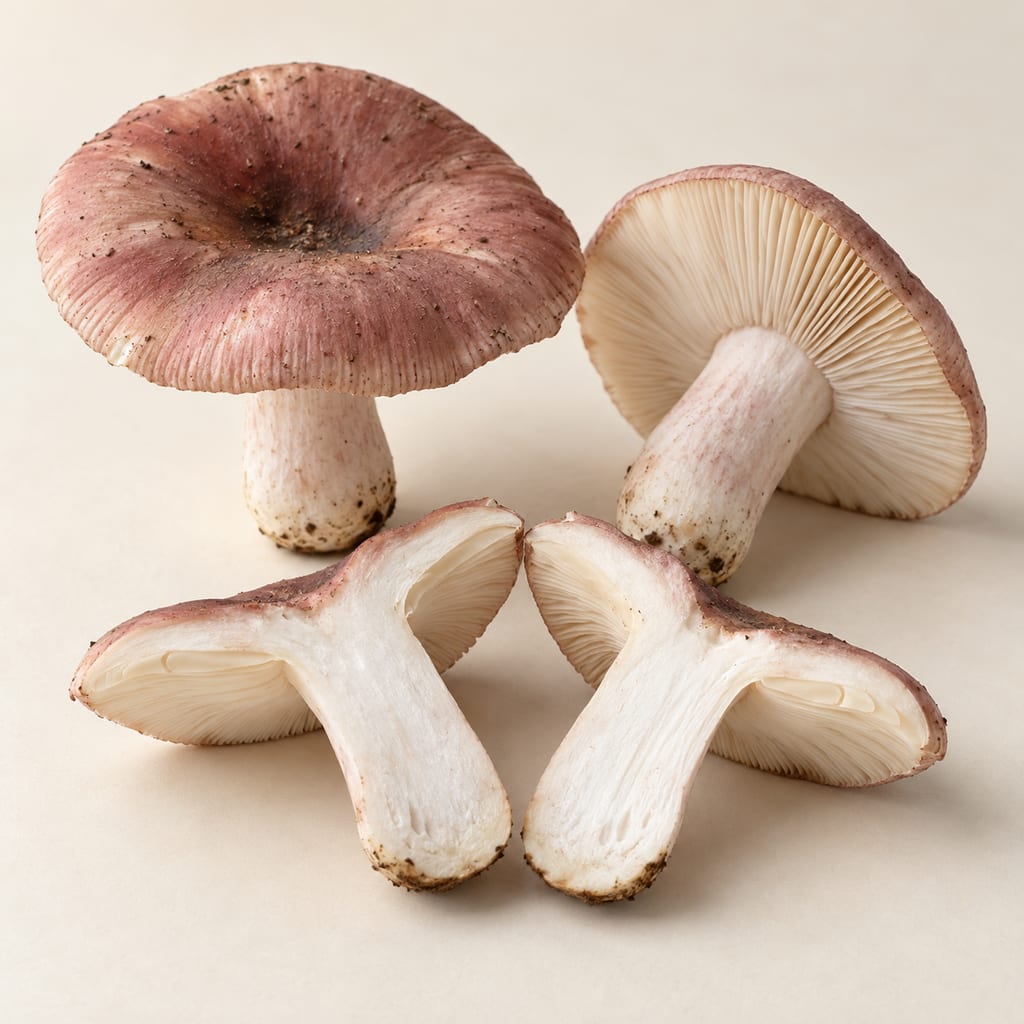
A wild Russula recorded as locally eaten in Tshopo province, DR Congo, in voucher-backed interviews. No preparation or toxicity assessment is recorded.
A wild brittlegill of African miombo woodland listed in the EFTA edible-fungi inventory across eight countries. The inventory gives no preparation and no explicit edibility rating.
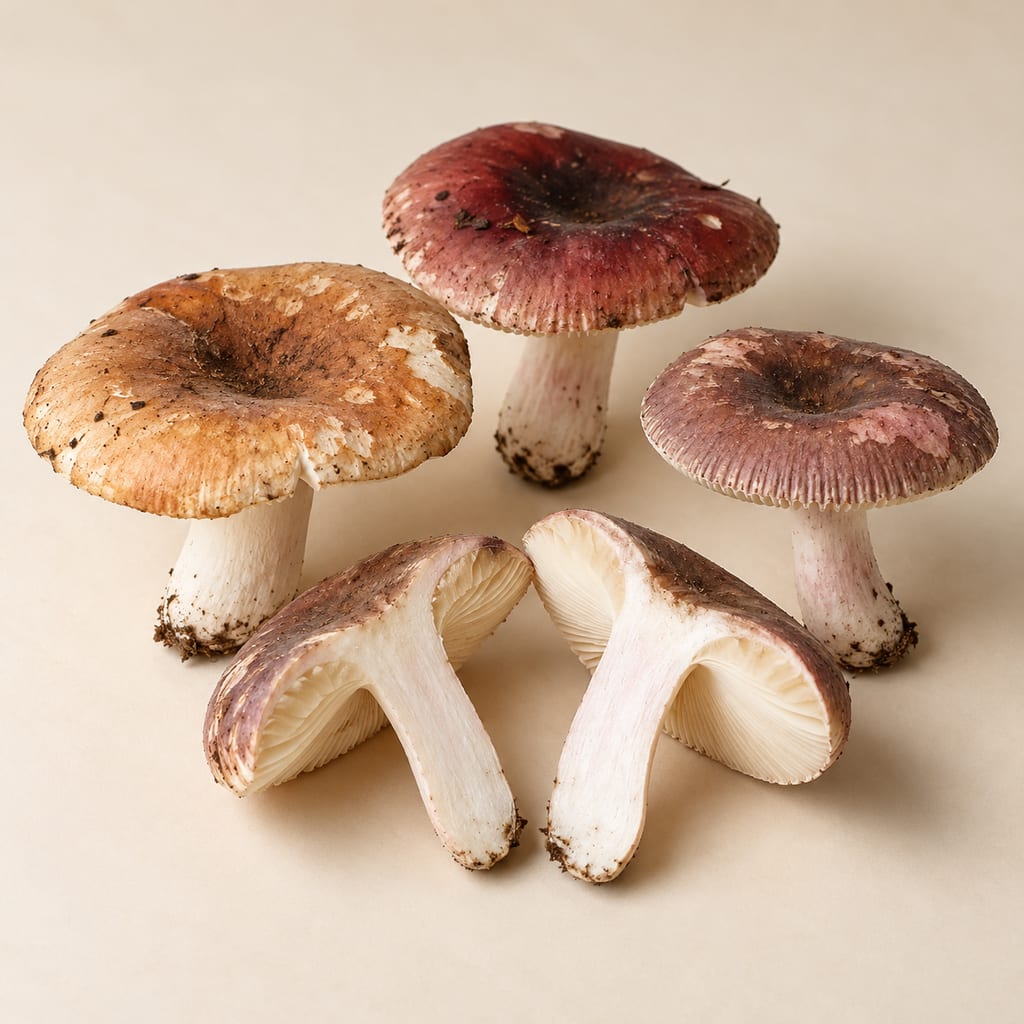
Russula xerampelina, the shrimp brittlegill, is a wild mushroom of conifer and mixed woods with a shellfish smell. Guides rate it edible and mild-tasting, but its red relatives include acrid look-alikes.