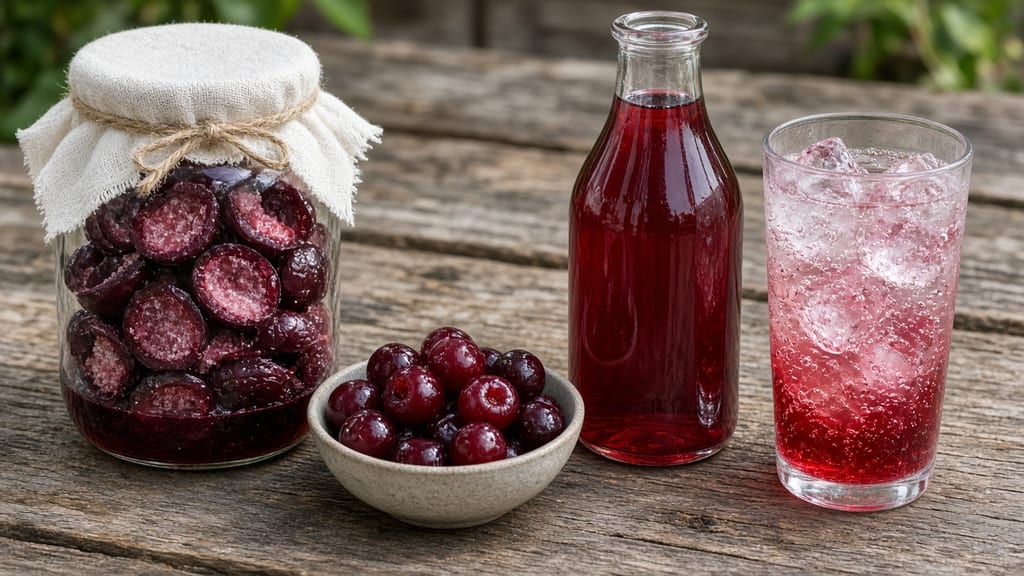
Sugar-drawn sharbats: Konkan kokum and Iranian sour cherry
Two sharbats where sugar alone draws the juice: Marathi kokum syrup made in a jar, often in the sun, and Iranian sour cherry syrup drawn overnight in the fridge and boiled briefly.
 FermenteaWhere food goes to change
Substrates
Kokum, the sour purple fruit of Garcinia indica, grows on India's west coast. Goa's apothecaries made a red syrup from it by 1890; Konkan households still draw amrut kokum with sugar alone.
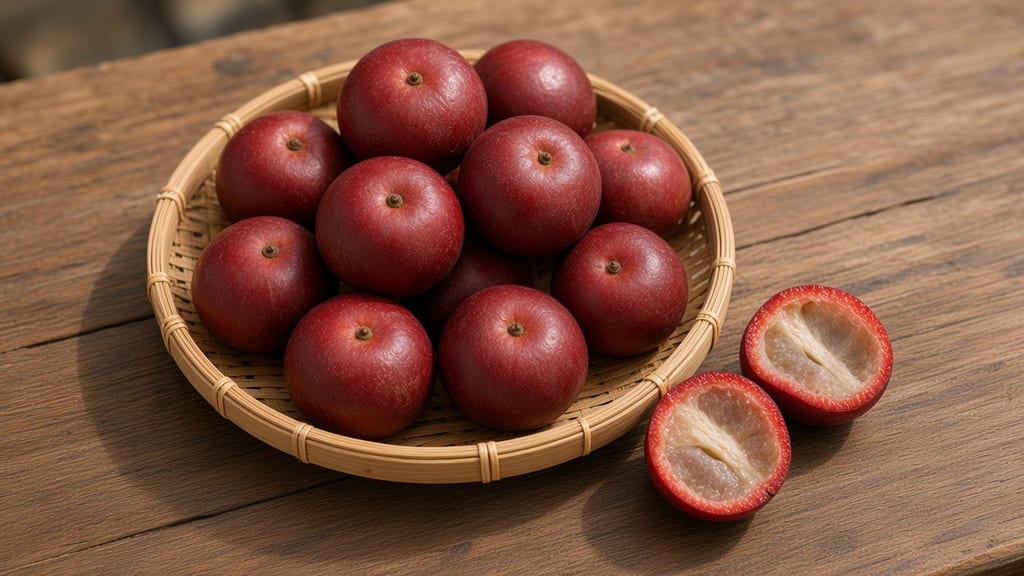
Kokum is the fruit of Garcinia indica, an evergreen tree of the west coast of India and a relative of the mangosteen. The Western Ghats Kokum Foundation, in its 2012 resource book, places it mainly in the Konkan region of Maharashtra, in Goa, Karnataka and Kerala, and in Surat district of Gujarat, with smaller numbers in the forests of Assam, Meghalaya and West Bengal. It is a slender tree with sloping branches and grows to about 15 metres. The genus Garcinia has around 200 species across tropical Asia and about 30 in India, and the book cites Patil and colleagues for the view that Garcinia indica itself is confined to India and Sri Lanka. Dymock, in 1890, found it wild on the hills of the Konkan and often planted in gardens close to the sea.
The fruit is round and dark purple when ripe. William Dymock and his co-authors, writing in Pharmacographia Indica in 1890, describe it as about the size of a small apple, red, with an acid pulp of an even deeper colour around 5 to 8 kidney-shaped seeds. The foundation gives 2.5 to 3 cm across. Most of the tree's value lies in the rind, which the Dapoli agricultural university puts at 50 to 55 per cent of the fruit.
Kokum is rarely grown as an orchard crop. The foundation describes it as a kitchen garden tree, a mixed crop among coconut and areca nut, a roadside tree or a forest tree, and says it does best below about 800 metres in warm, humid coastal country with more than 250 cm of rain a year.
Few fruits carry so many names over such a short stretch of coast. The foundation lists bheranda, bhiranda, kokamba, kokambi, ratamba, ratambi and tambada amba in Marathi; murgal in Tamil; murgina, punarpuli and devana huli in Kannada; tintali in Oriya; and kokam or bhirind in Gujarati and Konkani. Sanskrit names include vrikshamla and amlabija. In Portuguese Goa it was brindao.
Dymock separates the names by part of the plant. The fruit is ratambi or bhirand in Marathi and brindao in Goa; the oil from the seeds is kokam cha tel or bhirandel; the bark is ratambi sala. The dried, salted rind is amsul. In Marathi home recipes the fresh fruit is often called ratamba, and the syrup kokam sarbat or amrut kokum.
Dymock found nothing written about the kokum fruit before the time of the Portuguese physician Garcia d'Orta, which he dates to 1563. Orta, Dymock says, found the fruit in use at Goa under the name brindao when he visited the city, a name the native Christians of Goa still used in 1890. Since it was already an export article in Orta's time, Dymock thought it had been used on the west coast long before the Portuguese arrived.
Dymock also cites the Dutch naturalist Rumphius, who knew the tree in Amboyna, now Ambon in Indonesia, and wrote that its young leaves were as acid as sorrel and were used in cooking fish. A manuscript note by a Dr White records that dried kokum was issued to the Bombay Army as an antiscorbutic in 1799.
For syrup makers one line matters most. The juice of the fruit, Dymock writes, is sometimes used as a mordant in dyeing, and the apothecaries of Goa prepare a very fine red syrup from it, used in bilious affections. He gives no recipe. The dried fruit of commerce in his day came from Goa, Hingoli and Malwan, and kokum butter from Goa.
The acid is what makes kokum work in a syrup. Dymock reports an 1881 analysis by Lyon of the dried kokam sold in the bazaar: a hot water extract that was bright red and very acid, with the acidity due to malic acid and little or no tartaric acid. The red turned bluish green when alkali was added in excess.
Later work names a different acid. The Dapoli review by Haldankar and colleagues gives fresh rind as 87.5 per cent moisture, with 16.44 degrees Brix of soluble solids and acid, calculated as hydroxycitric acid, at 22.8 per cent. The foundation notes that industry now extracts hydroxycitric acid from the rind. The fruit has little sugar of its own: the foundation gives total sugars of 4.52 and 4.10 per cent for Konkan Amruta and Konkan Hatis, the two varieties released by the Dapoli university. That is why every syrup recipe uses so much sugar.
Dymock says the tree flowers about Christmas and ripens its fruit in April and May. The foundation gives flowering as November to February, with fruit ripening in April and May. Haldankar and colleagues add that most of the crop comes in May and June, just as the monsoon starts, and that 40 to 70 per cent of the fruit can be lost to the rains.
The fruit does not ripen all at once, so a high-yielding tree may be picked six to eight times. Ripe fruit is picked by hand, or a climber shakes the branches and the fallen fruit is gathered. Fresh kokum keeps only about five days at room temperature, which is why so much of the crop is dried, salted or turned into syrup within days of picking.
Each part of the fruit has a use. The rind is dried, often after repeated soaking in the juice of the pulp, and sold as kokum or amsul, a souring agent for fish curry and for solkadhi. The pulp and seeds are mixed with salt to make agal, a salted juice; the Dapoli flow sheet uses 160 g of salt per kilogram of pulp, stirred daily for seven days and strained. The seeds give kokum butter, which stays solid at room temperature.
The scale of the syrup trade is easy to miss. The foundation reports that in South Konkan 1674 tonnes of fruit went to dried rind, 757 tonnes to syrup and 40 tonnes to butter, and that 43,000 of the 46,600 kokum trees counted in Maharashtra stood in Ratnagiri and Sindhudurg districts. A case study it cites found homesteads with 4 to 10 trees, each household keeping about 10 kg of rind and 10 to 15 litres of syrup for its own use through the year.
Fresh kokum is eaten as well as preserved. One contributor to the foundation's book describes a childhood summer habit: take the small cap off a ripe fruit, push a few salt crystals into the hole with a toothpick, turn the toothpick to mix the salt with the seeds, and suck out the juice. Then break the skin in two, pop the seeds into the mouth one by one for their fleshy white coating, and discard them. The writer ranks it second only to mango as a summer fruit.
The same book says large glasses of kokum sherbet are drunk through the hot months in Gujarat, Maharashtra and several southern states. Purva remembers her mother sugaring and drying some peels as a very sour snack that turned nails and teeth yellow.
The oldest full method we found is a family one. Sulekha's recipe on the Marathi community site Maayboli, posted in 2012 and credited to her mother, uses 30 kokum fruits and 4 small bowls of sugar. Wash and wipe the fruit, cut each in half into two cups and take out the seeds. Fill every cup with sugar, stack the cups gently in a wide-mouthed glass jar and spread the leftover sugar on top. Red juice appears within half an hour. Put the jar in the sun each day; the sugar takes about eight days to dissolve. Then squeeze the halves gently, lift them out, and salt and dry them as amsul for amti, vegetables or chutney.
Purva's Food Funda, a bilingual Marathi and English blog, gives the same method with a cotton cloth tied over the jar, 8 to 10 days in strong sun and a daily stir, until the syrup is thick and dark pink-red. A 2005 thread on the Maayboli forum layers salt and sugar with three or four kokum shells at a time, adds the squeezed juice of the crushed seeds before the last layer, and closes the jar for two days without sun. That writer insists that no water may touch the fruit, the jar, the lid or the spoon, or the batch can turn mouldy.
Dr. Balasaheb Sawant Konkan Krishi Vidyapeeth, the agricultural university at Dapoli in Ratnagiri district, has standardised the same idea for amrut kokum. Fresh, sound fruit is washed and destalked, cut into four, and the pulp and seeds removed. The rind is mixed with sugar at 1 part rind to 2 parts sugar and kept in a large stainless steel vessel for seven days, stirred well every day. By then, the review says, osmosis has drawn out the juice and all the sugar has dissolved. The syrup is strained through a 1 mm stainless steel sieve and bottled.
The foundation's account of the same work describes two commercial versions: one with nothing but rind and sugar, and one with permitted preservatives and salt, using sodium benzoate at 610 mg per kilogram of finished syrup. The home recipes on this page use no preservative, so storage matters more for them.
Our home version follows the published ratio and leaves out the sun. Marathi Srushti uses 1 kg of ripe kokum to 2 kg of sugar, and tells the cook not to heat the jar in the sun; the juice begins to run after two or three days. Halve the washed and thoroughly dried fruit, remove the seeds, fill the cups with sugar and pack them into a dry glass jar coated inside with sugar. Spread the rest on top, close the jar and stir daily with a dry spoon, as Dapoli does, until the sugar has dissolved, about a week.
Strain through a fine stainless steel sieve, bottle in sterilised glass, label and date it, and keep it in the refrigerator. The University of Maine Cooperative Extension gives one month in the refrigerator for homemade flavoured syrups, and we follow that limit. To serve, Sulekha uses 1 part syrup to 3 parts cold water with a little salt; Marathi Srushti adds water and salt, stirs and strains.
The kokum sun jar appears in full on our sharbat page, next to the Iranian sour cherry sharbat, sharbat-e albaloo. Both use sugar to pull juice out of raw fruit.
Acid: Lyon in 1881 found malic acid and little or no tartaric acid; Dapoli measures the acid as hydroxycitric acid. Flowering: Dymock says about Christmas; the foundation says November to February. Sun: Maayboli and Purva use daily sun; Marathi Srushti says not to heat the jar. Sugar: Dapoli and Marathi Srushti use twice the weight of fruit or rind; Purva's English and Marathi texts disagree with each other. Keeping: Purva says a year; the University of Maine Cooperative Extension says one month in the refrigerator.
Ratnagiri and Sindhudurg hold most of Maharashtra's kokum trees; home and commercial amrut kokum.
Garcia d'Orta found brindao in use at Goa in 1563; Goa apothecaries' red syrup recorded by Dymock in 1890.
Murgalu; rind, syrup and seed use.
Rumphius records the young leaves used in cooking fish.
Two sharbats where sugar alone draws the juice: Marathi kokum syrup made in a jar, often in the sun, and Iranian sour cherry syrup drawn overnight in the fridge and boiled briefly.
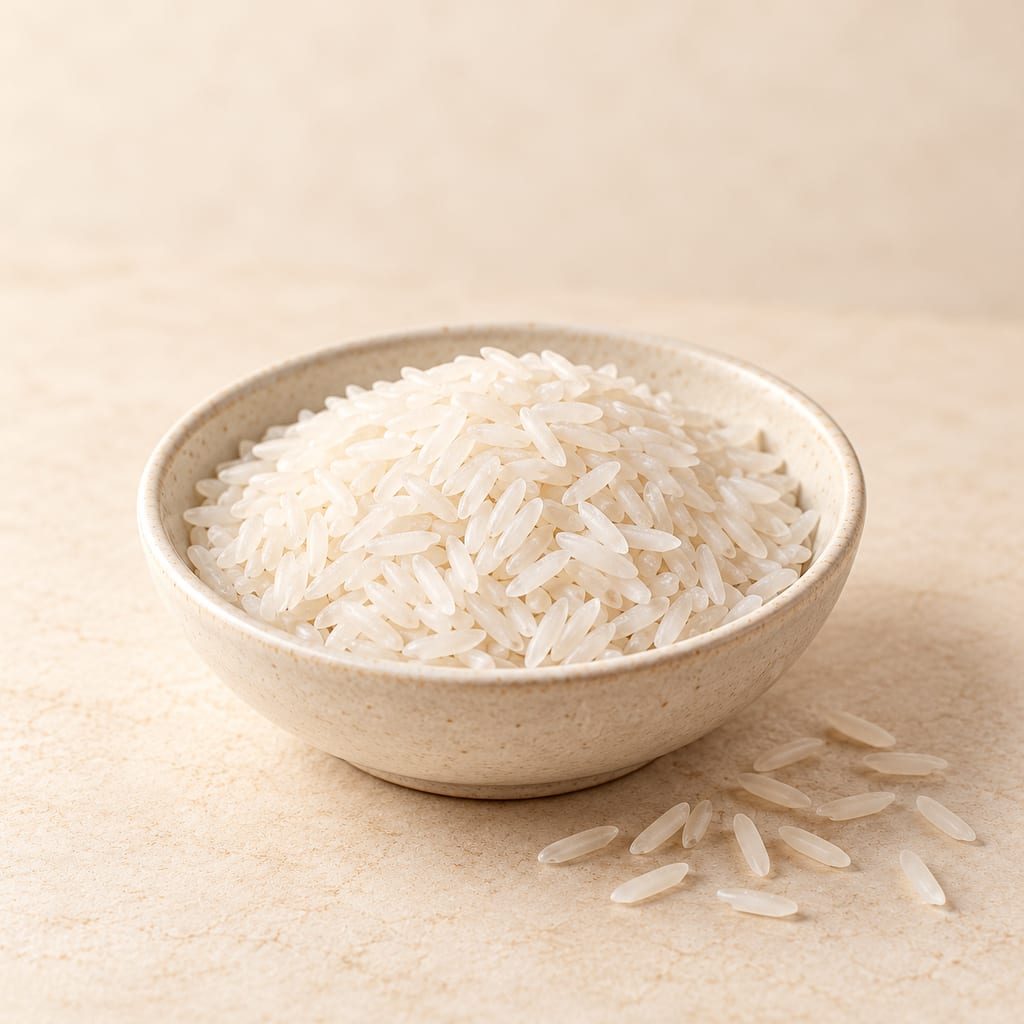
Rice contributes starch to flatbreads, steamed breads, batters and many distinct fermentations. Its species, milling and starch character shape how it cooks, binds, expands and feeds enzymes.
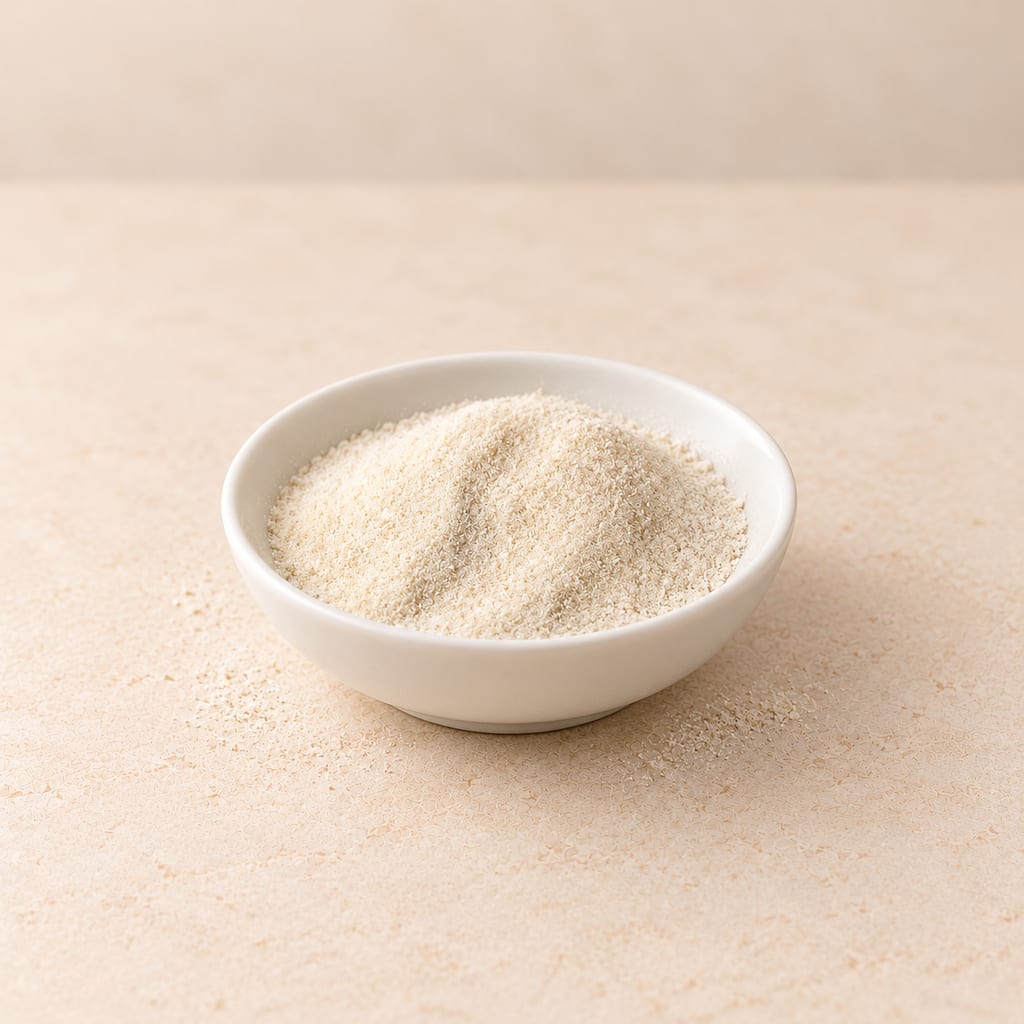
A gelling polysaccharide extracted from red seaweeds, sold as kanten strips or powder; it sets firm at a low concentration and stays solid until about 85 °C.
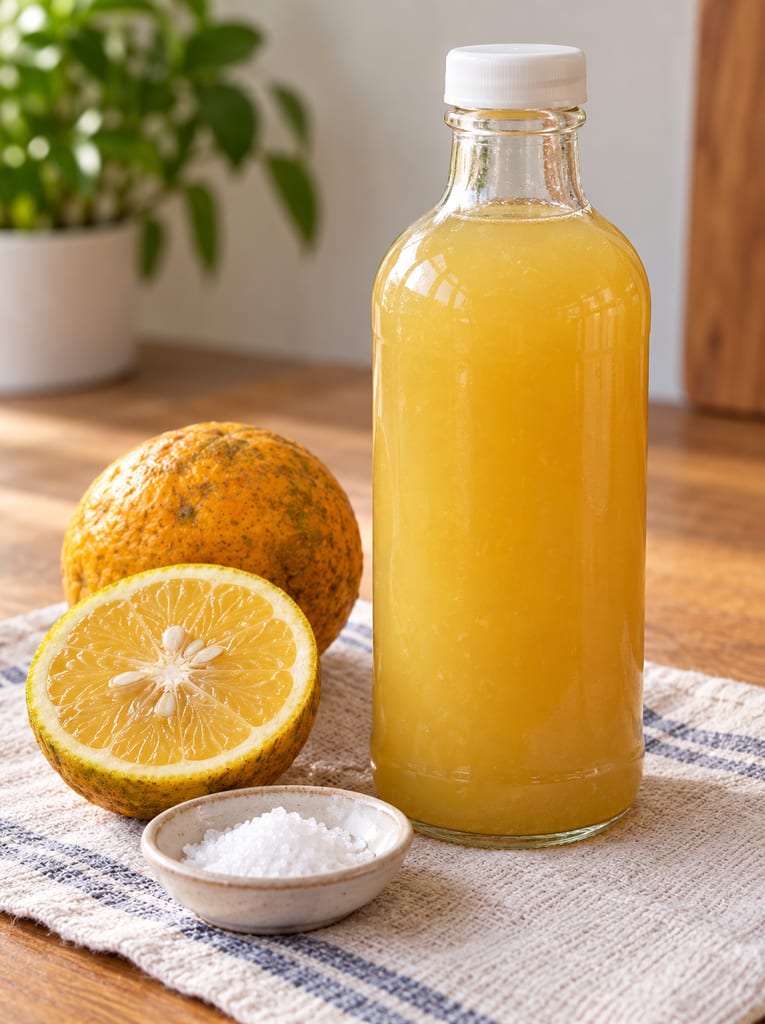
A Dominican table and seasoning condiment of sour orange juice, mixed with lime and salt and bottled raw; garlic, oregano or a hot pepper may be added for meat or a spicier bottle.
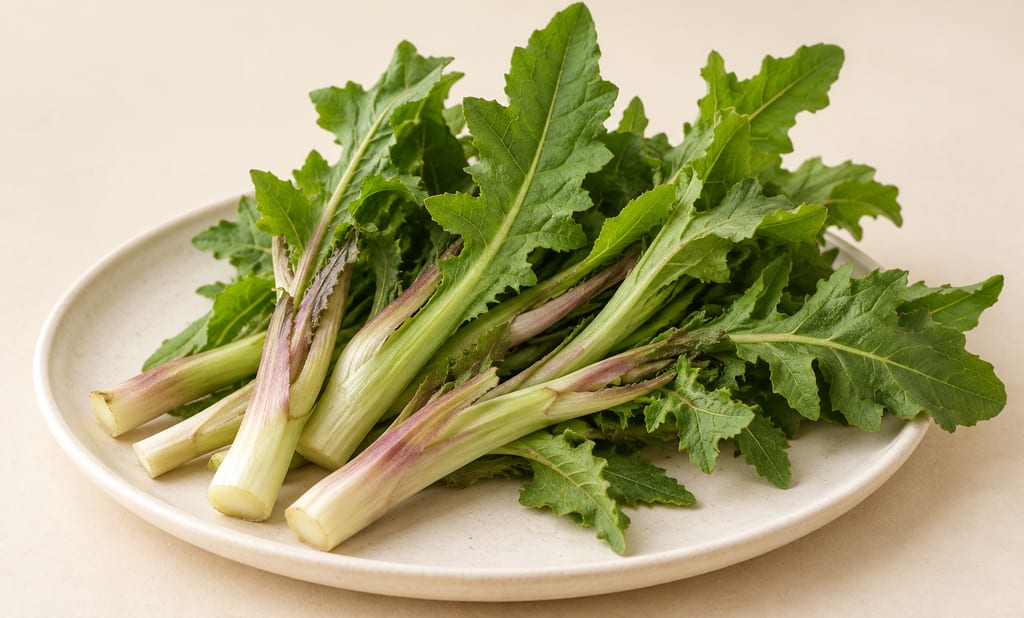
Cicerbita alpina is an alpine perennial whose tender shoots and leaves have been eaten raw or cooked. Sámi milk preparations and modern Carnian dishes are distinct uses, with serious identification and preservation limits.
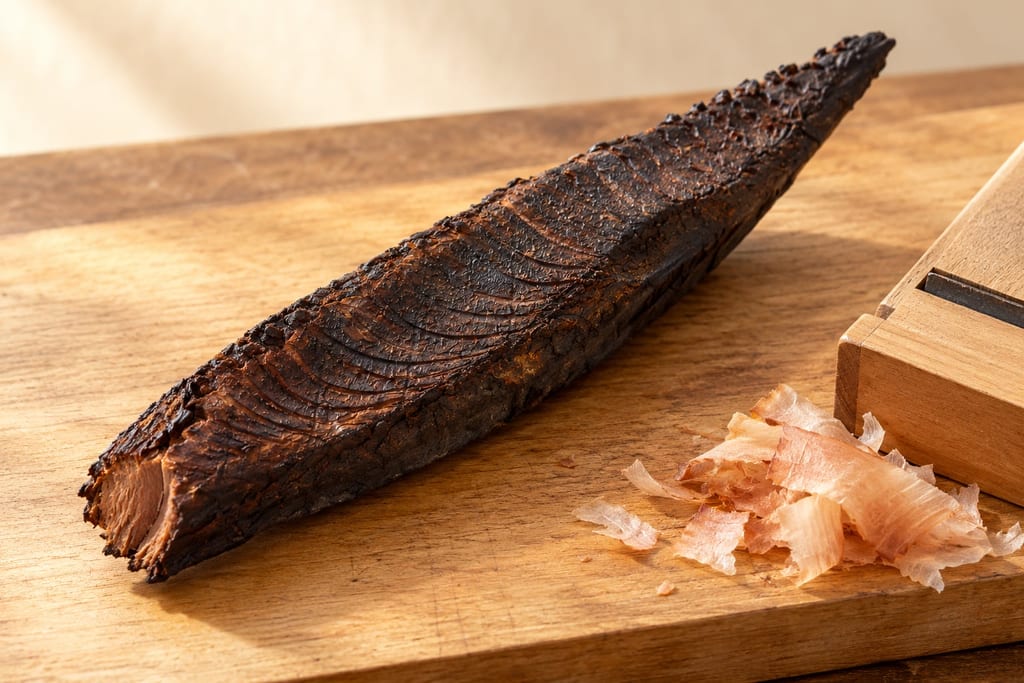
Japanese skipjack tuna cooked, then repeatedly smoked and dried over a wood fire by the hand-fired tebiyama method into a hard block for shaving into dashi: the first stage of katsuobushi.
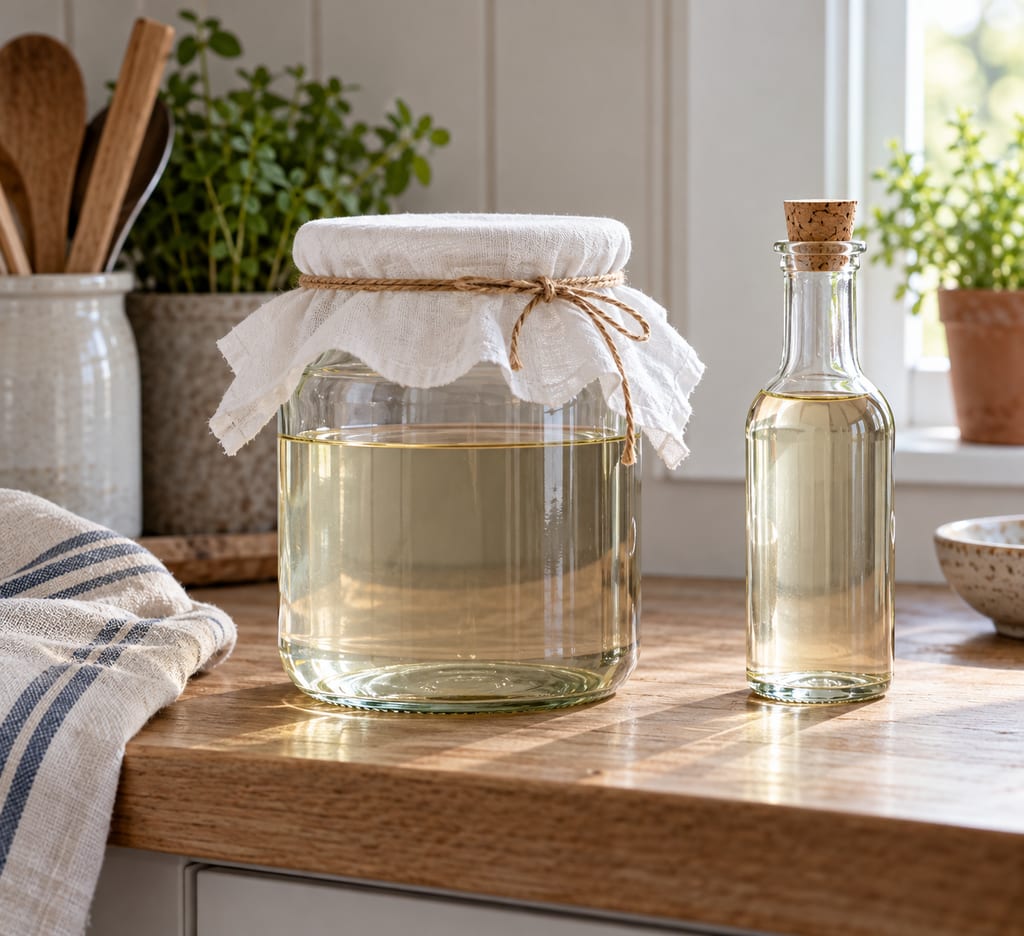
A Swedish-style spirit vinegar made by fermenting neutral alcohol with live vinegar bacteria, with a separate guide to commercial ättika strengths.

A yeast-raised wheat ring shaped from a firm dough, briefly boiled and baked. This source-batch formula gives a gently malted crust and a chewy crumb.
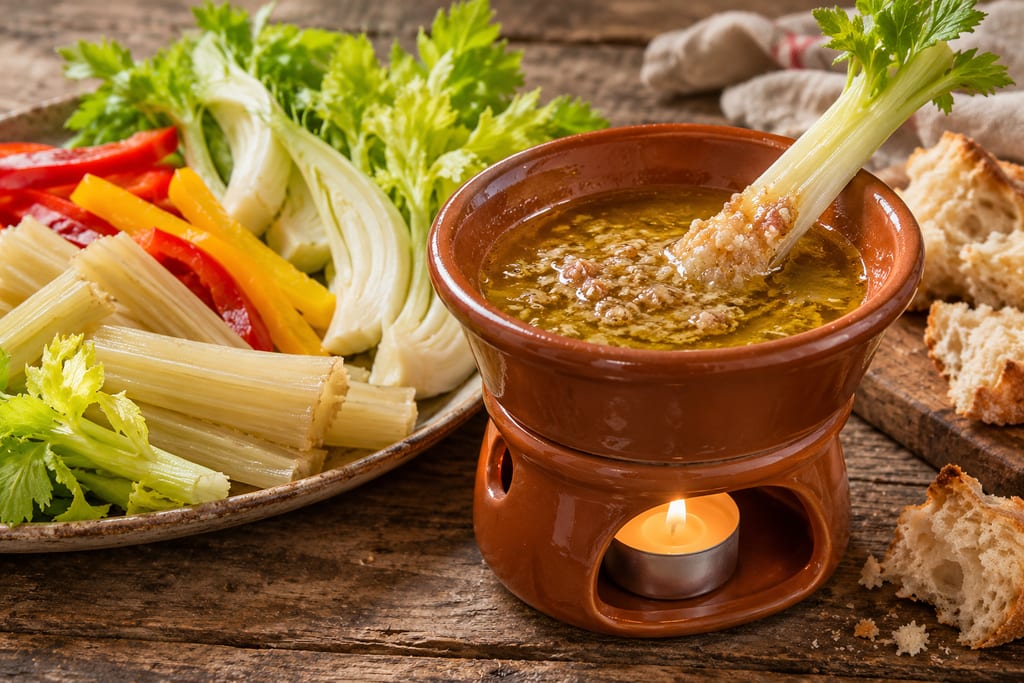
A warm dip of garlic, anchovy and olive oil, often enriched with butter, that Piedmont serves over a flame with raw and cooked vegetables and bread.
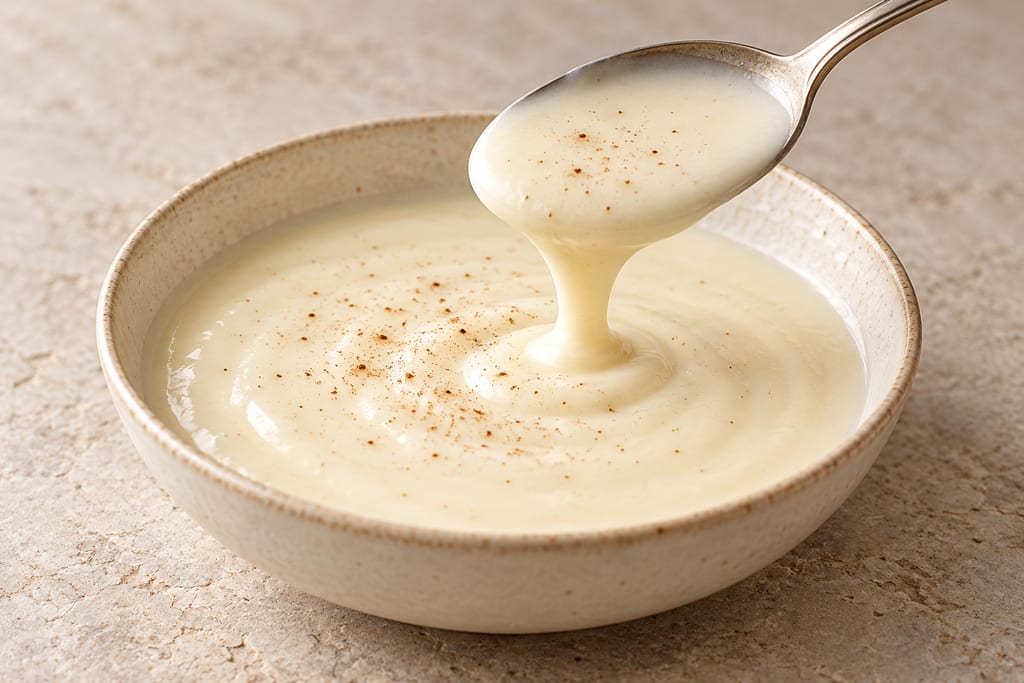
Bechamel is a white sauce of milk thickened with a butter and flour roux, one of the French mother sauces, and the base from which Mornay and other cheese and cream sauces are made.
No community contributions have been published for this entry yet.
Sign in to contribute. Published comments and photos are free to read.
Kegan Paul, Trench, Trubner, London; Thacker, Spink, Calcutta; Education Society's Press, Bombay, 1890; Internet Archive
Pharmacographia Indica, vol. 1: Garcinia indicaVernacular: fruit Ratambi, Bhirand (Marathi), Brindao (Goa); oil Kokam cha tel, Bhirandel.
Common on the western coast between Damaun and Goa, wild on the Concan hills, often in gardens close to the sea; flowers about Christmas, ripens April and May.
Fruit dried and slightly salted as Amsul or Kokam; used as an antiscorbutic in the Bombay Army in 1799 (Dr White).
Apothecaries of Goa prepare a very fine red syrup from the juice, used in bilious affections; juice used as a mordant in dyeing.
Garcia d'Orta (1563) found it in use at Goa under the name Brindao, as an export article; Rumphius: young leaves acid like sorrel, used in cooking fish in Amboyna.
Kokam butter noticed by Europeans about 1830 for chapped skin.
Fruit spherical, size of a small apple, 5 to 8 seeds; Lyon (1881): hot water solution bright red, very acid, bluish green with alkali, acidity due to malic acid.
Dried fruit came from Goa, Hingoli and Malwan.
Cited in: What kokum is; Names along the coast; Garcia d'Orta and the apothecaries of Goa; What is in the rind; Season and harvest; Rind, agal, amsul and butter; Where the sources disagree
Western Ghats Kokum Foundation, Panaji, Goa, 2012
Resource Book on Kokum (Garcinia indica Choisy)Genus about 200 species, about 30 in India; G. indica confined to India and Sri Lanka (Patil et al. 2005). Found in the Konkan of Maharashtra, Goa, Karnataka, Kerala and Surat district of Gujarat; tree to 15 m; fruit dark purple, round, 5 to 8 seeds.
Names: Goa butter tree; bheranda, ratamba, ratambi (Marathi); murgal (Tamil); murgina, punarpuli, devana huli (Kannada); tintali (Oriya); kokam or bhirind (Gujarati, Konkani); vrikshamla, amlabija (Sanskrit); brindao (Portuguese).
Flowers November to February; fruit ripens April to May; products agal, amrut syrup, dried rind.
About 1000 ha and 4500 t of fruit in the Konkan (2010 survey); 43,000 of 46,600 Maharashtra trees in Ratnagiri and Sindhudurg; South Konkan: 1674 t to dried rind, 757 t to syrup, 40 t to butter.
Households keep 4 to 10 trees, and reserve about 10 kg of rind and 10 to 15 litres of syrup a year.
Wine red syrup drawn from the rind with sugar is stored for summer drinks; solkadhi; fish curry of Konkan and Goa.
Selected types: total sugars 4.52 and 4.10 per cent (Konkan Amruta, Konkan Hatis).
Ripe fruit eaten with salt pushed into the cap hole; kokum sherbet drunk in summer in Gujarat, Maharashtra and southern states.
Amrit kokum: halves layered with sugar 7 days, strained through 1 mm sieve; versions with and without sodium benzoate 610 mg/kg; agal with salt 160 g per kg pulp, 7 days.
Cited in: What kokum is; Names along the coast; What is in the rind; Season and harvest; Rind, agal, amsul and butter; Eating the fresh fruit; The Dapoli method; Where the sources disagree
Journal of the Andaman Science Association 27 (Special Issue), 2022
Promotion of Underutilized Kokum (Garcinia indica) Interventions: an OverviewHarvest April to May, most in May and June at the start of the rains; 40 to 70 per cent of fruit lost to rain; 6 to 8 pluckings; ripe fruit shaken down.
Fresh fruit keeps about 5 days at ambient temperature; rind is 50 to 55 per cent of the fruit.
Fresh rind: moisture 87.5 per cent, TSS 16.44 Brix, acid as hydroxycitric acid 22.8 per cent.
Amrut kokum: fruit cut in four, pulp and seeds removed, rind mixed with sugar 1:2 in a stainless steel vessel for 7 days, stirred daily, strained through a 1 mm stainless steel sieve.
Cited in: What is in the rind; Season and harvest; Rind, agal, amsul and butter; The Dapoli method; A safer way at home; Where the sources disagree
Maayboli, recipe by सुलेखा (Sulekha), 18 May 2012, with reader commentsMethod · Serving
कोकम फळाचे /रातांबे [आमसुल] सरबत30 kokum fruits, 4 vati (small bowls) of sugar, a wide-mouthed glass jar; recipe credited to the author's mother.
Wash and wipe the fruit, cut each in half into cups, remove the seeds, fill each cup with sugar and stack them gently in the jar; spread leftover sugar on top.
Put the jar in the sun every day; red juice appears within half an hour; the sugar takes about 8 days to dissolve, faster in the sun.
After 7 to 8 days squeeze the halves gently, salt and dry them for amsul to use in amti, vegetables or chutney.
Serve 1 part juice to 3 parts cold water with a little salt.
A reader comment says the real flavour is in the seeds, and that a first batch made with seeds removed was thrown away on the grandmother's advice.
A 2022 reader asks whether the syrup spoils if it cannot be put in the sun every day; the thread does not give a tested answer.
Cited in: Names along the coast; The household sun jar; Where the sources disagree
Maayboli Hitguj forum, post by Karadkar, 19 December 2005Method · Safety
कोकम सरबत (discussion thread)Kokum syrup is not instant; it needs at least 2 to 3 days to mature.
Use a dry glass jar, never plastic; layer salt and sugar, then 3 to 4 kokum shells, and repeat; before the last layer add the juice squeezed from the crushed seeds (juice only, not seeds).
Wipe the lid, close it tightly, tie a cloth over it, and leave the jar undisturbed for 2 days; then stir with a dry spoon and take out the juice.
Water must not touch anything at any point, or the whole batch can go mouldy.
Keep adding water to the seeds to extract the rest of the juice for sharbat, sol kadhi or amsul saar; kokum is sticky, so do not grind it in a mixer.
Cited in: The household sun jar; A safer way at home
Purva's Food Funda, 30 April 2015 (Marathi and English)Method · Storage
Kokam/Kokum Sharbat/Juice: Homemade Kokam Sharbat Syrup (कोकम सरबत/अमृत कोकम)English text: 30 kokum fruits, 2 1/2 cups sugar; the Marathi text on the same page gives 1 1/2 cups sugar.
Halve the fruit and scoop out the white inner flesh, fill the cups with sugar, arrange them in a clean dry jar with sugar at the bottom and on top, tie a cotton cloth over the mouth and keep in strong sun for 8 to 10 days, stirring daily.
After 8 to 10 days the syrup is thick and dark pink-red; squeeze the peels hard, discard them, strain and store in a clean, dry, airtight bottle.
The author says it keeps for a year if handled carefully.
The author remembers her mother sugaring and drying some peels as a very sour snack that turned nails and teeth yellow.
Cited in: Eating the fresh fruit; The household sun jar; Kokum in this series; Where the sources disagree
Marathi Srushti, Gavogavchi Khadyayatra, 30 April 2016Method
कोकम सरबत (Kokam Sarbat)1 kg ripe kokum fruit to 2 kg sugar.
Halve, remove the seeds, fill the cups with sugar and pack them into a glass jar coated inside with sugar; spread leftover sugar on top.
After two or three days the juice begins to run; do not put the jar out to heat in the sun.
To serve, take out as much juice as needed, add water and a little salt, stir and strain.
Cited in: A safer way at home; Kokum in this series; Where the sources disagree
University of Maine Cooperative ExtensionSafety · Method
Drinks from the GardenFruit shrub: mash equal parts fruit and sugar, put in a sterilised jar, and let sit in the refrigerator for 2 to 3 days, stirring and mashing daily; strain.
Flavoured simple syrup and shrub: label, date and store in a sterilised jar in the refrigerator for up to 1 month.
Cited in: A safer way at home; Where the sources disagree
