Kokum
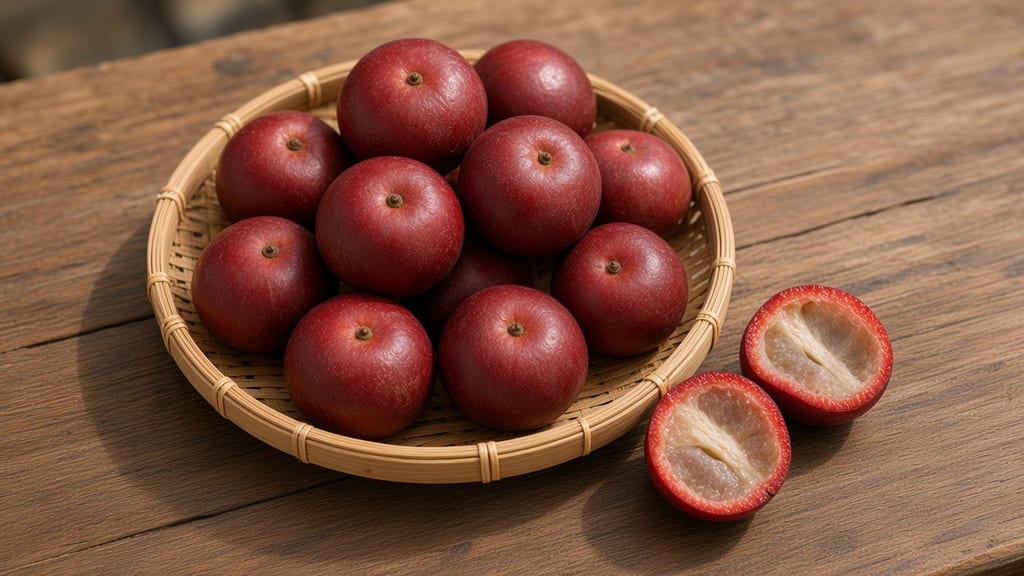
Kokum, the sour purple fruit of Garcinia indica, grows on India's west coast. Goa's apothecaries made a red syrup from it by 1890; Konkan households still draw amrut kokum with sugar alone.
 FermenteaWhere food goes to change
شربت · Sharbat · Sherbet · Kokum sharbat · Kokam sarbat · कोकम सरबत · Sharbat-e albaloo · شربت آلبالو · Sour cherry syrup
Two sharbats where sugar alone draws the juice: Marathi kokum syrup made in a jar, often in the sun, and Iranian sour cherry syrup drawn overnight in the fridge and boiled briefly.
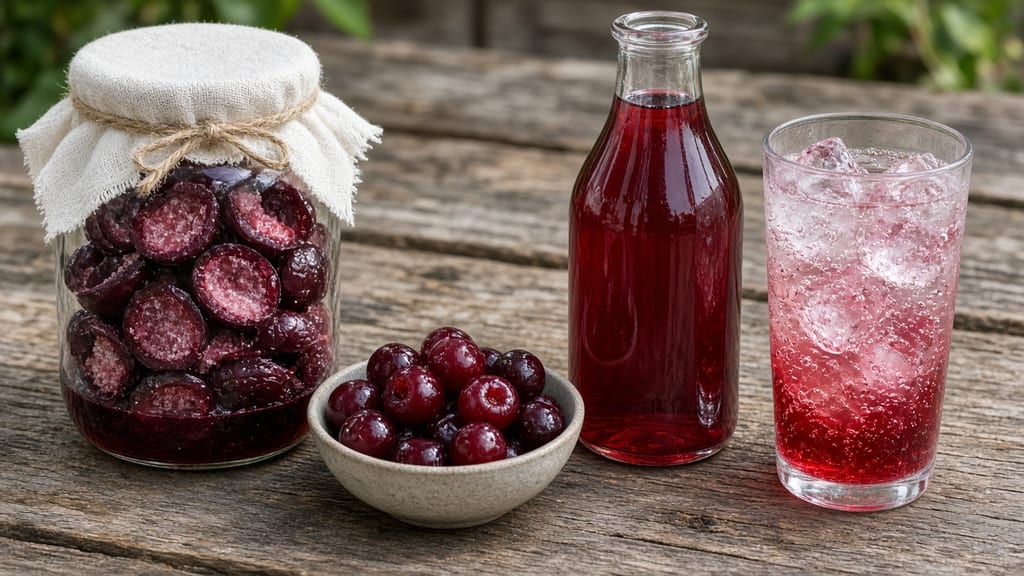
Sharbat, written شربت in Persian and सरबत in Marathi, is a sweet concentrate that you dilute with cold water. This page covers one branch of that big family: the sharbats where sugar, not water and not heat, pulls the juice out of the fruit. You pack raw fruit with sugar, wait, and the sugar draws out a deep red syrup.
Two recipes from two very different climates use this method. On the Konkan coast of India, kokum fruit halves are filled with sugar and left in a glass jar for a week or more, often in the sun. In Iran, sour cherries are layered with sugar in the refrigerator overnight, then boiled briefly and strained to make sharbat-e albaloo. The first is a folk method with no heat at all. The second adds a short boil. Both finish as a thick concentrate for cold water, and both work very well over ice with sparkling water.
The idea is the same in both kitchens. Sugar packed against cut fruit draws out its juice, and the juice dissolves the sugar into a syrup. Nobody adds water at the start. In the Konkan the fruit sits in sugar for days and the syrup is used raw. In Iran the cherries sit in sugar for 12 to 48 hours in the refrigerator, and a cup of boiling water and a short boil finish the job.
The University of Maine Cooperative Extension uses the same first step for its fruit shrub: equal parts fruit and sugar mashed in a sterilised jar and left in the refrigerator for 2 to 3 days. The Persian method matches that, cold and closed. The Konkan method is the outlier. It is done at room temperature or in strong sun, with a cloth over the jar, and it relies on a great deal of sugar and on keeping every drop of water out.
Kokum, called ratamba or amsul in Marathi, grows on the Konkan coast. Its salted, dried rind, also called amsul, goes into amti, vegetable dishes and chutney, and the fresh fruit makes this sharbat. The recipes here are Marathi home recipes from the community site Maayboli, a Marathi food blog, and the Marathi Srushti recipe collection.
Sulekha's recipe on Maayboli, from 2012, which she credits to her mother, is the clearest. Take 30 kokum fruits and 4 small bowls of sugar. Wash and dry the fruit, cut each one in half to make two cups, and take out the seeds. Fill every cup with sugar and stack them gently in a wide-mouthed glass jar, then spread any leftover sugar on top. Within half an hour red juice starts to appear. Put the jar out in the sun every day. After 7 to 8 days, when the sugar has dissolved, squeeze the halves gently and lift them out.
Purva's Food Funda, a bilingual Marathi and English blog, gives the same method with 30 fruits, a cotton cloth tied over the mouth of the jar, 8 to 10 days in strong sun and a daily stir. The result is a thick, dark pink-red syrup. The peels are squeezed hard and thrown away, and the syrup is strained into a clean, dry, airtight bottle. The two language versions on that page disagree on the sugar: the English text says 2 1/2 cups, the Marathi text 1 1/2 cups.
The kokum sources disagree on two points, and both matter.
The first is the sun. Maayboli and Purva put the jar in the sun every day. Marathi Srushti, with 1 kg of ripe fruit to 2 kg of sugar, says the opposite: after two or three days the juice begins to run, but do not put the jar out to heat in the sun. A 2005 post on the Maayboli forum by Karadkar keeps the jar closed and undisturbed for two days, with a tight lid and a cloth tied over it, and does not mention sun at all.
The second is the seeds. Most recipes discard them. Karadkar crushes them and adds their squeezed juice before the last layer of sugar, then keeps adding water to the seeds to extract the rest for sharbat, sol kadhi or amsul saar. A reader under Sulekha's recipe goes further: her grandmother told her the real flavour is in the seeds, and her first batch, made without them, was thrown away.
On one point they all agree. Karadkar puts it most firmly: no water must touch anything, not the fruit, the jar, the lid or the spoon, or the whole batch can go mouldy. That is why every recipe wipes the fruit dry and uses a dry glass jar. Karadkar also says never plastic.
The sun jar is a folk practice. No food safety authority we found has tested it, and the cooks who use it disagree about the sun itself. We give it here as Marathi households describe it, not as a tested method.
If you make it, follow the parts that every source shares: ripe, sound fruit, washed and wiped completely dry, a clean dry glass jar, plenty of sugar and no water. Marathi Srushti's version, kept out of the heat, is the cooler of the three. Once you have strained the syrup, store it the way the University of Maine Cooperative Extension stores fruit syrups and shrubs: in a sterilised jar, labelled and dated, in the refrigerator, and used within a month. Purva writes that a careful batch keeps for a year, but that is her experience, not a tested shelf life.
Sulekha serves 1 part syrup to 3 parts cold water with a pinch of salt. Marathi Srushti also adds salt, stirs and strains. The salt is the Konkan signature: it turns a sweet syrup into something closer to a savoury cooler. Over ice with sparkling water instead of still, it is one of the best drinks in this series.
Nothing is wasted. Sulekha salts the squeezed halves and dries them as amsul for amti, vegetable dishes and chutney. Purva remembers her mother sugaring and drying some peels as a snack so sour that it turned the children's nails and teeth yellow.
Albaloo is the sour cherry, and sharbat-e albaloo is Iranian sour cherry syrup. The method below follows the Persian recipe site Iran Cook, checked against the Orkideh Restaurant blog and Mochmag.
Use 1 kg sour cherries, 1.5 kg sugar and 1 cup of water. Iran Cook gives 1.5 to 2 kg sugar per kilo of cherries, but says that if you do not like it very sweet you can use the same weight of sugar as fruit, or 200 to 300 g more. Orkideh goes up to 2 kg sugar per kilo. How much you need depends on how sour your cherries are.
Wash the cherries and pull off the stalks, which would otherwise flavour the syrup. Take out the stones by hand, with a cherry pitter, or by pushing a drinking straw through each cherry. Layer the cherries and sugar in an enamel pot and put it in the refrigerator for at least 12 and at most 48 hours, until the cherries have released their juice.
Add 1 cup of boiling water and set the pot on medium heat over a heat diffuser. Bring it to the boil, stirring now and then to dissolve the sugar, but do not press the cherries: that darkens the syrup and clouds it. Skim off the pink foam as it rises. Orkideh lifts out the cherries after about 20 minutes and simmers the syrup on low heat for 15 minutes more, until it is thick and no longer drips easily from a spoon. Strain it while it is still warm through a fine sieve or a clean silk cloth. It thickens further as it cools.
Colour is the point of sharbat-e albaloo, and all three Persian sources spend their tips on it. Do not press the fruit. Do not boil too long: Iran Cook says long boiling darkens the syrup and spoils the taste, and Orkideh says it turns thick and brown. Early-season cherries give a light, sour syrup; ripe ones give a darker, sweeter one.
Watch for sugar crystals. Iran Cook says hard boiling or a very sweet syrup can crystallise, and suggests a tablespoon of lemon juice in the last minutes. If it crystallises anyway, add a little boiling water and boil again. Orkideh says that sour cherries are sour enough not to need lemon. Mochmag adds half a teaspoon of citric acid.
Mochmag uses a different method: the cherries, stones and all, are boiled in 5 cups of water for 15 to 20 minutes without stirring, strained, and the juice is then boiled with 1.4 kg sugar for 25 to 30 minutes. That is an extraction by water and heat, not by sugar, and it belongs with the cooked fruit syrups elsewhere in this series.
The cherries left behind are not waste. Iran Cook and Orkideh both turn them into jam, and Iran Cook into albaloo polo, the Persian rice dish with sour cherries. Orkideh finishes the syrup with two drops of rose water or a little vanilla; Iran Cook says vanilla is possible but not necessary, so taste first.
Iran Cook also allows the stones to stay in, with one adjustment: about 200 g of a kilo of cherries is stone, so reduce the sugar a little. We follow the pitted version, which all three sources give as standard.
Store both syrups in clean glass bottles, labelled and dated, in the refrigerator, and use them within a month, as the University of Maine Cooperative Extension advises for homemade fruit syrups and shrubs. Pour with a clean, dry spoon or jug each time.
The home sources are more generous. Iran Cook says sharbat-e albaloo keeps for two years in the refrigerator or freezer, and Purva says kokum syrup keeps a year. Neither gives a test behind the claim. Iran Cook itself warns that syrup that has not thickened properly may go mouldy or sour, and that you can reboil it a day or two later if it seems thin. Iran Cook mentions the freezer as well as the refrigerator, which is the better place for anything you will not use within the month.
Both are concentrates. For kokum, start with Sulekha's 1 part syrup to 3 parts water, with a pinch of salt, and use cold sparkling water. For sour cherry, start with a few tablespoons of syrup in a tall glass of ice and top up with soda; the colour alone is worth it.
The cold sugar draw is the same family as Korean maesil-cheong and yuja-cheong on our cold sugar syrups page, where green plums and citrus sit in sugar for weeks. The Persian cherry method, cold first and then boiled, mirrors the UMaine shrub on our vinegar syrup page, where fruit and sugar sit in the refrigerator before the vinegar goes in.
Other sharbats, such as rose, bael, khus and nannari, are made by other methods, from steeping roots overnight to mashing fresh pulp in water, and belong on other pages in this series.
Mould. Karadkar warns that any contact with water can make the whole kokum batch mouldy, and Iran Cook warns that a sour cherry syrup that has not thickened properly may go mouldy or sour. Discard any batch with mould.
Storage. Refrigerate both syrups once strained and use them within a month, following the University of Maine Cooperative Extension.
The sun jar. Sun-drawing kokum syrup is a folk practice with no tested safety data, and the sources disagree about it. Marathi Srushti tells you not to heat the jar in the sun. If you choose to make it, keep everything dry and refrigerate the syrup as soon as you strain it.
Sun: Maayboli and Purva put the kokum jar in the sun every day; Marathi Srushti says not to heat it in the sun.
Seeds: most kokum recipes discard them; Karadkar and a Maayboli reader say the seed juice carries the flavour.
Sugar: Purva's English and Marathi texts give different amounts; Iran Cook ranges from equal weight to double; Orkideh uses double.
Keeping: home sources say one to two years; the University of Maine Cooperative Extension says one month in the refrigerator.
Scaling: linear
Homemade fruit syrups and shrubs are stored in the refrigerator and used within a month.
Hazard sourceStore in a sterilised jar, labelled and dated, in the refrigerator.
Control sourceDraw fruit with sugar in the refrigerator.
Control sourceRefrigerate once strained and use within a month.
The kokum sun jar is untested folk practice; keep it completely dry and discard anything mouldy.
Kokum sugar-jar syrup in Marathi home recipes.
Sharbat-e albaloo, sour cherry syrup.
Kokum, the sour purple fruit of Garcinia indica, grows on India's west coast. Goa's apothecaries made a red syrup from it by 1890; Konkan households still draw amrut kokum with sugar alone.
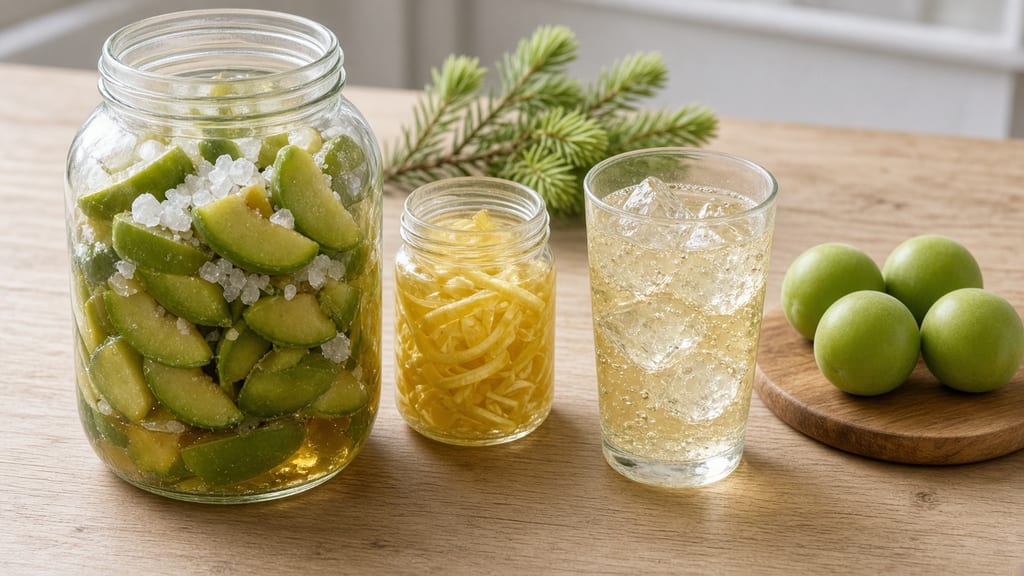
Syrups made without heat by packing fruit or shoots in sugar: Korean maesil-cheong with the ministry's stone-removal steps, frozen Japanese ume syrup, yuja-cheong and Polish pine-shoot syrup.
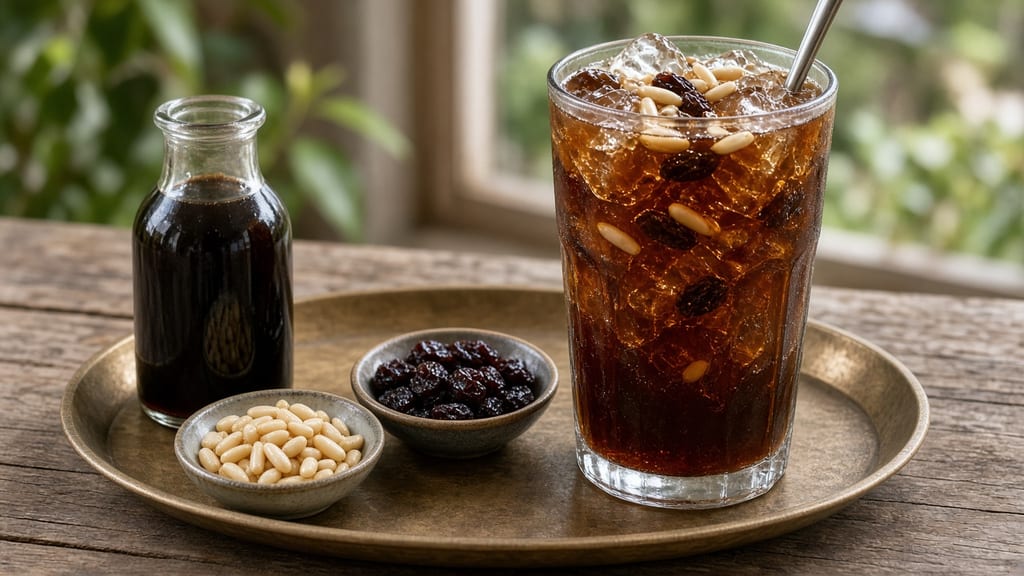
The Levant's Ramadan syrup: grape and date molasses blended into a sugar syrup in 5 minutes, smoked with mastic or cinnamon, finished with rose water and served over ice with pine nuts and raisins.
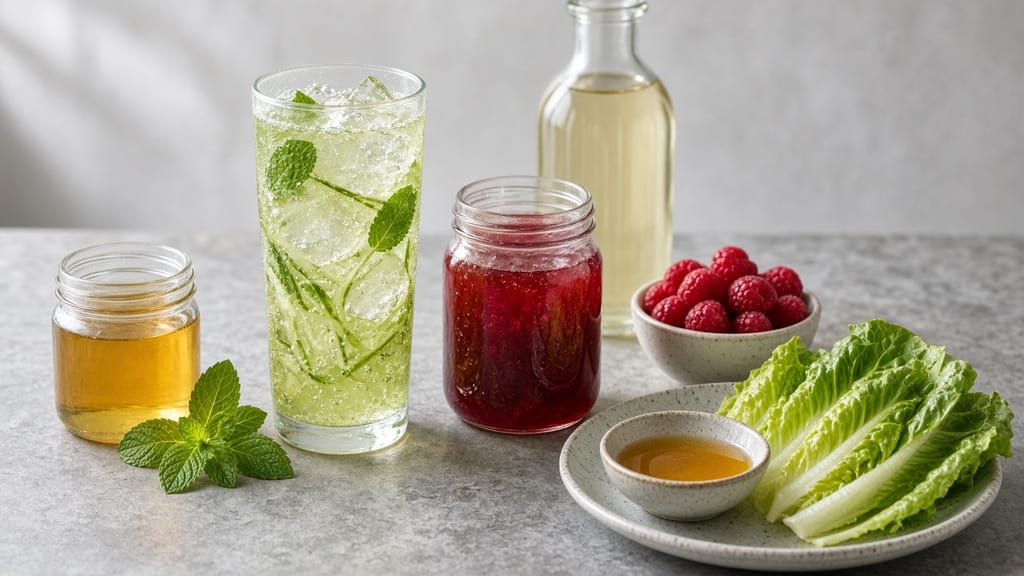
Vinegar syrups in two parts: the 13th-century Andalusian sikanjabin quoted in full, then a modern cold fruit shrub and a mint sekanjabin kept in the refrigerator.
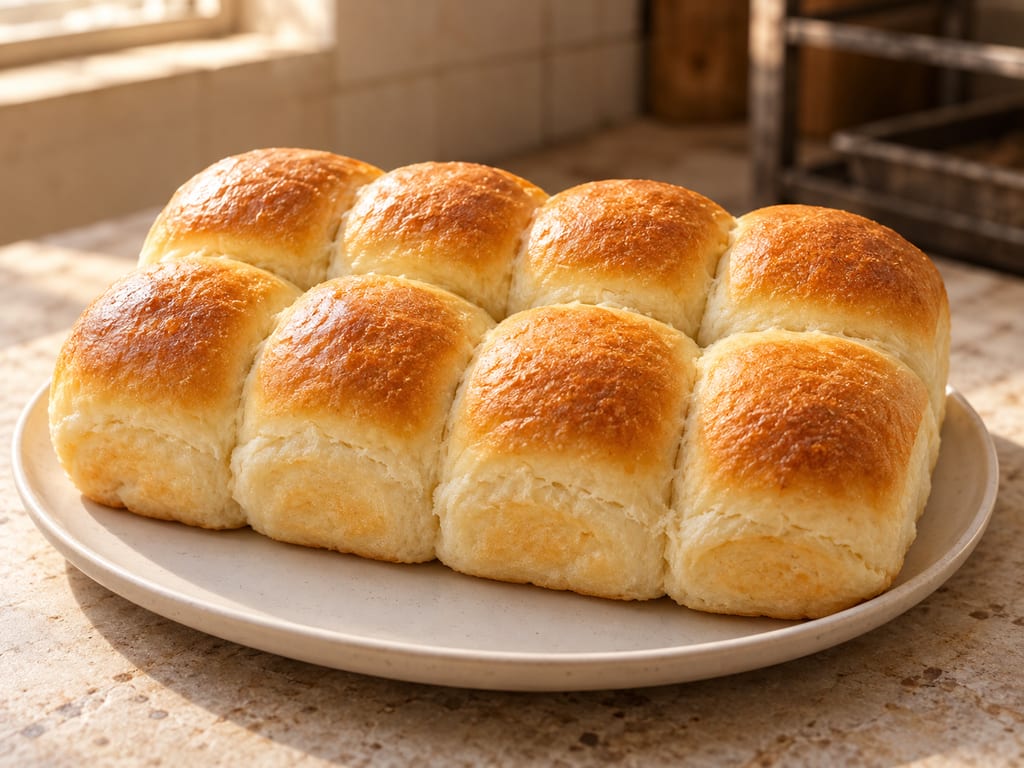
Soft Mumbai-style wheat rolls made with an instant-yeast sponge and baked together. This home batch makes eight.
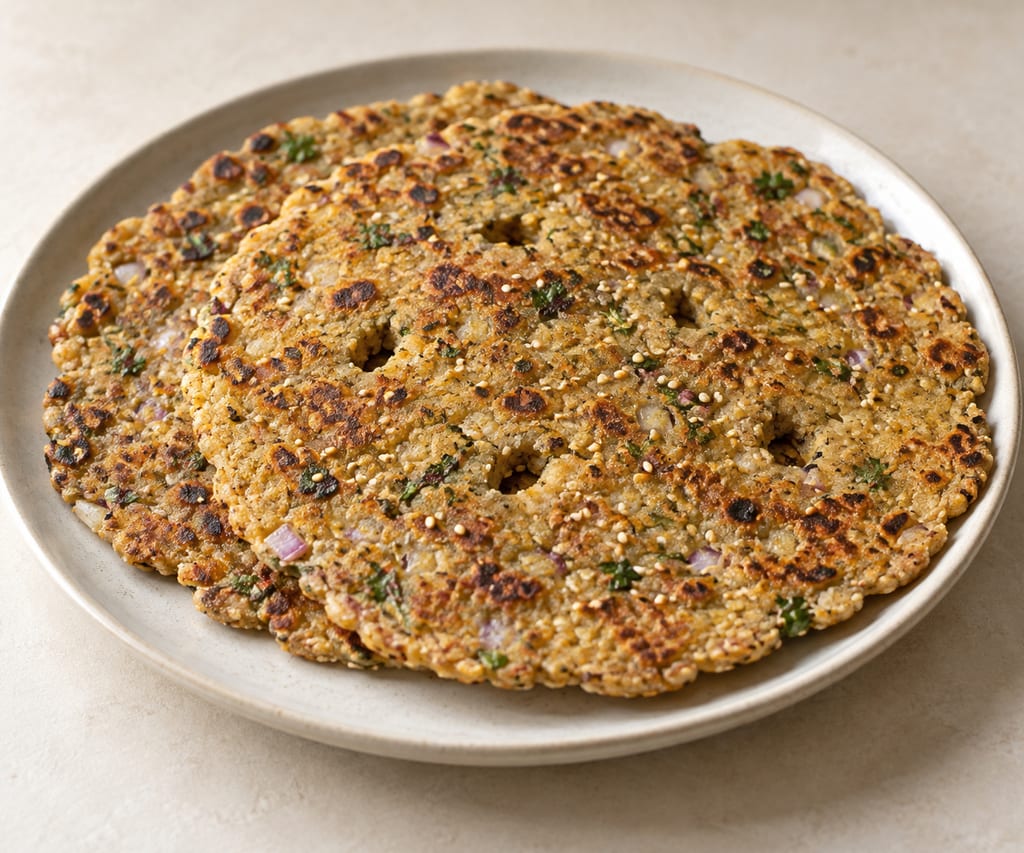
A Maharashtrian multigrain flatbread, patted by hand and cooked on a hot griddle. This home version mixes five flours with onion, sesame and spices.
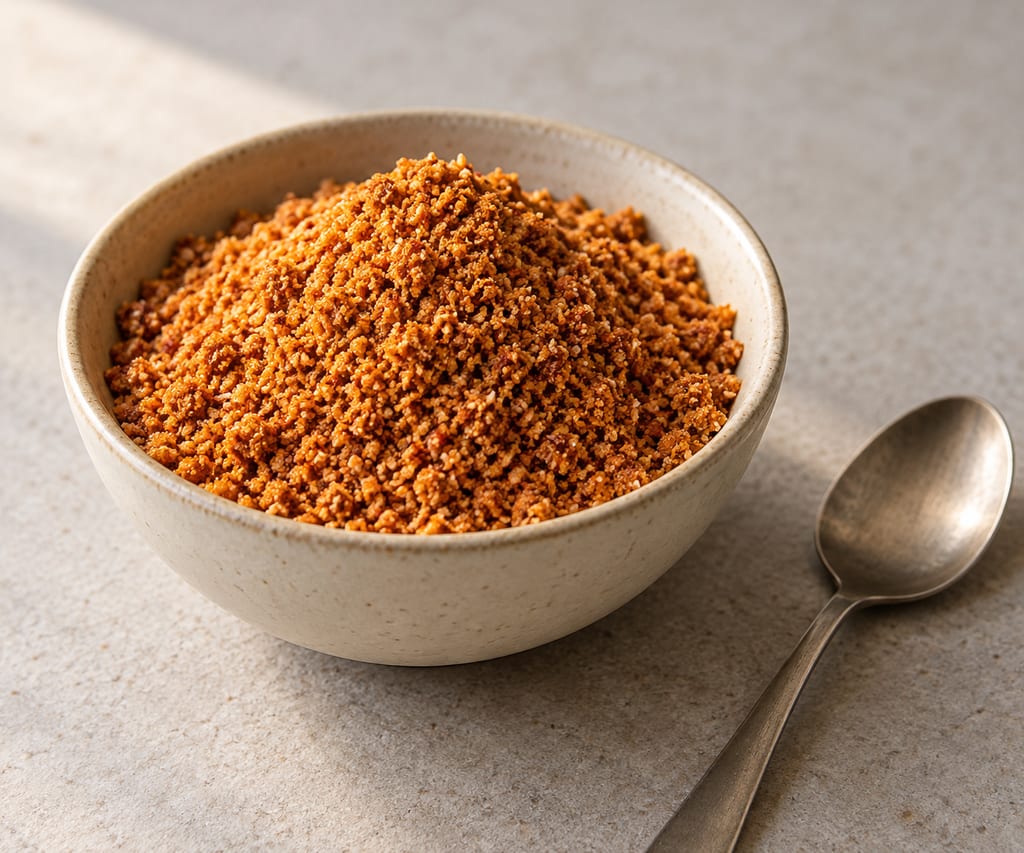
A Maharashtrian dry chutney of slowly roasted sesame and coconut ground fine with garlic, chilli powder, cumin, tamarind and sugar, kept in a bottle and eaten as a winter side.
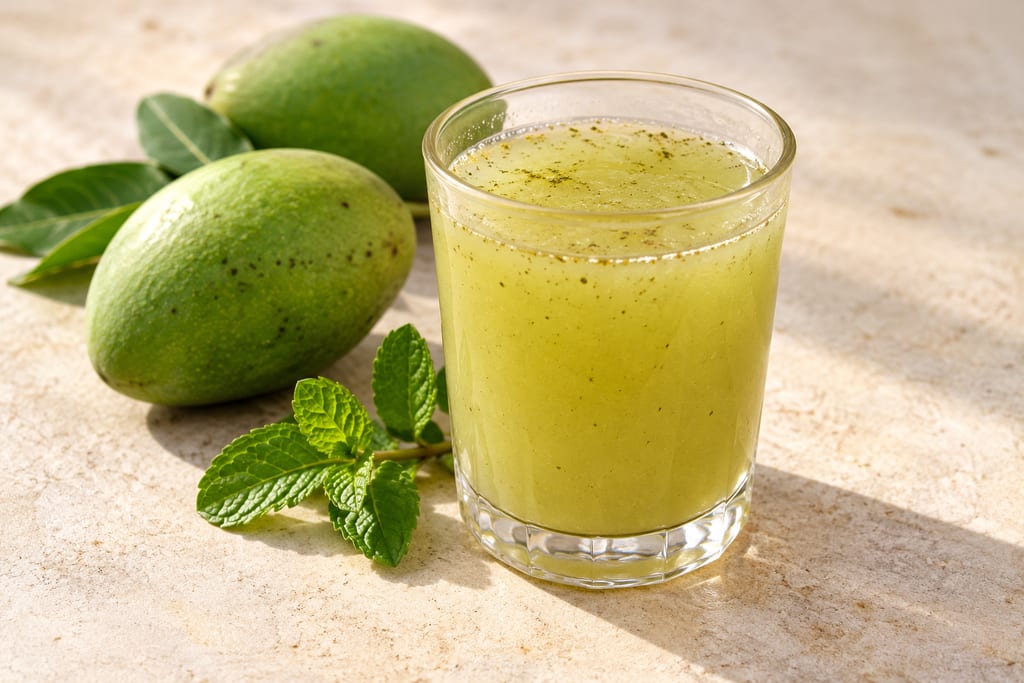
Aam panna is a tart Indian summer drink made by cooking unripe green mango until its flesh softens, then blending the pulp with sweetener, salt and spices and diluting it with water.
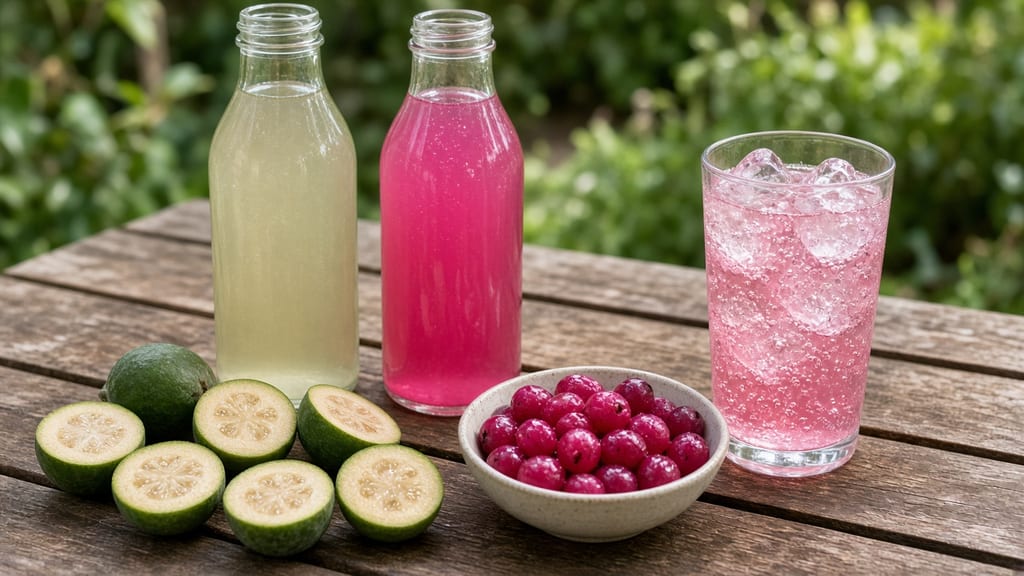
New Zealand feijoa cordial, from the flesh or just the skins, and Australian lilly pilly cordial: fruit, water and sugar heated briefly, strained, and sharpened with lemon and tartaric or citric acid.
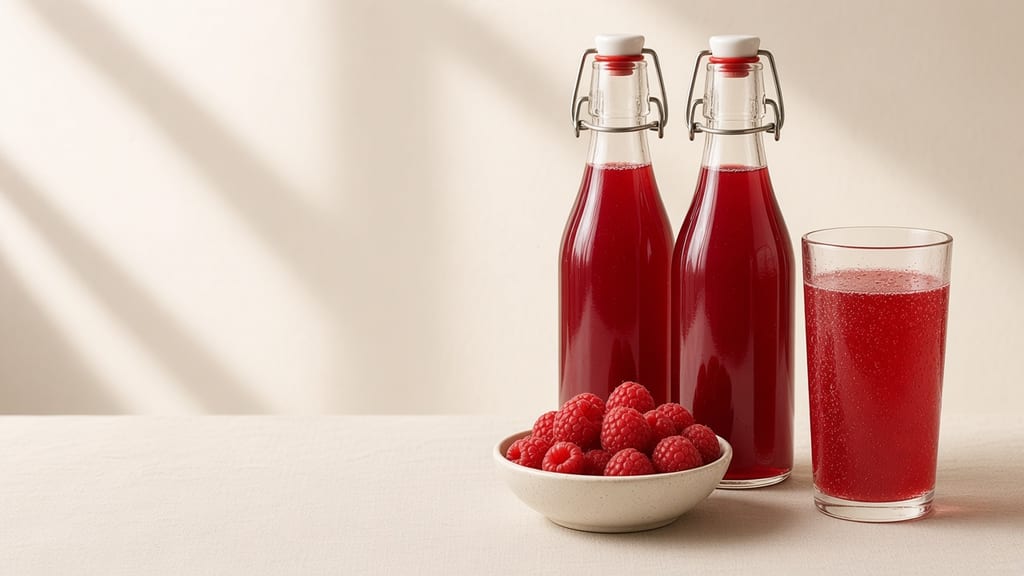
Clear fruit syrup from cooked, dripped berry juice boiled with sugar and canned in a water bath; one tested method for raspberry, strawberry, blueberry, cherry, grape and blackberry.
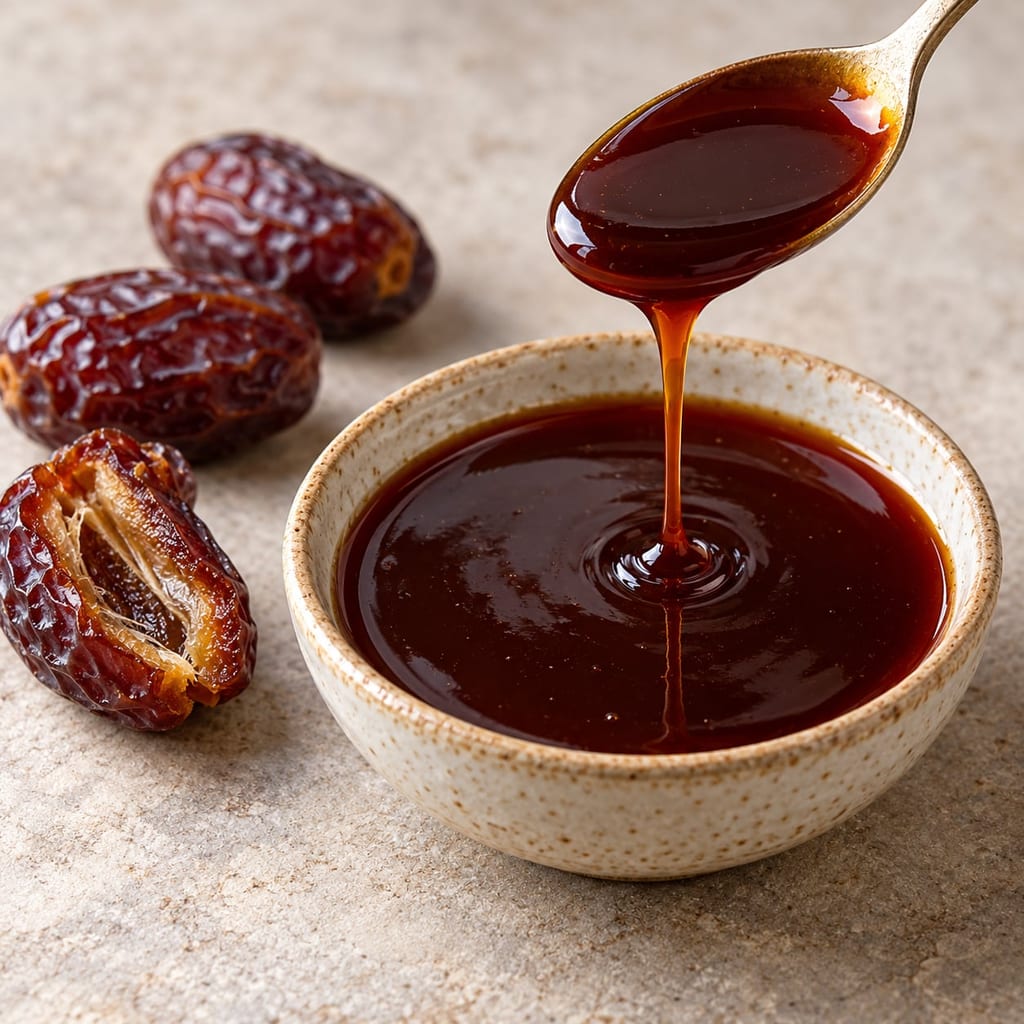
A thick, dark, very sweet syrup made from dates, known as dibs, rub, silan or date molasses. It sweetens tahini and desserts and glazes or sauces savoury dishes across the Middle East and North Africa.
Elderflower heads steeped for one to three days in a lemony sugar syrup, strained and kept cold; the same infusion method flavours syrups with mint, basil, thyme and other herbs.
Boiled syrups from hard ingredients: a refrigerated ginger syrup, Trinidad mauby from tree bark, Tamil nannari root syrup, Peruvian purple-corn concentrate and a Turkish spiced sherbet.
The registered Hatay method presses pomegranate arils and slowly concentrates the strained juice. Its 100 kg source batch and experienced-producer endpoint are retained; no home-scale time or shelf-life is inferred.
Sugar syrups flavoured by holding botanicals, sugar and water in sealed bags in a 135°F (57°C) water bath for an hour, then cooling and refrigerating; several can share one bath.
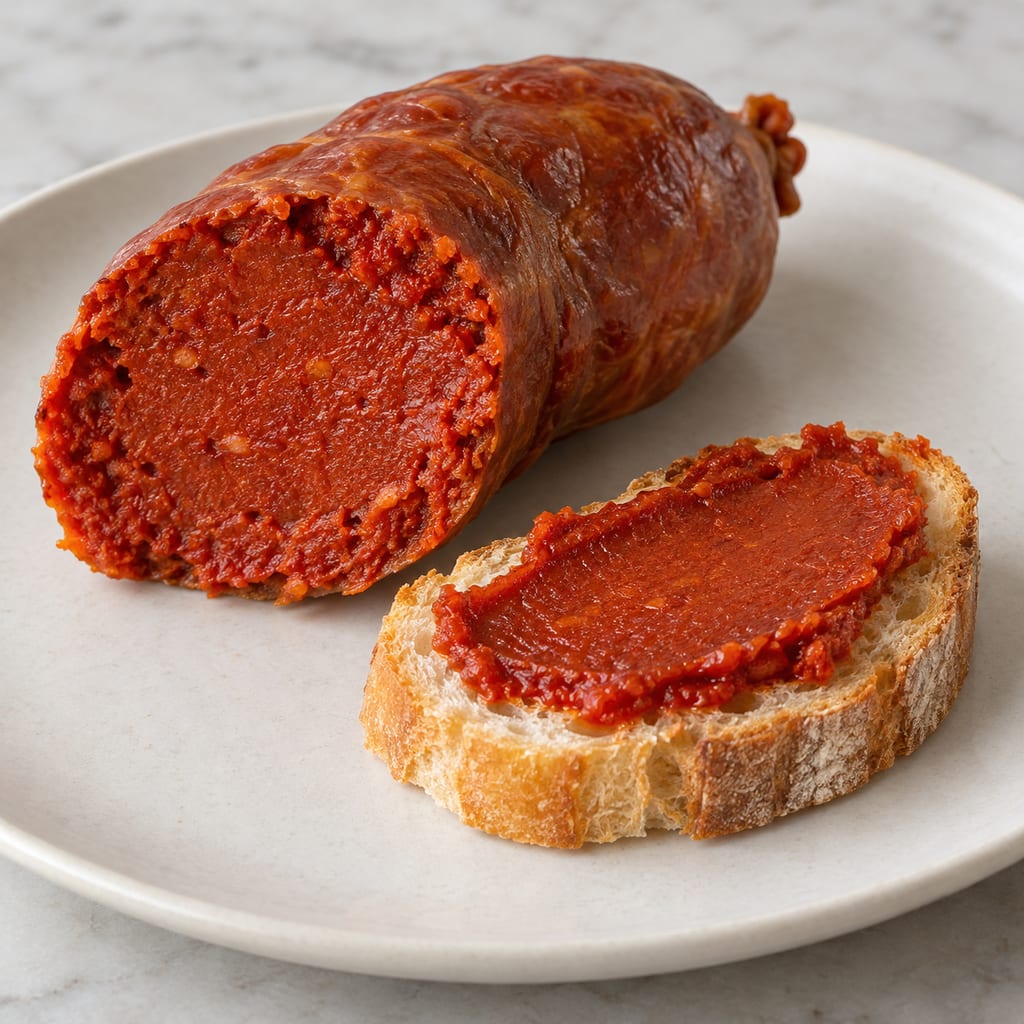
Soft, spreadable Calabrian pork sausage made with a great deal of red chilli and fatty pork, stuffed into natural casings, sometimes smoked and matured while staying soft.
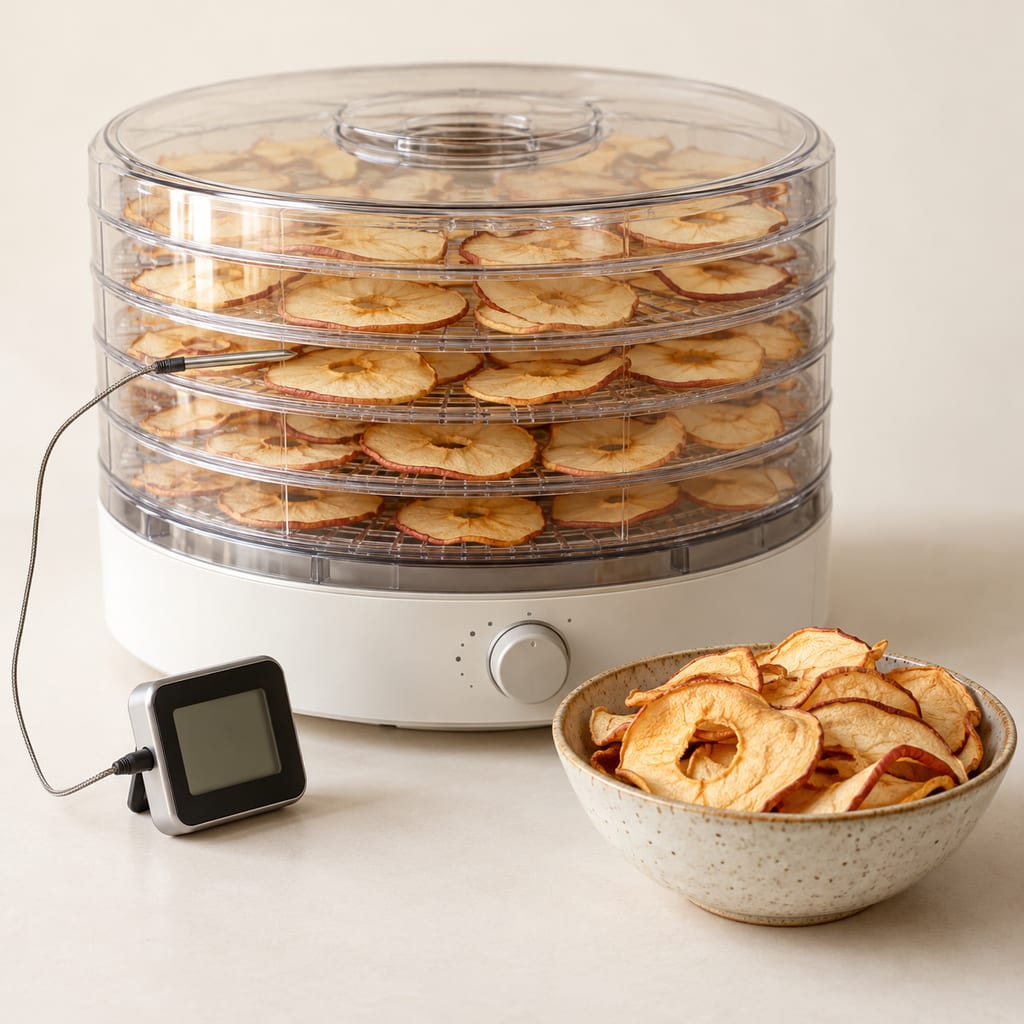
A way to add independent temperature logging to an existing food dehydrator without changing its built-in controls or protections. It is a monitoring method, not a rewiring plan.
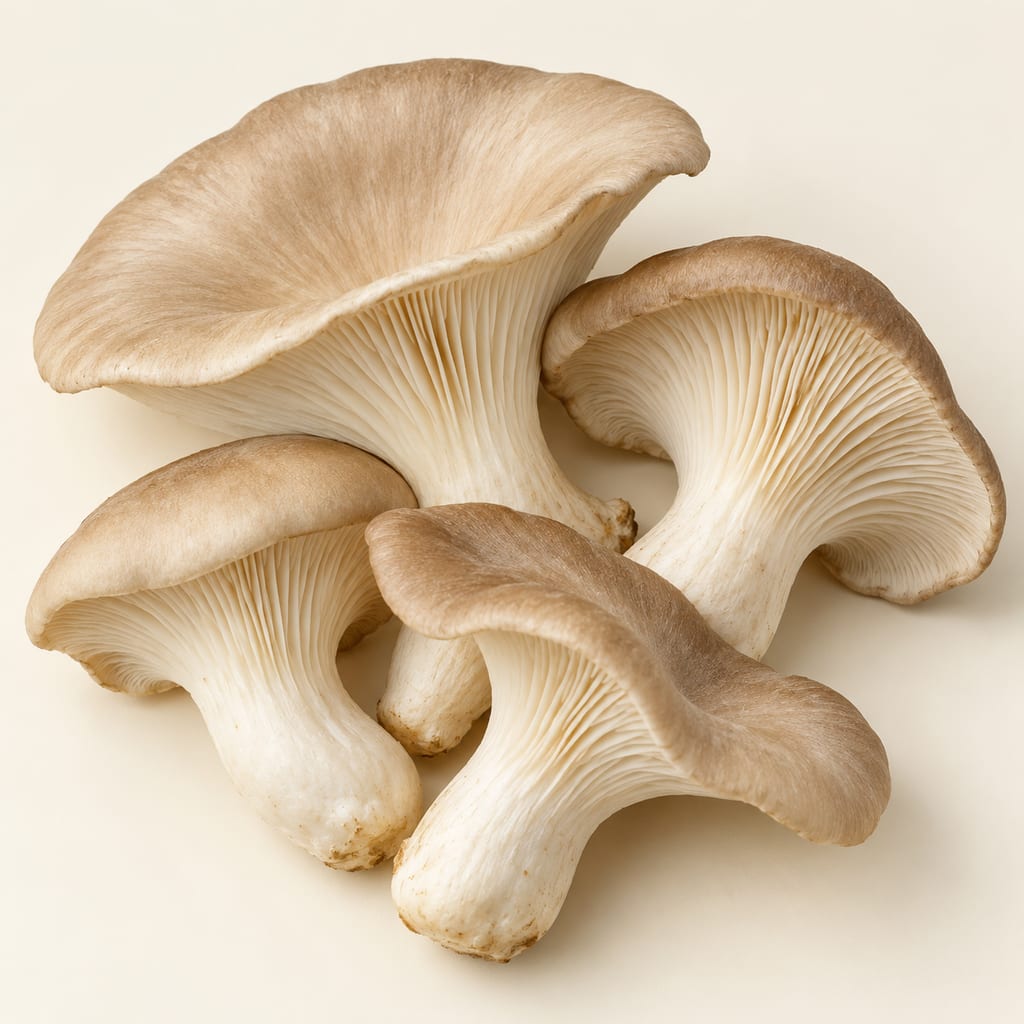
Pleurotus cystidiosus is the abalone mushroom, a cultivated oyster-type fungus with dark brown caps that grows more slowly and is more demanding than other Pleurotus species.
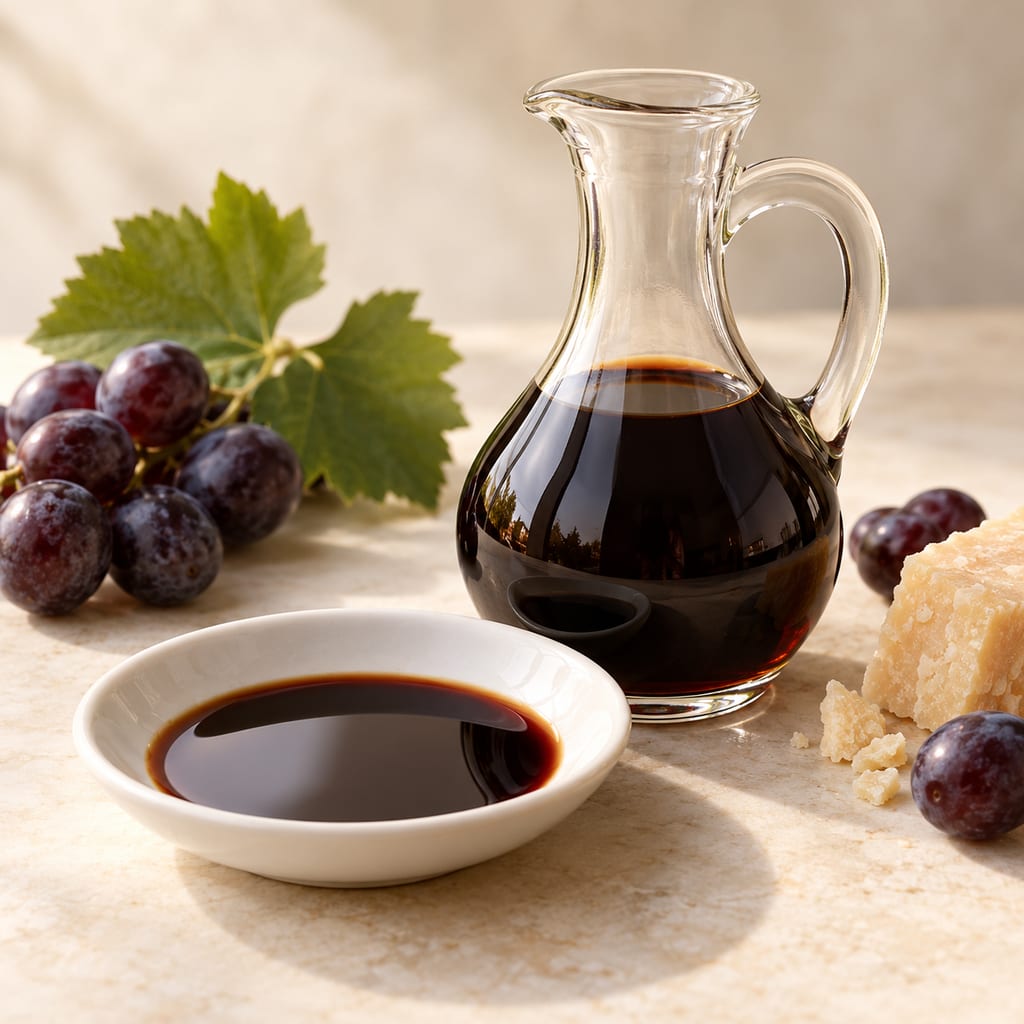
A dark, balanced vinegar from Emilia-Romagna made by combining cooked or concentrated grape must with wine vinegar, then acetifying and refining it in wood under a protected specification.
A living dairy inoculum that starts controlled cream fermentation, developing acidity and aroma before sour cream or cultured butter is finished.
A small electric incubator holds jars at a selected temperature for yogurt and other documented warm food preparations. Controls, capacity and vessel arrangement vary by model.
Adygean salt is a seasoned table salt associated with Adygea and the wider North Caucasian culinary tradition. Salt is blended with garlic and a variable selection of herbs and spices; the exact mix depends on the named style and maker.
The African Caesar-group mushroom, Amanita masasiensis, is a wild ectomycorrhizal species of central and southern African woodlands, eaten locally. The genus contains deadly poisonous species, so identification needs care.
No community contributions have been published for this entry yet.
Sign in to contribute. Published comments and photos are free to read.
Maayboli, recipe by सुलेखा (Sulekha), 18 May 2012, with reader commentsMethod · Serving
कोकम फळाचे /रातांबे [आमसुल] सरबत30 kokum fruits, 4 vati (small bowls) of sugar, a wide-mouthed glass jar; recipe credited to the author's mother.
Wash and wipe the fruit, cut each in half into cups, remove the seeds, fill each cup with sugar and stack them gently in the jar; spread leftover sugar on top.
Put the jar in the sun every day; red juice appears within half an hour; the sugar takes about 8 days to dissolve, faster in the sun.
After 7 to 8 days squeeze the halves gently, salt and dry them for amsul to use in amti, vegetables or chutney.
Serve 1 part juice to 3 parts cold water with a little salt.
A reader comment says the real flavour is in the seeds, and that a first batch made with seeds removed was thrown away on the grandmother's advice.
A 2022 reader asks whether the syrup spoils if it cannot be put in the sun every day; the thread does not give a tested answer.
Cited in: What this recipe is; Same process, two climates; Part one: kokum sharbat, the Konkan sun jar; Three Marathi cooks, three answers on sun and seeds; Serving kokum sharbat; Using them in fizzy water; Where the sources disagree
Maayboli Hitguj forum, post by Karadkar, 19 December 2005Method · Safety
कोकम सरबत (discussion thread)Kokum syrup is not instant; it needs at least 2 to 3 days to mature.
Use a dry glass jar, never plastic; layer salt and sugar, then 3 to 4 kokum shells, and repeat; before the last layer add the juice squeezed from the crushed seeds (juice only, not seeds).
Wipe the lid, close it tightly, tie a cloth over it, and leave the jar undisturbed for 2 days; then stir with a dry spoon and take out the juice.
Water must not touch anything at any point, or the whole batch can go mouldy.
Keep adding water to the seeds to extract the rest of the juice for sharbat, sol kadhi or amsul saar; kokum is sticky, so do not grind it in a mixer.
Cited in: Same process, two climates; Three Marathi cooks, three answers on sun and seeds; How we treat the sun jar; Problems and safety; Where the sources disagree
Purva's Food Funda, 30 April 2015 (Marathi and English)Method · Storage
Kokam/Kokum Sharbat/Juice: Homemade Kokam Sharbat Syrup (कोकम सरबत/अमृत कोकम)English text: 30 kokum fruits, 2 1/2 cups sugar; the Marathi text on the same page gives 1 1/2 cups sugar.
Halve the fruit and scoop out the white inner flesh, fill the cups with sugar, arrange them in a clean dry jar with sugar at the bottom and on top, tie a cotton cloth over the mouth and keep in strong sun for 8 to 10 days, stirring daily.
After 8 to 10 days the syrup is thick and dark pink-red; squeeze the peels hard, discard them, strain and store in a clean, dry, airtight bottle.
The author says it keeps for a year if handled carefully.
The author remembers her mother sugaring and drying some peels as a very sour snack that turned nails and teeth yellow.
Cited in: Part one: kokum sharbat, the Konkan sun jar; Three Marathi cooks, three answers on sun and seeds; How we treat the sun jar; Serving kokum sharbat; Storing the syrups; Where the sources disagree
Marathi Srushti, Gavogavchi Khadyayatra, 30 April 2016Method
कोकम सरबत (Kokam Sarbat)1 kg ripe kokum fruit to 2 kg sugar.
Halve, remove the seeds, fill the cups with sugar and pack them into a glass jar coated inside with sugar; spread leftover sugar on top.
After two or three days the juice begins to run; do not put the jar out to heat in the sun.
To serve, take out as much juice as needed, add water and a little salt, stir and strain.
Cited in: Part one: kokum sharbat, the Konkan sun jar; Three Marathi cooks, three answers on sun and seeds; How we treat the sun jar; Serving kokum sharbat; Problems and safety; Where the sources disagree
Iran Cook (irancook.com)Method · Storage
طرز تهیه شربت آلبالو خانگی خوشمزه مرحله به مرحله1 kg sour cherries, 1.5 kg sugar, 1 cup water; use 1.5 to 2 kg sugar per kg of cherries, or as little as the same weight for a sourer syrup.
Wash, remove stalks, and remove stones by hand, with a pitter or by pushing a straw through each cherry.
Layer cherries and sugar in an enamel or zinc pot and refrigerate for at least 12 and at most 48 hours.
Add 1 cup boiling water, bring to the boil on medium heat with a heat diffuser, stirring gently without pressing the cherries, which darkens the colour.
Skim the pink foam; boil 5 to 10 minutes more until thickened; strain while warm through a metal or plastic sieve or clean silk cloth; it thickens as it cools.
Boiling hard can make it crystallise; a tablespoon of lemon juice in the last minutes helps prevent this; if it crystallises, add a little boiling water and reboil.
Cooking time starts at half an hour; long boiling darkens it and spoils the taste; early-season cherries give a light, sour syrup, ripe ones darker and sweeter.
If the syrup has not thickened properly it may go mouldy or sour; it can be reboiled a day or two later.
Stems left on flavour the syrup; you can leave the stones in, but then use a little less sugar because about 200 g of a kilo is stone.
Leftover cherries can be used for jam or albaloo polo; store in glass bottles; the page says it keeps for two years in the refrigerator or freezer.
Cited in: What this recipe is; Same process, two climates; Part two: sharbat-e albaloo, Iranian sour cherry syrup; Getting a clear, bright syrup; The cherries and the scent; Storing the syrups; Using them in fizzy water; Problems and safety; Where the sources disagree
Orkideh Restaurant blogMethod
طرز تهیه شربت آلبالو بدون مربا2 kg sugar, 1 kg pitted sour cherries, 1 glass water; sugar to taste.
Layer cherries and sugar in a pot and refrigerate 12 to 24 hours to draw the juice.
Add a glass of water, heat gently to the boil, skim the foam; after about 20 minutes lift out the cherries with a slotted spoon.
Simmer the syrup 15 minutes more on low heat; it is ready when it is thick and does not drip easily from a spoon; cool, strain through a fine sieve and refrigerate.
Do not press the cherries, for a better colour; no lemon juice is needed because the cherries are sour; two drops of rose water or a little vanilla at the end; over-boiling makes it thick and brown.
Cited in: Part two: sharbat-e albaloo, Iranian sour cherry syrup; Getting a clear, bright syrup; The cherries and the scent; Where the sources disagree
Mochmag (mochmag.ir)Method
طرز تهیه شربت آلبالو خانگی خوشمزه و شفاف1 kg sour cherries, 1.4 kg sugar, 5 cups cold water, 1/2 tsp citric acid, 1/4 tsp vanilla.
Cherries need not be pitted; boil them in the water 15 to 20 minutes without stirring, then strain off the juice.
Boil the juice with the sugar 25 to 30 minutes, skimming, until thick; add the citric acid; cool and bottle in a clean, completely dry jar.
Cited in: Part two: sharbat-e albaloo, Iranian sour cherry syrup; Getting a clear, bright syrup
University of Maine Cooperative ExtensionSafety · Method
Drinks from the GardenFruit shrub: mash equal parts fruit and sugar, put in a sterilised jar, and let sit in the refrigerator for 2 to 3 days, stirring and mashing daily; strain.
Flavoured simple syrup and shrub: label, date and store in a sterilised jar in the refrigerator for up to 1 month.
Cited in: Same process, two climates; How we treat the sun jar; Storing the syrups; Cousins on this site; Problems and safety; Where the sources disagree
