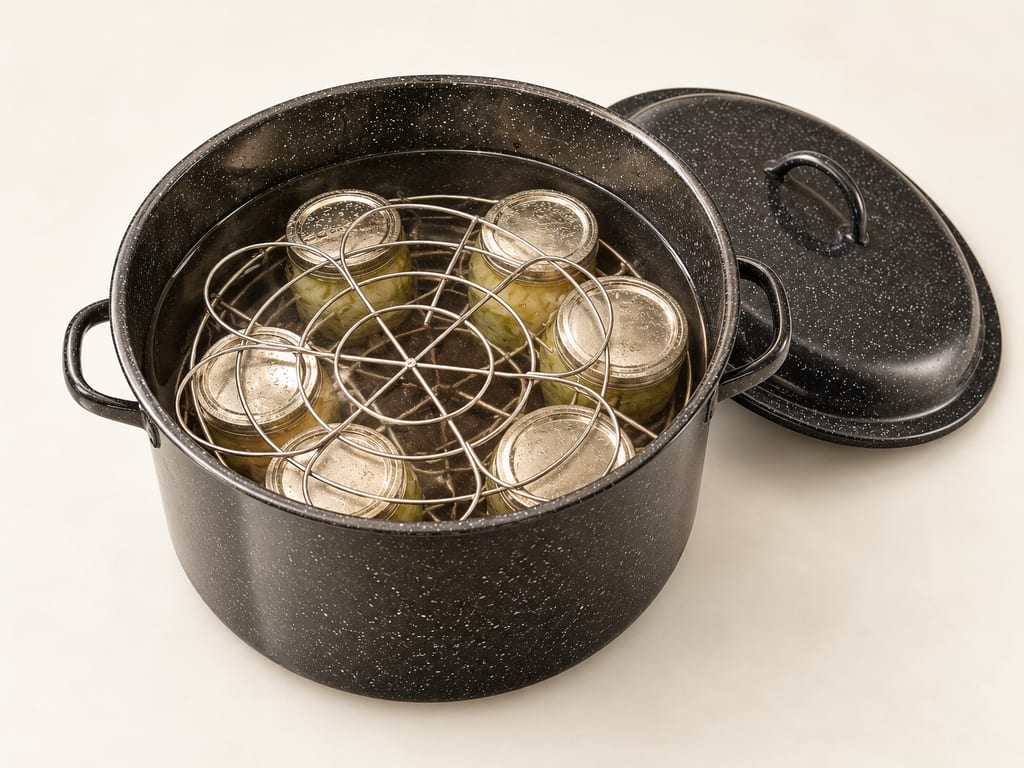
Boiling-water canner
A deep, lidded pot with a removable rack processes jars beneath boiling water. It is intended for foods with tested boiling-water processes; low-acid foods require pressure canning.
 FermenteaWhere food goes to change
Fruchtsirup · Berry syrup · Raspberry syrup · Himbeersirup · Fruit cordial
Clear fruit syrup from cooked, dripped berry juice boiled with sugar and canned in a water bath; one tested method for raspberry, strawberry, blueberry, cherry, grape and blackberry.
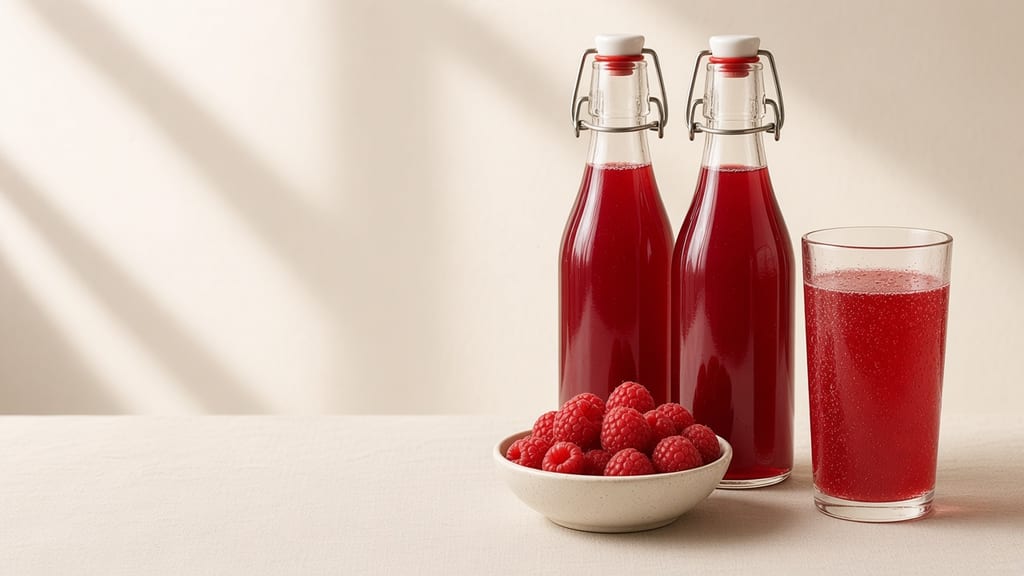
This is the master method for clear fruit syrup made from cooked juice: crush the fruit, cook it briefly, let the juice drip through a cloth, boil the juice with a little more than its own volume of sugar, then fill hot jars and process them in a boiling-water canner. The same steps work for every fruit in the tested list, so one page covers raspberry, strawberry, blueberry, cherry and grape, with blackberry from a second tested recipe.
The finished syrup is thick, bright and very sweet. Stirred into sparkling water it makes a fruit soda; poured straight it is a topping for ice cream or pancakes. The quantities follow the National Center for Home Food Preservation (NCHFP), which publishes them for shelf-stable jars.
The NCHFP berry syrup recipe names blueberries, cherries, grapes, red or black raspberries and strawberries, and tells readers to use the directions only with those fruits. Clemson Extension's smaller berry syrup adds blackberry, with corn syrup and bottled lemon juice in the formula. Those six fruits can go on a shelf after processing.
Fruits outside the list still make good syrup with the same cooking and dripping, but no tested processing time exists for them. Blackcurrant, redcurrant, gooseberry and mixed-berry syrups belong in the refrigerator or the freezer. Elderberry has its own rules, set out below, because the raw berries carry toxins and some kinds are low in acid.
In German the product is Fruchtsirup or, for the commonest flavour, Himbeersirup. In Czech it is ovocný sirup, and Czech law allows the word sirup only for a drink concentrate with more than 50% natural sweeteners by weight. American canning guides call it berry syrup and present it as a topping.
Austria writes its syrup rules into the national food book. Codex chapter B 6 sets a minimum of 55 °Brix dry matter for every syrup and 45 °Brix for herb syrups, and asks for at least 10% fruit in a Fruchtsirup. A label that claims traditional Austrian Codex quality must contain 33% fruit. The chapter also records two habits: colouring Himbeersirup, and souring syrups with tartaric, citric or malic acid.
The chapter asks every bottle meant for dilution to print a mixing instruction, and its own example is 1 + 6: one part syrup to six parts water.
Many Central European households extract the juice with a steam juicer. The Saftborn, invented in 1949 by Wilhelm Wagner GmbH & Co. KG in Esslingen, boils water in a base pan, sends the steam up through a basket of fruit and collects the juice in a ring-shaped pan that drains through a clamped hose. A Finnish women's organisation brought the German model to Finland in the 1950s, where it became the Mehumaija.
Sugar is the preservative. The NCHFP batch uses 6¾ cups of sugar for 4½–5 cups of juice, roughly 1.35 kg of granulated sugar to 1.1 litres of juice. That puts the finished syrup at about 55% sugar before the fruit's own sugar is counted, close to the Austrian 55 °Brix floor. Tyrolean farm courses work at the same level: 1.3 kg sugar per litre of fresh juice.
Tyrolean advisers report that lower-sugar versions of old recipes mould in the bottle or start to ferment soon after opening. Sweetener swaps fail the same way: the NCHFP warns that granular sucralose does not preserve the way sugar does.
Citric acid is a flavouring here. It sharpens the taste and keeps red syrups bright by lowering the pH, but it does not make an under-sugared syrup keep. Clemson's tested formula adds 1 tablespoon of bottled lemon juice per batch; the NCHFP formula adds none.
A wide stainless steel or enamel pan, a colander, a damp jelly bag or a double layer of cheesecloth, a ladle, a skimmer, half-pint (about 250 ml) or pint (about 500 ml) canning jars with new two-piece lids, a jar lifter and a boiling-water canner or deep pot with a rack. A steam juicer can replace the pan and jelly bag for the juice stage. A refractometer reading in °Brix is optional and cheap; it lets you check the sugar level of a finished batch.
Measure 6½ cups (about 1.5 litres by volume) of fresh or frozen fruit from the tested list. Wash it, hull strawberries, pit cherries if you like and remove stems. Crush the fruit in the pan, bring it to the boil and simmer until soft, 5–10 minutes. Berries need no added water beyond what stops them scorching. Longer boiling destroys colour and fresh flavour; Clemson keeps its berries at a simmer for only 1–2 minutes.
Tip the hot fruit into a colander set over a bowl and let it drain until cool enough to handle. Then pour the collected juice through a damp jelly bag or two layers of cheesecloth. Let it drip; squeezing the bag clouds the syrup. Discard the dry pulp. Expect 4½–5 cups (about 1.1 litres) of juice.
Very juicy berries can be crushed and dripped raw, without heating. A steam juicer does this stage without a bag: steam from the base pan bursts the fruit in the basket and the juice runs off through the hose. It runs at about 100 °C, and Austrian advisers find it dulls aroma and colour compared with pressing.
Combine the juice with 6¾ cups of sugar in a large pan. Bring to the boil, stirring until the sugar dissolves, and simmer for 1 minute. Take the pan off the heat and skim the foam.
For a syrup with whole fruit in it, keep back 1–2 cups of the raw fruit, add it to the juice and sugar, and simmer as above.
Ladle the hot syrup into clean, hot half-pint or pint jars, leaving ½ inch (about 1.25 cm) of headspace. Wipe the rims, fit the lids and process in a boiling-water canner: 10 minutes at 0–1,000 ft (up to about 300 m), 15 minutes at 1,001–6,000 ft, 20 minutes above 6,000 ft (about 1,830 m). The batch fills about 9 half-pint jars.
Lift the jars out, let them cool undisturbed and check that every lid has sealed. Store sealed jars in a cool, dark cupboard. Put any unsealed jar in the refrigerator and use it first.
For one or two jars, Clemson's version uses 1¼ cups of blackberry, blueberry, raspberry or strawberry juice, 1½ cups of sugar, ¼ cup of corn syrup and 1 tablespoon of bottled lemon juice. Bring everything to a rolling boil for 1 minute, skim, fill hot half-pint jars with ¼ inch of headspace and process 10 minutes in a boiling-water bath. It makes about 2 half-pints.
Clemson also gives a grape syrup made from purée. Wash and stem ripe grapes and warm them over low heat for 8–10 minutes to loosen the skins, without boiling. Push them through a food mill or wide-mesh strainer and discard skins and seeds. Combine 1¼ cups of the purée with 1½ cups of sugar, ¼ cup of corn syrup and 1 tablespoon of bottled lemon juice, bring to a rolling boil for about 1 minute and skim. Fill hot half-pint jars with ¼ inch of headspace and process 5 minutes in a boiling-water bath. The yield is about 2 half-pints, and the syrup is thicker and cloudier than dripped juice syrup.
A fruit honey uses half as much sugar as juice and boils the mixture down until it has the body of honey. For strawberry honey, crush the berries, add 1 cup of water to each quart (about 1 litre) of berries, cook slowly for 15 minutes and strain. Bring 8 cups of the juice to a vigorous boil, add 4 cups of sugar and boil rapidly until it thickens. Fill hot jars with ¼ inch of headspace and process 5 minutes in a boiling-water bath. Peach and pear honeys follow the same ratio, with juice cooked from the washed peelings and, for pear, the juice of one lemon if wanted. A spoonful of fruit honey also works in fizzy water, though it dissolves more slowly than syrup.
Tyrolean syrup courses start from pressed juice. They treat the crushed fruit with pectin-splitting enzymes, which open the cells and stop the finished syrup setting into jelly in the bottle. They heat the fresh juice to 85 °C, dissolve 1.3 kg of sugar and 5–10 g of citric acid in each litre, and pour the syrup into bottles at 85 °C.
They close each bottle at once and lay it on its side to cool, so the hot syrup pasteurises the inside of the cap and the air pocket. Kept dark and below 16 °C, the bottles last about twelve months. No home-canning authority has tested this method, so this page records it as Austrian practice and uses the water-bath method for the recipe.
Raw elderberries and raw juice can cause nausea and cyanide poisoning, so the juice must be cooked, and leaves and stems must be picked out because they carry more toxin. Red elderberries should not be used at all.
Blue elderberries from the western United States are acidic enough to can. Oregon State's tested blue elderberry syrup uses 2½ cups of strained juice and 3½ cups of sugar, simmered for 3 minutes, filled with ½ inch of headspace and processed 10, 15 or 20 minutes by altitude. It makes about 4 half-pints.
American and European black elderberries can be low in acid, with a pH above 4.6. Syrup made from them by the same recipe must be refrigerated or frozen, never canned. Leave 1 inch (2.5 cm) of headspace in frozen containers.
For blackcurrant, redcurrant or mixed berries, cook and drip the juice as in stages 1 and 2 and boil it with sugar as in stage 3, then bottle it into clean jars and keep it in the refrigerator. Maine Extension's guidance for homemade fruit syrups is to refrigerate them and use them within a month; for longer keeping, freeze the syrup in containers with headspace.
Start with the Austrian label instruction of 1 + 6: 30 ml of syrup topped with 180 ml of cold sparkling water. Maine Extension suggests a few tablespoons in an 8-ounce (240 ml) glass for a homemade soda, which lands in the same place. Tyrolean syrup makers add 5–10 g of citric acid or the juice of one or two lemons per litre of juice when they want a fresher, sharper drink; with the tested canned syrup, add the lemon to the glass instead of the jar.
Mould on the surface or a fizzy, yeasty smell in an opened bottle means spoilage; throw the syrup out. Tyrolean advisers trace both faults to syrups made with too little sugar. Keep opened jars in the refrigerator.
Sugar substitutes do not preserve. Keep the sugar at the tested amount and process for the right altitude. Only the fruits named by the NCHFP and Clemson have tested processing times; smell, taste and colour cannot show that an untested jar is safe.
The NCHFP and Clemson process filled jars in boiling water; Austrian practice relies on filling at 85 °C and turning the bottle. The NCHFP uses no corn syrup or lemon juice; Clemson uses both. Clemson simmers berries for 1–2 minutes and warns that longer boiling destroys pectin, flavour and colour; the NCHFP simmers them for 5–10 minutes. The NCHFP leaves ½ inch of headspace and Clemson ¼ inch.
The Austrian codex records the Himbeersirup tradition; the Saftborn steam juicer dates from 1949; the method on this page follows the NCHFP.
Yield 9 half-pint jar · Scaling: source batch only
Processing times exist only for the fruits named in the NCHFP and Clemson recipes; others must be refrigerated or frozen.
Hazard sourceRaw elderberries can cause cyanide poisoning; American and European elderberries can exceed pH 4.6 and their syrup must not be canned by this recipe.
Hazard sourceReduced-sugar syrups mould in the bottle or ferment after opening; sucralose does not preserve.
Hazard sourceUse the tested ratio of 4½–5 cups juice to 6¾ cups sugar.
Control sourceProcess filled jars in a boiling-water canner by altitude.
Control sourceCook elderberry juice and refrigerate or freeze syrup from American or European elderberries.
Control sourceRefrigerate after opening.
Smell and taste do not prove an untested jar safe.
The Austrian food codex defines Fruchtsirup and Himbeersirup; Tyrolean farm courses teach the hot-fill method.
The Saftborn steam juicer was invented here in 1949; the row does not claim the syrup originated here.
The tested canning method is published by the NCHFP from the USDA Complete Guide.
A deep, lidded pot with a removable rack processes jars beneath boiling water. It is intended for foods with tested boiling-water processes; low-acid foods require pressure canning.
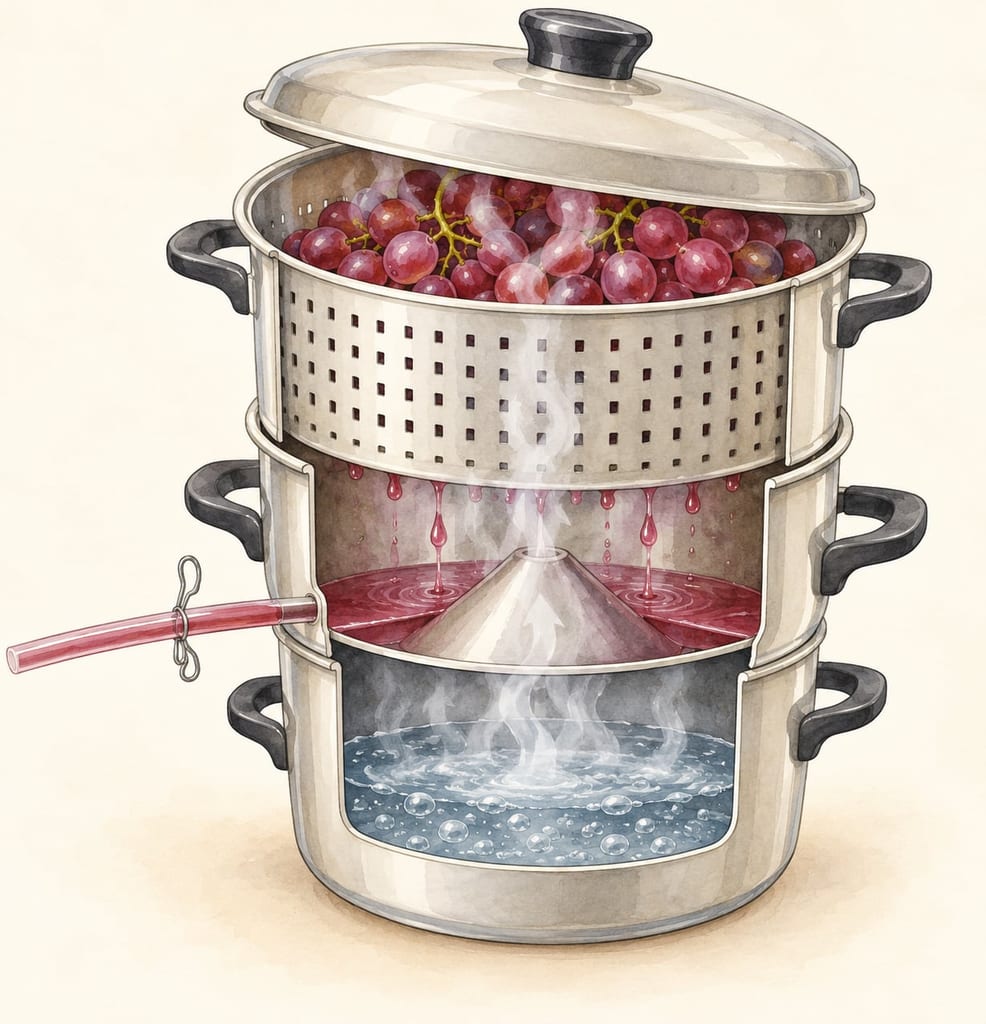
A steam juicer stacks a water pan, juice collector and perforated fruit basket so steam releases juice that drains through an outlet hose. It extracts juice; it does not itself concentrate or preserve it.
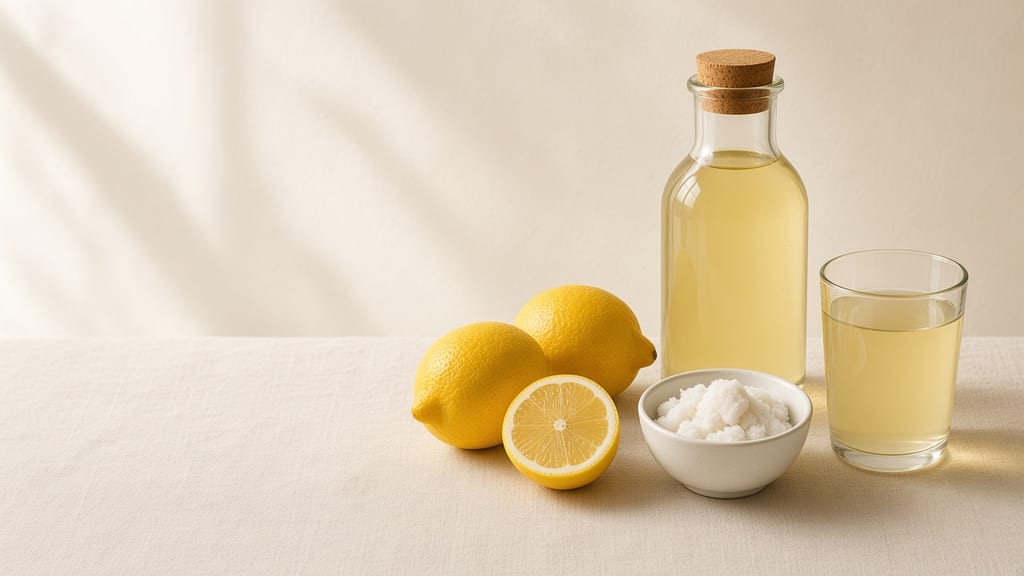
A lemon concentrate for diluting with water or soda: Isabella Beeton's 1861 citric-acid lemon syrup in full, then a tested canned strawberry lemonade concentrate and a refrigerated Swedish-style lemon syrup.
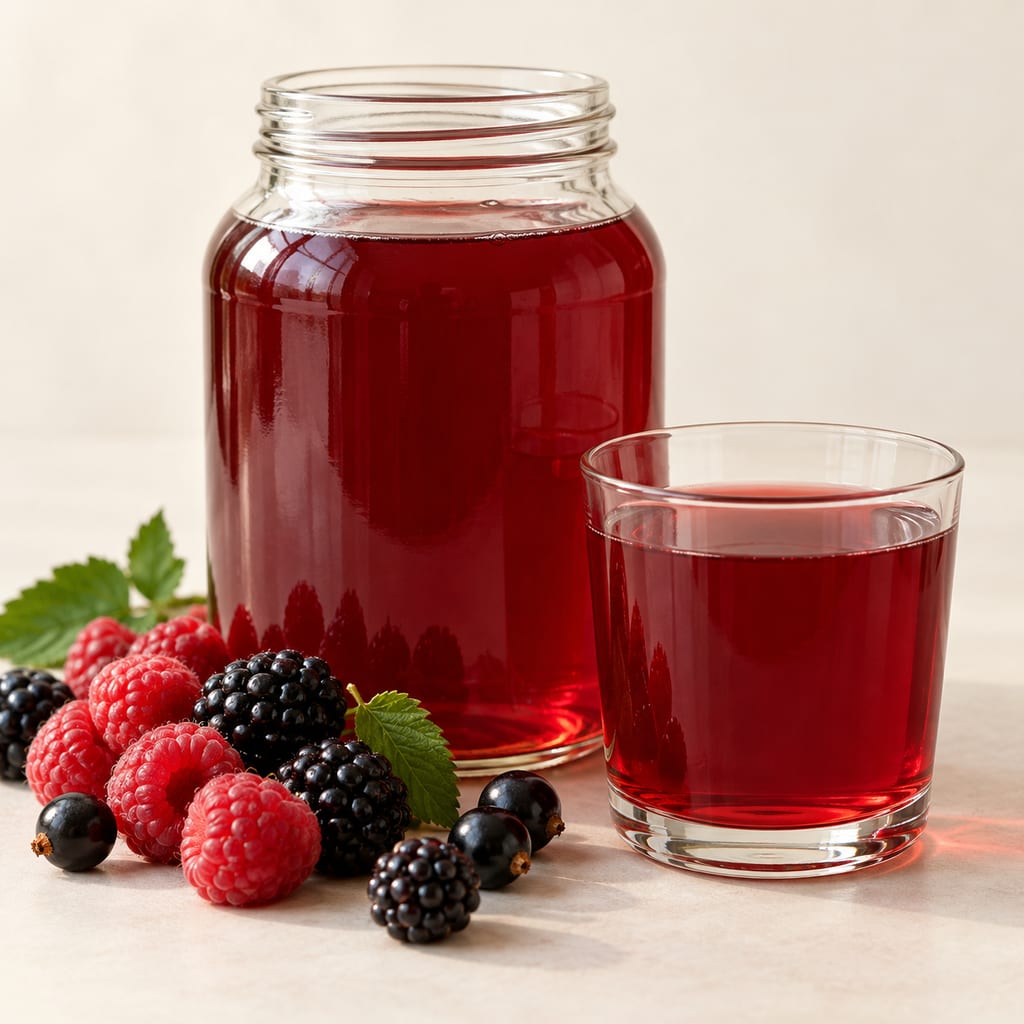
Clear juice that a stacked steam juicer draws out of ripe fruit by steam alone, without crushing it. It is the base for jelly, syrup or cordial and still needs its own keeping step.
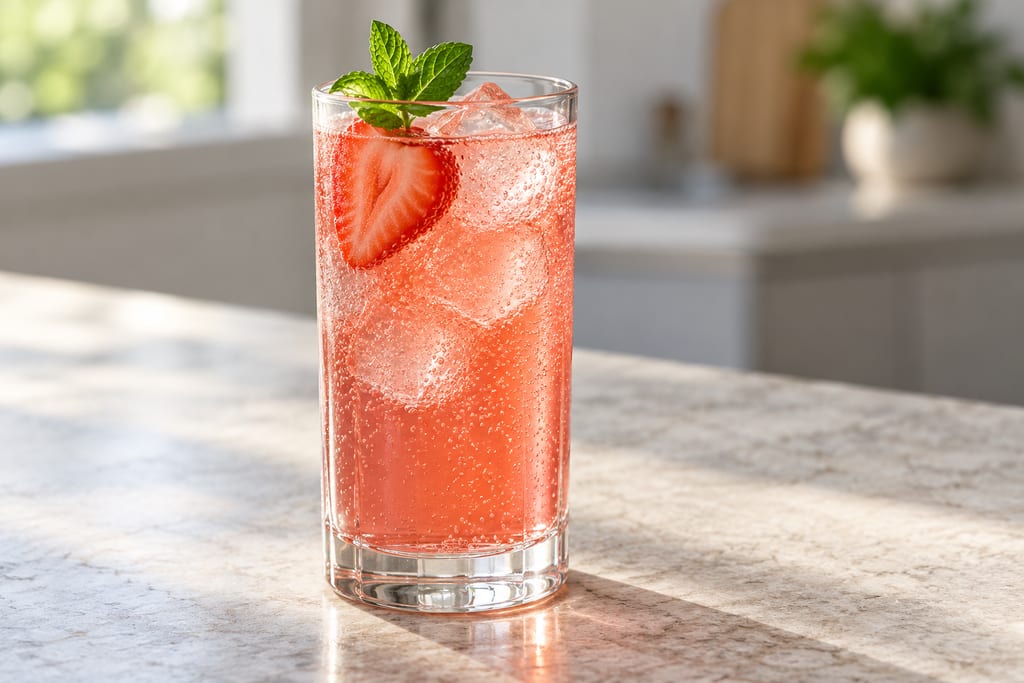
A cold finished drink charged with carbon dioxide in a home carbonator that accepts liquids other than water. Carbonating is not fermentation and does not preserve the drink.
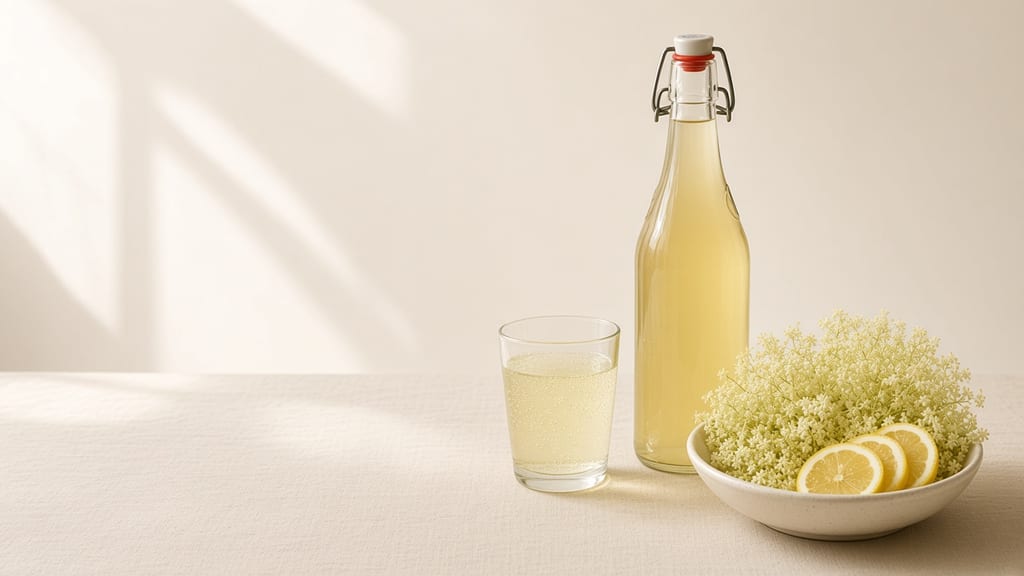
Elderflower heads steeped for one to three days in a lemony sugar syrup, strained and kept cold; the same infusion method flavours syrups with mint, basil, thyme and other herbs.
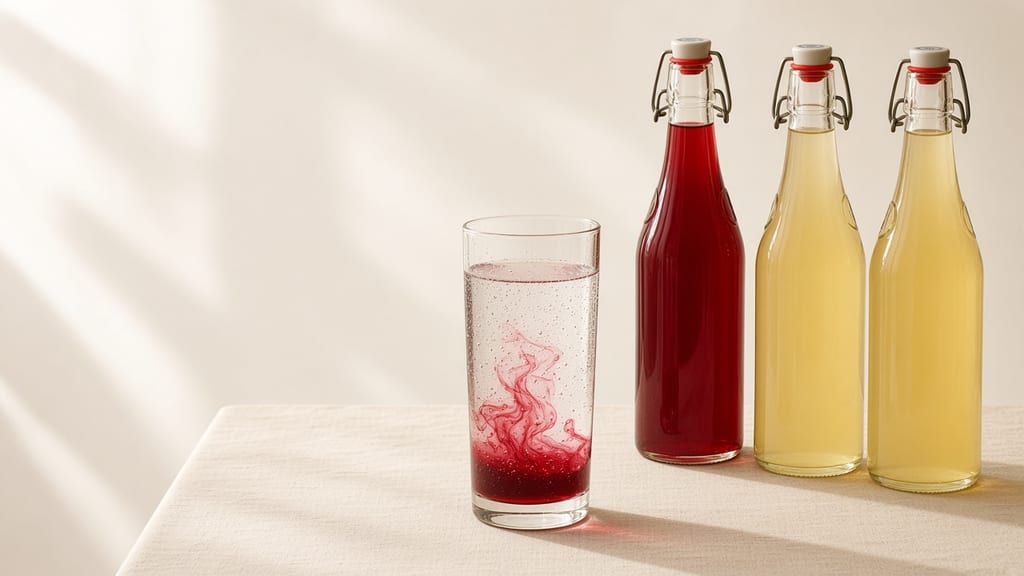
Sugar keeps, acid flavours, heat seals and cold protects the rest: how fruit syrups, flower cordials and lemon syrups are made and kept at home, from the Austrian 55 °Brix rule and a 1949 steam juicer to Victorian lemon syrup.
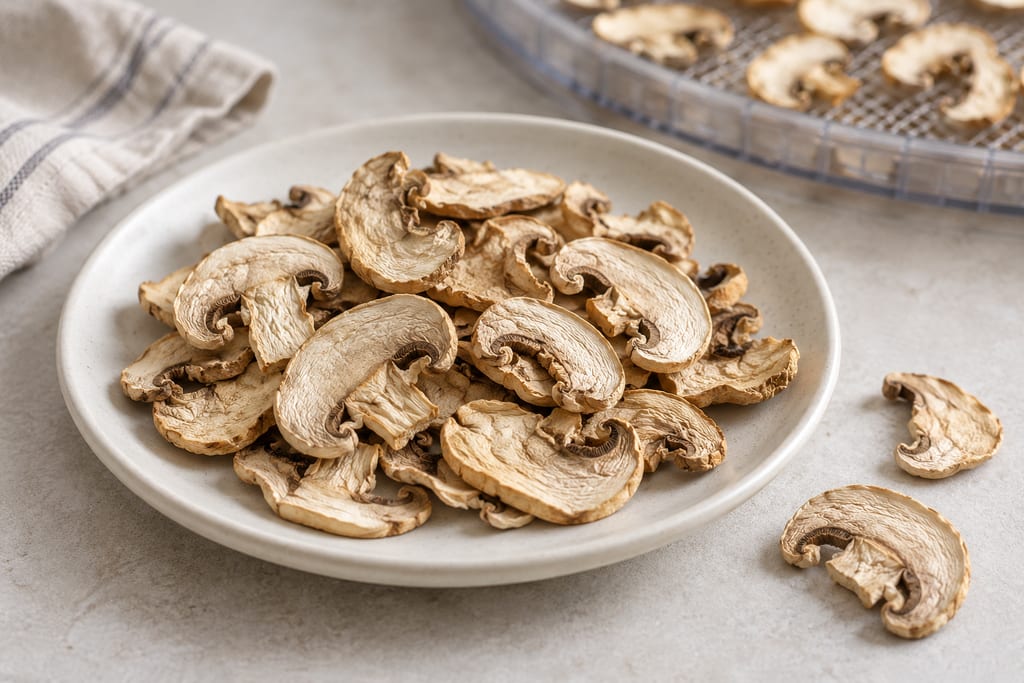
Hot-air dehydrated mushrooms are sliced mushrooms dried in a dehydrator or dryer with heated, moving air; a 2011 study dried button mushroom slices at 60 °C and compared them with microwave-vacuum and freeze-drying.
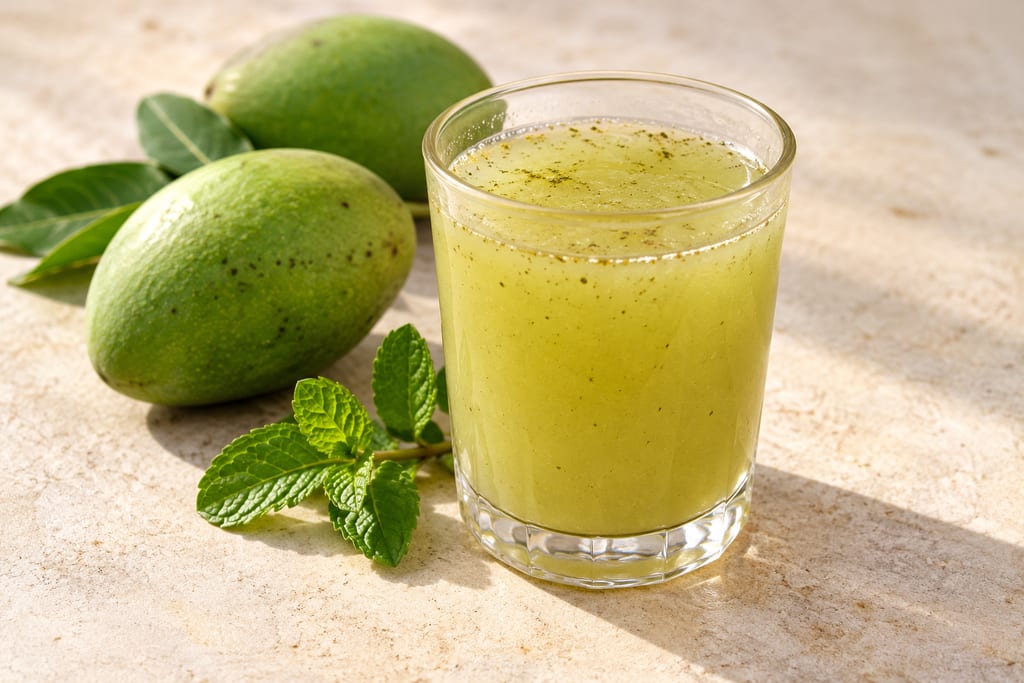
Aam panna is a tart Indian summer drink made by cooking unripe green mango until its flesh softens, then blending the pulp with sweetener, salt and spices and diluting it with water.
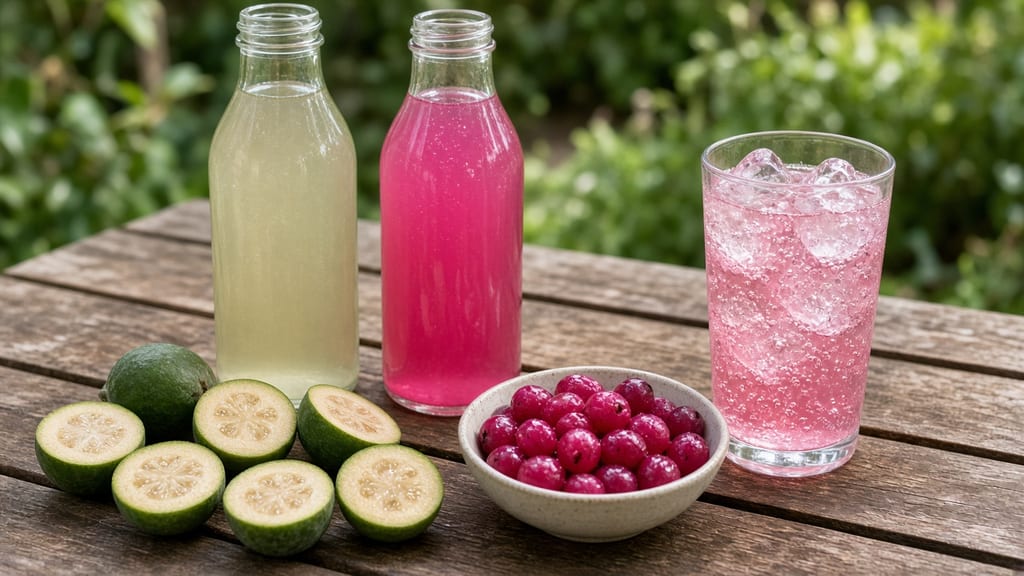
New Zealand feijoa cordial, from the flesh or just the skins, and Australian lilly pilly cordial: fruit, water and sugar heated briefly, strained, and sharpened with lemon and tartaric or citric acid.
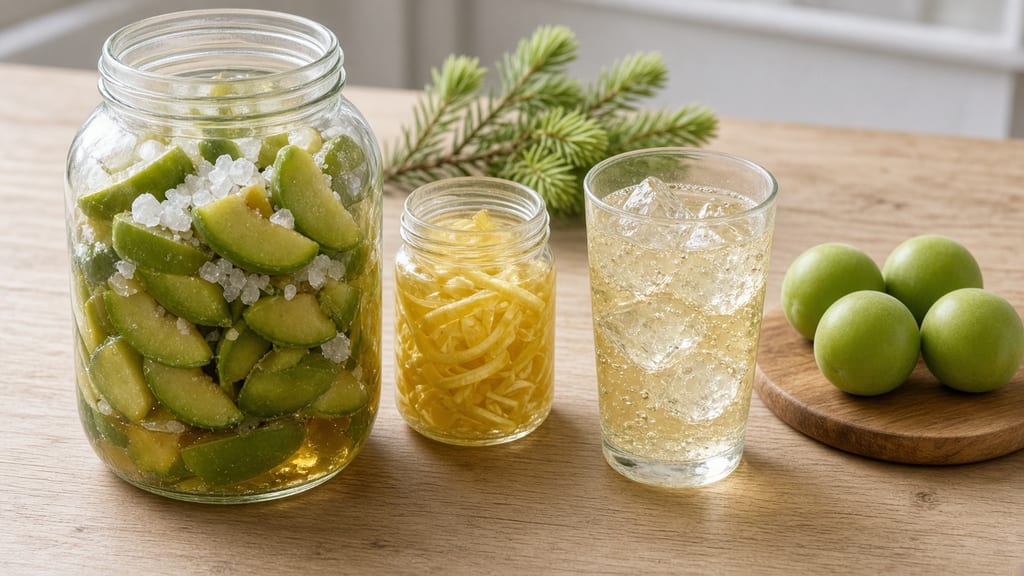
Syrups made without heat by packing fruit or shoots in sugar: Korean maesil-cheong with the ministry's stone-removal steps, frozen Japanese ume syrup, yuja-cheong and Polish pine-shoot syrup.
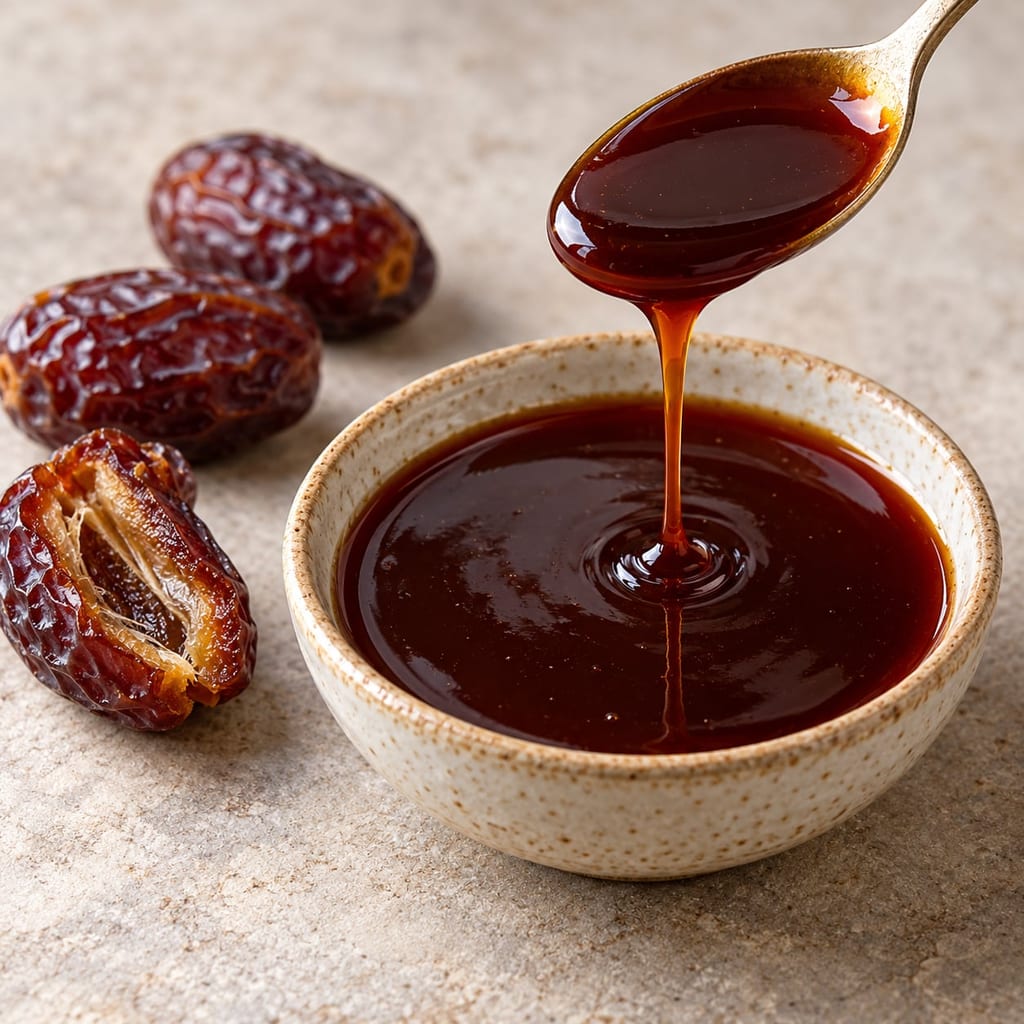
A thick, dark, very sweet syrup made from dates, known as dibs, rub, silan or date molasses. It sweetens tahini and desserts and glazes or sauces savoury dishes across the Middle East and North Africa.
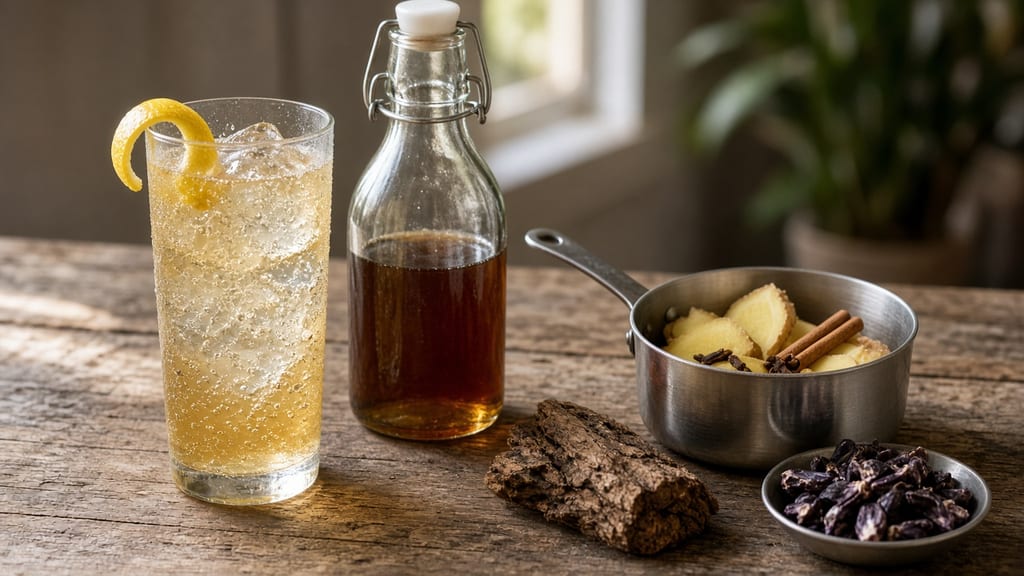
Boiled syrups from hard ingredients: a refrigerated ginger syrup, Trinidad mauby from tree bark, Tamil nannari root syrup, Peruvian purple-corn concentrate and a Turkish spiced sherbet.
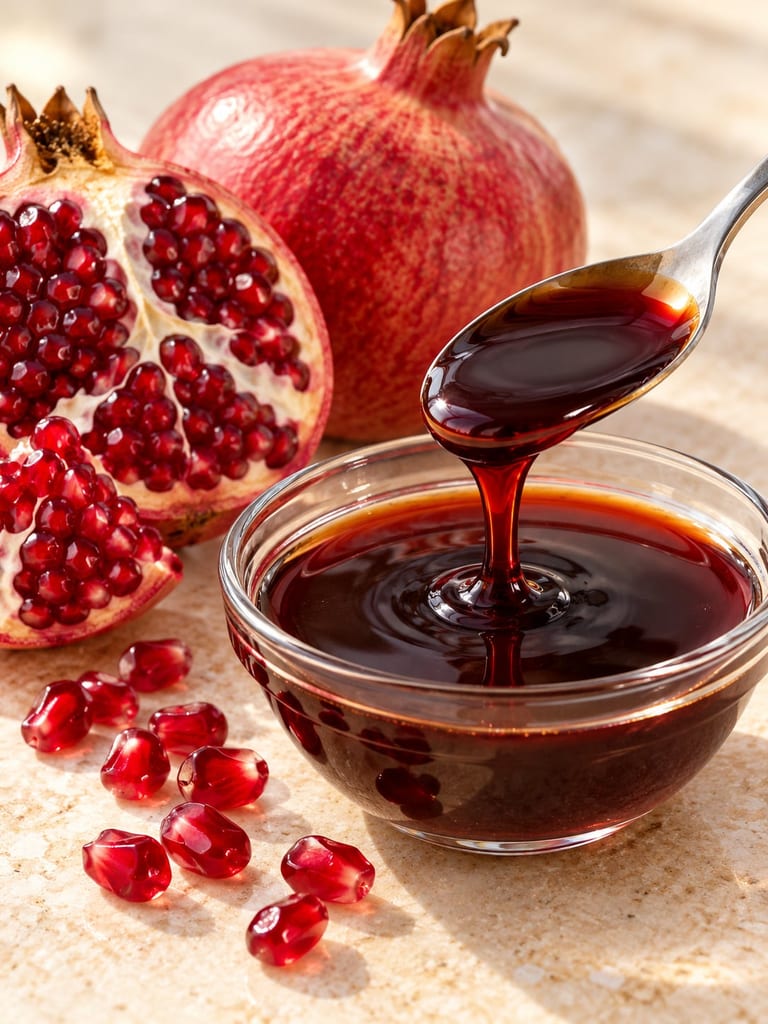
The registered Hatay method presses pomegranate arils and slowly concentrates the strained juice. Its 100 kg source batch and experienced-producer endpoint are retained; no home-scale time or shelf-life is inferred.
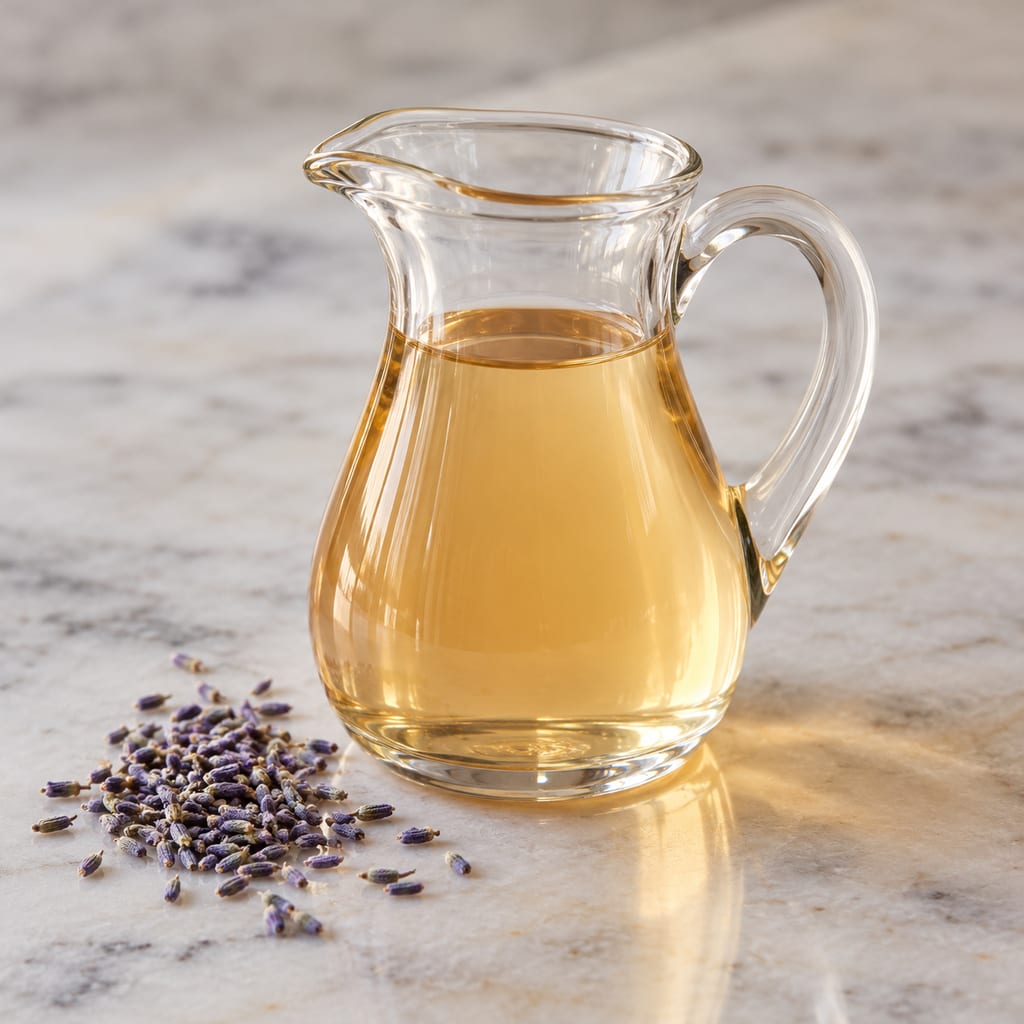
Sugar syrups flavoured by holding botanicals, sugar and water in sealed bags in a 135°F (57°C) water bath for an hour, then cooling and refrigerating; several can share one bath.
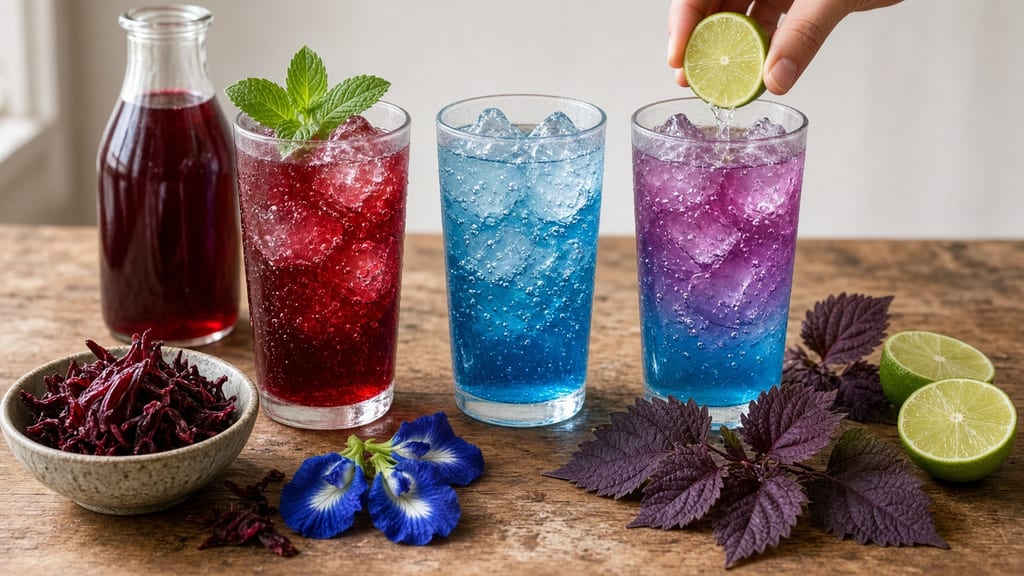
Senegalese bissap syrup from a cold soak, with Ghanaian sobolo, Thai butterfly pea that turns from blue to magenta and Japanese red shiso juice that flashes ruby.
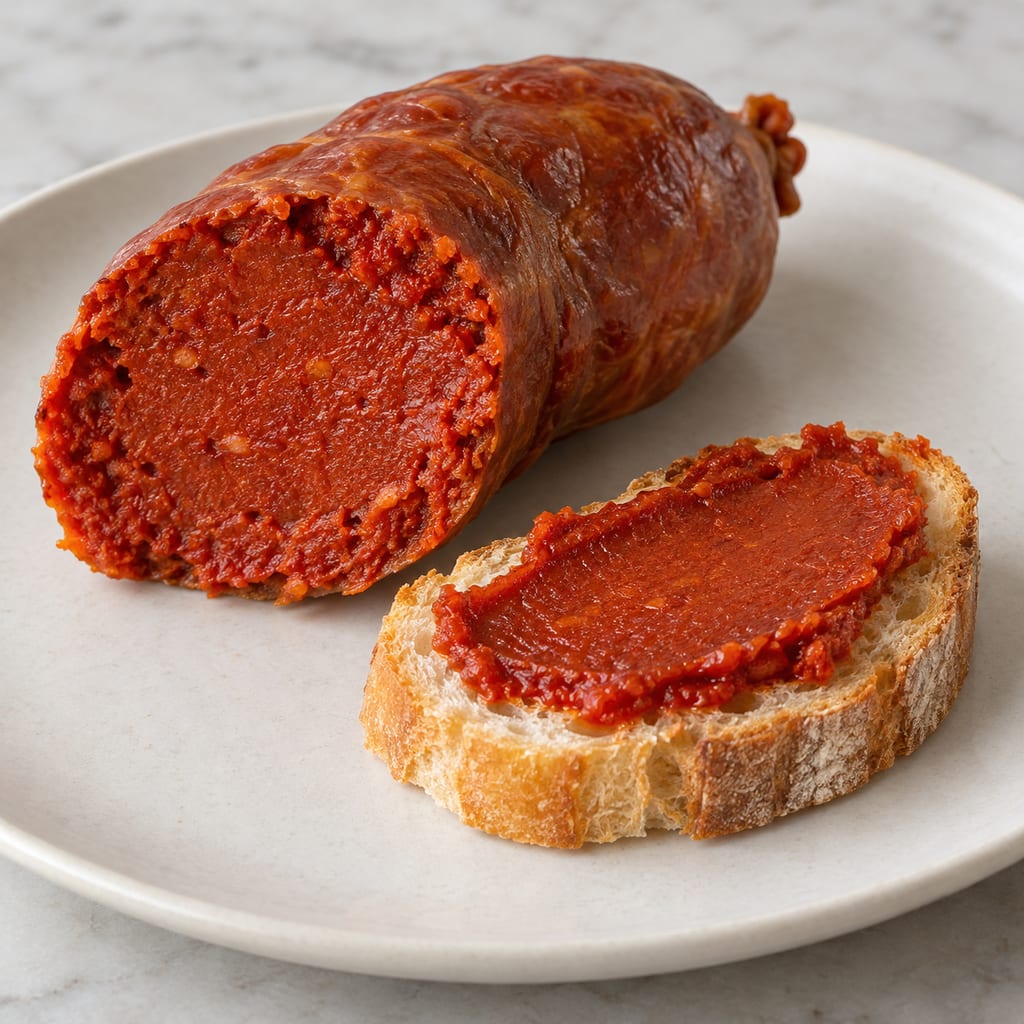
Soft, spreadable Calabrian pork sausage made with a great deal of red chilli and fatty pork, stuffed into natural casings, sometimes smoked and matured while staying soft.
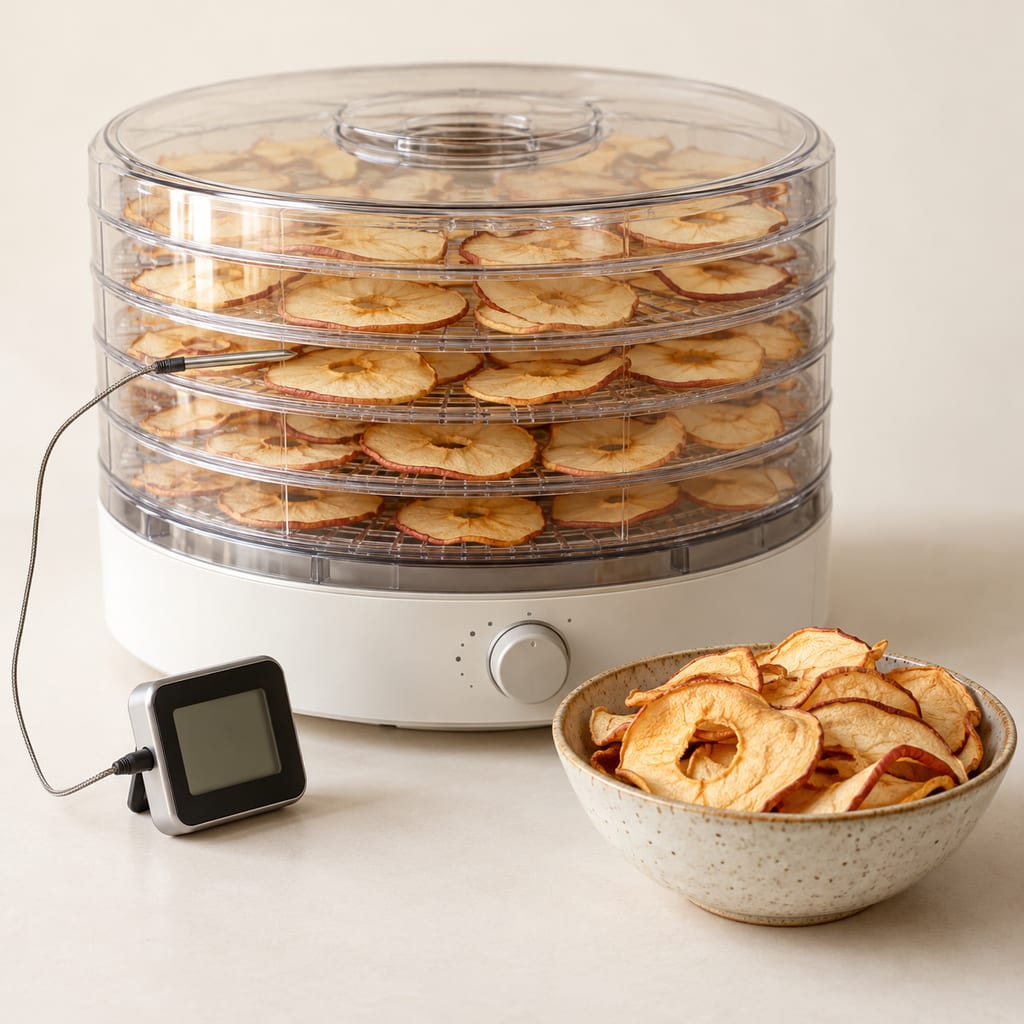
A way to add independent temperature logging to an existing food dehydrator without changing its built-in controls or protections. It is a monitoring method, not a rewiring plan.
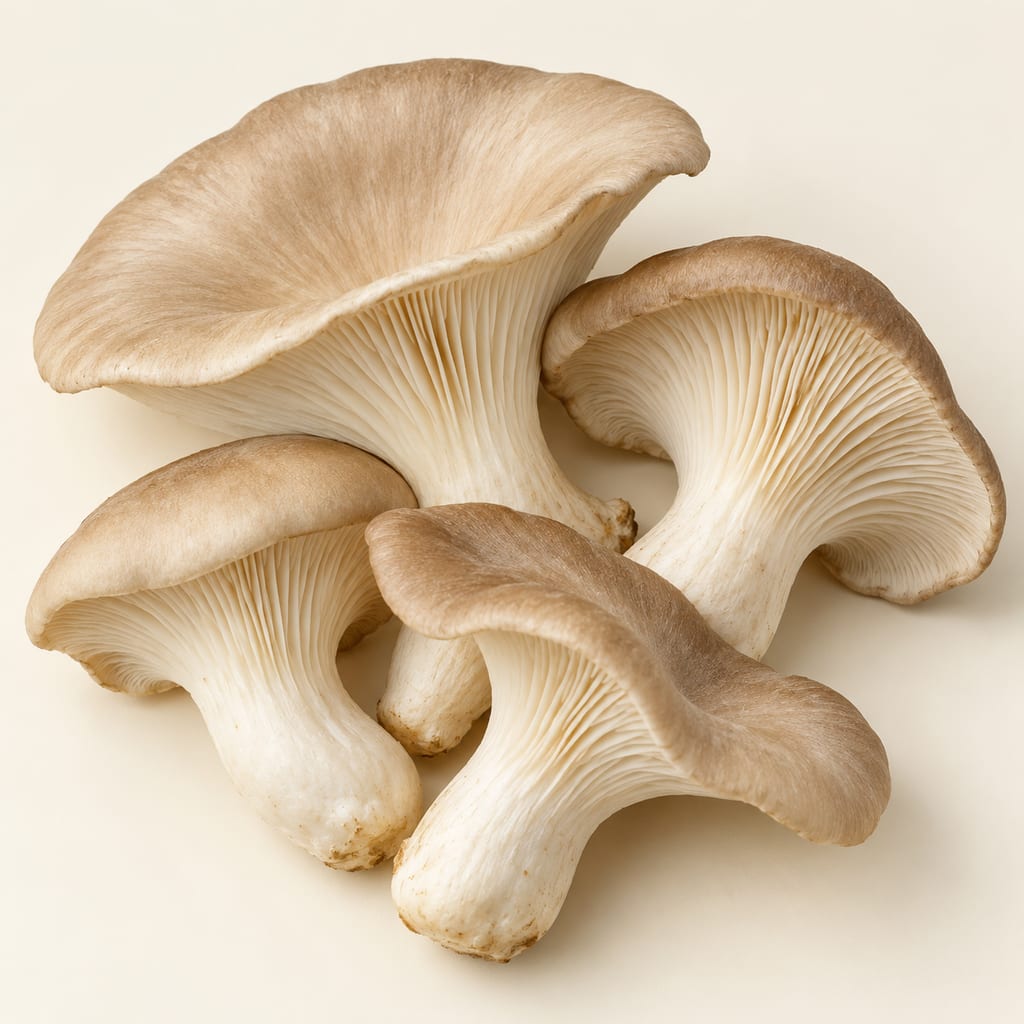
Pleurotus cystidiosus is the abalone mushroom, a cultivated oyster-type fungus with dark brown caps that grows more slowly and is more demanding than other Pleurotus species.
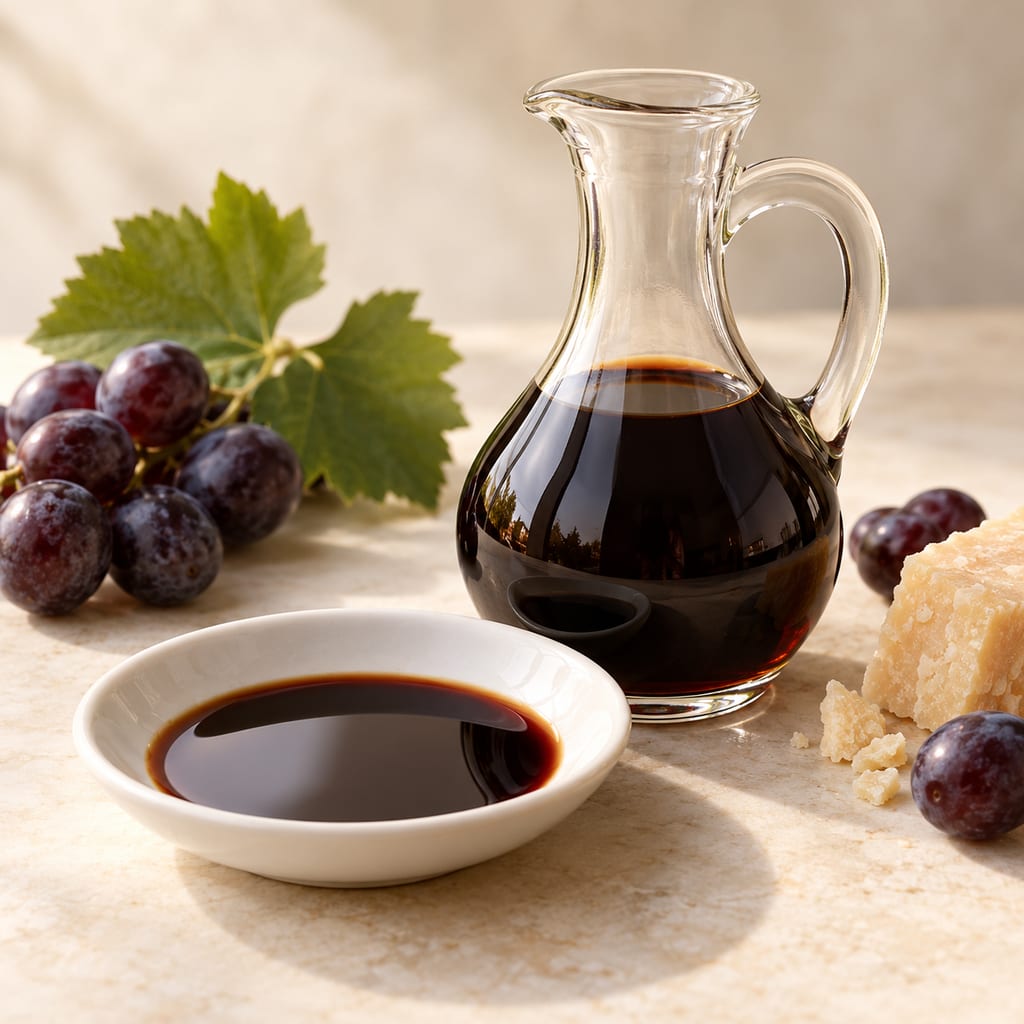
A dark, balanced vinegar from Emilia-Romagna made by combining cooked or concentrated grape must with wine vinegar, then acetifying and refining it in wood under a protected specification.
A living dairy inoculum that starts controlled cream fermentation, developing acidity and aroma before sour cream or cultured butter is finished.
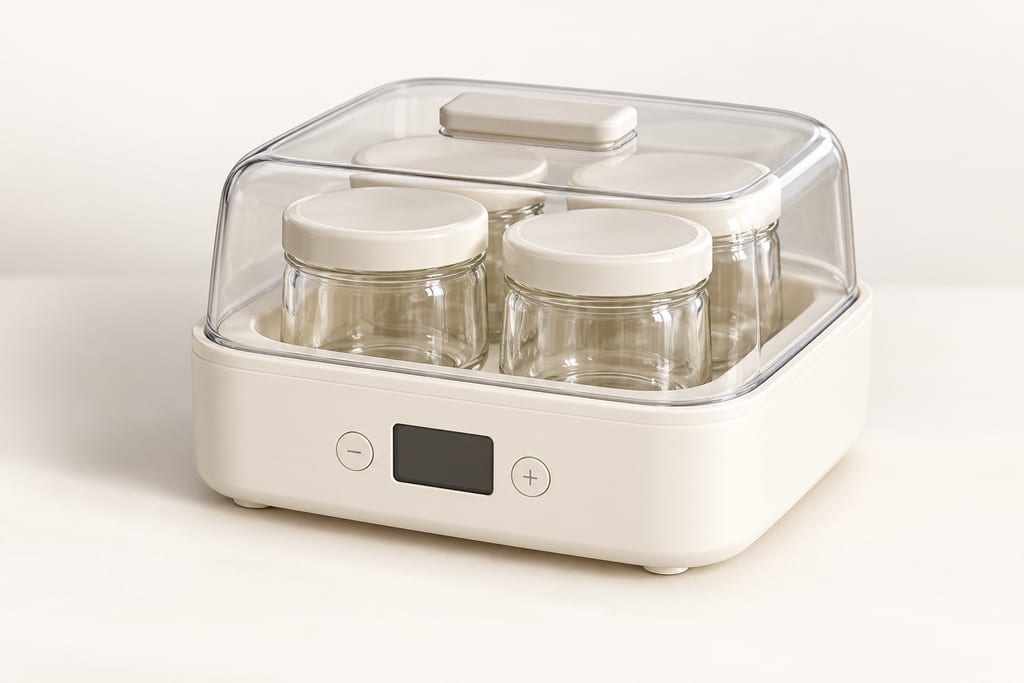
A small electric incubator holds jars at a selected temperature for yogurt and other documented warm food preparations. Controls, capacity and vessel arrangement vary by model.
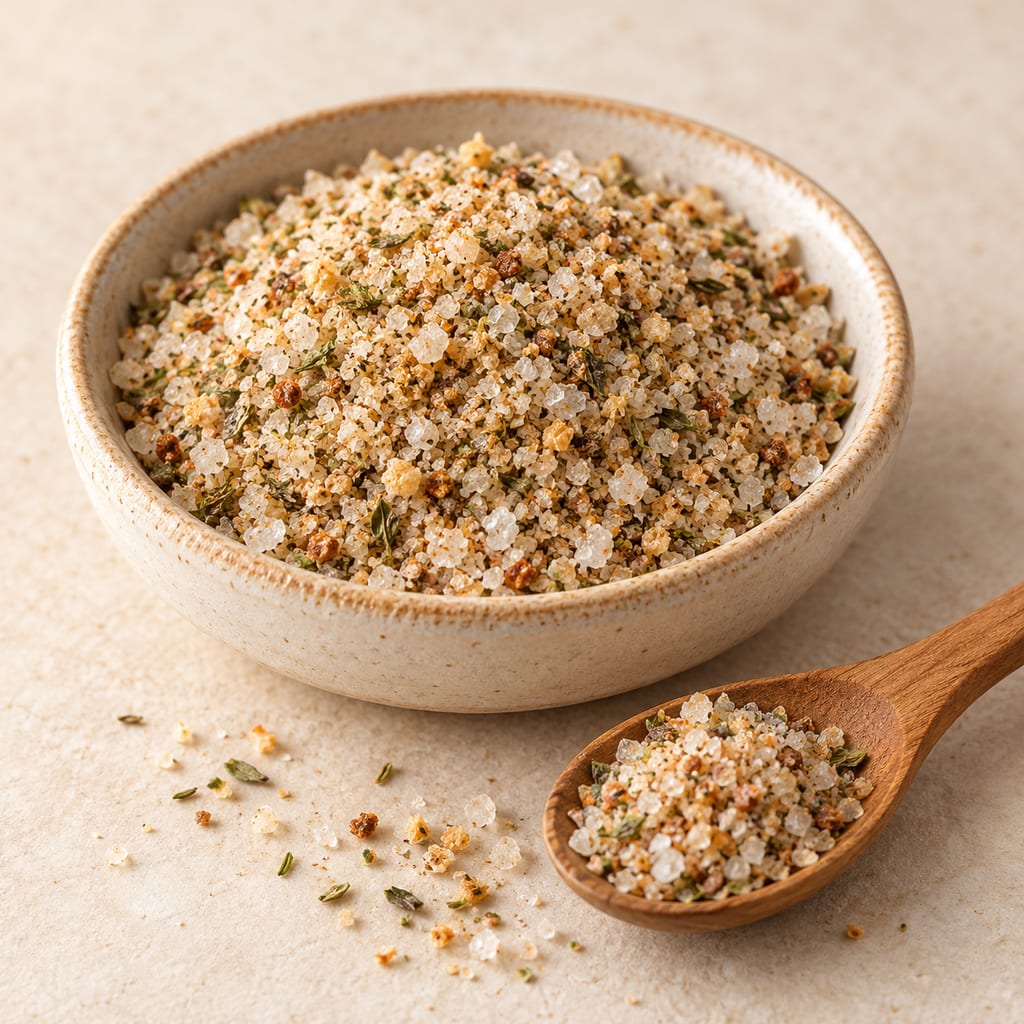
Adygean salt is a seasoned table salt associated with Adygea and the wider North Caucasian culinary tradition. Salt is blended with garlic and a variable selection of herbs and spices; the exact mix depends on the named style and maker.
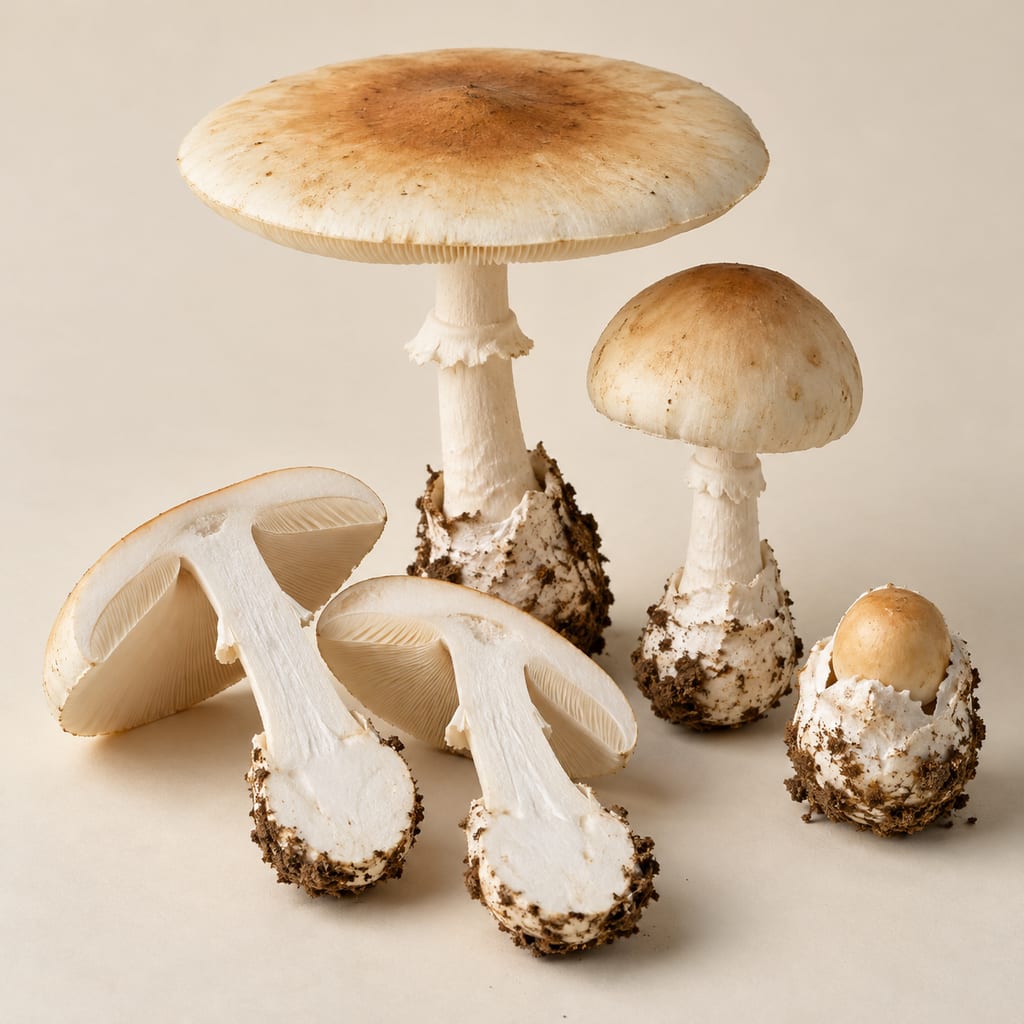
The African Caesar-group mushroom, Amanita masasiensis, is a wild ectomycorrhizal species of central and southern African woodlands, eaten locally. The genus contains deadly poisonous species, so identification needs care.
No community contributions have been published for this entry yet.
Sign in to contribute. Published comments and photos are free to read.
National Center for Home Food Preservation, University of GeorgiaMethod · Safety
Berry SyrupUse only blueberries, cherries, grapes, red or black raspberries and strawberries.
6½ cups fruit crushed, simmered 5–10 minutes, strained through colander then double cheesecloth or jelly bag; 4½–5 cups juice.
Juice plus 6¾ cups sugar, boil, simmer 1 minute, skim; whole-fruit option with 1–2 cups fruit.
Half-pint or pint jars, ½-inch headspace; boiling-water process 10 min at 0–1,000 ft, 15 min at 1,001–6,000 ft, 20 min above 6,000 ft; yield about 9 half-pints.
Granular Splenda does not provide preservative properties like sugar.
Cited in: What this recipe is; Which fruits fit this method; Names; Sugar and acid; Equipment; Stage 1: Cook the fruit; Stage 2: Drip the juice; Stage 3: Boil with sugar; Stage 4: Fill and process; Problems and safety; Where the sources disagree
National Center for Home Food Preservation, University of GeorgiaMethod
Extracting Juice for JellyBerries need only enough water to prevent scorching and simmer 10 minutes or less.
The clearest juice drips through a damp jelly bag without pressing or squeezing.
Cited in: Stage 1: Cook the fruit; Stage 2: Drip the juice
Clemson Cooperative Extension Home & Garden Information CenterMethod · Safety
Fruit Syrups & Honeys (HGIC 3165)Berry syrup for blackberry, blueberry, raspberry or strawberry: 1¼ cups juice, 1½ cups sugar, ¼ cup corn syrup, 1 tablespoon bottled lemon juice; about 2 half-pints.
Crush berries, boil, simmer 1–2 minutes; excess boiling destroys pectin, flavour and colour; juicy berries may be crushed and juice extracted without heating.
Rolling boil 1 minute, skim, ¼-inch headspace, process 10 minutes in a boiling-water bath.
Grape syrup from purée: grapes warmed 8–10 minutes without boiling, milled; same formula; process 5 minutes.
Fruit honeys: half as much sugar as juice, boiled to honey consistency, ¼-inch headspace, 5 minutes; strawberry honey 8 cups juice to 4 cups sugar, 1 cup water per quart of berries, cooked 15 minutes.
Cited in: What this recipe is; Which fruits fit this method; Sugar and acid; Stage 1: Cook the fruit; Stage 2: Drip the juice; Small batch: Clemson berry syrup; Grape syrup from purée; Fruit honeys: the same juice boiled further; Problems and safety; Where the sources disagree
Oregon State University Extension ServiceSafety · Method
Play it safe when preserving elderberries (EM 9446)Many elderberry varieties contain cyanogenic glycosides; always cook elderberries; leaves and stems carry more toxin; avoid red elderberries.
American elderberries are not consistently below pH 4.6; European elderberries are hard to tell apart and should follow the American rules.
Blue elderberry syrup: 2½ cups juice, 3½ cups sugar, simmer 3 minutes, ½-inch headspace, process 10/15/20 minutes; about 4 half-pints.
Syrup from American and European elderberries made this way must be refrigerated or frozen; leave 1-inch headspace if frozen; it is not safe to can.
Cited in: Which fruits fit this method; Elderberries; Blackcurrant and other untested fruits
Austrian Federal Ministry of Health (BMGFJ-75210/0007-IV/B/7/2007, amended 2017)Definition · History
Österreichisches Lebensmittelbuch, Codexkapitel B 6 SirupeFruchtsirupe contain at least 10% fruit; traditional Austrian Codex quality means 33%.
All syrups at least 55 °Brix measured by refractometer; herb syrups at least 45 °Brix.
Syrups for dilution carry a dilution instruction such as 1 + 6.
Colouring of Himbeersirup and acidifying with tartaric, citric or malic acid are Austrian traditions.
Cited in: Names; Where the method comes from; Sugar and acid; Using it in fizzy water
Bauernzeitung (Landwirtschaftskammer Tirol)Method · Safety
Sirupe aus Blüten, Kräutern und BeerenOld recipes dissolve 2 kg sugar in 1 litre liquid; reduced-sugar versions mould in the bottle or ferment after opening.
Citric acid cannot preserve a food; it brightens taste and, in berry syrups, colour by lowering pH.
Base recipe 1 litre fresh juice, 1.3 kg sugar, 5–10 g citric acid or juice of 1–2 lemons; enzymes break down pectin; juice heated to 85 °C, sugar dissolved, filled at 85 °C, bottles closed and laid down.
About 12 months kept dark below 16 °C.
Steam juicing at about 100 °C costs aroma and colour; cold pressing gives the best juice; refractometers are cheap.
Cited in: Sugar and acid; Equipment; Stage 2: Drip the juice; The Austrian hot-fill method; Using it in fizzy water; Problems and safety; Where the sources disagree
Ministerstvo zemědělství České republikyDefinition
Vyhláška č. 248/2018 Sb., o požadavcích na nápoje, kvasný ocet a droždí§ 5(2): a drink concentrate with more than 50% by weight natural sweeteners may be called sirup.
Cited in: Names
Stadtmuseum im Gelben Haus Esslingen, museum-digital:baden-württembergHistory
Dampfentsafter „Saftborn“The steam juicer was invented in 1949 in Esslingen by Wilhelm Wagner GmbH & Co. KG and sold as Saftborn.
Water boils in the base, steam rises through a tube into a fruit basket, juice collects and drains through a hose with a clamp.
Cited in: Where the method comes from; Stage 2: Drip the juice
Tekniikka&Talous, 17 September 2020History
Mehumaijan isät ja äidit: malli tuli Suomeen SaksastaThe Mehumaija steam juicer came to Finland from Germany in the 1950s; the Maa- ja kotitalousnaiset organisation says it brought the predecessor.
Cited in: Where the method comes from
University of Maine Cooperative Extension (Kate McCarty, 15 May 2025)Method · Safety · Serving
Drinks from the Garden: Using Fresh Fruit, Vegetables and Herbs in DrinksSimple syrup 1 part sugar to 1 part water, boiled; add 1–2 cups berries or other flavouring, steep 5 minutes, strain.
Shrubs and simple syrups are refrigerated and used within a month.
A few tablespoons of concentrate in an 8-ounce glass of sparkling water make a homemade soda.
Cited in: Blackcurrant and other untested fruits; Using it in fizzy water