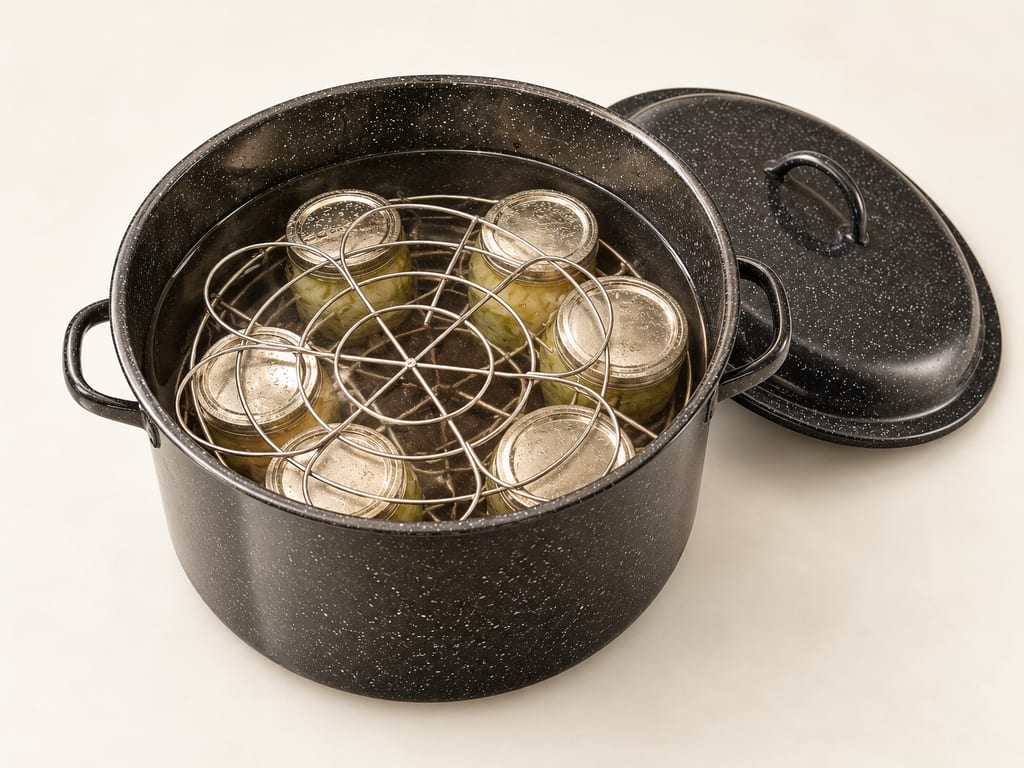
Boiling-water canner
A deep, lidded pot with a removable rack processes jars beneath boiling water. It is intended for foods with tested boiling-water processes; low-acid foods require pressure canning.
 FermenteaWhere food goes to change
Lemon cordial · Lemonade concentrate · Citronsaft · Zitronade
A lemon concentrate for diluting with water or soda: Isabella Beeton's 1861 citric-acid lemon syrup in full, then a tested canned strawberry lemonade concentrate and a refrigerated Swedish-style lemon syrup.
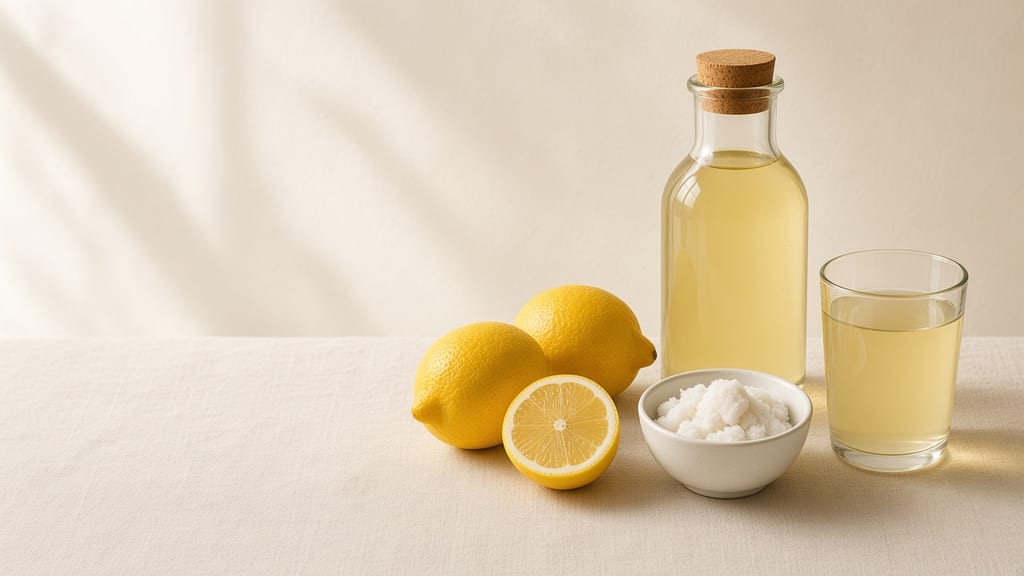
Lemon syrup is sugar, water and lemon acid boiled into a concentrate that keeps the taste of a lemonade in a bottle. Two tablespoons in a glass of cold water made Victorian summer drinks; a splash in sparkling water makes a sharp, clean soda today.
This page is in two parts. Part one gives Isabella Beeton's lemon syrup of 1861 in full, with the other Victorian ways of getting lemon into a drink. Part two gives the modern methods that keep safely: a tested canned strawberry lemonade concentrate, and a plain lemon syrup kept in the refrigerator or freezer. The berry syrup and the elderflower cordial in this series follow the same balance of sugar, acid and cold.
English uses lemon syrup, lemon cordial and lemonade concentrate for much the same bottle. In Sweden it is citronsaft, and the drink poured from it, diluted a lot, is citrondricka. Austrian food rules call a syrup flavoured with lemon peel a Zitronade and one flavoured with orange peel an Orangeade. Czech law keeps the word sirup for a concentrate with more than half its weight in natural sweeteners.
Sugar carries the syrup. It thickens it, holds the lemon flavour and, at high strength, keeps moulds and yeasts from growing; Tyrolean advisers note that the old 2 kg-per-litre syrups kept because of their sugar, and that cutting it made bottles mould. The Austrian codex asks at least 55 °Brix of a fruit or citrus syrup.
Citric acid gives the sourness without fresh fruit, which is why Beeton could use it alone. It sharpens the taste, but Tyrolean advisers are clear that it does not preserve a syrup. Buy the food-grade kind.
The lemon itself gives two things. The juice brings acid and fresh flavour. The peel holds the scented oil, which Beeton bought as essence of lemon or rubbed off with lumps of sugar, and which the Swedish recipe gets by slicing whole lemons into the hot syrup.
Recipe No. 1822 in The Book of Household Management, as printed:
LEMON SYRUP. INGREDIENTS.—2 lbs. of loaf sugar, 2 pints of water, 1 oz. of citric acid, ½ drachm of essence of lemon. Mode.—Boil the sugar and water together for ¼ hour, and put it into a basin, where let it remain till cold. Beat the citric acid to a powder, mix the essence of lemon with it, then add these two ingredients to the syrup; mix well, and bottle for use. Two tablespoonfuls of the syrup are sufficient for a tumbler of cold water, and will be found a very refreshing summer drink. Sufficient.—2 tablespoonfuls of syrup to a tumbler-ful of cold water.
There is no fresh lemon in it. The sourness comes from an ounce of citric acid, bought as crystals and pounded to powder, and the lemon taste from a few drops of essence of lemon, the oil from the peel. It is a syrup a household could make in any month without waiting for good lemons.
In modern measures, 2 lb of sugar is about 907 g, and 2 imperial pints of water is about 1.14 litres, so the syrup starts at roughly 44% sugar by weight before the quarter-hour boil drives off some water. An ounce of citric acid is about 28 g. Beeton does not say how much water boils away, so the finished strength is unknown.
The order matters. The acid and essence go in after the syrup is cold, then it is bottled. Nothing is heated after bottling, and no seal is described. That is a store-cupboard habit, not a tested preserving process, and part two explains how to make the same drink so it keeps safely.
Beeton's lemonade, No. 1834, gets its lemon flavour another way. Lumps of loaf sugar are rubbed on the skins of two lemons until they have taken up all the oil, then go into a jug with the rest of the sugar and the juice of three large or four small lemons, pips left out. A quart of boiling water is poured over, the sugar dissolves, and the lemonade is strained through a fine sieve or muslin and drunk cool. Beeton adds that a beaten egg white or a little sherry improves it.
The same trick appears in her negus, where sugar is rubbed on the rind until all the yellow part is absorbed. A year later the lemonade turned up almost word for word in Jerry Thomas's bar book in New York, as No. 224, 'fine for parties'.
The confectioner's manual bound into Jerry Thomas's How to Mix Drinks has a richer lemon syrup, No. 430. It takes 2 lb of sugar, or 2 pints of ready syrup, and 1 pint of lemon juice. The juice is left to settle, the thin skin on top is cleared off, and it is strained through a fine sieve or cloth. The syrup is boiled to the stage the manual calls the little crack, the juice goes in, and the pan goes back on the fire until the syrup reaches the pearl. Both are sugar-boiling stages that the manual describes in its own earlier entries, Nos. 13 and 17. It is skimmed and bottled when quite cool.
No. 431 makes orange syrup the same way. Thomas also gives an orangeade made exactly like lemonade with oranges, and a bar lemonade sweetened partly with a tablespoon of raspberry or strawberry syrup.
Beeton's No. 1837, For a Summer Draught, is a soda made in the glass. Strain the juice of one lemon into a tumbler of cold water, sweeten it with pounded sugar, then stir in a small teaspoon of carbonate of soda and drink it while it is still effervescing. The lemon juice and the soda fizz together as they meet, which is why it has to be drunk at once. Today a bottle of carbonated water gives the bubbles without the soda.
Beeton's and Thomas's syrups were bottled cold or hot with no processing time, and nobody tested how long they kept. Modern home-preserving advice works from tested recipes, and there is a gap here. The National Center for Home Food Preservation has no tested method for canning plain lemonade concentrate.
An Ask Extension thread from 2026 shows how easily that gets blurred. A canning-group organiser in Ohio asked about recipes that had been passed around as safe. One expert suggested the centre's fruit purée guidance as a near match; a colleague followed up and found that the person who shared the lemonade recipes had no validated recipe and had shared them for the ingredients, not for safety. The safe choices are a tested recipe with a processing time, or cold storage.
This is the tested recipe, from Ball and reprinted by Clemson Extension. It makes about 7 pint jars. Prepare a boiling-water canner and keep 7 clean pint jars hot in simmering water without boiling them. Wash the lids in warm soapy water.
Hull 6 cups of strawberries and purée them in a blender or food processor in batches until smooth, then put the purée in a large stainless-steel pan. Stir in 4 cups of freshly squeezed lemon juice and 6 cups of granulated sugar.
Heat to 88 °C (190 °F) over medium-high heat, stirring now and then, and do not let it boil. Take it off the heat and skim off the foam.
Ladle the hot concentrate into hot jars, leaving 6 mm (¼ inch) of headspace. Wipe the rims, put on the lids and screw the bands on fingertip-tight. Process for 15 minutes in the boiling-water canner, adjusted for altitude. Lift the jars out and let them cool. After 24 hours check the seals: the centre of the lid should not flex when pressed.
Clemson notes that the same concentrate can be made and drunk straight away, or frozen instead of canned.
For a plain lemon syrup there is no tested canning process, so keep it cold. The Swedish citronsaft is a good model. Scrub 650 g of lemons, four or five, cut them into wedges and slice them finely, keeping the juice. Bring 1 litre of water, 1 litre (by volume) of sugar and 40 g of citric acid to the boil. Add the lemons, stir, take the pan off the heat and let it cool completely.
Cover and leave it in the refrigerator for a day, stirring a few times. Strain through a colander lined with a cloth, then pour into clean bottles or freezer boxes. It makes about 1.6 litres. Keep it in the refrigerator, or freeze it; frozen citronsaft can be scraped straight into a jug.
The Swedish recipe also suggests a preservative, sodium benzoate, for longer keeping. This page leaves it out and relies on the refrigerator and freezer, as Maine Extension does for its syrups: refrigerate and use within a month.
The old books treat orange as lemon's twin: Thomas makes orange syrup by the lemon method and orangeade like lemonade. Austrian food rules still group them, naming peel-flavoured syrups Zitronade and Orangeade and asking at least 55 °Brix of every syrup that is not a herb syrup.
No tested canning recipe gives quantities for an orange, lime or grapefruit concentrate. They can be made like the Swedish syrup, swapping the fruit, and kept in the refrigerator or freezer.
Beeton's measure is two tablespoons of syrup to a tumbler of water. Clemson mixes one part strawberry lemonade concentrate with three parts water, tonic water or ginger ale. The Swedish citronsaft is diluted three to six times; diluted a lot, it gets a different name, citrondricka. Maine Extension's measure for a homemade soda is a few tablespoons in an 8-ounce (240 ml) glass of sparkling water.
Lemon syrup also mixes with the other syrups in this series. Thomas sweetened his bar lemonade with a spoon of raspberry or strawberry syrup, and Maine suggests berry lemonade.
Follow the canned recipe exactly: the purée, juice and sugar quantities, the 88 °C heat, the headspace and the 15-minute processing with the altitude adjustment. Do not swap in plain lemon juice concentrate and use the same time; no one has tested that.
Keep plain lemon syrup in the refrigerator or freezer. Fresh juice keeps a week in the refrigerator. If a syrup grows mould or starts to fizz on its own, throw it away; smell and taste cannot show that a syrup is safe.
Use food-grade citric acid.
Beeton gets the sourness from citric acid alone, while Thomas uses a pint of lemon juice and the Swedish recipe uses both. Beeton boils the syrup for a quarter of an hour; Thomas boils it to sugar-stage tests; the Swedish recipe only brings it to the boil. The old books bottle for the cupboard, and the Swedish recipe allows a cool dark place for an unopened bottle. The extension services that answered this question say a plain lemon syrup has no tested canning process and belongs in the refrigerator or freezer.
Beeton's 1861 Book of Household Management prints lemon syrup No. 1822; Jerry Thomas's 1862 How to Mix Drinks prints lemon syrup No. 430.
Yield 7 pint jar · Scaling: tested batch
NCHFP has no safe method for canning plain lemonade concentrate; recipes passed around were not validated.
Hazard sourceThe strawberry lemonade concentrate is tested at an 88 °C fill, ¼-inch headspace and 15 minutes with altitude adjustment.
Hazard sourceCitric acid cannot preserve a syrup; reduced-sugar syrups mould or ferment.
Hazard sourceUse the tested canned recipe exactly.
Control sourceKeep plain lemon syrup cold.
Control sourceDo not can plain lemon syrup.
Smell and taste do not show that a syrup is safe.
Beeton's London household book prints the lemon syrup, lemonade and summer draught.
Jerry Thomas's New York bar book prints a boiled lemon syrup and orange syrup.
Swedish home citronsaft made with sliced lemons, sugar and citric acid.
The Austrian food codex defines Zitronade and Orangeade; it does not give a home recipe.
Clemson Extension republishes the tested Ball concentrate; the recipe itself is not regional.
A deep, lidded pot with a removable rack processes jars beneath boiling water. It is intended for foods with tested boiling-water processes; low-acid foods require pressure canning.
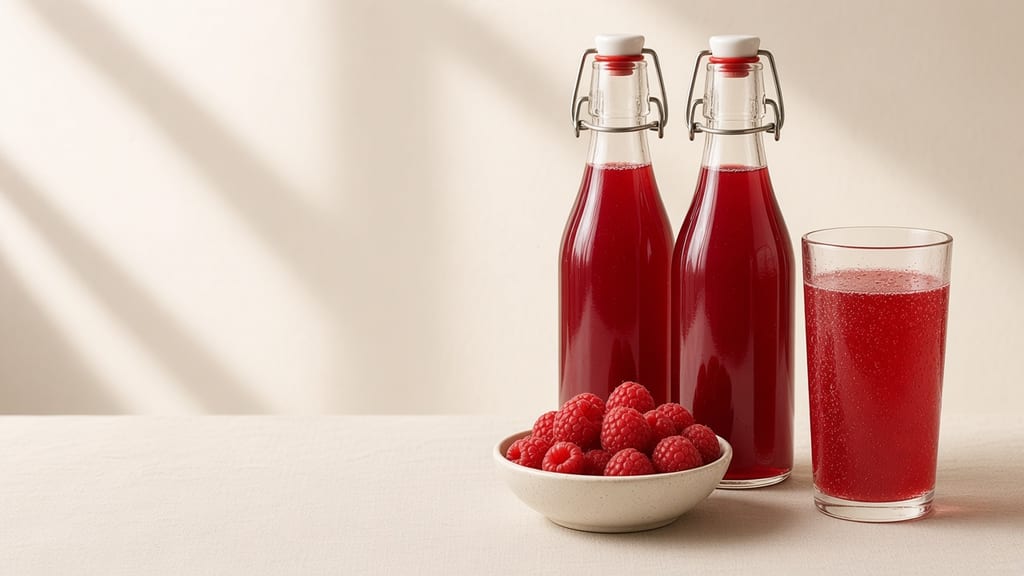
Clear fruit syrup from cooked, dripped berry juice boiled with sugar and canned in a water bath; one tested method for raspberry, strawberry, blueberry, cherry, grape and blackberry.
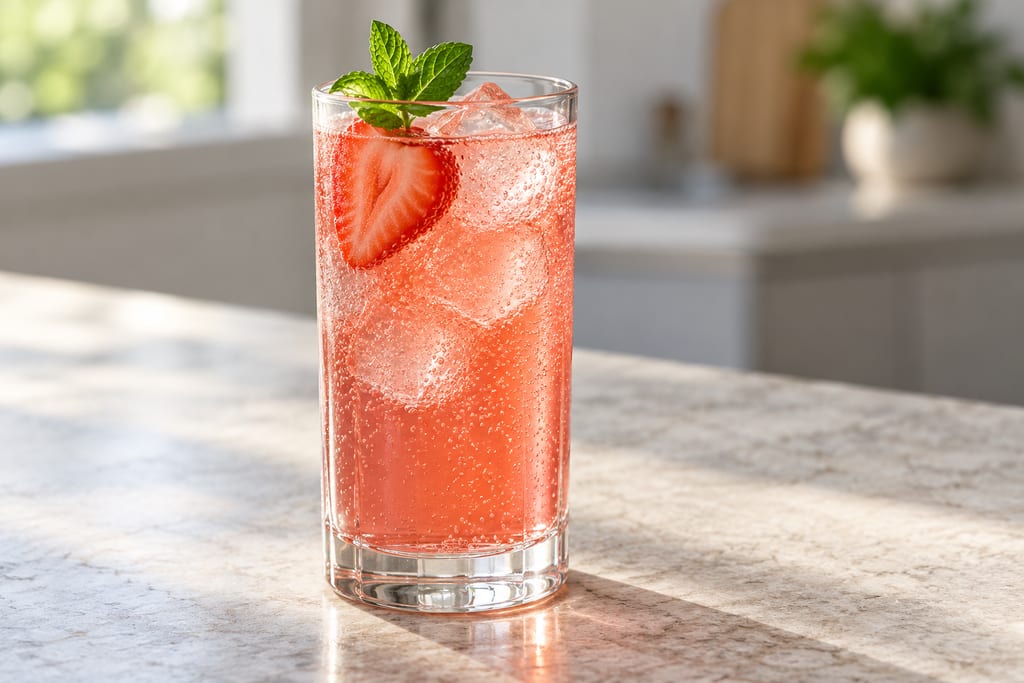
A cold finished drink charged with carbon dioxide in a home carbonator that accepts liquids other than water. Carbonating is not fermentation and does not preserve the drink.
Elderflower heads steeped for one to three days in a lemony sugar syrup, strained and kept cold; the same infusion method flavours syrups with mint, basil, thyme and other herbs.
Boiled syrups from hard ingredients: a refrigerated ginger syrup, Trinidad mauby from tree bark, Tamil nannari root syrup, Peruvian purple-corn concentrate and a Turkish spiced sherbet.
Sugar keeps, acid flavours, heat seals and cold protects the rest: how fruit syrups, flower cordials and lemon syrups are made and kept at home, from the Austrian 55 °Brix rule and a 1949 steam juicer to Victorian lemon syrup.
Cider vinegar is made when acetic-acid bacteria use oxygen to turn the alcohol in dry apple cider into acetic acid. This historical cask method begins with fermented cider and differs from apple-scrap vinegar made with sugar and water.
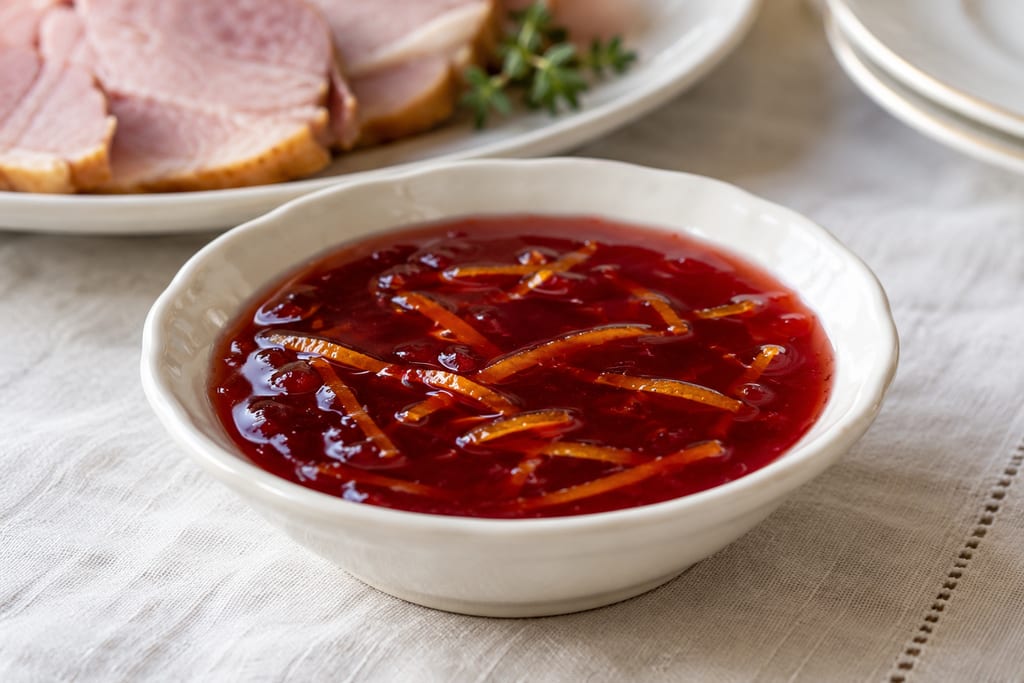
Cumberland sauce is a British condiment of redcurrant jelly, mustard, blanched orange peel and port, traditionally served cold with ham, game and cold meats.
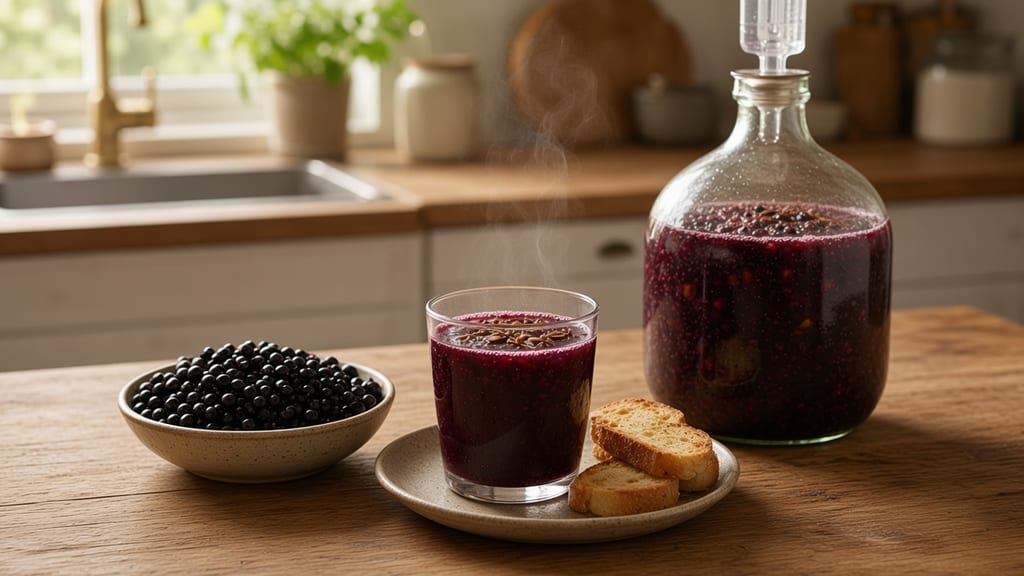
Mrs Beeton's 1861 elder wine in full, a peck of berries steeped in boiling water, spiced and boiled for an hour, then a safe modern version with ripe black elderberries simmered before fermenting.
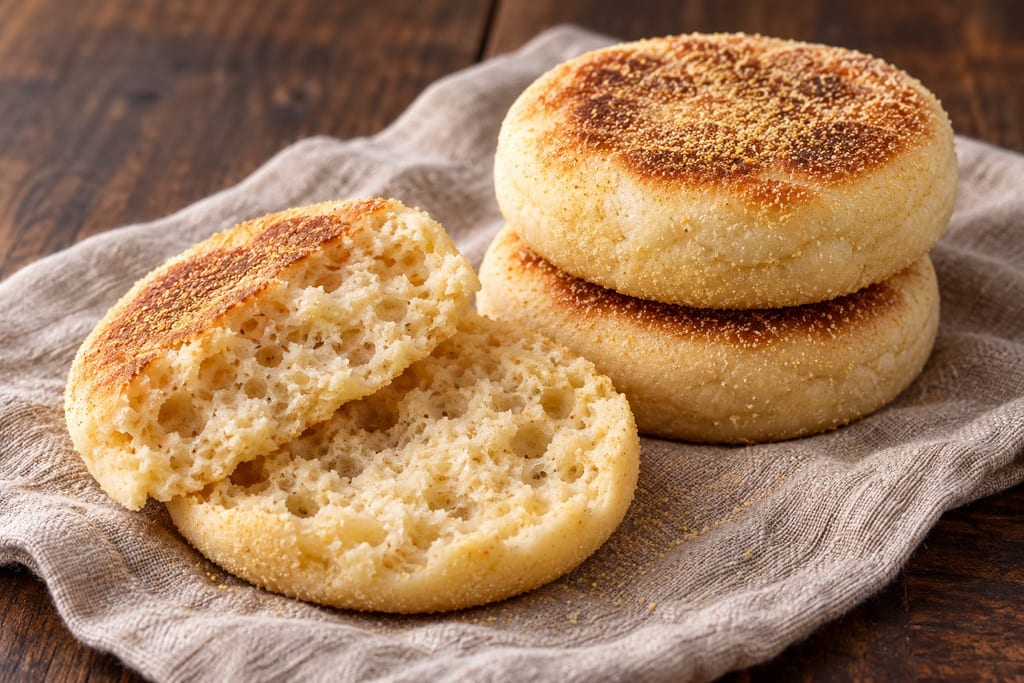
King Arthur’s six-piece English muffin batch uses a yeast preferment, two folds and a skillet or electric griddle; it is distinct from the sourdough-and-yeast version already catalogued.
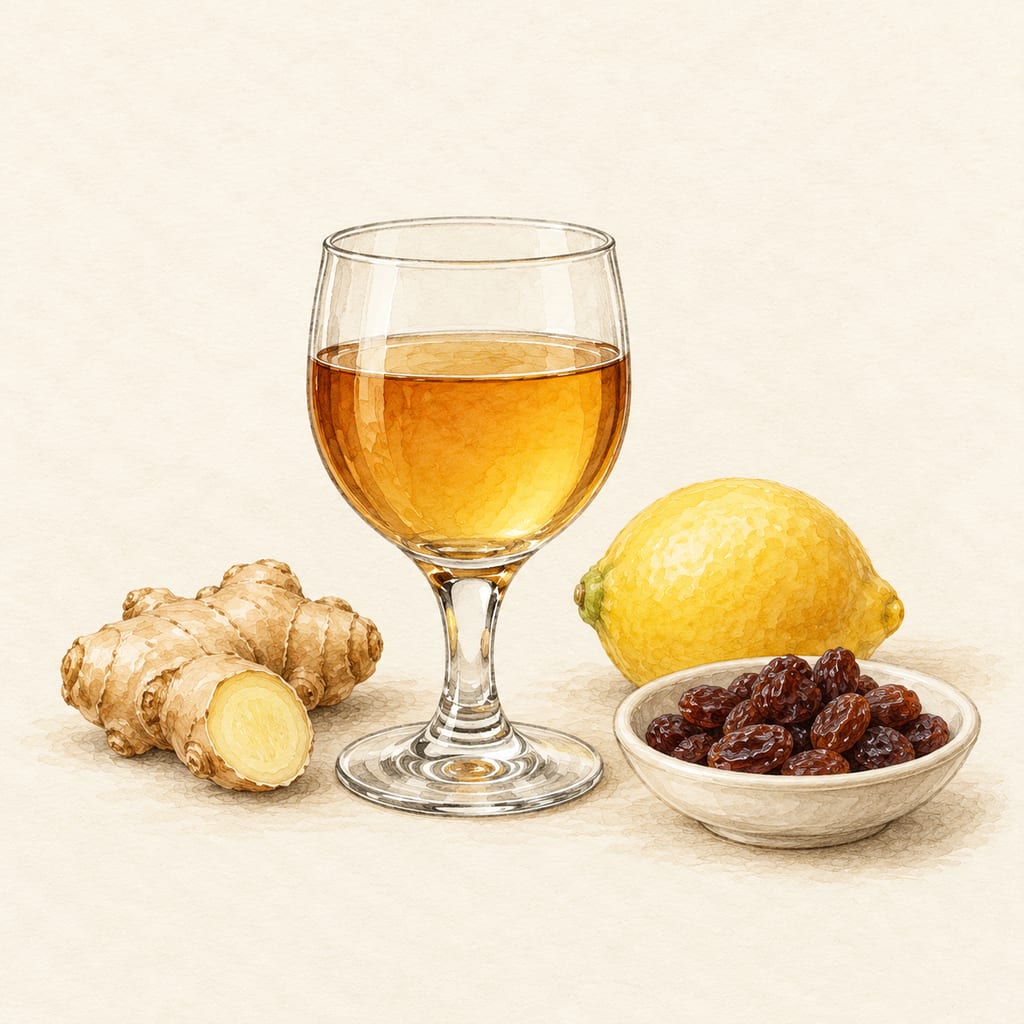
A Victorian household wine of boiled sugar, lemon and bruised ginger, worked on raisins in a cask for a fortnight and finished with brandy, made nine gallons at a time.
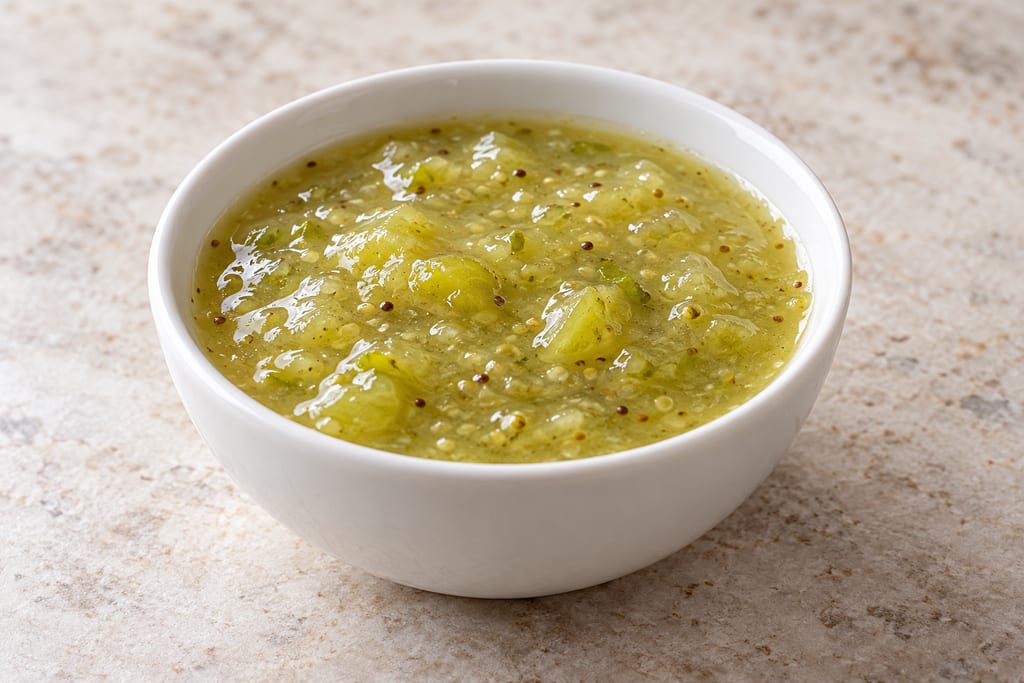
Gooseberry sauce is a soft, tart sauce of cooked green gooseberries, sharpened with wine or vinegar and lightly sweetened, traditionally served with mackerel.
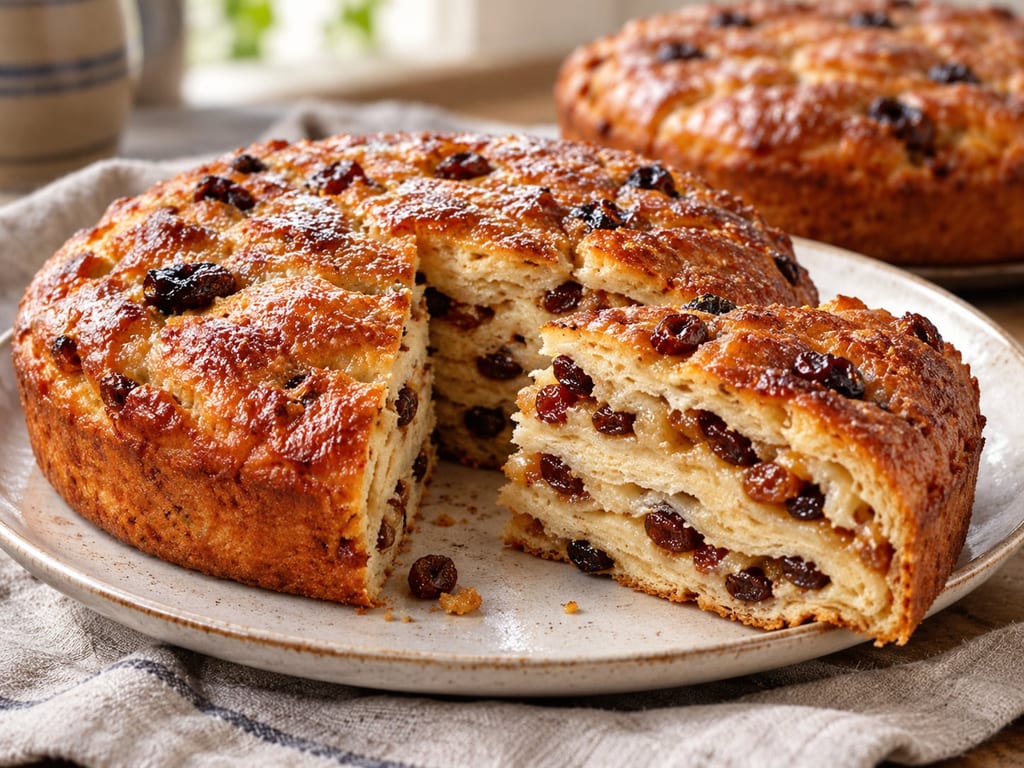
A yeast dough is folded around sweetened lard and dried fruit, then baked in tins until the bottom caramelizes.
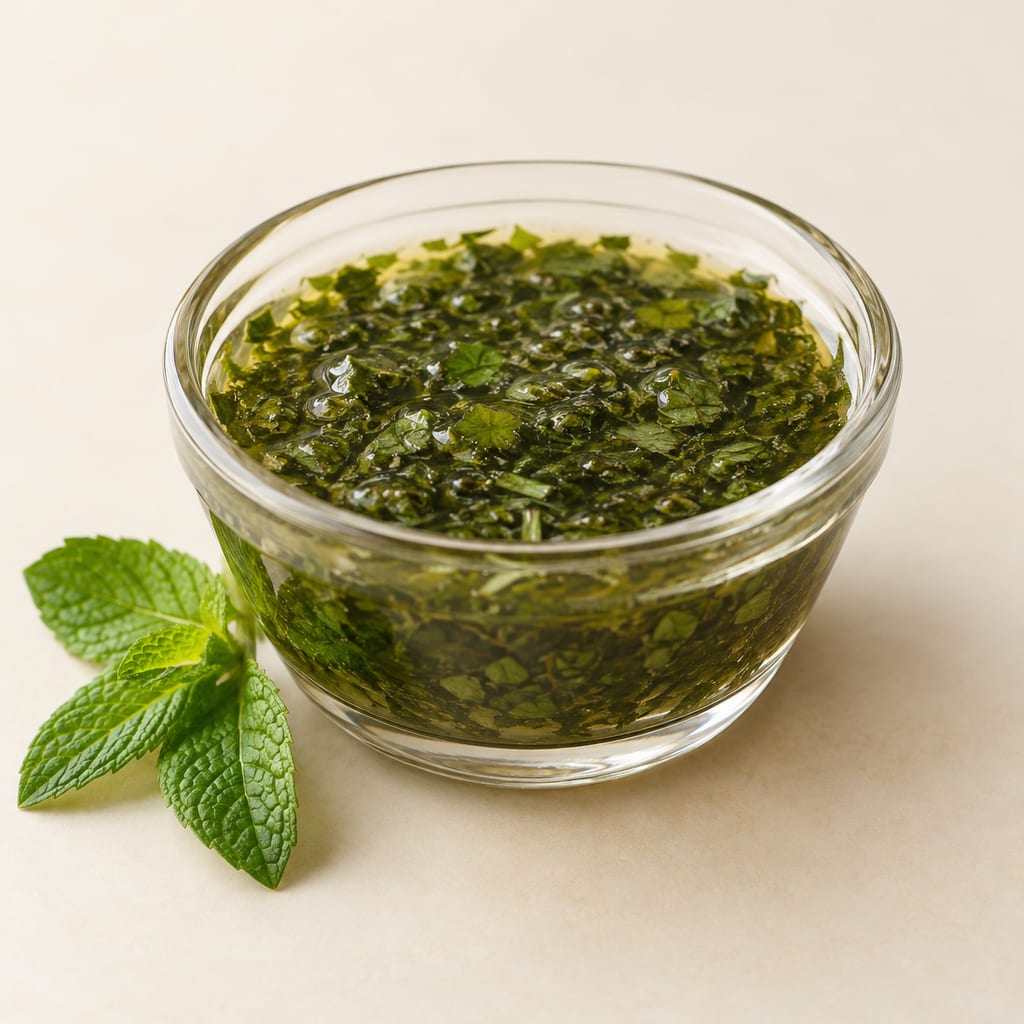
Finely chopped fresh mint steeped in a sweet and sharp liquid of white wine vinegar, sugar and water, the sauce traditionally served with roast lamb in Britain.
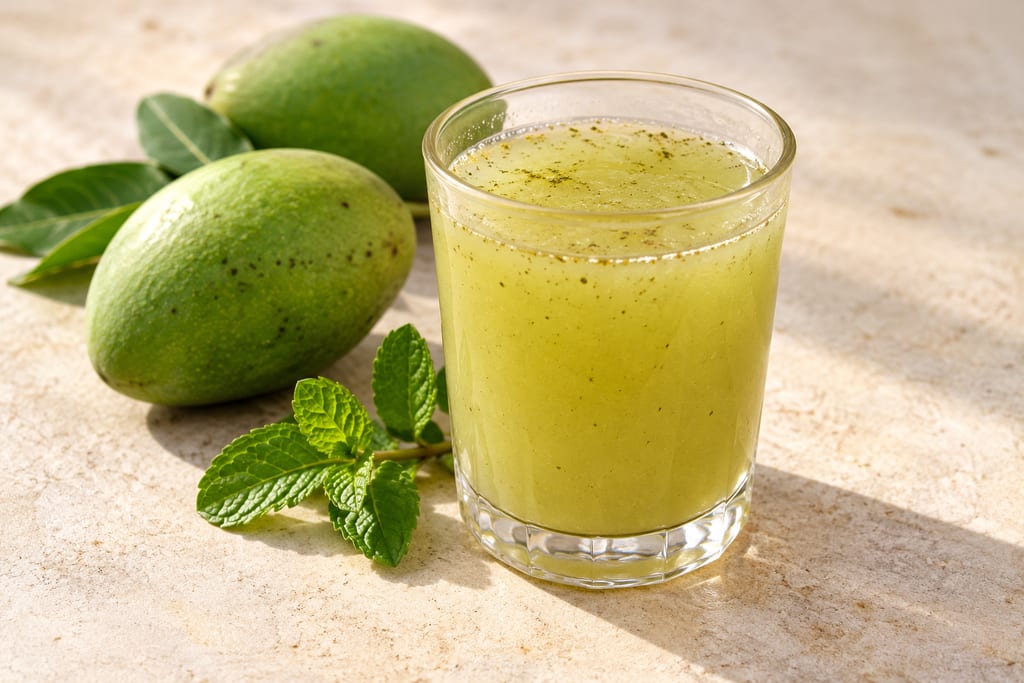
Aam panna is a tart Indian summer drink made by cooking unripe green mango until its flesh softens, then blending the pulp with sweetener, salt and spices and diluting it with water.
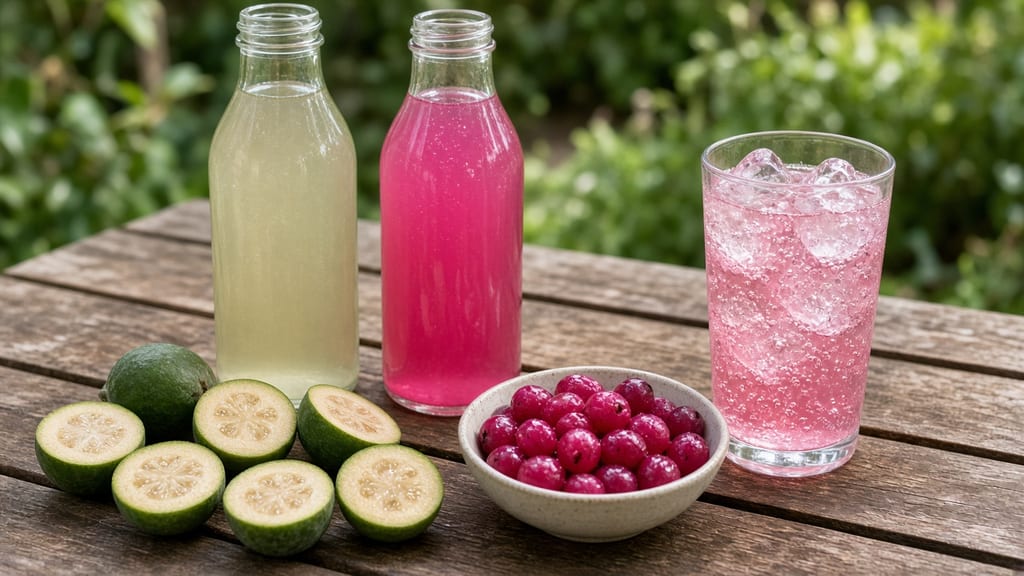
New Zealand feijoa cordial, from the flesh or just the skins, and Australian lilly pilly cordial: fruit, water and sugar heated briefly, strained, and sharpened with lemon and tartaric or citric acid.
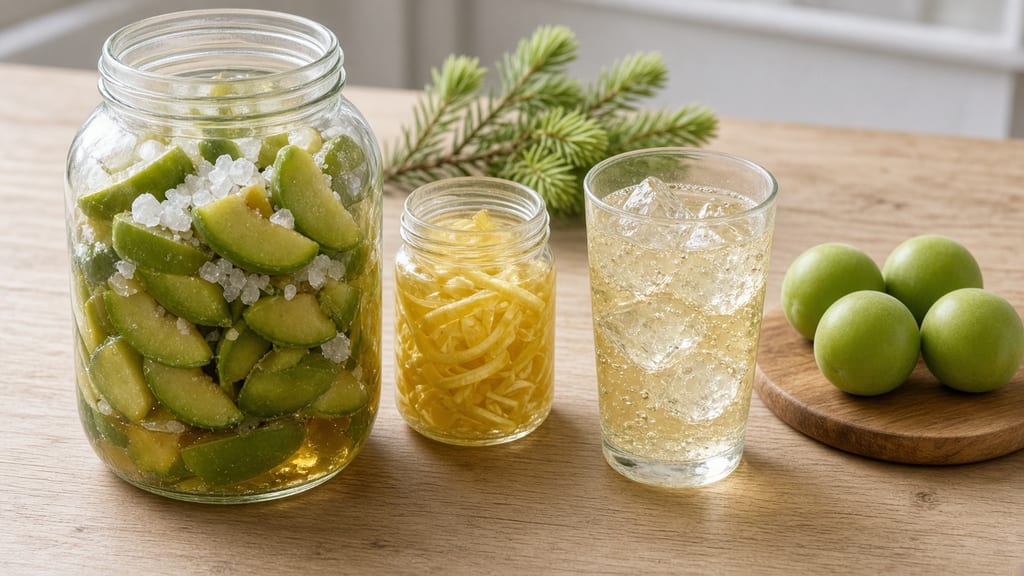
Syrups made without heat by packing fruit or shoots in sugar: Korean maesil-cheong with the ministry's stone-removal steps, frozen Japanese ume syrup, yuja-cheong and Polish pine-shoot syrup.
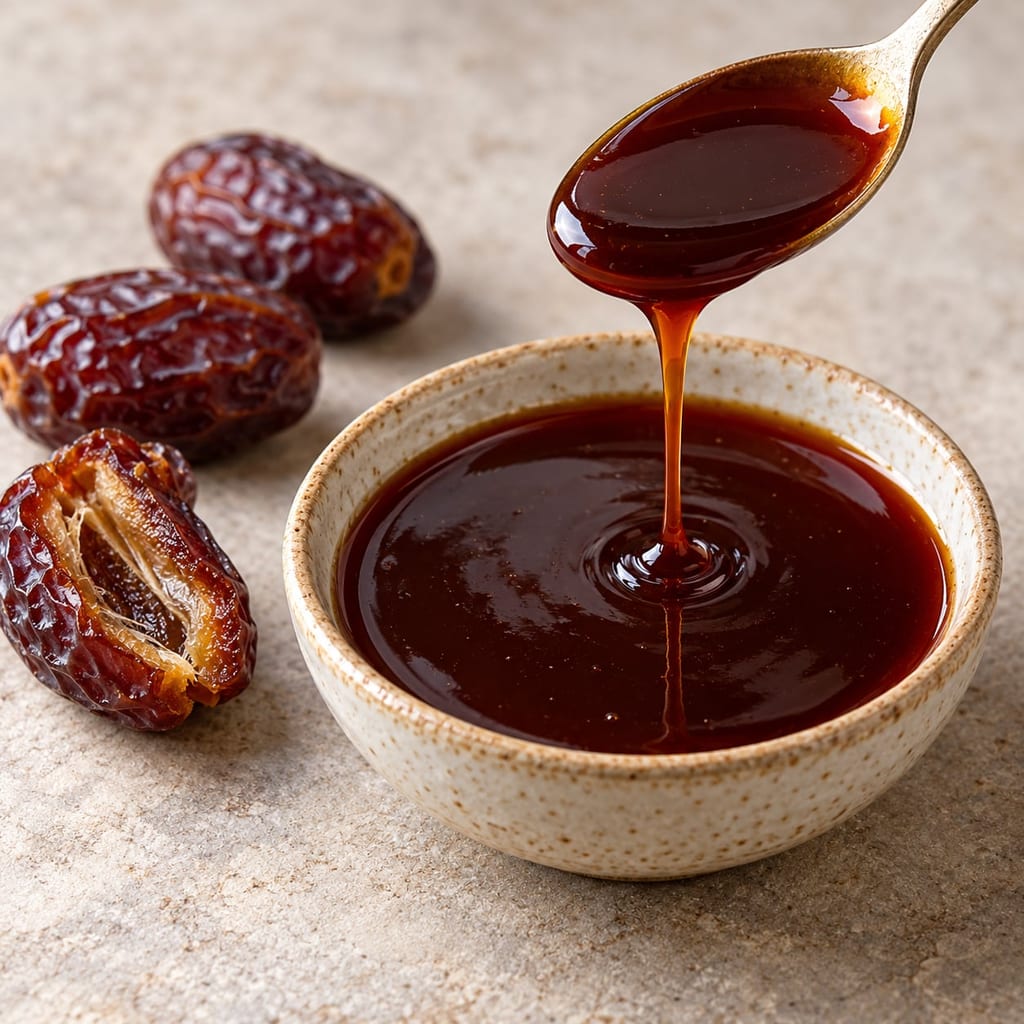
A thick, dark, very sweet syrup made from dates, known as dibs, rub, silan or date molasses. It sweetens tahini and desserts and glazes or sauces savoury dishes across the Middle East and North Africa.
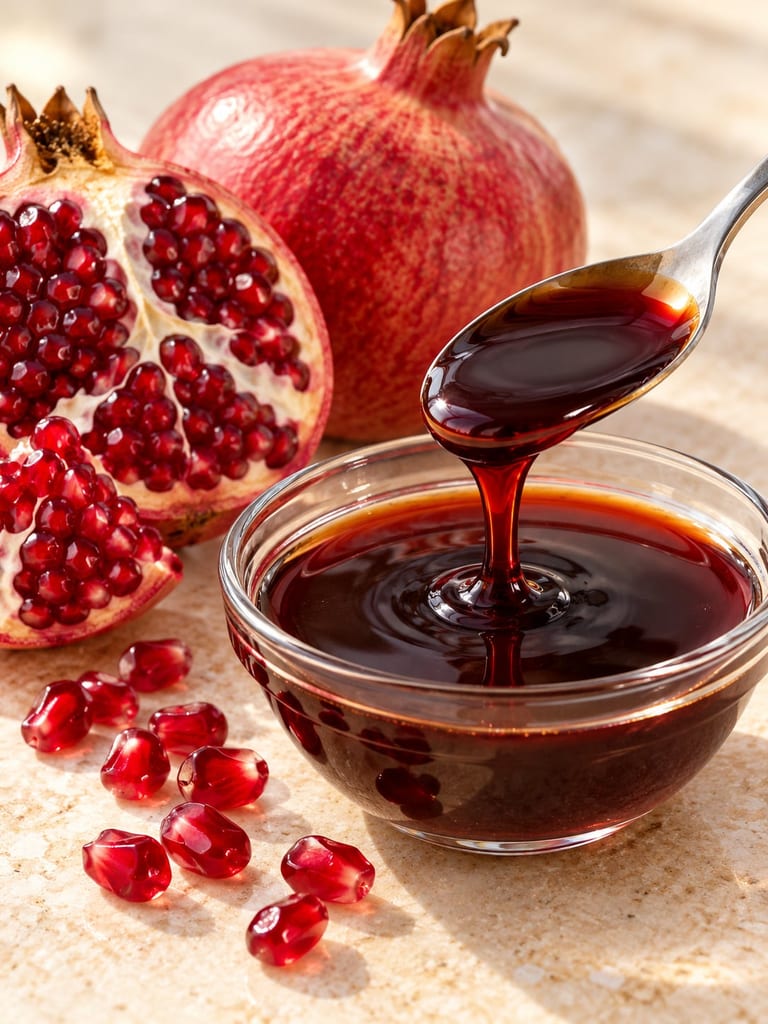
The registered Hatay method presses pomegranate arils and slowly concentrates the strained juice. Its 100 kg source batch and experienced-producer endpoint are retained; no home-scale time or shelf-life is inferred.
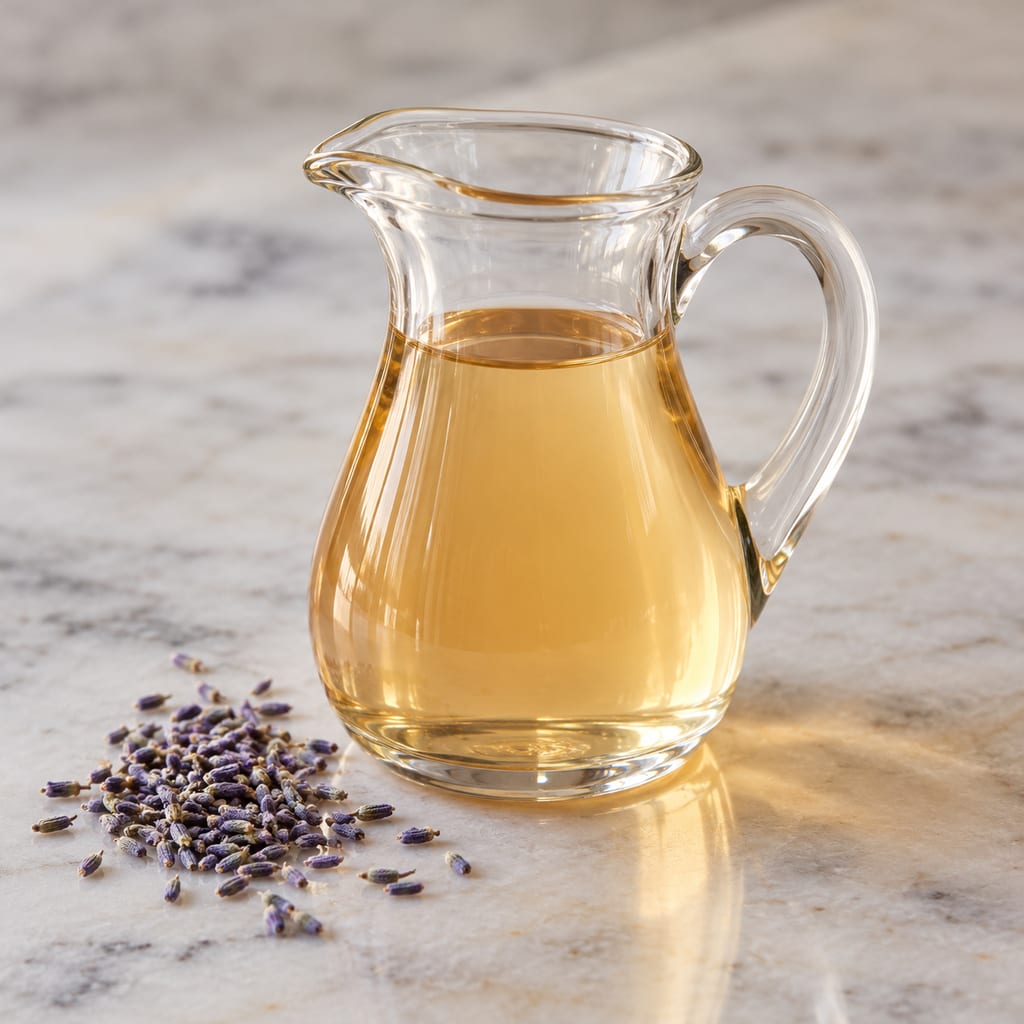
Sugar syrups flavoured by holding botanicals, sugar and water in sealed bags in a 135°F (57°C) water bath for an hour, then cooling and refrigerating; several can share one bath.
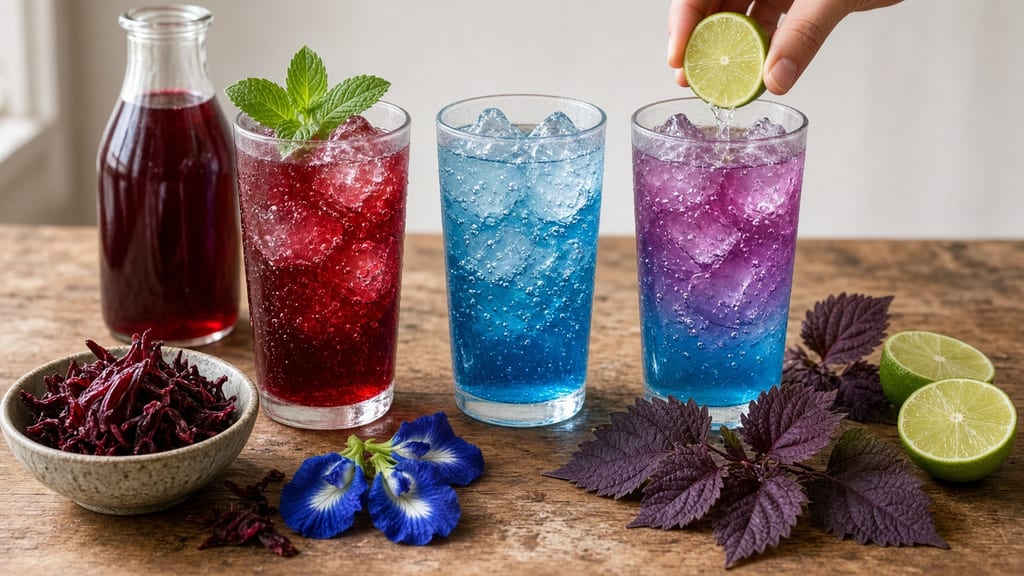
Senegalese bissap syrup from a cold soak, with Ghanaian sobolo, Thai butterfly pea that turns from blue to magenta and Japanese red shiso juice that flashes ruby.
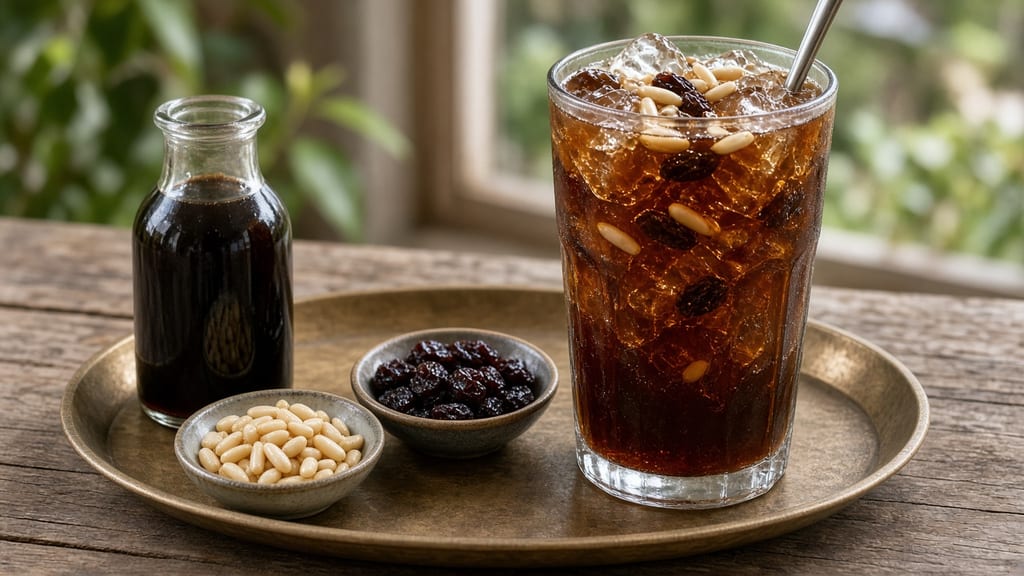
The Levant's Ramadan syrup: grape and date molasses blended into a sugar syrup in 5 minutes, smoked with mastic or cinnamon, finished with rose water and served over ice with pine nuts and raisins.
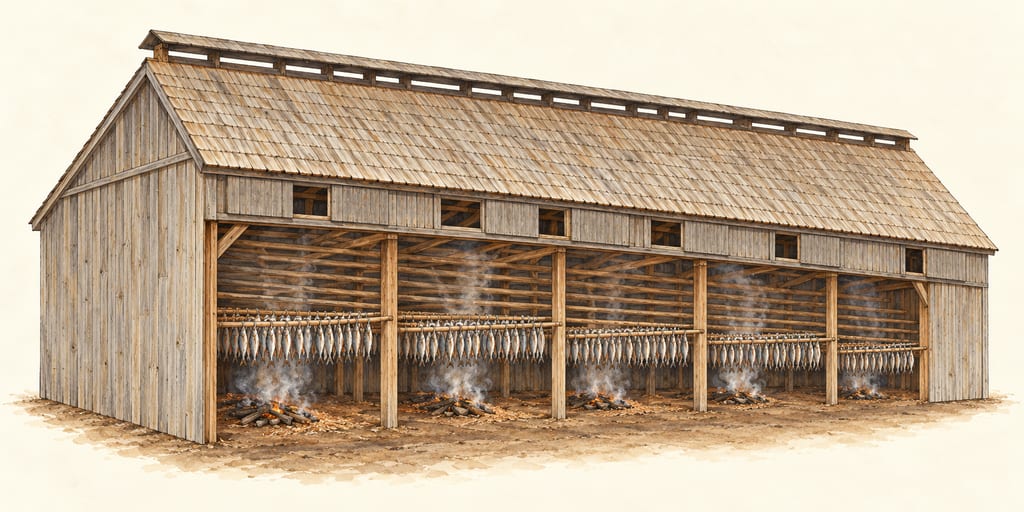
A Cap-Pelé boucanière is an Acadian herring-smoking building. The documented Willie Niles example is a one-storey wood-frame structure with a ridge smoke vent and interior bays for hanging fish-bearing cannes.
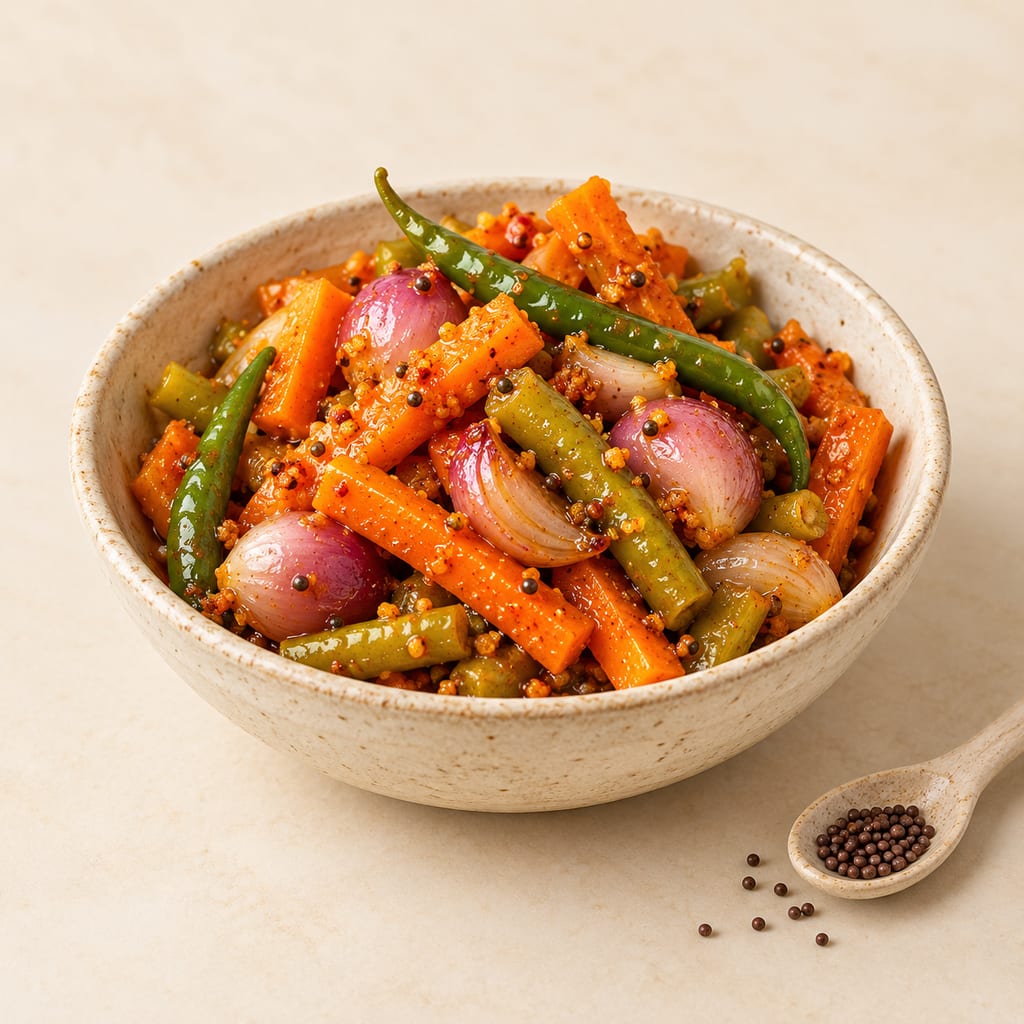
Achcharu is a family of Sri Lankan vinegar pickles made with mixed vegetables or seasonal fruit and a piquant spice dressing. This version is a quick, refrigerated, non-fermented mixed-vegetable pickle.
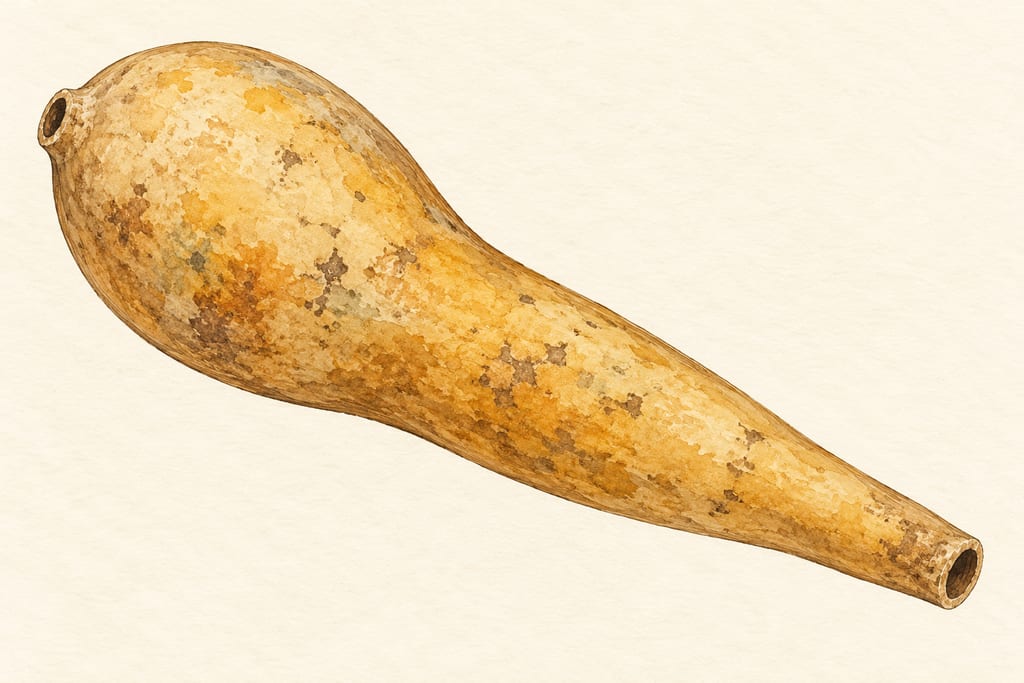
The acocote is a long, hollowed and dried gourd used to draw aguamiel from a mature maguey. It is a harvesting tool: the sap is transferred to a separate vessel before it ferments into pulque.
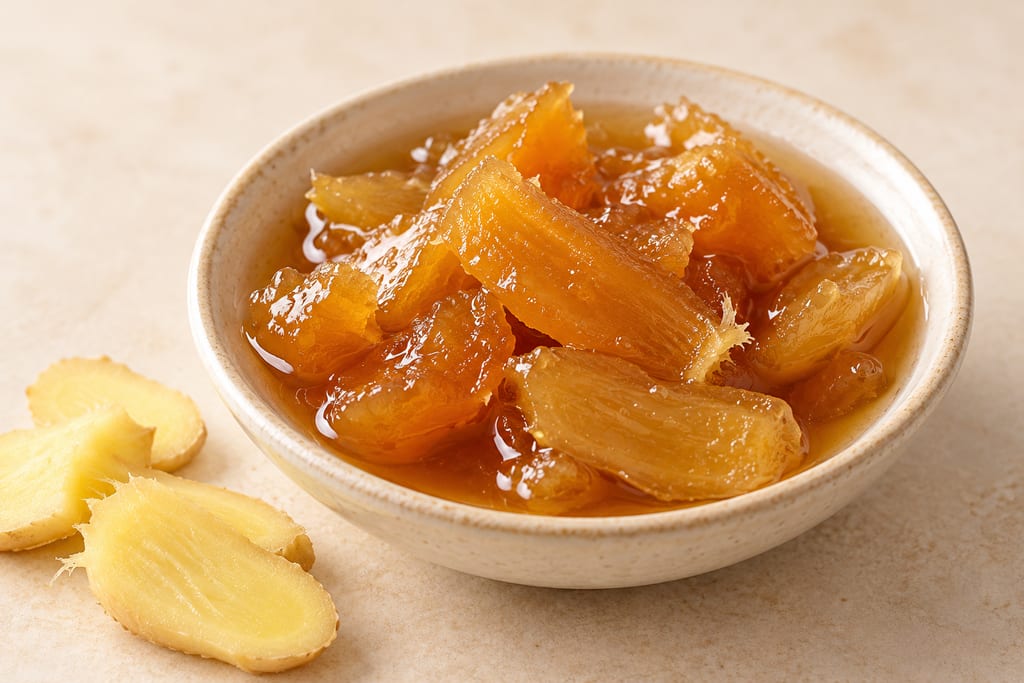
Adrak murabba preserves young ginger in sugar syrup, a sweet South Asian preparation recorded in Indian cookery and food-processing sources.
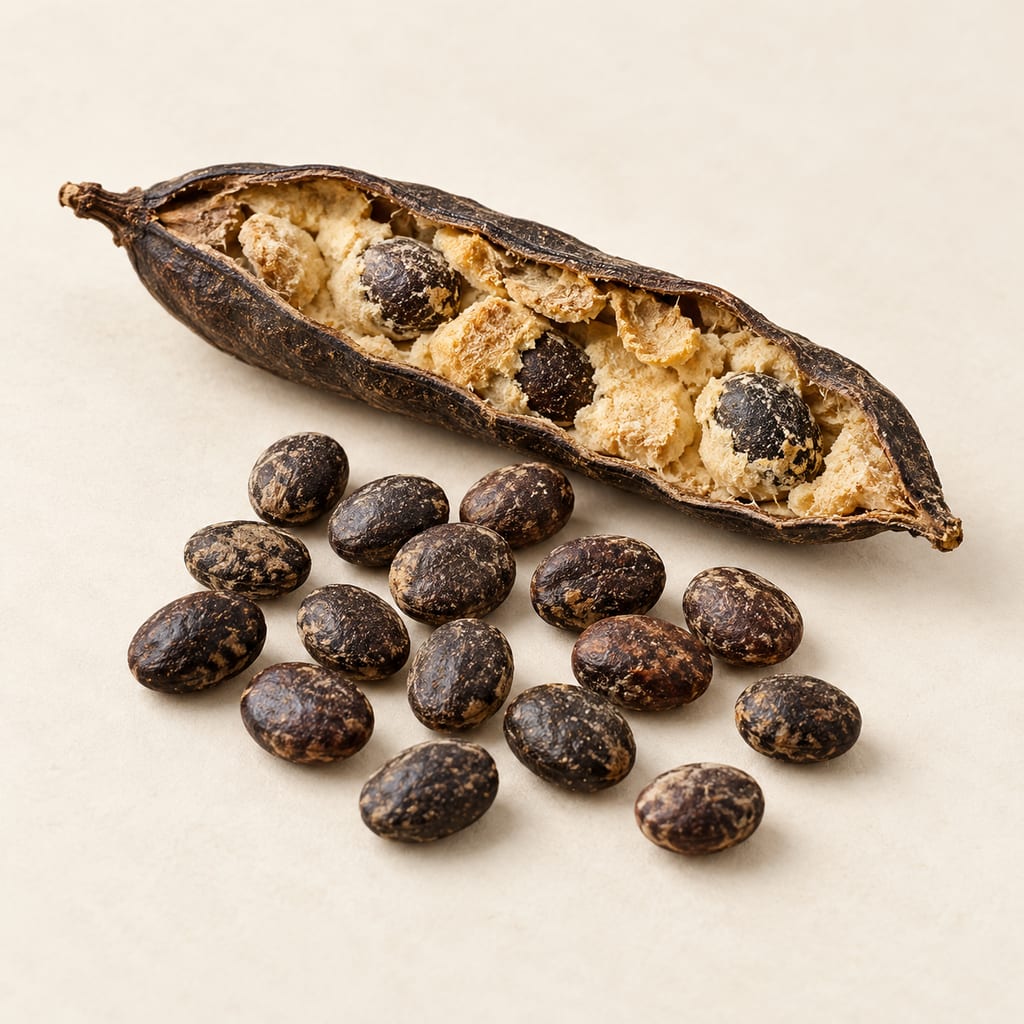
Parkia biglobosa seeds are fermented into regional West African seasonings, including nététou, iru, dawadawa and soumbala. The yellow fruit pulp is a separate food, and names and methods vary by place.
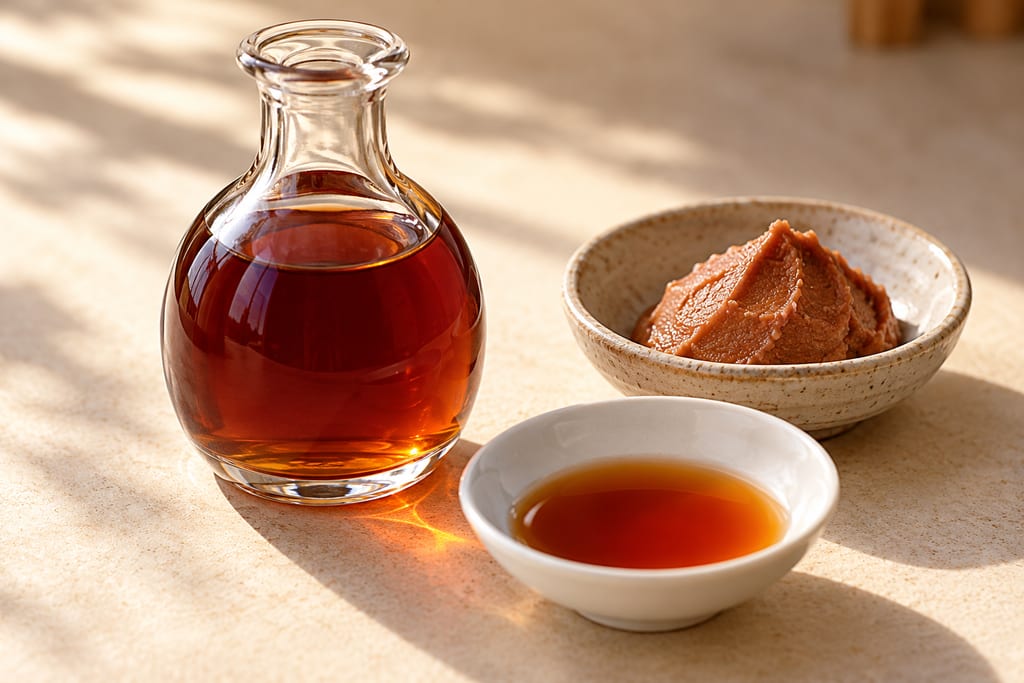
Japanese reddish-brown vinegar from sake lees matured about three years, turned to vinegar by acetic bacteria; the vinegar of Handa and Edomae sushi rice.
A refined common-wheat flour blended for a broad range of baking; its protein and behavior vary with wheat, milling and market.
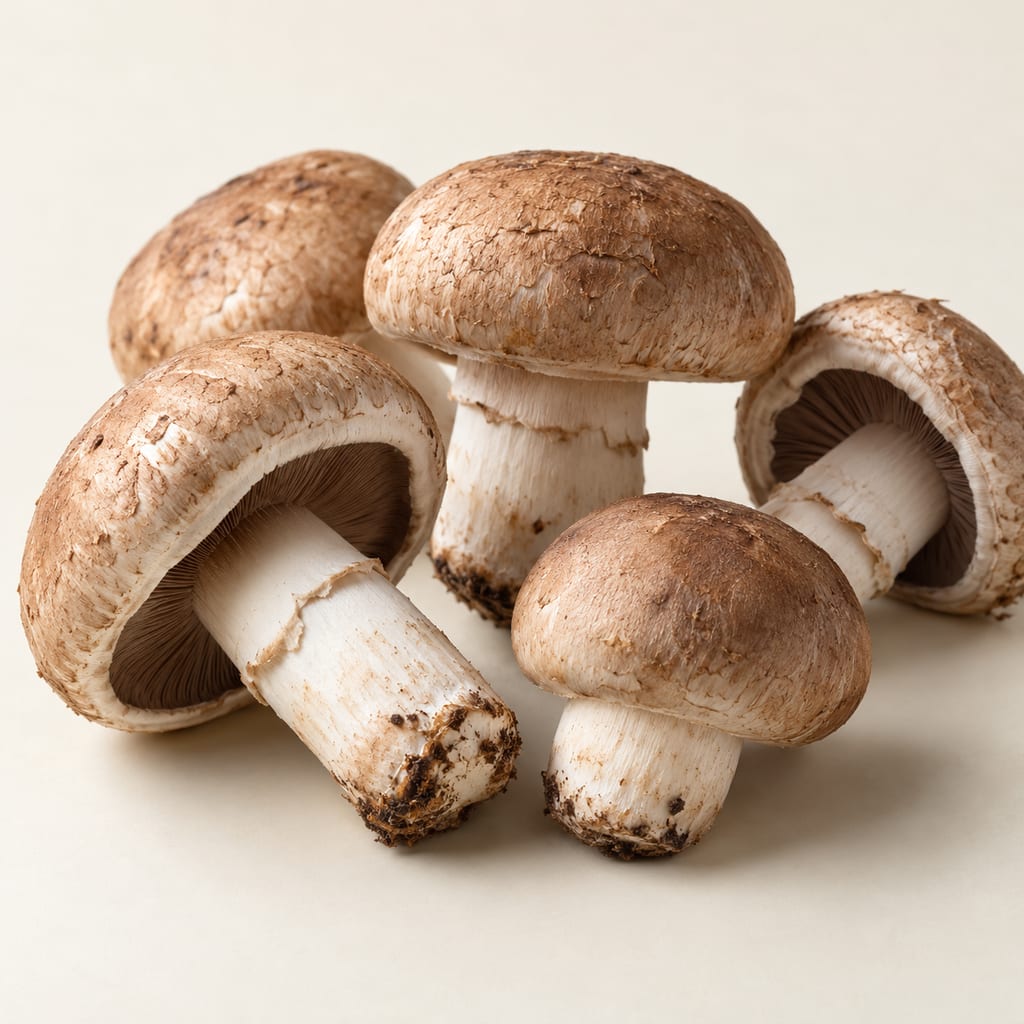
The almond mushroom, Agaricus subrufescens, was cultivated in eastern North America in the 1800s, lost its market, and returned as a cultivated mushroom from Brazil, where it is grown under several names.
No community contributions have been published for this entry yet.
Sign in to contribute. Published comments and photos are free to read.
Isabella Beeton, S. O. Beeton, London; scan via Internet ArchiveHistory · Method
The Book of Household Management (1861)No. 1822 Lemon syrup: 2 lbs loaf sugar, 2 pints water, 1 oz citric acid, ½ drachm essence of lemon; boil sugar and water ¼ hour, cool in a basin, powder the acid, mix with the essence, add to the syrup, bottle; 2 tablespoonfuls to a tumbler of cold water.
No. 1834 Lemonade: rub lumps of sugar on 2 lemons until they take up the oil, add the juice of 3 large or 4 small lemons without pips, pour on a quart of boiling water, strain through a fine sieve or muslin; egg white or sherry improve it.
No. 1837 For a summer draught: juice of 1 lemon, a tumblerful of cold water, pounded sugar to taste, a small teaspoonful of carbonate of soda, drunk while effervescing.
No. 1835 Negus: sugar rubbed on the lemon rind until the yellow part is absorbed.
Cited in: What this recipe is; What each ingredient does; Part one: Beeton's lemon syrup, 1861; Reading Beeton's recipe; Rubbing sugar on the lemon; A Victorian fizz; Using it in fizzy water; Where the sources disagree
Jerry Thomas and Christian Schultz, Dick & Fitzgerald, New York; scan via Internet ArchiveHistory · Method
How to Mix Drinks, or The Bon-Vivant's Companion (1862), with A Manual for the Manufacture of CordialsNo. 430 Lemon syrup: 2 lbs sugar (or 2 pints syrup), 1 pint lemon juice; let the juice settle, clear off the skin, strain; boil the syrup to the little crack, add the juice, boil to the pearl, skim, bottle when quite cool.
No. 431 Orange syrup is made the same way.
No. 224 Lemonade (fine for parties): rub lump sugar on two lemons until it takes up the oil; same method as Beeton No. 1834.
No. 222 Lemonade: juice of half a lemon, sugar, orange pieces, 1 tablespoon raspberry or strawberry syrup, shaved ice and water.
No. 225 Orangeade is made like lemonade with oranges.
Cited in: Rubbing sugar on the lemon; The bartender's lemon syrup, 1862; Oranges and other citrus; Using it in fizzy water; Where the sources disagree
Clemson Cooperative Extension Home & Garden Information Center (16 May 2024)Method · Safety · Serving
Strawberry LemonadeStrawberry lemonade concentrate (from ballmasonjars.com): 6 cups hulled strawberries, 4 cups freshly squeezed lemon juice, 6 cups granulated sugar, 7 pint jars.
Purée the strawberries, add juice and sugar, heat to 190 °F without boiling, skim foam, ¼-inch headspace, process 15 minutes in a boiling-water canner adjusting for altitude, check seals after 24 hours.
Can also be made and served immediately or stored frozen.
Serve one part concentrate to three parts water, tonic water or ginger ale.
Cited in: What this recipe is; Modern recipe: strawberry lemonade concentrate (canned); Using it in fizzy water; Problems and safety
Ask Extension, May–June 2026Safety
Canning Lemonade Concentrate (#932767)Question from Franklin County, Ohio: NCHFP has no safe method for canning plain lemonade concentrate.
An expert pointed to NCHFP fruit purée guidance as similar; a colleague checked and the person who had shared lemonade concentrate recipes confirmed they had no validated recipe and shared them for ingredients, not safety.
Cited in: Part two: why the old syrups are not the modern method; Modern recipe: plain lemon syrup (refrigerated or frozen); Problems and safety; Where the sources disagree
Receptfavoriter.se (Henrik Mattsson; published 2009, updated 2023)Method · Serving
Citronsaft650 g lemons (4–5), 1 litre sugar, 40 g citric acid, 1 litre water; makes 1.6 litres concentrate.
Boil water, sugar and citric acid, add finely sliced lemons, cool, cover and leave in the fridge a day, strain through a cloth, bottle; keep in the fridge or cool and dark, opened bottles in the fridge; may be frozen and scraped out.
Dilute 3–6 times; heavily diluted it is called citrondricka; sodium benzoate may be added for longer keeping.
Cited in: Names; What each ingredient does; Modern recipe: plain lemon syrup (refrigerated or frozen); Using it in fizzy water; Where the sources disagree
Austrian Federal Ministry of Health (2007, amended 2017)Definition
Österreichisches Lebensmittelbuch, Codexkapitel B 6 SirupeOrangeaden and Zitronaden contain natural flavourings from the fruit peel and possibly fruit juice; syrups need at least 55 °Brix, herb syrups 45 °Brix; dilution instruction such as 1 + 6.
Cited in: Names; What each ingredient does; Oranges and other citrus
University of Maine Cooperative Extension (Kate McCarty, 15 May 2025)Safety · Serving
Drinks from the Garden: Using Fresh Fruit, Vegetables and Herbs in DrinksFresh juice should be refrigerated and used within a week or frozen.
Simple syrups are refrigerated and used within a month.
A few tablespoons in an 8-ounce glass of sparkling water; berry lemonade suggested.
Cited in: Modern recipe: plain lemon syrup (refrigerated or frozen); Using it in fizzy water; Problems and safety
Bauernzeitung (Landwirtschaftskammer Tirol)Safety
Sirupe aus Blüten, Kräutern und BeerenTraditional syrups with 2 kg sugar per litre kept because moulds and yeasts cannot grow; reduced-sugar syrups mould or ferment; citric acid cannot preserve.
Cited in: What each ingredient does; Problems and safety
Ministerstvo zemědělství České republikyDefinition
Vyhláška č. 248/2018 Sb., o požadavcích na nápoje, kvasný ocet a droždí§ 5(2): a drink concentrate with more than 50% by weight natural sweeteners may be called sirup.
Cited in: Names