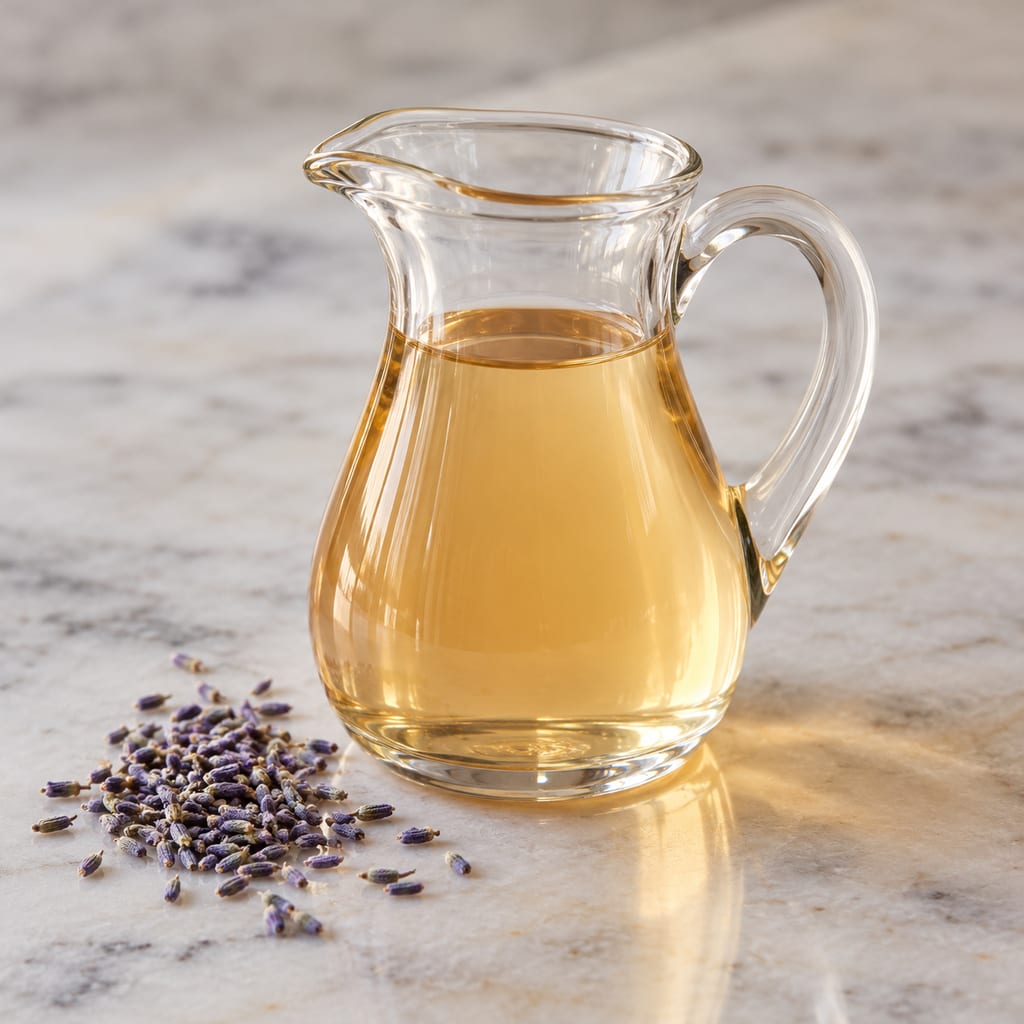
Herb, flower and fruit cordial syrups
Sugar syrups flavoured by holding botanicals, sugar and water in sealed bags in a 135°F (57°C) water bath for an hour, then cooling and refrigerating; several can share one bath.
 FermenteaWhere food goes to change
Holunderblütensirup · Elderflower syrup · Bezový sirup · Herb syrup · Flower syrup
Elderflower heads steeped for one to three days in a lemony sugar syrup, strained and kept cold; the same infusion method flavours syrups with mint, basil, thyme and other herbs.
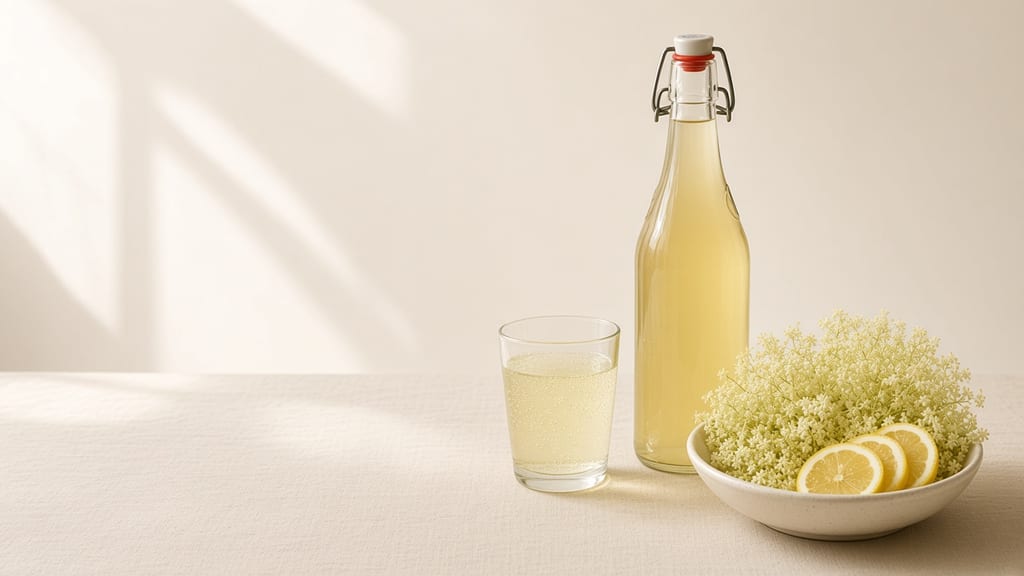
Elderflower cordial is a sugar syrup flavoured with the creamy flower heads of the elder tree, Sambucus nigra, and sharpened with lemon and citric acid. The flowers are never cooked. They steep in the syrup for one to three days, then the syrup is strained and kept cold. Stirred into sparkling water it makes a pale, scented soda.
This page gives the tested refrigerated recipe from Oregon State University Extension as the method. It then applies the same infusion to garden herbs, and records the older room-temperature methods from Bohemia, Tyrol and Britain as practice, with their quantities. Oregon State published the recipe in a guide to preserving elderberries safely, which covers the flowers and the berries of the same shrub.
In German it is Holunderblütensirup, in Czech bezový sirup, in English elderflower cordial or elderflower syrup. Austria's food codex files it under Kräutersirupe, syrups flavoured with plant extracts, which may be thinner than fruit syrups: at least 45 °Brix against 55 °Brix for every other syrup. Czech food law reserves the word sirup for a drink concentrate with more than 50% natural sweeteners by weight.
Austrian rules treat a bottle of herb syrup as a concentrate. Any syrup meant for dilution must carry a mixing instruction, with 1 + 6 as the codex's own example, and must say how to store it after opening where that matters. A homemade bottle can borrow both habits: write the dilution and the words keep refrigerated on the lid.
In Bohemia the syrup is a family recipe. The actress and writer Iva Hüttnerová gave hers on the Czech Radio programme Domácí štěstí as a classic inherited from grandmothers: flowers, lemons, sugar, water and citric acid, with no gadgets.
Tyrolean recipes for elderflower and lemon balm syrup traditionally dissolved 2 kg of sugar in a litre of water. Tyrolean advisers explain that the high sugar is what keeps such a syrup: moulds and yeasts cannot live or multiply in it. As households cut the sugar, the bottles began to mould and the opened syrup began to ferment. Current extension advice therefore keeps the low-sugar version in the refrigerator. The Tyrolean chamber of agriculture runs syrup-making courses in the winter and spring months.
Pick whole clusters, the flat umbrella-shaped cymes, when the flowers are white and fully open. Czech practice adds conditions: the heads should smell strongly and be dry, and they should come from bushes away from roads and busy places, picked on a sunny day.
Do not rinse them. Most of the scent sits in the pollen, and washing carries it away. Shake each head and spread the flowers on a tray for a while so small insects can leave. Then strip away stems and any leaf pieces: elder leaves and stems contain higher levels of toxins than the flowers.
The same shrub gives elderberries in late summer, and the berries follow stricter rules than the flowers. Raw elderberries and their juice can cause nausea and, in serious cases, cyanide poisoning, so the berries are always cooked. Red elderberries are a different species and should not be used. Syrup made from American or European black elderberries must be refrigerated or frozen, because some of them are too low in acid to can safely. The cooked berry syrup has its own page in this series.
The Oregon State recipe uses equal volumes of sugar and water, about 400 g of sugar to 475 ml of water. That works out at roughly 46% sugar before the lemon juice goes in, a little above the Austrian herb-syrup minimum and well below the old 2 kg per litre. At that strength the syrup cannot protect itself on a shelf.
Citric acid sharpens the flavour, but it does not preserve; Tyrolean advisers state this plainly. The answer is cold. The infusion happens in the refrigerator and the finished syrup stays there. Oregon State says its syrup cannot be safely consumed after storage at room temperature or after canning. No home-canning authority has published a tested canning process for elderflower cordial, and Ask Extension names freezing as the safest way to keep it.
The Ask Extension question came from a cook in DeKalb County, Georgia, who already froze the cordial and found it filled the freezer. The answer was that canning it could be safe but has probably never been tested, so no processing time exists. Freezer space is the price of keeping elderflower cordial into winter.
A medium saucepan, a zester, a lidded container large enough for the flowers, a colander lined with cheesecloth or muslin, clean bottles with lids, and room in the refrigerator or freezer. Use food-grade citric acid, not the descaling product sold for kettles.
A refractometer that reads in °Brix is optional. Tyrolean advisers describe them as cheap, and one shows at a glance whether a batch reaches the Austrian 45 °Brix for herb syrups.
Put 2 cups (about 475 ml) of water and 2 cups (about 400 g) of granulated sugar in a pan. Stir and bring to the boil until the sugar dissolves, then simmer for 10 minutes. Take it off the heat and stir in the zest and juice of one large lemon and 1½ teaspoons of citric acid.
Put 15–20 prepared flower clusters and the second lemon, sliced thinly, in the covered container. Pour the syrup over them, cover and put the container in the refrigerator. Leave it for one to three days.
Pour the syrup through a colander lined with cheesecloth and let it drain. Bottle the clear syrup and keep it in the refrigerator, using it within a few weeks. For longer keeping, freeze it. BBC Food freezes cordial in plastic bottles with a couple of inches left for expansion and keeps it for a year.
The season lasts a few weeks. Oregon State dries surplus clusters on parchment paper at 27 °C (80 °F) or less to keep the best flavour, then rubs the flowers off the stalks in a bowl and discards any leaf or stem pieces. No tested recipe gives a quantity of dried flowers for syrup, so a dried-flower syrup is a matter of taste and should be kept in the refrigerator like the fresh one.
Garden herbs work the same way. Maine Extension makes a simple syrup from 1 cup of sugar or honey and 1 cup of water, brings it to the boil, adds 1–2 cups of flavouring such as mint, rosemary, thyme or basil, turns off the heat and steeps it for 5 minutes before straining into a clean glass jar. Fruit and herbs can share the pan: blueberry with thyme is one of Maine's suggestions for a homemade soda. The same 5-minute steep works for rhubarb, berries, peaches or sliced hot peppers.
These syrups follow the same rule as elderflower. Refrigerate them and use them within a month.
Tyrolean syrup courses use a slower version for herbs and blossoms. They dissolve 1.3 kg of sugar and 5–10 g of citric acid in a litre of boiling water and cool the syrup to about 50 °C. Half a litre of herbs or flowers goes in, and the mixture steeps for about two days. The syrup is then strained, reheated to 85 °C and filled hot. That method is Austrian practice and has not been tested by a home-canning authority.
Iva Hüttnerová's bezový sirup is the classic Czech method, recorded here as practice. Boil about 2 litres of water with 80–90 g of citric acid, stir until it dissolves and let it cool completely. Add 50 flower heads and 4 medium lemons cut into slices. Leave it at room temperature for about 24 hours.
Strain through a clean cloth or fine sieve. For every litre of liquid add at least 1 kg of sugar, 2–3 kg in all, and heat it to just below boiling, stirring until the sugar dissolves. Pour it hot into sterilised bottles or jars and close them at once. Czech cooks keep it for several months, often until the next season. No authority has tested that shelf life, and Oregon State's advice for its lower-sugar syrup is refrigeration.
BBC Food's elderflower cordial by Lotte Duncan pours 1.7 litres of boiling water over 30 flower heads with 2 sliced unwaxed oranges and 3 sliced unwaxed lemons. It stands overnight under a tea towel. The next day the cook strains it, adds 900 g of caster sugar and 1 teaspoon of citric acid, simmers it until the sugar dissolves and bottles it hot. It makes about 2 litres. BBC Food warns that the cordial can go mouldy on top, keeps a couple of weeks in the fridge once opened, and freezes well.
Per litre of water, the Oregon State syrup uses about 840 g of sugar, 32–42 flower heads and 3 teaspoons of citric acid. The Czech recipe uses about 25 heads, 40–45 g of citric acid and at least 1 kg of sugar per litre of strained liquid. The BBC Food recipe uses about 18 heads, about 530 g of sugar and a little over half a teaspoon of citric acid.
The sugar figures explain the storage advice. The Czech syrup, at 1 kg or more per litre, sits at or just over the 50% line that Czech law draws for a sirup. The Oregon State syrup sits just under that. The BBC cordial is the thinnest of the three, which is why BBC Food warns about mould and sends opened bottles to the fridge.
Czech households pour bezový sirup into water with ice and lemon. BBC Food serves it with sparkling water, or with sparkling wine. Maine Extension's measure for homemade sodas is a few tablespoons in an 8-ounce (240 ml) glass of sparkling water. Maine also freezes herb leaves, fruit or edible flowers into ice cubes for the glass, which suits a mint or lemon balm syrup.
Start with the label habit from Austria. A 1 + 6 dilution means one part syrup to six parts water, so 30 ml of elderflower syrup makes a 210 ml glass. Taste and adjust from there, because a homemade syrup is rarely the same strength twice. Put the bottle straight back in the refrigerator after each glass; Oregon State stores this syrup cold, and Maine gives refrigerated syrups about a month.
Mould on the surface or a fizzy, yeasty smell means the syrup has spoiled; throw it out. Tyrolean advisers trace both faults to syrups with too little sugar for room-temperature storage, which is why the low-sugar recipe stays cold.
Elder leaves and stems carry more toxins than the flowers, so remove them before infusing. Smell and taste cannot show that a cordial stored outside the refrigerator is safe.
Oregon State and Czech practice say never rinse the flowers; BBC Food rinses them gently to remove dirt and insects. Oregon State infuses cold for 1–3 days in syrup; Hüttnerová and BBC Food steep the flowers in water for about a day and add the sugar afterwards. The citric acid ranges from 1 teaspoon in 1.7 litres in the BBC recipe to 80–90 g in 2 litres in Hüttnerová's. Czech and Tyrolean cooks keep hot-filled bottles for months; Oregon State says its syrup is unsafe after room-temperature storage.
Czech bezový sirup is described as a recipe handed down from grandmothers; old Tyrolean herb syrup recipes used 2 kg sugar per litre; the refrigerated method on this page is Oregon State's.
Scaling: linear
Oregon State says its elderflower syrup cannot be safely consumed after room-temperature storage or canning.
Hazard sourceThere are no NCHFP recommendations for canning elderflower cordial; freezing is the safest way to keep it.
Hazard sourceLeaf and stem pieces contain higher levels of toxins and must be discarded.
Hazard sourceCitric acid flavours a syrup but cannot preserve it; reduced-sugar syrups mould or ferment.
Hazard sourceInfuse and store in the refrigerator.
Control sourceFreeze for longer keeping, with headspace.
Control sourceRemove stems and leaves before infusing.
Control sourceDo not can or store at room temperature.
Smell and taste do not show that a cordial is safe.
Bezový sirup by the traditional room-temperature method, as given on Czech Radio by Iva Hüttnerová.
Tyrolean farm advisers record the old 2 kg-per-litre recipes and teach the hot-fill herb syrup.
The Austrian food codex defines herb syrups and their 45 °Brix minimum; it does not describe home recipes.
British elderflower cordial with oranges and lemons as published by BBC Food.
The refrigerated elderflower syrup used as the main method is Oregon State University Extension's.
Sugar syrups flavoured by holding botanicals, sugar and water in sealed bags in a 135°F (57°C) water bath for an hour, then cooling and refrigerating; several can share one bath.
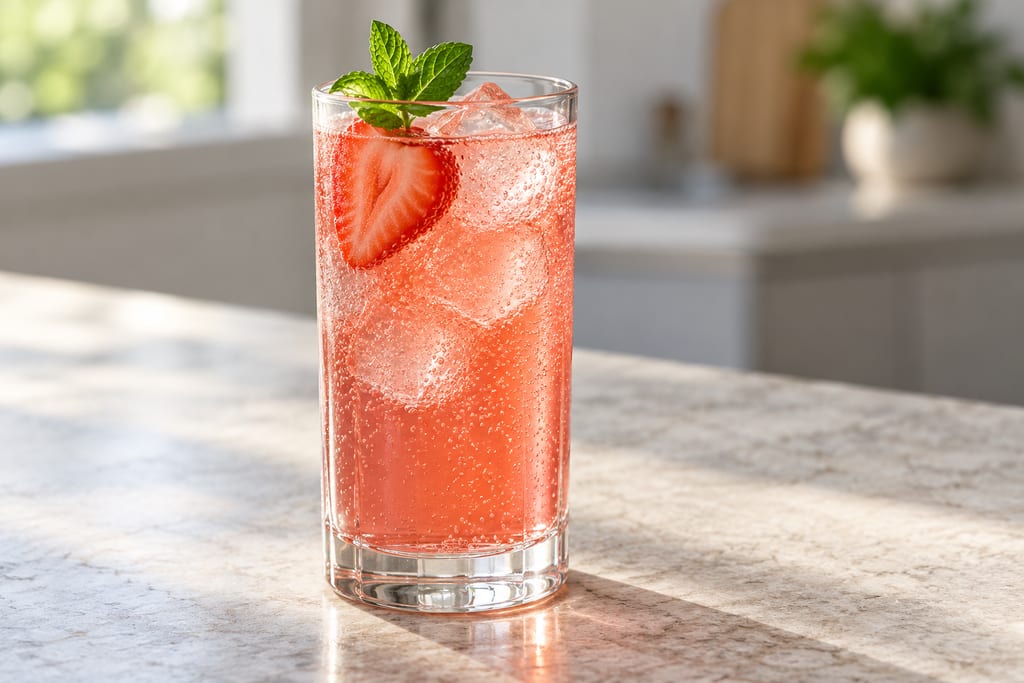
A cold finished drink charged with carbon dioxide in a home carbonator that accepts liquids other than water. Carbonating is not fermentation and does not preserve the drink.
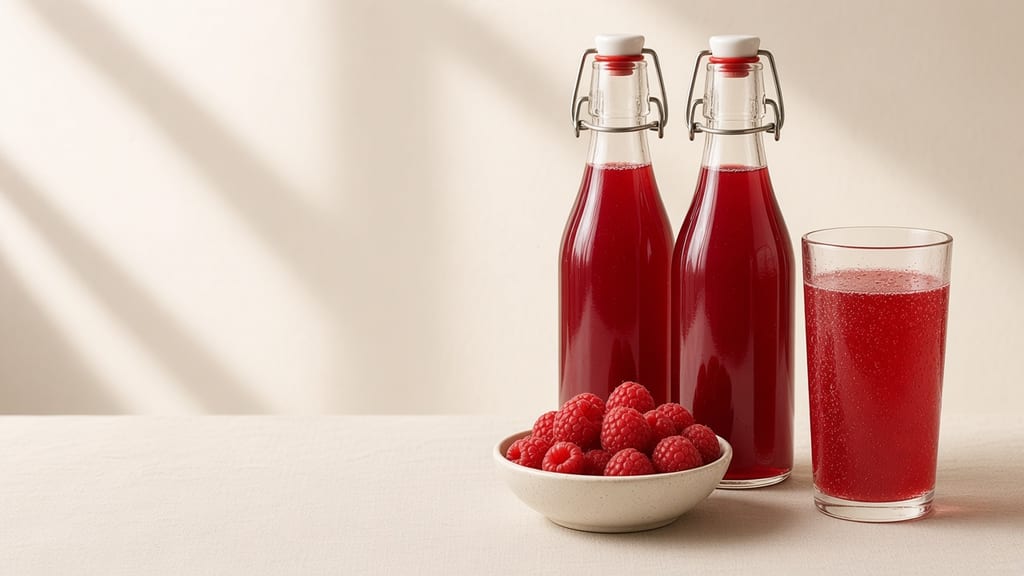
Clear fruit syrup from cooked, dripped berry juice boiled with sugar and canned in a water bath; one tested method for raspberry, strawberry, blueberry, cherry, grape and blackberry.
A lemon concentrate for diluting with water or soda: Isabella Beeton's 1861 citric-acid lemon syrup in full, then a tested canned strawberry lemonade concentrate and a refrigerated Swedish-style lemon syrup.
Sugar keeps, acid flavours, heat seals and cold protects the rest: how fruit syrups, flower cordials and lemon syrups are made and kept at home, from the Austrian 55 °Brix rule and a 1949 steam juicer to Victorian lemon syrup.
Křížaly are Czech dried apple or pear pieces. The name has regional meanings beyond apple slices, and drying practice varies by place and dryer.
A mild, creamy Czech-style table mustard made from ground seed, vinegar, water, salt and a little sweetness. This home version follows a Czech Television formula and is not a copy of SPAK’s proprietary product.
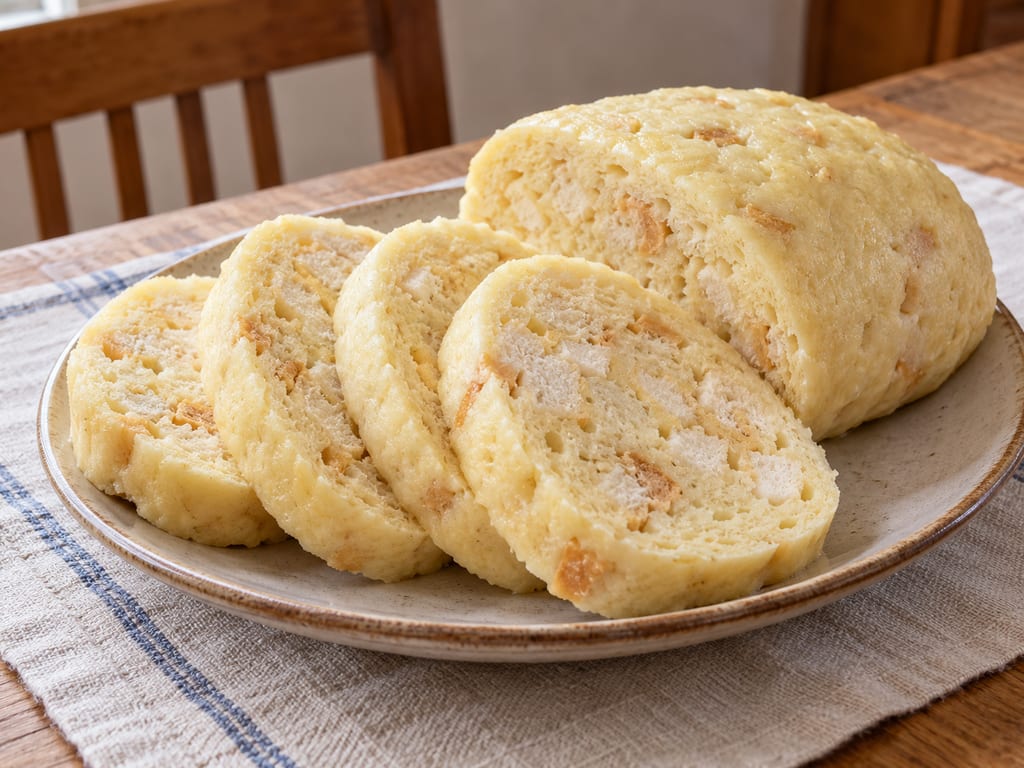
Czech houskové knedlíky are yeast-raised flour dumplings studded with stale white roll cubes, shaped as logs and steamed until tender for serving with sauce.
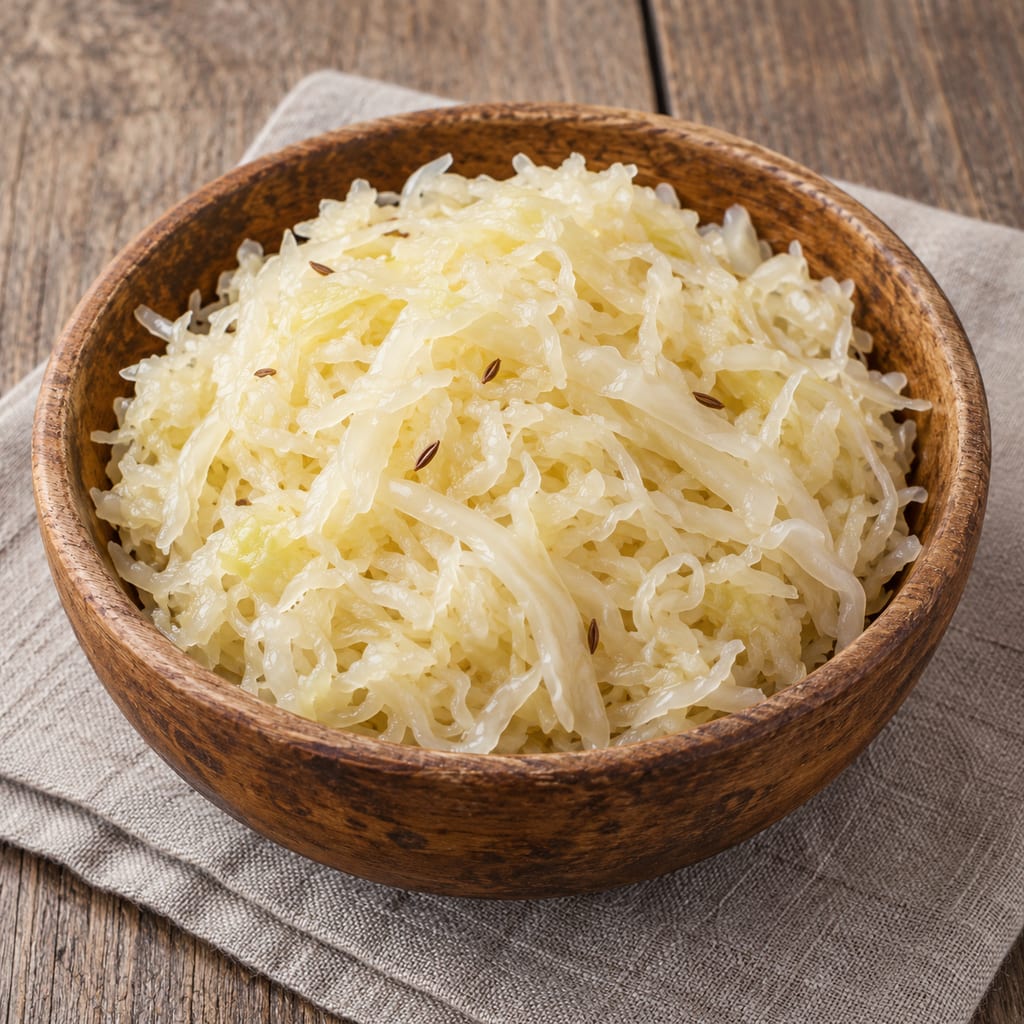
Kysané zeľí is Czech sour cabbage: shredded cabbage layered with salt and caraway and pressed in a wooden barrel. The regional account is descriptive and gives no validated salt ratio or endpoint.
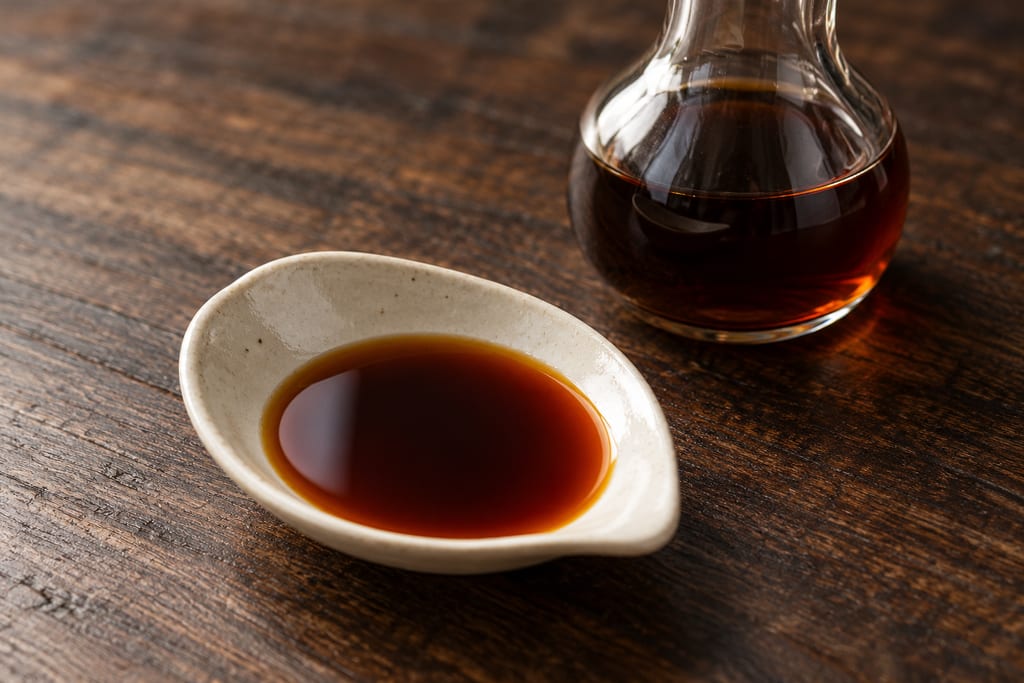
Meat-trim koji garum is a savoury liquid seasoning made by holding meat scraps with rice koji, salt and water at steady warmth before straining the mash.
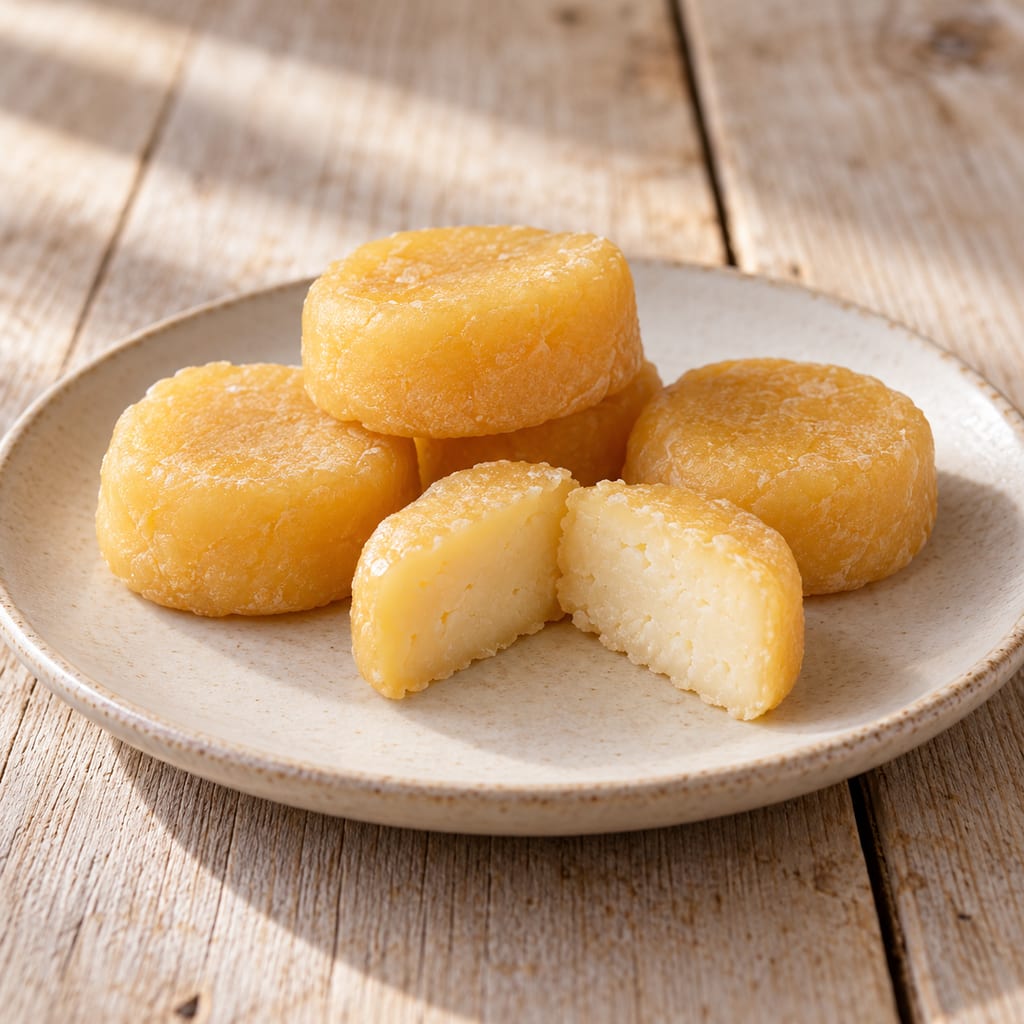
A ripened Czech table cheese made from skimmed acid-set curd, salted, cultured and ripened from the surface inward, with a golden smear and a paler centre.
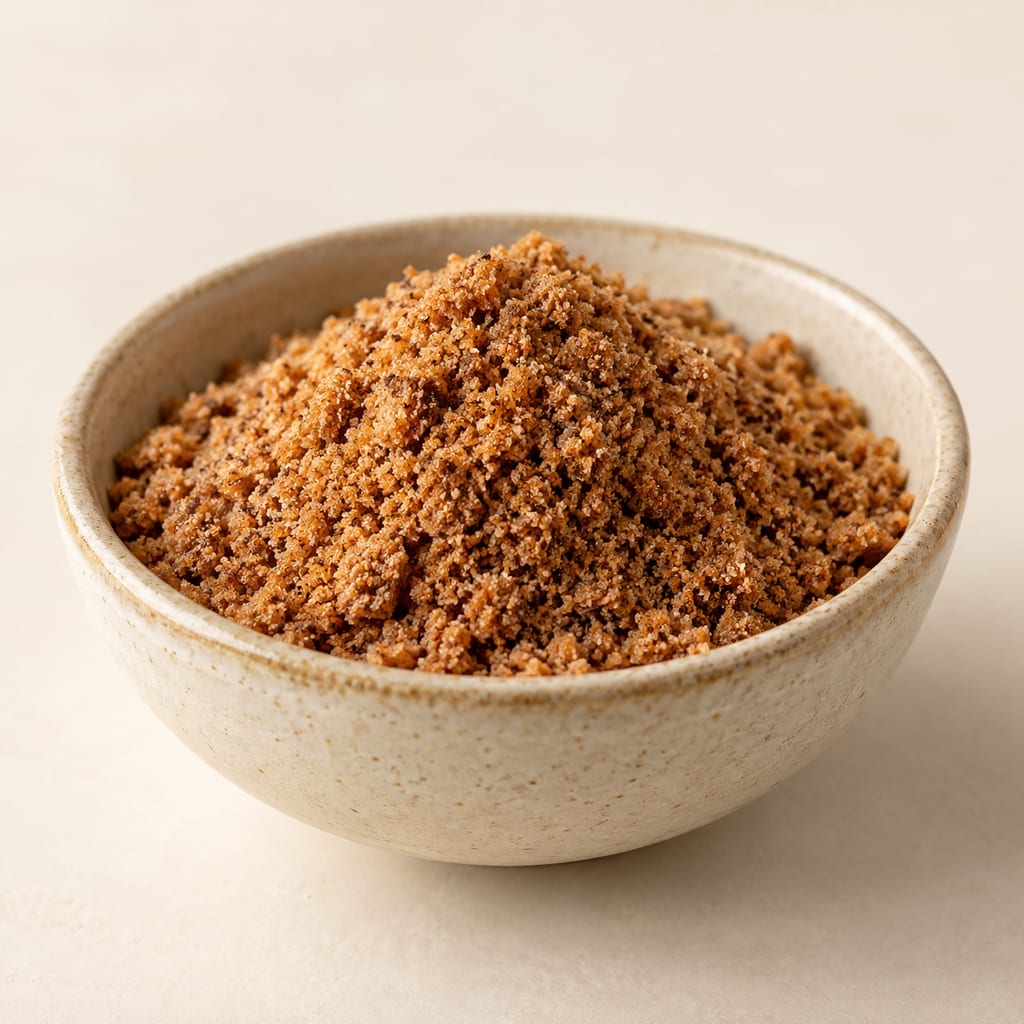
Pracharanda is finely reduced dried pear used as a topping on porridge, dumplings and cakes in Czech sources. Accounts of its preparation differ.
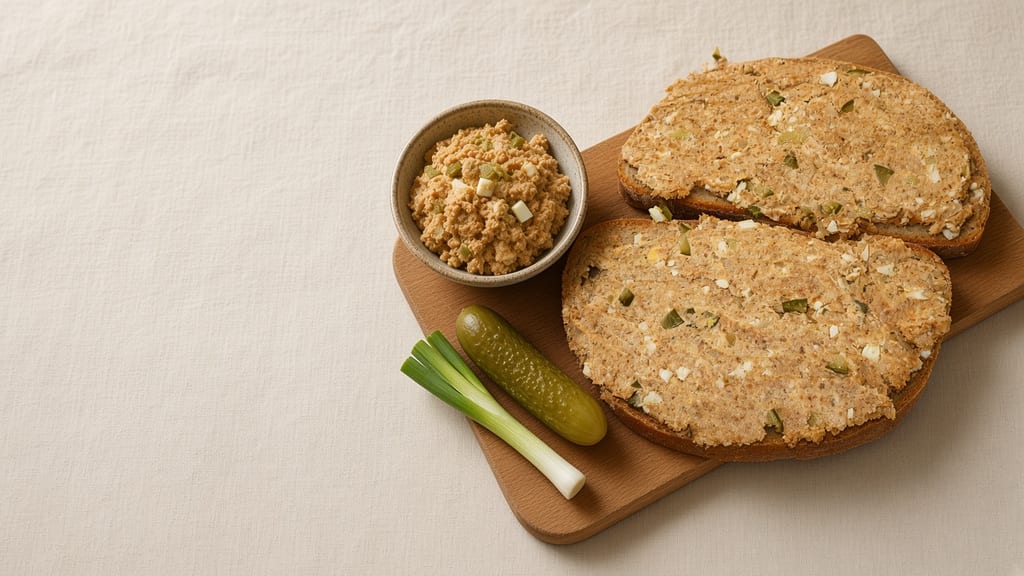
Ground or roughly chopped škvarky bound with a little lard, onion, mustard and hard-boiled egg, spread on fresh bread. A zabijačka leftover that became a pub staple.
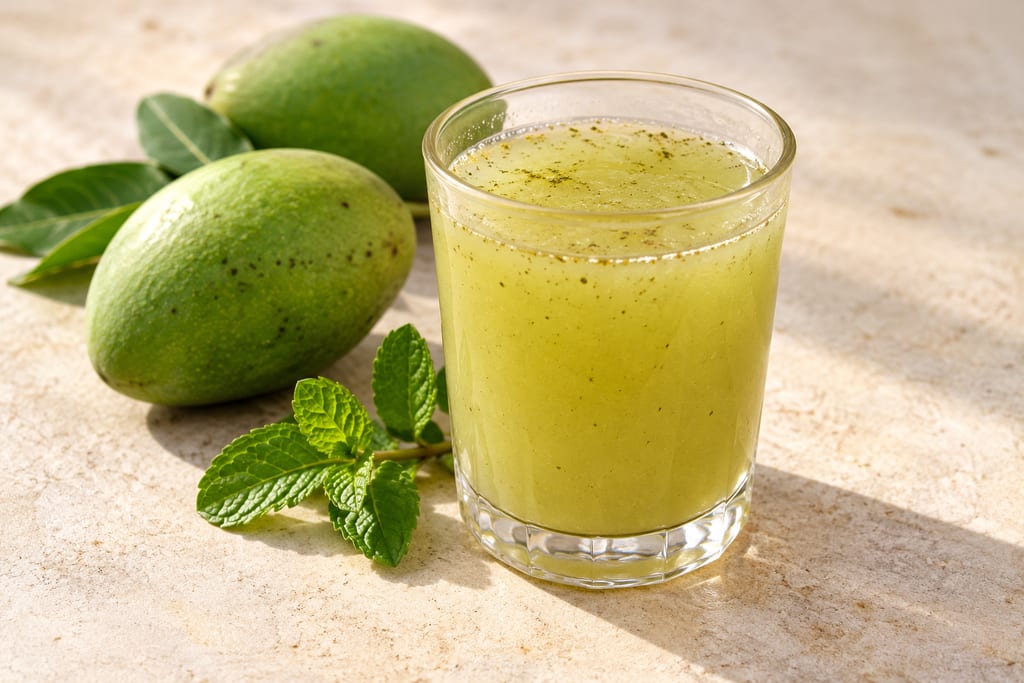
Aam panna is a tart Indian summer drink made by cooking unripe green mango until its flesh softens, then blending the pulp with sweetener, salt and spices and diluting it with water.
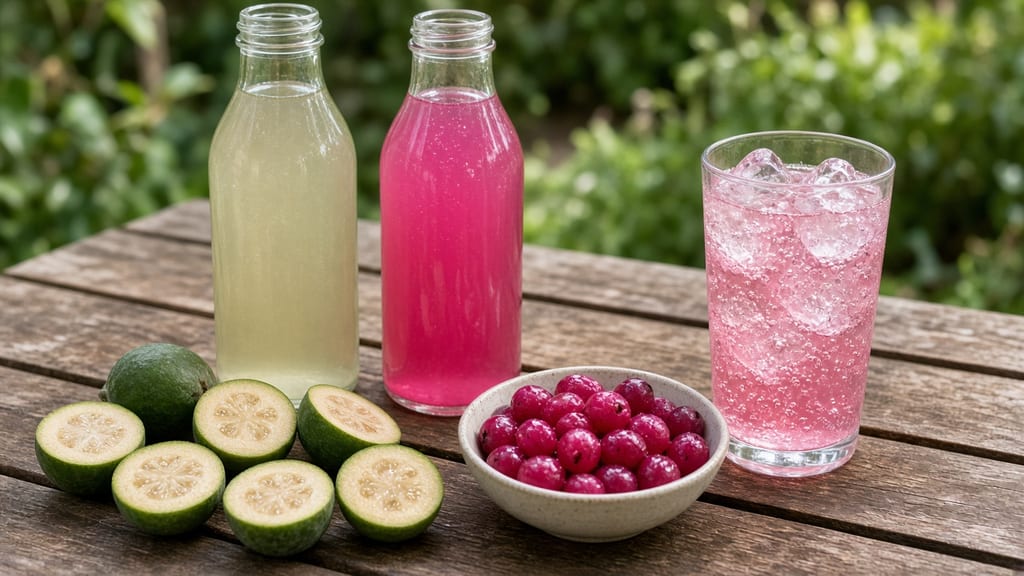
New Zealand feijoa cordial, from the flesh or just the skins, and Australian lilly pilly cordial: fruit, water and sugar heated briefly, strained, and sharpened with lemon and tartaric or citric acid.
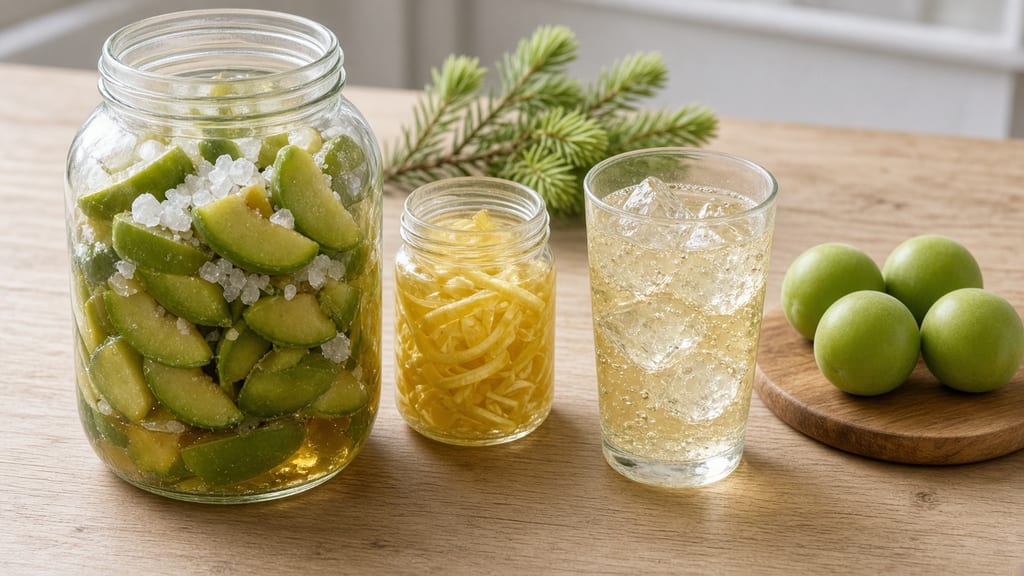
Syrups made without heat by packing fruit or shoots in sugar: Korean maesil-cheong with the ministry's stone-removal steps, frozen Japanese ume syrup, yuja-cheong and Polish pine-shoot syrup.
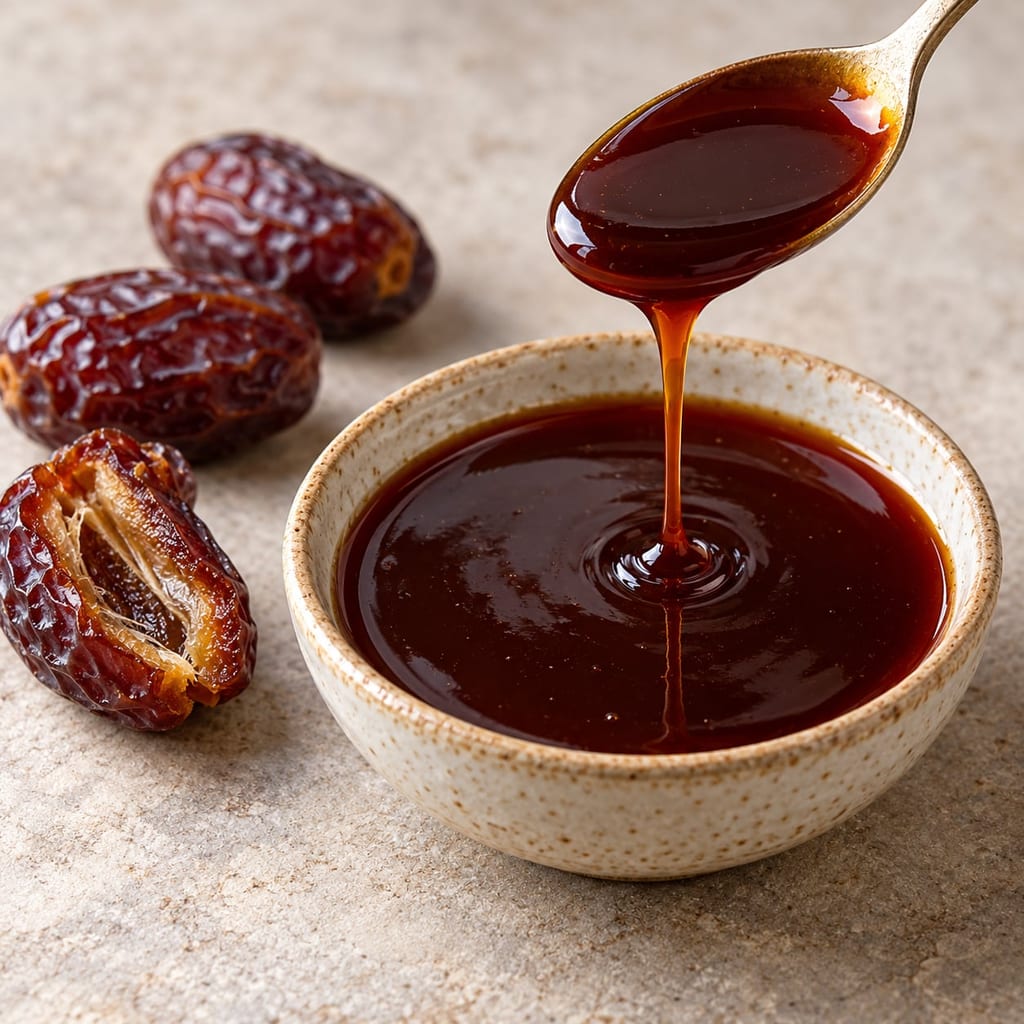
A thick, dark, very sweet syrup made from dates, known as dibs, rub, silan or date molasses. It sweetens tahini and desserts and glazes or sauces savoury dishes across the Middle East and North Africa.
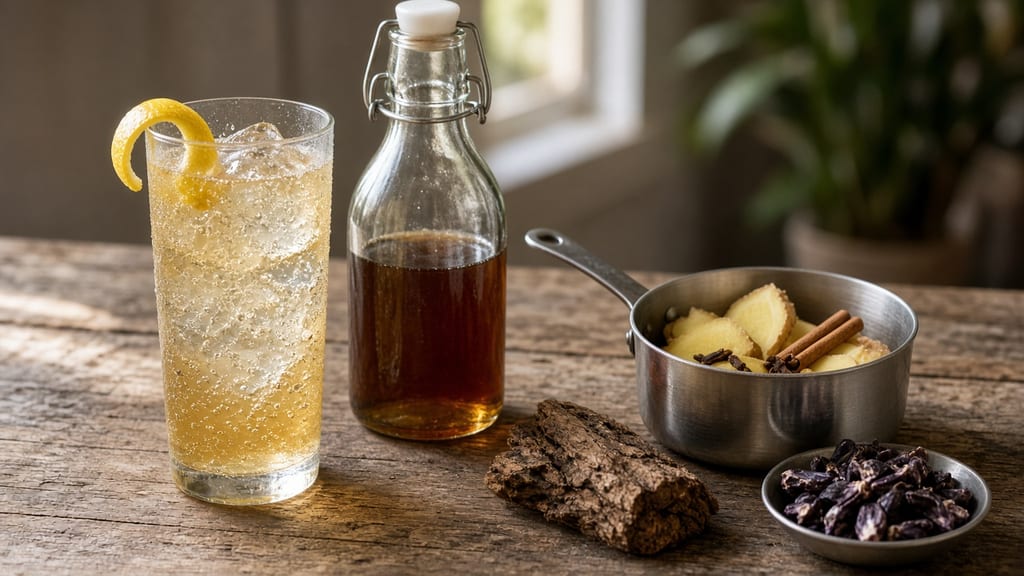
Boiled syrups from hard ingredients: a refrigerated ginger syrup, Trinidad mauby from tree bark, Tamil nannari root syrup, Peruvian purple-corn concentrate and a Turkish spiced sherbet.
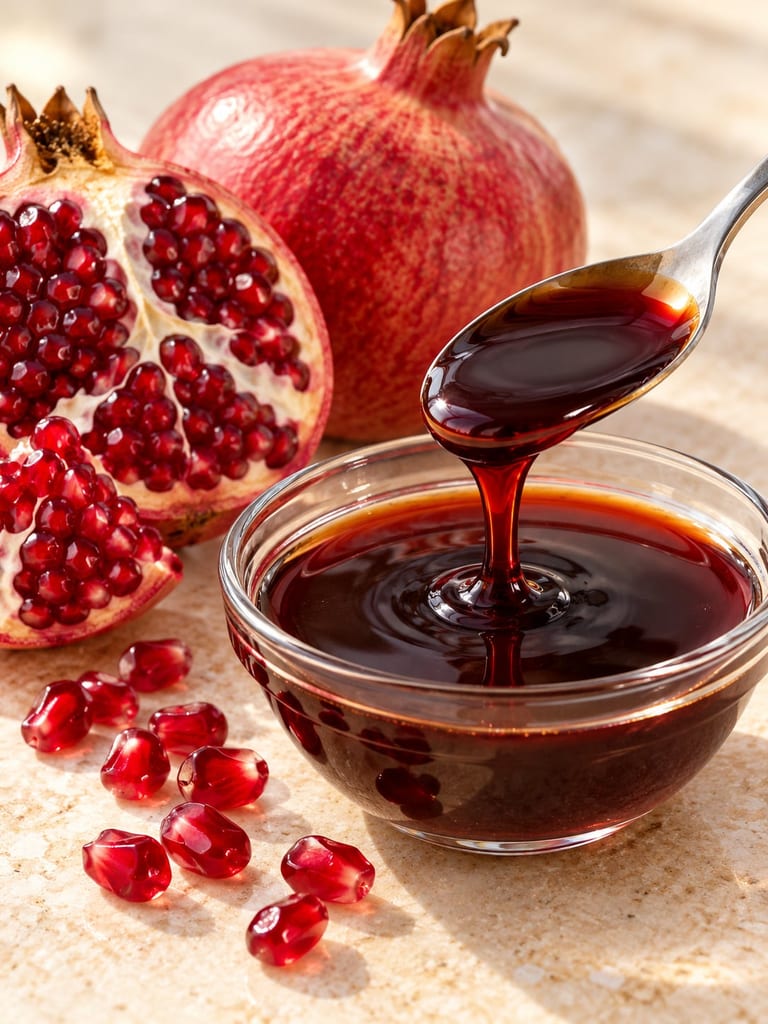
The registered Hatay method presses pomegranate arils and slowly concentrates the strained juice. Its 100 kg source batch and experienced-producer endpoint are retained; no home-scale time or shelf-life is inferred.
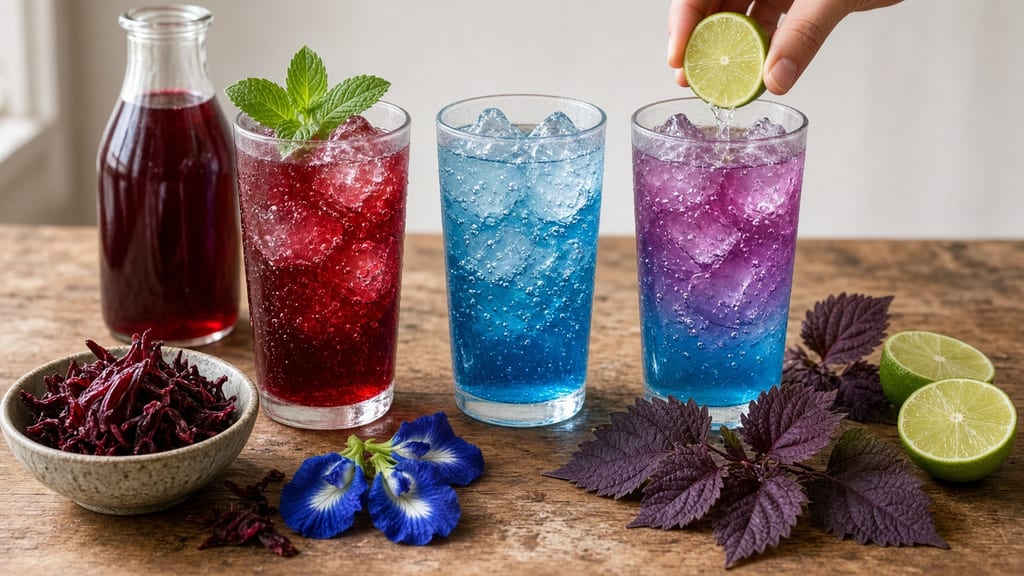
Senegalese bissap syrup from a cold soak, with Ghanaian sobolo, Thai butterfly pea that turns from blue to magenta and Japanese red shiso juice that flashes ruby.
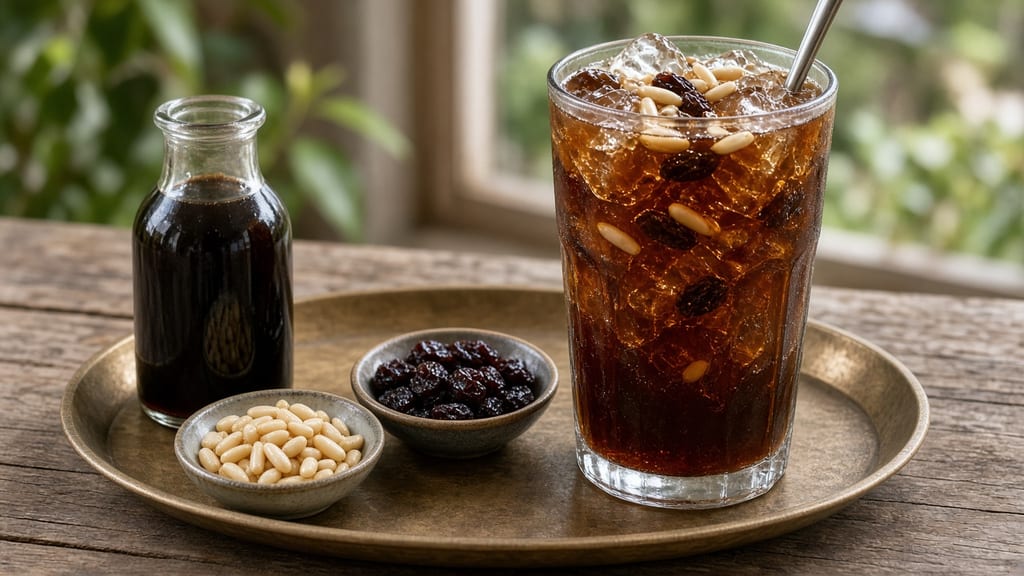
The Levant's Ramadan syrup: grape and date molasses blended into a sugar syrup in 5 minutes, smoked with mastic or cinnamon, finished with rose water and served over ice with pine nuts and raisins.
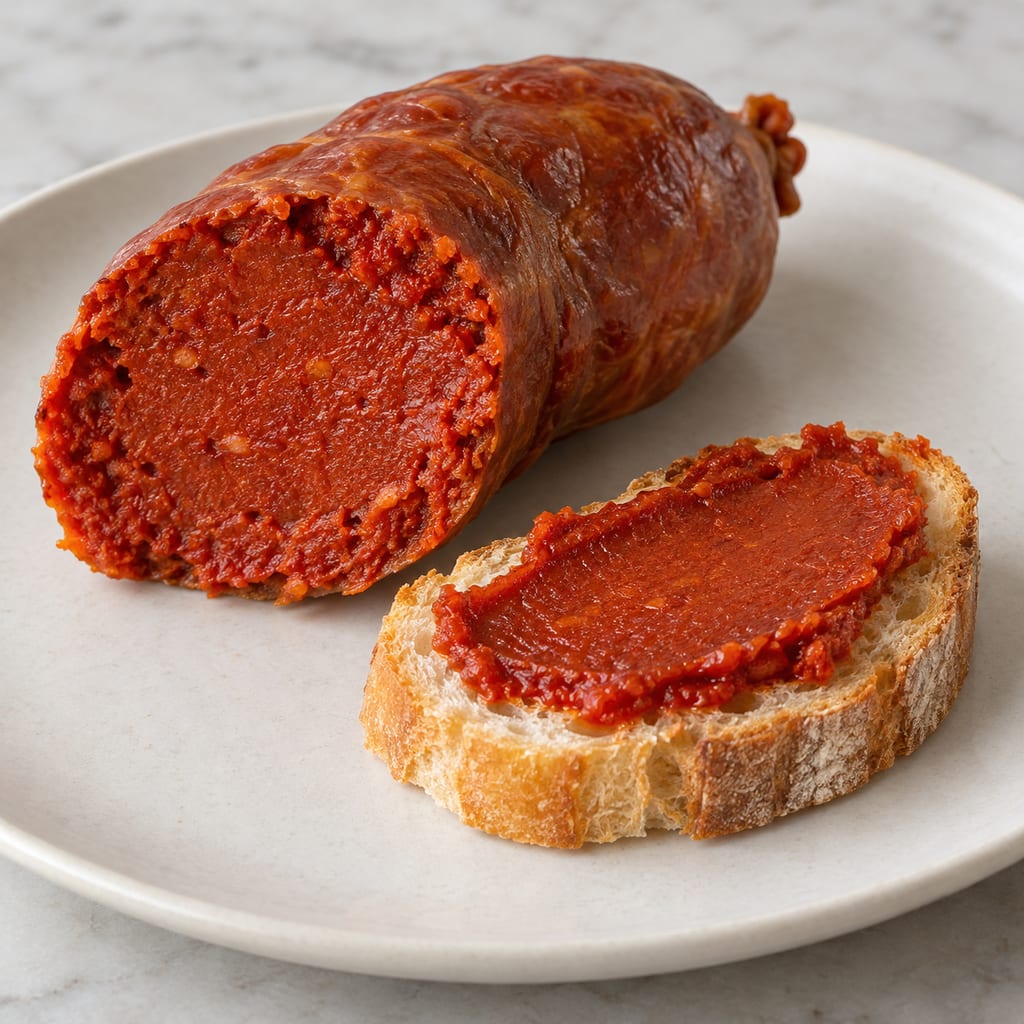
Soft, spreadable Calabrian pork sausage made with a great deal of red chilli and fatty pork, stuffed into natural casings, sometimes smoked and matured while staying soft.
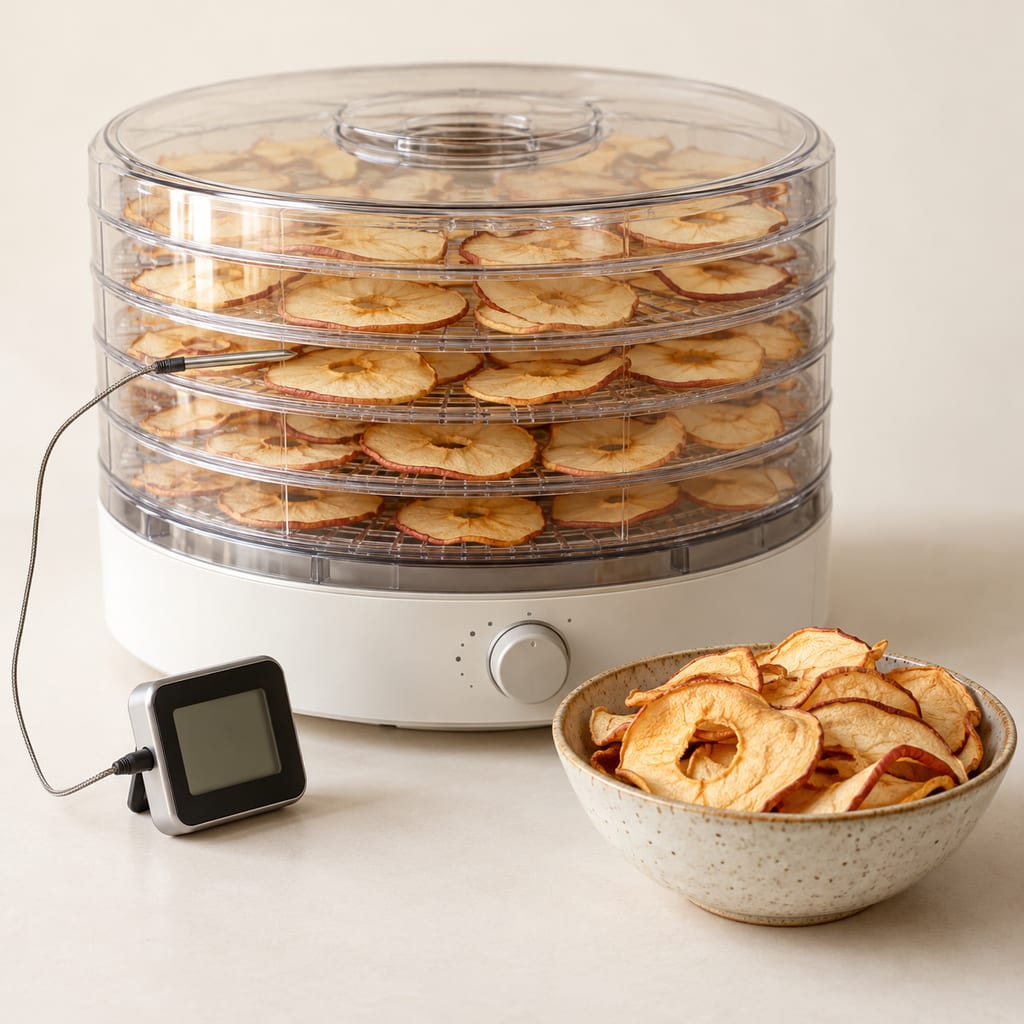
A way to add independent temperature logging to an existing food dehydrator without changing its built-in controls or protections. It is a monitoring method, not a rewiring plan.
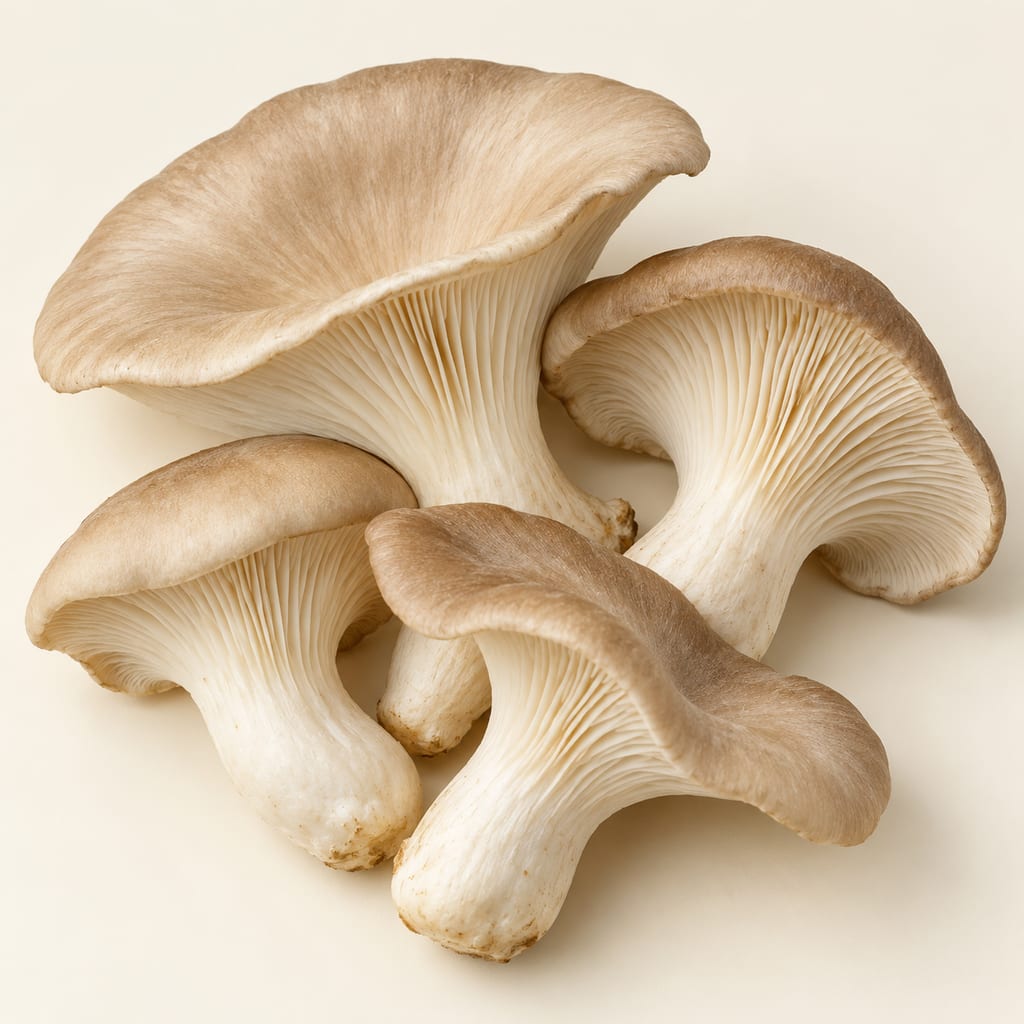
Pleurotus cystidiosus is the abalone mushroom, a cultivated oyster-type fungus with dark brown caps that grows more slowly and is more demanding than other Pleurotus species.
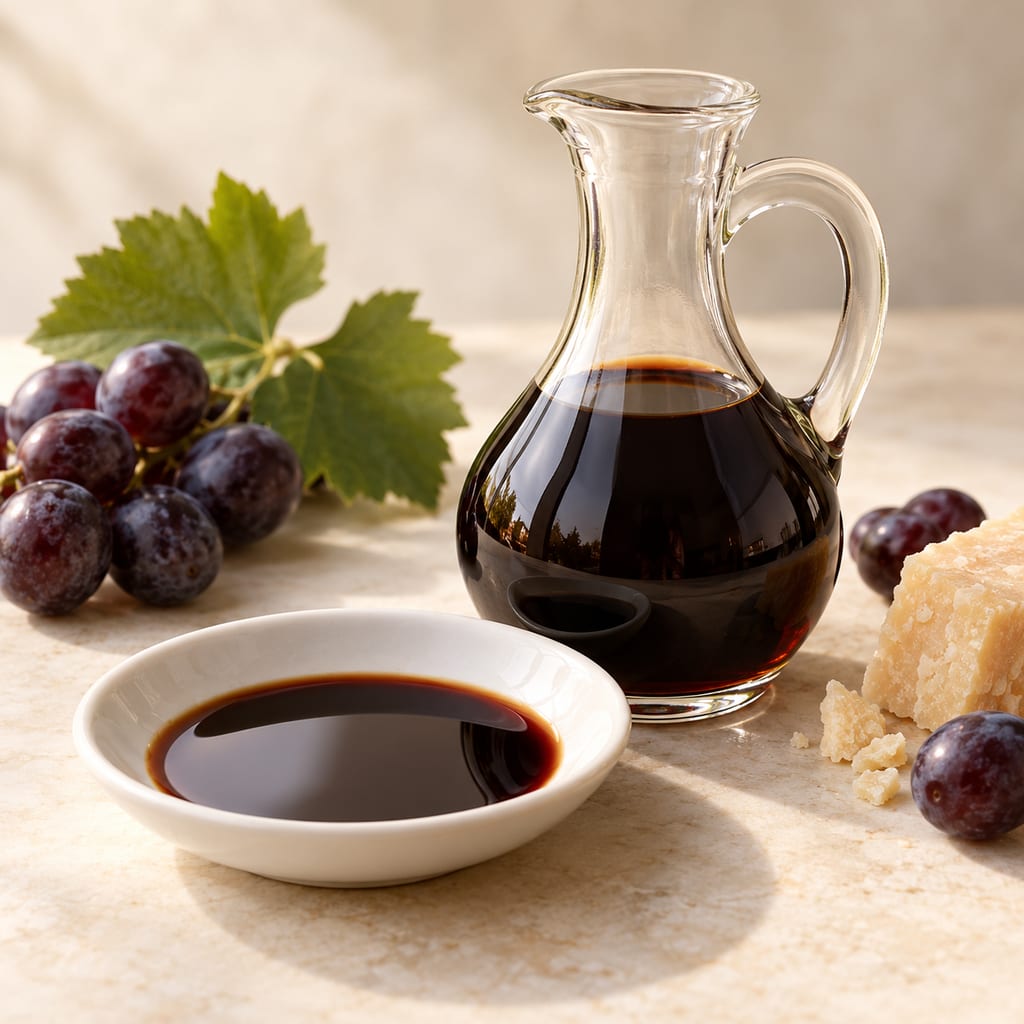
A dark, balanced vinegar from Emilia-Romagna made by combining cooked or concentrated grape must with wine vinegar, then acetifying and refining it in wood under a protected specification.
A living dairy inoculum that starts controlled cream fermentation, developing acidity and aroma before sour cream or cultured butter is finished.
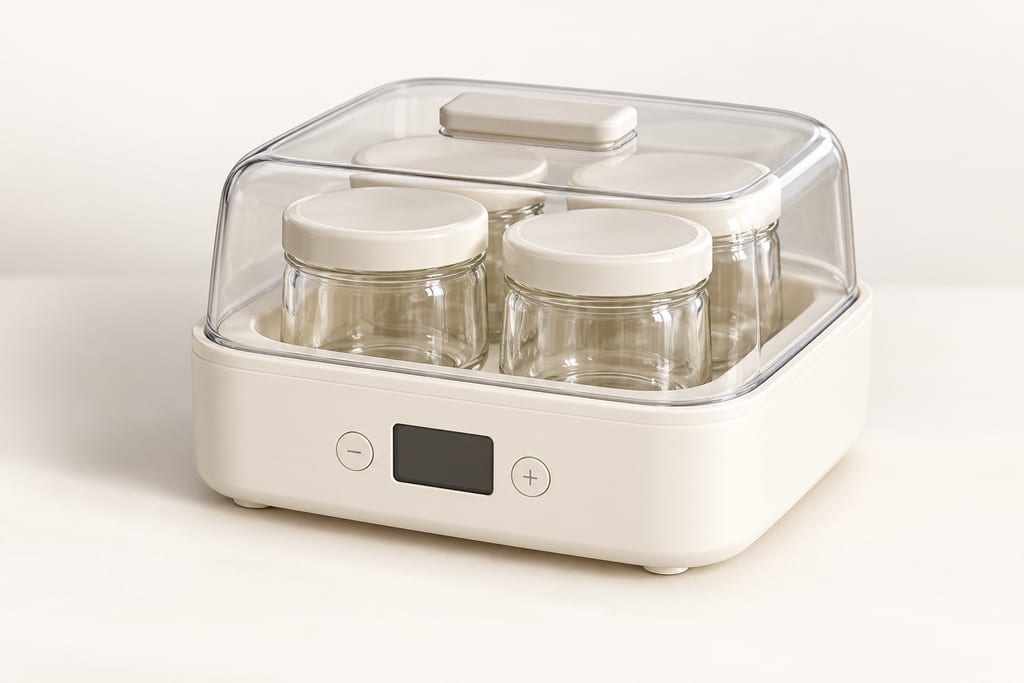
A small electric incubator holds jars at a selected temperature for yogurt and other documented warm food preparations. Controls, capacity and vessel arrangement vary by model.
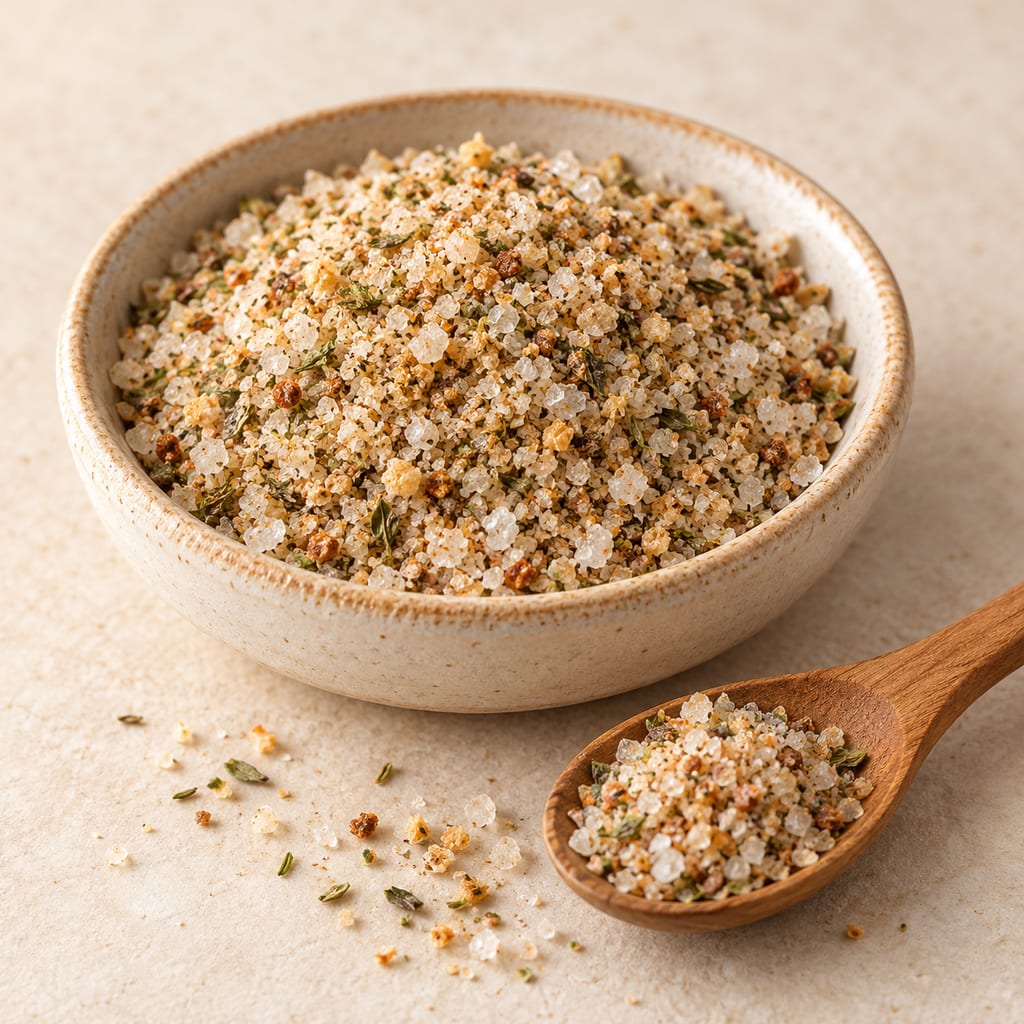
Adygean salt is a seasoned table salt associated with Adygea and the wider North Caucasian culinary tradition. Salt is blended with garlic and a variable selection of herbs and spices; the exact mix depends on the named style and maker.
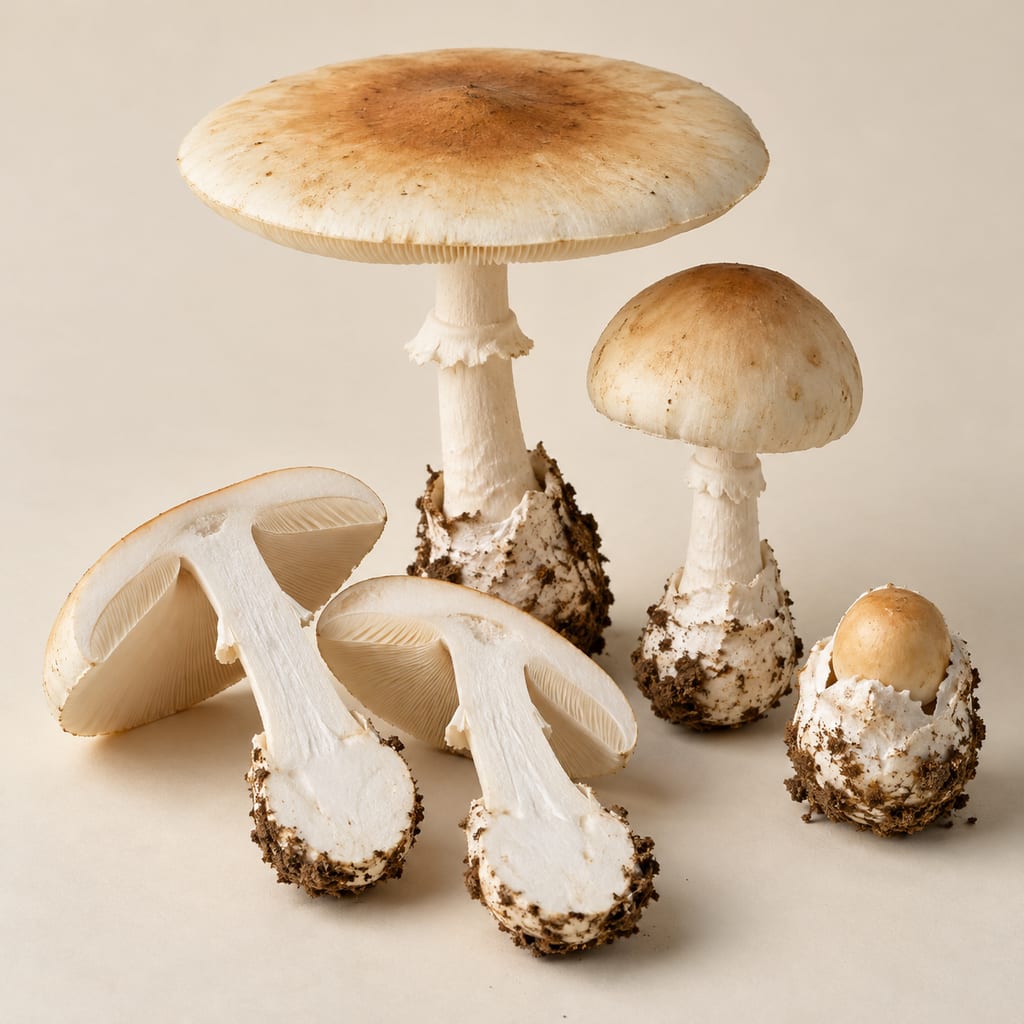
The African Caesar-group mushroom, Amanita masasiensis, is a wild ectomycorrhizal species of central and southern African woodlands, eaten locally. The genus contains deadly poisonous species, so identification needs care.
No community contributions have been published for this entry yet.
Sign in to contribute. Published comments and photos are free to read.
Oregon State University Extension ServiceMethod · Safety
Play it safe when preserving elderberries (EM 9446)Elderflower syrup: 2 cups water, 2 cups sugar, 2 large lemons, 15–20 clusters, 1.5 teaspoons citric acid.
Shake flowers and remove stems, insects and dirt; do not rinse, which removes flavour.
Boil sugar and water, simmer 10 minutes; add zest, juice and citric acid; pour over flowers and sliced lemon; infuse 1–3 days in the refrigerator; strain through cheesecloth; refrigerate, use within a few weeks or freeze.
The syrup cannot be safely consumed after room-temperature storage or canning.
Pick whole clusters when white and open; dry at 80 °F or less; leaf and stem pieces contain higher levels of toxins.
Raw elderberries can cause cyanide poisoning; avoid red elderberries; American and European elderberry syrup must be refrigerated or frozen.
Cited in: What this recipe is; Picking the flowers; Flowers now, berries later; Sugar, acid and cold; Equipment; Stage 1: Make the syrup; Stage 2: Infuse the flowers; Stage 3: Strain and store; Drying flowers for later; The Czech room-temperature method; The three recipes side by side; Using it in fizzy water; Problems and safety; Where the sources disagree
Ask Extension, 30 May 2025Safety
Preserving elderflower cordial (#902990)Question from DeKalb County, Georgia: the asker freezes cordial but it fills the freezer.
No NCHFP recommendations for canning elderflower cordial; it could be safe but has probably never been tested; freezing is the safest way to preserve it.
Cited in: Sugar, acid and cold; Stage 3: Strain and store
Toprecepty.cz (Vilém Besser, 8 June 2026)History · Method
Iva Hüttnerová prozradila recept na bezový sirup: Jeden krok rozhoduje o dokonalém výsledkuRecipe given on the Czech Radio programme Domácí štěstí; a classic inherited from grandmothers.
Pick fully open, fragrant, dry flowers on a sunny day away from roads; do not rinse, the aroma is in the pollen; spread on a tray so insects leave.
50 flower heads, about 2 litres water, 4 medium lemons, 80–90 g citric acid, 2–3 kg sugar.
Boil water with citric acid, cool, add flowers and lemon slices, steep about 24 hours at room temperature, strain, add at least 1 kg sugar per litre, heat to just below boiling, fill hot into sterilised bottles; keeps several months.
Used in water with ice and lemon.
Cited in: What this recipe is; Names; Where the method comes from; Picking the flowers; The Czech room-temperature method; The three recipes side by side; Using it in fizzy water; Where the sources disagree
BBC Food (Lotte Duncan)Method · Serving
Elderflower cordial30 heads, 1.7 litres boiling water, 900 g caster sugar, 1 tsp citric acid, 2 unwaxed oranges and 3 unwaxed lemons, sliced; makes 2 litres.
Rinse flowers gently; steep overnight, strain, add citric acid and sugar, simmer until dissolved, bottle hot; opened bottles keep a couple of weeks in the fridge.
Can go mouldy on top; freeze in plastic bottles with a couple of inches of space, lasts all year; use food-grade citric acid, not the descaling product.
Serve with sparkling water or sparkling wine.
Cited in: What this recipe is; Equipment; Stage 3: Strain and store; The British method; The three recipes side by side; Using it in fizzy water; Where the sources disagree
Bauernzeitung (Landwirtschaftskammer Tirol)Method · Safety · History
Sirupe aus Blüten, Kräutern und BeerenTraditional elderflower and lemon balm syrup recipes dissolve 2 kg sugar in 1 litre water; the high sugar stops moulds and yeasts.
Reduced-sugar versions mould in the bottle or ferment after opening; citric acid cannot preserve.
Herb syrup: dissolve sugar and citric acid in boiling water, cool to about 50 °C, add herbs, steep about two days, strain, reheat to 85 °C and fill hot; 1.3 kg sugar and 5–10 g citric acid per litre; half a litre of herbs or flowers per litre of water.
Refractometers are cheap; courses run in winter and spring months.
Cited in: What this recipe is; Where the method comes from; Sugar, acid and cold; Equipment; Herb syrups by the same method; Problems and safety; Where the sources disagree
Austrian Federal Ministry of Health (2007, amended 2017)Definition
Österreichisches Lebensmittelbuch, Codexkapitel B 6 SirupeKräutersirupe take their flavour from plant extracts; herb syrups need at least 45 °Brix, other syrups 55 °Brix.
Syrups for dilution carry a dilution instruction such as 1 + 6 and any needed storage instruction after opening.
Cited in: Names; Labels and dilution in Austria; Sugar, acid and cold; Equipment; Using it in fizzy water
Ministerstvo zemědělství České republikyDefinition
Vyhláška č. 248/2018 Sb., o požadavcích na nápoje, kvasný ocet a droždí§ 5(2): a drink concentrate with more than 50% by weight natural sweeteners may be called sirup.
Cited in: Names; The three recipes side by side
University of Maine Cooperative Extension (Kate McCarty, 15 May 2025)Method · Safety · Serving
Drinks from the Garden: Using Fresh Fruit, Vegetables and Herbs in DrinksSimple syrup of 1 cup sugar or honey to 1 cup water, boiled; add 1–2 cups flavouring such as rhubarb, berries, peaches, herbs or peppers, turn off heat, steep 5 minutes, strain.
Herbs named: mint, rosemary, thyme, basil; blueberry-thyme soda.
Refrigerate and use within a month.
A few tablespoons in an 8-ounce glass of sparkling water; herb, fruit or edible-flower ice cubes.
Cited in: Herb syrups by the same method; Using it in fizzy water