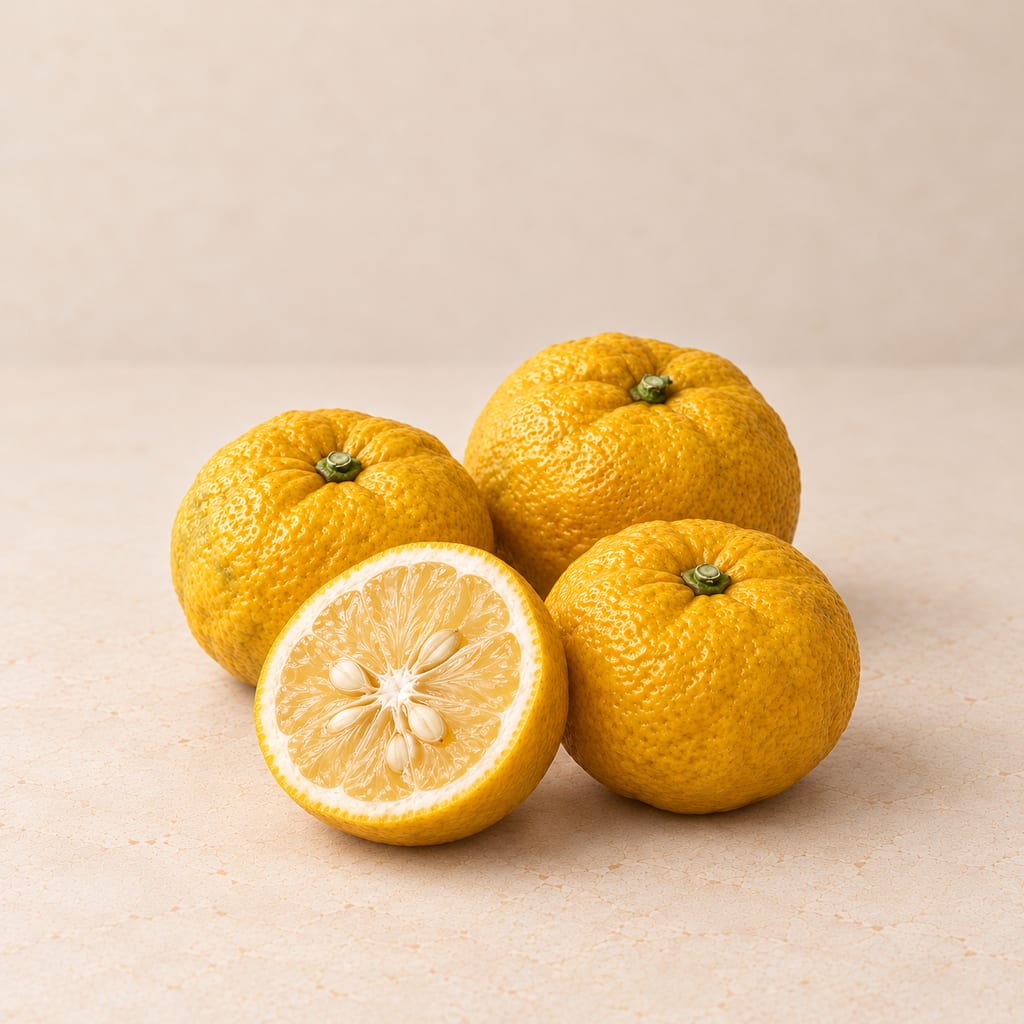
Yuzu (fruit and zest)
Yuzu (Citrus junos) is a hardy, thorny East Asian citrus whose sour juice and intensely scented peel flavour ponzu, yuzu kosho and preserves.
 FermenteaWhere food goes to change
매실청 · Maesil-cheong · Maesil syrup · Ume syrup · Ume shiroppu · Yuja-cheong · Yuzu syrup · Pine-shoot syrup · Syrop z pędów sosny · Cheong
Syrups made without heat by packing fruit or shoots in sugar: Korean maesil-cheong with the ministry's stone-removal steps, frozen Japanese ume syrup, yuja-cheong and Polish pine-shoot syrup.
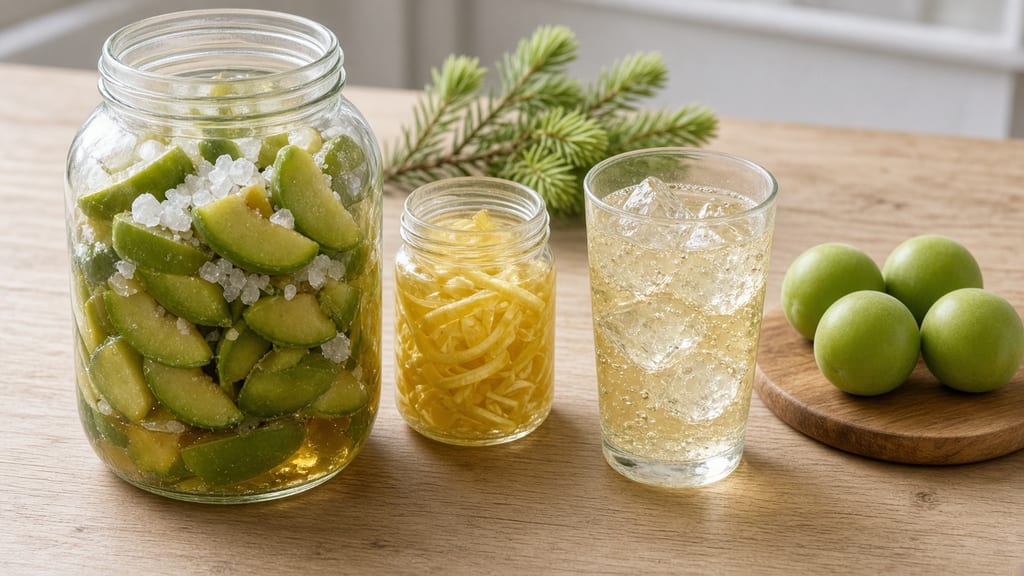
These syrups are made with no stove at all. You pack fruit or young shoots into a jar with an equal weight of sugar, and the sugar pulls the juice out. A few days or months later you pour off a thick, fragrant syrup. Korea calls it cheong, Japan calls it ume syrup, and Polish foragers call the pine version syrop z pędów sosny.
It is the slowest and strangest syrup method on this site, and the one with the most rules. Green plums carry cyanide compounds in their stones, and a jar of fruit and sugar left in a warm kitchen can start to ferment. The master method below is the Korean food safety ministry's maesil-cheong, which removes the stones. Then come the Tanabe ume council's frozen-fruit shortcut, Korean yuja-cheong and Polish pine-shoot syrup.
The Tanabe ume council explains it plainly: ume syrup, umeshu and umeboshi all work by osmosis. Sugar or salt outside the fruit draws water out through the skin. No heat is needed, but the process is slow, and as it runs the sugar sinks. The liquid at the top of the jar is weaker than at the bottom, so you move the jar or stir to even it out.
Speed is the trick. The council says the key to good ume syrup is to get the juice out quickly and keep fermentation down. Freezing the fruit first puts tiny cracks in the skin and lets the juice run in days instead of weeks. A slow jar spends longer as a mix of wet fruit and weak syrup, which is what yeasts like.
The Tanabe council lists three ume for syrup: Nanko, the large Wakayama variety, Gojiro and the small koume. The variety changes the colour. In the council's side-by-side jars, all from green frozen fruit, Gojiro syrup is almost clear, Nanko a little pink and Beni Nanko, with more red on the skin, redder still. Korea's ministry uses green or yellow maesil and treats both the same way.
Rock sugar is the Japanese choice because it dissolves slowly and evenly as the fruit gives up juice; the council notes that white sugar tends to sink to the bottom. Korean cheong uses ordinary sugar at an equal weight. Either way, weigh the fruit after trimming and pitting, then weigh the sugar to match.
A wide-mouthed glass jar of about 3 litres holds a kilogram of fruit and a kilogram of sugar with room to spare. The council also uses thick stand-up food bags, pressing the air out once syrup forms. Wikitree adds a warning for jars just sterilised in boiling water: let them cool before you fill them, because cold fruit can crack hot glass, and dry them fully, because a damp jar undoes the sterilising.
In May 2026 Korea's Ministry of Food and Drug Safety published a four-card guide to making maesil-cheong at home. It starts with the fruit. Wash the green plums at least three times under running water on a rack, then dry them completely, because water left on them can cause mould. Pick out each stem with a needle or toothpick; a stem left on can make the syrup bitter.
Then remove the stones. The ministry says pitting cuts the cyanide compounds in green or yellow plums by most of the way, 95 %. This is the step the whole guide turns on, and on this site it is not optional. The ministry uses a commercial stone remover; a sharp knife, cutting the flesh off the stone, does the same job.
Sterilise the jar with steam or boiling water and let it dry. Put in the fruit and sugar at 1:1 by weight and finish with a layer of sugar so no plum is exposed. Leave it at room temperature, and stir as the sugar dissolves so fruit and syrup mix. The ministry says this usually takes 3 to 4 months.
Strain off the fruit. The ministry measured that maturing without the solids cuts cyanide compounds by a further 22 %. Pour the syrup into a clean sterilised container and let it mature for 6 months or more, which cuts them by another 13 %. Using oligosaccharide syrup instead of sugar cuts them by 14 %, but changes the taste.
The Kishu Tanabe Ume Promotion Council in Wakayama recommends frozen fruit. Wash 1 kg of ume, drain them and freeze them in a bag for at least 24 hours. Layer them with 1 kg of rock sugar in a 3 litre jar sterilised with boiling water, or wiped with vinegar if it cannot be boiled, and close it. As the fruit thaws, tip and turn the jar now and then to dissolve the sugar. In about 7 days it is ready: lift out the fruit and keep the syrup, about 900 ml, in the refrigerator.
The council keeps the fruit whole. Following the Korean ministry, we pit the ume before freezing, which also helps the juice run. The council's older method, with fresh green fruit pierced with a toothpick, takes about a month in the refrigerator and fails more often. If you use it, the council suggests 200 ml of vinegar per kilogram of ume to hold back fermentation, and warns never to cut the sugar, because that invites mould.
For keeping longer than a few weeks, the council heats the finished syrup to 80 °C or more for about 15 minutes in a pan that is not aluminium, cools it and refrigerates it. That one step turns a fragile syrup into a store-cupboard one.
When yuja come into season in late autumn, Wikitree notes, many Korean households put up a year's supply of yuja-cheong, the jar of sliced citron and sugar used for tea and cooking. It is just as good in cold sparkling water. Jeonbuk province's food culture plaza scrubs 4 yuja with baking soda, rinses them under running water, cuts off the stem end, slices them and removes every seed. It mixes them with 300 g of sugar, less if white, and jars them once the sugar has dissolved.
Wikitree's food desk gives the more common home ratio: sugar about equal to the weight of the trimmed fruit, weighed after the seeds and bruises are cut out. Paring away the white pith makes it milder. Dry the fruit completely, use a sterilised and fully dry jar, leave room at the top, and move it to the refrigerator as soon as syrup forms. If you cut the sugar, make a small jar and refrigerate it from day one.
Polish foragers pick the soft young tips of pine shoots and layer them with sugar. Poland's Ministry of Agriculture describes the method: remove the brown scales, layer the shoots with sugar in a jar, press them down lightly and leave the jar for 7 to 14 days, shaking it often. Then strain, press the shoots and jar the syrup, stored cool.
We publish this as a folk practice. No one has tested it the way the plum methods were tested, so refrigerate the syrup once strained. Some families stand the jar in the sun for weeks; we do not recommend that.
Identification comes first. The State Forests service describes Scots pine needles as growing in pairs on short shoots, 3 to 8 cm long, stiff, finely toothed and sharp; Swiss stone pine has them in fives. Yew looks nothing like that up close: its needles sit in two flat rows like a comb, are soft, up to 3 cm long, dark above and paler below. Every part of a yew except the red flesh around the seed contains taxine, which harms the heart. Anyone who has eaten it must go to hospital at once. If you are not sure, do not pick.
A cold sugar jar is not something to fill and forget. Wikitree's food desk calls the idea that a sugared jar keeps forever at room temperature the most dangerous belief of all. A little water from the fruit or a crumb from a dirty spoon speeds spoilage far more than a little less sugar does. Refrigeration only slows it down and will not rescue an unwashed jar. The Korean ministry's own food-poisoning advice starts in the same place: wash your hands, and wash and dry every tool.
In the first days, the jar of frozen ume will sweat as the fruit thaws; the Tanabe council warns about the condensation on the outside, so wipe it and stand the jar on a cloth. Each day, tip and turn it until no sugar is left on the bottom. A maesil jar needs a stir whenever you see undissolved sugar. Always use a clean, dry spoon, and close the lid again straight away.
Learn the warning signs before you start: foam on top, bubbles rising on their own, a lid that has domed, or a smell of alcohol. Any one of them means the jar is fermenting.
Tanabe serves ume syrup at 1 part to 4 parts unsweetened soda. It is sharp and fruity, and the easiest of these to like. Maesil-cheong is thicker after its long rest, so start at 1 to 5. Tanabe also mixes it 1 to 4 with milk for an ume lassi, or pours it neat over shaved ice. A spoon of yuja-cheong with its peel, stirred into sparkling water over ice, makes a bright citrus soda with chewy peel. Pine syrup is strong; a teaspoon in a glass of cold sparkling water with a slice of lemon is plenty.
Plum stones: always pit maesil and ume before they meet the sugar. Strain off the fruit when the method says, and give maesil-cheong its full time.
Fermentation: foam, fizzing, an alcohol smell or a swollen lid means the jar has started to ferment. Wikitree says to throw away the whole jar, not skim the top, and the same goes for mould. Smell and taste cannot show that a syrup is safe.
Water and dirt: dry fruit, a dry sterilised jar and a clean dry spoon matter more than extra sugar. Do not cut the sugar in a jar that will sit at room temperature.
Pine: pick only shoots you can identify, away from roads and sprayed land, and never from yew.
If this is your first cold sugar syrup, start with the frozen ume. It is ready in a week, it lives in the refrigerator, and it shows you what a healthy jar looks like before you commit to a ten-month maesil.
Korea's ministry matures maesil-cheong at room temperature for months, while Tanabe keeps its syrup cold and ready in a week. Tanabe leaves the ume whole, and the ministry insists on pitting; we follow the ministry. Yuja recipes range from the Jeonbuk plaza's 300 g of sugar for four fruits to an equal weight, and Wikitree says a lower-sugar jar must live in the fridge. Poland's agriculture ministry stores pine syrup simply in a cool place. We go further and refrigerate it, because no source has measured its sugar or acidity.
Korean ministry guidance (2026), Tanabe ume council method, Polish Ministry of Agriculture pine-shoot syrup page.
Yield 1 litre · Scaling: linear
Removing the stones cuts the cyanide compounds of green or yellow plums by 95 %.
Hazard sourceThe key to ume syrup is to extract quickly and suppress fermentation; reduced sugar leads to mould.
Hazard sourceEvery part of the yew except the aril contains taxine, which harms the heart.
Hazard sourcePit the plums before adding sugar.
Control sourceStrain off the fruit and mature the syrup.
Control sourceHeat ume syrup for long storage.
Control sourceDiscard any jar showing foam, alcohol smell or mould.
Control sourceAlways remove plum stones.
Never pick pine shoots you cannot identify; yew is poisonous.
Throw out any jar that foams, smells of alcohol or grows mould.
Maesil-cheong; ministry guidance on cyanide compounds.
Yuja-cheong recipe from the provincial food culture plaza.
Ume syrup method of the Kishu Tanabe Ume Promotion Council.
Pine-shoot syrup, folk practice.
Yuzu (Citrus junos) is a hardy, thorny East Asian citrus whose sour juice and intensely scented peel flavour ponzu, yuzu kosho and preserves.
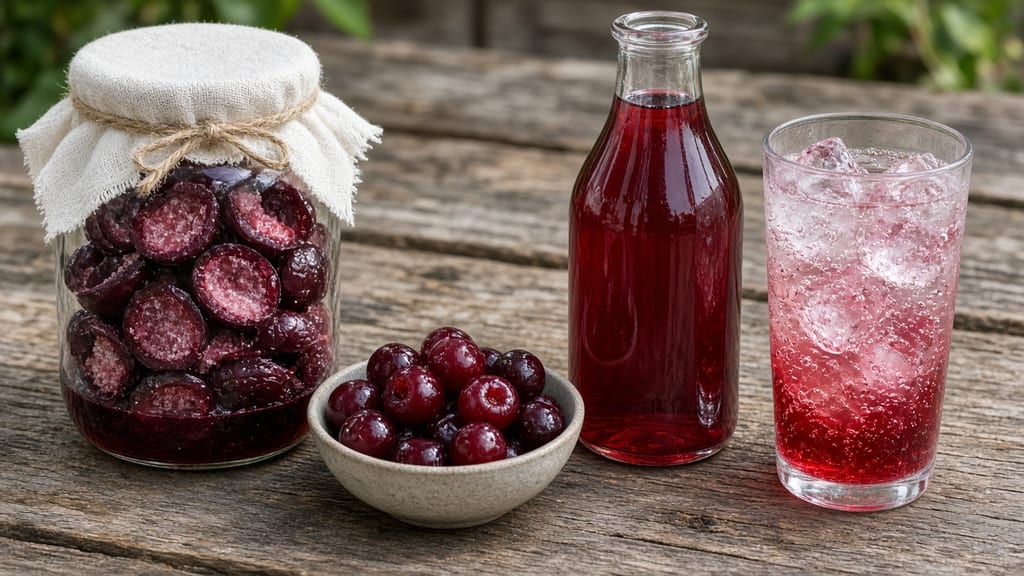
Two sharbats where sugar alone draws the juice: Marathi kokum syrup made in a jar, often in the sun, and Iranian sour cherry syrup drawn overnight in the fridge and boiled briefly.
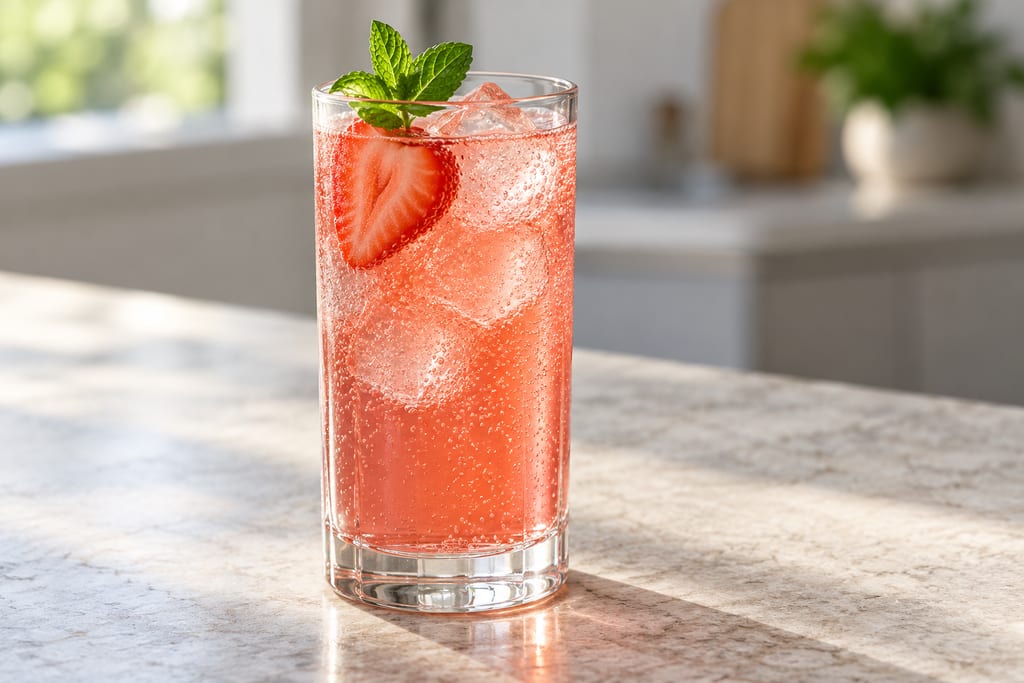
A cold finished drink charged with carbon dioxide in a home carbonator that accepts liquids other than water. Carbonating is not fermentation and does not preserve the drink.
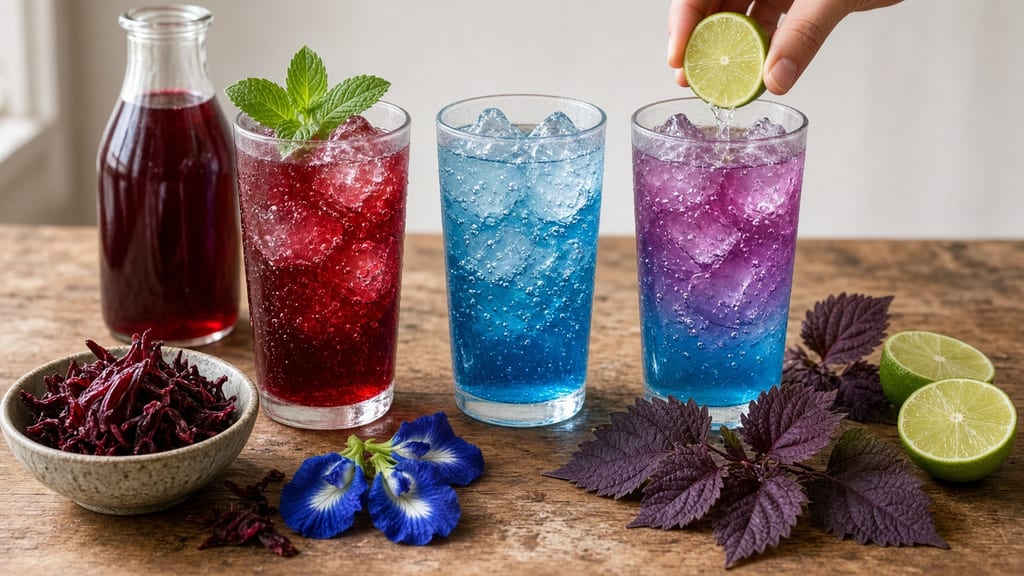
Senegalese bissap syrup from a cold soak, with Ghanaian sobolo, Thai butterfly pea that turns from blue to magenta and Japanese red shiso juice that flashes ruby.
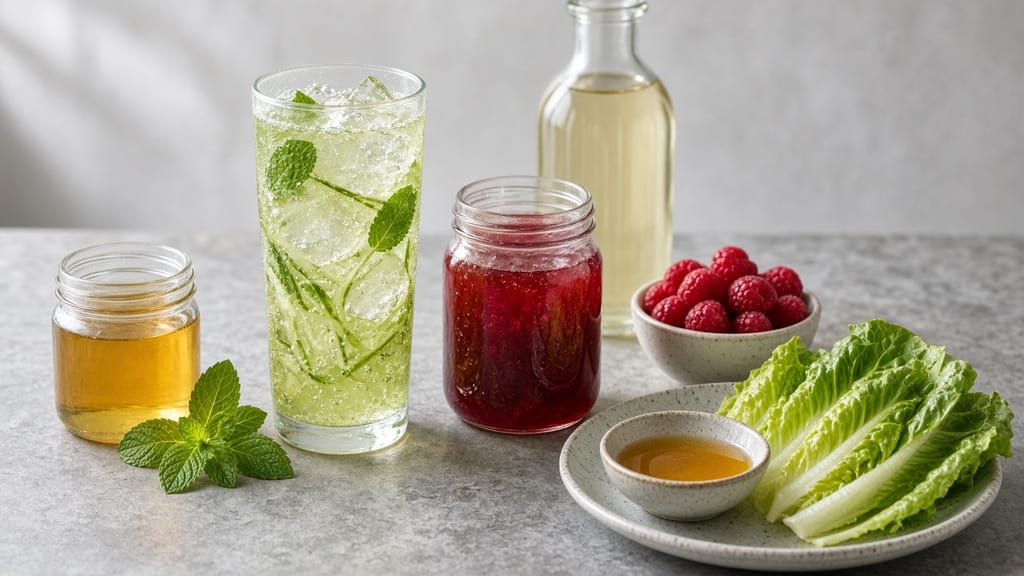
Vinegar syrups in two parts: the 13th-century Andalusian sikanjabin quoted in full, then a modern cold fruit shrub and a mint sekanjabin kept in the refrigerator.
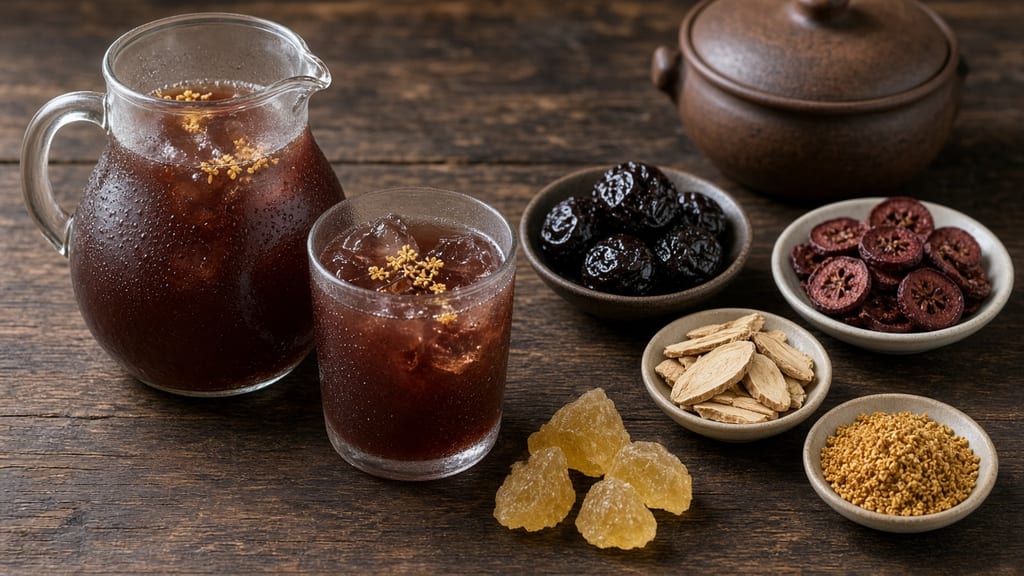
Beijing's smoked-plum summer drink in two parts: the 1906 Yanjing almanac entry quoted in full, then a modern double-decoction recipe and a Taiwanese roselle version, kept cold.
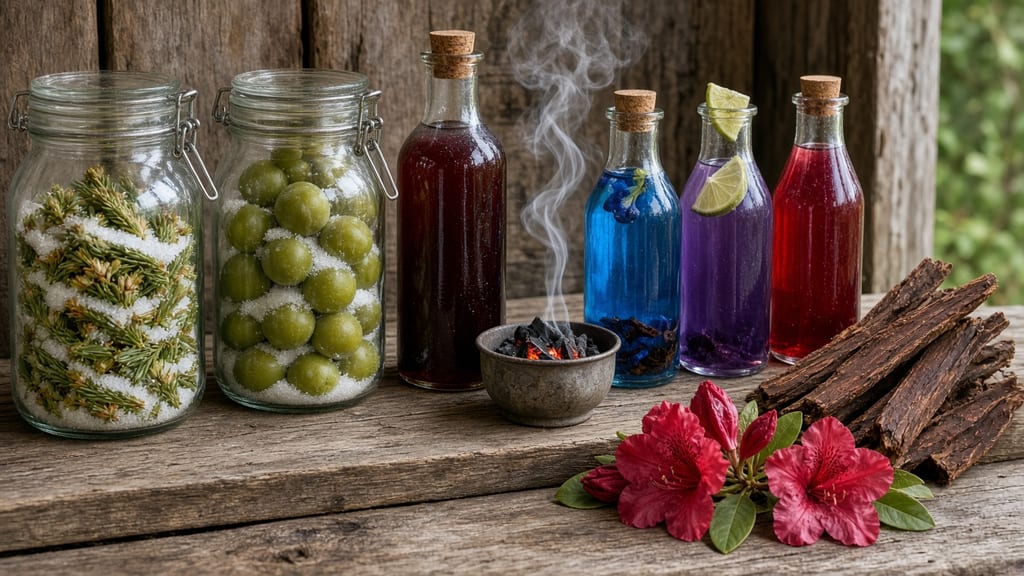
Rhododendron squash, cyanide in plum stones, pine shoots beside poisonous yew, mauby bark, distilled willow water, charcoal-smoked jallab and colour-changing drinks: unusual syrups and what makes each safe or not.
A documentary account of Japanese narezushi, a family of salted-fish and rice ferments. This entry preserves the East Kishu (Mie) source’s identity and regional context without providing a household preparation method.
Aam panna is a tart Indian summer drink made by cooking unripe green mango until its flesh softens, then blending the pulp with sweetener, salt and spices and diluting it with water.
New Zealand feijoa cordial, from the flesh or just the skins, and Australian lilly pilly cordial: fruit, water and sugar heated briefly, strained, and sharpened with lemon and tartaric or citric acid.
Clear fruit syrup from cooked, dripped berry juice boiled with sugar and canned in a water bath; one tested method for raspberry, strawberry, blueberry, cherry, grape and blackberry.
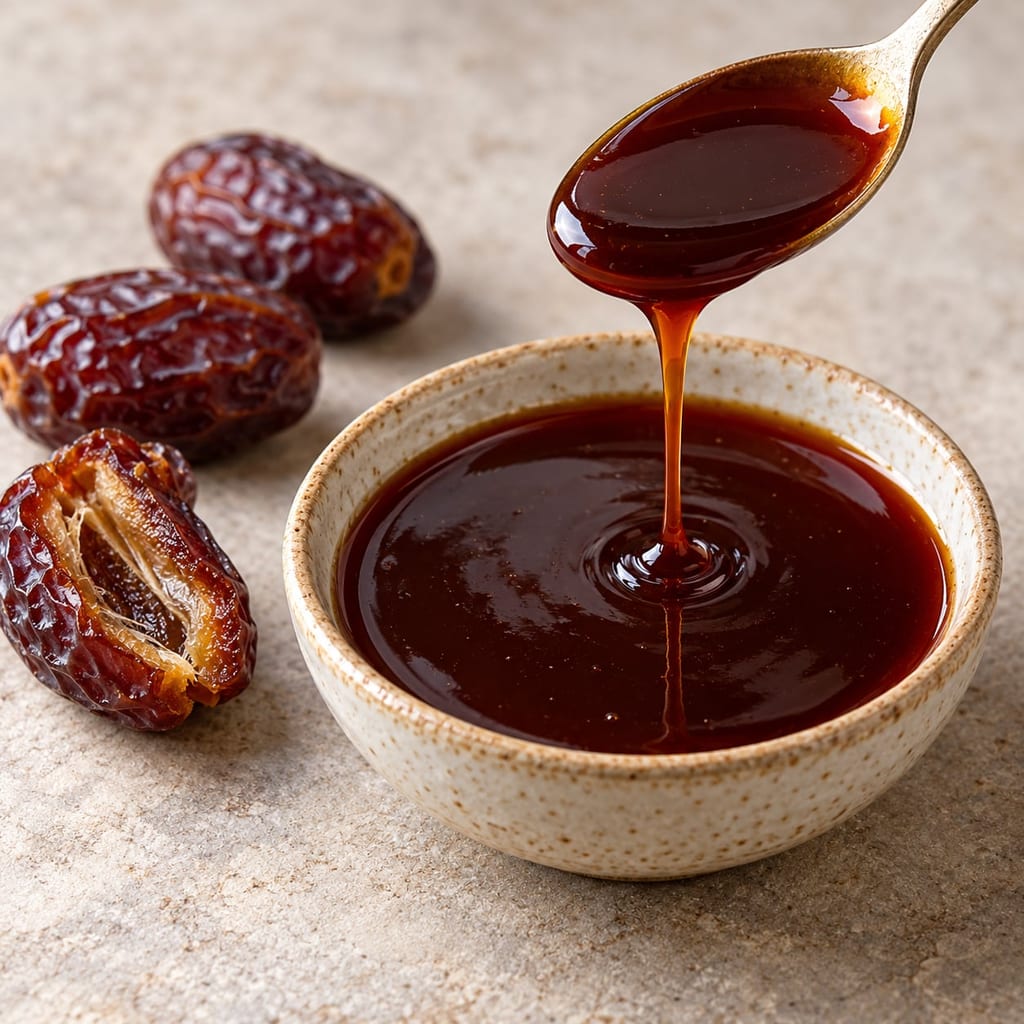
A thick, dark, very sweet syrup made from dates, known as dibs, rub, silan or date molasses. It sweetens tahini and desserts and glazes or sauces savoury dishes across the Middle East and North Africa.
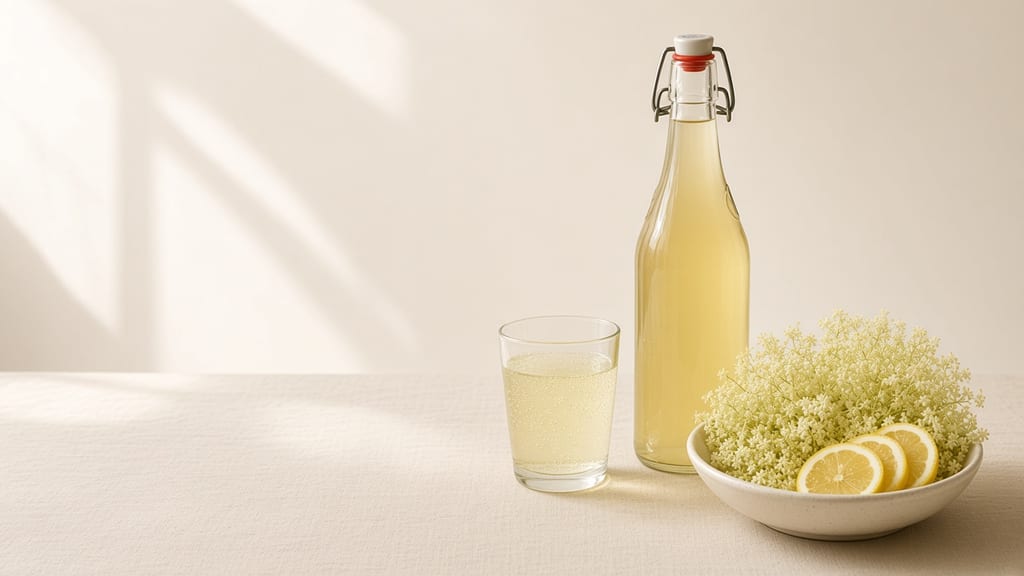
Elderflower heads steeped for one to three days in a lemony sugar syrup, strained and kept cold; the same infusion method flavours syrups with mint, basil, thyme and other herbs.
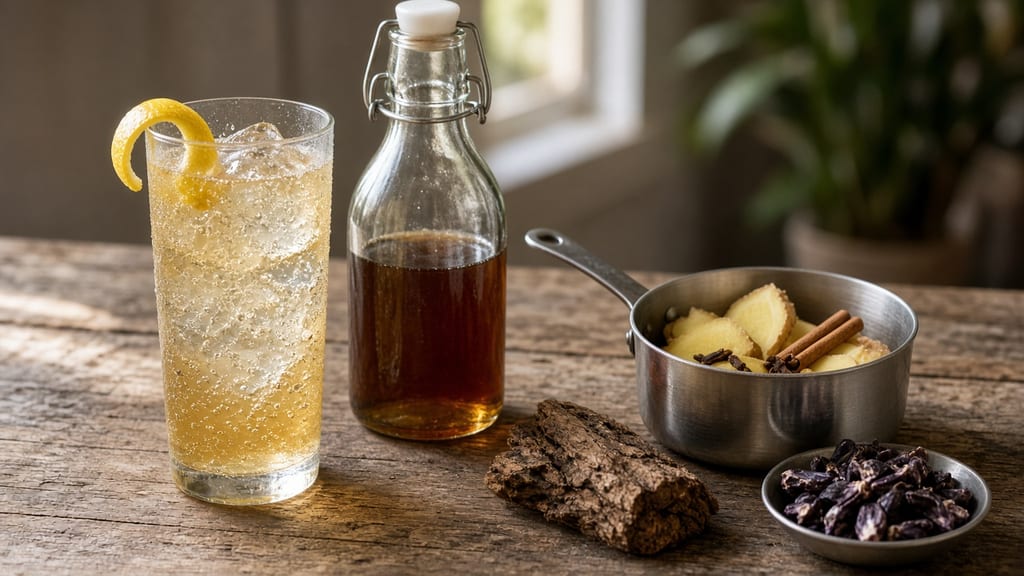
Boiled syrups from hard ingredients: a refrigerated ginger syrup, Trinidad mauby from tree bark, Tamil nannari root syrup, Peruvian purple-corn concentrate and a Turkish spiced sherbet.
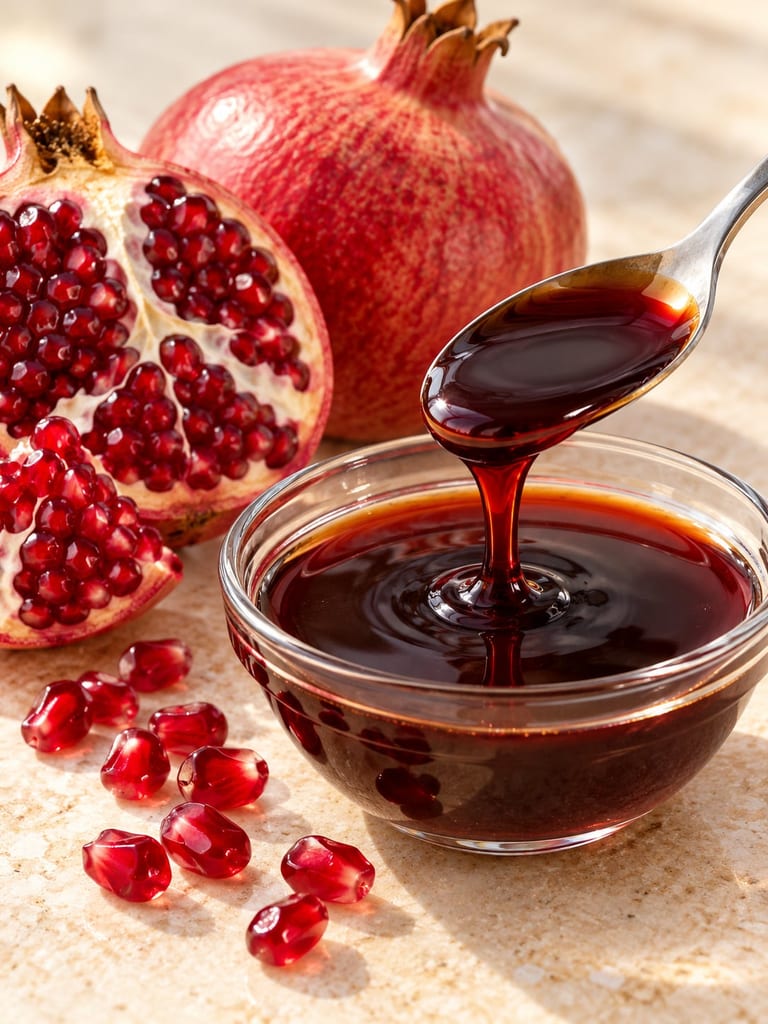
The registered Hatay method presses pomegranate arils and slowly concentrates the strained juice. Its 100 kg source batch and experienced-producer endpoint are retained; no home-scale time or shelf-life is inferred.
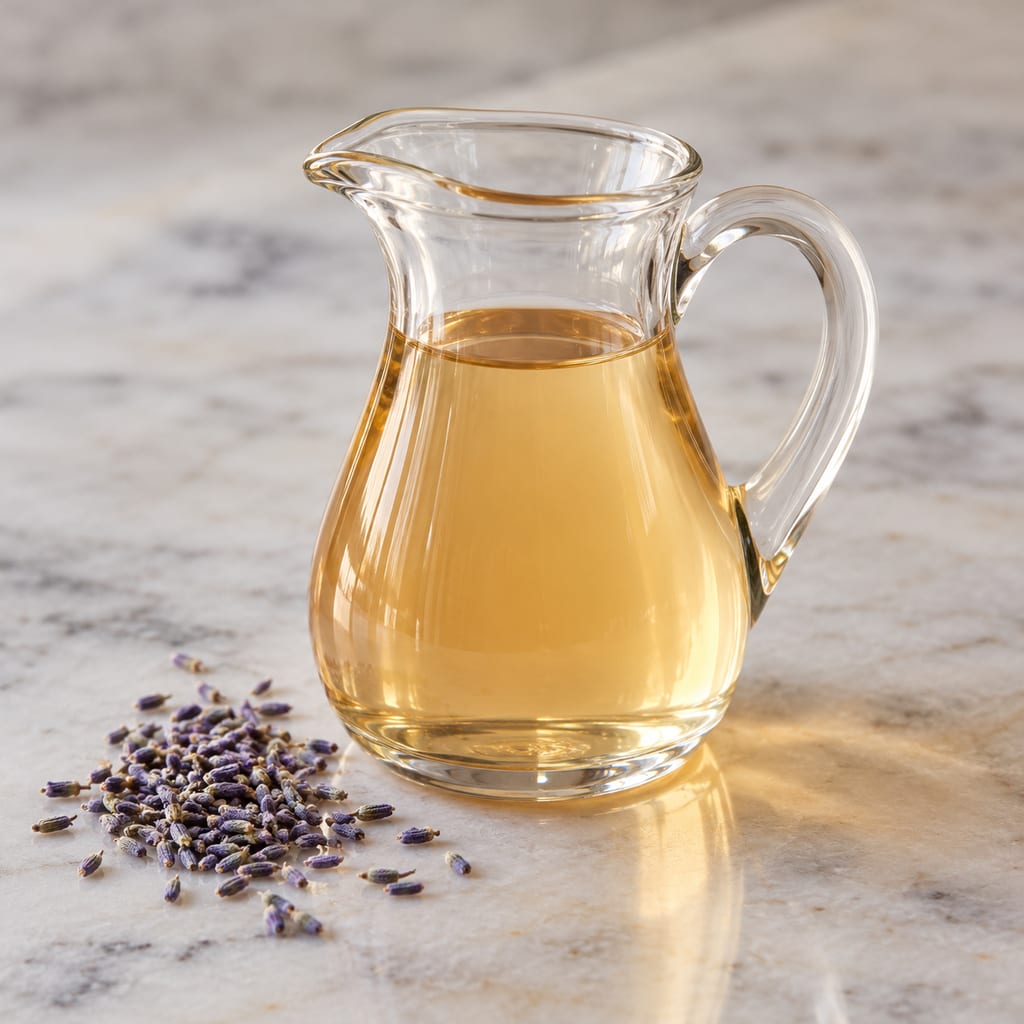
Sugar syrups flavoured by holding botanicals, sugar and water in sealed bags in a 135°F (57°C) water bath for an hour, then cooling and refrigerating; several can share one bath.
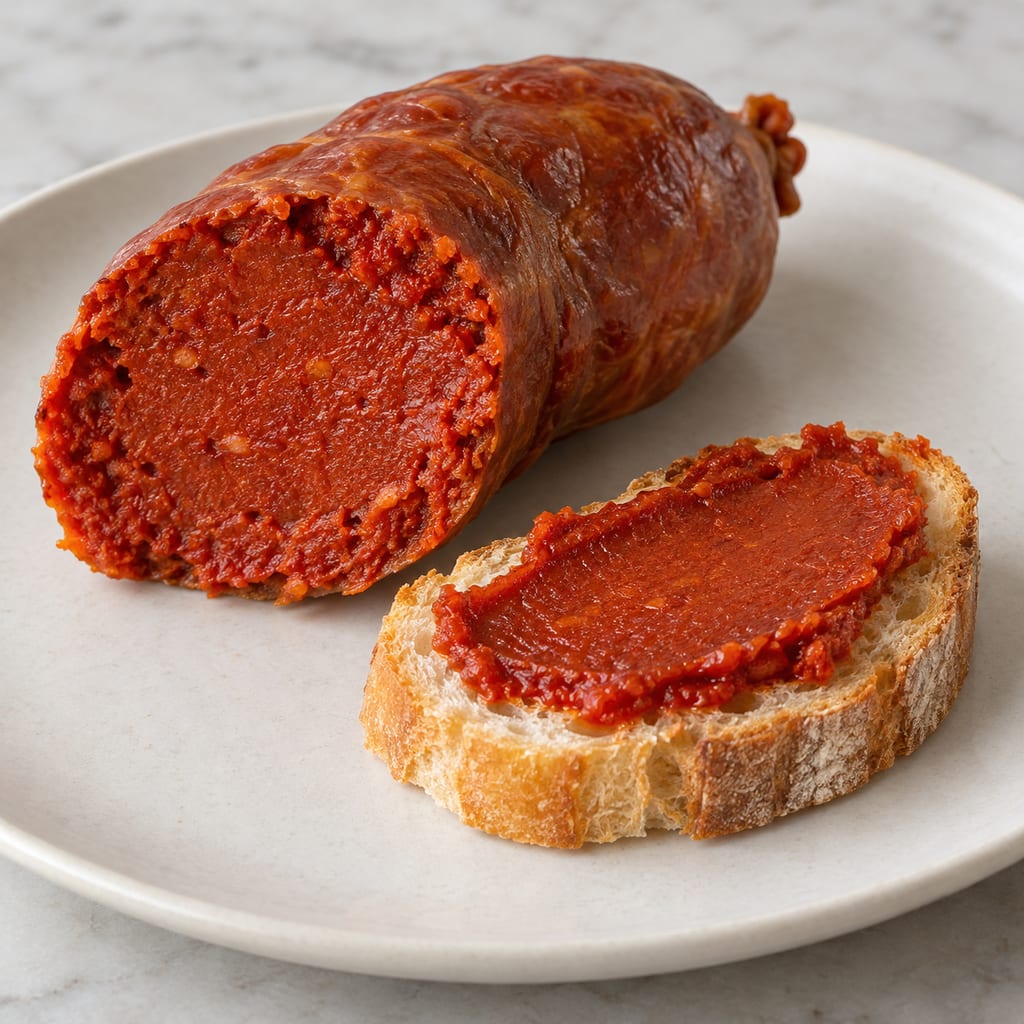
Soft, spreadable Calabrian pork sausage made with a great deal of red chilli and fatty pork, stuffed into natural casings, sometimes smoked and matured while staying soft.
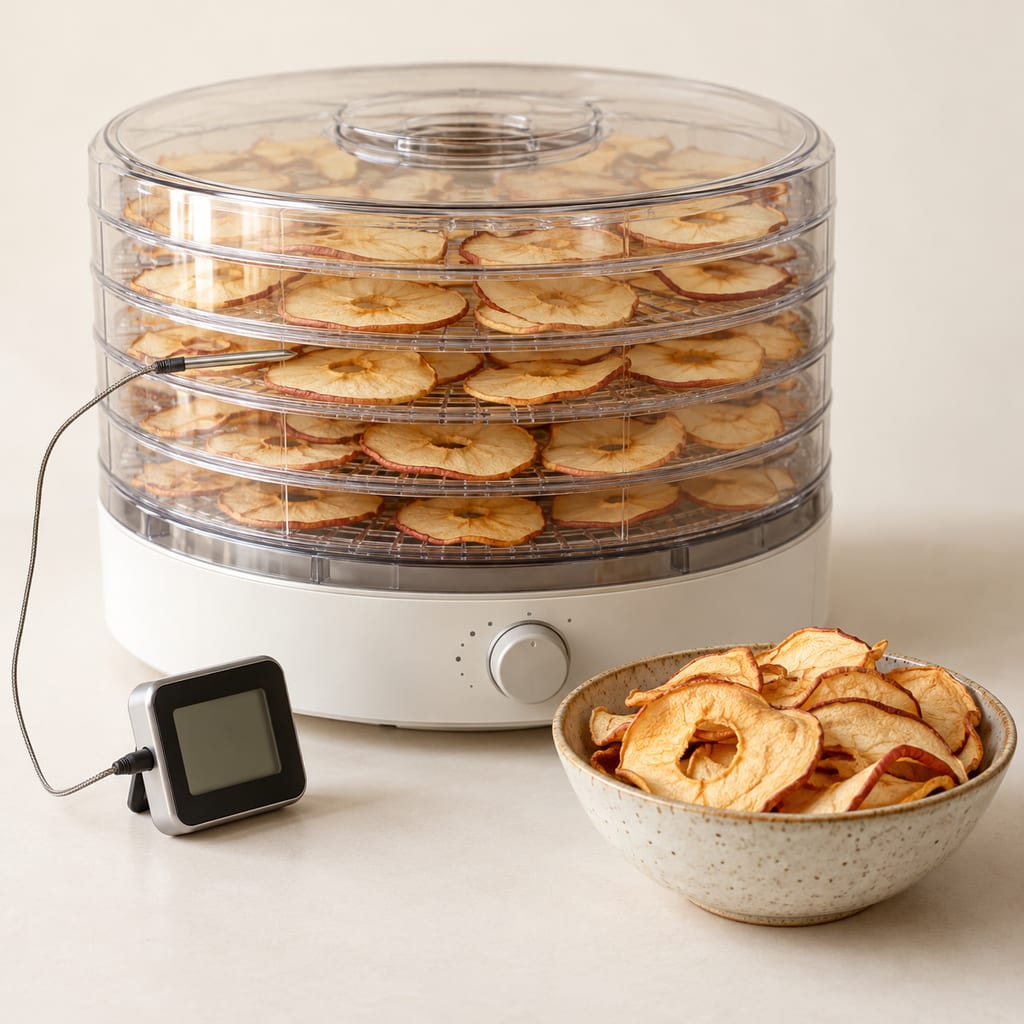
A way to add independent temperature logging to an existing food dehydrator without changing its built-in controls or protections. It is a monitoring method, not a rewiring plan.
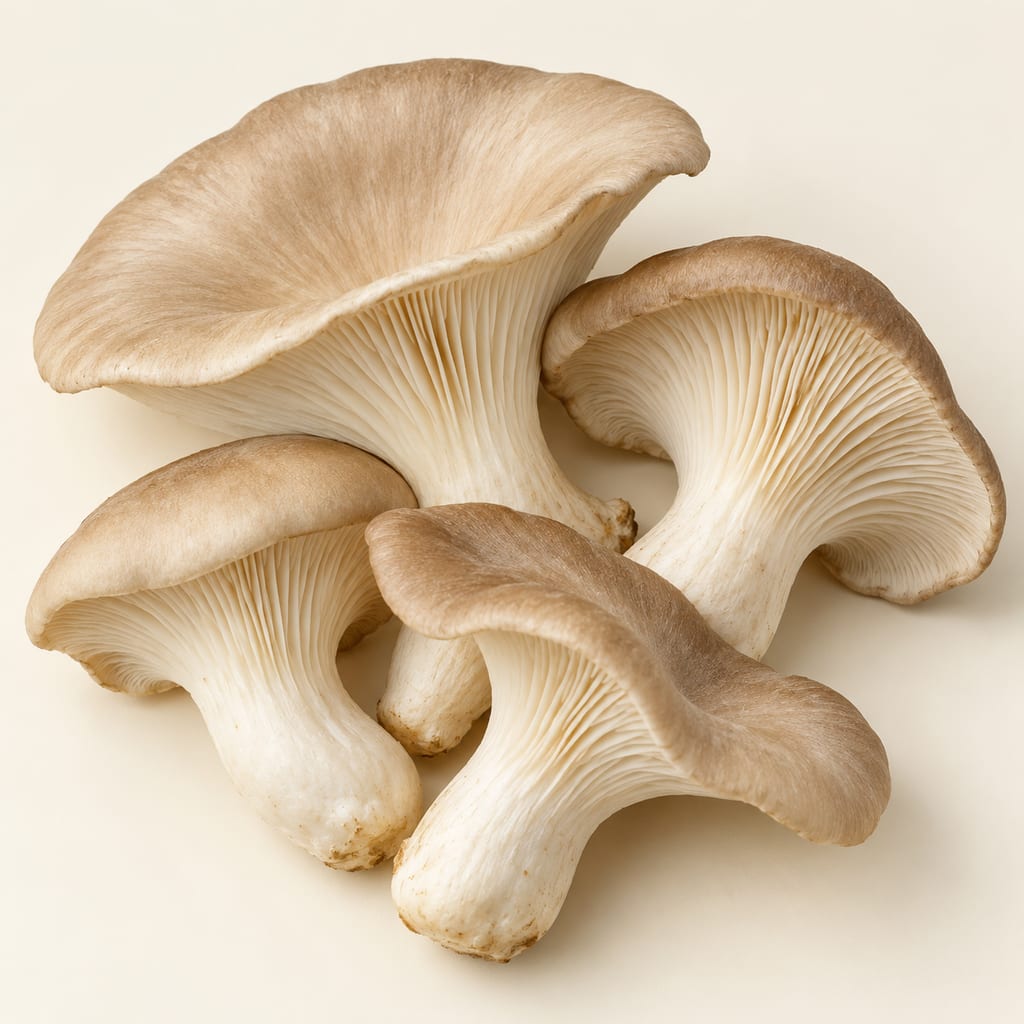
Pleurotus cystidiosus is the abalone mushroom, a cultivated oyster-type fungus with dark brown caps that grows more slowly and is more demanding than other Pleurotus species.
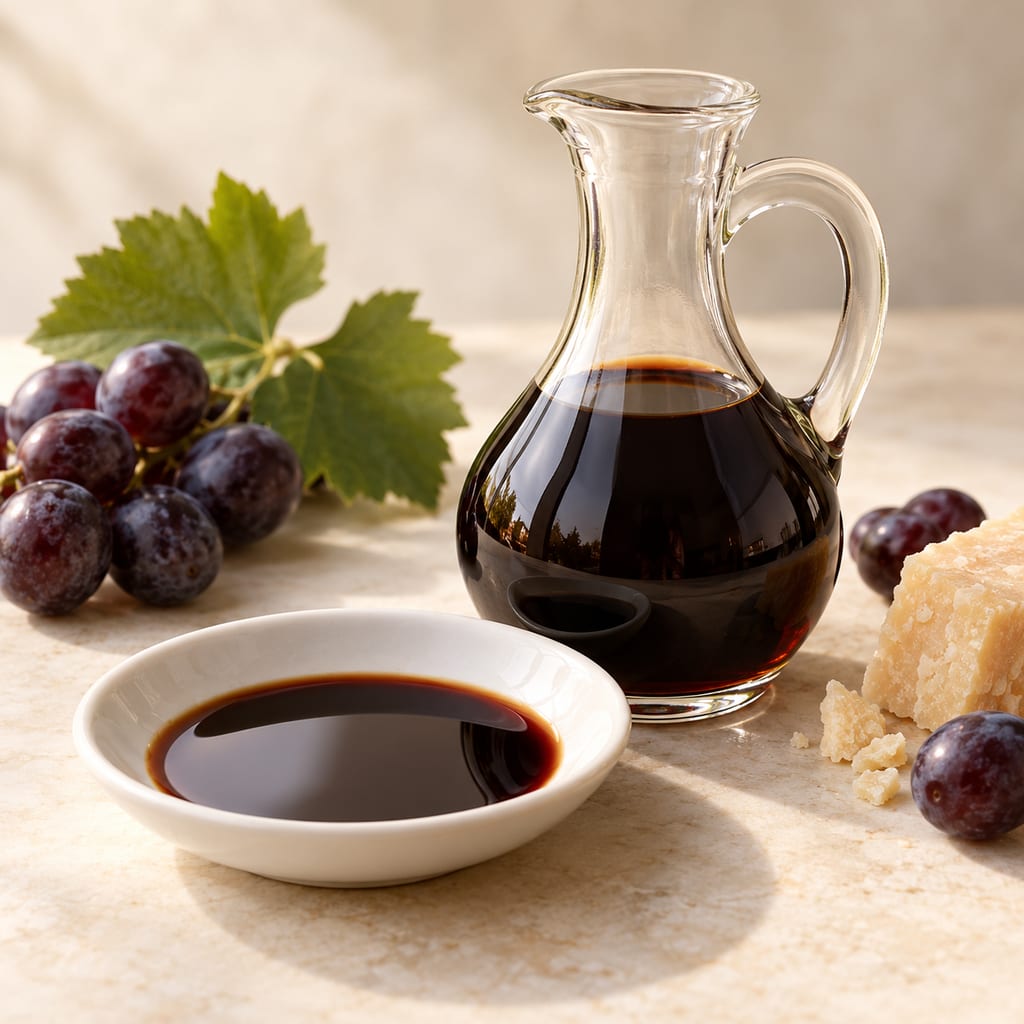
A dark, balanced vinegar from Emilia-Romagna made by combining cooked or concentrated grape must with wine vinegar, then acetifying and refining it in wood under a protected specification.
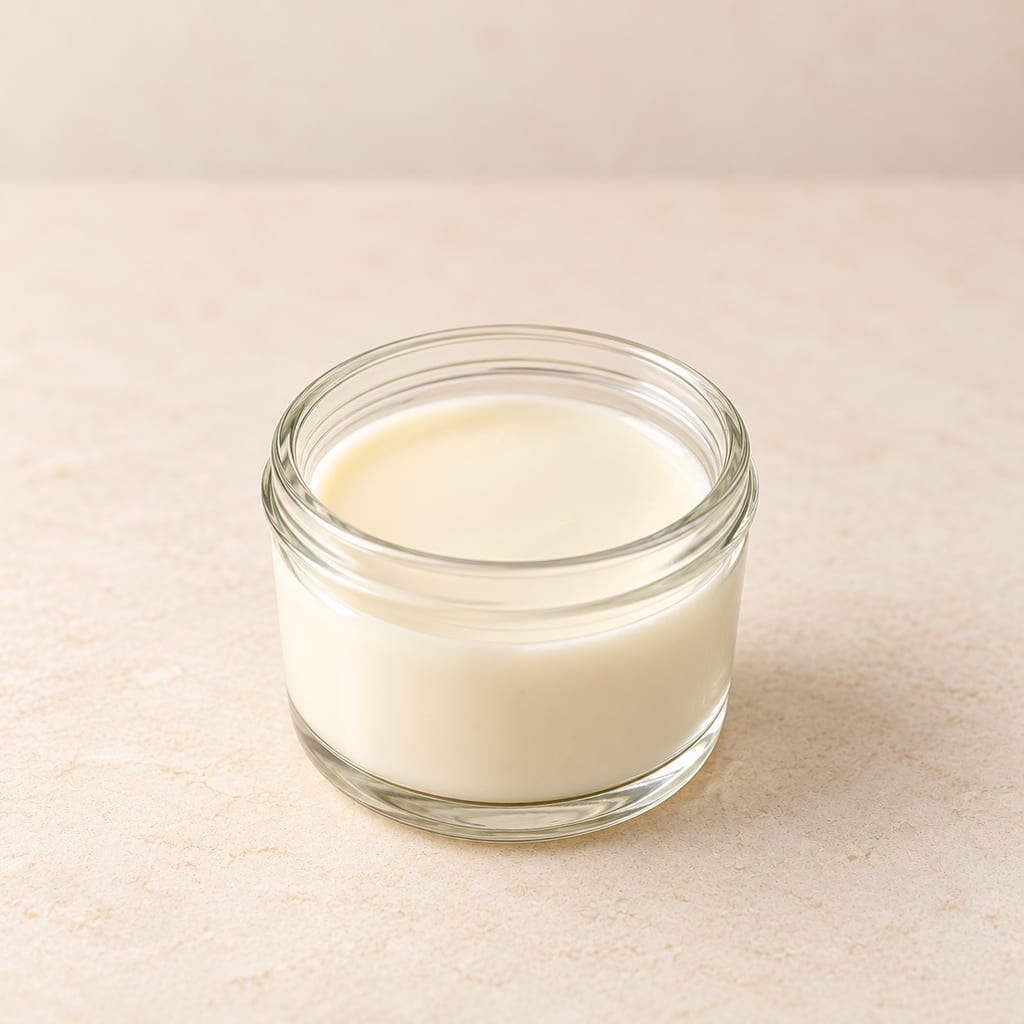
A living dairy inoculum that starts controlled cream fermentation, developing acidity and aroma before sour cream or cultured butter is finished.
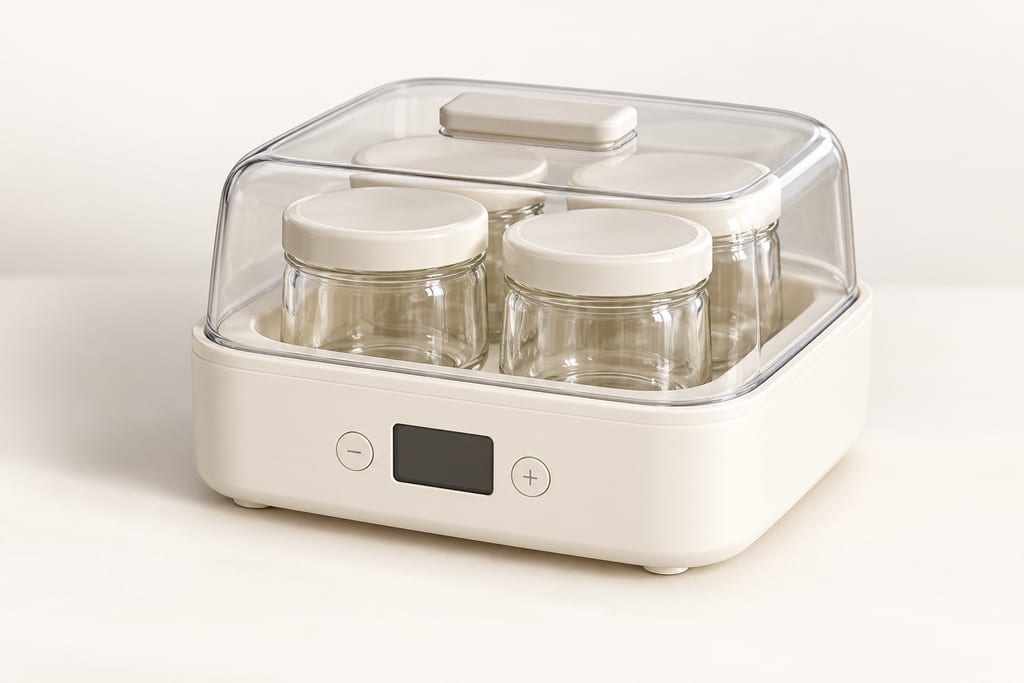
A small electric incubator holds jars at a selected temperature for yogurt and other documented warm food preparations. Controls, capacity and vessel arrangement vary by model.
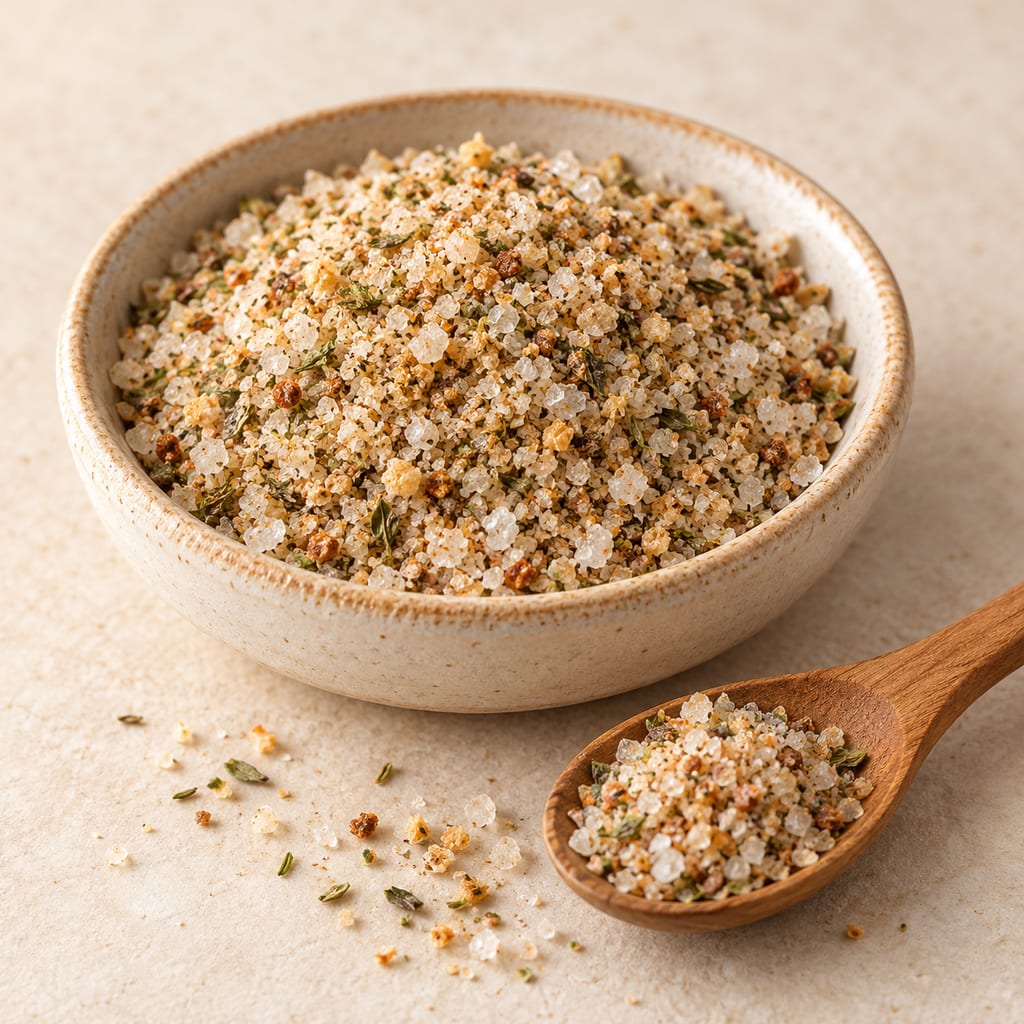
Adygean salt is a seasoned table salt associated with Adygea and the wider North Caucasian culinary tradition. Salt is blended with garlic and a variable selection of herbs and spices; the exact mix depends on the named style and maker.
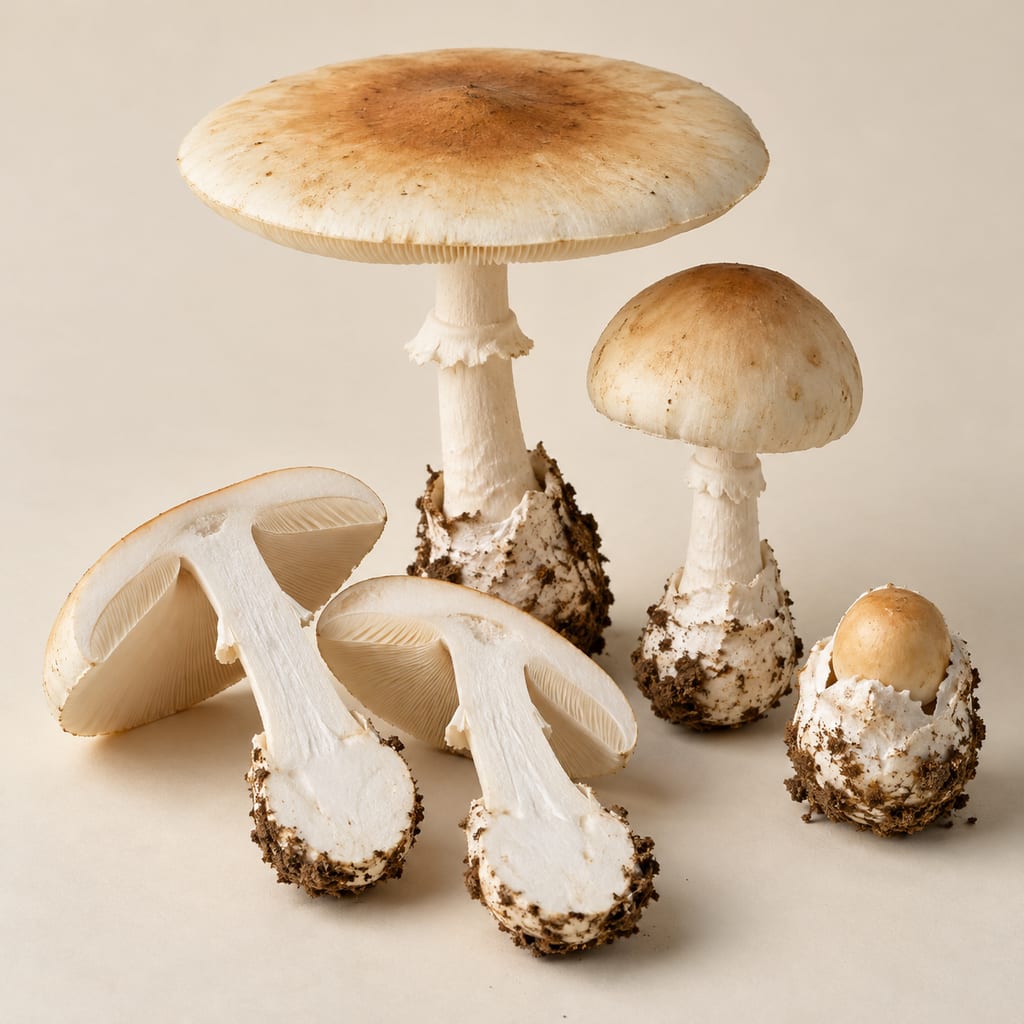
The African Caesar-group mushroom, Amanita masasiensis, is a wild ectomycorrhizal species of central and southern African woodlands, eaten locally. The genus contains deadly poisonous species, so identification needs care.
No community contributions have been published for this entry yet.
Sign in to contribute. Published comments and photos are free to read.
식품의약품안전처 (Ministry of Food and Drug Safety, Korea), 26 May 2026Method · Safety
매실청 담그기 (Making maesil-cheong safely), card newsWash the plums at least three times under running water on a rack and dry completely; water left on them can cause mould.
Remove the stems with a needle or toothpick; stems left on can make the syrup bitter.
Remove the seeds with a pitter; removing seeds cuts the cyanide compounds of green or yellow plums by most (95 %).
Sterilise the container with steam or boiling water and dry it; otherwise unwanted microbes can grow.
Fruit and sugar 1:1, with sugar covering the fruit; oligosaccharide syrup instead of sugar cuts cyanide compounds by 14 %.
Mature at room temperature, stirring as the sugar dissolves; generally 3 to 4 months.
Strain out the fruit; maturing after the solids are removed cuts cyanide compounds by 22 %.
Put the strained syrup in a sterilised container and mature 6 months or more; this cuts cyanide compounds by 13 %.
Cited in: What this recipe is; Choosing fruit, sugar and jar; Korean maesil-cheong, the ministry's way; Japanese ume syrup from frozen fruit; Watching the jar; Problems and safety; Where the sources disagree
紀州田辺うめ振興協議会 (Kishu Tanabe Ume Promotion Council, Wakayama)Method · Safety · Serving
梅シロップの作り方 (How to make ume syrup)Recommended: wash ume, drain, freeze in a bag at least 24 hours; home-frozen ume best used within about six months.
Layer ume and rock sugar in a jar sterilised by boiling, or wiped with vinegar if it cannot be boiled; seal.
As the ume thaw, move the jar now and then to dissolve the sugar; ready in about 7 days; remove the fruit and keep the syrup in the refrigerator.
1 kg ume (Nanko, Gojiro or small ume) and 1 kg rock sugar in a 3 litre wide-mouth jar; 1 kg ume gives about 900 ml syrup.
As frozen ume thaw, condensation forms on the outside of the jar.
Green ume method: pierce with a toothpick, layer with white sugar, keep in the refrigerator (recommended) or a cool dark place, about a month; this method fails more often.
Adding 200 cc vinegar per 1 kg ume helps suppress fermentation; do not reduce the sugar, because that leads to mould.
The key is to extract quickly and suppress fermentation; freezing makes fine cracks in the skin.
Ume syrup, umeshu and umeboshi all draw water out of the fruit by osmosis of sugar or salt; settled sugar leaves the top of the liquid weaker, so move the container to even it out.
For long storage heat the syrup in a non-aluminium pan at 80 °C or more for about 15 minutes, cool, and refrigerate.
Serve 1 part syrup to 4 parts water, or 1 to 4 unsweetened soda.
Cited in: What this recipe is; How sugar pulls the juice out; Choosing fruit, sugar and jar; Japanese ume syrup from frozen fruit; Watching the jar; Using them in fizzy water; Problems and safety; Where the sources disagree
紀州田辺うめ振興協議会Serving
梅シロップの作り方: 梅の種類による色の違いSyrup colour depends on the variety: Gojiro is almost clear, Nanko a little red, Beni Nanko redder; all made from green unripe frozen ume.
White sugar tends to settle at the bottom of the jar; a thick stand-up plastic bag can replace the jar, with the air pressed out once syrup forms.
Serve also 1 to 4 with milk as an ume lassi, or neat over shaved ice.
Cited in: Choosing fruit, sugar and jar; Using them in fizzy water
전북특별자치도 음식문화플라자 (Jeonbuk Food Culture Plaza)Method
유자청 만들기 (Making yuja-cheong)4 yuja and 300 g sugar (150 to 200 g if white sugar), a little baking soda, a jar.
Scrub the yuja with baking soda and rinse under running water; remove the stem end, slice, and remove the seeds.
Mix yuja and sugar; when the sugar has fully dissolved, put into the jar.
Cited in: Yuja-cheong: Korean citron in sugar; Where the sources disagree
위키트리 Wikitree (Yoon Si-hyeon, 12 October 2026)Method · Safety
'유자청' 설탕은 같은 무게로 담그세요, 술 냄새 나면 버립니다When yuja come in late autumn, many households make a year's yuja-cheong for tea and cooking.
Sugar about equal to the weight of trimmed yuja, weighed after removing seeds and damaged parts.
Lower-sugar cheong should be made in small batches and refrigerated from the start, skipping room-temperature maturing.
Wash and dry the fruit completely; slice the peel thinly; remove all seeds; removing the white pith gives a milder taste.
Use a sterilised, completely dry jar and leave headspace; refrigerate once syrup forms.
If foam, an alcohol smell or mould appears, discard the whole jar rather than skimming the top.
The most dangerous belief is that a sugared jar keeps forever at room temperature; water or food crumbs speed spoilage, and a clean, dry jar and spoon matter more than the amount of sugar.
Refrigeration only slows spoilage; it does not make an unwashed jar safe; MFDS lists hand washing and washing and drying utensils as the basics of preventing food poisoning.
Let a jar sterilised with hot water cool before filling, because cold ingredients can crack hot glass; use a clean, dry bowl and spatula and wash and dry hands.
Cited in: Choosing fruit, sugar and jar; Yuja-cheong: Korean citron in sugar; Watching the jar; Problems and safety; Where the sources disagree
Ministerstwo Rolnictwa i Rozwoju Wsi (Polish Ministry of Agriculture), gov.plMethod · History
Syrop z pędów sosnyYoung pine shoots with their scales removed are layered with sugar in a jar and pressed down lightly.
The jar stands 7 to 14 days and is shaken often.
The syrup is strained, the shoots pressed, and the syrup jarred and stored in a cool place.
Cited in: What this recipe is; Polish pine-shoot syrup, a folk practice; Where the sources disagree
Lasy Państwowe (State Forests, Poland)Safety · Definition
Sosna zwyczajna (Scots pine)Scots pine needles grow in pairs on short shoots, 3 to 8 cm long, stiff, finely serrated and sharp.
Swiss stone pine has needles in fives.
Cited in: Polish pine-shoot syrup, a folk practice
Lasy Państwowe (State Forests, Poland)Safety
Cis pospolity (yew)Yew needles are arranged like a comb on green shoots, pointed but soft, dark above and paler below, up to 3 cm long.
Every part of the yew except the red aril contains taxine, which harms the heart; a poisoned person must go to hospital at once.
Cited in: Polish pine-shoot syrup, a folk practice; Problems and safety