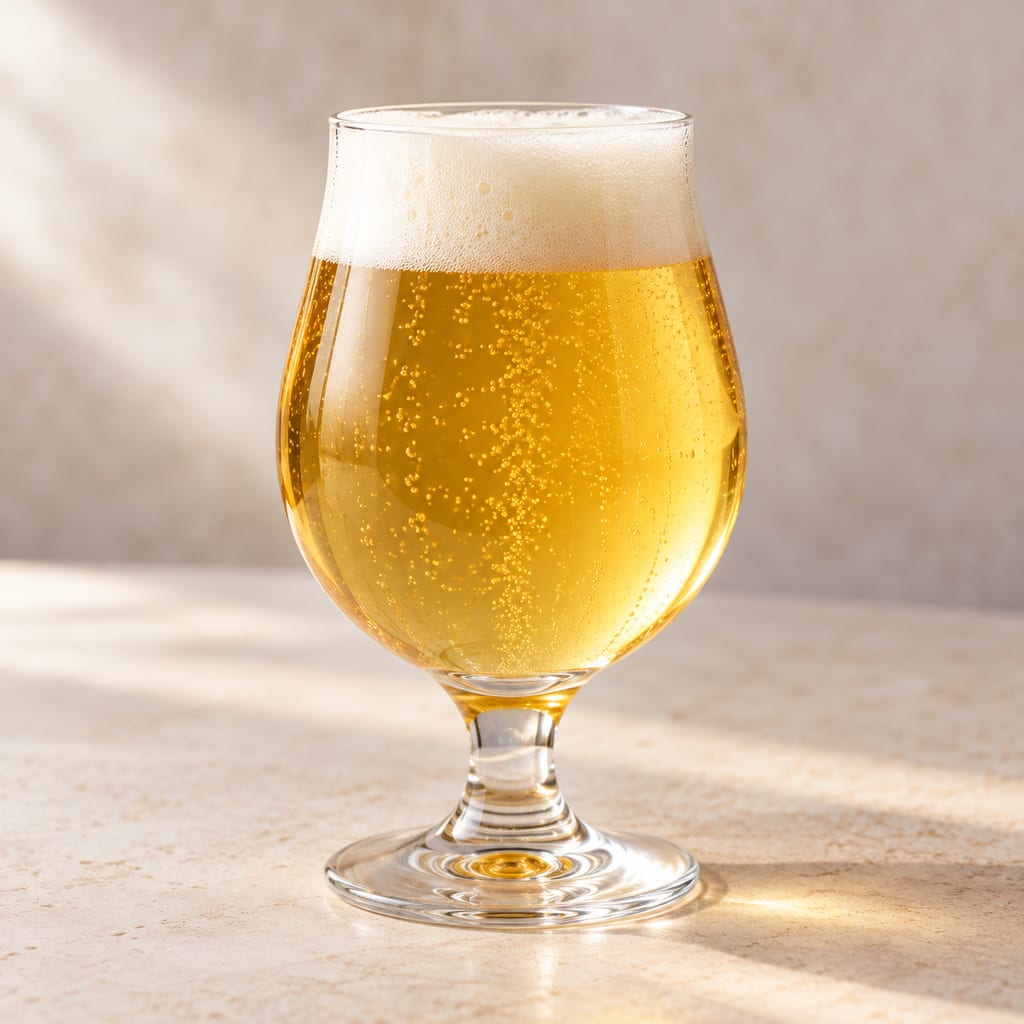
Monk’s Ration Trappist-style single
A pale Belgian-style ale with Pilsner and aromatic malts, cane sugar and Saaz hops, fermented under loose foil before an airlock is fitted.
 FermenteaWhere food goes to change
Cultures
Lallemand Abbaye is a dried Saccharomyces cerevisiae brewing culture for fruity, spicy Belgian-style ales. Its published Belgian-origin claim does not identify a monastery or donor brewery.
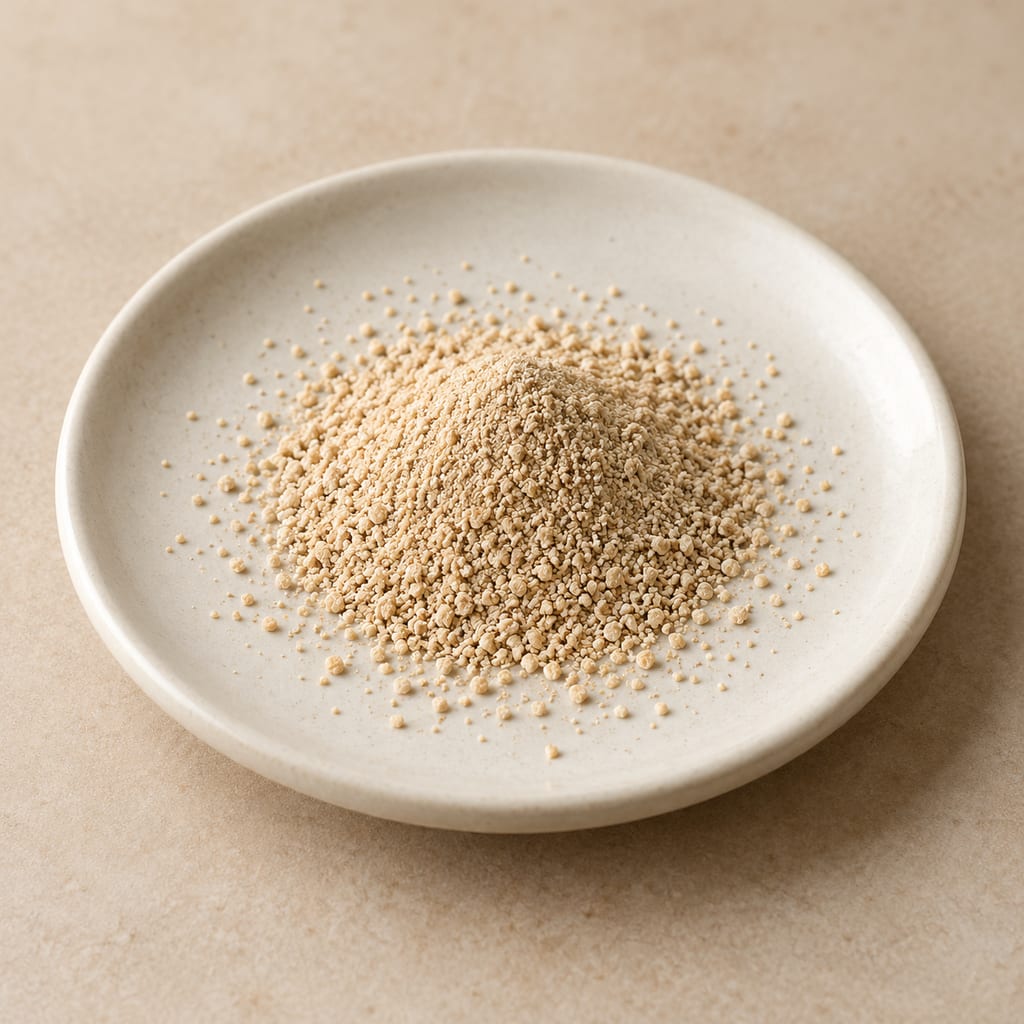
Lallemand Abbaye is a commercial dried brewing culture marketed as LalBrew Abbaye. It brings a selected Saccharomyces cerevisiae yeast to a wort rather than relying on organisms arriving from the room, equipment or grain. Its purpose is both to carry out alcoholic fermentation and to contribute the fruity and spicy character associated with the producer’s Belgian-style beer recommendations.
The product is described as Belgian in origin. That country-level association does not identify an abbey, a donor brewery or a historical collection site. Abbaye and Trappist-style describe a commercial name and a brewing association here; they do not establish that the culture came from a monastery. The public product documents do not supply that genealogy.
The named culture was already documented in the manufacturer’s 2019 technical sheet. That is an attestation of the commercial product, rather than its launch date. Its place in brewing history is the wider use of selected dry cultures: a brewer can buy a defined inoculum for a chosen beer style without maintaining a brewery’s own yeast propagation system.
Commercial dry yeast begins as a living culture, not as a powder made by grinding a food. In Lallemand’s described production pathway, a sample from its Montreal culture collection is grown on an agar slant and sent to a production facility in Vienna. A liquid culture is then expanded through progressively larger volumes before the commercial growth stage.
This staged expansion separates maintaining the culture from manufacturing enough cells to supply brewers. The production fermentation is managed to obtain robust, nutrient-rich yeast. The harvested cells are concentrated by centrifugation and filtration before drying. The material in a sachet therefore represents grown and processed biomass, rather than a small quantity of the beer in which a culture might once have been used.
That account describes the company’s manufacturing pathway. It does not identify the origin of a particular packet or disclose a unique Abbaye production schedule. Collection, propagation, drying and packaging are different operations; the location of one should not silently become the location of them all.
The June 2022 Abbaye specification describes a tan-to-beige granular powder. It lists active dry Saccharomyces cerevisiae and the emulsifier E491. The finished commercial ingredient is consequently a formulated dry culture, rather than a pure chemical or an unqualified spoonful of generic yeast. The ingredient list belongs to that dated formulation; the package remains the reference for the product actually purchased.
Dry is a physical state, while viable describes cells capable of growing under appropriate conditions. A dry culture can contain viable organisms even though no activity is visible in the sealed pack. Conversely, its appearance cannot establish how many cells remain capable of growth after transport, storage or opening.
Product specifications distinguish appearance, composition and microbiological measurements. Those are different attributes. A laboratory viable-cell specification describes a test of the supplied culture; it is not a measurement of the yeast after a brewer has handled it, and it does not describe the finished beer. Keep the product’s identity and storage history together when choosing a packet.
The viable-cell declaration uses colony-forming units: a measure of organisms capable of producing colonies under the test conditions. It is different from weighing the powder or counting every visible cell. The specification separately reports bacterial, wild-yeast and other tests. Each result belongs to its particular method, so a commercial culture is characterized through several measurements rather than through one activity claim.
Turning a freshly grown yeast into a dry supply changes the conditions its cells experience. Comparisons of matched fresh and dried brewing strains have found differences in viability and in the way the yeast later flocculates during wort fermentation. The effects were not identical across the ale and lager strains examined.
This makes drying more than a convenient change of package. A manufacturer needs a process that leaves enough cells able to resume the intended fermentation. The strain’s response to processing matters alongside the format in which it is sold. A dry form is therefore not a reason to assume that every commercial yeast will behave alike.
Those experiments did not test Abbaye. They explain why production and handling deserve attention without assigning their measured results to this product. Likewise, a result obtained with freshly propagated yeast does not automatically describe the same culture after drying. For Abbaye, its own technical documents provide the product-specific brewing description.
Manufacturing quality control follows the culture beyond its initial selection. Lallemand describes testing both bulk yeast after production and the product after final packaging. The company also ferments samples in standard wort to monitor the start and progress of fermentation and apparent attenuation, then uses a trained panel to assess the resulting beer’s aroma.
These checks address different questions. A fermentation test asks how a sample performs in the test wort; a microbiological analysis looks for specified organisms; a sensory panel evaluates the resulting flavour. A named culture’s identity cannot substitute for all of those observations, nor can one fermentation measurement represent every aspect of the product.
The manufacturer’s reference conditions make batches comparable within that testing system. A household or brewery wort can differ in composition, yeast nutrition and handling. Quality testing of a supplied culture consequently supports consistency without predicting every later batch. The brewer still has to follow the chosen recipe and the actual product’s handling instructions.
Abbaye’s published aroma description includes fruity notes as well as spice. Fruity yeast aroma can involve esters made during metabolism. Their accumulation depends on both formation and breakdown; an aromatic compound can be produced and hydrolysed within the same fermentation environment.
In experimentally modified sake yeasts, changing the balance between alcohol acetyltransferase and an ester-hydrolysing enzyme changed the accumulation of isoamyl acetate. The fermentation profiles could remain broadly similar while this particular aromatic component differed. That distinction is useful when interpreting flavour: similar fermentation progress does not require an identical aroma profile.
The experiment concerns selected sake strains and a particular ester, rather than Abbaye. It provides a mechanism for understanding yeast-derived fruit character without supplying this product’s genetic makeup or a chemical analysis of its beer. Banana, tropical fruit or dark-fruit descriptions in a product profile are sensory comparisons, not added fruit ingredients or guaranteed concentrations.
Spicy phenolic character is a different aspect of yeast metabolism from ester production. The A4 Abbaye sheet identifies the culture as POF-positive. In brewing terminology, that designation concerns the ability to form certain volatile phenols; it does not mean that every beer made with the yeast has an unwanted defect.
Experimental Saccharomyces cerevisiae strains with a positive phenotype have converted ferulic acid into 4-vinylguaiacol. The precursor and the resulting aromatic compound are different substances, linked by a biochemical conversion. Whether a brewer wants the resulting character depends on the beer being made and its intended balance.
The older genetic experiment did not examine Abbaye or establish an allele for this commercial product. The product designation and the general mechanism therefore answer separate questions. They help explain how a selected yeast can contribute spice while leaving the precise aroma of a particular wort and fermentation to be determined by that process.
Instructions for adding a dry culture can change as product guidance develops. An earlier Abbaye sheet recommends rehydration before pitching, while allowing that direct pitching can give good results. The A4 sheet instead directs rehydration only where equipment does not readily permit dry pitching and refers users to the specified rehydration procedure.
The distinction matters because rehydration is a handling operation, not a way to turn any yeast into a starter of known strength. Departing from the intended procedure can affect fermentation performance and introduce contamination. Use the instructions for the actual product and brewing arrangement rather than combining stages from different documents.
A packet amount, a manufacturer’s mass-based pitching recommendation and a liquid-yeast calculator are also different ways of describing an inoculum. They should not be treated as interchangeable without the relevant product and process information. The chosen recipe supplies its amount; the product instructions supply its handling. Neither should be silently replaced by a procedure for another culture.
Re-pitching a harvested culture is a separate operation from opening a new dry packet. The A4 product sheet directs breweries to their yeast-handling procedures for re-use and specifically calls for wort aeration in that setting. A first-use instruction should therefore not be carried over to harvested yeast without retaining that difference.
The substrate presented to the yeast affects the fermentation it can perform. Wort composition, nutritional quality, inoculation level, temperature and yeast handling all influence the lag before activity, the duration of fermentation, attenuation and flavour. A product description is most useful when those dependencies remain visible.
Attenuation describes the extent to which wort extract is reduced during fermentation; it is not a single final gravity that the yeast imposes on every beer. Similarly, flocculation describes cells aggregating and settling from suspension. A settling characteristic helps describe the culture’s behaviour but cannot replace an assessment of fermentation progress.
Abbaye is intended for a range of Belgian-style ales rather than one fixed beer strength or flavour. The same culture can therefore be used within different malt bills and fermentation arrangements. Keep the whole formulation in view: selecting the yeast is one decision within brewing, alongside the substrate, handling and conditions that allow it to perform.
Belgian origin, Canadian company identity and Austrian manufacture describe different associations. Doemens’ account of a 2024 visit to Lallemand’s Vienna plant places Abbaye among the company’s dry brewing yeasts and notes production in Vienna and elsewhere. That supports a manufacturing association, without making Vienna the biological origin or the source of every packet.
The contemporary Monk’s Ration Trappist-style single is one documented use of Lallemand Abbaye. Published among the American Homebrewers Association’s 2026 Big Brew recipes, Phil LaFleur’s formula names a packet of the culture. Its Trappist-style designation describes the beer; the recipe does not add evidence of a monastic source for the yeast.
Keep that recipe’s pitch and fermentation sequence with its complete formulation. They are instructions for that beer, rather than a general Abbaye schedule. A named yeast can connect recipes while each recipe retains its own ingredients, equipment, fermentation conditions and intended result.
Protect the dry culture from air and moisture and retain the intact package until use. Abbaye’s product instructions call for dry, cold storage and distinguish unopened packs from packs that have been opened and resealed. The printed expiry and current supplier directions belong with the actual supply, rather than a storage duration copied from another yeast.
Opening a bulk packet changes its storage situation. Ordinary resealing and resealing under vacuum are different conditions in the manufacturer’s guidance. Plan the amount needed and handle the remainder under the applicable instructions; the stability of an original sealed package should not be transferred to a partially used one.
The granules are a manufactured living ingredient, the wort is their fermentation substrate, and the beer is the later food produced through the complete brewing process. Storage instructions for the dry culture do not establish how to keep the beer or how to retain a harvested yeast slurry for another brew.
Producer describes Belgian origin; no locality, monastery or donor brewery identified.
Documented manufacturing association for LalBrew yeasts including Abbaye; exact packet origin is not established.
A pale Belgian-style ale with Pilsner and aromatic malts, cane sugar and Saaz hops, fermented under loose foil before an airlock is fitted.
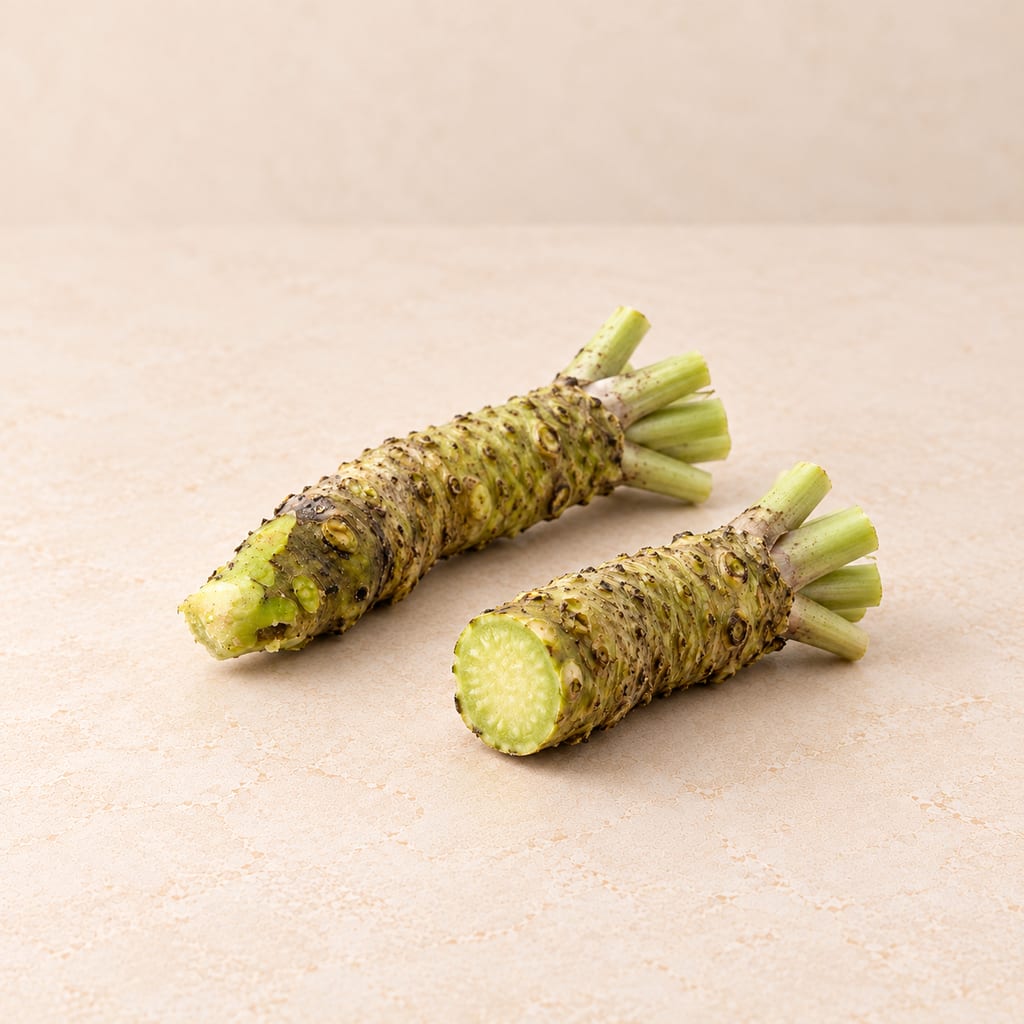
Wasabi is the enlarged stem of Eutrema japonicum, a pungent perennial in the mustard family. Fresh rhizome is grated as a Japanese condiment; powder and prepared paste are separate products.

Soft, spreadable Calabrian pork sausage made with a great deal of red chilli and fatty pork, stuffed into natural casings, sometimes smoked and matured while staying soft.

A way to add independent temperature logging to an existing food dehydrator without changing its built-in controls or protections. It is a monitoring method, not a rewiring plan.

Pleurotus cystidiosus is the abalone mushroom, a cultivated oyster-type fungus with dark brown caps that grows more slowly and is more demanding than other Pleurotus species.

A dark, balanced vinegar from Emilia-Romagna made by combining cooked or concentrated grape must with wine vinegar, then acetifying and refining it in wood under a protected specification.

A living dairy inoculum that starts controlled cream fermentation, developing acidity and aroma before sour cream or cultured butter is finished.

A small electric incubator holds jars at a selected temperature for yogurt and other documented warm food preparations. Controls, capacity and vessel arrangement vary by model.

Adygean salt is a seasoned table salt associated with Adygea and the wider North Caucasian culinary tradition. Salt is blended with garlic and a variable selection of herbs and spices; the exact mix depends on the named style and maker.

The African Caesar-group mushroom, Amanita masasiensis, is a wild ectomycorrhizal species of central and southern African woodlands, eaten locally. The genus contains deadly poisonous species, so identification needs care.
No community contributions have been published for this entry yet.
Sign in to contribute. Published comments and photos are free to read.
Lallemand BrewingCulture identity · Fermentation function · Handling
LalBrew AbbayeCommercial product identity and brewing profile; product-specific technical and specification sheets provide the detailed formulation and handling information.
Cited in: A selected yeast for Belgian-style ales
Lallemand BrewingCulture identity · Fermentation function · Handling
LalBrew Abbaye Belgian-Style Ale Yeast, A4 technical data sheetBelgian-origin claim, species, POF-positive designation, fermentation dependencies, direct-pitch guidance and product storage. Manufacturer specification, not an individual batch assay.
Cited in: A selected yeast for Belgian-style ales; Fruit aromas are products of metabolism; Phenolic character has a separate pathway; Adding yeast without losing its context; Wort and conditions shape the result; Keeping the supplied culture usable
Lallemand BrewingCulture identity · Fermentation function · Handling
Abbaye Belgian-Style Ale Yeast, technical data sheet TDS-8.5x11-04032019-ENGEarlier product documentation and different rehydration guidance; documented in 2019, not product launch date.
Cited in: A selected yeast for Belgian-style ales; Adding yeast without losing its context; Wort and conditions shape the result
Lallemand Brewing; hosted by Scott LaboratoriesCulture identity · Fermentation function · Handling
LalBrew Abbaye Specifications’ Sheet, June 2022Tan-to-beige granular powder, active dry Saccharomyces cerevisiae plus E491, and product quality/storage specifications.
Cited in: A powder containing viable cells; Keeping the supplied culture usable
Lallemand BrewingCulture identity · Fermentation function · Handling
Premium Brewing Yeast: Shelf Life, Storage and Pitching RateGeneral collection/propagation/centrifugation/filtration/drying pathway, Montreal and Vienna associations; not unique lot provenance.
Cited in: From a culture collection to a dry ingredient; Keeping the supplied culture usable
Lallemand BrewingCulture identity · Fermentation function · Handling
Production and QualityManufacturer description of bulk and packaged testing, standard-wort fermentation and sensory panel; no invented pass criteria.
Cited in: What quality testing measures
DoemensCulture identity · Fermentation function · Handling
Doemens visits Lallemand plant in Vienna, 9 April 2024Institutional account of Vienna and other manufacturing sites, Abbaye among LalBrew products; not an exact packet origin.
Cited in: Place, manufacture and the named recipe
Journal of the American Society of Brewing Chemists; author institution recordCulture identity · Fermentation function · Handling
Fermentation Characteristics of Dried Brewers Yeast: Effect of Drying on Flocculation and Fermentation — D. A. Finn and G. G. Stewart, 2002Original abstract comparing matched fresh/dried ale/lager strains, viability and flocculation changes; not an Abbaye trial.
Cited in: Drying is part of the culture’s performance
MicrobiologyCulture identity · Fermentation function · Handling
Genetic and Biochemical Analysis of the Ability of Saccharomyces cerevisiae to Decarboxylate Cinnamic Acids — Andrew R. Goodey and Roy S. Tubb, 1982The abstract reports conversion of ferulate to 4-vinylguaiacol by the tested POF-positive strains; no Abbaye allele or strain-specific result is established.
Cited in: Phenolic character has a separate pathway
Applied and Environmental MicrobiologyCulture identity · Fermentation function · Handling
Balance of Activities of Alcohol Acetyltransferase and Esterase in Saccharomyces cerevisiae Is Important for Production of Isoamyl Acetate — Kiyoshi Fukuda et al., 1998Original abstract and text: altered ATF1/IAH1 in sake yeast; synthesis/hydrolysis balance, not Abbaye flavor measurements.
Cited in: Fruit aromas are products of metabolism
American Homebrewers AssociationCulture identity · Fermentation function · Handling
2026 Official Big Brew Recipes: Monk’s Ration Trappist-Style SinglePage 1 names one pack of Lallemand Abbaye in Phil LaFleur’s modern recipe; it does not establish the culture’s genealogy.
Cited in: Place, manufacture and the named recipe