
Almond mushroom
The almond mushroom, Agaricus subrufescens, was cultivated in eastern North America in the 1800s, lost its market, and returned as a cultivated mushroom from Brazil, where it is grown under several names.
 FermenteaWhere food goes to change
Mushrooms
Lentinula raphanica is a wild wood-rotting mushroom of the Neotropics, a close relative of the cultivated shiitake, recorded as food by Amazonian communities and still poorly studied.
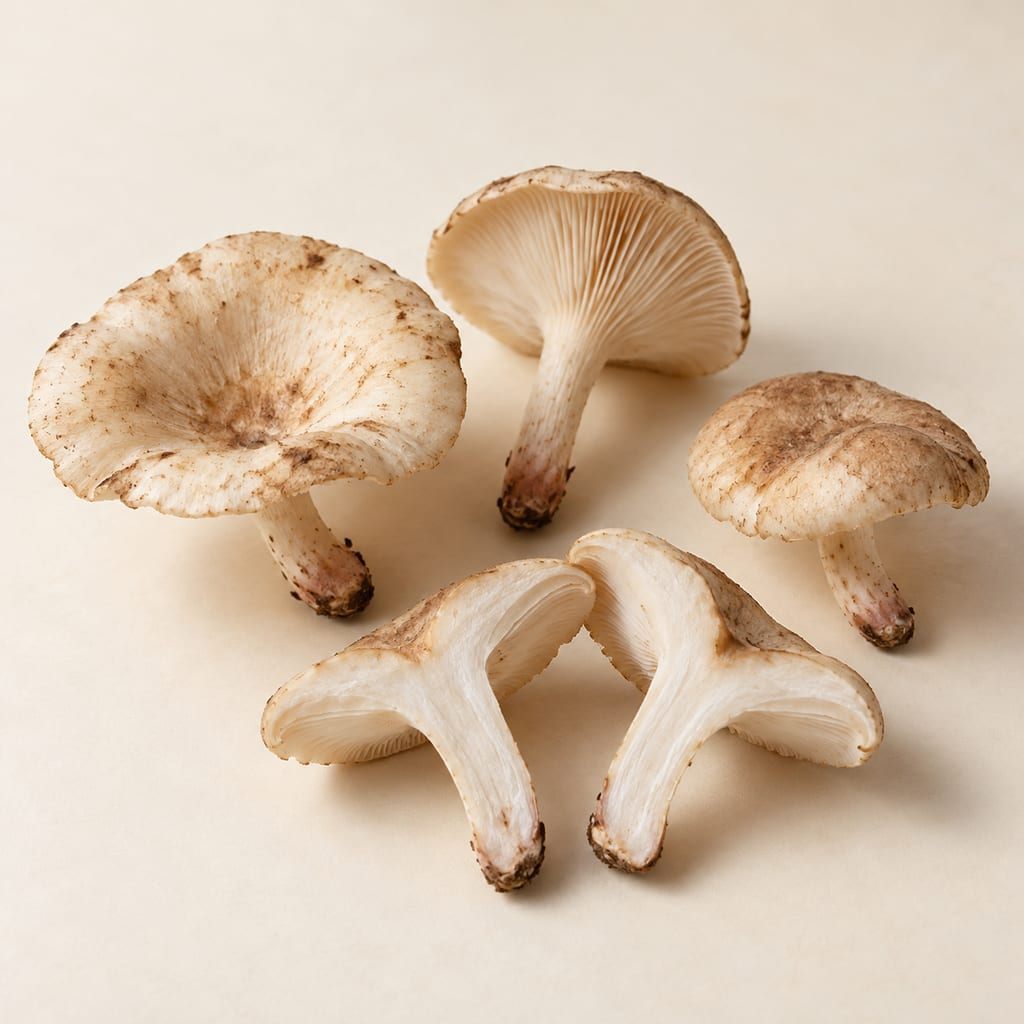
Lentinula raphanica is a gilled wood-decaying mushroom in the genus Lentinula, the same genus as the shiitake, Lentinula edodes, which is grown on logs and on sawdust. Like other members of the genus it grows on dead wood and breaks it down, which is why it is recorded in rainforest habitats rather than on living trees.
The species is a relative of the shiitake, not a copy of it. A wild Neotropical fungus is not the same thing as a cultivated strain, and the record for this species says nothing about how it tastes or cooks beyond the fact that it is eaten.
The name has been revised several times. William Alphonso Murrill described two species in 1943, Armillaria raphanica and Gymnopus alliaceus. Ron Petersen and J. L. Mata moved them into one species of Lentinula in 2001.
L. raphanica is morphologically very similar to Lentinula boryana. Thon and Royse (1999) first separated the two as independent lineages, and Mata and colleagues formally described them as distinct species in 2001. A 2022 global phylogeny of the genus flagged some taxa as dubious and proposed a Neotropical origin for the group. A 2010 Mycotaxon paper reports the species from Amazonas State in Brazil, and Mata and colleagues list it from Florida, Louisiana, Puerto Rico, Costa Rica, Venezuela and Brazil. Sources disagree on the molecular support for the Amazonas identification, so the record should be read as provisional.
The species is recorded as an edible mushroom consumed by Yanomami communities in the Amazon. The Brazilian record comes from the supplied catalogue of fungi, which classes it as a Neotropical food-use record with unknown supply. The catalogue does not say whether it is gathered regularly or only occasionally.
Documented occurrence and consumption do not establish a standardized food-safety assessment. The sources reviewed for this page give no preparation, cooking method or toxicity profile for the species, and none should be inferred from the shiitake, which is a different organism with its own cultivation history.
A Brazilian project to cultivate naturally occurring fungi began in 2012 with Lentinula raphanica. A study from Santa Catarina found it among four species identified in Florianopolis, and it noted that further research and time are needed before cultivation protocols can be developed for this species.
The species is therefore a subject of cultivation research, not a crop. No yield, substrate or growing-time figures were found for it.
This page is not an identification guide. Lentinula species are gilled wood fungi that can be confused with other gilled mushrooms, and the Neotropical taxa are poorly resolved. Anyone thinking of eating a wild Lentinula should have it identified by a qualified mycologist first.
No standardized food-safety assessment for this species was found in the sources reviewed.
The main open questions are the species limits within Lentinula in the Neotropics, how often and where the species is eaten, what preparations are used, and whether any cultivation yields are achievable. Each question needs a source the reader can check.
Brazilian and Amazonian food-use record, Yanomami consumption from the supplied catalogue and the Portuguese literature; country-level only.
The almond mushroom, Agaricus subrufescens, was cultivated in eastern North America in the 1800s, lost its market, and returned as a cultivated mushroom from Brazil, where it is grown under several names.
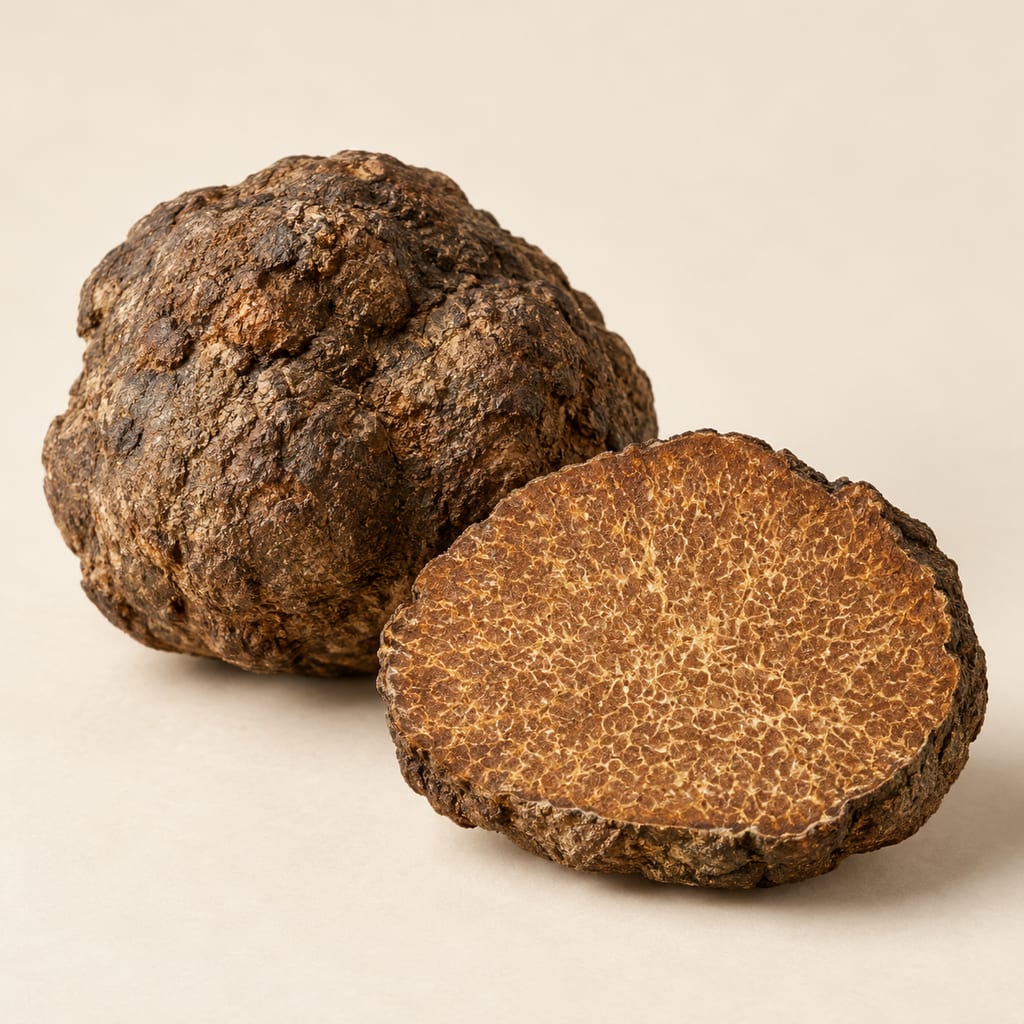
Polyporus indigenus, a polypore of the Brazilian Amazon. Its underground sclerotium, not the fruiting body, is the part people eat, and it is known locally as pão do índio.
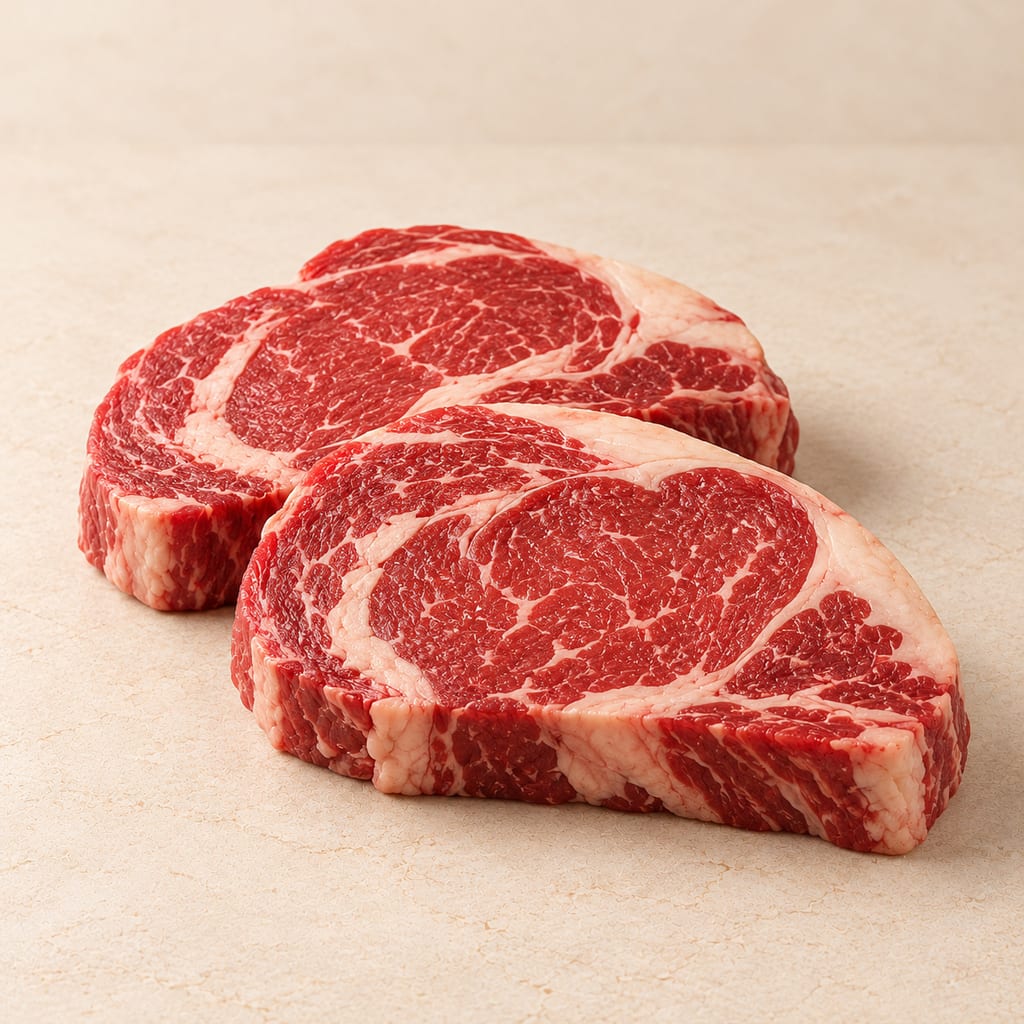
Beef is the meat of domestic cattle, Bos taurus and Bos indicus, sold as steaks, roasts, ground meat and cured products, and used in broths, salami and koji seasonings.
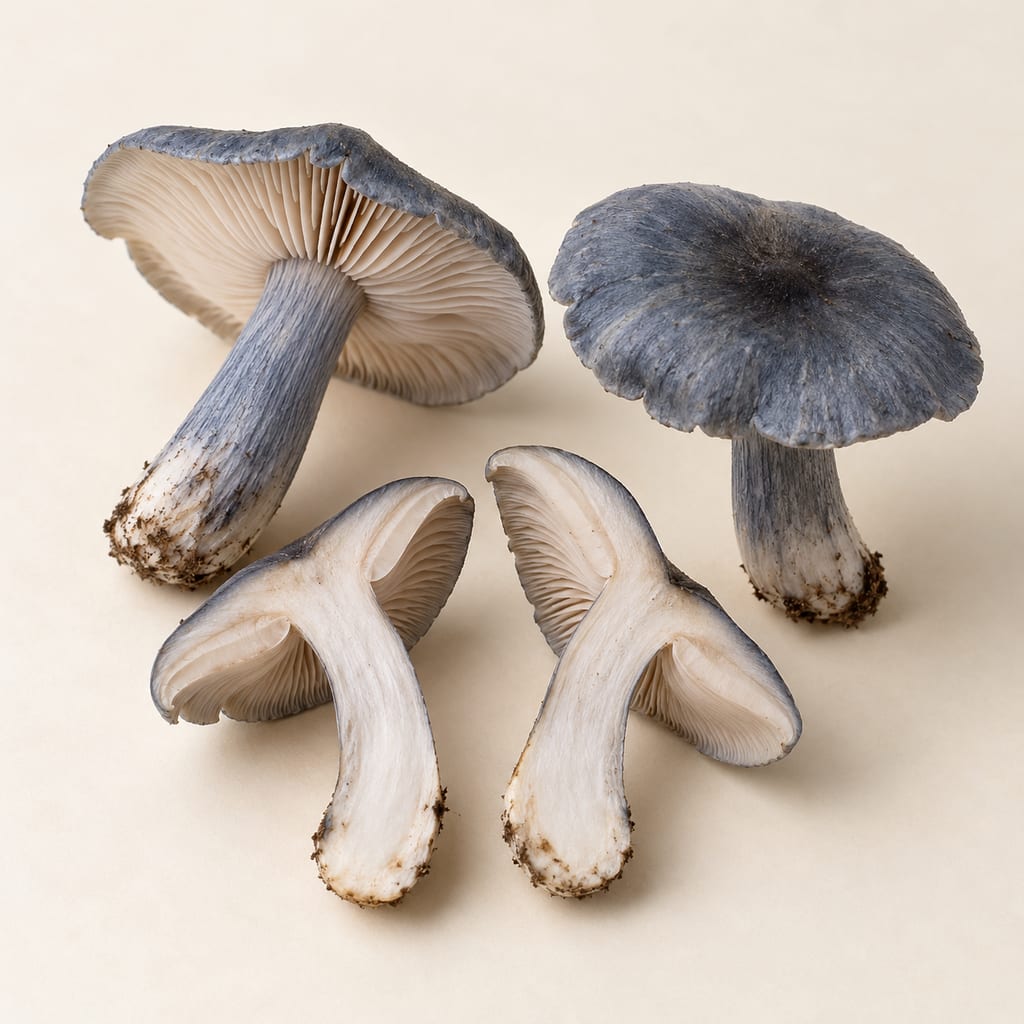
Bloxam's entoloma is a rare pink-gilled mushroom of old grasslands. Historical sources call it edible, but food-use evidence and older identifications remain uncertain; this does not recommend gathering or eating it.
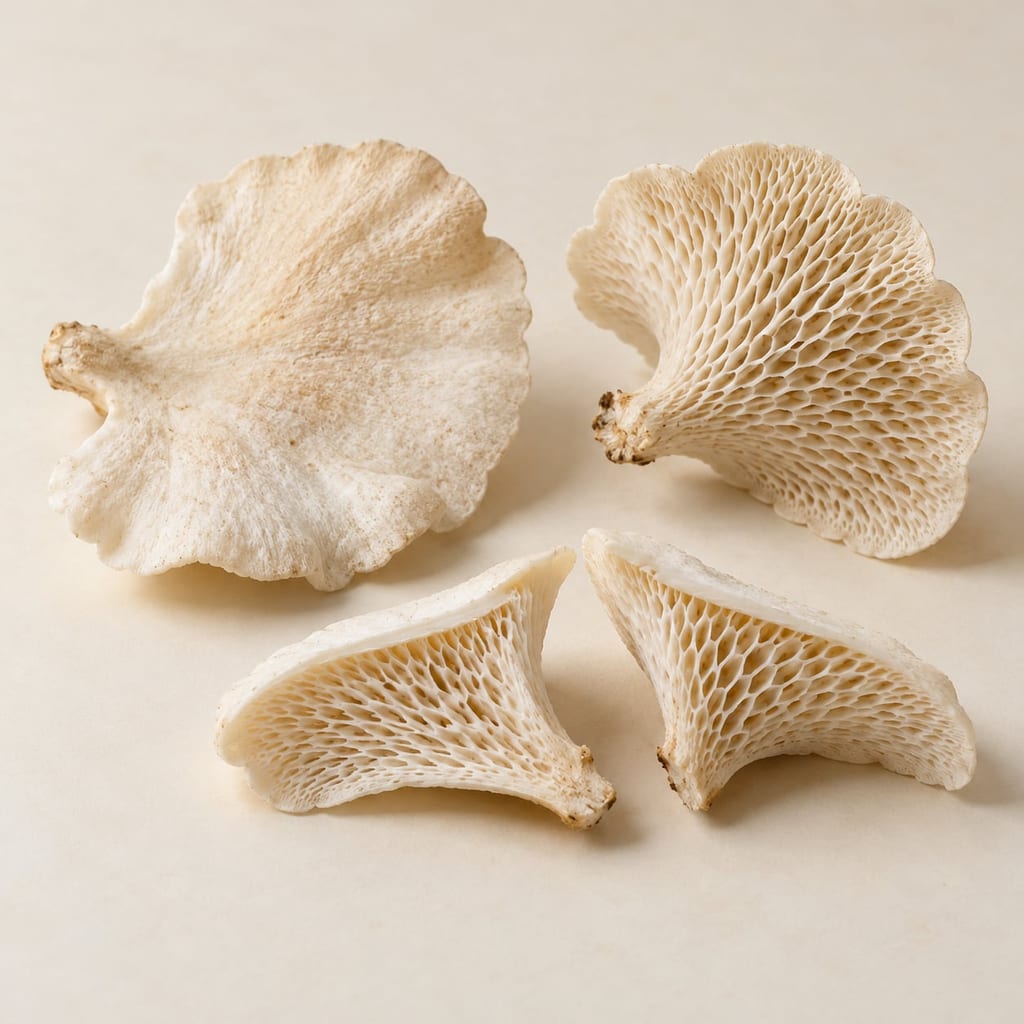
Brazilian honeycomb polypore, Favolus brasiliensis, is a wood-growing fungus of tropical forests recorded as food in Brazil and Guyana. It has no standardized food-safety assessment.
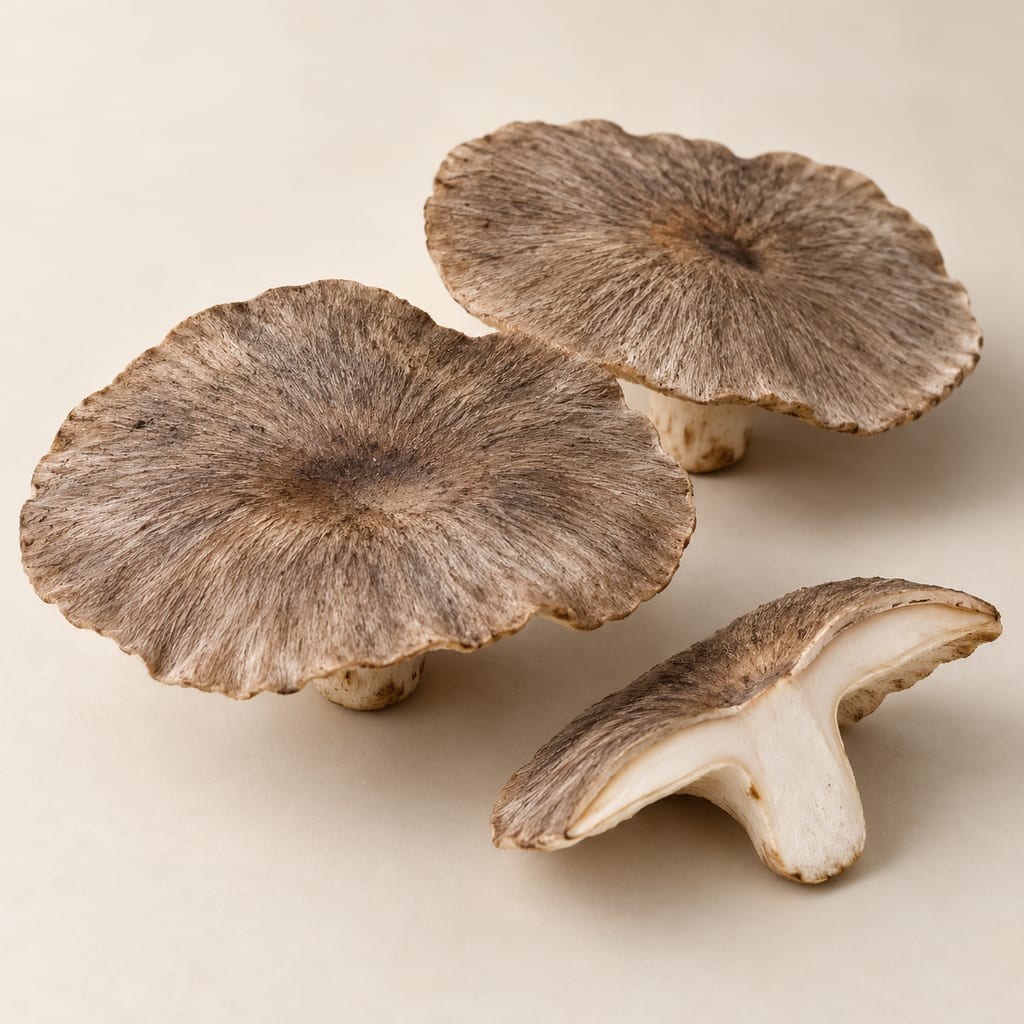
Bresadolia paradoxa is a large fungus of dead hardwood logs in Amazon and Atlantic Forest sites in Brazil and Colombia. Its only edibility source is a conservation assessment, so the claim is lightly documented.
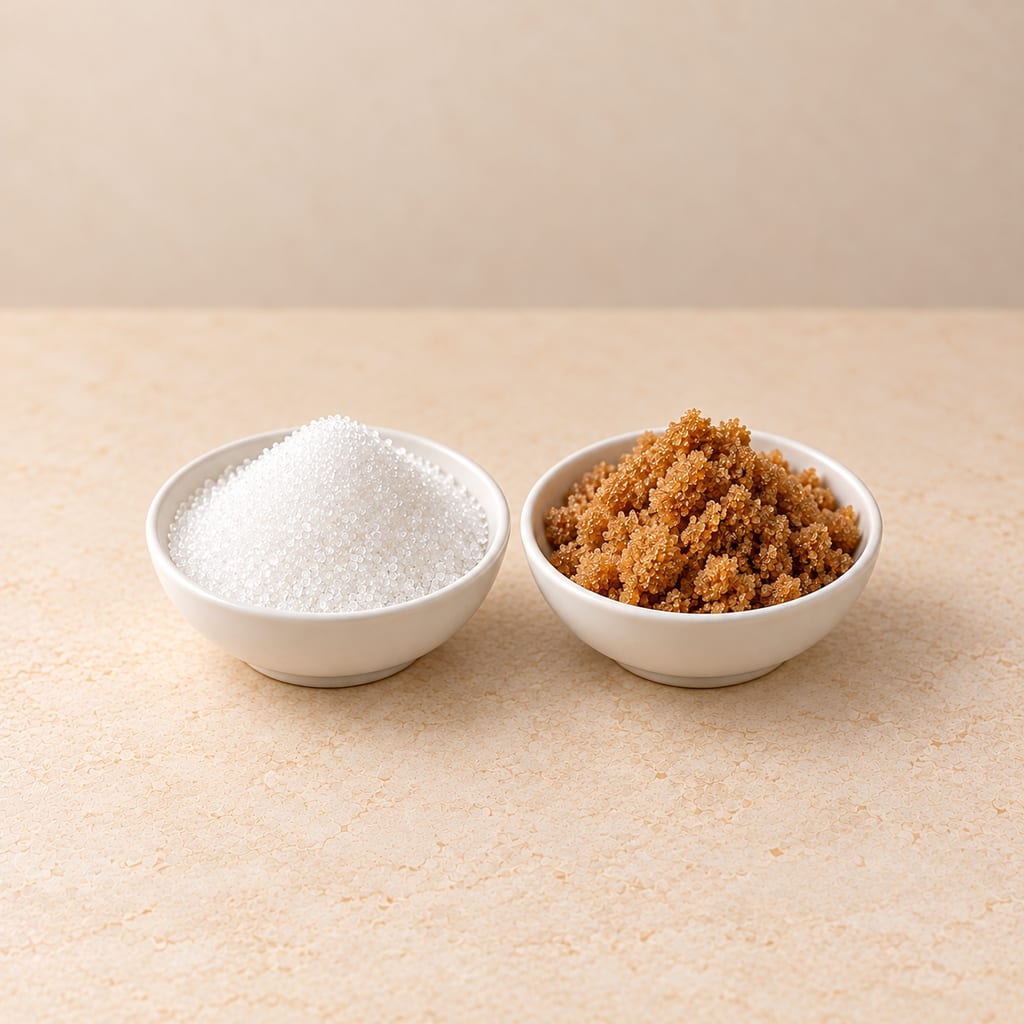
White sugar is refined sucrose, almost pure; brown sugar is sucrose with molasses, left in or added back. Molasses makes brown sugar moister, darker and more strongly flavoured.
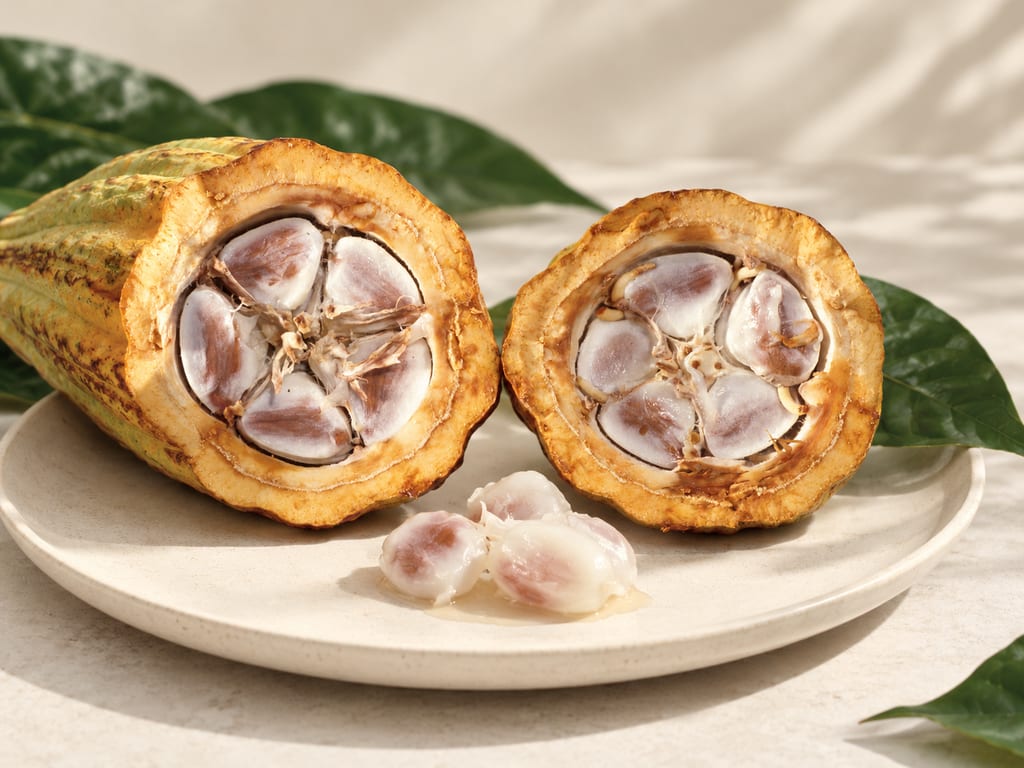
Cacao pulp is the moist, sweet-acid mucilage around cacao seeds. It fuels bean fermentation and can be extracted for fruit drinks, wine and vinegar.
No community contributions have been published for this entry yet.
Sign in to contribute. Published comments and photos are free to read.
Springer (IMA Fungus)Taxonomy · Food use · Cultivation
Brazilian fungi: species and food-use research (supplied paper, Springer)Supplied source for the Lentinula raphanica catalogue record.
Cited in: What it is; Food use; Cultivation research; Safety and identification; Open questions
Catalogue of Fungi of Colombia (colfungi.org)Taxonomy
Lentinula raphanica (Murrill) Mata & R.H. Petersen, Catalogue of Fungi of ColombiaName history: Armillaria raphanica and Gymnopus alliaceus, Murrill 1943, moved to Lentinula in 2001.
Cited in: What it is; Name and taxonomy; Food use; Safety and identification