African fermented foods, drinks and preservation
From sour breads and milk to savoury seeds, cassava staples and living beers, African fermentation follows the crop, the community and the work of transformation.
 FermenteaWhere food goes to change
Substrates
Melon seeds, called egusi in Nigeria and much of West Africa, are the seeds of several cucurbit species. They are ground into soup and cooked and fermented into the condiment ogiri-egusi.
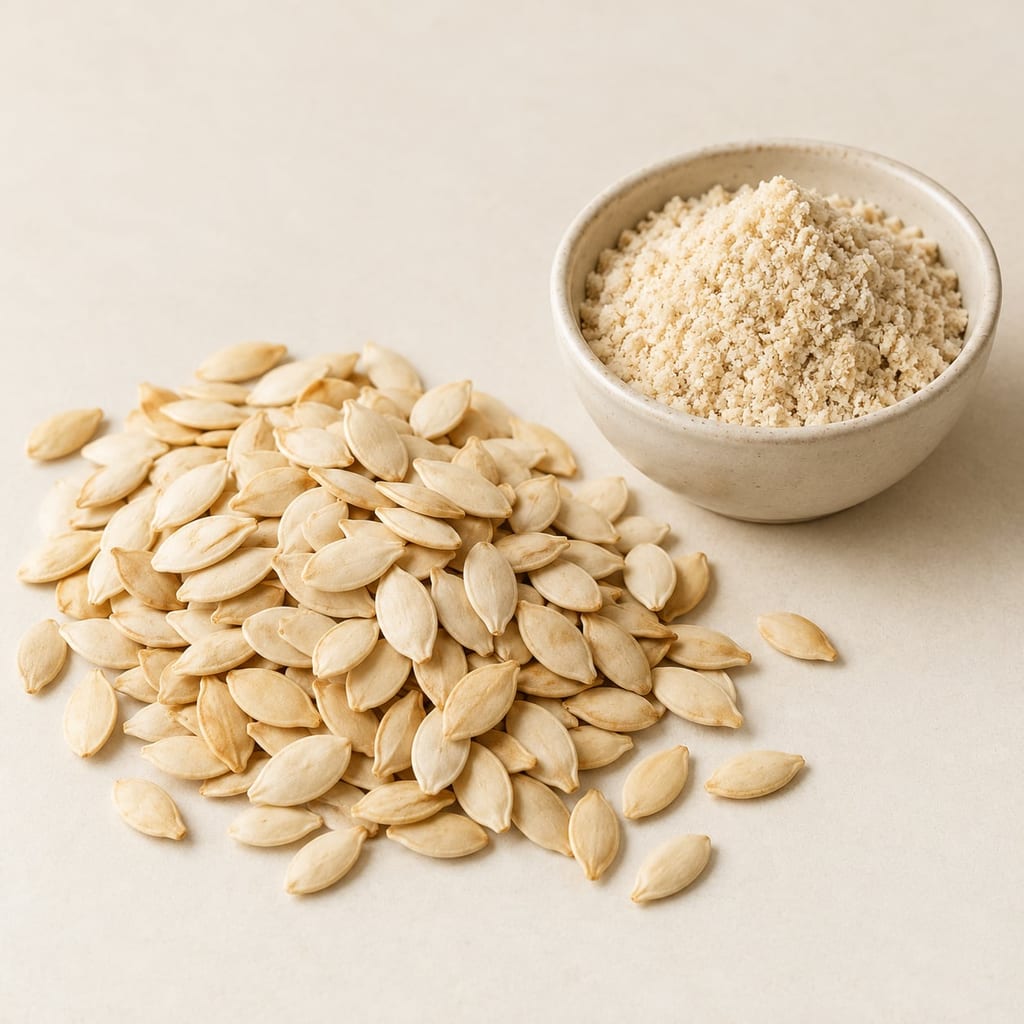
Egusi is a food name, and the name is used for more than one cucurbit. Kew accepts Citrullus mucosospermus as the name of the melon whose seeds are sold as egusi, with Citrullus lanatus subsp. mucosospermus as a synonym. A USDA germplasm accession of this species carries egusi as its local name and was collected at Ibadan in Oyo State, Nigeria. That record describes one accession, not every seed sold under the name.
Other studies work with Cucumeropsis mannii, which Kew treats as a synonym of Melothria sphaerocarpa. Food and fermentation papers still use C. mannii. A 2025 review lists several conflicting names in the egusi literature and discusses disagreement over the crop's identity. For that reason this record treats melon seeds as an ingredient class. It does not assign a single species to every seed sold as egusi, and the botanical name a study prints stays attached to that study.
Egusi kernels are dried, hulled and ground for soup. That is a different product from ogiri-egusi, which is made by cooking and fermenting the seeds into a pungent seasoning. A 1990 review of traditional Nigerian fermented foods lists ogiri-egusi as a melon-seed condiment, distinct from ogiri made from fluted-pumpkin seeds or castor seeds, and describes household-scale natural fermentation.
Several experimental studies have tested the process. One used Cucumeropsis seeds, another compared Citrullus vulgaris, Citrullus colocynthis and Cucumeropsis mannii, and a third tested mixtures of melon and groundnut seed. Their results describe those experiments. None of them establishes one standard household recipe, and their substrates should not be treated as interchangeable.
A 2017 survey of raw melon seeds and ogiri bought in south-western Nigeria found bacteria and mycotoxins. Some melon and ogiri samples had detectable aflatoxins, and the authors recovered organisms they considered potentially pathogenic and raised hygiene concerns. The authors reported low overall mycotoxin levels in the lots they studied. Those results describe the sampled lots, not every seed or every batch.
A 1989 controlled experiment made ogiri from melon seed deliberately contaminated with Aspergillus flavus and measured how much aflatoxin fell during production. That reduction is a finding about that experiment. It is not a home method for rescuing mouldy or damaged seeds. Appearance and smell do not show that seeds are free of mycotoxins, and the sources reviewed give no validated household process, salt, time, temperature or pH limit for ogiri-egusi.
Seeds should not be fermented if they are mouldy, damaged or suspect. The sources reviewed do not give a grade system, a storage life or a shelf-life limit for raw melon seeds or for ogiri-egusi. Where a cook needs a practical check, the record can only say what the studies found, and that a fermented product's smell or taste does not prove it is safe.
Country-level association for the documented ogiri-egusi preparation. It does not establish one town of origin or one melon species.
From sour breads and milk to savoury seeds, cassava staples and living beers, African fermentation follows the crop, the community and the work of transformation.

Parkia biglobosa seeds are fermented into regional West African seasonings, including nététou, iru, dawadawa and soumbala. The yellow fruit pulp is a separate food, and names and methods vary by place.
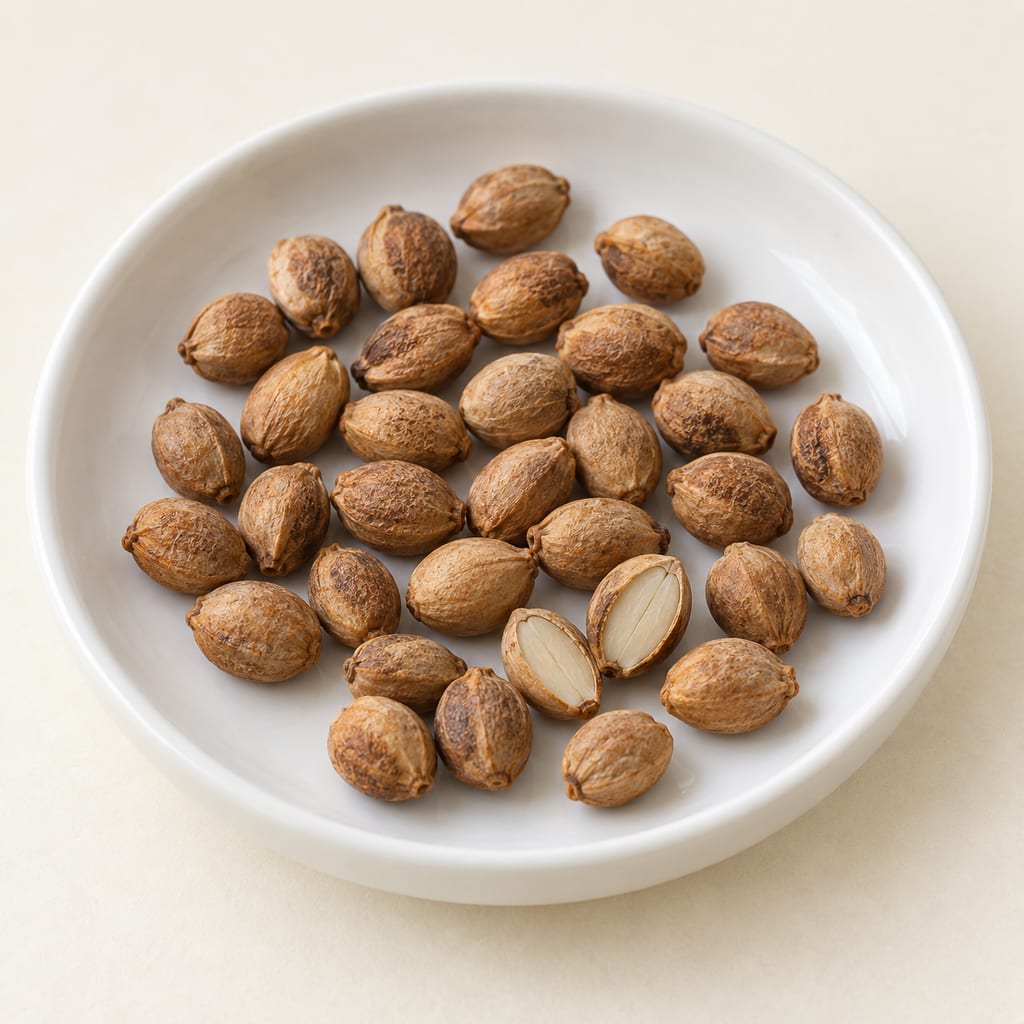
The seeds of the African breadfruit, Treculia africana, are cooked, dried and milled into flour in West and Central Africa, and the fruit is heaped and fermented before the seeds are washed out.
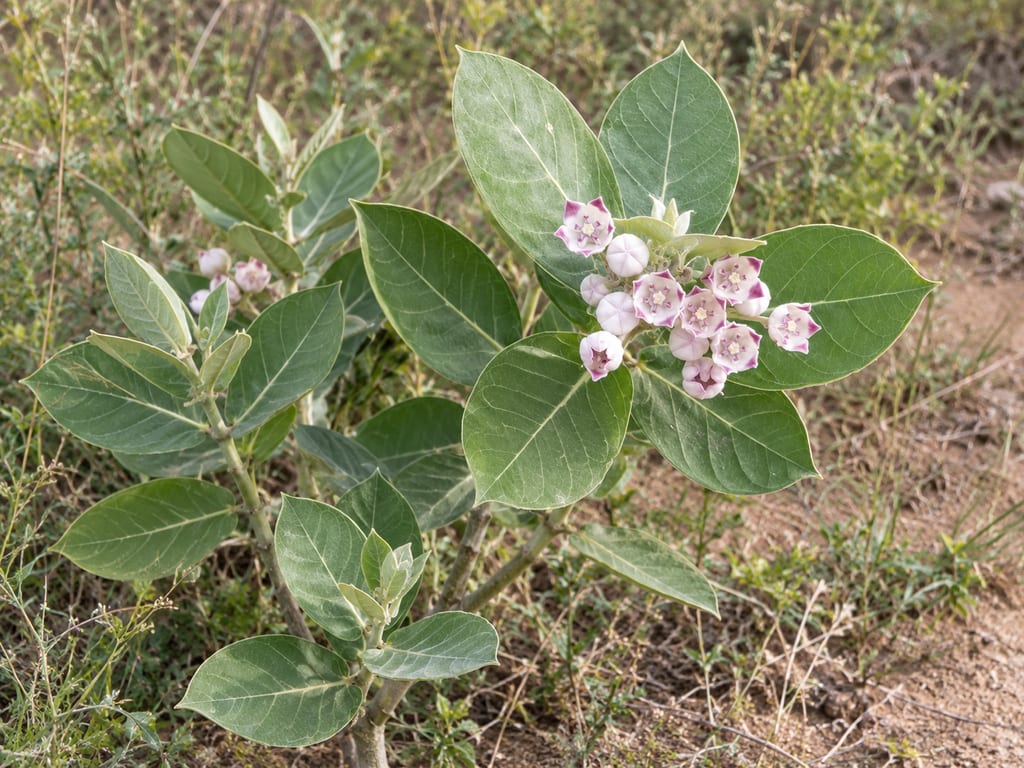
Calotropis procera preparations are documented as coagulants for wagashi gassirè in Benin and wara in Nigeria. Crude plant materials differ from purified research enzymes, and current evidence does not support a general home preparation.
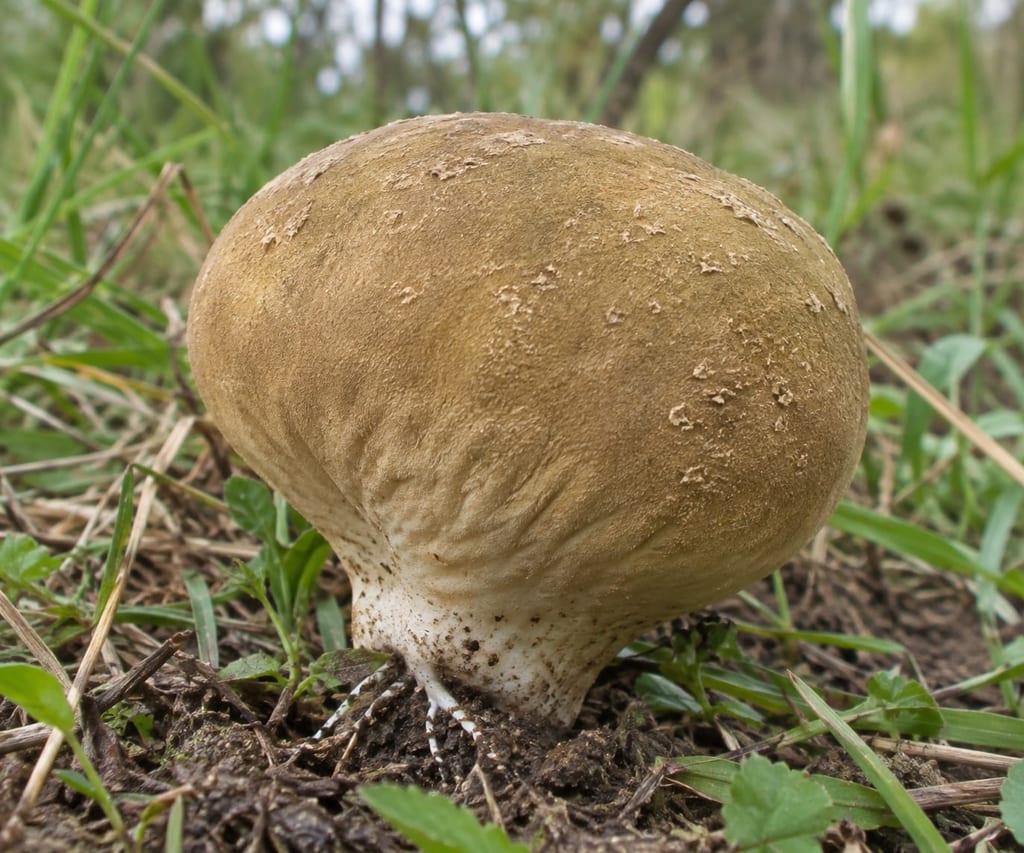
A tropical African puffball recorded in West African range accounts and Ethiopian edible-mushroom studies. Ethiopian use evidence is qualified; Benin identification and safety remain unresolved.
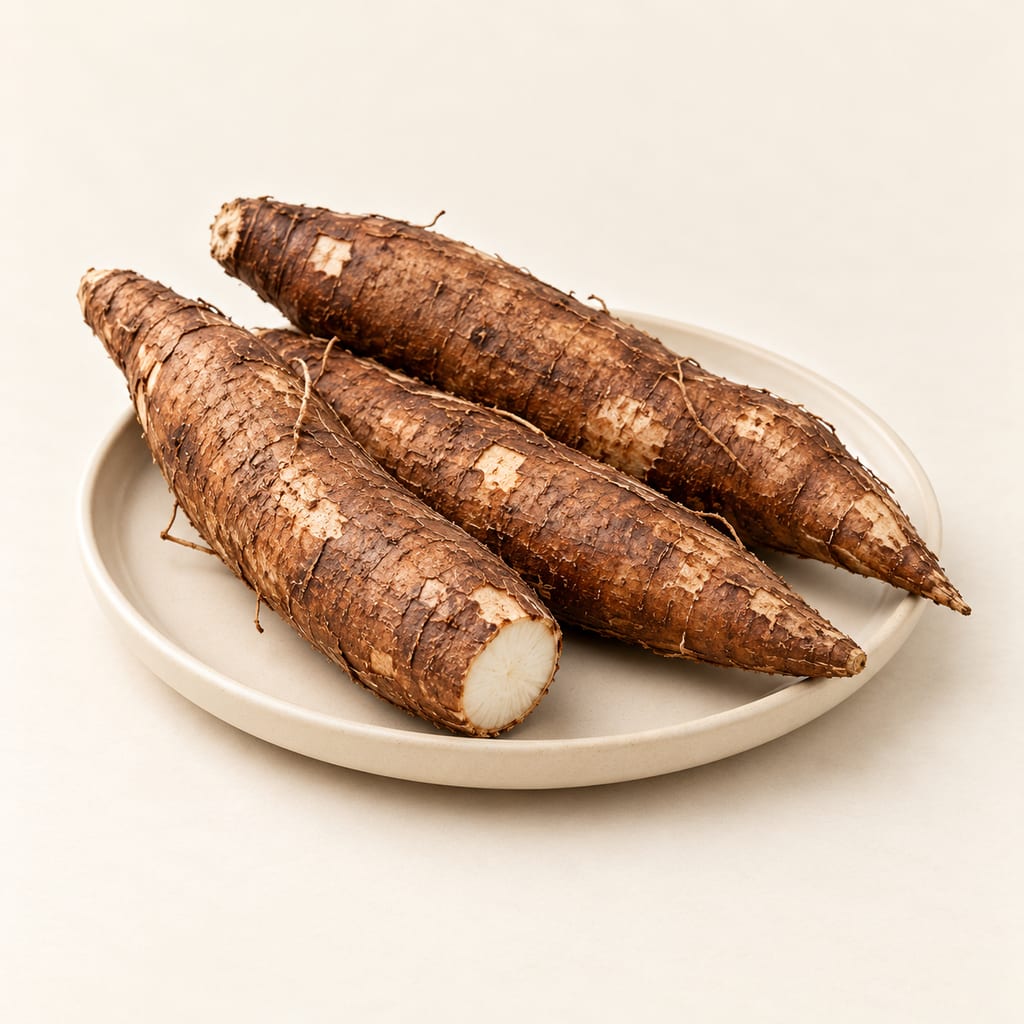
Cassava is the starchy root of Manihot esculenta, transformed across Africa into fermented doughs, granules and flours through distinct processes whose safety depends on thorough cyanogen removal.
A defined Saccharomyces cerevisiae strain, 2Y48P22, was screened in 2010 for softening cassava in lafun experiments. It is an experimental candidate, not a household starter with a verified method.
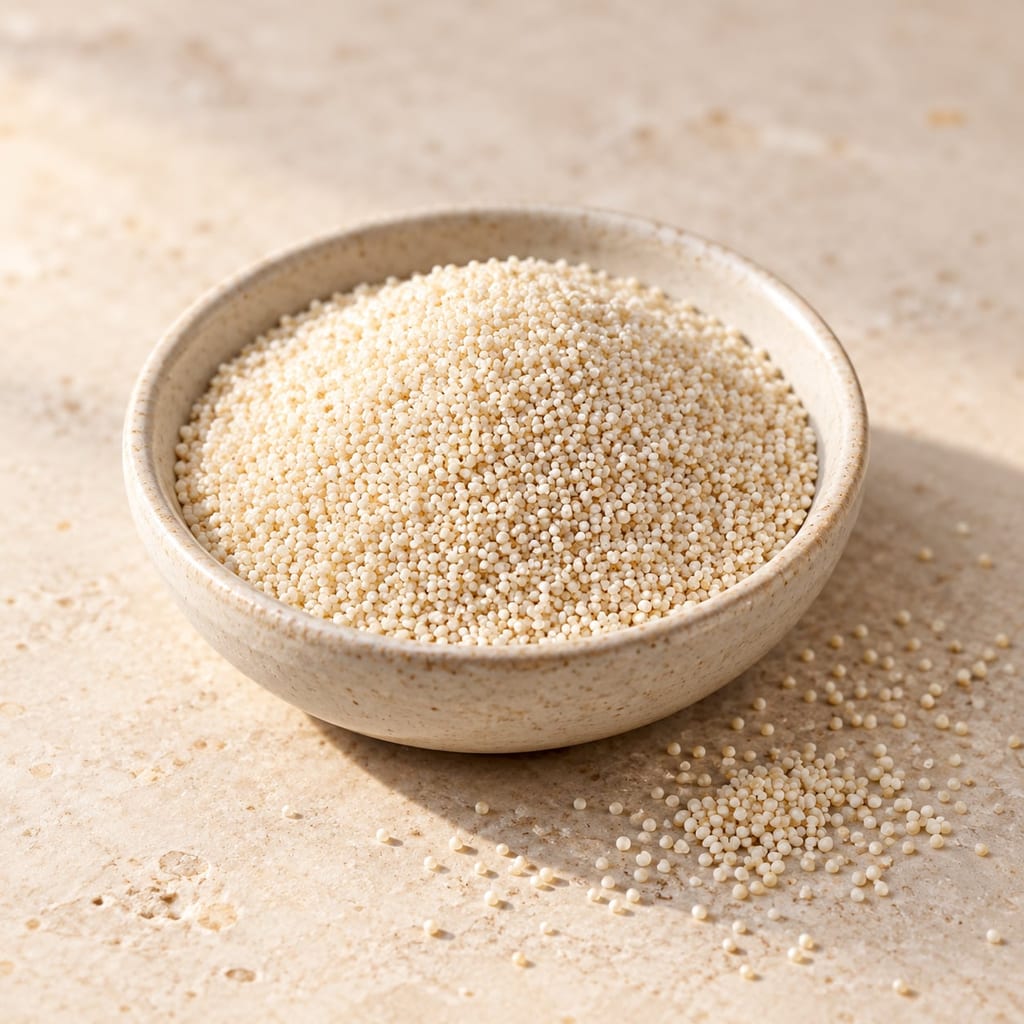
Fonio covers two distinct West African cereals: white fonio (Digitaria exilis) and black fonio (D. iburua). Both are eaten in cooked dishes; sources also document fermented drinks and controlled fonio fermentations.
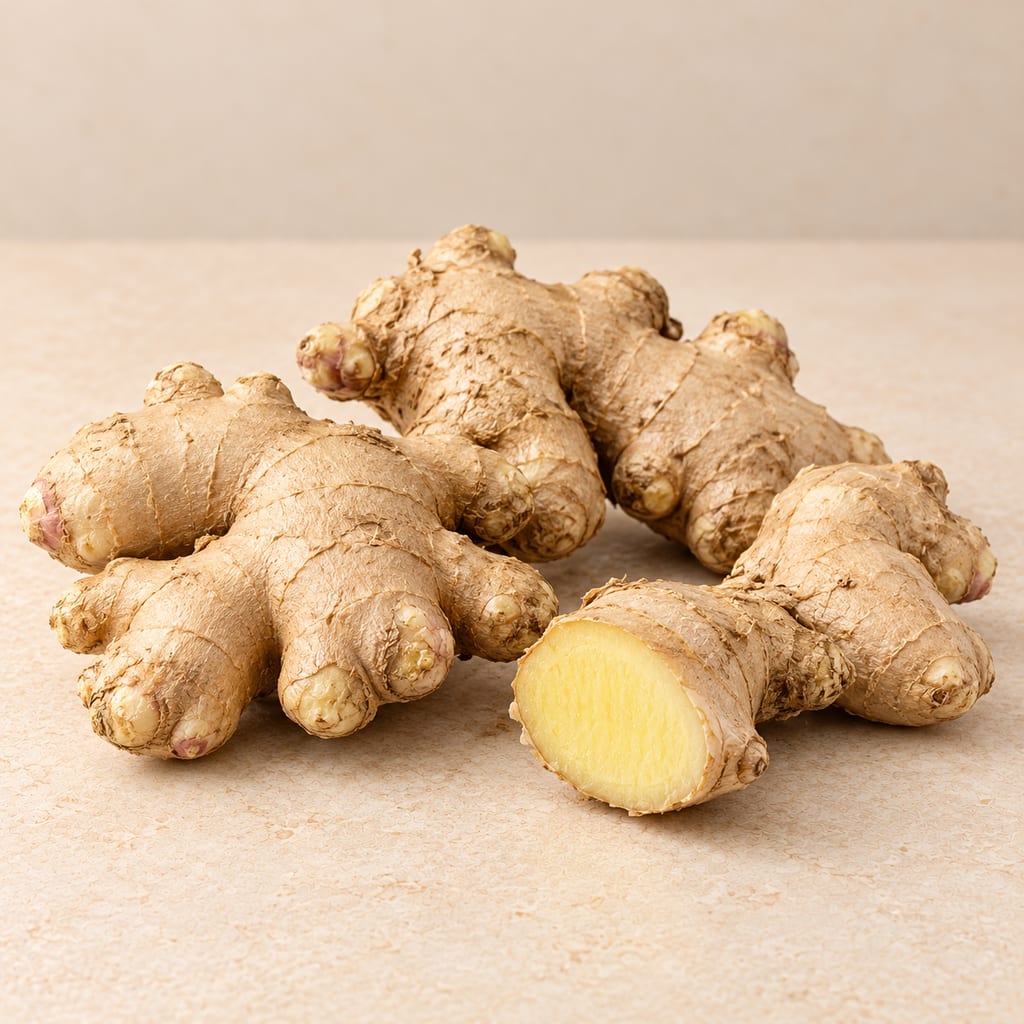
Ginger is the aromatic rhizome of Zingiber officinale, used fresh, dried and preserved. Historical ginger wines sliced or bruised it to flavour a sugar-based ferment.
No community contributions have been published for this entry yet.
Sign in to contribute. Published comments and photos are free to read.
Royal Botanic Gardens, KewIdentity
Plants of the World Online: Citrullus mucosospermusAccepted name Citrullus mucosospermus; synonym Citrullus lanatus subsp. mucosospermus; native range West Tropical Africa to Sudan.
Cited in: What the name covers
Royal Botanic Gardens, KewIdentity
Plants of the World Online: Melothria sphaerocarpaCucumeropsis mannii is treated as a synonym of Melothria sphaerocarpa.
Cited in: What the name covers
USDA Agricultural Research ServiceIdentity
GRIN-Global PI 560019: Citrullus mucosospermus, EgusiAccession identified as C. mucosospermus with local name Egusi, collected at Ibadan, Oyo, Nigeria.
Cited in: What the name covers
Frontiers in Plant ScienceIdentity
Unlocking the potential of 'Egusi' melon (Colocynthis citrullus L.) as a crop for biotechnological improvementConflicting names for egusi in the literature and disagreement over crop identity.
Cited in: What the name covers
Ecology of Food and NutritionHistory · Method
A review of traditional fermented foods, condiments and beverages in Nigeria: Their benefits and possible problemsOgiri-egusi listed as a melon-seed condiment, distinct from ogiri-ugu and ogiri-isi; household-scale natural fermentation.
Cited in: Ground for soup, fermented for ogiri
African Journal of Microbiology ResearchMethod
Fermentation of Cucumeropsis seeds, an uncommon substrate for ogiri productionExperimental fermentation of Cucumeropsis seeds for ogiri.
Cited in: Ground for soup, fermented for ogiri
Microbiology Research Journal InternationalMethod
Comparative Studies on Citrullus vulgaris, Citrullus colocynthis and Cucumeropsis mannii for Ogiri ProductionComparison of three melon taxa for ogiri production.
Cited in: Ground for soup, fermented for ogiri
Plant Foods for Human NutritionMethod
Improvement of the traditional method of ogiri production and identification of the micro-organisms associated with the fermentation processMelon and groundnut seed mixtures in ogiri production.
Cited in: Ground for soup, fermented for ogiri
International Journal of Food MicrobiologySafety
Bacterial species and mycotoxin contamination associated with locust bean, melon and their fermented products in south-western NigeriaRaw melon seeds and ogiri sampled in south-western Nigeria; detectable aflatoxins in some samples; potentially pathogenic organisms; low overall mycotoxin levels reported.
Cited in: Mould, aflatoxin and what the seeds can carry; Choosing and handling the seeds
Die NahrungSafety
The fate of aflatoxins during the production of Ogiri, a West African fermented melon seed condiment from artificially contaminated seedsControlled experiment; aflatoxin reduction under those conditions; not a home detoxification method.
Cited in: Mould, aflatoxin and what the seeds can carry; Choosing and handling the seeds