
All-purpose wheat flour
A refined common-wheat flour blended for a broad range of baking; its protein and behavior vary with wheat, milling and market.
 FermenteaWhere food goes to change
Mushrooms
The Oregon spring white truffle, Tuber gibbosum, is a wild truffle of Douglas-fir forests in the Pacific Northwest, valued for a garlic, spice and cheese aroma that often develops only after harvest.
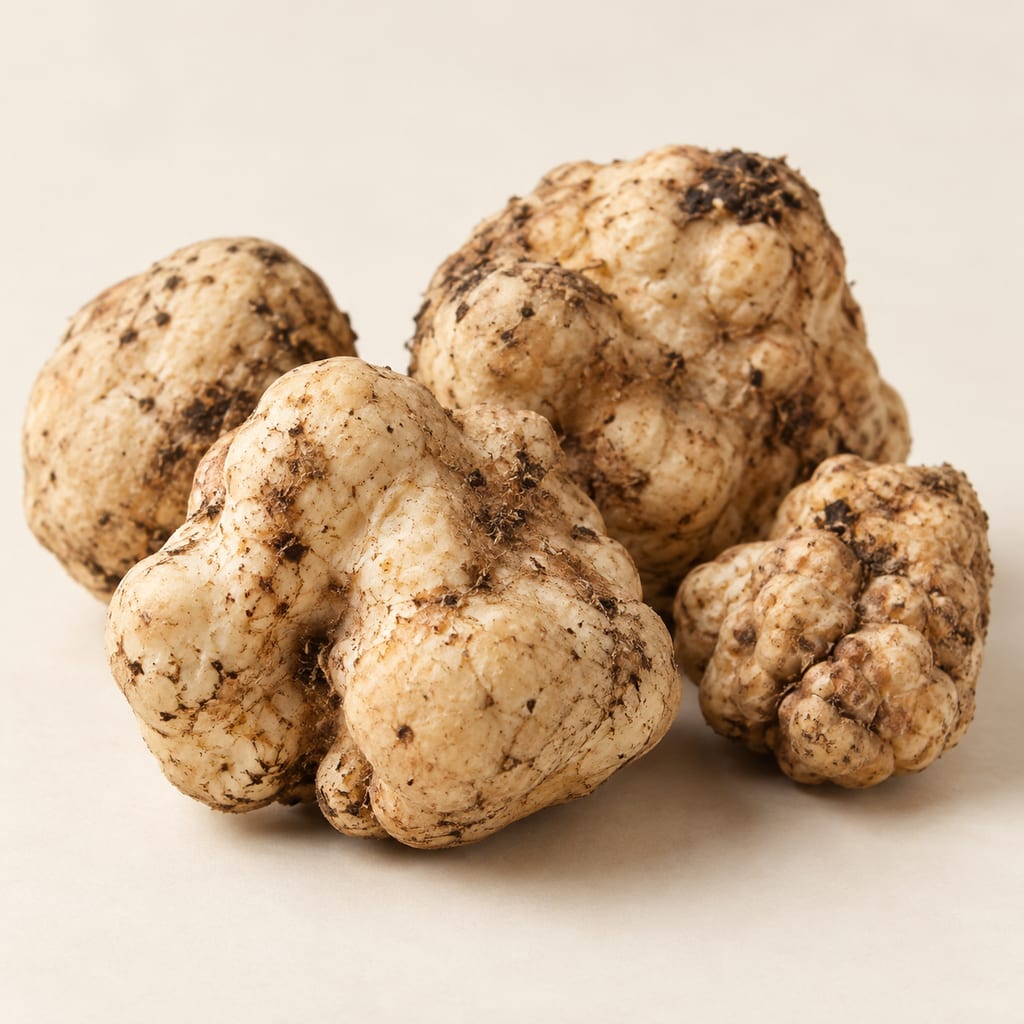
Tuber gibbosum is one of the Oregon white truffles, the group of truffles that grows underground near Douglas-fir trees in western Oregon. The name Oregon spring white truffle is used for it in the Oregon State University Extension publication, which sets it beside the winter white, Tuber oregonense, as the two species commonly harvested as Oregon white truffles.
A truffle is the fruiting body of a fungus that grows underground in the soil and in association with tree roots. It does not open to release spores in the way a cap mushroom does, and the harvester finds it by smell or by animals rather than by sight. The spring white is firm and solid when ripe, with a marbled or speckled interior, which is the mark of the gourmet truffles the extension publication describes.
The sources consulted give the aroma as a complex mixture of garlic, spices and cheese. The spring white's aroma is often undetectable at harvest and develops afterwards, so a truffle that smells of little when dug may still develop its character in storage. The publication gives no more precise chemistry for the aroma, and this page does not supply any.
The Oregon white truffles favour young to early-mature Douglas-fir stands on former pastureland, from sea level to about 2,000 feet on the west side of the Cascades and in the coastal ranges. Tuber gibbosum sits in this group, and the publication gives its season as January through June.
The season is set by moisture. The publication notes that truffles are generally harvested in the rainy season, although they can be found in almost any month. The black and brown Oregon truffles, which are not Tuber gibbosum, have their own seasons and habitats, and the publication places them in young Douglas-fir forests in western Oregon and northern California.
The source gives no historical record of the harvest of this species. Commercial value is noted: the publication says these truffles are valued commercially, and that some farmers have tried to cultivate European truffles, which is a different species.
Trained truffle dogs find ripe truffles from a distance and leave immature ones alone. Without a dog, the publication suggests a rake with three to five tines, used to clear the surface litter and rake the soil lightly, with shallow raking usually enough. Small animal diggings can also indicate that truffles are nearby.
The harvesting advice is about the forest as much as the crop. Harvesters should replace litter over bare soil, keep disturbed areas small and backfill holes to protect the tree roots that the truffle depends on. A harvester who leaves the ground in good order protects the next year's crop.
Once dug, truffles are best stored in airtight containers, and the publication says they stay fragrant for about a week. The sources give no longer storage life, and this page does not give one.
The Oregon State extension publication says that none of the Oregon truffles is poisonous, but that only four are considered gourmet edibles. The publication discusses the spring white among these Oregon truffles. The publication warns that many truffle species that are not gourmet edibles are spongy, hollow or differently coloured, and that soft, hollow or powdery truffles are not edible.
The distinction matters for a cook or a forager. This page does not identify a truffle from a description, and no edibility verdict for a specimen follows from it. The publication's own advice is the rule: never eat a wild truffle or mushroom unless you have identified it with absolute confidence. A buyer should buy a truffle from a source that identifies it, and a forager should have an expert check a specimen before it is eaten.
The Oregon State publication does not describe culinary use of the spring white. This page therefore does not describe dishes or cooking methods. Its aroma is the reason the truffle is sought, and the publication notes that the aroma can develop one to three days after harvest in the winter white, so a cook should expect change in the first days after digging.
Oregon truffles are a seasonal wild food, and their commercial value is high. The publication places them in a regional market rather than a supermarket trade. Where a dish or a preparation uses the truffle, its own page should carry the method.
The source does not give a price, a yield or a historical record of the spring white's harvest. The next research pass should look for a primary account of the Oregon white truffle harvest and a taxonomic source for the spring white's name and its relation to the winter white.
Regional record from Oregon State University Extension. The source covers the west side of the Cascades and the coastal ranges, not a single locality.
Country-level. The Oregon record sits inside the United States; no wider claim is made.
A refined common-wheat flour blended for a broad range of baking; its protein and behavior vary with wheat, milling and market.

Toasted almonds are whole sweet almond kernels dry-roasted until golden to brown. Heat replaces their marzipan note with a roasted, nutty one; they thicken and flavour romesco.
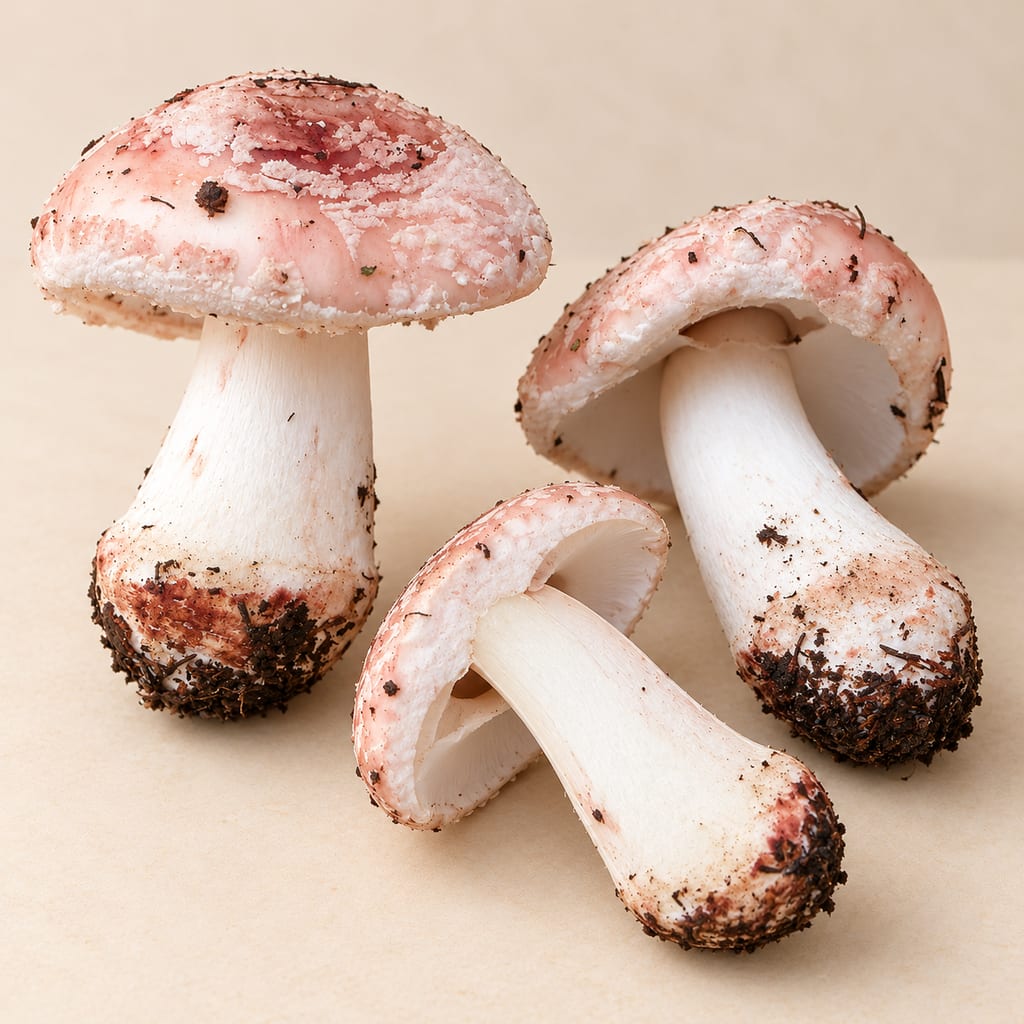
Amanita novinupta is a western North American blusher, a forest mushroom recorded as food in Mexico, and one that must be cooked because its raw flesh is toxic.
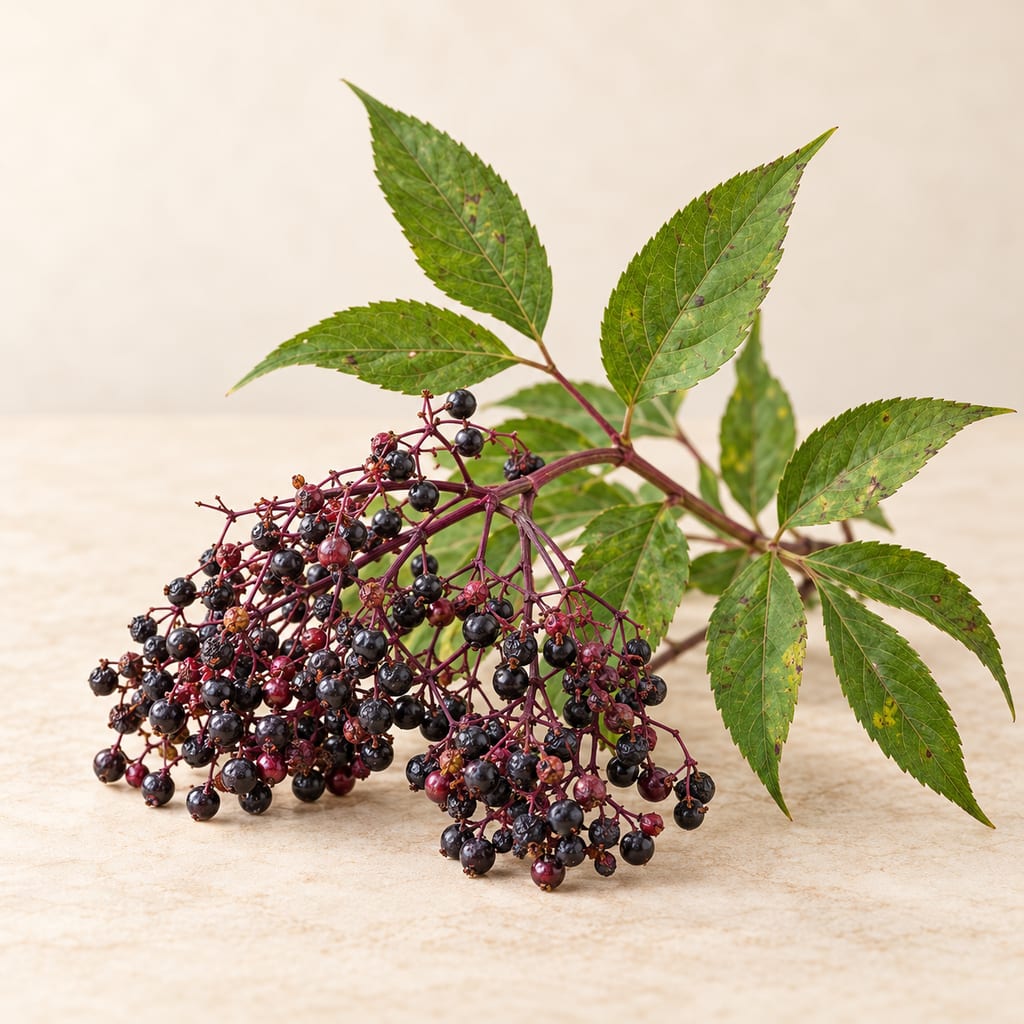
Sambucus canadensis is the accepted name used here for American elderberry. Missouri production guidance and named-cultivar studies give useful regional growing information, while food and analytical sources leave process questions open.
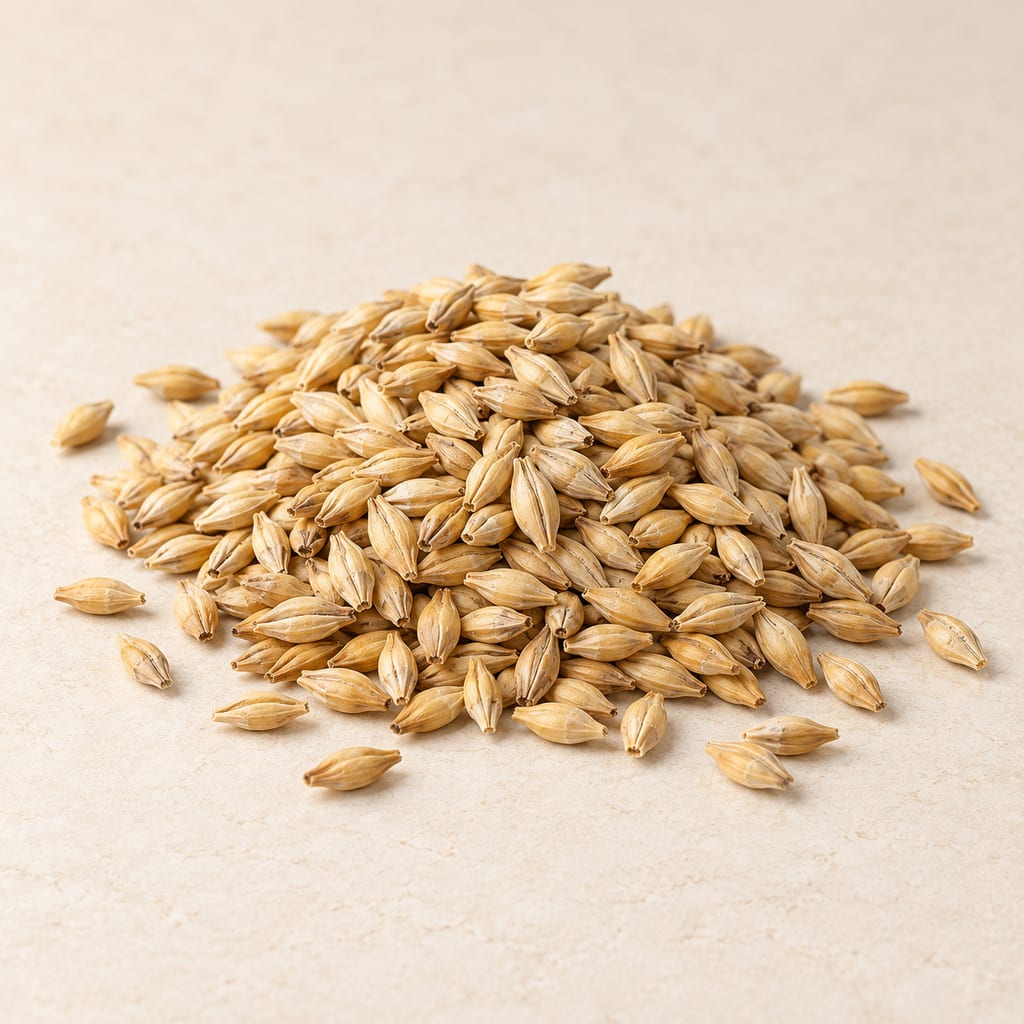
A lightly kilned brewing base made from two-row barley. It supplies starch and enzymes for the mash, with the maltster’s product and lot analysis defining its brewing properties.

Ripe avocado flesh is the soft, buttery, fat-rich pulp of Persea americana, eaten raw. It is low in acid, so it is a fresh ingredient that needs care in chilled dishes.
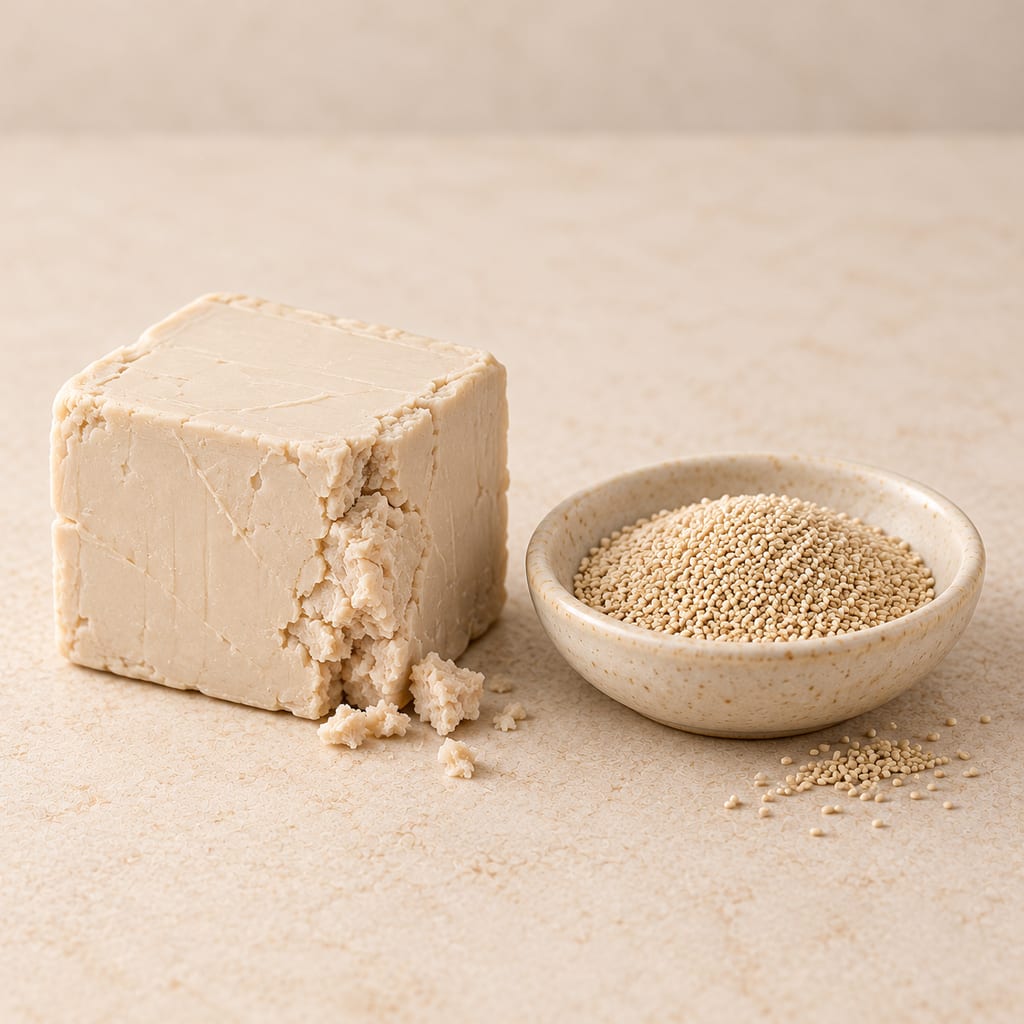
Baker's yeast is a cultivated living leavener, commonly sold fresh or dried. In dough, selected Saccharomyces cerevisiae cells make gas that can raise bread.
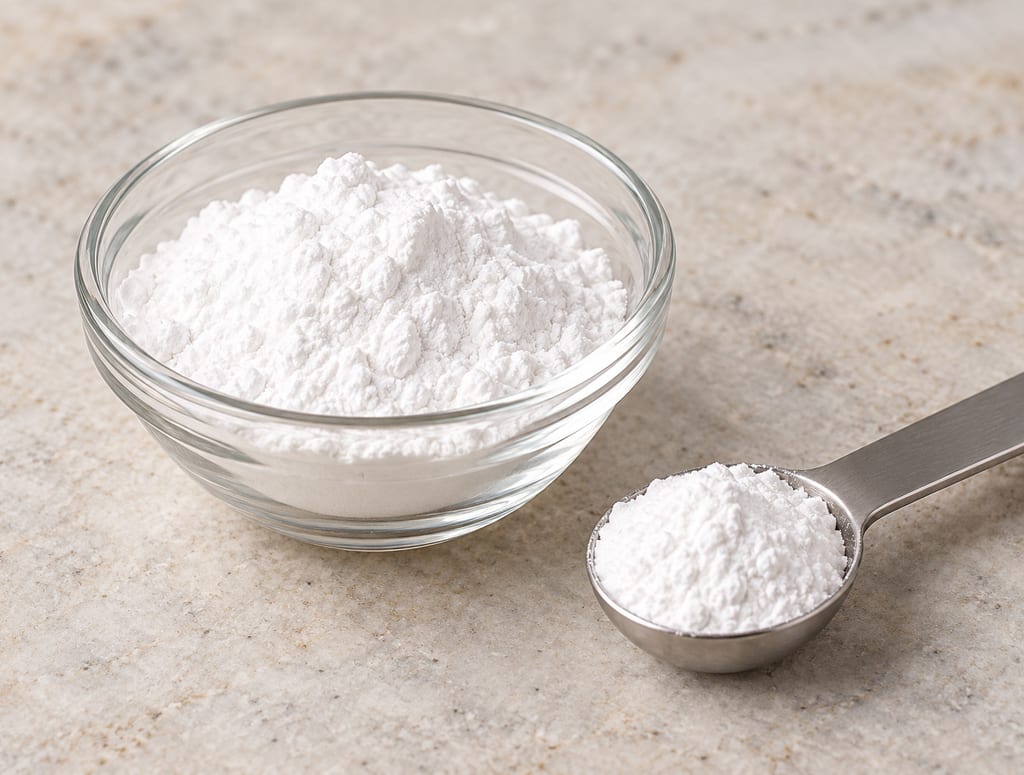
Baking powder is a dry chemical leavener that combines bicarbonate with acid-reacting ingredients and a carrier. Moisture and heat release carbon dioxide for quick breads, batters and griddle cakes.
No community contributions have been published for this entry yet.
Sign in to contribute. Published comments and photos are free to read.
Oregon State University ExtensionIdentity · Method · Safety · Geography
Oregon Native Edible Truffles (EM 9369)Oregon spring white truffle (Tuber gibbosum) fruits January through June; the winter white (Tuber oregonense) October through February.
Aroma of the spring white described as garlic, spices and cheese, often undetectable at harvest.
Habitat: young to early-mature Douglas-fir stands, sea level to about 2,000 feet on the west side of the Cascades and the coastal ranges.
Harvest advice: trained dogs; a rake with three to five tines; replace litter and backfill holes; airtight storage, fragrant about a week.
None of the Oregon truffles is poisonous, but only four are considered gourmet edibles; never eat a wild truffle or mushroom unless identified with absolute confidence.
Cited in: What it is; Where and when it grows; Finding and harvesting it; Edibility and identification; How it is used; Open questions