
All-purpose wheat flour
A refined common-wheat flour blended for a broad range of baking; its protein and behavior vary with wheat, milling and market.
 FermenteaWhere food goes to change
Mushrooms
Tuber oregonense is a wild truffle of Douglas-fir forests in the Pacific Northwest, valued for its aroma and shaved raw over warm fatty food.
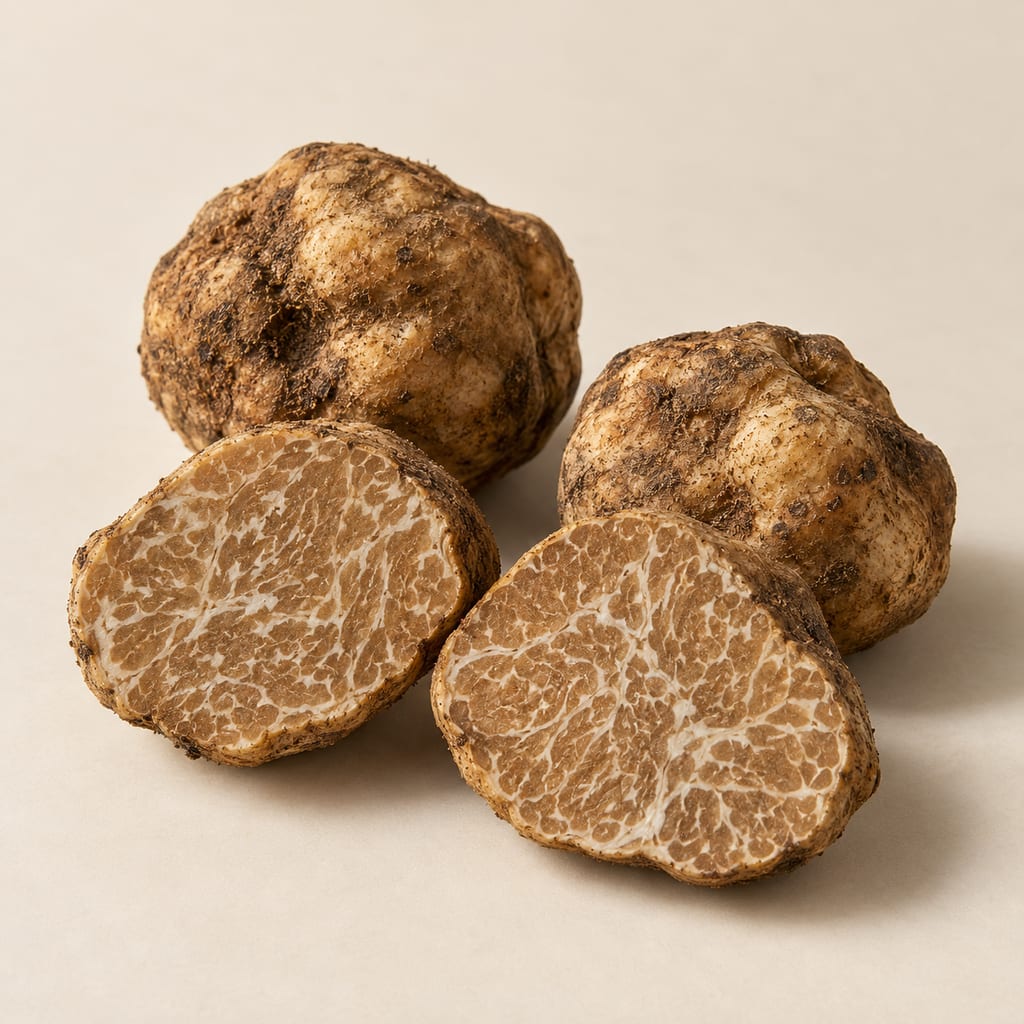
Tuber oregonense is an underground fungus that forms truffles, fruit bodies that grow below the soil. Its common name is the Oregon winter white truffle. Oregon State University Extension groups it with Tuber gibbosum under the name Oregon white truffles, and it is one of several native Oregon truffle species.
The catalogue calls it an aromatic culinary truffle. The species is recorded as wild in supply, and the sources reviewed do not state a current accepted name beyond the one used here.
The Oregon State extension bulletin describes it as favouring young to early-mature Douglas-fir stands, especially those planted on former pasture land. It occurs from sea level to about 600 metres (2,000 feet) in the western Cascades and the coastal ranges, from Northern California to southern British Columbia.
Harvest is recorded from October through February, usually in the rainy season. The fruit body is a mycorrhizal partner of the trees and grows near Douglas-firs.
Immature specimens are white to beige and firm inside, with little aroma. Mature specimens have a reddish-brown exterior with fissures and a smoky brown interior marbled with white. The aroma is described as garlic, spice and cheese, and it often develops one to three days after harvest. A mature truffle is about the size of a marble to a golf ball.
Spongy, squishy, hollow or powdery truffles are not edible. The extension bulletin notes that many truffle species are not gourmet edibles.
Truffles of this kind are not cooked. Cooks shave them thinly over warm fatty foods such as eggs, meat, butter or a cream sauce, so the aroma reaches the diner. Harvested truffles are kept refrigerated in an airtight container lined with paper towels, and the extension bulletin says they last about a week.
The Oregon State extension bulletin says, "Never eat a wild truffle or mushroom unless you have identified it with absolute confidence." It states that none of the native Oregon truffle species is poisonous, and that only four are considered gourmet edibles. This page is not an identification guide, and identification should rest on an expert.
Range given in the Oregon State extension bulletin, from Northern California to southern British Columbia.
Southern end of the range given by the extension bulletin.
A refined common-wheat flour blended for a broad range of baking; its protein and behavior vary with wheat, milling and market.

Toasted almonds are whole sweet almond kernels dry-roasted until golden to brown. Heat replaces their marzipan note with a roasted, nutty one; they thicken and flavour romesco.
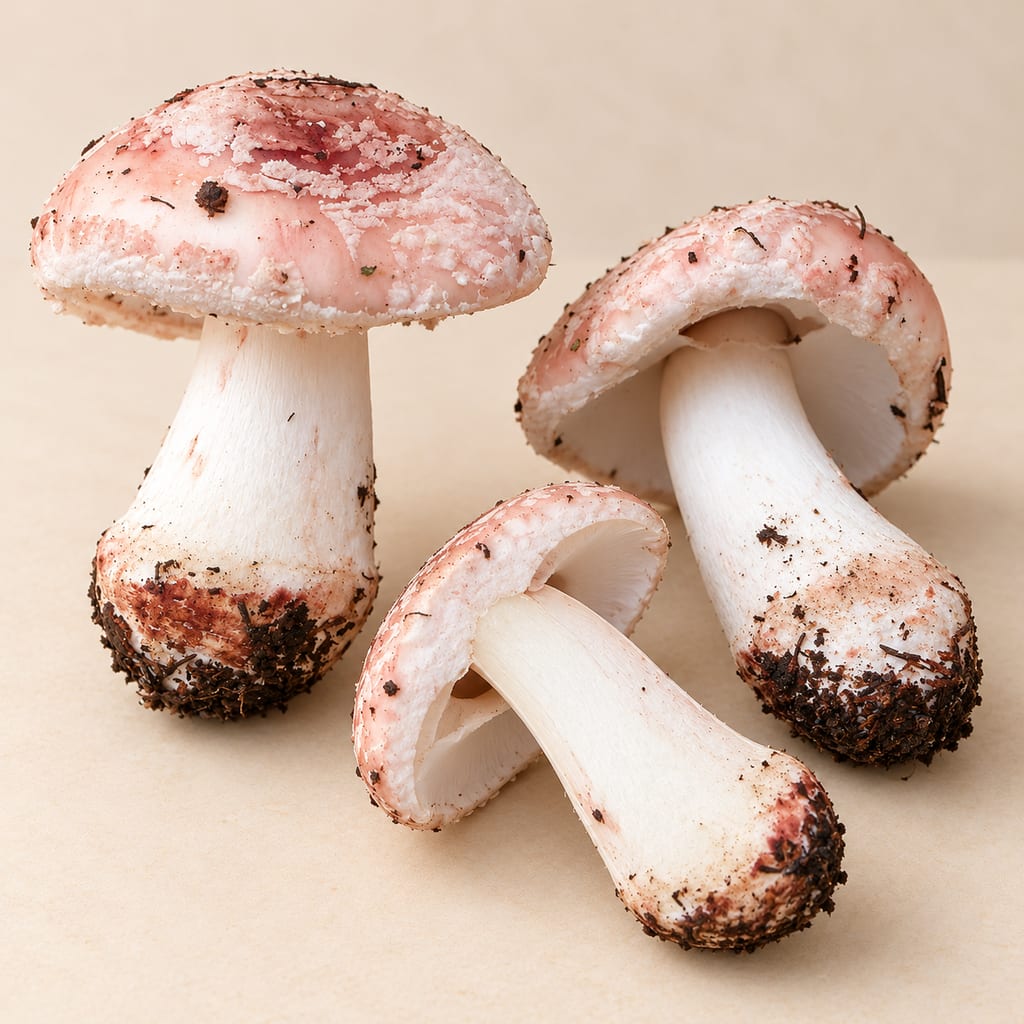
Amanita novinupta is a western North American blusher, a forest mushroom recorded as food in Mexico, and one that must be cooked because its raw flesh is toxic.
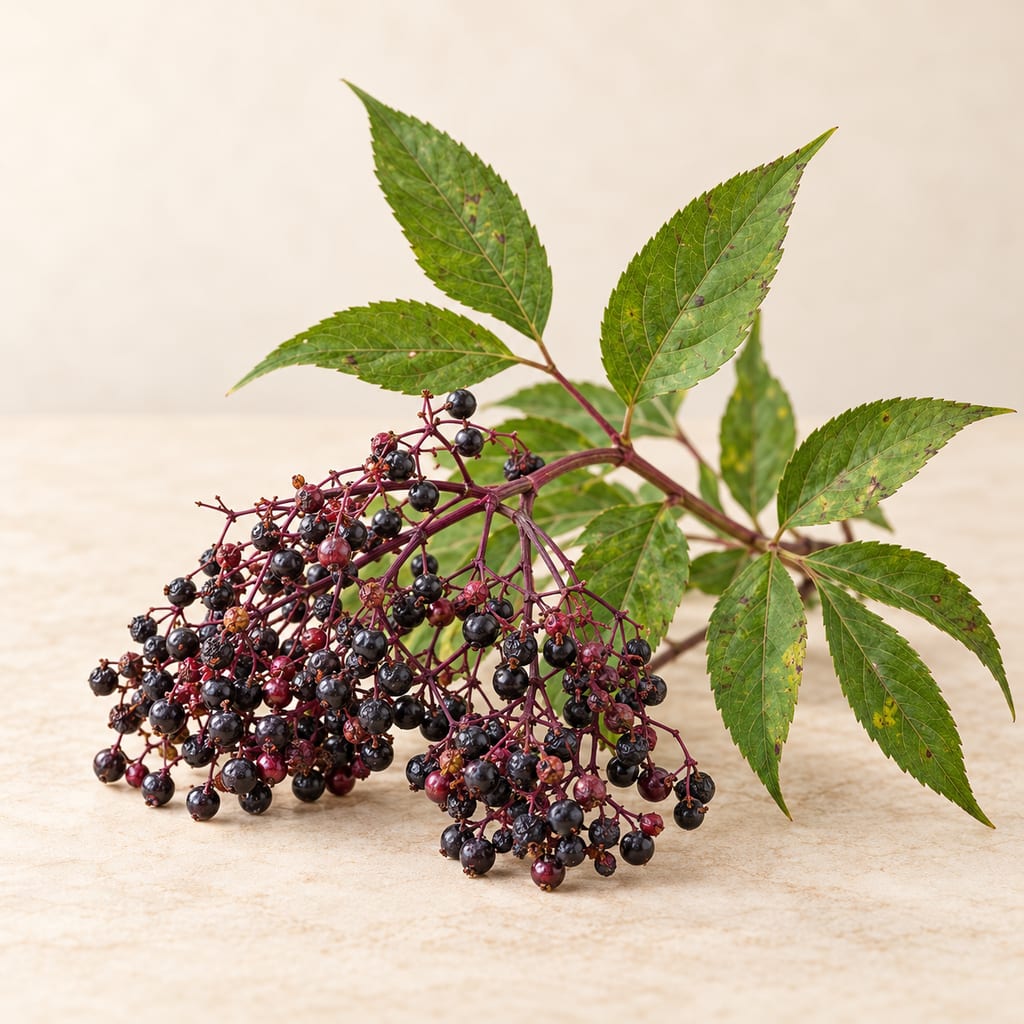
Sambucus canadensis is the accepted name used here for American elderberry. Missouri production guidance and named-cultivar studies give useful regional growing information, while food and analytical sources leave process questions open.
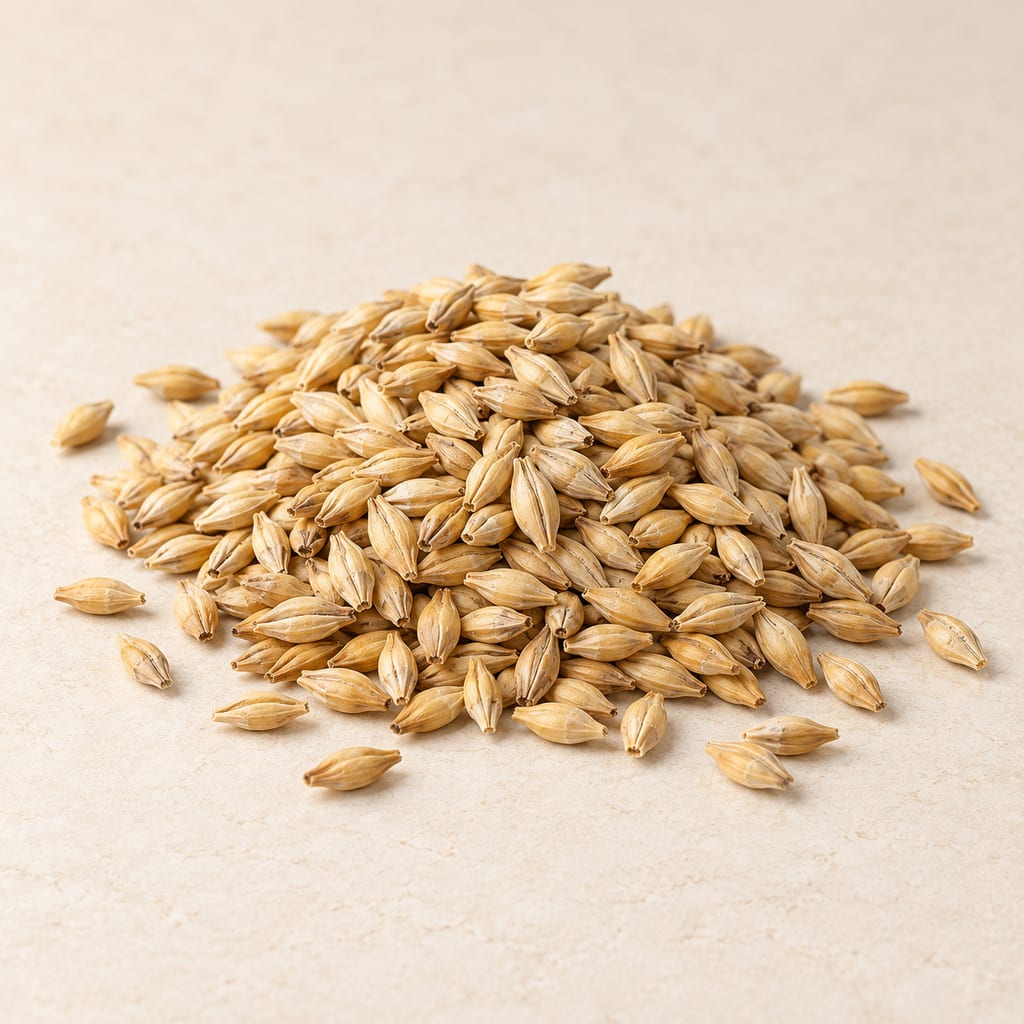
A lightly kilned brewing base made from two-row barley. It supplies starch and enzymes for the mash, with the maltster’s product and lot analysis defining its brewing properties.

Ripe avocado flesh is the soft, buttery, fat-rich pulp of Persea americana, eaten raw. It is low in acid, so it is a fresh ingredient that needs care in chilled dishes.
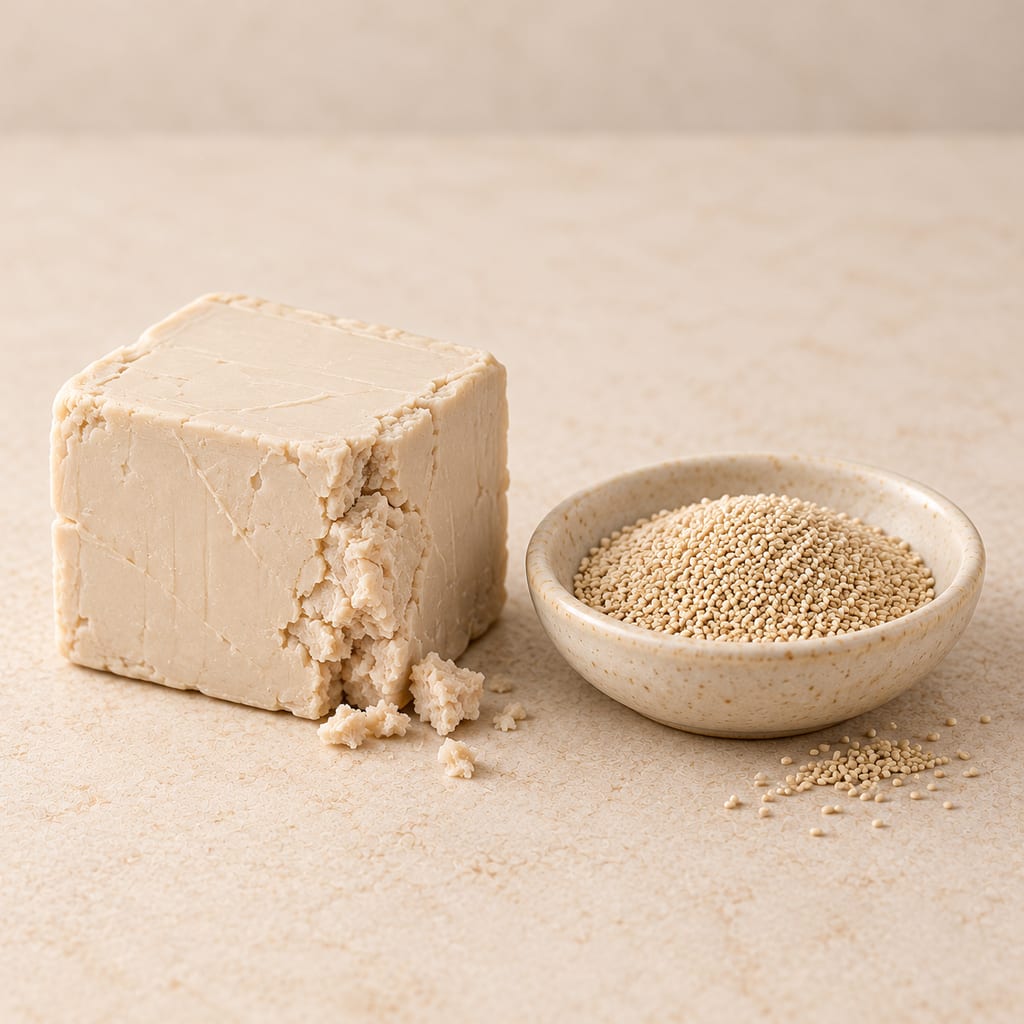
Baker's yeast is a cultivated living leavener, commonly sold fresh or dried. In dough, selected Saccharomyces cerevisiae cells make gas that can raise bread.

Baking powder is a dry chemical leavener that combines bicarbonate with acid-reacting ingredients and a carrier. Moisture and heat release carbon dioxide for quick breads, batters and griddle cakes.
No community contributions have been published for this entry yet.
Sign in to contribute. Published comments and photos are free to read.
Oregon State University Extension ServiceDescription · Habitat · Season · Use · Storage · Cautions
Oregon Native Edible Truffles (EM 9369)Habitat in Douglas-fir stands; elevation and range
Season October to February
Identification of immature and mature specimens; aroma timing
Uses raw over warm fatty food; refrigerated storage for about a week
Safety statement on wild truffles; four gourmet edible species