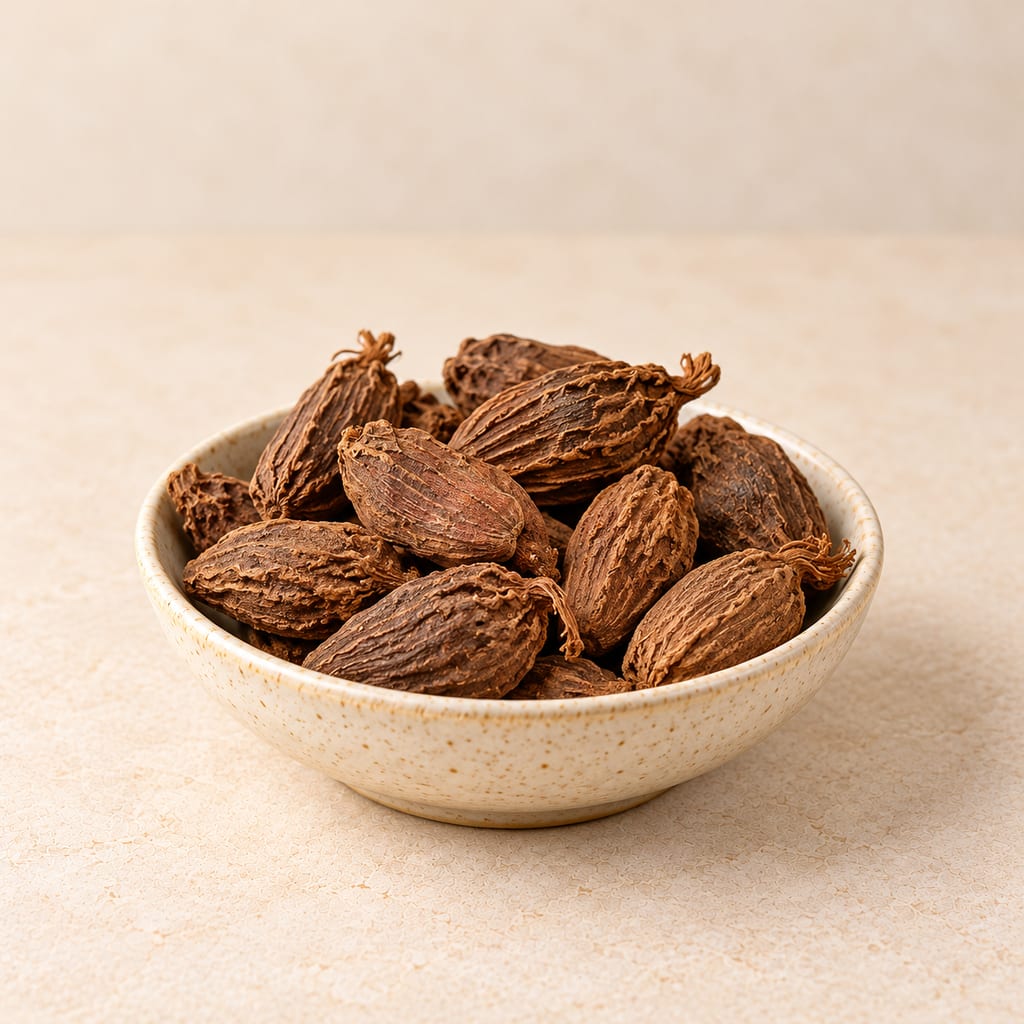
Alainchi (cardamom)
Alainchi is the large or black cardamom of the eastern Himalaya, the dark, smoke-dried pods of Amomum subulatum. Its camphor-cool, smoky seeds season Himalayan and North Indian cooking and a sweet Nepali lapsi achar.
 FermenteaWhere food goes to change
Other
Parmotrema cetratum, a tree-dwelling lichen gathered in the Nepal Himalaya and cooked with pork as yangben by Limbu and Rai communities. It is wild-gathered and boiled with ash before use.
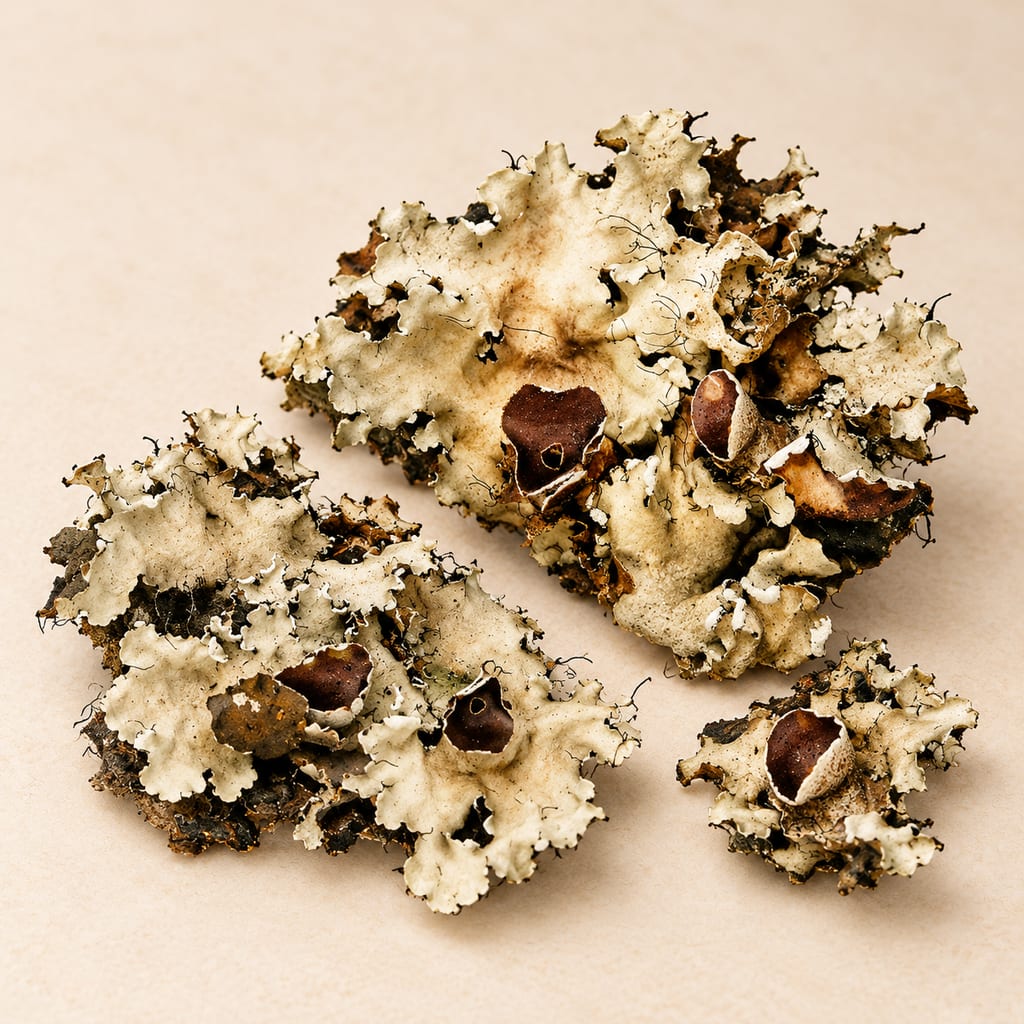
Parmotrema cetratum is a lichen, a fungus living in partnership with an alga, that grows on trees. In Nepal it is one of three lichens eaten by the Limbu and Rai communities, and it is known there as yangben. The catalogue calls it an edible Himalayan lichen.
Yangben is a signature ingredient of Limbu cooking. It is cooked mainly with pork and is part of festival and gift-giving customs.
The catalogue warns not to confuse this species with other Parmotrema sold as spices. The species name in the record is a research name, and the catalogue does not reconcile it with a current accepted name.
The three lichens named in the Kathmandu Post feature are Everniastrum cirrhatum, Everniastrum nepalense and Parmotrema cetratum. A Nepal Himalaya study of lichenophilic communities records Everniastrum nepalense and P. cetratum as eaten by the Limbu and Rai peoples.
The catalogue describes it as a tree-dwelling lichenised fungus, and records its supply as wild. The Kathmandu Post feature reports that the lichens grow on old chestnut, rhododendron and alder trees.
The feature reports that the traditional lichen is becoming less available, and links this to overharvesting and to road dust. These are reported views, not measurements.
The Kathmandu Post feature describes the traditional method. The lichen is boiled for a few hours with firewood ash, which turns it from light greenish-white to dark brown. The article states that the alkaline ash removes toxicity and reduces bitterness. It is then washed in cold water until the water runs clear, sun-dried and stored.
After soaking in hot water it is mixed with blood and spices and cooked with pork. The main dishes named are yangben-faksa, a pork dish with fatty skin, pig's blood, lichen and spices, and sargemba, a blood sausage with minced meat or innards.
The feature describes yangben as the Limbu community's signature speciality. It has traditionally been given to relatives as a gift, and is prepared during several Limbu festivals, including Dashain and Tihar. The black pig is revered by Limbu and Kirat people and offered to ancestral deities.
Neighbouring Rai and other communities have also adopted the dish, according to the feature.
The Kathmandu Post article says the ash boil removes toxicity. That is a traditional practice reported in a news feature. It is not a tested process, and this record does not give the ash quantity, boiling time or alkalinity that the method needs.
A food technologist quoted in the same feature says the lichen's high fibre content reduces the fat the body absorbs from pork. The article cites no study for this view, so it is recorded as an opinion only.
Identification of lichens and the separation of food species from spice species need a specialist. The catalogue's caution applies: do not conflate with other Parmotrema sold as spices.
The fieldwork districts and sourcing areas are the named places; the record does not give a precise locality for any population.
Alainchi is the large or black cardamom of the eastern Himalaya, the dark, smoke-dried pods of Amomum subulatum. Its camphor-cool, smoky seeds season Himalayan and North Indian cooking and a sweet Nepali lapsi achar.
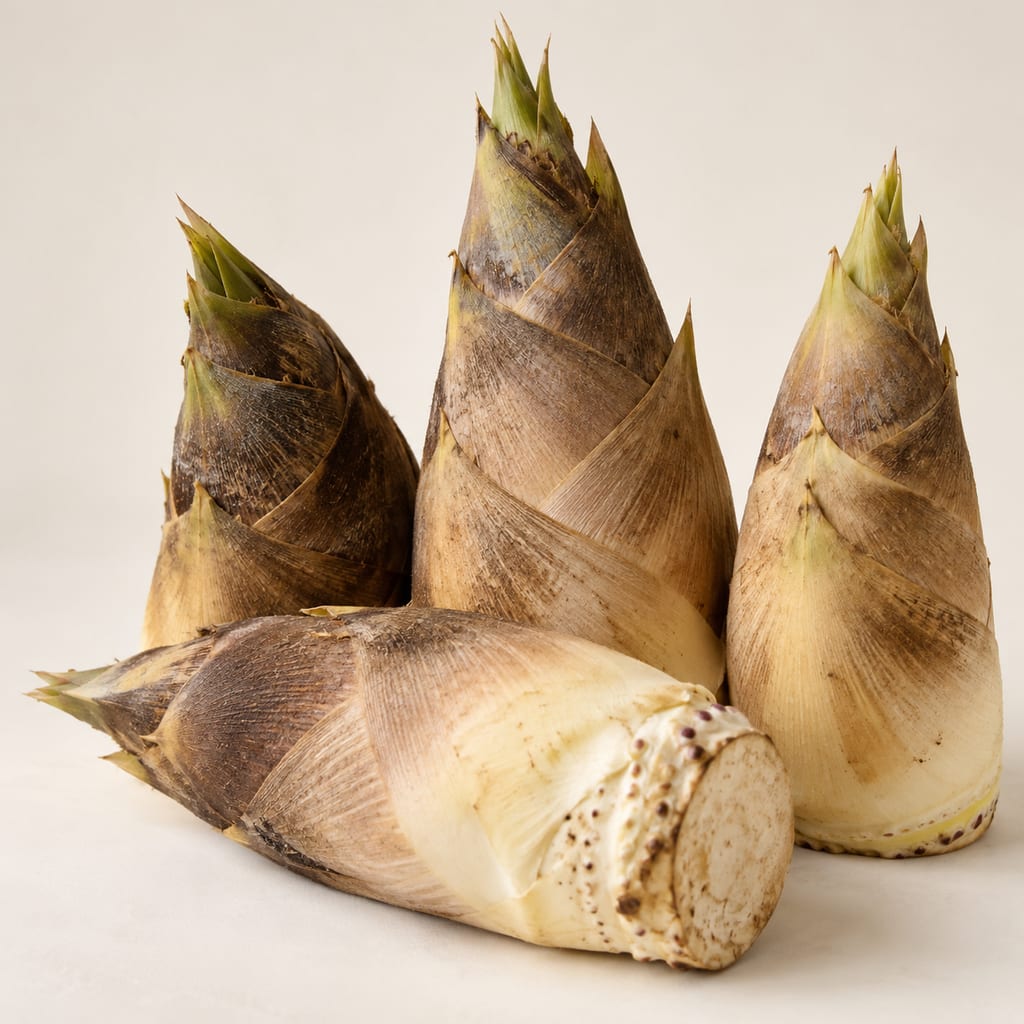
Bamboo shoots are the young culms of many bamboo species, eaten after boiling or leaching in Asia, and fermented into sour and preserved foods in the Himalayas, northeast India and Burma.
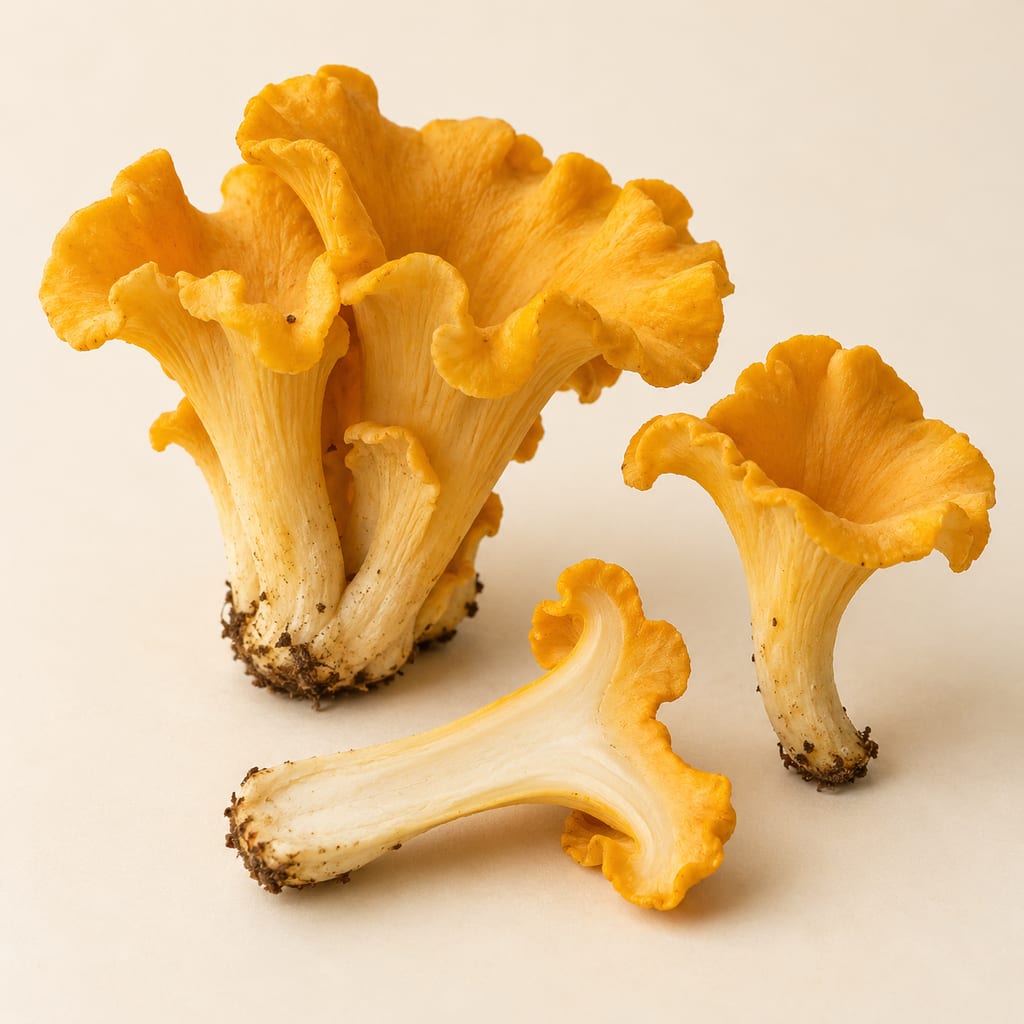
Cantharellus odoratus, the fragrant chanterelle, is a North American and Central American oak-woodland fungus. It was sold in a Veracruz market in the 1980s and in Guatemala in 2002, and its name is still disputed.
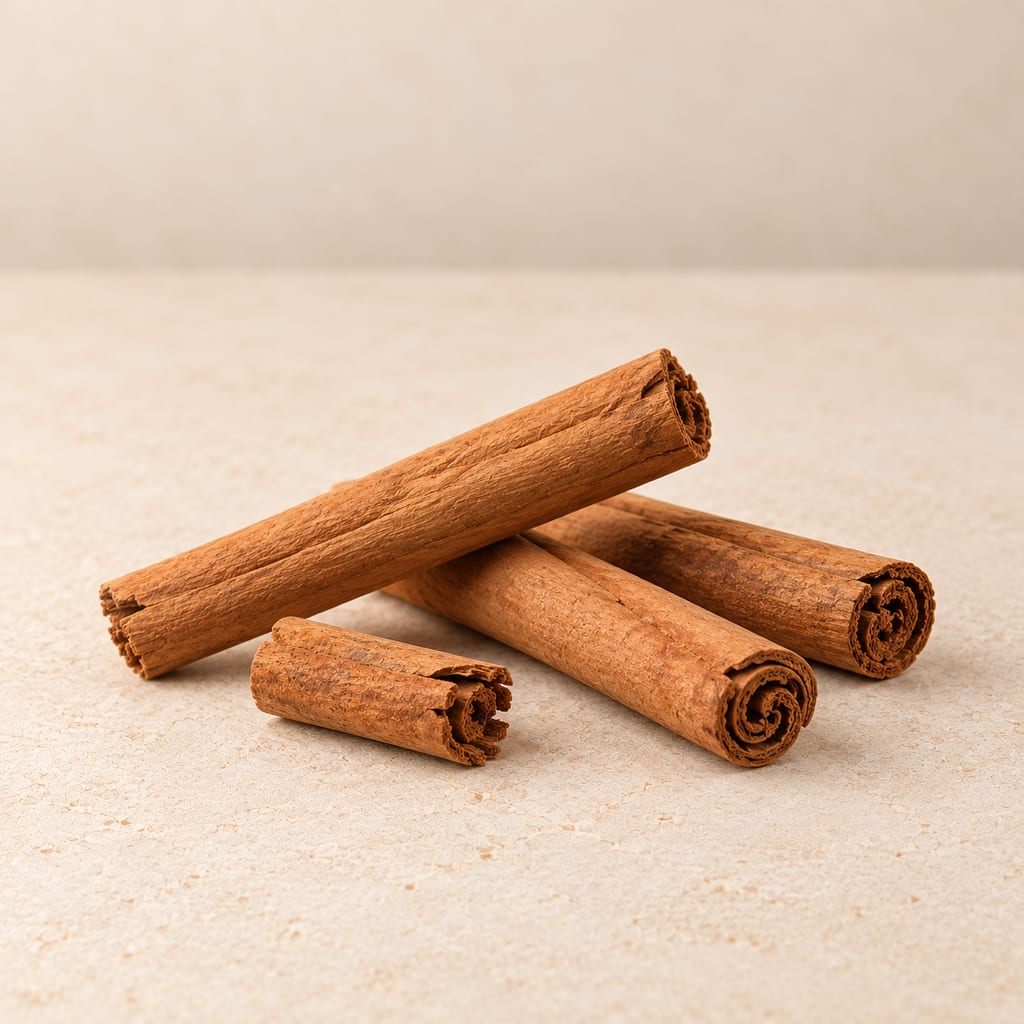
Cinnamon is the dried inner bark of Cinnamomum trees, rolled into quills or ground; Ceylon cinnamon comes from C. verum of Sri Lanka and cassia from related species.
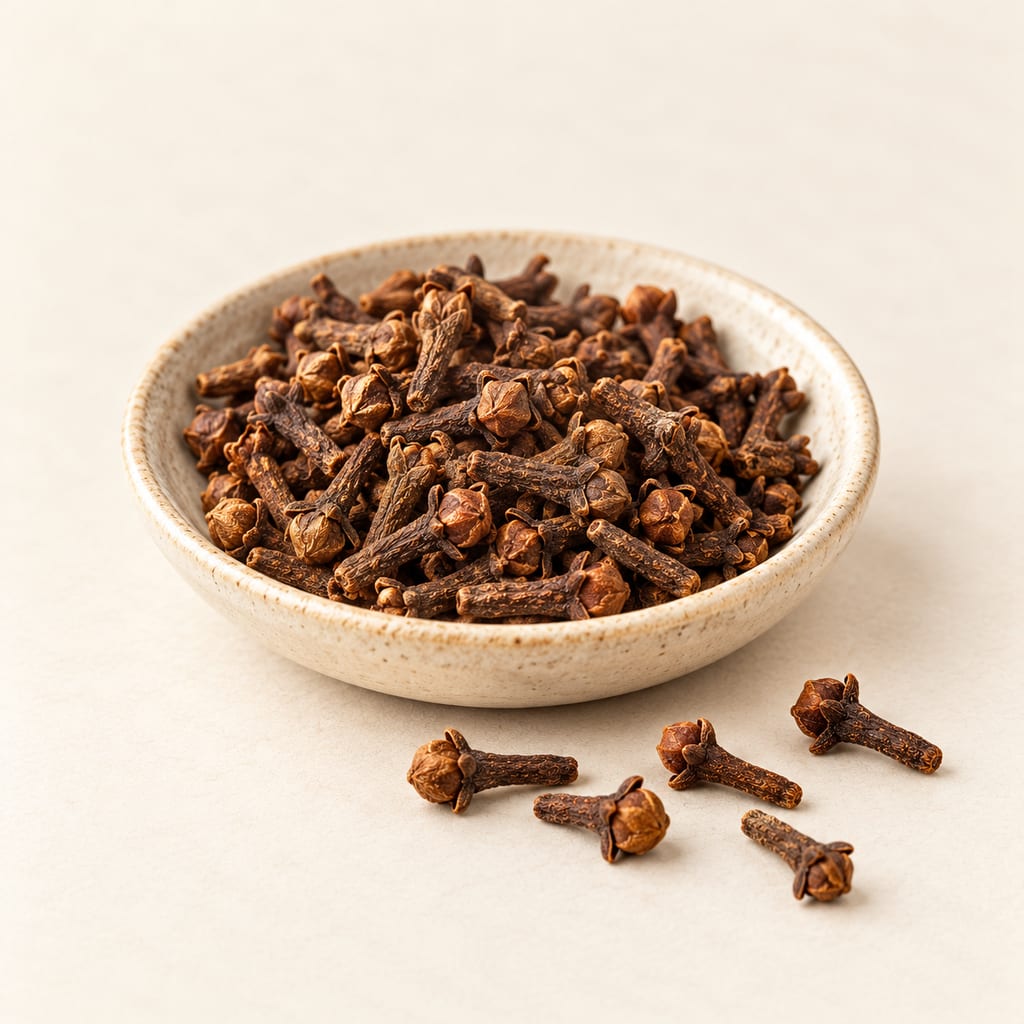
Cloves are the dried unopened flower buds of Syzygium aromaticum. Whole buds infuse liquids and can be removed; ground clove disperses its intense aroma through food.
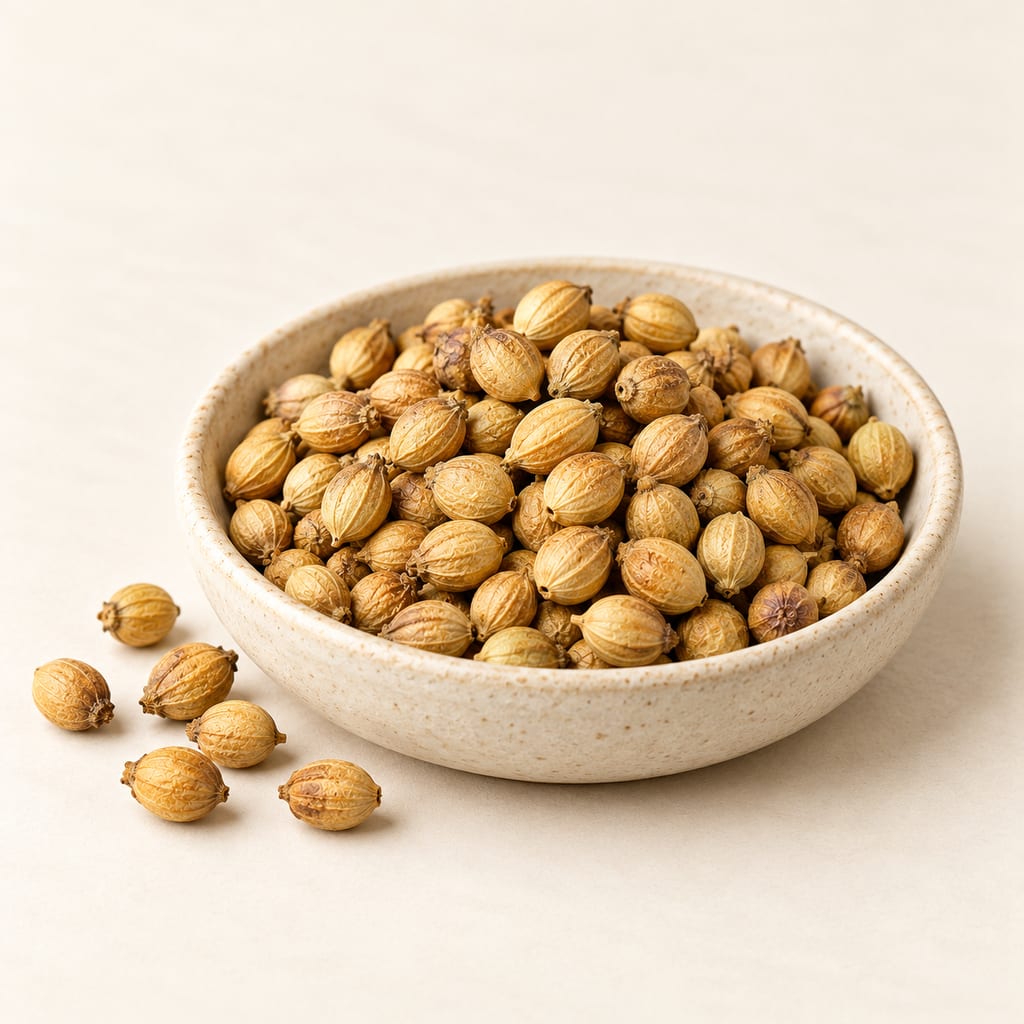
Coriander seed is the dried, aromatic fruit of Coriandrum sativum, used whole, cracked or ground in spice blends, pickles and cooked dishes.
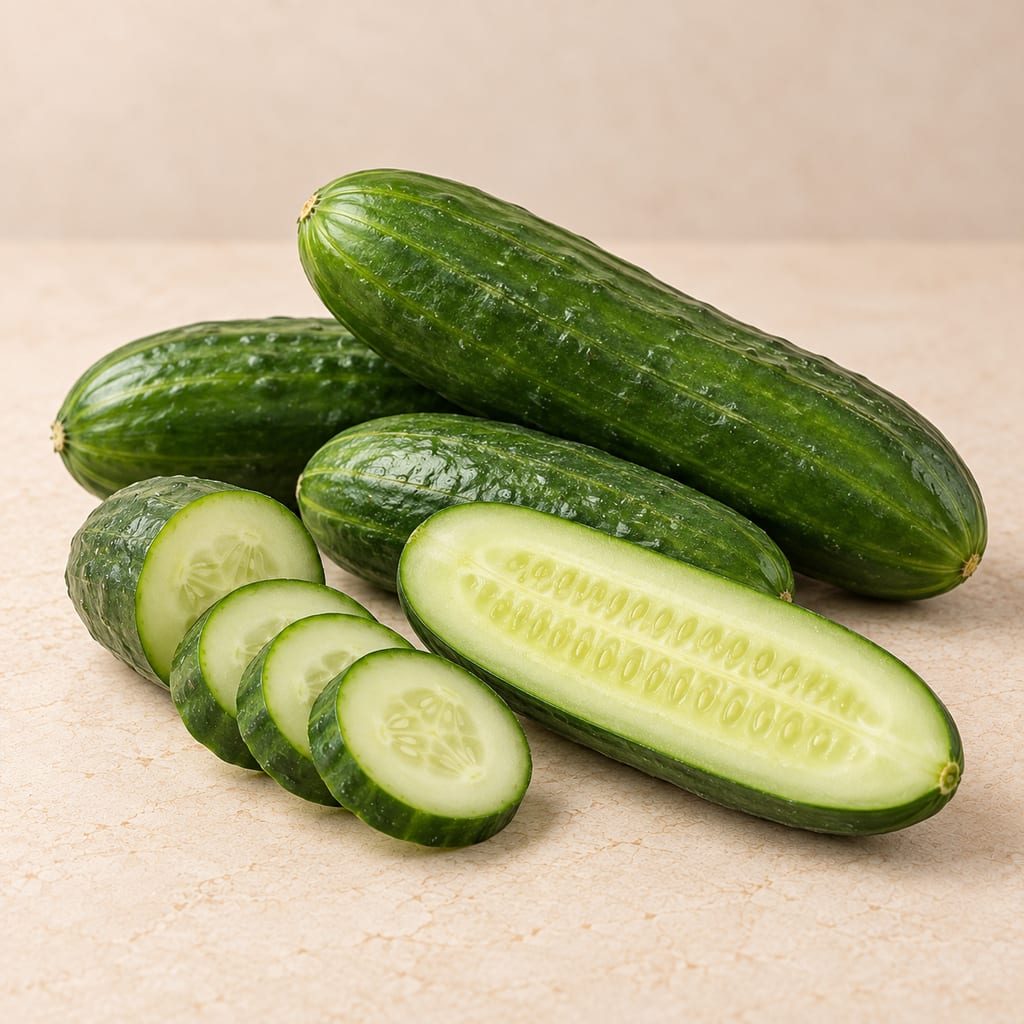
Cucumber is the watery fruit of Cucumis sativus, domesticated in India, and the classic raw material of brine pickles from New York dills to Nepali khalpi and Korean oi-sobagi.
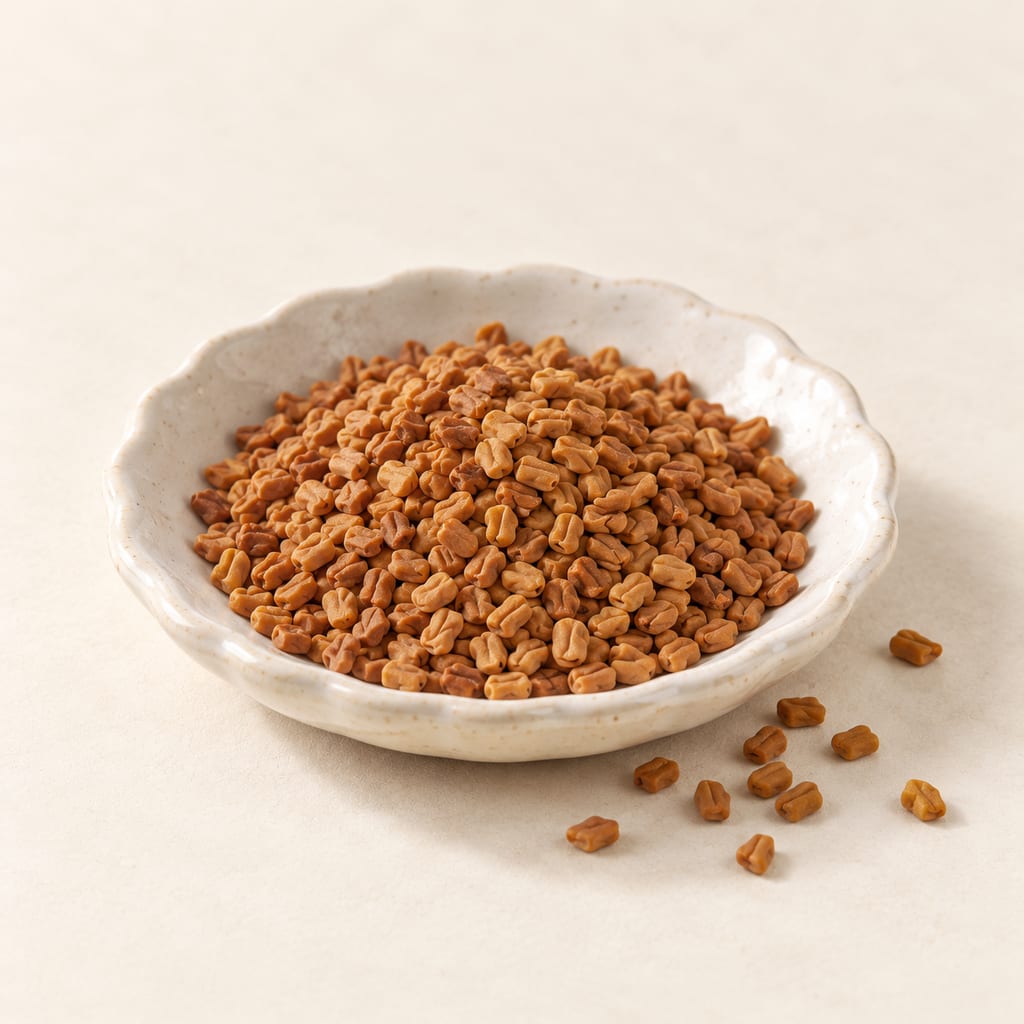
Fenugreek seed is the bitter, fragrant dry seed of Trigonella foenum-graecum, used in tempering, pickles, breads and spice mixtures.
No community contributions have been published for this entry yet.
Sign in to contribute. Published comments and photos are free to read.
PubMed Central (Journal of Ethnobiology and Ethnomedicine, 2017)Food use · Identity
Indigenous knowledge and use of lichens by the lichenophilic communities of the Nepal HimalayaThree edible lichen species consumed by Limbu and Rai communities, including P. cetratum.
Fieldwork in Taplejung, Solukhumbu and Gorkha districts.
Kathmandu PostMethod · History · Safety
Yangben: the wild delicacy of the LimbusBoiling with firewood ash; the ash is said to remove toxicity and reduce bitterness.
Yangben-faksa and sargemba dishes; gift-giving and festival use.
Lichen species on chestnut, rhododendron and alder; harvest decline reported.
Fibre claim attributed to a food technologist, without a cited study.
PubMed CentralIngredient
Supplied catalogue source for Parmotrema cetratumCatalogue record: edible Himalayan lichen, traditional soups, pickles and sausage ingredients (uses not confirmed in the fetched articles).