
All-purpose wheat flour
A refined common-wheat flour blended for a broad range of baking; its protein and behavior vary with wheat, milling and market.
 FermenteaWhere food goes to change
Enzyme sources
A family of pectin-active enzyme preparations used in fruit and beverage processing. Exact activities and formulations vary; the linked Concord recipe and its current powder product give conflicting use rates.
Pectic enzyme is a practical name for a preparation that acts on pectin in fruit. In winemaking it can assist the handling of crushed fruit, juice and suspended material. It is not the yeast that converts sugar into alcohol. Its role is to change part of the fruit's structural carbohydrate, potentially altering viscosity, juice release or clarification. The distinction matters in a must where enzyme, fruit, sugar, yeast and other additions each perform different work.
The name does not specify one purified molecule. Pectinase preparations can contain different catalytic activities, and a product intended for one fruit process may have a different composition from another. Pectin esterase, polygalacturonase and pectin lyase are related by their substrate, but they do not carry out identical reactions. A formulation can combine activities to deal with the complexity of pectin. The general ingredient identity therefore needs to remain separate from the exact enzyme blend, carrier and activity declared for a commercial product.
The Concord grape wine linked here illustrates that distinction. Its ingredient list names pectic enzyme, and the current retail hyperlink leads to a dry powder product. The page does not provide an activity assay or a complete formulation. A different liquid preparation cannot acquire that identity merely because both are sold under a pectinase name. Choosing an enzyme means selecting a documented food-processing preparation, not simply matching a word on the front of a bottle.
In December 1930, the New York State Agricultural Experiment Station published Zoltan I. Kertesz's bulletin on enzymic clarification of unfermented apple juice. The problem was commercial as well as technical. Fresh sweet cider was a seasonal drink associated with apple pressing, while a clear bottled product required additional processing. Sedimentation and filtration occupied time, storage space and equipment. The proposed enzyme treatment addressed the way pectin complicated that sequence.
Kertesz worked with an active liquid preparation and described an experiment using Rome Beauty apples. After pressing and coarse filtration, the juice was still cloudy. Enzyme treatment was followed by the appearance of a sediment, and a separated sample became clear after centrifugation. The experiment is a useful reminder that clarification did not mean every constituent simply vanished into solution. Changes to pectin altered the behavior of other suspended material, which still had to be separated from the beverage.
The bulletin compared pectic material before treatment, after sediment formation and after centrifugation. It also contrasted the filtration behavior of untreated cloudy juice and clarified juice. The practical outcome connected chemistry with equipment: a change in the material passing through the filter could improve the operation of the filter itself. Enzyme action and physical separation were successive stages, each contributing something that the other did not supply.
The visual sequence was not a steady passage from cloudy to clear. The treated juice initially appeared unchanged, then became cloudier before a sediment developed. Its appearance at that intermediate stage would therefore have been a poor guide to whether the intended process had failed. The separated liquid supplied the later comparison. Photographs placed untreated and clarified juices from McIntosh and Rome Beauty apples side by side, using the visibility of newspaper print behind the bottles to make the difference legible. Measurements of pectic material accompanied that visual demonstration. The experiment combined observation, separation and analysis rather than relying on a clear bottle alone.
The account also emphasized the relationship among enzyme activity, quantity and treatment time. An amount was meaningful only in relation to the preparation's strength and the conditions of the process. This was already a central issue in an early juice-processing application, long before the modern homebrew spoon measure. The bulletin supplies a documented experiment and a proposed process, rather than a universal present-day instruction or evidence that Kertesz invented every use of pectinolytic enzymes.
Its setting helps explain how a specialist processing ingredient became useful beyond the laboratory. A fruit crop produced juice with a desirable flavor but awkward settling and filtration behavior. Altering a structural component made the subsequent handling easier. The history concerns unfermented apple juice, so it should not be turned into an ancient Concord wine tradition. It reveals an industrial food problem that later enzyme preparations could address in other fruits and processes.
Pectin is a complex plant polysaccharide associated with primary cell walls and the middle lamella between cells. It contributes to the physical organization of plant tissue alongside other wall polymers. Crushing fruit disrupts that organization, but it does not make all structural carbohydrate irrelevant. Some pectin enters the liquid phase, where it can contribute viscosity and colloidal behavior, while other material remains associated with pulp. Juice handling therefore begins with both a liquid and the structures carried into it from the fruit.
A pectin-rich system can retain water and complicate pressing or filtration. Enzymatic treatment changes the substrate rather than operating as a sieve. By altering pectin, an enzyme preparation can change how the liquid flows and how particles separate. The distinction explains why clarification may still require settling, centrifugation, filtration or another treatment. An enzyme can help make those operations more effective without replacing the physical removal of all suspended material.
Pectin's chemistry also prevents a one-direction account in which every pectic enzyme always softens every fruit. Removing methyl ester groups changes the opportunities for interaction with calcium, and suitably demethylated pectin can contribute to tissue firming in particular applications. The chosen activity and food environment determine which effect is sought. Fruit maceration, juice clarification and maintaining the structure of a processed fruit piece are consequently different formulation problems, even though all can involve pectin.
Pectin esterase removes methyl ester groups from pectic substances. It changes the chemical character of the polymer without by itself fully breaking down the entire pectin structure. Polygalacturonase acts on the backbone by hydrolysis, while lyase activity provides another route for cleavage. The substrate's structure and degree of esterification influence how these activities fit together. A combined preparation can use complementary actions rather than depending on one enzyme to perform every required conversion.
A manufacturer's ENDOZYM Pectofruit BR sheet provides a concrete example of that combination: its juice preparation contains pectin lyase, polygalacturonase and pectinesterase activities. The maker describes viscosity reduction and assistance with clarification and ultrafiltration for that product. Those are product-specific applications and claims. They do not establish that the dry powder linked by the Concord recipe contains the same activities, at the same relative strengths, or in the same formulation.
The activity description is more useful than assuming that an equal volume means an equal effect. Enzyme preparations can differ in concentration and in how activity is measured. A teaspoon measures a physical volume, while an assay describes catalytic performance under specified conditions. Even activity-unit labels require the associated analytical method before comparison. Two products sharing a general ingredient name therefore do not supply an automatic volume conversion, and a dry preparation cannot be exchanged for a liquid by appearance or spoon measure alone.
Microorganisms can produce pectinolytic enzymes during controlled cultivation. The recovered preparation is selected and processed for its intended use. The producer's organism and strain belong to that manufacturing history, but the consumer does not add a growing fermentation culture to the must merely by adding a food enzyme. The distinction between the production organism and the preparation explains why a fungal name on a technical dossier is not a complete ingredient list for every pectinase product.
AB Enzymes' pectin-esterase notification, for example, describes a named Aspergillus oryzae production strain grown by controlled submerged fermentation. The process separates enzyme-containing liquid from biomass, concentrates the preparation and applies further filtration. AEB's Pectofruit BR documentation instead identifies Aspergillus niger for its pectolytic activities. These are distinct documented products. Neither supplies a production-host identity for the retail powder simply because that powder also acts on pectin.
Cultivation conditions can influence the enzyme profile obtained. Experimental comparisons of Aspergillus niger in submerged and solid-state systems showed differences in pectinesterase and polygalacturonase production, including different responses when glucose was present. These observations concern the tested organism and conditions, not a home manufacturing recipe. They help explain why a commercial producer develops a process, measures activity and supplies a preparation with defined properties instead of treating every fungal culture as a standard source of identical enzymes.
In juice processing, the desired result may be easier extraction, a less viscous liquid or improved separation before concentration and packaging. In winemaking, pectinolytic preparations can be used at fruit crushing, must handling or a later clarification stage, depending on the product and process. These stages expose the enzyme to different substrates and conditions. A preparation chosen for warm juice treatment is not automatically suitable for an unchanged addition to a cooler fermenting must.
The Concord formula adds the pectic enzyme with the other initial must ingredients before yeast pitching. Its stated sulfite waiting period precedes the addition of wine yeast. That sequence documents where the enzyme enters this particular method, but it provides no pectin assay, extraction comparison or measured clarity improvement. The enzyme's intended processing role can be explained without claiming that the finished wine achieved an outcome the recipe never measured.
The recipe gives three-quarters of a teaspoon for a five-gallon batch. Its current product hyperlink resolves to Adventures in Homebrewing item 24-6382, a pectic-enzyme powder pictured in an LD Carlson pouch. The retail page's general directions specify half a teaspoon per gallon, which is a different rate. The two statements are preserved as a source discrepancy. No assumption about a change in product strength, recipe author intent or equivalent activity reconciles them here; the method needs clarification before that addition can be treated as a verified instruction.
These preparations also appear beyond grape wine. Canada's permitted-food-enzyme list distinguishes pectinase, pectin lyase and pectinesterase entries, naming particular production sources and food categories such as cider, fruit wine, wine and fruit juices. That is evidence of regulated technological uses within that jurisdiction. It does not turn every commercial preparation into the same product, establish global permissions or provide a use rate for an unidentified packet.
Useful purchasing information includes intended food use, physical form, declared activities, activity method, formulation and the manufacturer's application instructions. A complete product identity also supports questions about carriers, allergens and storage. The generic term pectic enzyme supplies none of those details on its own. A retailer's short description and a front-of-pack photograph may identify a sale item while still leaving its full technical specification unavailable.
Storage and handling conditions given for one liquid juice preparation do not become a generic shelf life for every dry powder or enzyme solution. Likewise, a sequence-based allergen assessment does not establish an allergen-free claim for every formulation or carrier. Check the exact product documentation for these details. The Concord recipe’s product rate has an unresolved discrepancy.
Exact preparation, carriers and product declaration required; no generic allergen-free claim.
1930AgriculturalExperimentStation juiceclarification bulletin, not origin of all enzyme preparations.
Jurisdiction-specific permitted-enzyme entries, not product provenance or global permission.
A refined common-wheat flour blended for a broad range of baking; its protein and behavior vary with wheat, milling and market.

Toasted almonds are whole sweet almond kernels dry-roasted until golden to brown. Heat replaces their marzipan note with a roasted, nutty one; they thicken and flavour romesco.
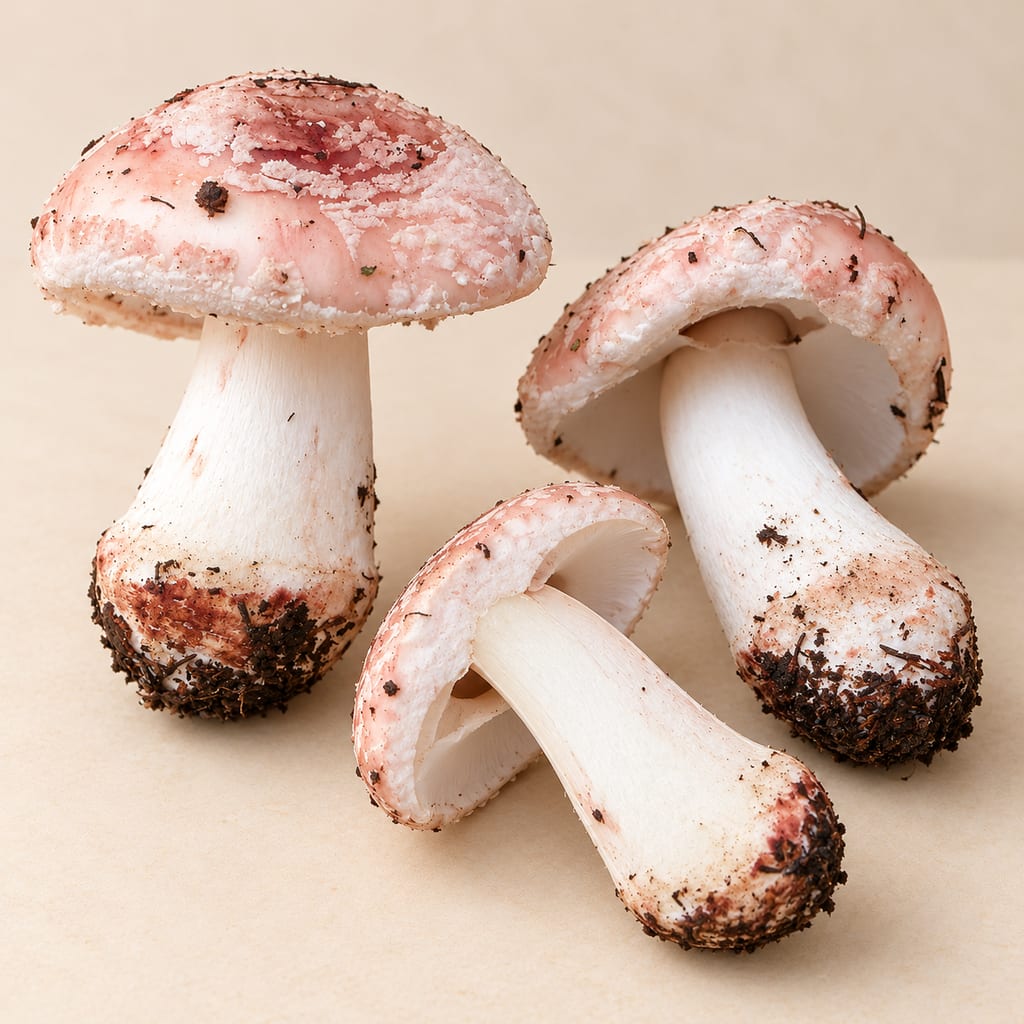
Amanita novinupta is a western North American blusher, a forest mushroom recorded as food in Mexico, and one that must be cooked because its raw flesh is toxic.
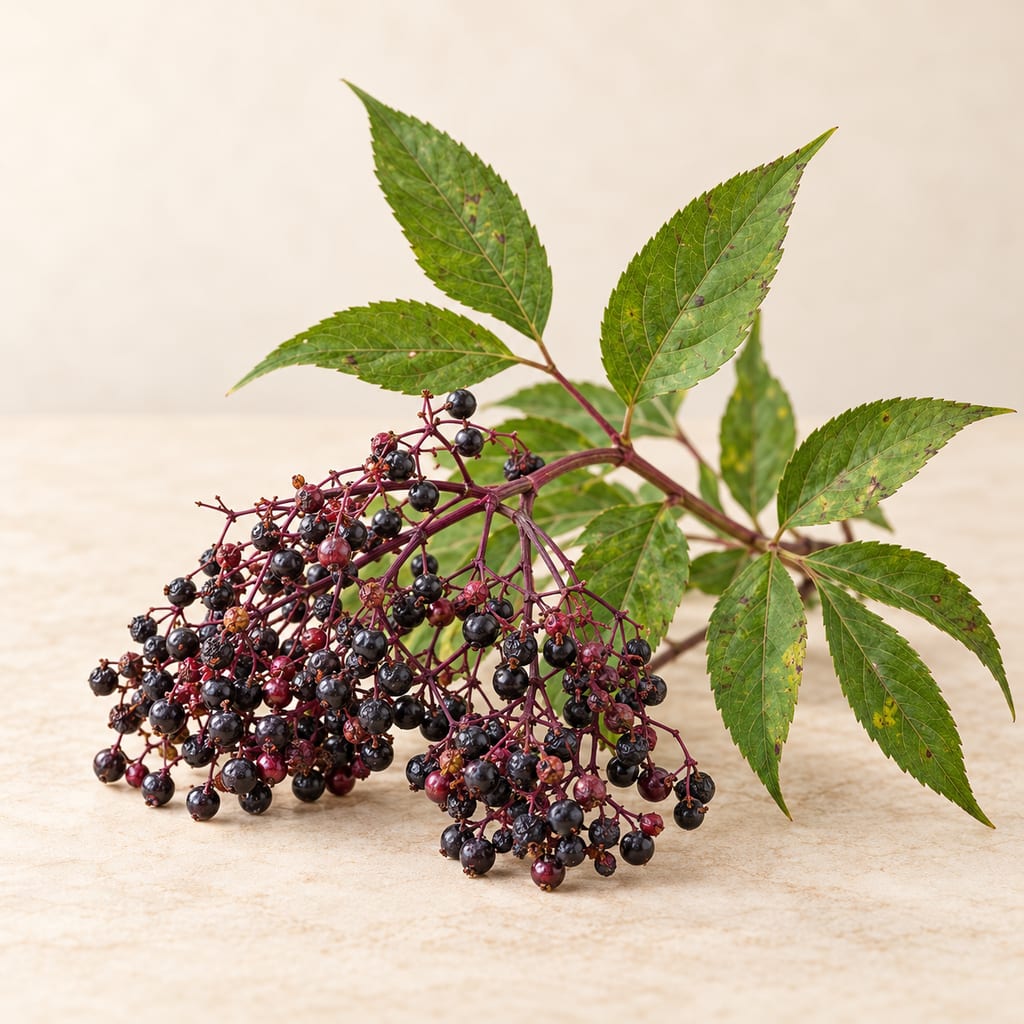
Sambucus canadensis is the accepted name used here for American elderberry. Missouri production guidance and named-cultivar studies give useful regional growing information, while food and analytical sources leave process questions open.
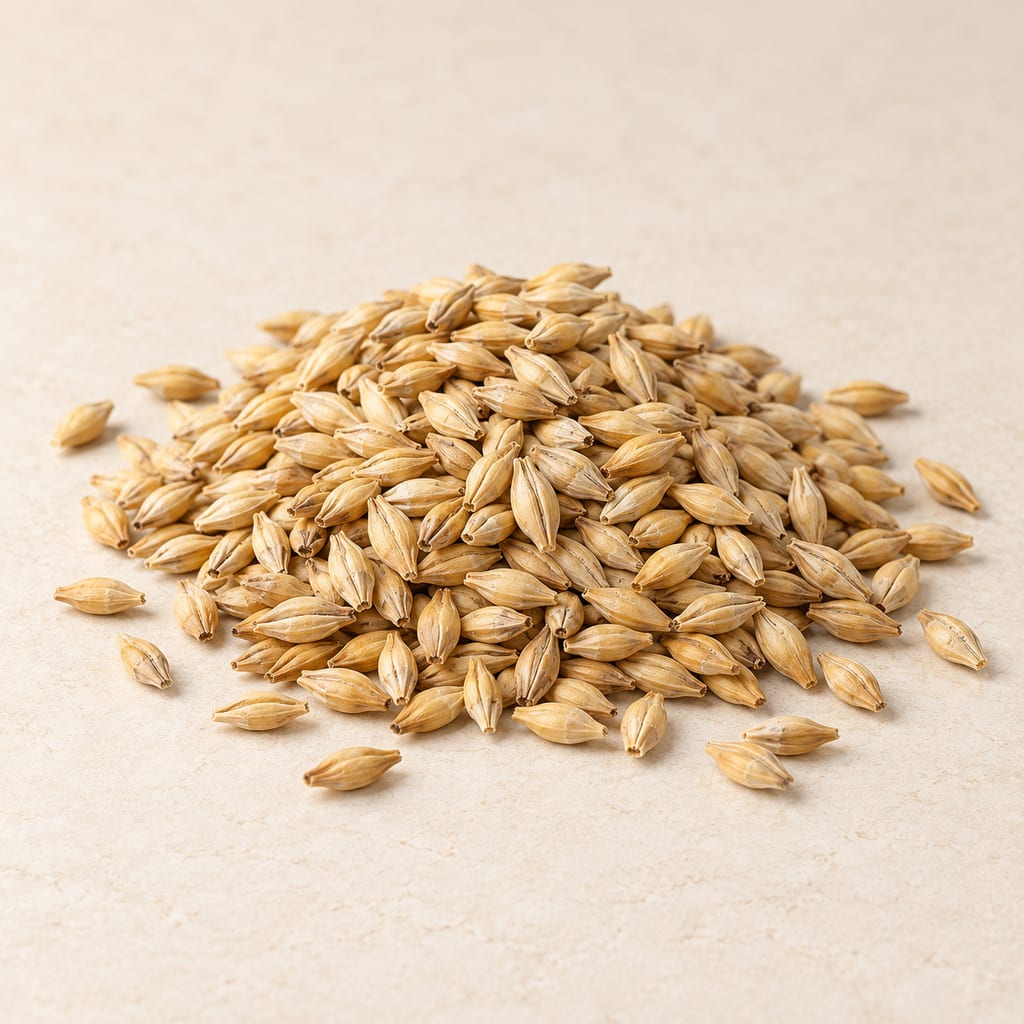
A lightly kilned brewing base made from two-row barley. It supplies starch and enzymes for the mash, with the maltster’s product and lot analysis defining its brewing properties.

Ripe avocado flesh is the soft, buttery, fat-rich pulp of Persea americana, eaten raw. It is low in acid, so it is a fresh ingredient that needs care in chilled dishes.
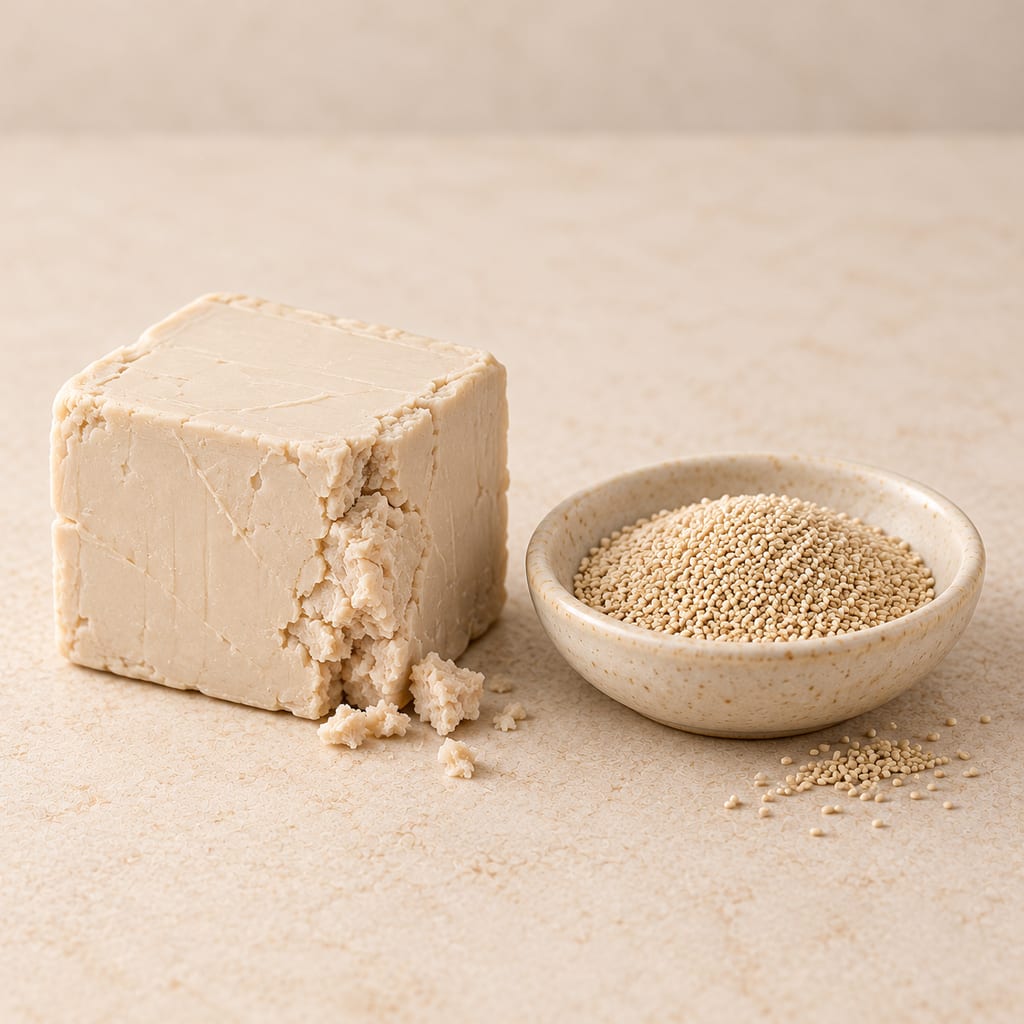
Baker's yeast is a cultivated living leavener, commonly sold fresh or dried. In dough, selected Saccharomyces cerevisiae cells make gas that can raise bread.
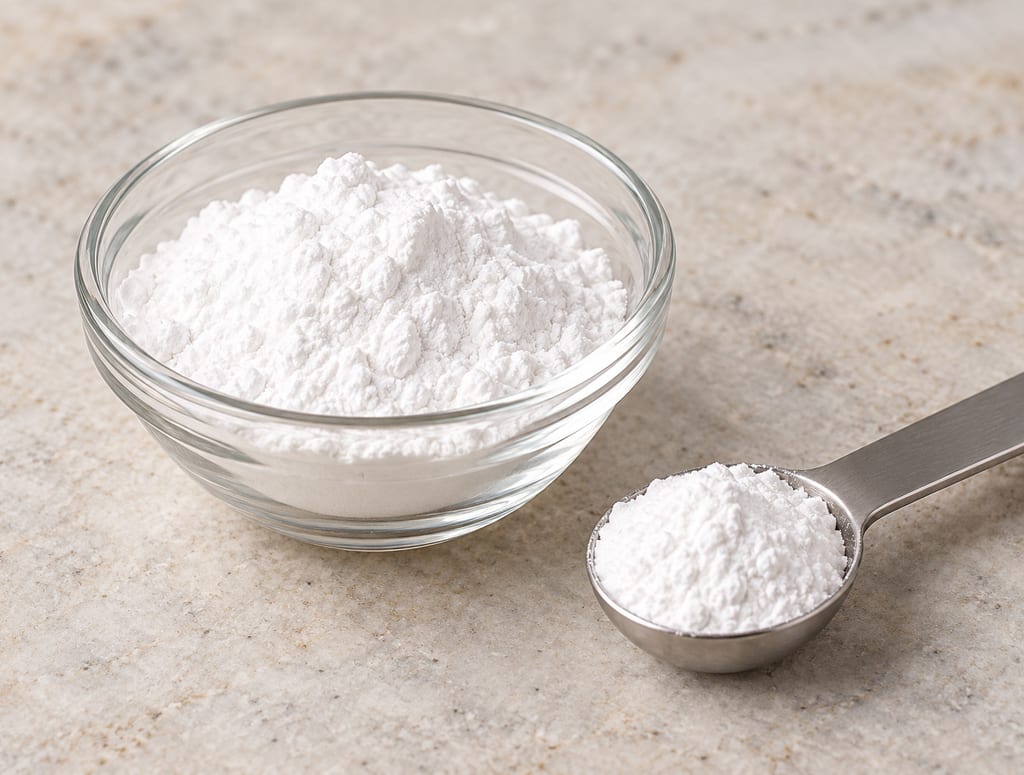
Baking powder is a dry chemical leavener that combines bicarbonate with acid-reacting ingredients and a carrier. Moisture and heat release carbon dioxide for quick breads, batters and griddle cakes.
No community contributions have been published for this entry yet.
Sign in to contribute. Published comments and photos are free to read.
Adventures in HomebrewingIdentity · History · Science · Handling · Use
Concord Grape Medium Bodied Wine RecipeThe Concord recipe adds pectic enzyme with initial must ingredients before yeast. Its three-quarter-teaspoon quantity for five gallons differs from its currently linked product's directions.
Cited in: An enzyme preparation for the fruit around the yeast; Fruit processing and the place of the addition
New York State Agricultural Experiment StationIdentity · History · Science · Handling · Use
A New Method for Enzymic Clarification of Unfermented Apple Juice, Bulletin589Kertesz's December 1930 bulletin describes a liquid enzyme trial in unfermented apple juice, sediment formation, pectin measurements and improved separation. Activity, quantity and treatment time are connected.
Cited in: The apple-juice problem in 1930
AB Enzymes notification hosted byFDAIdentity · History · Science · Handling · Use
GRAS Notice979: Pectin esterase from a genetically modified Aspergillus oryzaeThe named pectin-esterase notification describes its production strain, fermentation and recovery, pectin chemistry and processing uses. The notifier's product and activity measurements do not define every pectinase preparation.
Cited in: An enzyme preparation for the fruit around the yeast; Pectin holds more than a fruit's shape; Different reactions within a shared name; A microbial factory is different from the finished ingredient; Fruit processing and the place of the addition; Selecting a preparation with information beyond its name
AEBIdentity · History · Science · Handling · Use
ENDOZYM Pectofruit BR Technical DatasheetENDOZYM Pectofruit BR combines pectin lyase, polygalacturonase and pectinesterase activities for juice processing. Its Aspergillus niger source and handling instructions apply to that product.
Cited in: An enzyme preparation for the fruit around the yeast; Different reactions within a shared name; A microbial factory is different from the finished ingredient; Selecting a preparation with information beyond its name
Journal of Industrial Microbiology and BiotechnologyIdentity · History · Science · Handling · Use
Production of pectinesterase and polygalacturonase by Aspergillus niger in submerged and solid state systemsThe original study abstract compares Aspergillus niger enzyme production in submerged and solid-state systems, including different glucose responses. It is not a household production method.
Cited in: A microbial factory is different from the finished ingredient
Adventures in HomebrewingIdentity · History · Science · Handling · Use
Pectic Enzyme Powder1oz, item24-6382The current recipe hyperlink resolves to powder item24-6382 pictured in an LD Carlson pouch. Its half-teaspoon-per-gallon directions conflict with the recipe rate; the sealed pouch does not show the actual powder.
Cited in: An enzyme preparation for the fruit around the yeast; Fruit processing and the place of the addition; Selecting a preparation with information beyond its name
Health CanadaIdentity · History · Science · Handling · Use
List of Permitted Food EnzymesCanada's enzyme list distinguishes pectinase, pectin lyase and pectinesterase, production sources and permitted food categories. It is jurisdiction-specific and does not supply a generic home-use rate.
Cited in: Fruit processing and the place of the addition