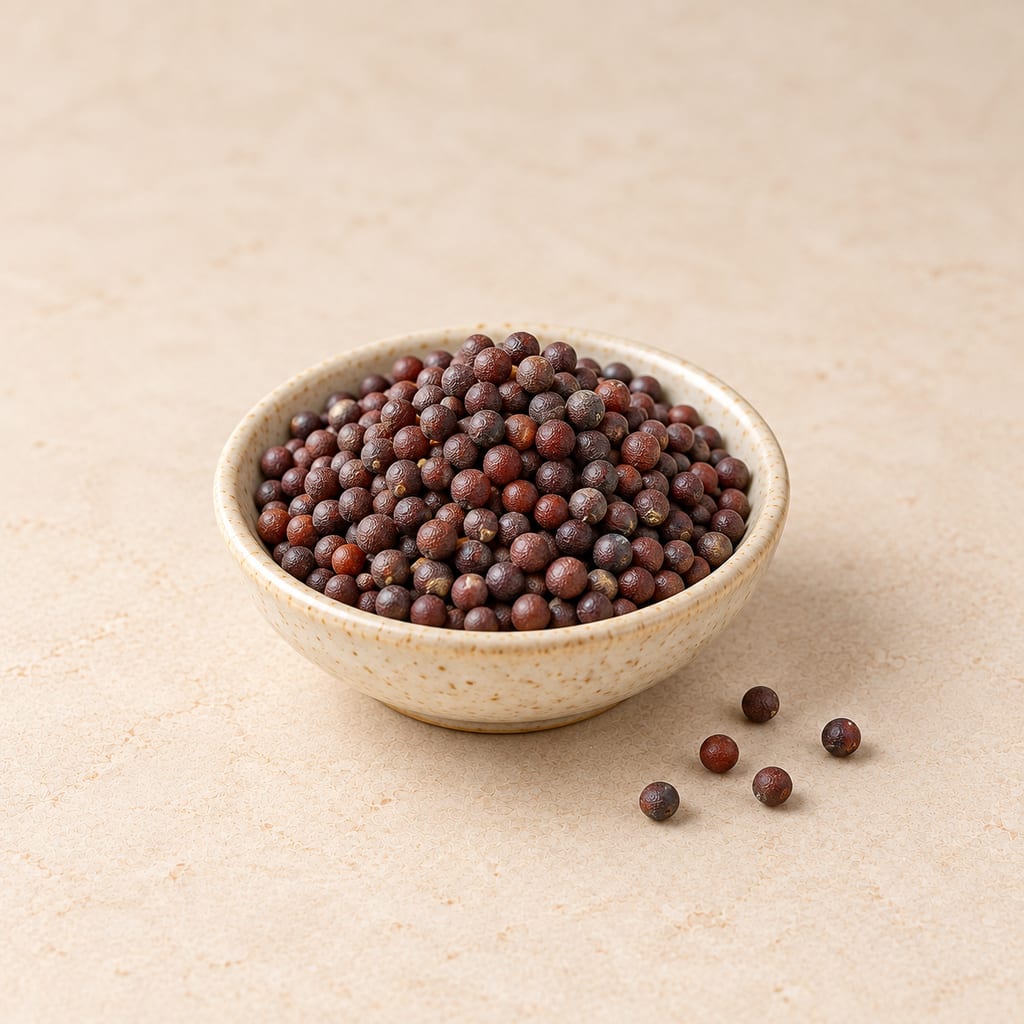
Black mustard seed
Black mustard seed is the small, dark, very pungent seed of Brassica nigra, the hottest of the three mustards. It gives its bite through sinigrin, which turns into allyl isothiocyanate when the crushed seed meets water.
 FermenteaWhere food goes to change
Cultures
Penicillium camemberti is the white mould of Camembert and Brie, a domesticated fungus whose white, fluffy coat ripens soft cheese from the outside in.
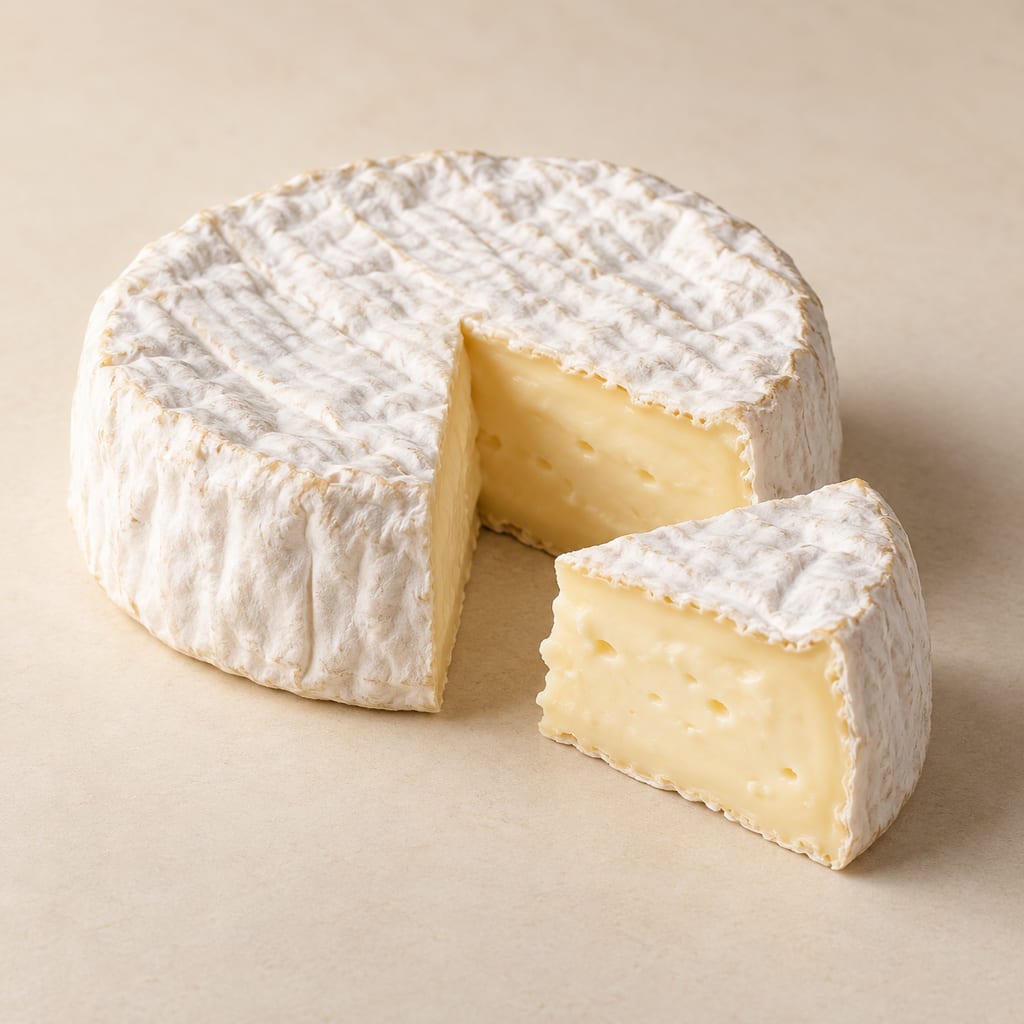
Penicillium camemberti is the white mould that covers Camembert and related soft cheeses. It forms a dense, white, fluffy coat on the rind, and its growth is what makes the cheese's surface and its interior texture change during ripening.
It is a cultivated fungus rather than one found only in the wild. Genomic work places it as a distinct cluster, closely related to the blue-green P. biforme, and the two are treated as products of separate domestication steps.
Ropars and colleagues describe the domestication in stages. The first event produced P. biforme, which is used in some fresh goat cheeses. A later, more recent event produced the white P. camemberti that is used for Camembert.
The domesticated species differs from wild relatives in traits that suit cheese ripening: it grows faster in the cool, humid conditions of a ripening cellar, is whiter, and produces no toxin or only very small amounts of a potentially dangerous one. It also suppresses undesirable moulds on the cheese.
The bioRxiv preprint of the same work is titled as a diversification of P. camemberti into two varieties. The CNRS page read here does not name those varieties, so this page does not describe them in detail. Mould catalogues list older names for the organism, including P. candidum, which should be checked against a taxonomic database before use.
The source read for this page is a research summary, and the genome figures and horizontal gene transfer points reported in secondary coverage were not checked against the primary paper. Strain identity matters: a species name does not establish which culture a cheesemaker uses.
Camembert and Brie are the cheeses the sources name for this mould; the source does not give a single place of origin for the species.
Black mustard seed is the small, dark, very pungent seed of Brassica nigra, the hottest of the three mustards. It gives its bite through sinigrin, which turns into allyl isothiocyanate when the crushed seed meets water.
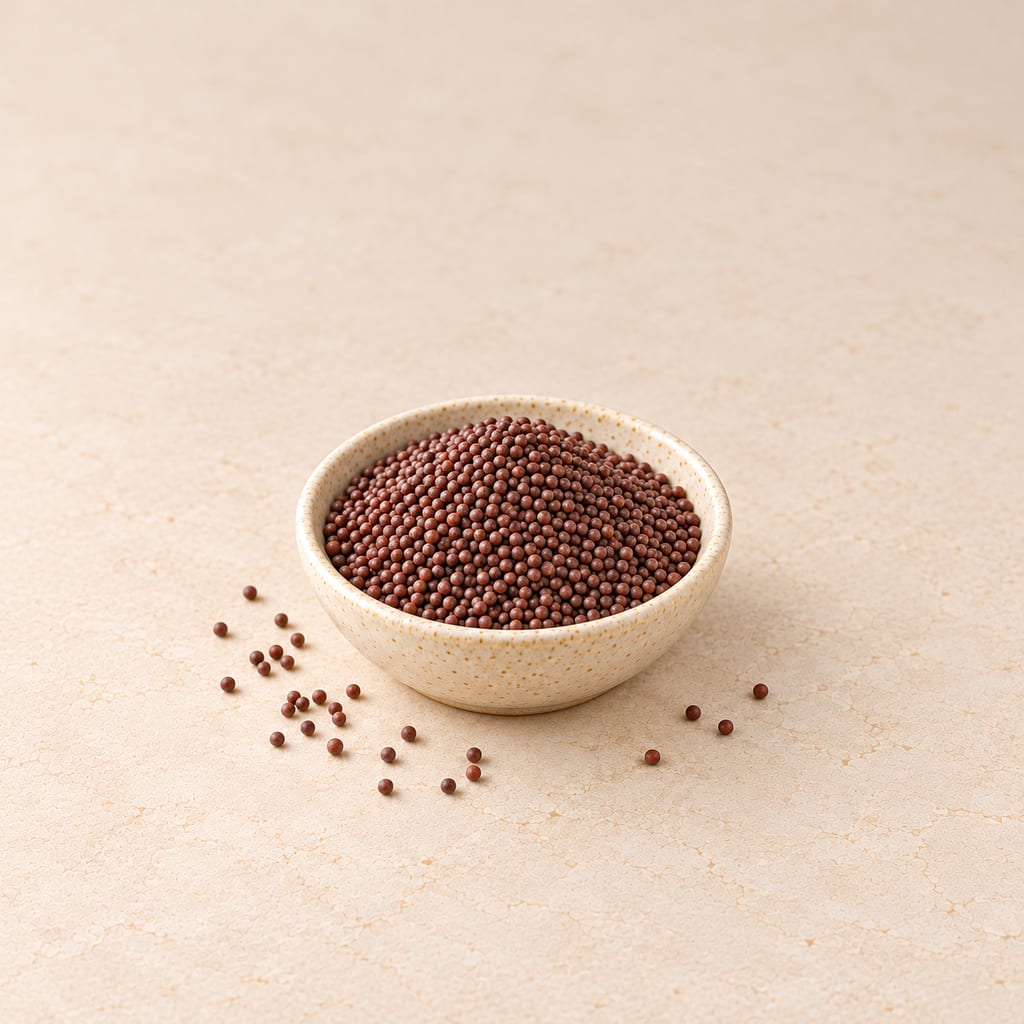
Brown or oriental mustard seed comes from Brassica juncea, a hybrid of black mustard and turnip rape. It is the hot, easily harvested seed behind Dijon, spicy brown mustards and much of the mustard oil of the Indian subcontinent.
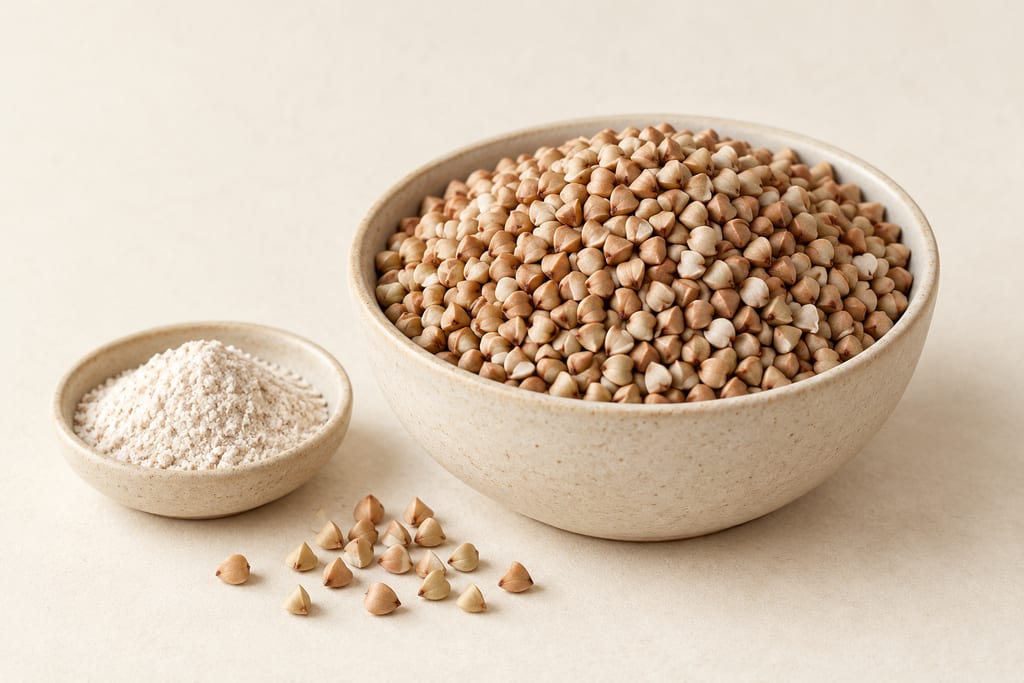
Buckwheat is a triangular-seeded flowering plant whose whole groats and flour cross regional food traditions, from porridge and pancakes to modern sourdough and gluten-free bread.
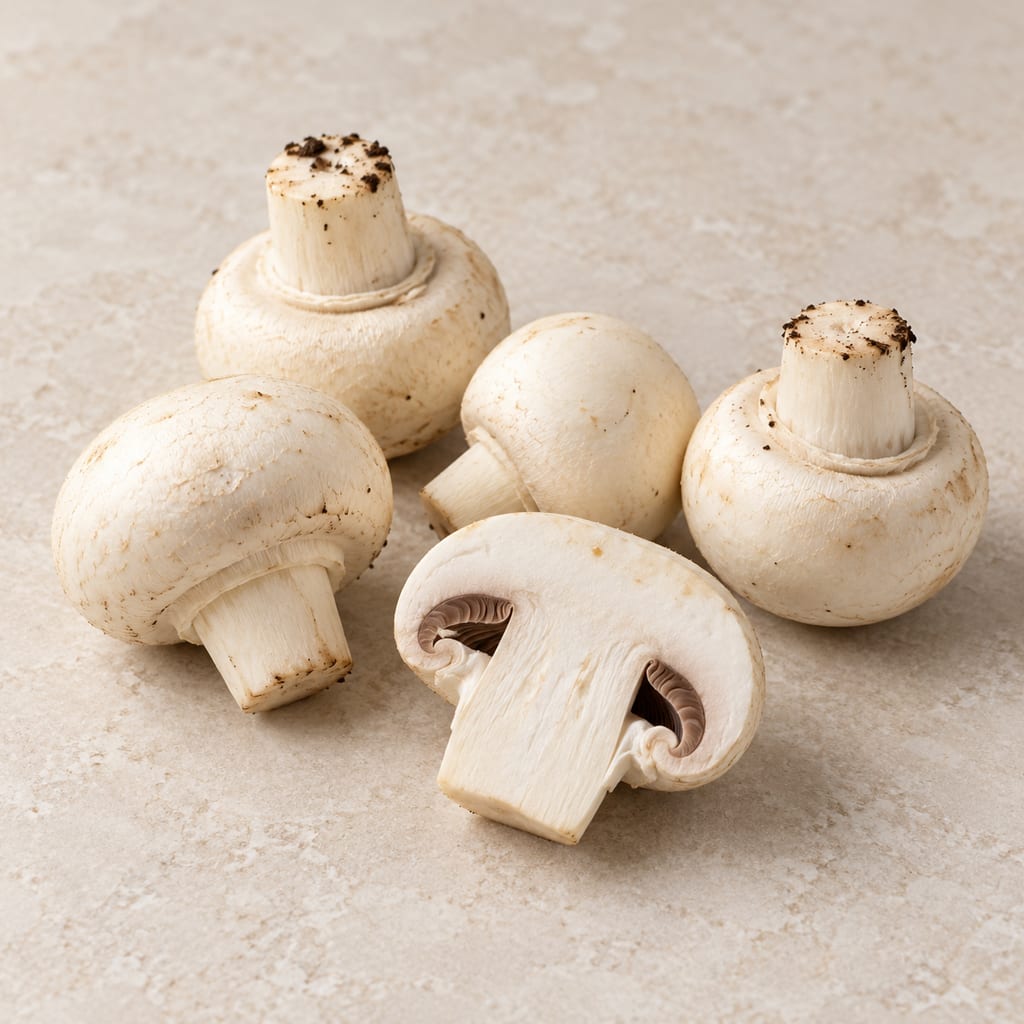
A cultivated form of Agaricus bisporus sold young as a button and at more mature stages as cremini or portobello, used fresh or preserved in everyday cooking.
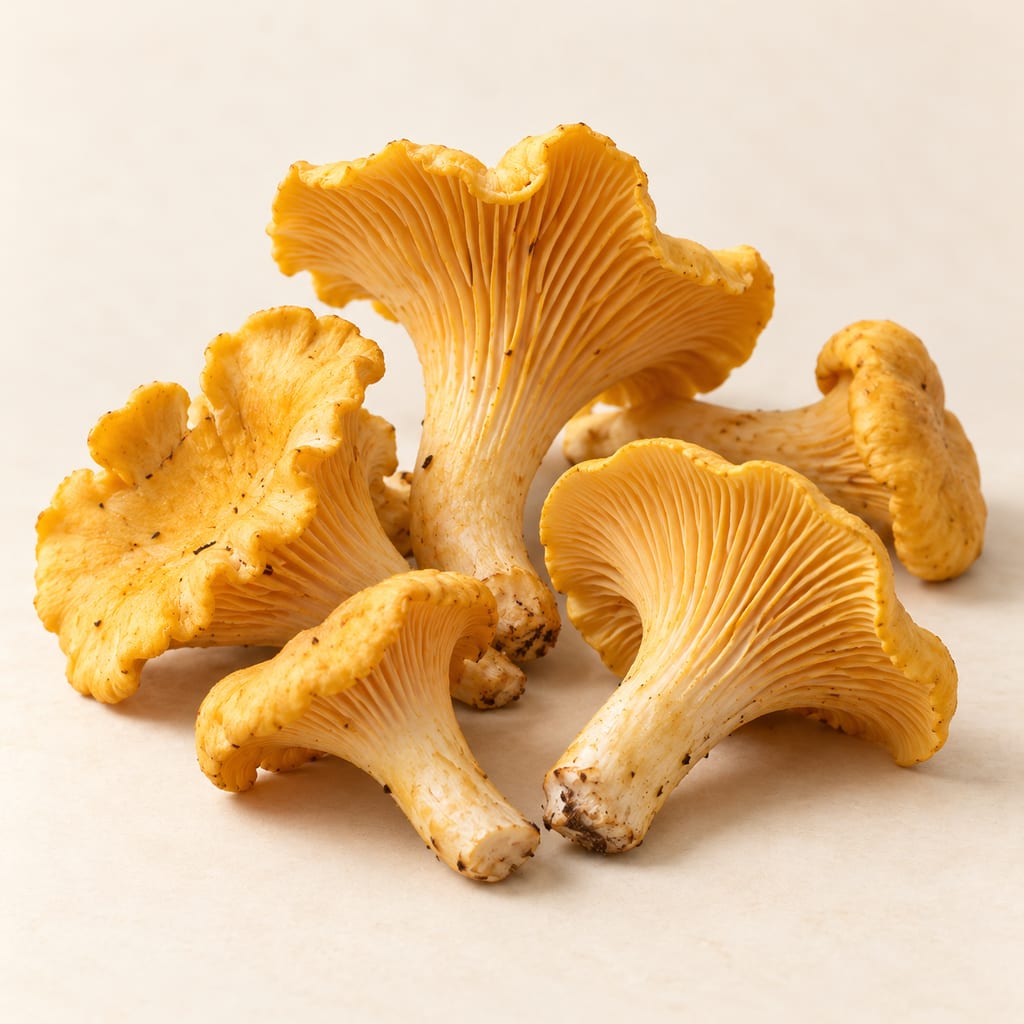
Chanterelles are wild, tree-associated edible mushrooms, particularly the European golden chanterelle Cantharellus cibarius, prized for their firm flesh, fruity aroma and use fresh, frozen, dried or pickled.
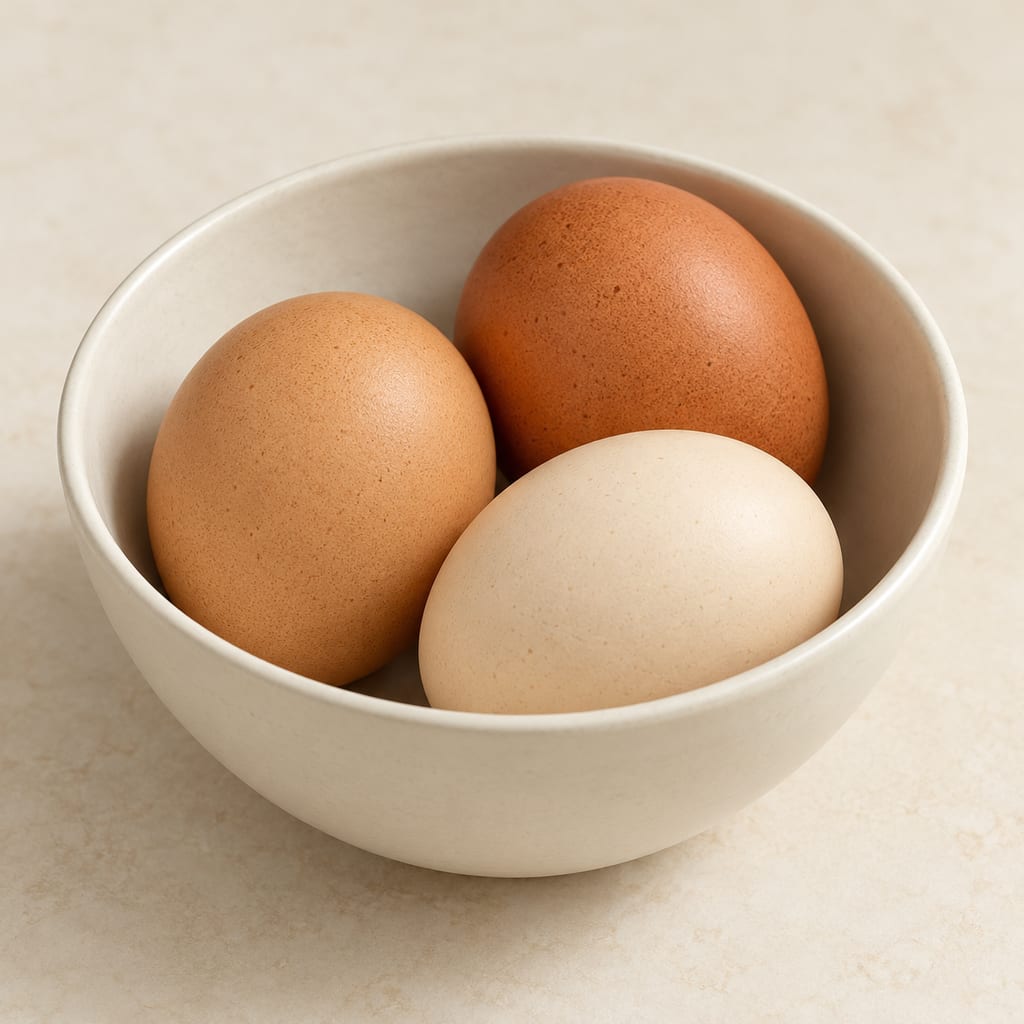
Chicken eggs supply proteins and yolk fats that set and emulsify. Atlas breads use them in enriched doughs, surface washes and a sourdough pancake batter mixed after fermentation.
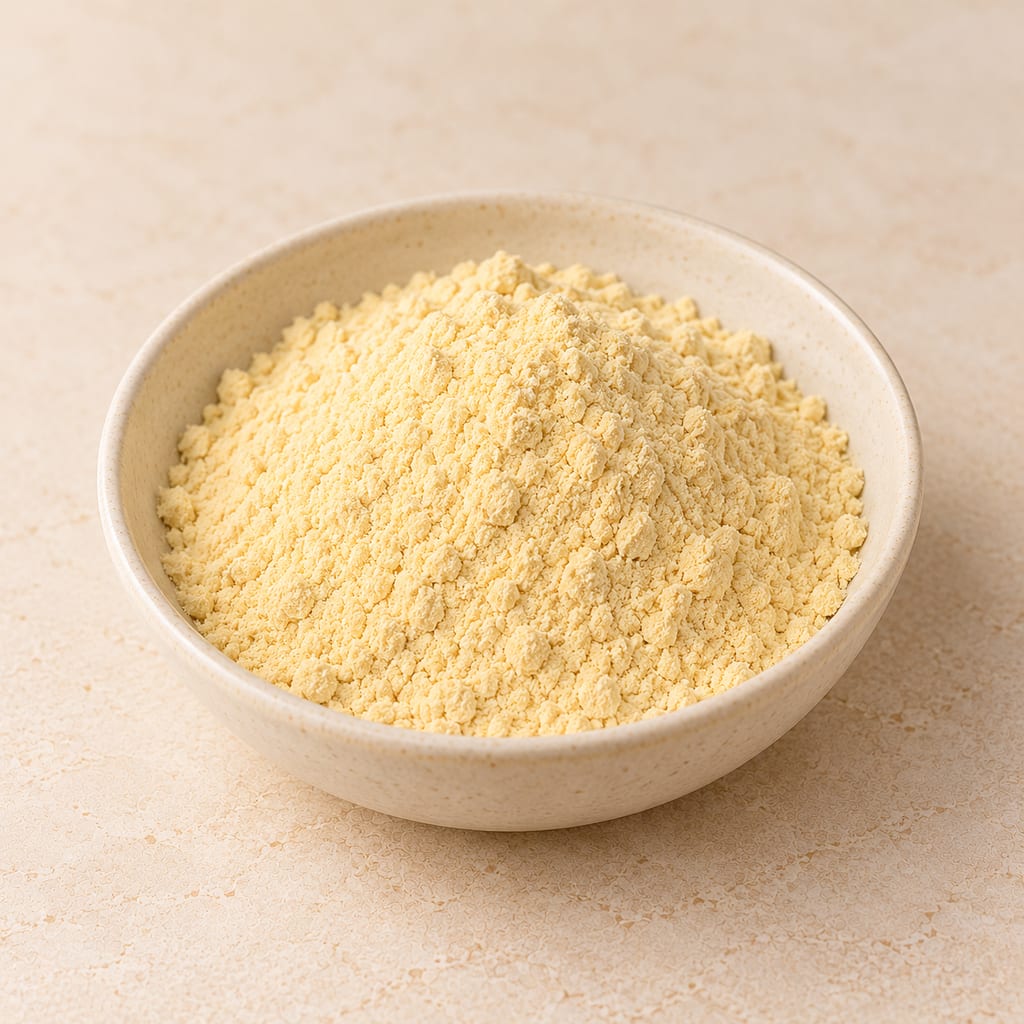
Chickpea flour is milled Cicer arietinum, used as besan in many Indian dishes and as the base of breads such as socca and farinata.
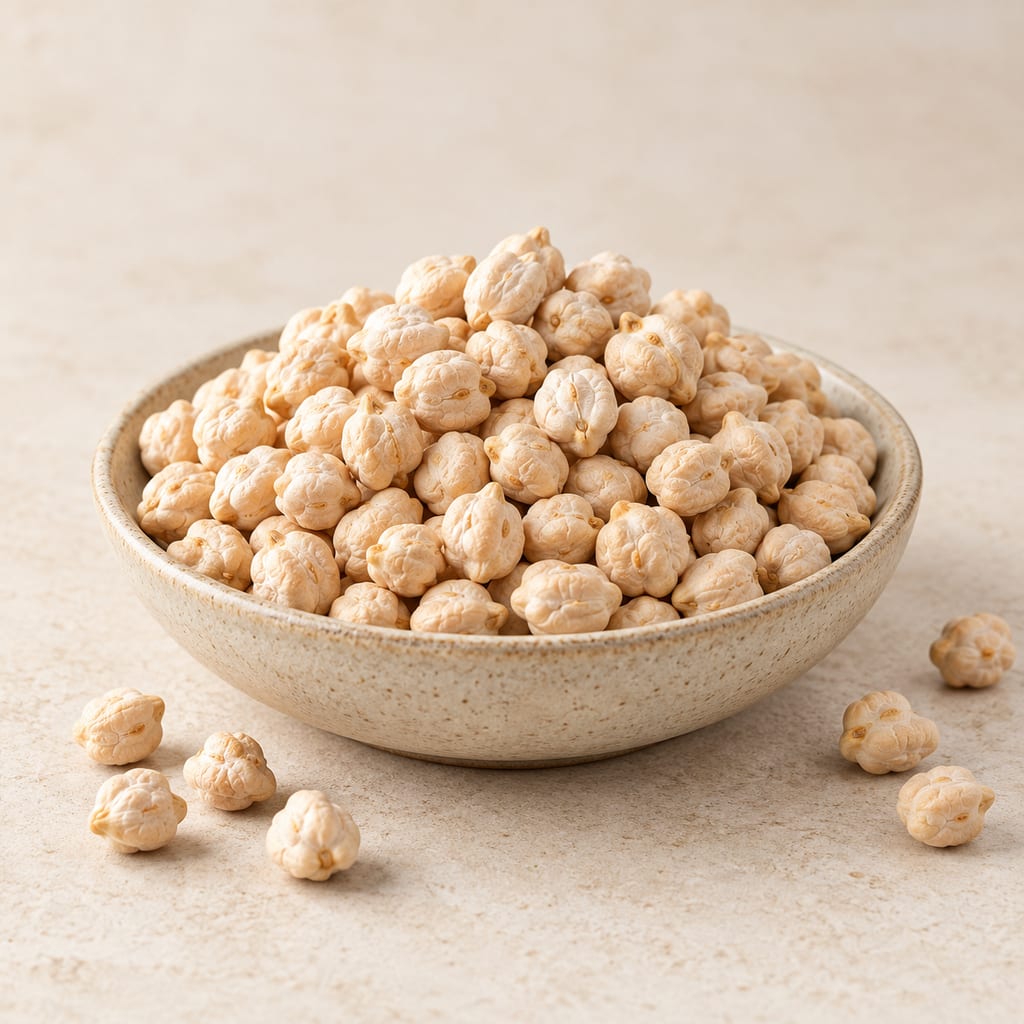
Chickpeas (Cicer arietinum) are dry pulses eaten whole or milled into flour, which gives socca, farinata and other breads a dense, nutty batter or dough.
No community contributions have been published for this entry yet.
Sign in to contribute. Published comments and photos are free to read.
CNRSHistory · Identity · Science
Penicillium camemberti: a history of domestication on cheeseTwo domestication events: P. biforme (blue-green, fresh goat cheese) then P. camemberti (white, fluffy, Camembert)
Domesticated species are whiter and grow faster in cheese-ripening cellar conditions and make no toxin or very small amounts
Study: Ropars et al., Current Biology, 24 September 2020, genomic analysis and laboratory experiments
Cited in: What the mould is; How it came to be on cheese; Varieties and naming; Notes
bioRxivScience
Domestication of the emblematic white cheese-making fungus Penicillium camemberti and its diversification into two varietiesPreprint of the same study; the two-variety diversification is named in its title (listed, not read in full)
Cited in: Varieties and naming
Taylor and Francis OnlineIdentity
Supplied catalogue source (Penicillium camemberti)Supplied catalogue source; not independently revalidated