
Almond mushroom
The almond mushroom, Agaricus subrufescens, was cultivated in eastern North America in the 1800s, lost its market, and returned as a cultivated mushroom from Brazil, where it is grown under several names.
 FermenteaWhere food goes to change
Mushrooms
Pleurotus magnificus, a wood-decaying oyster mushroom of the Araucaria forests of southern Brazil, recorded as locally eaten and listed as Endangered. Cultivation has not been confirmed.
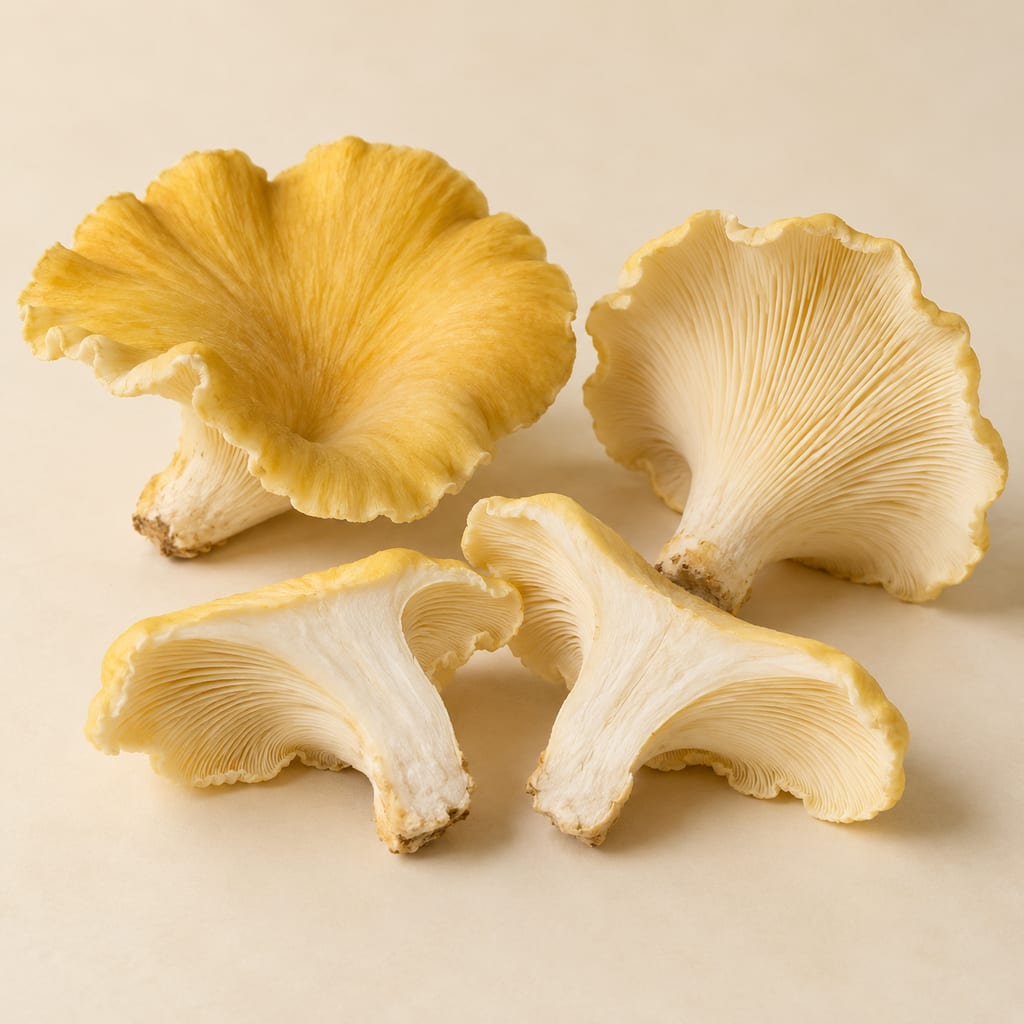
Pleurotus magnificus is an oyster mushroom known from southern Brazil. The Pleurotus genus contains the commonly cultivated oyster mushrooms, but this species is a wild fungus whose food use is recorded only in a limited way.
The supplied catalogue records the food use as newly recorded in a 2024 audit, and the evidence as limited, including author observations rather than proof of widespread traditional use.
The species was described under the name Pleurotus magnificus by Rick, and the name is the one used in the current record. A Phytotaxa paper on rare veiled Pleurotus from the Neotropics covers neotypification of the species. It reports first records of the species in Minas Gerais, Paraná and São Paulo, and a new record in Santa Catarina.
The 2024 IUCN assessment describes the species as a wood-decaying fungus restricted to Araucaria forest. It grows on large dead trunks of gymnosperms and angiosperms, in gregarious, scattered or caespitose growths.
The assessment gives records from nine sites in Brazil, in the states of Rio Grande do Sul, Santa Catarina, Minas Gerais, Paraná and São Paulo, at altitudes it gives as 800 to 1,700 metres. The page is internally inconsistent on the upper limit, so the figure should be read as approximate.
The IUCN Red List assessment, dated 25 January 2024, lists the species as Endangered. The assessment estimates about 8,750 mature individuals in one subpopulation and a suspected decline of at least 50 per cent over 40 years.
The main threats are loss and decline of Araucaria forest habitat, mainly from human disturbance. The assessment states that about 90 per cent of the original Araucaria forest cover has been lost, and that most remaining fragments are under 50 hectares.
The IUCN assessment describes the species as edible and consumed by local populations. It states that cultivation is unconfirmed and that more work is needed to know whether it could be cultivated.
No commercial cultivation method, substrate or yield is recorded for this species here. The Pleurotus genus is widely cultivated, but that does not establish cultivation of P. magnificus.
The IUCN assessment says that use of the species is viewed as safe. That is a statement in a conservation document, not a food-safety evaluation, and it does not establish a safe preparation or a safe quantity.
Identification of Pleurotus from wood requires a specialist, and the Neotropical veiled species are the subject of taxonomic work. Anyone considering a wild oyster mushroom should confirm the species with a qualified mycologist before eating it.
The sources give Brazilian states and municipalities for records; the record does not establish a single locality.
The almond mushroom, Agaricus subrufescens, was cultivated in eastern North America in the 1800s, lost its market, and returned as a cultivated mushroom from Brazil, where it is grown under several names.
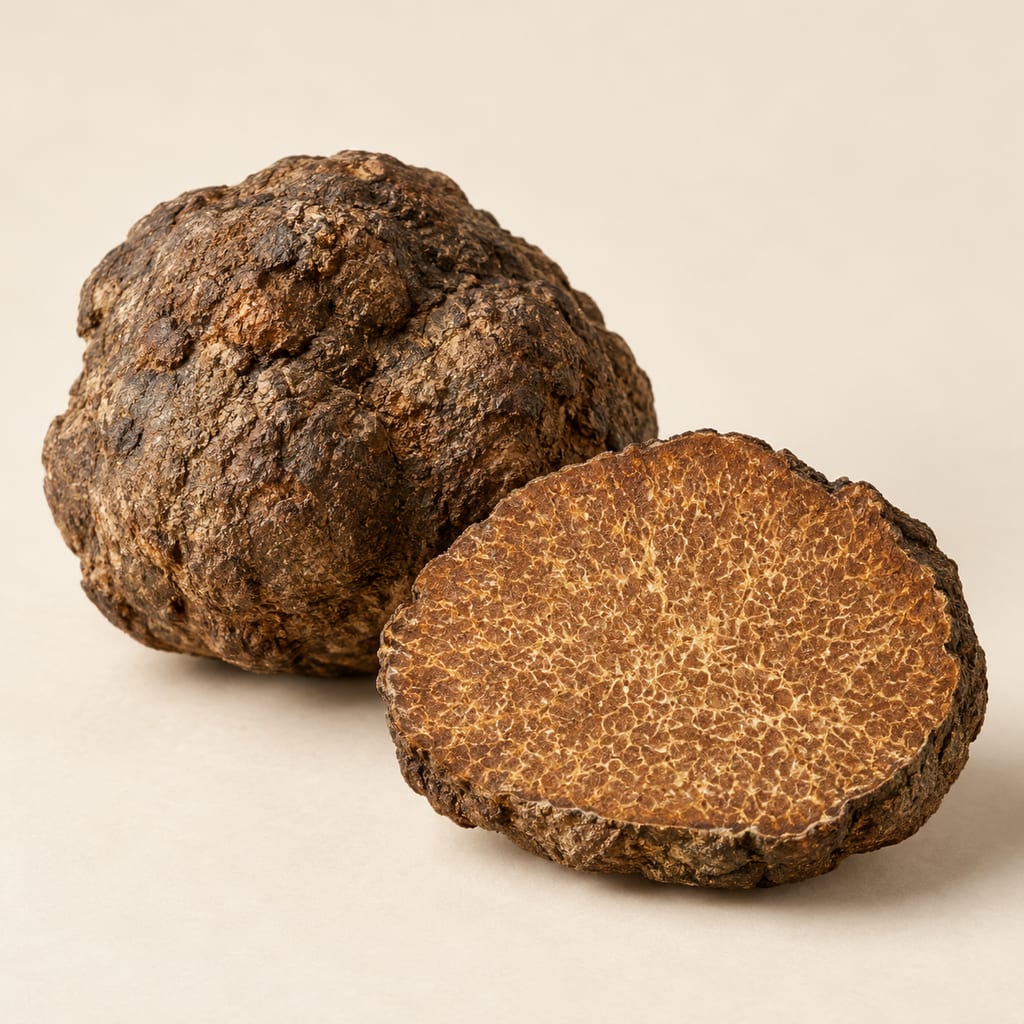
Polyporus indigenus, a polypore of the Brazilian Amazon. Its underground sclerotium, not the fruiting body, is the part people eat, and it is known locally as pão do índio.

Beef is the meat of domestic cattle, Bos taurus and Bos indicus, sold as steaks, roasts, ground meat and cured products, and used in broths, salami and koji seasonings.
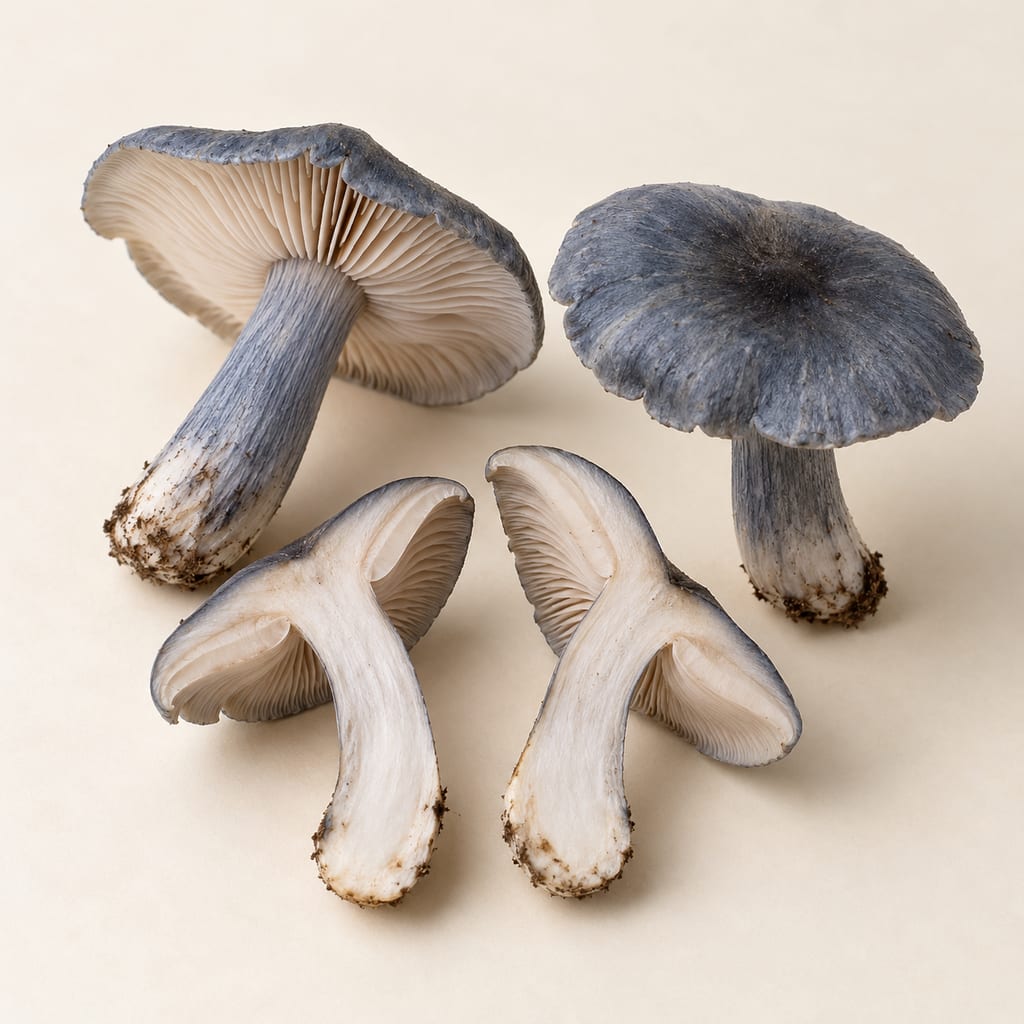
Bloxam's entoloma is a rare pink-gilled mushroom of old grasslands. Historical sources call it edible, but food-use evidence and older identifications remain uncertain; this does not recommend gathering or eating it.
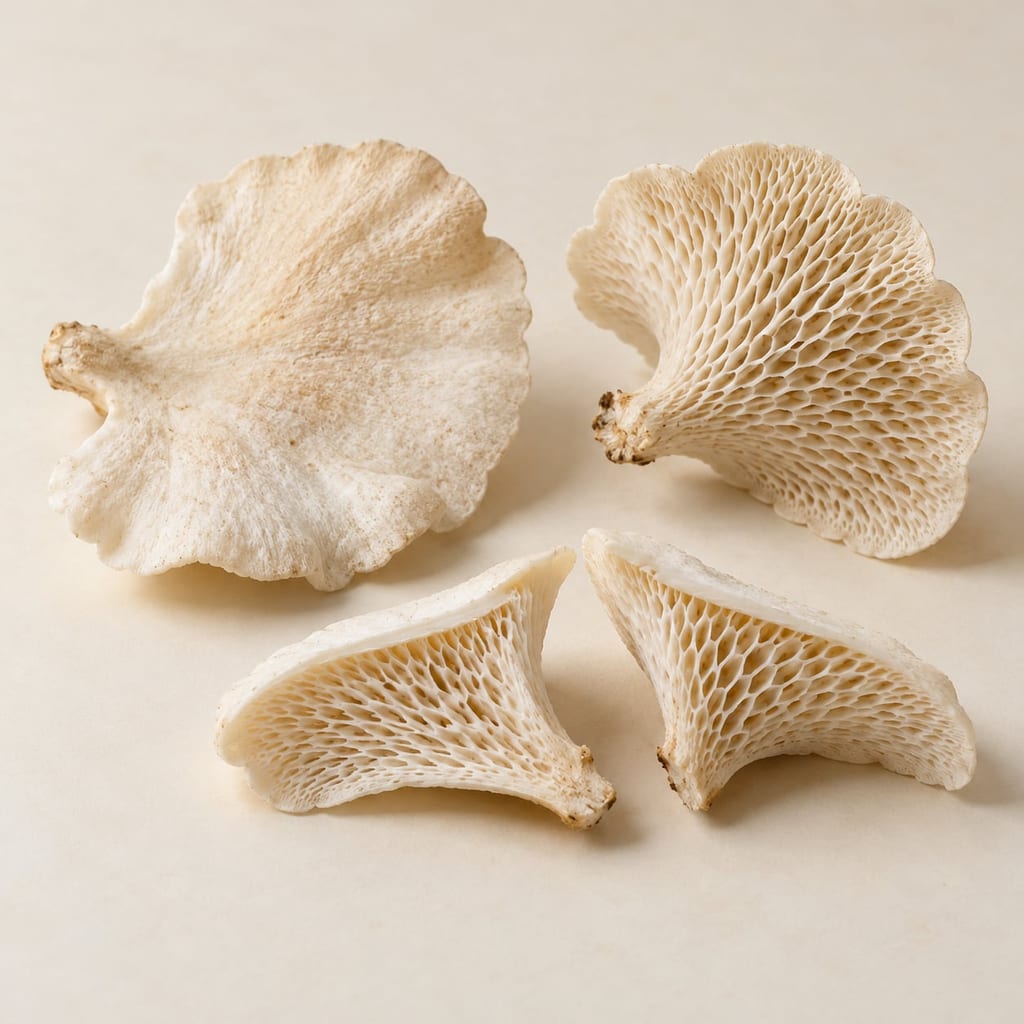
Brazilian honeycomb polypore, Favolus brasiliensis, is a wood-growing fungus of tropical forests recorded as food in Brazil and Guyana. It has no standardized food-safety assessment.
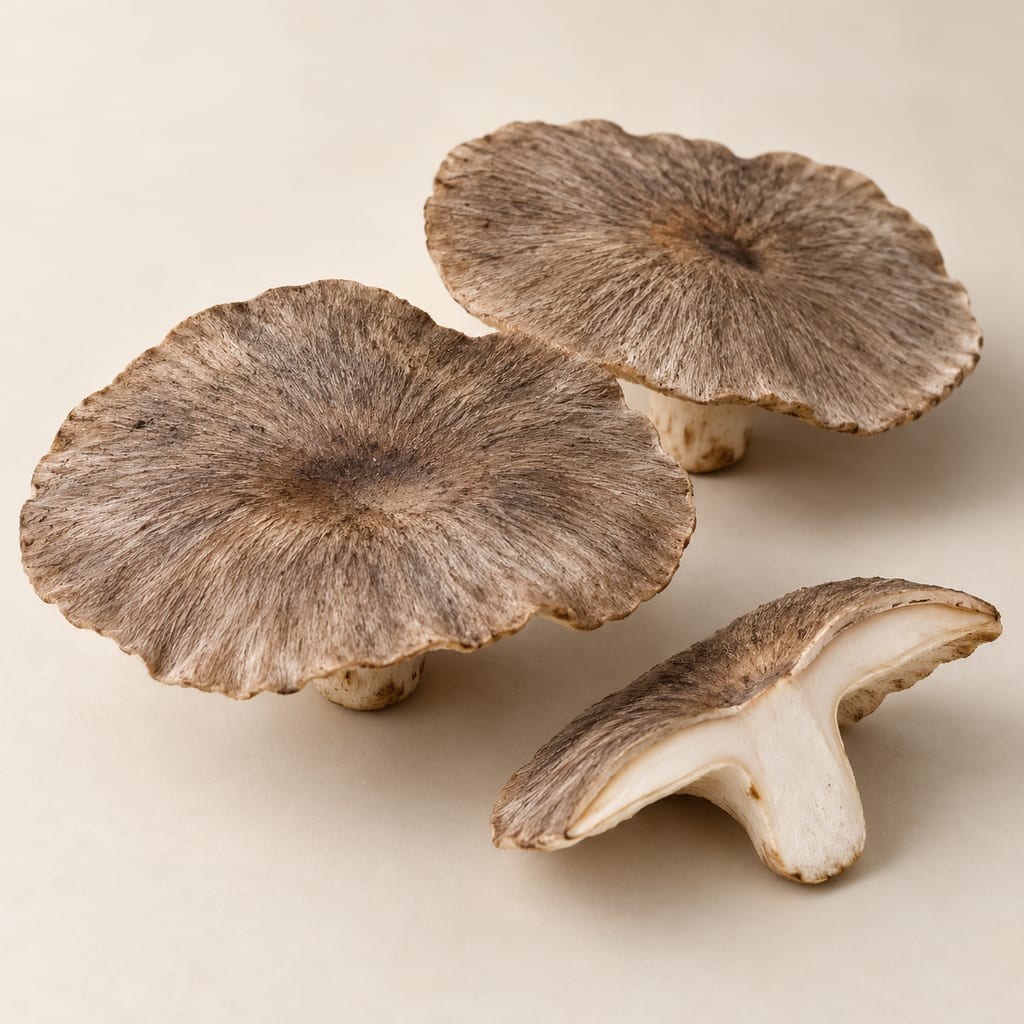
Bresadolia paradoxa is a large fungus of dead hardwood logs in Amazon and Atlantic Forest sites in Brazil and Colombia. Its only edibility source is a conservation assessment, so the claim is lightly documented.
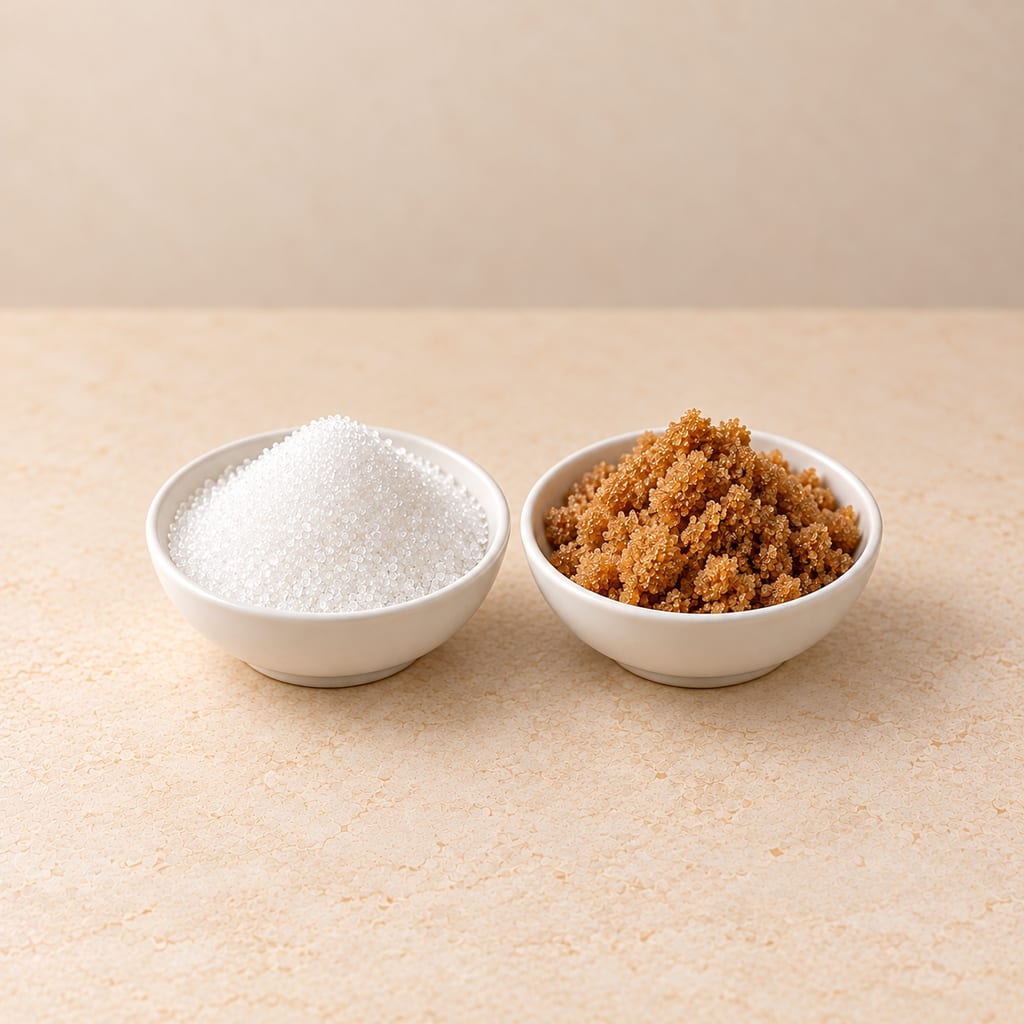
White sugar is refined sucrose, almost pure; brown sugar is sucrose with molasses, left in or added back. Molasses makes brown sugar moister, darker and more strongly flavoured.
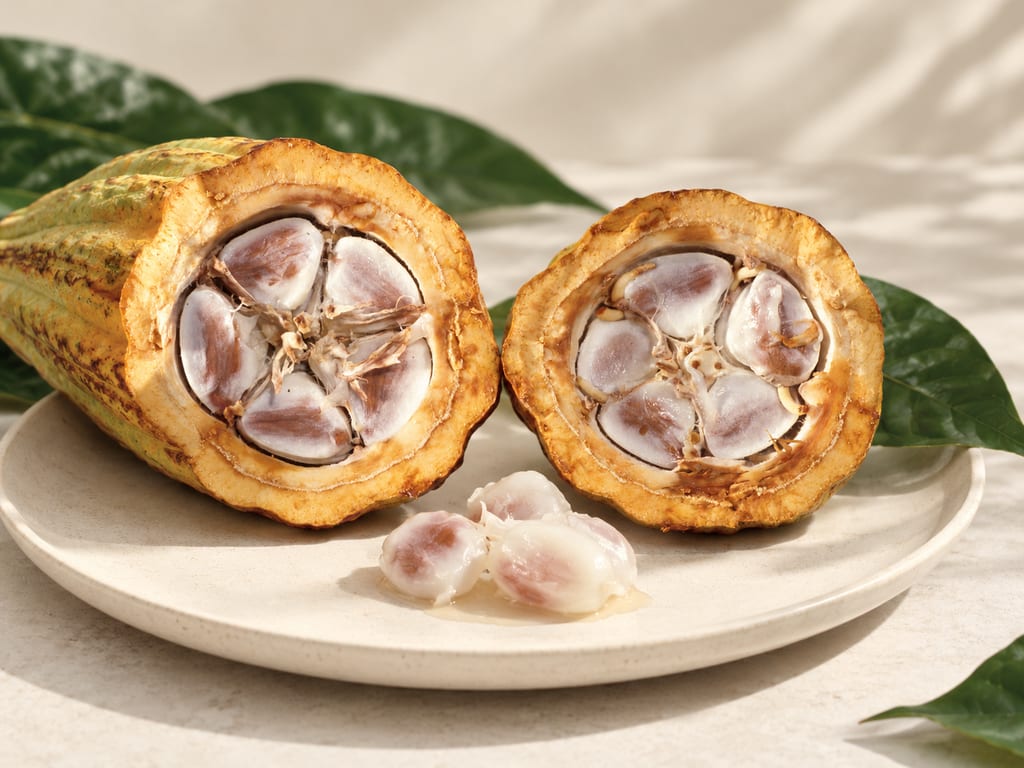
Cacao pulp is the moist, sweet-acid mucilage around cacao seeds. It fuels bean fermentation and can be extracted for fruit drinks, wine and vinegar.
No community contributions have been published for this entry yet.
Sign in to contribute. Published comments and photos are free to read.
Springer (IMA Fungus, DOI 10.1186/s43008-024-00171-8)Ingredient · Food use
Supplied catalogue source for Pleurotus magnificus (2024 food-use audit)Food use newly recorded in the 2024 audit; limited evidence, including author observations, rather than proof of widespread traditional use.
IUCN Red ListEcology · Conservation · Food use · Safety
IUCN Red List assessment, Pleurotus magnificusEndangered, assessed 25 January 2024; restricted to Araucaria forest; nine sites in Brazil.
Edible and consumed by local populations; the assessment says use is viewed as safe.
Cultivation is unconfirmed.
PhytotaxaTaxonomy
Rare veiled Pleurotus from the Neotropics (Phytotaxa)Neotypification of P. magnificus; first records in Minas Gerais, Paraná and São Paulo; new record in Santa Catarina.
Mohamed bin Zayed Species Conservation FundConservation
Yellow carapicu (Pleurotus magnificus) case studyEndangered species restricted to Araucaria forests; a 2024 small grant supports work on it.