
Abalone mushroom
Pleurotus cystidiosus is the abalone mushroom, a cultivated oyster-type fungus with dark brown caps that grows more slowly and is more demanding than other Pleurotus species.
 FermenteaWhere food goes to change
Substrates
Pork liver is a richly flavoured pig organ used fresh, in cooked sausages and pâtés, and in several preserved meat traditions. Its documented uses differ in process and place; it is not one finished product.
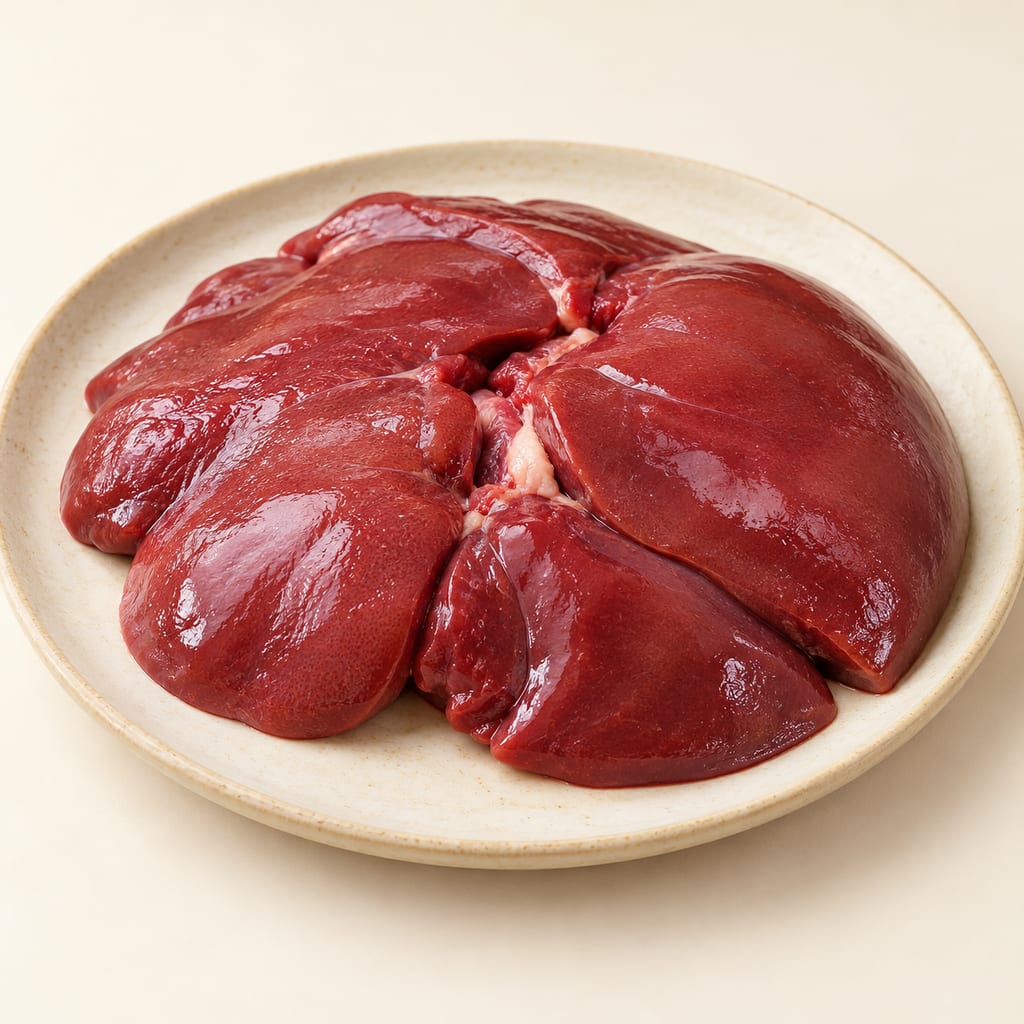
Pork liver is the liver of a domestic pig, sold as a whole organ, trimmed portions, slices, or minced material. The common names “pig liver” and “pork liver” refer to the same food when the animal is a domestic pig; they do not automatically include wild-boar liver. Unlike a named pork cut such as shoulder or loin, liver is an organ with a different tissue structure and culinary behaviour. Butchers and recipes may specify it simply as liver, while the animal species is left implicit. That shorthand is not enough to establish that a source means pork, especially where beef, lamb or other livers are also used.
Liver is a dense, moist organ made of fine tissue supplied by many blood vessels and drained through bile ducts. In a whole fresh liver, lobes and connective coverings remain visible; trimming and slicing expose a smooth cut face. Grinding breaks the tissue into a paste-like mass. Heat, particle size and added meat or fat change the finished texture, so a recipe that calls for liver cannot be assumed to work identically with a different organ or a different cut. In sausage manufacture, liver proteins help bind and emulsify a mixture; that is why liver can produce a cohesive spread rather than the same coarse bite as muscle pieces.
The pig’s history is not a single domestication story. Genetic and archaeological studies trace domestic pigs to wild boar populations in Eurasia and describe more than one early management trajectory, with substantial movement and interbreeding over time. Research on western Eurasian pigs describes their arrival in Europe alongside early farming communities from the Near East, followed by extensive interbreeding with local wild boar. Work on East Asian pigs reconstructs a distinct regional history. These findings help explain why the raw material has several regional livestock histories; they do not locate a single birthplace for pork liver, nor date the first meal made from it.
The organ has also carried meanings beyond ordinary cooking. A scholarly review of traditional Chinese dietary medicine reports pig liver as a remedy for night blindness in works associated with the Tang period, around the seventh century CE. This is evidence of a historical dietary and medical belief, not clinical advice. It is also a dated example, not proof that Chinese use began then or that the same practice existed throughout the region. A broader review of animal-liver remedies shows that liver appears in ancient medical traditions in several places, but the species and preparation differ; those accounts should not be relabelled as pork-liver cookery when they describe ox, ass, goat or unspecified liver.
Pigs have often been valued for food yield, and turning perishable organs into cooked or preserved products can make use of parts that would otherwise be difficult to market. That broad economic role is plausible across many settings, but local systems differ. The Italian Gran Sasso and Monti della Laga National Park describes its pork liver sausage as part of a practice of using edible pig parts and records historical presence in local oral tradition and municipal archives. The Park does not date the sausage’s beginning, so its evidence supports regional continuity, not an ancient origin claim.
Liver appears in products with different methods and endpoints. In cooked liver sausages, it may be combined with meat, fat, spices and other edible by-products; the mixture may be finely ground and spreadable or coarser and firmer. The UN Food and Agriculture Organization describes widely varying formulas and notes that liver can be raw or cooked before mixing in its general discussion of liver sausage production. Those are manufacturing categories, not one household recipe, and the examples are not all fermented. A cooked liver sausage should not be called fermented merely because it is a sausage or because it is stored after cooking.
Other products combine liver with a souring or maturation process. Thailand’s Mam is a well-documented example. The Japan International Research Center for Agricultural Sciences (JIRCAS) distinguishes Mam-neua, made with beef, from Mam-moo, made with pork. Its ingredient list includes pork liver as well as pork meat, salt, garlic, roasted ground rice and cooked rice. The rice materials are part of the documented mixture; the source does not set a fixed meat-to-liver ratio. The page describes a fermented product and reports traditional raw consumption alongside a present-day practice of frying. That description is cultural documentation, not validation that a home-made or commercially obtained raw product is safe.
The Park’s pork liver sausage in the Gran Sasso and Monti della Laga area uses pork liver with heart, lungs and other lean parts. The Park records local flavor variations, a regional production area spanning the Park, and a maturation stage. Its page calls the product matured but does not explain a starter culture or identify the microbial process. “Matured” is therefore the careful term here; the source does not establish that this particular sausage is fermented. Its description also says liver processing was associated with autumn production and sale after maturation, which illustrates how seasonal slaughter and local preservation practices can shape availability without proving the same calendar everywhere.
These examples show why the organ belongs on a shared ingredient page while each food needs its own record. A named fermented Thai mixture and an Italian matured sausage differ in added ingredients, geography, casing and evidence about their process. Liver pâté and leverpostej may be cooked products, and commercial formulas can vary. Their presence in culinary language is not evidence of microbial fermentation. When a source specifies only “liver,” preserve that uncertainty instead of assigning pork from the surrounding recipe unless the animal is explicit.
In a finely comminuted sausage, liver changes both flavour and structure. FAO’s technical account attributes an emulsifying role to liver proteins and notes that removal of bile ducts and large blood vessels affects eating quality. That helps explain why trimming and the fineness of grinding matter: large vessels or ducts can remain perceptible in the finished mixture, while a finer grind disperses the organ more evenly. The account describes product-specific choices about cooking liver before mixing, so there is no single rule to transfer to all products.
In a fermented mixture such as Mam, liver is one component among meat, salt, garlic and rice. It adds organ flavour and contributes to the texture of the minced mixture, while rice provides a distinct starch ingredient. The available sources do not isolate the liver’s microbial or chemical contribution from the rest of the formulation. It would be inaccurate to say that pork liver itself starts fermentation, supplies a particular starter, or makes a product safe. The observed souring and maturation belong to the full process and its documented conditions.
Liver’s strong, characteristic taste can dominate if used in a high proportion; products balance it in different ways with muscle meat and fat. Formulas vary widely. For example, FAO’s liver-sausage chapter lists both a pork-liver-and-belly formula and a separate mixed meat, fat and liver formula. Those figures belong to the cited industrial examples and should not be treated as a universal ratio. JIRCAS likewise says Mam has no fixed meat-to-liver ratio in its account. A reader should follow the proportions and methods of a particular, validated product rather than infer a ratio from the name.
The clearest traditional association for pork liver as a fermenting ingredient in the inspected sources is Mam-moo in northeastern Thailand. JIRCAS describes production in home industry and names the northeastern context; its entry places the food in Thai fermented-food research rather than claiming a national or global origin. The supplied natural-casings atlas also indexes Mam, but its entry alone does not resolve the liver species. The more specific JIRCAS wording supplies that link.
The Gran Sasso and Monti della Laga National Park documents pork liver sausage across the Park area in Italy. It describes local versions that vary in seasoning and preparation, with liver combined with other pork organs and lean parts. This is a documented regional product and historical presence, not a claim that the wider practice began there. Modern household, butcher and industrial liver sausages occur in other places, but names such as liver sausage, liverwurst and pâté cover products with varied species, ingredients and heat treatments. A product’s name alone does not prove a regional tradition or fermentation.
Fresh pork liver is also cooked in slices or pieces and used in pâtés, terrines and fillings. Some recipes fry or simmer it; others grind it with cooked meat and fat. These uses depend on the preparation, not on the ingredient name. Liver is therefore relevant in a fermentation atlas both as an ingredient in specified mixed ferments and as a versatile organ used in non-fermented cooked preparations. The catalogue should not turn the latter into ferments merely to keep the subject inside one food family.
Liver is a highly perishable edible by-product. FAO advises prompt handling after slaughter, cleaning and chilling when it is not processed at once. For household buying, use the date and storage instructions on the package and keep raw liver sealed and separate from ready-to-eat foods. USDA Food Safety and Inspection Service guidance for variety meats advises refrigeration or freezing promptly; its household storage table gives a short refrigerated period for variety meats. Those are general raw-food storage recommendations for their jurisdiction, not a shelf life for a cured, fermented or cooked liver product. If a package has been opened or mishandled, no sensory check can establish that it is safe.
Raw pork liver presents a specific hepatitis E risk. Germany’s Federal Institute for Risk Assessment reports that hepatitis E virus has been found in about five percent of tested raw pig and wild-boar liver samples, and that raw or insufficiently heated pork liver can transmit infection. The agency notes past hepatitis E cases linked to certain regional sausages containing raw pork liver and says even heating throughout the food reduces the risk; freezing does not inactivate the virus. Those findings are why the raw-eating description of Mam must be read as a record of tradition rather than as a recommendation. Fermentation, drying, sour taste, smell or appearance alone should not be represented as a safety control for pork liver.
The main practical distinction is between food-history description and supported preparation guidance. Follow current food-safety advice from the relevant public authority for pork liver and any product made from it. Do not infer a safe fermentation schedule from a source that records a traditional practice, and do not use a home pH reading or signs such as sourness, bubbling or aroma as proof that a raw liver mixture is safe. People who are pregnant, immunocompromised or have liver disease should take particular care to follow their local public-health advice about raw pork products.
Liver is nutrient-dense. The UK National Health Service describes liver and liver products as rich sources of iron and vitamin A, and advises pregnant people in the UK to avoid them because high vitamin A intake can harm fetal development. It also cautions that eating liver products frequently can contribute to excessive vitamin A intake. This is jurisdiction-specific public guidance; readers should use the current advice that applies where they live and seek individual medical advice when needed. A fermented sausage or pâté containing liver still counts as a liver product for that purpose.
Nutrient figures vary with the animal, the organ, trimming, cooking and water loss. A figure for raw pork liver should not be transferred to a cooked pâté or dried sausage, where added fat, salt, meat and moisture changes alter the composition. This page does not assign one nutrient value to all pork-liver preparations or treat historical medicinal use as evidence of a health benefit.
This page concerns pork liver as an ingredient, not a single finished product. Sources establish several uses, including cooked liver sausages, the pork version of Thai Mam and the regional matured sausage recorded by the Italian national park. They do not establish one earliest use, a universal origin, a standard ingredient ratio, or one process shared by all products. The inspected sources also do not establish a home fermentation control for raw pork liver. Those gaps should stay visible rather than be filled by assumptions.
JIRCAS documents pork liver in pork Mam; this is a use association, not a claim of ingredient origin.
The National Park describes this preparation as produced across the Park's territory in three regions; it does not establish the origin of pork liver generally.
Pig domestication history does not locate the first pork-liver use; no universal ingredient birthplace is supported.
Pleurotus cystidiosus is the abalone mushroom, a cultivated oyster-type fungus with dark brown caps that grows more slowly and is more demanding than other Pleurotus species.
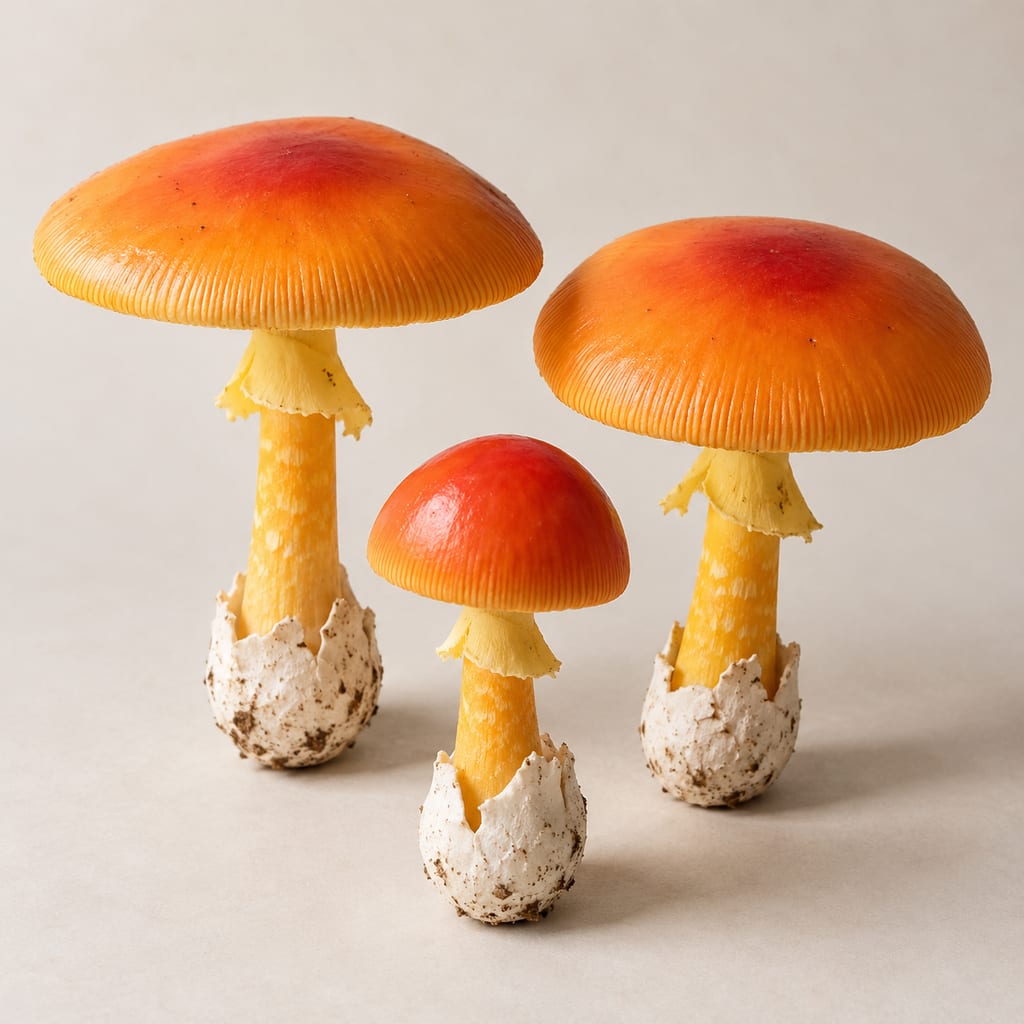
A wild Asian Amanita reported as food in regional literature and listed in China’s edible-fungi catalogue. Lookalikes include lethal species; this record is not a guide to identifying wild mushrooms.
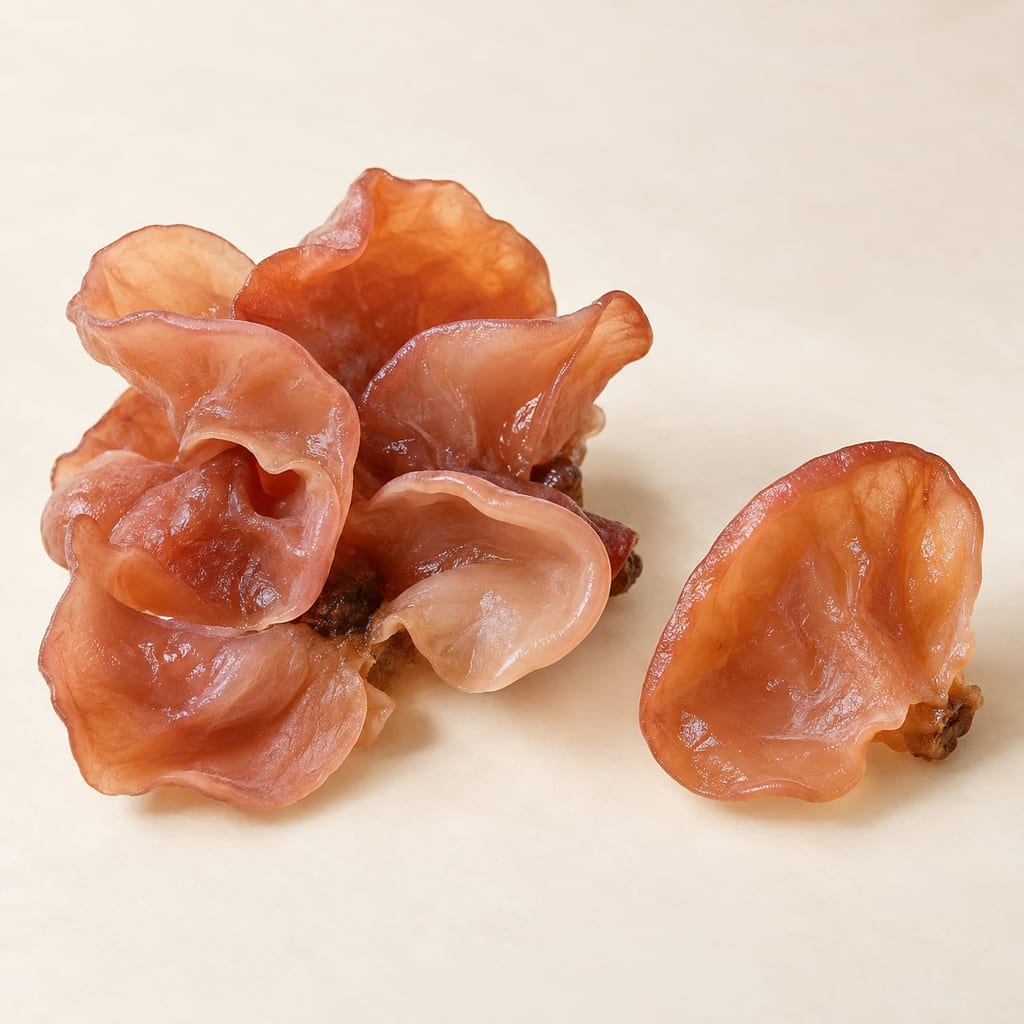
Auricularia thailandica is a thin, gelatinous wood ear described from Southeast Asian collections. Research reports it edible and experimentally cultivable, but species-specific recipes and everyday handling guidance are scarce.
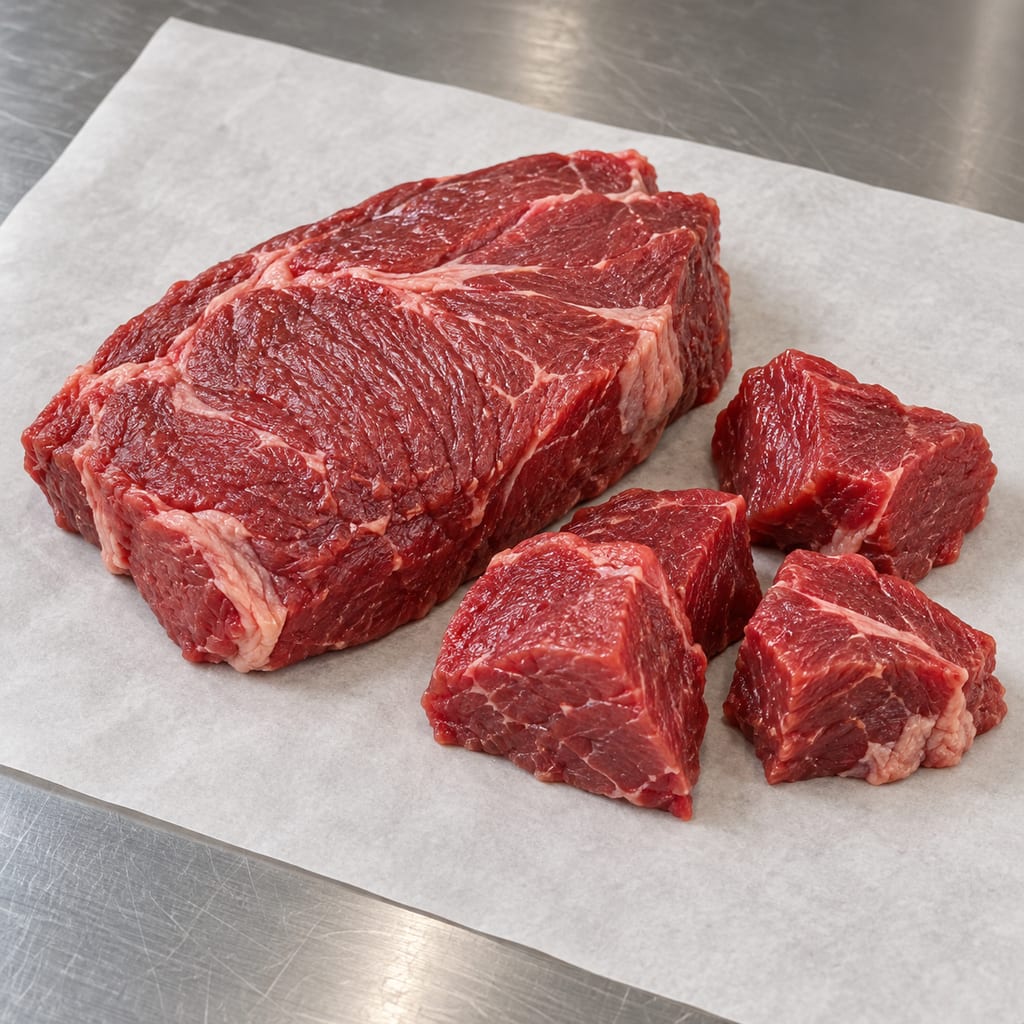
Water-buffalo meat, often called carabeef, is the flesh of Bubalus bubalis; its colour, texture and fat vary with animal, cut and production system. “Buffalo” can also mean bison or African buffalo in other contexts.
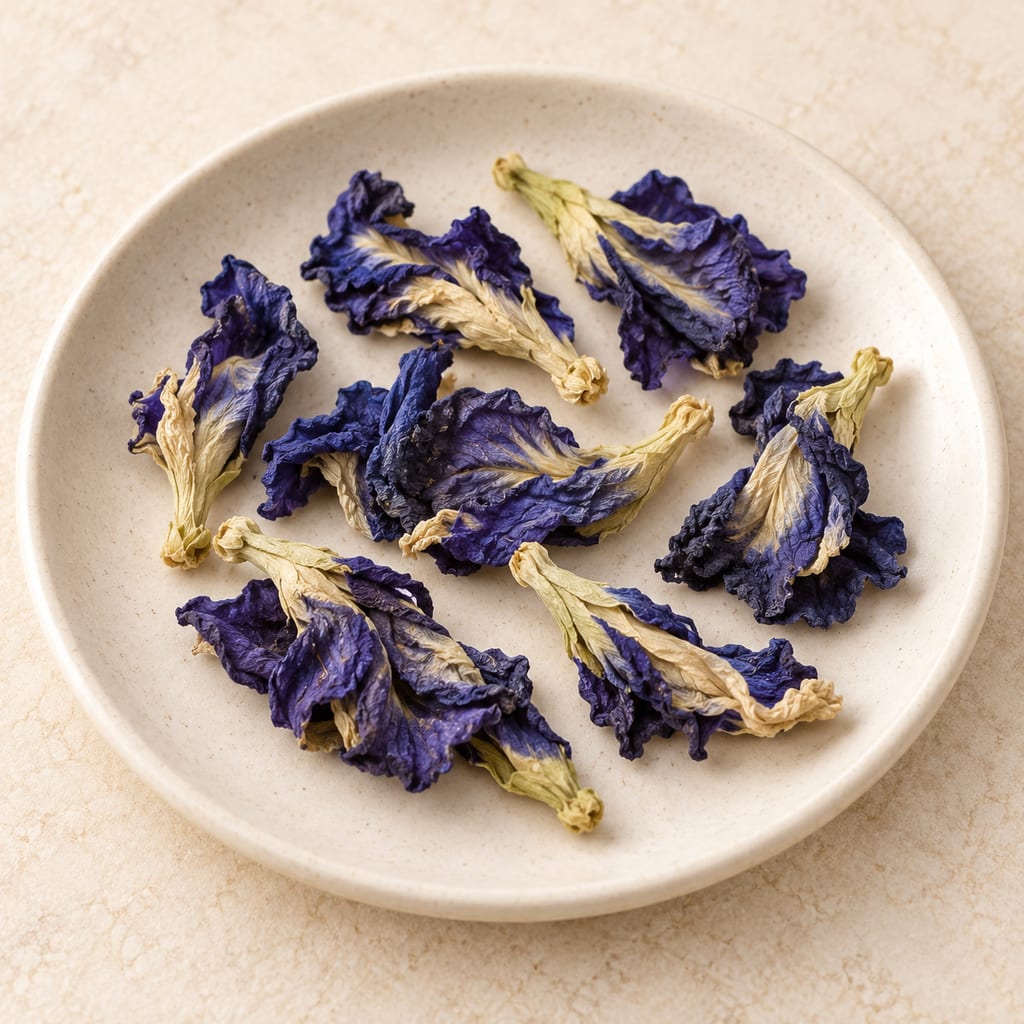
Clitoria ternatea's blue flower is used as a colourant and appears in a Thai dried-flower tea product. Food use is preparation-specific; EFSA raised safety objections to a dried-flower traditional-food notification.
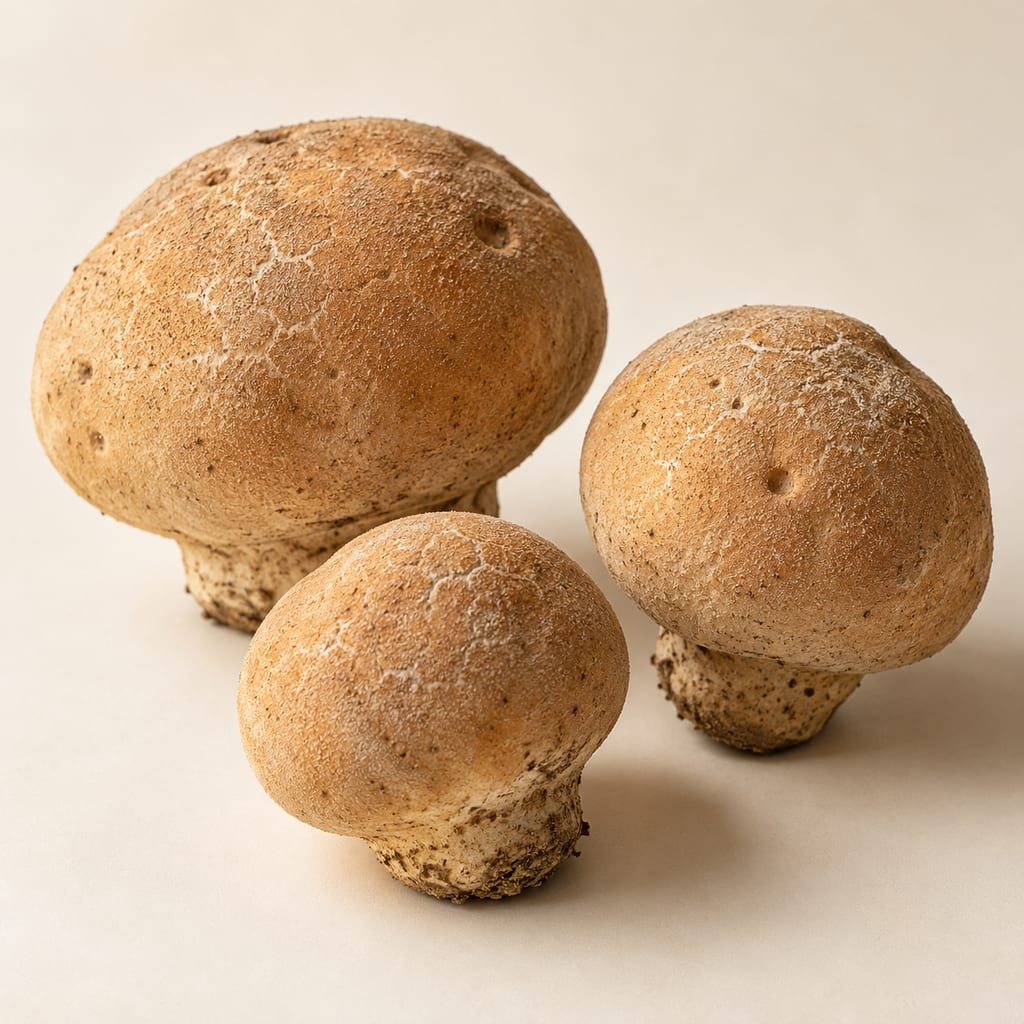
Calvatia boninensis is a large puffball described from the Bonin (Ogasawara) Islands of Japan, reported as edible in some catalogues and local accounts, with no species-specific safety or preparation study.
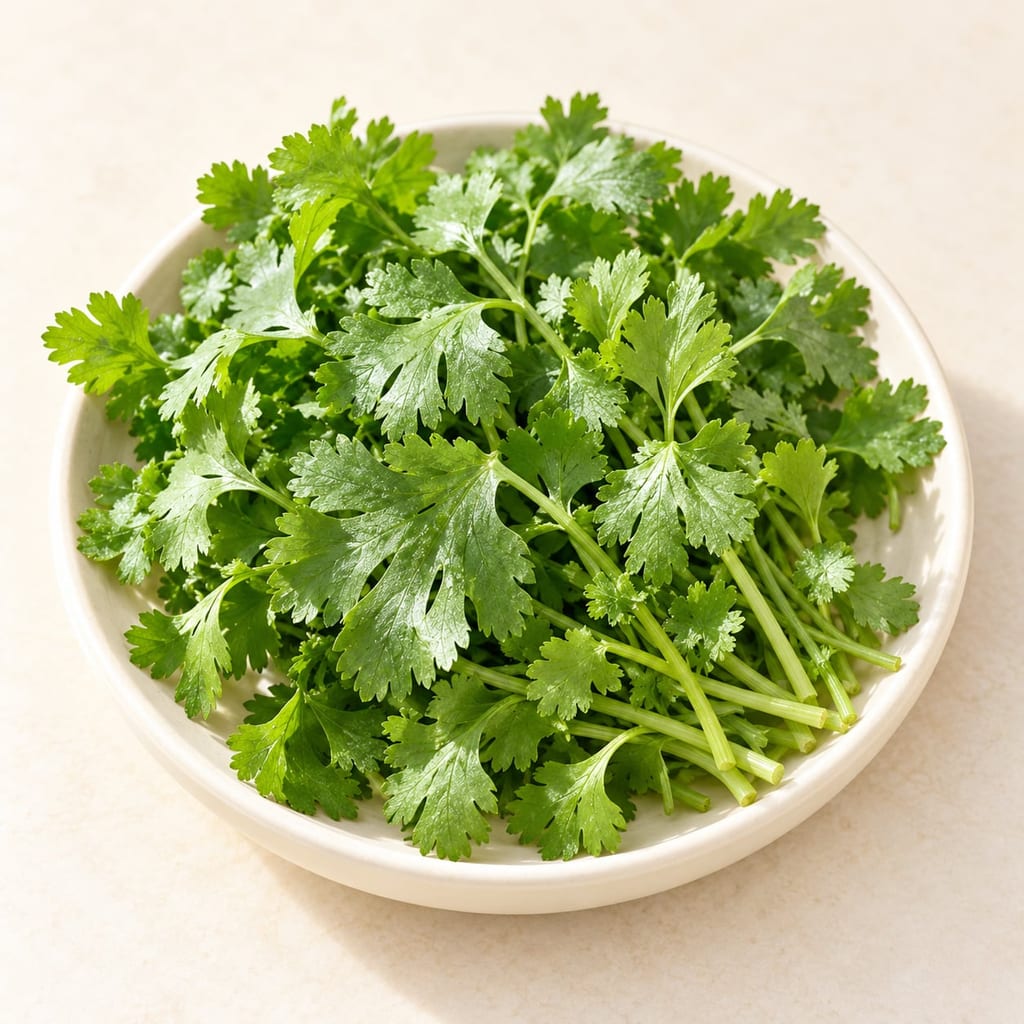
Cilantro is the fresh leafy herb of Coriandrum sativum, the same annual plant that produces coriander spice. Its green, aromatic leaves and fine stems bring a vivid herbal note to foods such as sai krok Isan.
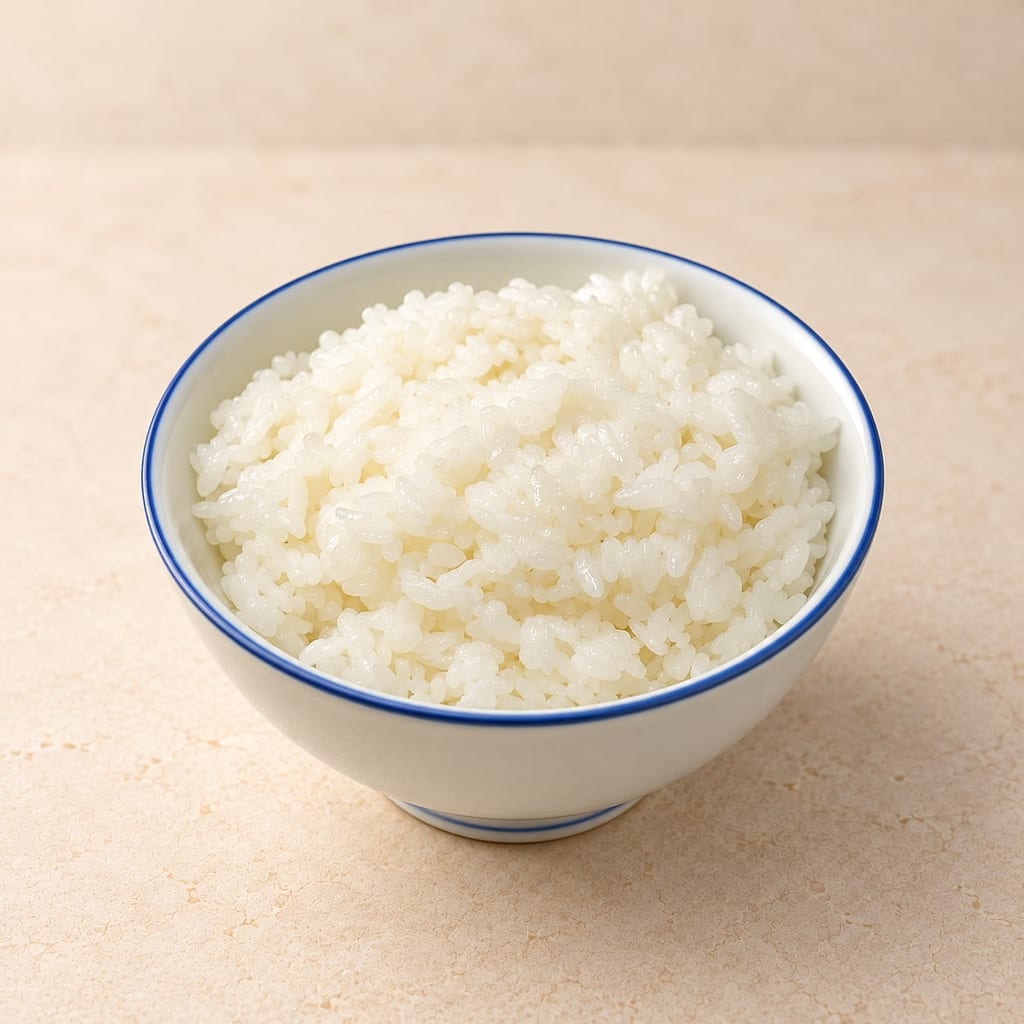
Cooked rice is rice grain heated in water until its starch gelatinizes; in Thai sour sausage it feeds the bacteria that acidify the meat.
No community contributions have been published for this entry yet.
Sign in to contribute. Published comments and photos are free to read.
Japan International Research Center for Agricultural Sciences (JIRCAS)History · Use · Geography · Ingredients
MamDistinguishes Mam-neua and pork Mam-moo.
Lists pork liver among Mam-moo ingredients with pork, salt, garlic and rice.
Describes fermentation and traditional raw consumption as well as frying; it does not validate home process safety.
Cited in: From fresh organ to a preserved mixture; Geography and documented uses; Evidence limits
Food and Agriculture Organization of the United NationsProcessing · Uses · Handling
Small-scale sausage production: Cooked sausage productionLiver sausage formulas and liver pre-cooking vary.
Describes trimming, comminution, liver's binding role and example pork formulas.
Separates cooked sausage manufacture from a single universal or necessarily fermented method.
Cited in: The organ and the ingredient; From fresh organ to a preserved mixture; What liver contributes; Geography and documented uses; Buying, handling and safety
Gran Sasso e Monti della Laga National ParkHistory · Use · Geography
Pork Liver SausageDescribes regional pork liver sausage with other organs, local seasoning variations and maturation.
Records local historical presence through oral tradition and municipal archives without dating its origin.
Cited in: Pigs, people and a history with more than one route; From fresh organ to a preserved mixture; Geography and documented uses; Evidence limits
German Federal Institute for Risk Assessment (BfR)Safety
Hepatitis E virus: avoiding transmission via domestic pigs and wild boars and food derived from themRaw pork and liver can transmit hepatitis E virus.
Food safety depends on applicable validated handling and cooking advice; sensory signs do not verify safety.
Cited in: Buying, handling and safety; Evidence limits
National Health Service (UK)Nutrition · Safety
Meat in your dietLiver products contain iron and vitamin A; UK advice cautions against liver during pregnancy because of vitamin A.
Nutrition and advice are jurisdiction-specific and products vary.
Cited in: Nutrition and dietary context
Proceedings of the National Academy of SciencesHistory
Ancient pigs reveal a near-complete genomic turnover following their introduction to EuropeGenomic evidence describes movements and interbreeding in European domestic pig history.
Pig history does not date the first use of pork liver.
Cited in: Pigs, people and a history with more than one route
Nutrition ReviewsHistory
The Eastern Perspective on Functional Foods Based on Traditional Chinese MedicineSecondary review reports a Tang-period pig-liver remedy for night blindness as historical dietary-medicine belief, not clinical evidence.
Cited in: Pigs, people and a history with more than one route
Food and Agriculture Organization of the United NationsProcessing
Guidelines for slaughtering, meat cutting and further processingTechnical description of liver proteins' emulsifying contribution in sausage texture.
Cited in: The organ and the ingredient; What liver contributes