
Almond mushroom
The almond mushroom, Agaricus subrufescens, was cultivated in eastern North America in the 1800s, lost its market, and returned as a cultivated mushroom from Brazil, where it is grown under several names.
 FermenteaWhere food goes to change
Mushrooms
Tropical chanterelle, Cantharellus guyanensis, is a ground-growing ectomycorrhizal chanterelle of Brazilian forests. A 2026 study reports it as a food resource in the Cerrado, but no standardized food-safety assessment exists for it.
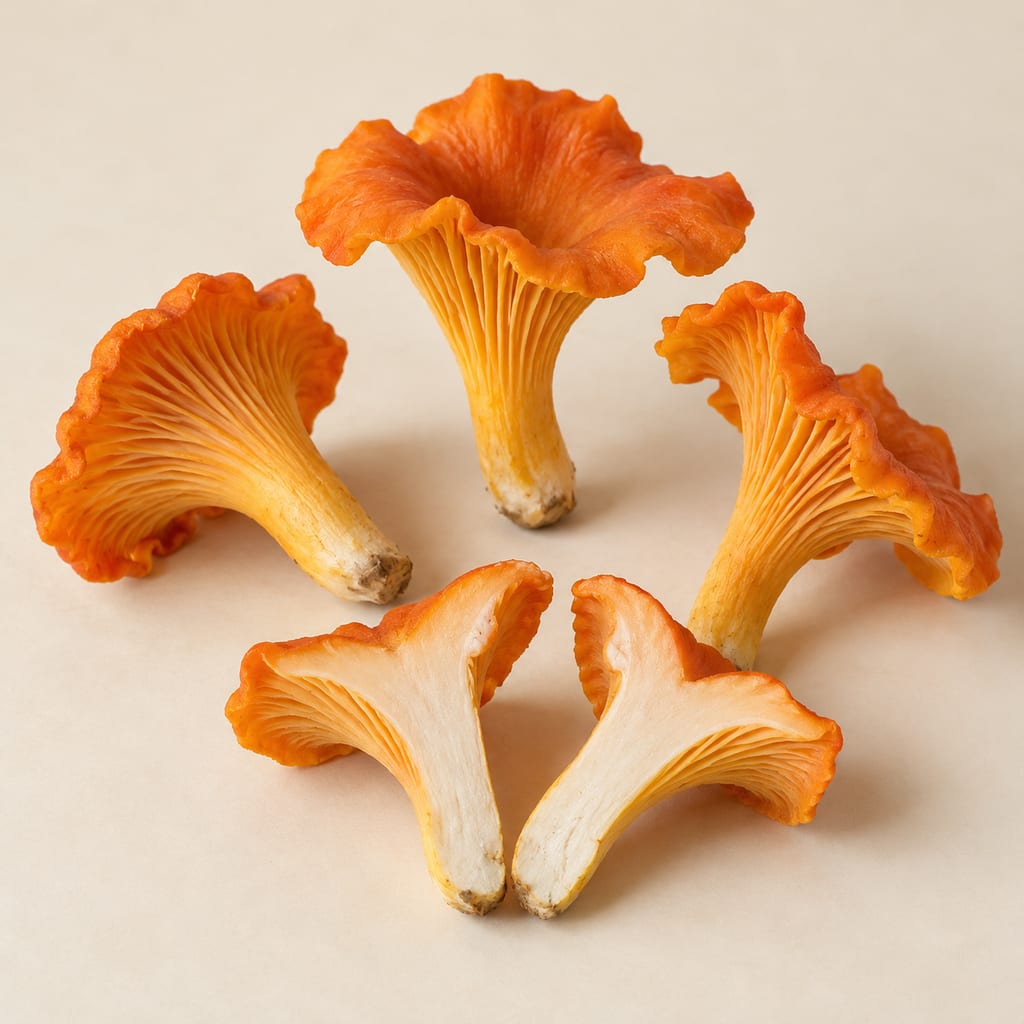
Tropical chanterelle is the English name the catalogue gives to Cantharellus guyanensis, a chanterelle-type fungus. The species is ground-dwelling and ectomycorrhizal, meaning it grows in association with tree roots.
The species was first described from French Guiana in 1854. Outside the Cerrado, the Brazilian records checked are concentrated in Amazon forests and in Atlantic Forest restinga areas. The catalogue lists its ecology as Amazon and Atlantic rainforest and Caatinga.
A 2026 study by Silveira-Silva and colleagues, published in Current Microbiology, reports the species from the Cerrado for the first time, at a site in Brasília. The authors describe it as an alternative food resource for that region, and the study's title calls it a gourmet mushroom in the Brazilian Cerrado.
A Brazilian mycological database notes that the species is considered edible but is not consumed by local communities, and that it could be commercialized. The sources checked do not record a traditional preparation or a regional name.
The IUCN Red List assessed the species as Least Concern in 2024, according to the IUCN entry checked for this page. Conservation status does not establish whether the species is safe to eat.
The catalogue states that documented occurrence and consumption do not establish a standardized food-safety assessment. This page does not provide one, and it gives no preparation method and no cooking detail.
Catalogue inclusion is not an edibility verdict. Nothing on this page is an identification guide, and identification of Cantharellus species by appearance alone is not established by these sources.
The catalogue records a regional food record for Brazil. The Cerrado study describes the species as an alternative food resource for that region, and one Brazilian source says local communities do not eat it.
The study reports the species from the Cerrado biome for the first time, at a site in Brasília. It is described as an alternative food resource for that area.
The almond mushroom, Agaricus subrufescens, was cultivated in eastern North America in the 1800s, lost its market, and returned as a cultivated mushroom from Brazil, where it is grown under several names.
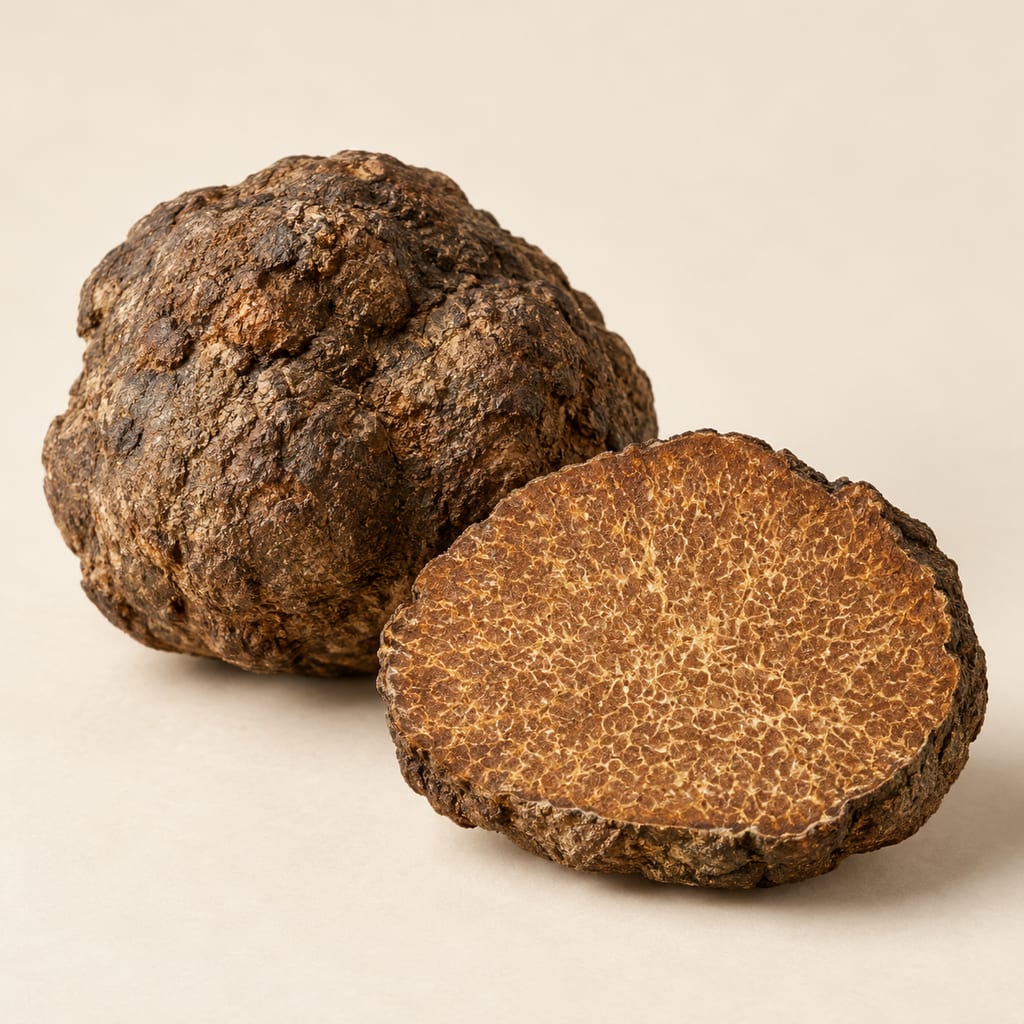
Polyporus indigenus, a polypore of the Brazilian Amazon. Its underground sclerotium, not the fruiting body, is the part people eat, and it is known locally as pão do índio.
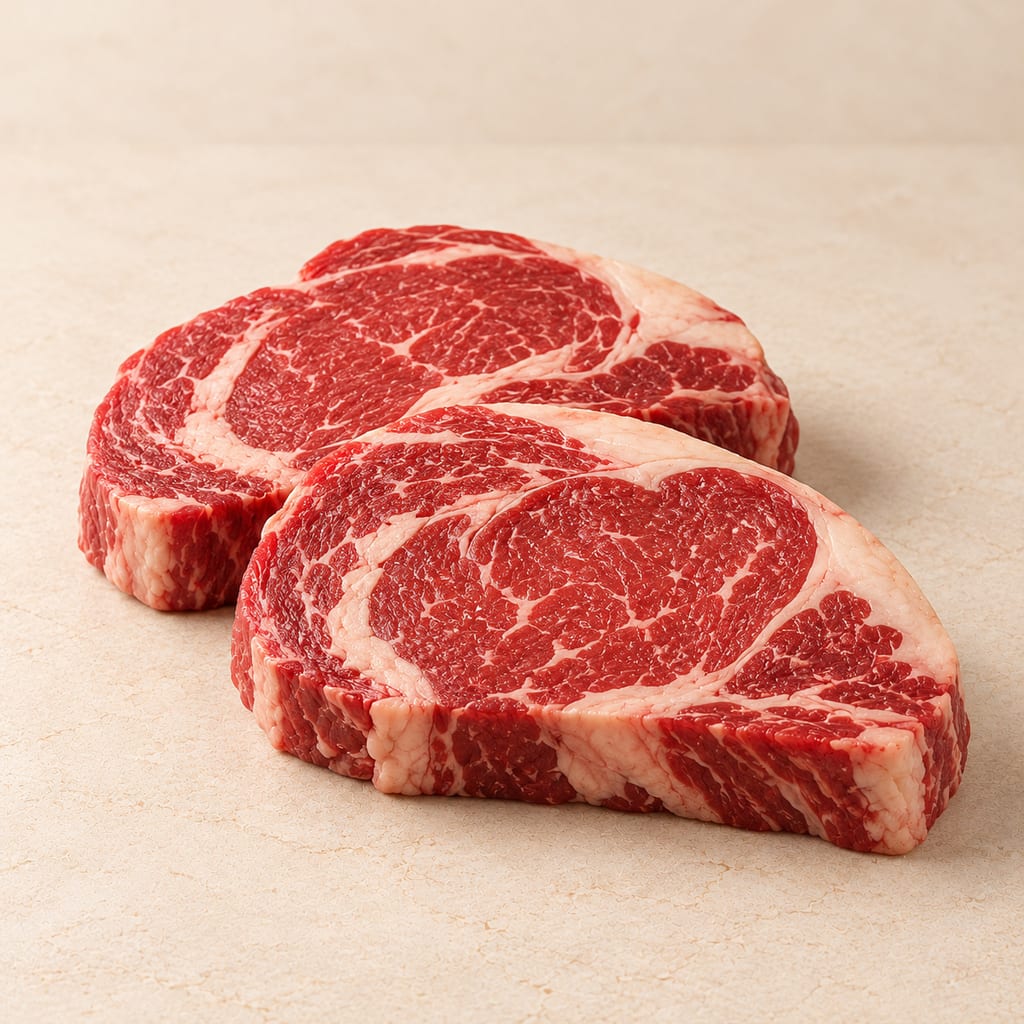
Beef is the meat of domestic cattle, Bos taurus and Bos indicus, sold as steaks, roasts, ground meat and cured products, and used in broths, salami and koji seasonings.
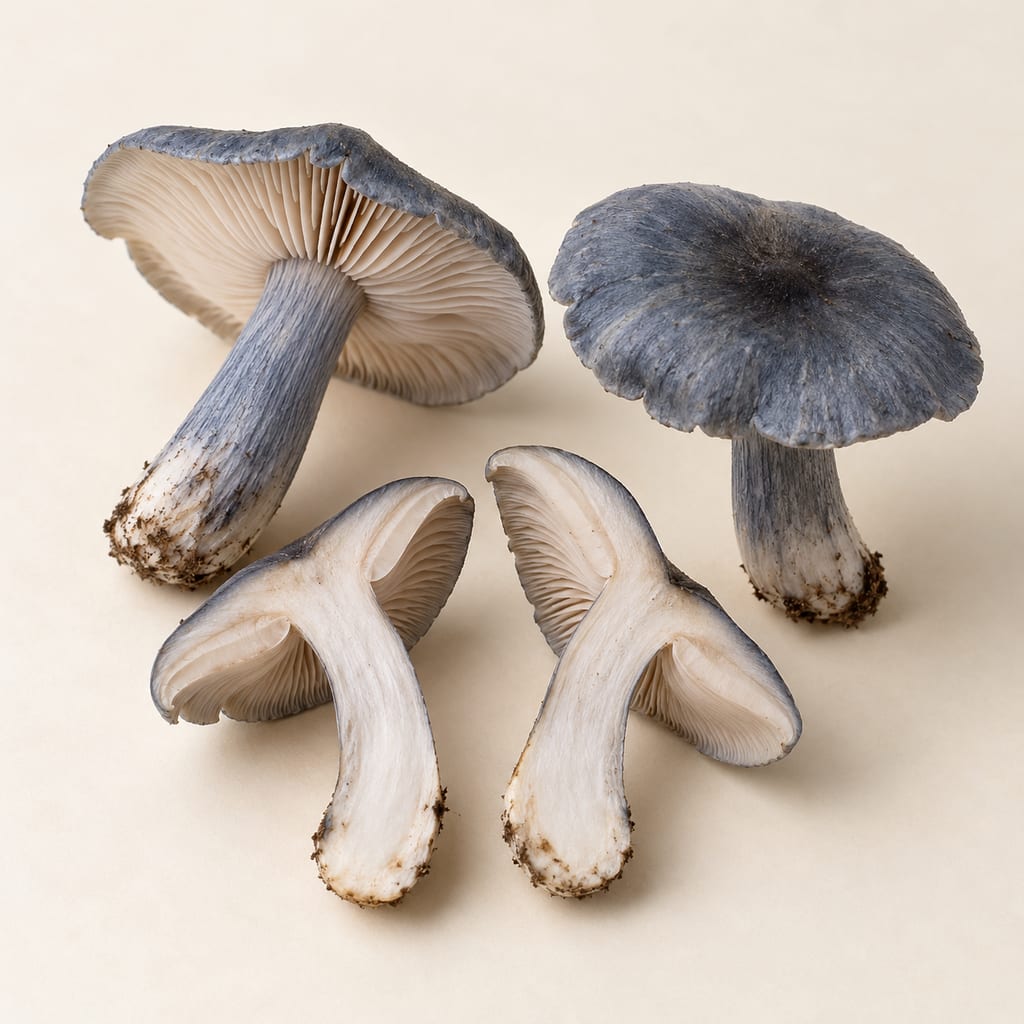
Bloxam's entoloma is a rare pink-gilled mushroom of old grasslands. Historical sources call it edible, but food-use evidence and older identifications remain uncertain; this does not recommend gathering or eating it.
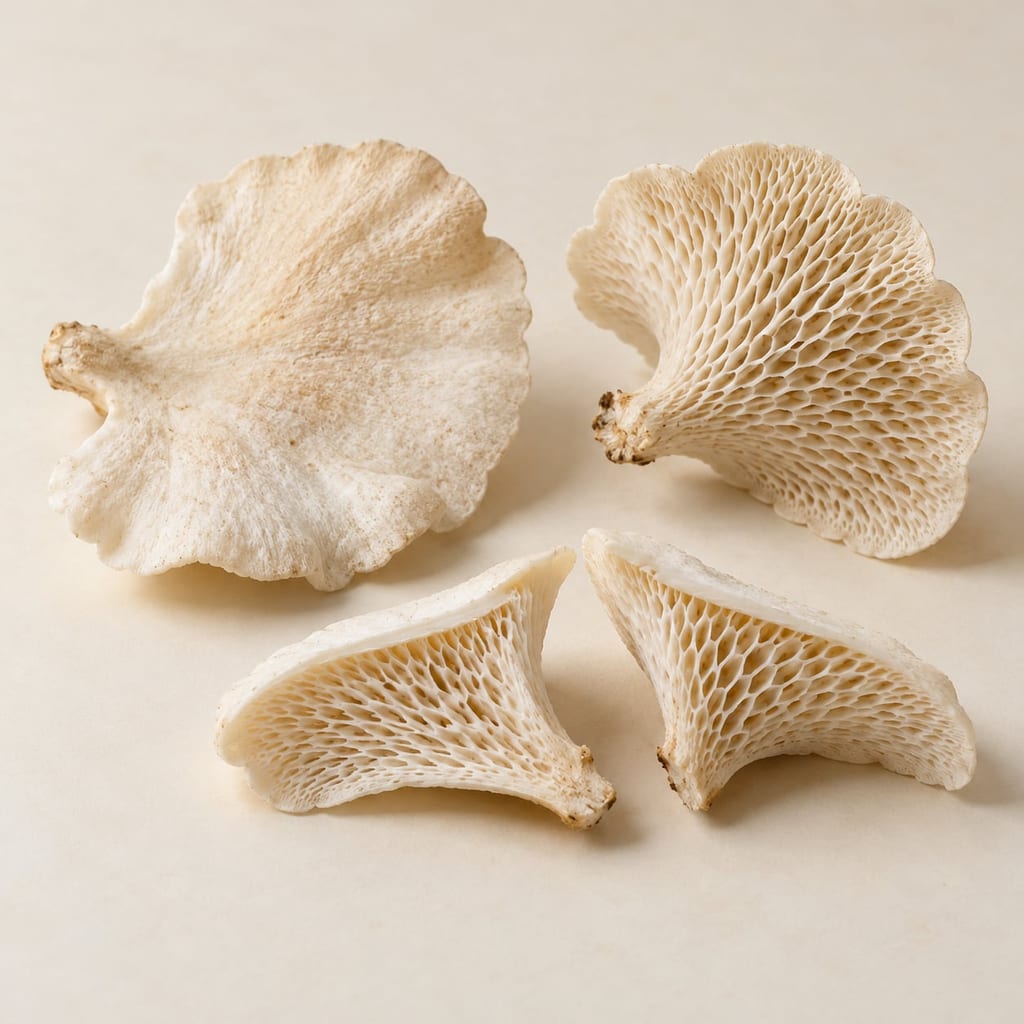
Brazilian honeycomb polypore, Favolus brasiliensis, is a wood-growing fungus of tropical forests recorded as food in Brazil and Guyana. It has no standardized food-safety assessment.
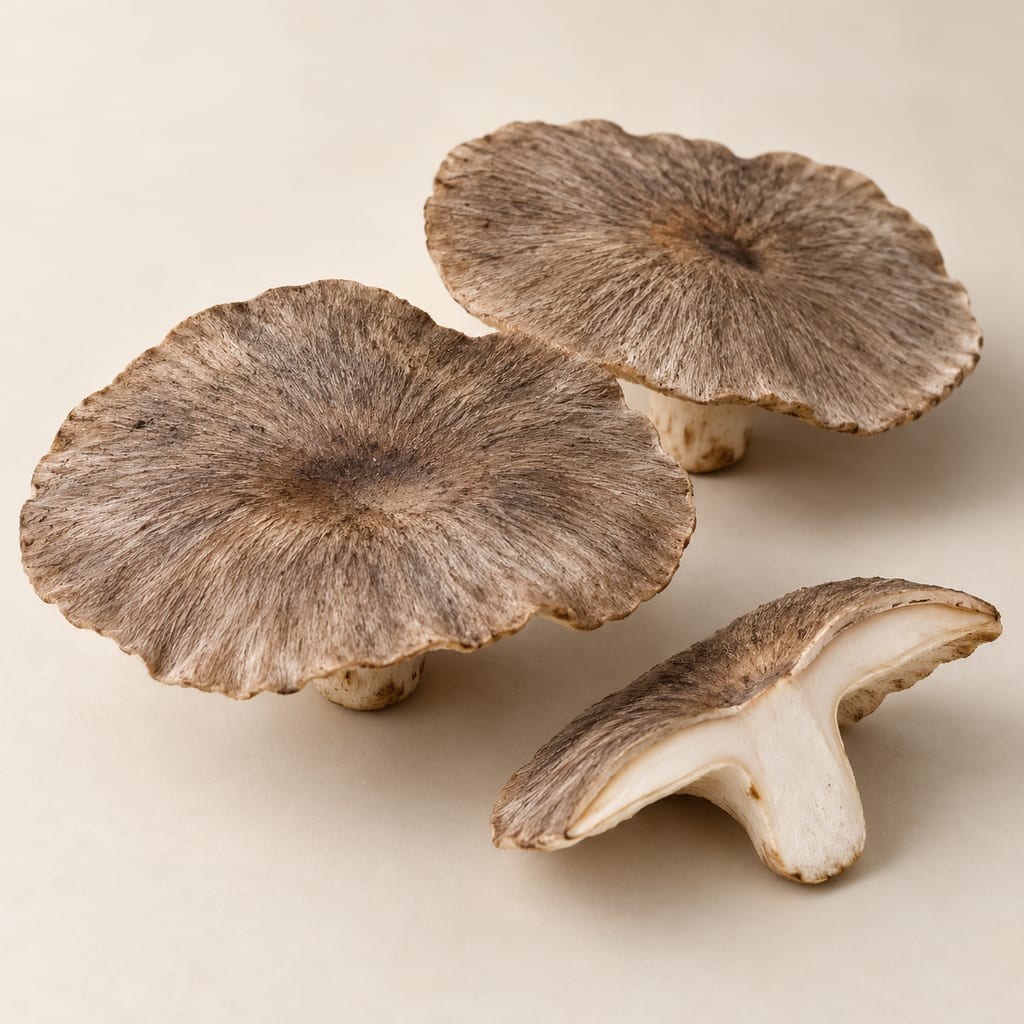
Bresadolia paradoxa is a large fungus of dead hardwood logs in Amazon and Atlantic Forest sites in Brazil and Colombia. Its only edibility source is a conservation assessment, so the claim is lightly documented.
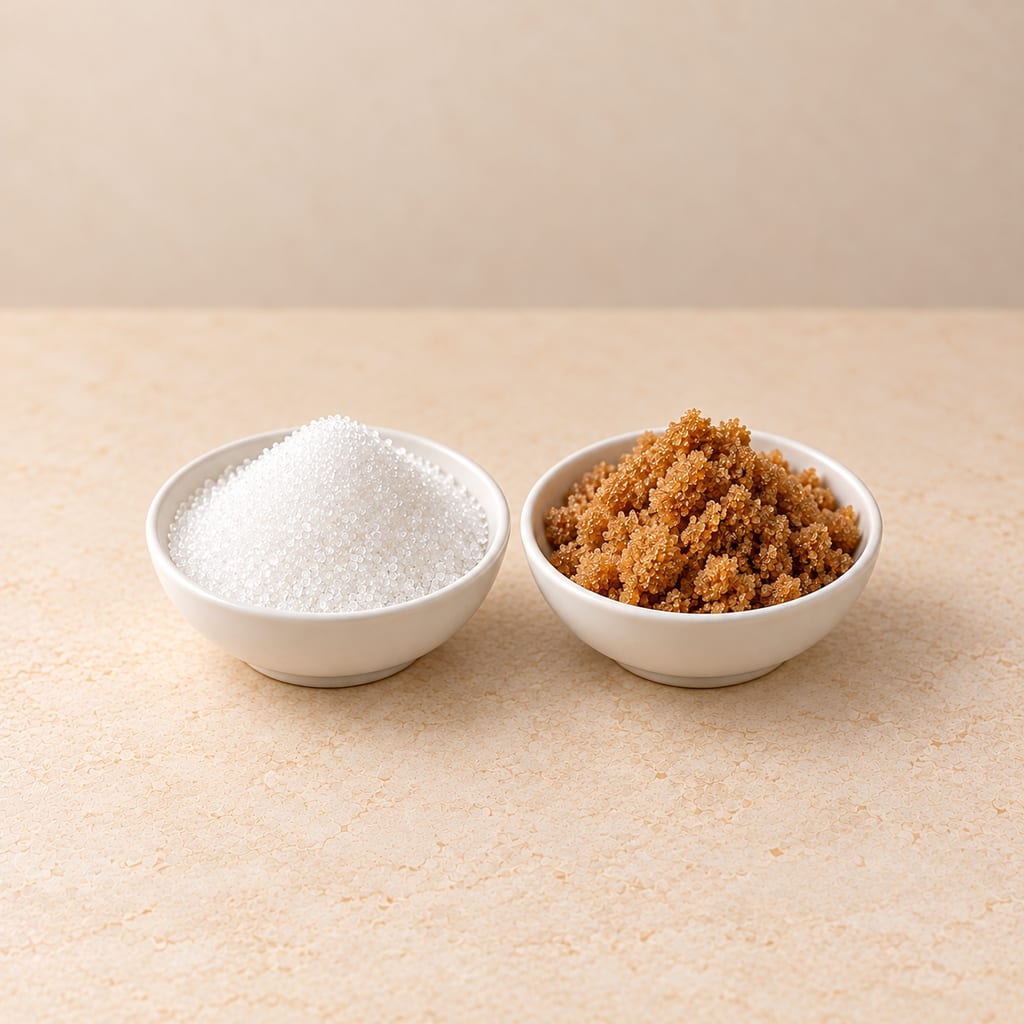
White sugar is refined sucrose, almost pure; brown sugar is sucrose with molasses, left in or added back. Molasses makes brown sugar moister, darker and more strongly flavoured.
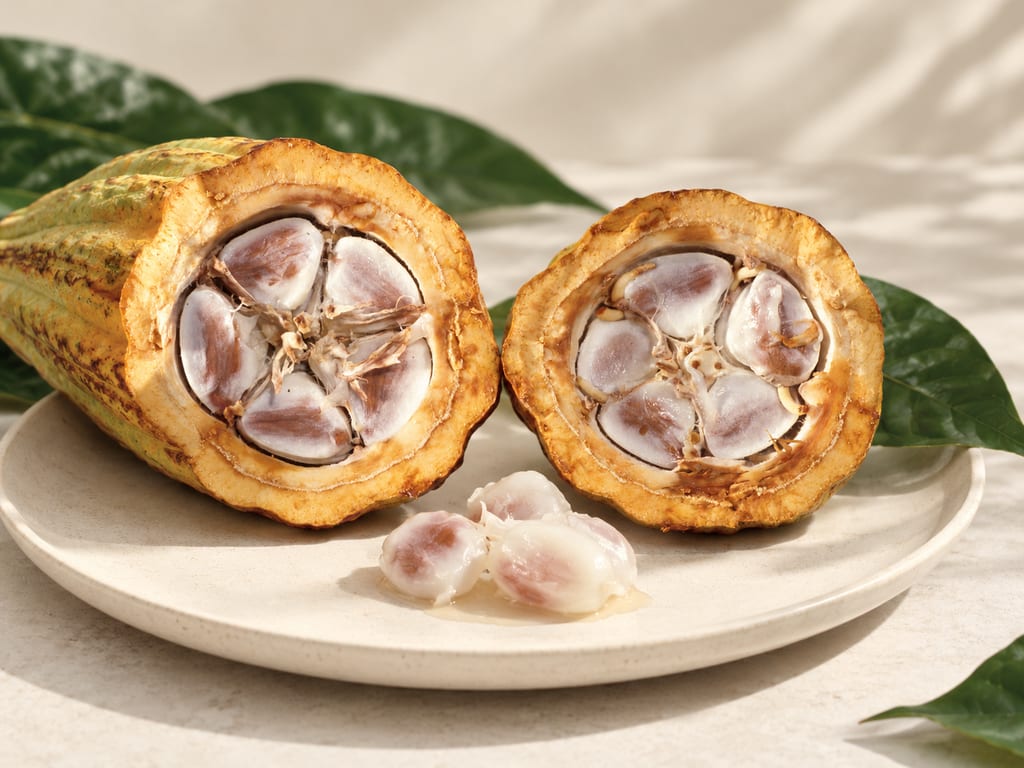
Cacao pulp is the moist, sweet-acid mucilage around cacao seeds. It fuels bean fermentation and can be extracted for fruit drinks, wine and vinegar.
No community contributions have been published for this entry yet.
Sign in to contribute. Published comments and photos are free to read.
Current MicrobiologyReference · History
Cantharellus guyanensis (Basidiomycota, Hydnaceae): A Gourmet Mushroom in the Brazilian CerradoFirst Cerrado record at a site in Brasilia, Distrito Federal, 2026
Described as an alternative food resource for the region
Mindfunga, Universidade Federal de Santa CatarinaReference · Safety
Cantharellus guyanensisConsidered edible but not consumed by local communities; could be commercialized
Ground-dwelling ectomycorrhizal species; Brazilian records in Amazon and Atlantic forest restinga