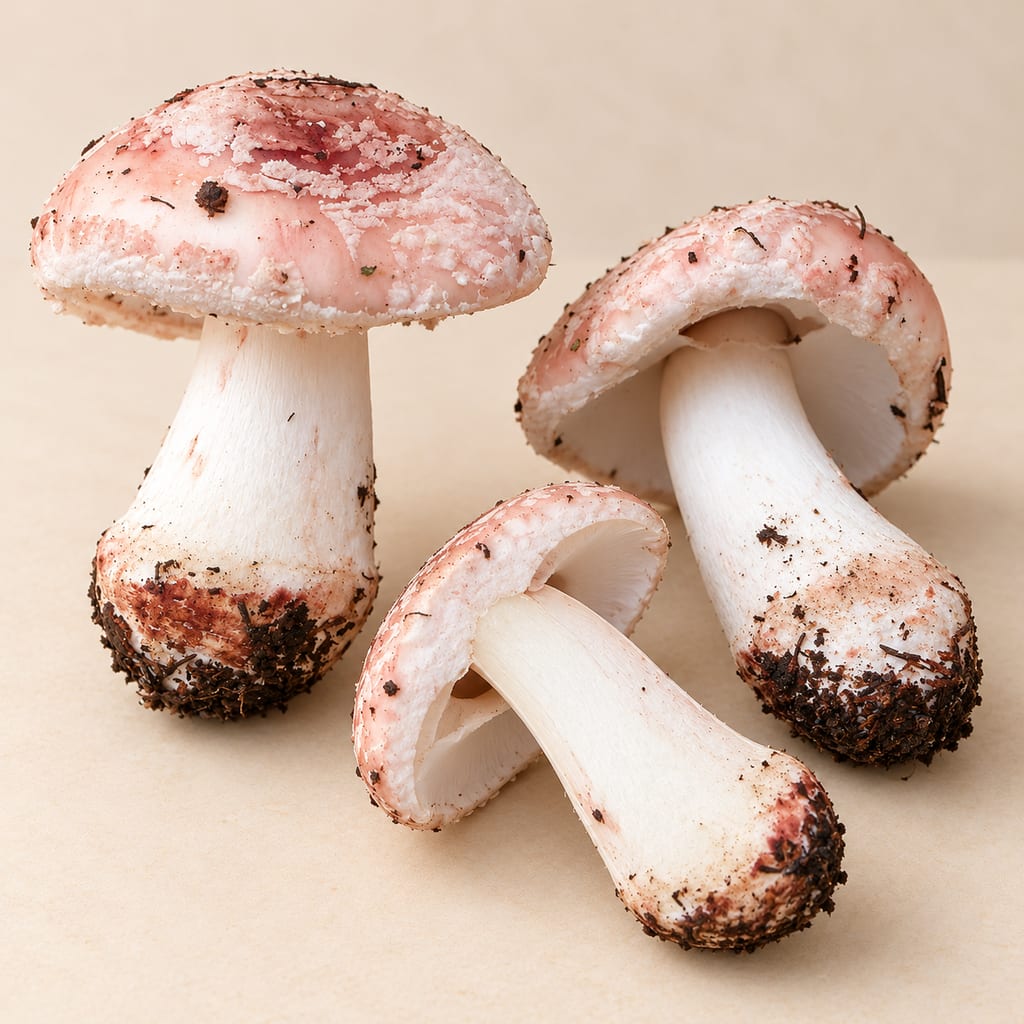
American blusher
Amanita novinupta is a western North American blusher, a forest mushroom recorded as food in Mexico, and one that must be cooked because its raw flesh is toxic.
 FermenteaWhere food goes to change
Cultures
Water kefir grains are gelatinous polysaccharide aggregates that carry a mixed community of lactic-acid bacteria and yeasts, used to ferment sugar water into a lightly sparkling drink.
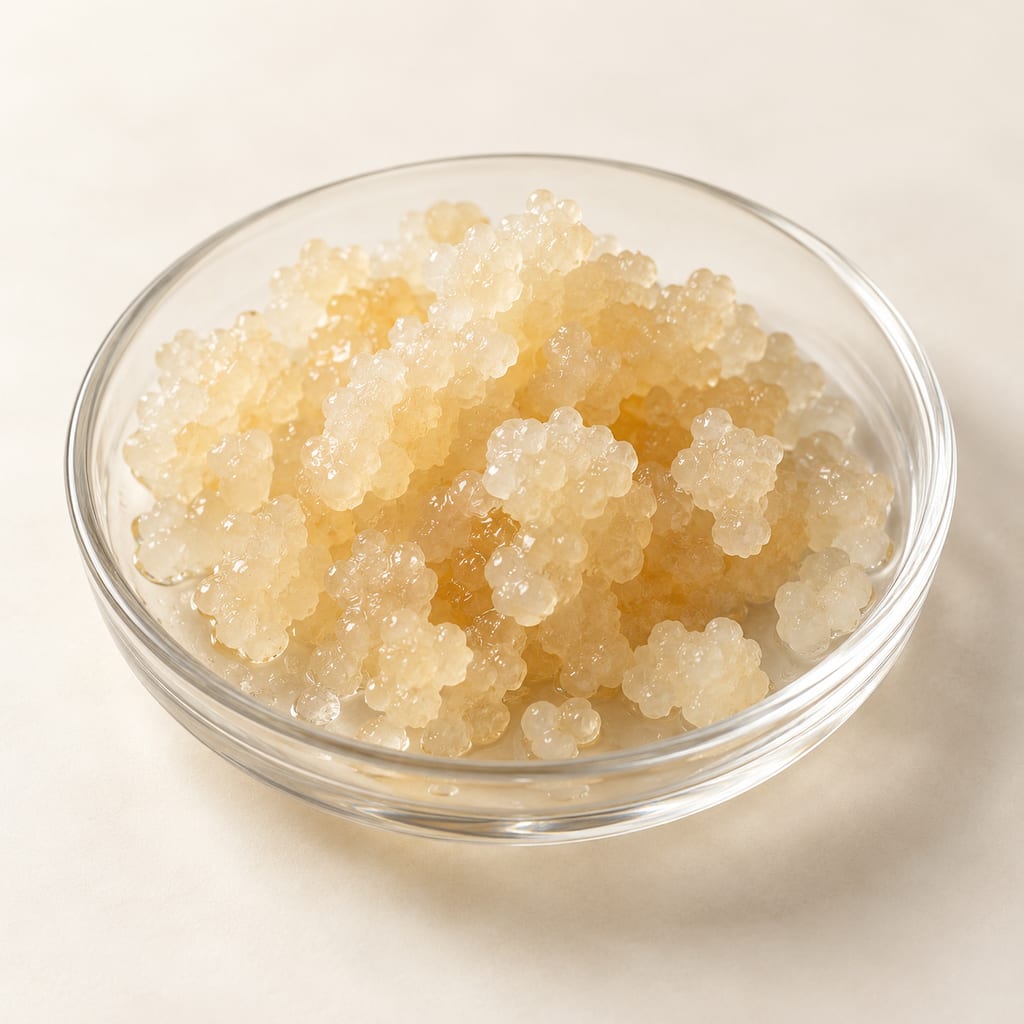
Water kefir grains are polysaccharide aggregates, translucent clumps of gel that carry a mixed microbial community. Studies of grains from several sources report lactic-acid bacteria and yeasts, with other groups in some samples. The grains are fed sugar water, and the community ferments it into a lightly sparkling, sour drink that can also contain some ethanol.
The community is not a fixed list. Species and their abundance vary between grain sources, which is why a name such as tibicos, tibi, sugary kefir or Japanese water crystals does not identify the lineage in a particular jar. Water kefir is also a different culture from dairy milk kefir.
The gel matrix and the fermented liquid around it are not the same thing. Some microorganisms move into the liquid, but a time-course study found that most of the sampled ecosystem stayed with the grains. The liquor can be used as an inoculum in some processes, but that alone does not show that the grain structure or its community is being reproduced.
An eight-step laboratory study that transferred grains through repeated fermentations found that the water's buffer capacity and calcium concentration were associated with grain growth, pH, carbohydrate use and the products formed. The grain inoculum and the prepared media were specific to that experiment, so its thresholds are not a general mineral formula for household water and do not indicate safety.
Two accounts of where water kefir comes from circulate. One is a nineteenth-century British ginger-beer plant history, linked to soldiers returning from the Crimea; the other is Mexican Tibi grains associated with Opuntia cactus. The origin is unresolved. Sampling from several countries shows how widely the grains have been studied, not that they share one birthplace or ancestry, and cultures sold under overlapping names should not be assumed to be the same.
The drink made with the grains has its own page, which carries a method; this page does not repeat one. Water kefir can produce ethanol and carbon dioxide, and public-health guidance from British Columbia discusses these within its own food-safety framework. Bubbles, sourness, smell, taste or visible growth cannot establish safety or measure the alcohol content.
The sources reviewed give no feed ratios, schedule, bottling method, storage period, revival method or household safety limit for grains, and the British Columbia guidance reflects its own jurisdiction.
Published accounts associate Mexican Tibi grains with Opuntia cactus. The sources do not settle where water kefir arose, so this row records an association, not an origin.
Published accounts link a British ginger-beer plant history to soldiers returning from the Crimea. The origin is unresolved, so this row records an association, not an origin.
Amanita novinupta is a western North American blusher, a forest mushroom recorded as food in Mexico, and one that must be cooked because its raw flesh is toxic.

Ripe avocado flesh is the soft, buttery, fat-rich pulp of Persea americana, eaten raw. It is low in acid, so it is a fresh ingredient that needs care in chilled dishes.
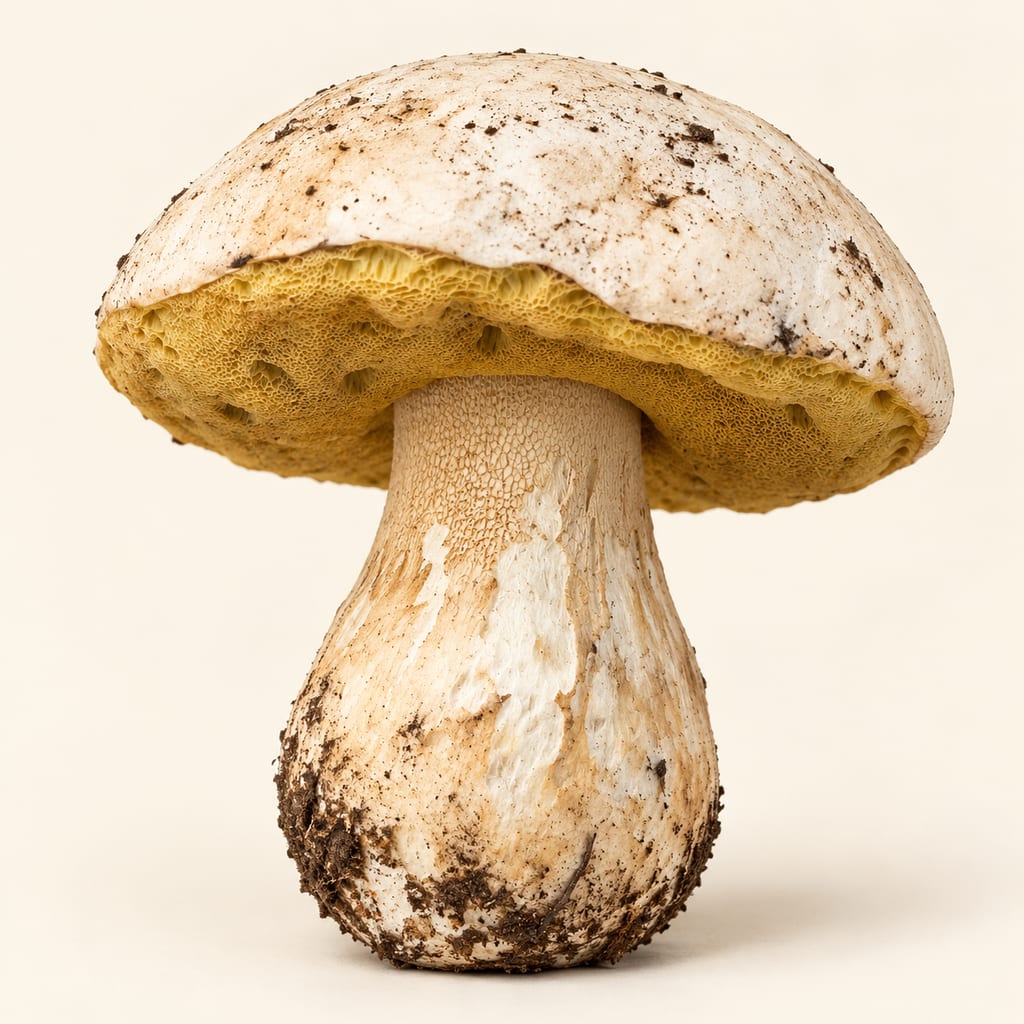
Boletus barrowsii, the white king bolete, is a western porcini relative with documented local food use in Mexico. Its pale cap and netted stem are not enough for field identification.
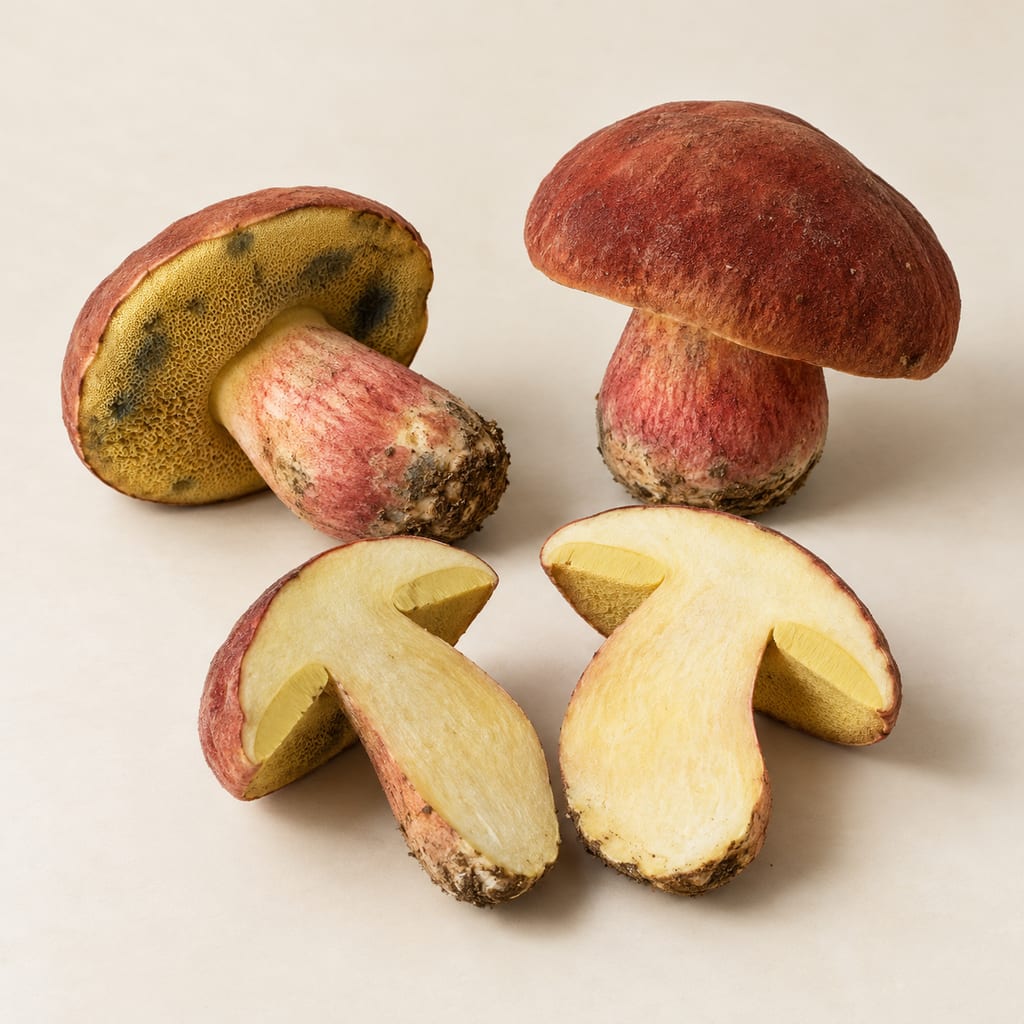
A red-and-yellow bolete described from Michigan and also listed in Mexican fungal records. Historical sources classify it as food, but its species limits, Mexican range and safe food use need careful qualification.
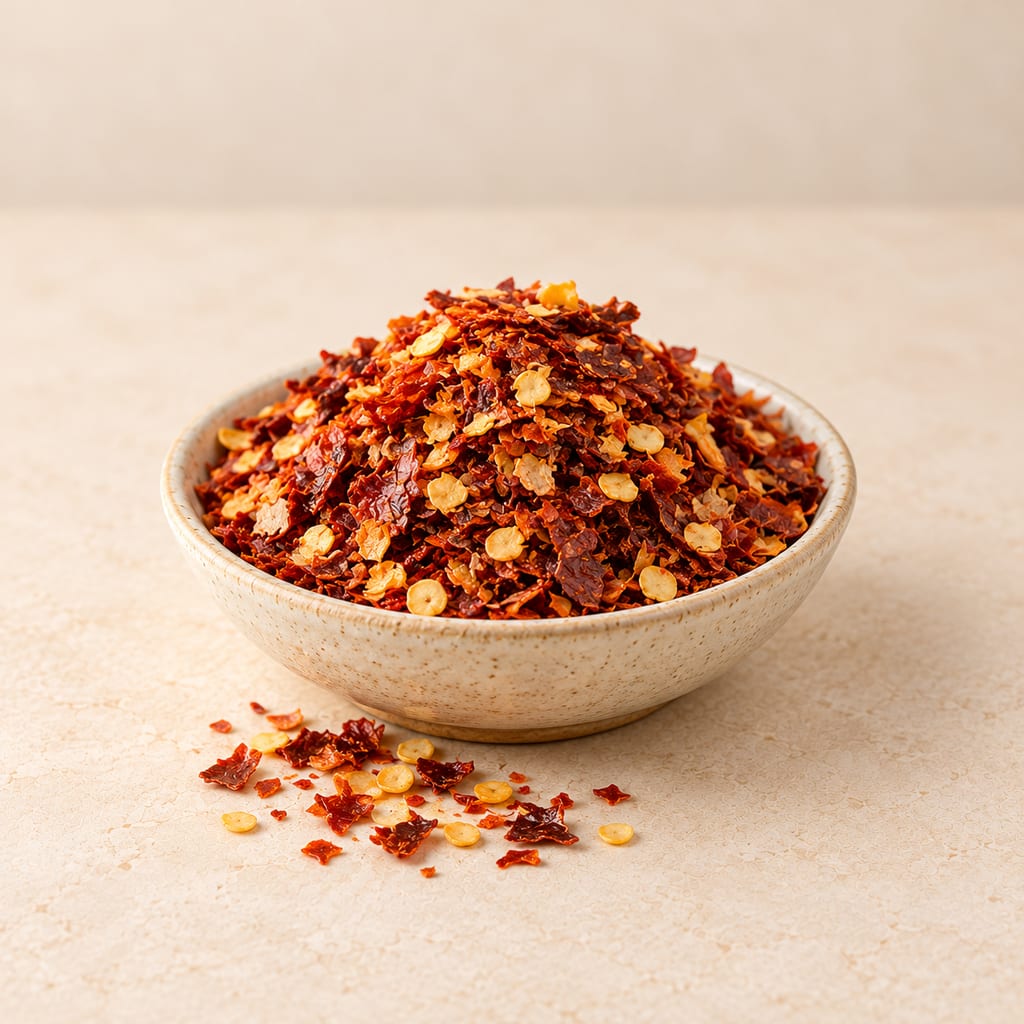
Calabrian pepper flakes are dried red Capsicum annuum from Calabria, crushed into coarse pieces; Peperoncino di Calabria is a protected geographical indication.
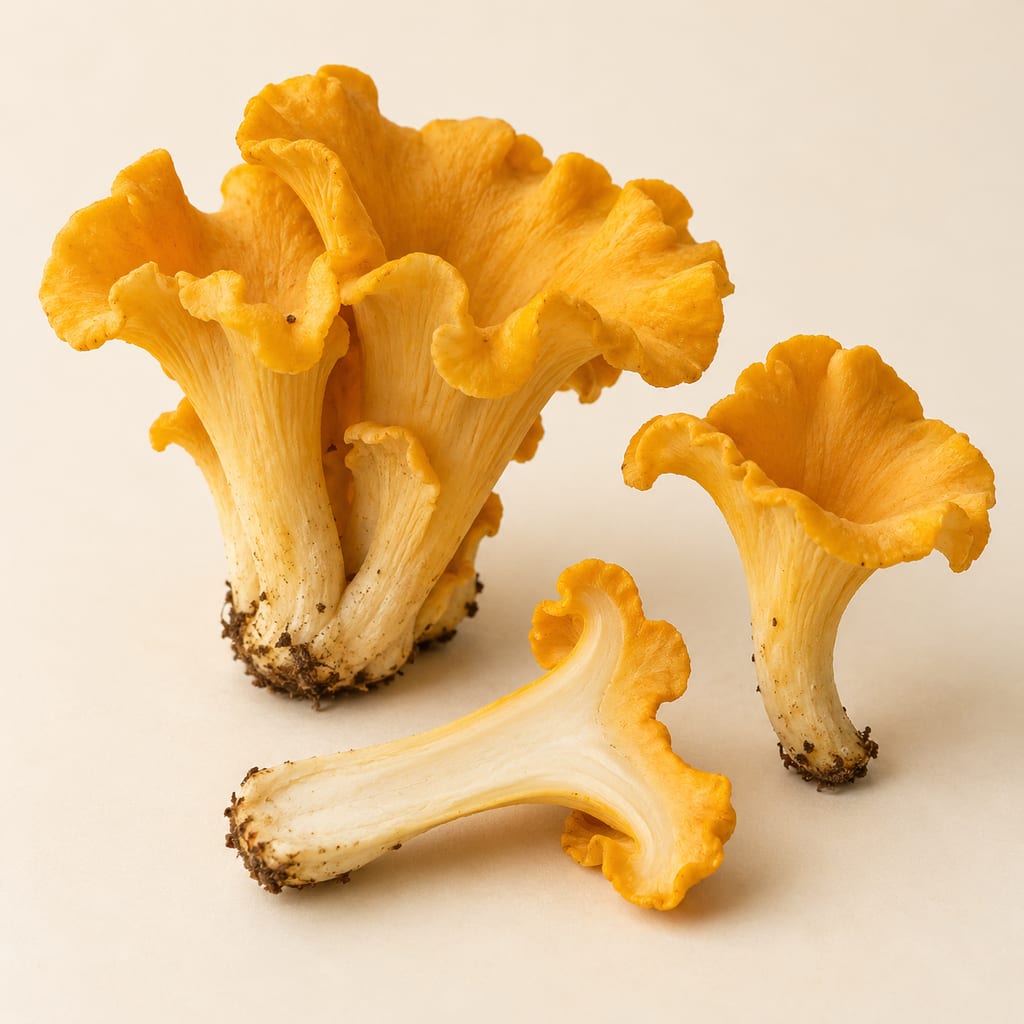
Cantharellus odoratus, the fragrant chanterelle, is a North American and Central American oak-woodland fungus. It was sold in a Veracruz market in the 1980s and in Guatemala in 2002, and its name is still disputed.
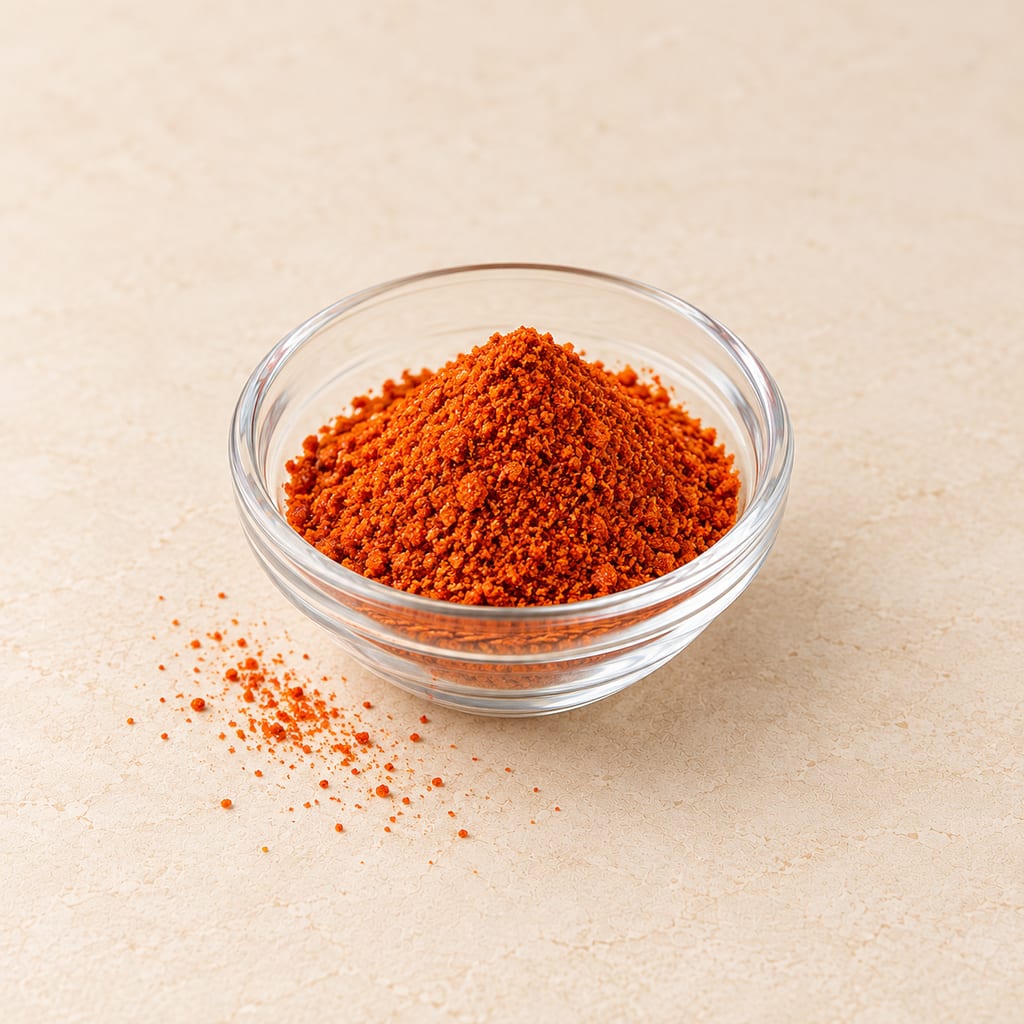
Cayenne is a very pungent red powder from dried, ground hot chilli pods, mostly Capsicum annuum, and the name of the long red peppers it comes from.
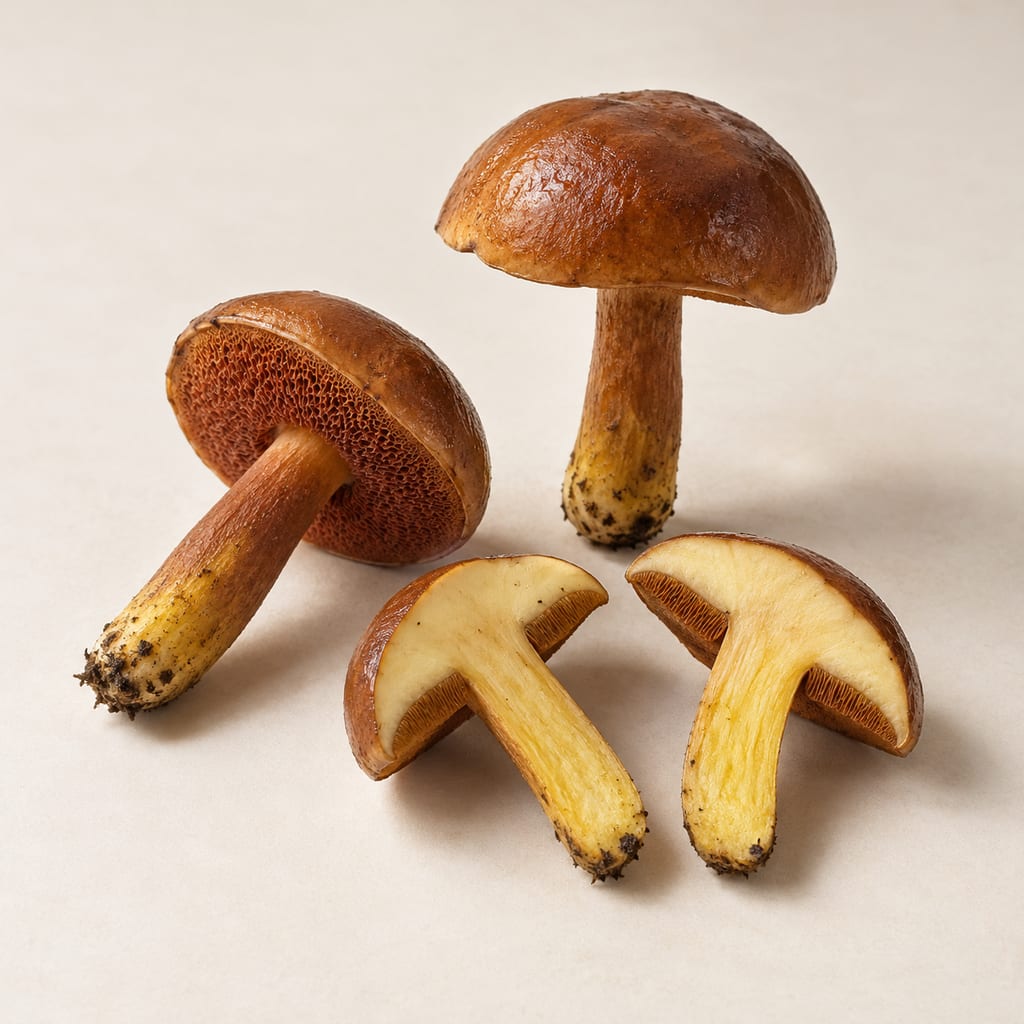
A peppery woodland bolete with historical edible labels and reported condiment use in Querétaro. Current mycological references call its edibility suspect or unestablished; this entry does not recommend consumption.
No community contributions have been published for this entry yet.
Sign in to contribute. Published comments and photos are free to read.
Frontiers in MicrobiologyMicrobiology · Water
The Buffer Capacity and Calcium Concentration of Water Influence the Microbial Species Diversity, Grain Growth, and Metabolite Production During Water Kefir FermentationAn eight-step laboratory study linked water buffer capacity and calcium to grain growth, pH, carbohydrate use and fermentation products; grains and media were specific to the experiment.
Cited in: Water chemistry in one experiment
International Journal of Food Microbiology; PubMed CentralMicrobiology
Microbial Species Diversity, Community Dynamics, and Metabolite Kinetics of Water Kefir FermentationA time-course study found most of the sampled water kefir ecosystem remained with the grains.
Cited in: Grain and liquor are different phases
FEMS Microbiology Letters; Oxford AcademicMicrobiology · History
Sequence-based analysis of the microbial composition of water kefir from multiple sourcesMicrobial composition of water kefir from several sources; origin accounts.
Cited in: A community held in a gel; Names and origin
Communications Biology; Nature PortfolioMicrobiology · History
The core microbiomes and associated metabolic potential of water kefir as revealed by pan multi-omicsCore microbiomes of water kefir sampled in several countries; lactic-acid bacteria and yeasts with other groups in some samples.
Cited in: A community held in a gel; Names and origin
BC Centre for Disease Control; National fermented food working groupSafety
Safety of fermented foods: Assessing risks in fermented food processing practices and advice on how to mitigate them — Section 3.12 KefirBritish Columbia public-health guidance on kefir, including ethanol and carbon dioxide production, within its own food-safety framework.
Cited in: Using the grains, and what the sources do not say