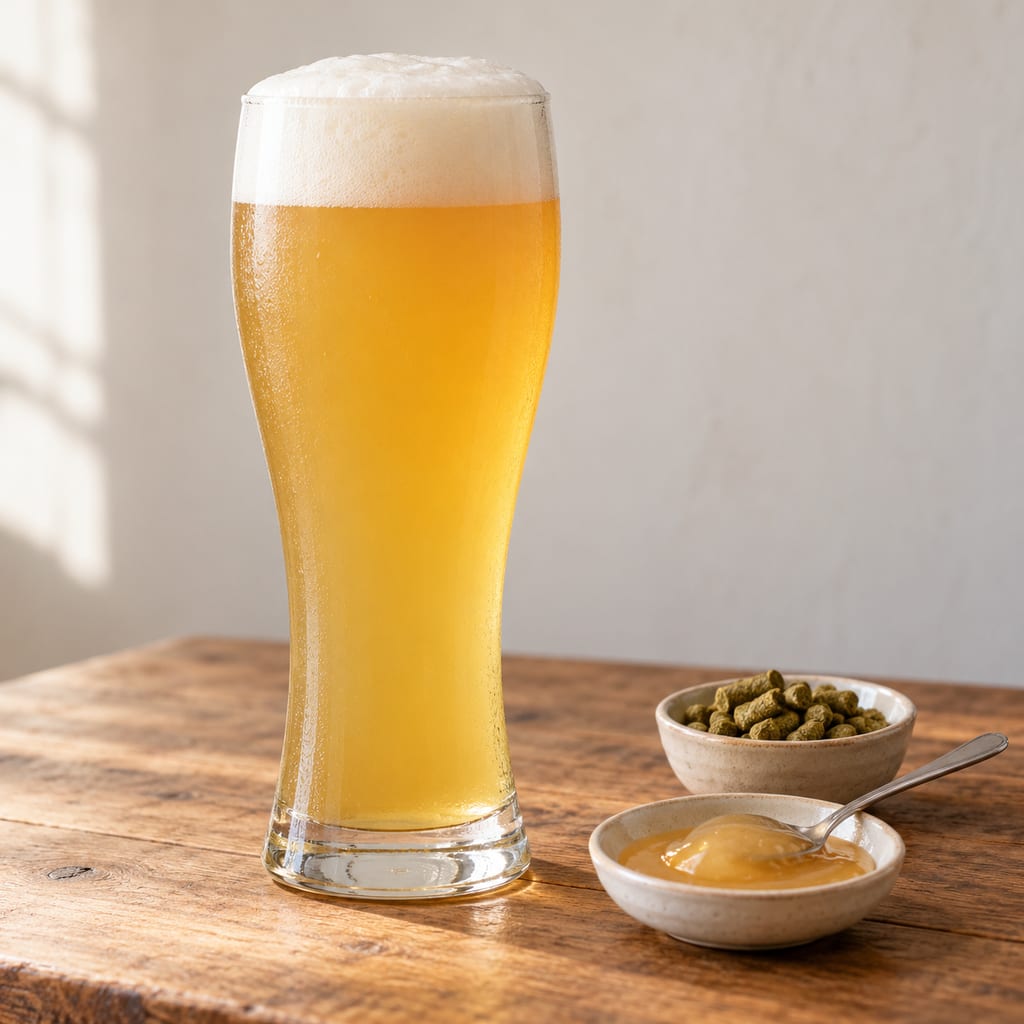
Weizen, extract method
A German-style wheat beer made with wheat extract, a short hop boil and a hefeweizen yeast, using cold water to top up the fermenter.
 FermenteaWhere food goes to change
Cultures
WLP300 is a commercial brewing yeast culture selected for German-style wheat beer, with banana-like ester and clove-like phenolic character. Its performance depends on the wort, culture condition and fermentation process.
WLP300 Hefeweizen Ale Yeast is a named commercial brewing culture from White Labs. Its purpose is to ferment wort while contributing the banana-like and clove-like character associated with German-style wheat beer. The culture is an ingredient; the beer it produces is a separate preparation. A product code identifies the brewer's chosen culture more precisely than a general instruction to add yeast.
The linked American Homebrewers Association extract method names WLP300 or Wyeast 3068 as alternatives for its Weizen. That is a choice within a recipe, not proof that the two products are the same strain. The source also offers different cultures for a softer American wheat-beer profile. Yeast selection therefore belongs to the beer's character, alongside the wheat extract and hops.
Commercial culture supply makes a particular yeast available independently of the brewery that uses it. In its account of liquid-yeast development, White Labs dates its use of the term pitchable to 1995 and explains WLP as White Labs Pitchable. The aim was to supply enough viable yeast for direct use under specified brewing conditions, rather than treating every small culture package as the same starting quantity.
Packaging became part of that work. White Labs dates the release of PurePitch to 2014 and describes growing and collecting yeast in the same flexible film vessel. Reducing transfers limits opportunities for environmental exposure. This is the manufacturer's account of its production system, not a date for the first appearance of WLP300.
The maker's German wheat-beer association does not identify a deposited accession or establish descent from a named historic brewery. Style, supplier and verified strain genealogy are different kinds of information.
A culture package contains material that has been grown, not simply collected from a finished beer. White Labs' FlexCell handout describes a route from its culture collection through small liquid cultures into larger flexible reactors containing sterile nutrient-rich wort. Growing a supply culture increases the number of cells available for the next fermentation.
The handout describes collecting concentrated yeast slurry in the vessel in which it grew, followed by checks using microscopy, microbiological plate media and PCR. These methods examine different features of a production culture. The document illustrates its packaging with WLP001, so its example lot numbers, cell counts and printed strain specifications cannot be reassigned to a package of WLP300.
For a brewer, strain identity and lot information answer different questions. The strain code names the selected culture; the lot identifies a particular production batch. Handling, age and transport can affect that batch. A manufacturer's production diagram explains how cultures are supplied, while the actual package and lot record supply the instructions and quality information relevant to the material in hand.
Wort supplies fermentable sugars, and yeast metabolism changes those sugars into ethanol, carbon dioxide and other products. In well-studied brewing Saccharomyces, the central pathway begins with glycolysis, a series of reactions that converts sugar into pyruvate while yielding energy for the cell. The familiar phrase alcoholic fermentation describes a set of biochemical reactions rather than a passive wait for beer to mature.
Pyruvate is then converted to acetaldehyde by a decarboxylase enzyme, releasing carbon dioxide. An alcohol dehydrogenase converts acetaldehyde to ethanol. This second reaction also restores a chemical carrier needed for continued sugar metabolism. The carrier cycles between forms called NADH and NAD+. During conversion of acetaldehyde to ethanol, NADH supplies reducing power and becomes NAD+ again. Regenerating it lets earlier reactions continue. Alcohol formation is consequently connected to the cell's chemical balance as well as to the drinker's finished beer. Gas and alcohol are connected products of the pathway, while other metabolic branches supply compounds that influence flavour.
This is general brewing-yeast biology, not a measured conversion chart for every WLP300 batch. Wort composition, cell condition and fermentation conditions affect how the culture performs. Sugar remaining at the end is not determined by the culture name alone; the material presented to the yeast matters too.
The extract method illustrates that division of work. Malt extract supplies the wort's fermentable material, while the purchased culture carries out fermentation after the wort has been prepared and cooled. Boiling the wort, cooling it and fermenting it are separate stages. Yeast does not make the wheat extract, and boiling is not part of the living culture's sugar metabolism.
Isoamyl acetate is an ester associated with banana-like aroma. White Labs identifies its production as a characteristic of WLP300. The aroma does not require banana as an ingredient: yeast cells can make the molecule during fermentation from compounds available through their metabolism.
In Saccharomyces cerevisiae, enzymes called alcohol acetyltransferases join an alcohol with acetyl-CoA to form acetate esters. Isoamyl alcohol supplies the alcohol part of isoamyl acetate. The enzymes Atf1 and Atf2 are important in this chemistry, while other enzyme systems form different ester families. This explains a pathway behind fruity fermentation aromas without asserting an unpublished genetic profile for WLP300.
The final ester concentration reflects more than formation. Small acetate esters can diffuse from the cell into the surrounding liquid. Their movement helps connect intracellular chemistry with the aroma of the beverage outside the living cells that produced them. Yeast can also break down esters through hydrolysis, and volatile compounds can leave the liquid. An aroma profile therefore represents production, breakdown and retention together. Increasing one part of the system does not guarantee that the finished beer will contain proportionately more of the same compound.
Perception adds another layer. A mixture of aroma compounds can strengthen or mask particular impressions, so a banana note is not an isolated substance experienced without context. The wort, other fermentation products and the finished beer's balance shape what a drinker notices. A chemical name makes the description more precise, but it does not turn a supplier's flavour description into a fixed sensory result.
The clove-like character of wheat beer is associated with 4-vinylguaiacol, a phenolic compound. Its precursor, ferulic acid, comes from cereal material. Brewing and fermentation can affect both the release of that precursor and its conversion. A study using different proportions of barley malt, wheat and wheat malt demonstrated why the grain and the culture both belong in the explanation.
In Saccharomyces, the relevant enzyme system involves Pad1 and Fdc1. Their roles are different: Pad1 helps form a modified flavin cofactor, while Fdc1 uses that cofactor in decarboxylation, removing carbon dioxide from the precursor. Older descriptions that assign the whole reaction to Pad1 alone miss this division of work.
The same phenolic character can be welcome in one beer and unwelcome in another. In wheat beer it can help define the intended profile; in many other styles it is described as an off-flavour. The word off is therefore partly a statement about the beer being made. It is not a universal judgement that the molecule signals a spoiled or unsafe beer.
This mechanism is evidence from brewing-yeast research. It does not disclose WLP300's exact gene sequence or prove how much 4-vinylguaiacol a particular package will produce in a particular wort. The manufacturer describes clove-like phenols; a batch-specific chemical measurement would be a different, more limited claim.
The current WLP300 product page lists attenuation of 72–76%, low flocculation, a fermentation range of 68–72°F (20–22°C), medium-to-high alcohol tolerance of 8–12%, and a negative STA1 quality-control result. These are manufacturer specifications accessed in October 2026. They are selection information, not a promise that every wort will finish at one gravity or alcohol content.
Attenuation describes how far fermentation reduces the fermentable extract under the conditions used. White Labs stresses that its strain ranges are approximate and that mash profile, temperature, nutrients and oxygenation affect the result. The figure cannot be read as the percentage of all material in any recipe that will become alcohol.
Flocculation concerns cells clumping and settling out of suspension. White Labs uses WLP300 as an example of a low-flocculating culture that remains suspended longer and contributes haze. This differs from attenuation: cells can remain suspended after substantial sugar conversion. Haze alone establishes neither fermentation completion nor safety.
Comparisons between wheat-beer yeasts show why a strain description cannot replace process information. A study of five named TUM cultures fermented under matched conditions found different patterns of acetate-ester formation and gene expression. Those cultures were not identified as WLP300. Their results establish variation among the tested wheat-beer strains, rather than a ranking of this commercial product against them.
Related wheat-beer research also examined aroma losses. Isoamyl acetate was more readily lost from the liquid than the more persistent clove-associated compound under the tested conditions. Temperature and movement in a fermentation vessel can affect what remains as well as what cells produce. A stronger banana aroma is therefore not reliably achieved by applying one isolated rule about warmer fermentation.
The practical lesson is to keep observations attached to the wort, pitch and equipment that produced them. A repeatable beer requires a repeatable process around the selected culture. Results from a different strain or vessel can explain a possible mechanism, but they are not a ready-made operating schedule for WLP300.
White Labs' handling guidance recommends refrigerated storage at 36–40°F (2–4°C) and attention to the package's best-before date. Its instructions distinguish the purchased culture from yeast harvested after fermentation. Advice for storing a harvested slurry does not establish the shelf life of an unopened retail package, and freezing a culture at home is not equivalent to maintaining a laboratory culture collection.
Viability is the proportion of cells that remain alive, not simply the age printed on a package. White Labs describes date-based viability calculators as estimates and points to direct measurement for a better determination. Storage and transport history still matter. The selected strain may be the same while the usable condition of two packages differs.
The package and current lot instructions should govern its preparation for use. A source that describes an older tube or a commercial-size pouch does not establish the cell content of every present format. Likewise, a reused culture has acquired the history of the fermentation from which it was collected; it should not be treated as a newly supplied lot merely because its original strain name is known.
The American Homebrewers Association formula calls for one tube or packet of its selected culture in a five-gallon, 18.9-litre wheat-extract beer. That is the source's recipe-level instruction. It does not establish that every package size or every wort of that volume needs the same cell quantity.
The formula contains wheat malt extract. Selecting a yeast does not establish that the resulting beer is gluten-free, and the sources used here do not supply a product-specific declaration of WLP300 package carriers or allergens. The wheat-based recipe and the commercial culture need their own accurate ingredient information.
The source also warns that airlock bubbling is not a reliable indication of completion. Gas release, haze and an attractive banana-and-clove aroma are observations of the beer, not evidence that every required process condition has been met.
Product-specific carrier and allergen declaration not established; the linked recipe contains wheat malt extract.
German wheat-beer style association; no specific brewery or collection origin established.
Exact strain accession, acquisition location and named brewery genealogy are not established by the current manufacturer page.
A German-style wheat beer made with wheat extract, a short hop boil and a hefeweizen yeast, using cold water to top up the fermenter.
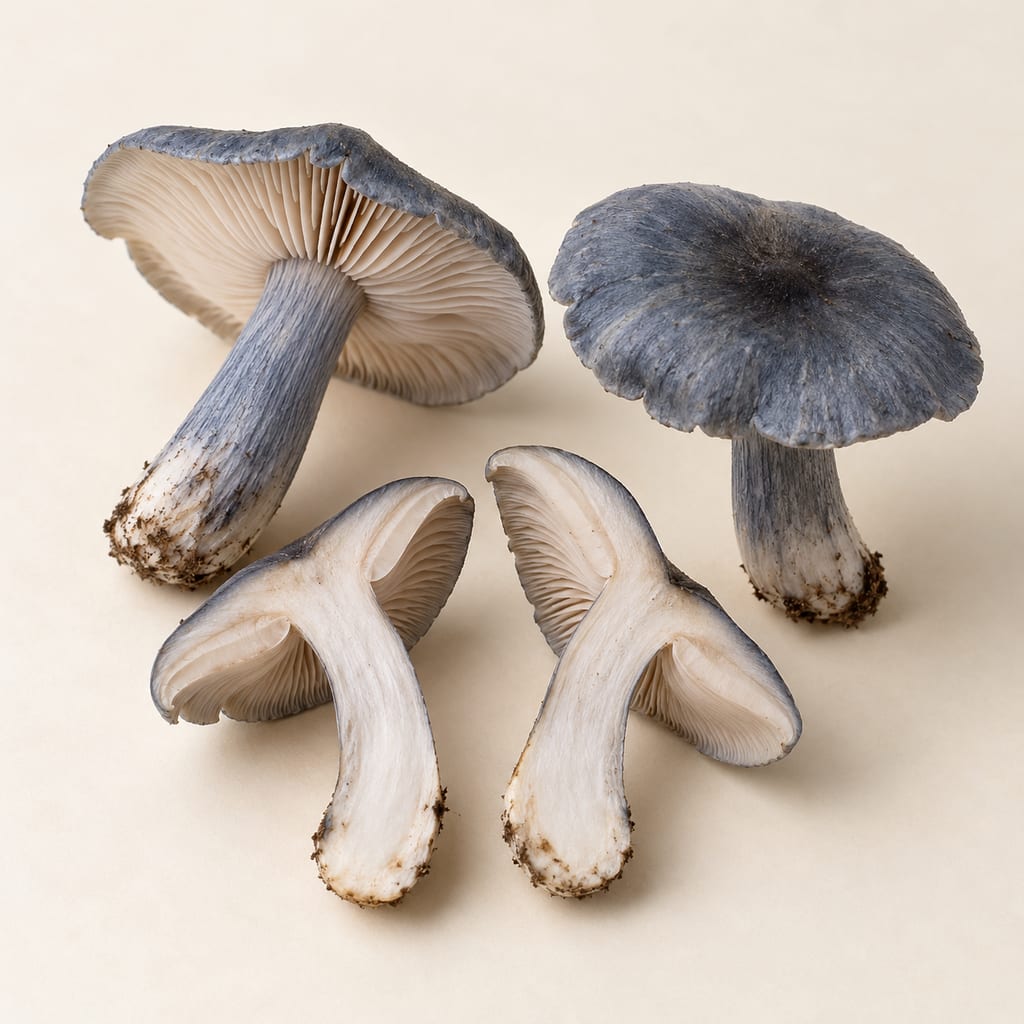
Bloxam's entoloma is a rare pink-gilled mushroom of old grasslands. Historical sources call it edible, but food-use evidence and older identifications remain uncertain; this does not recommend gathering or eating it.
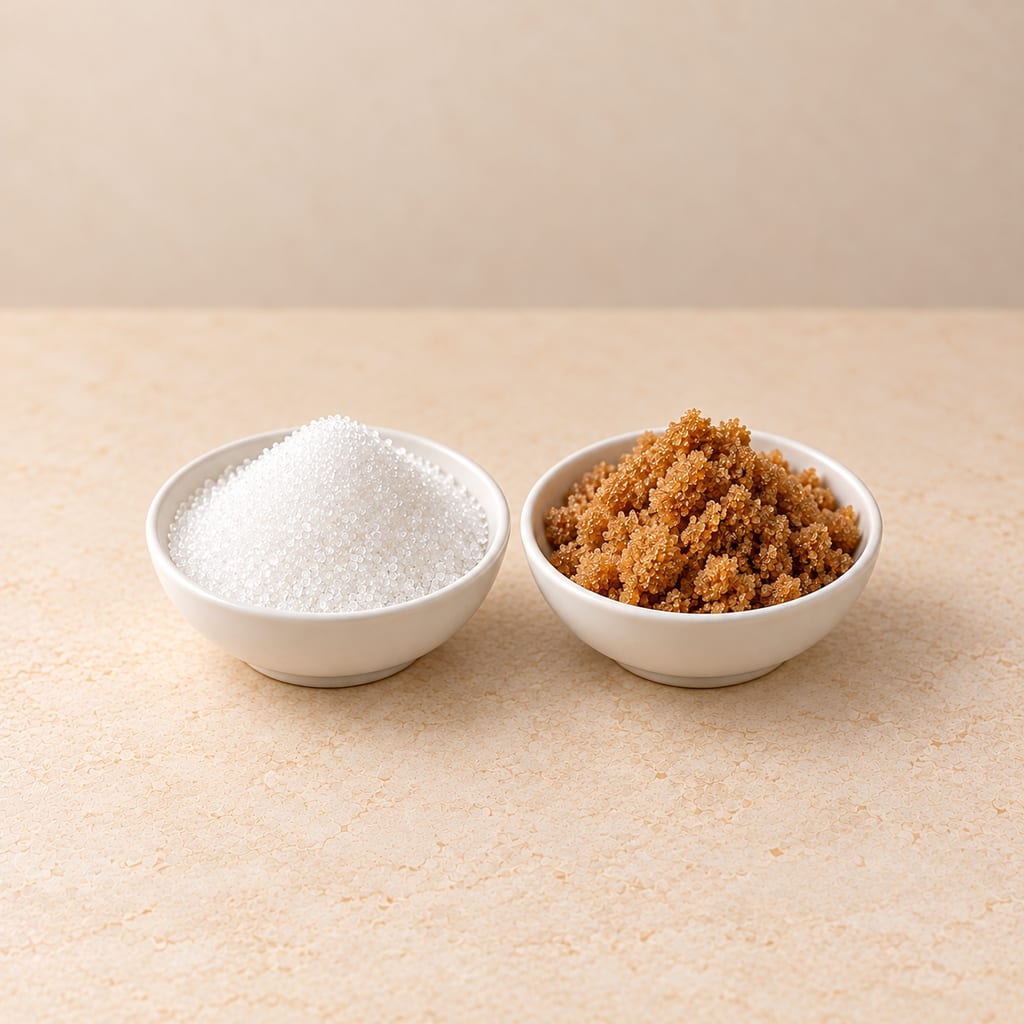
White sugar is refined sucrose, almost pure; brown sugar is sucrose with molasses, left in or added back. Molasses makes brown sugar moister, darker and more strongly flavoured.
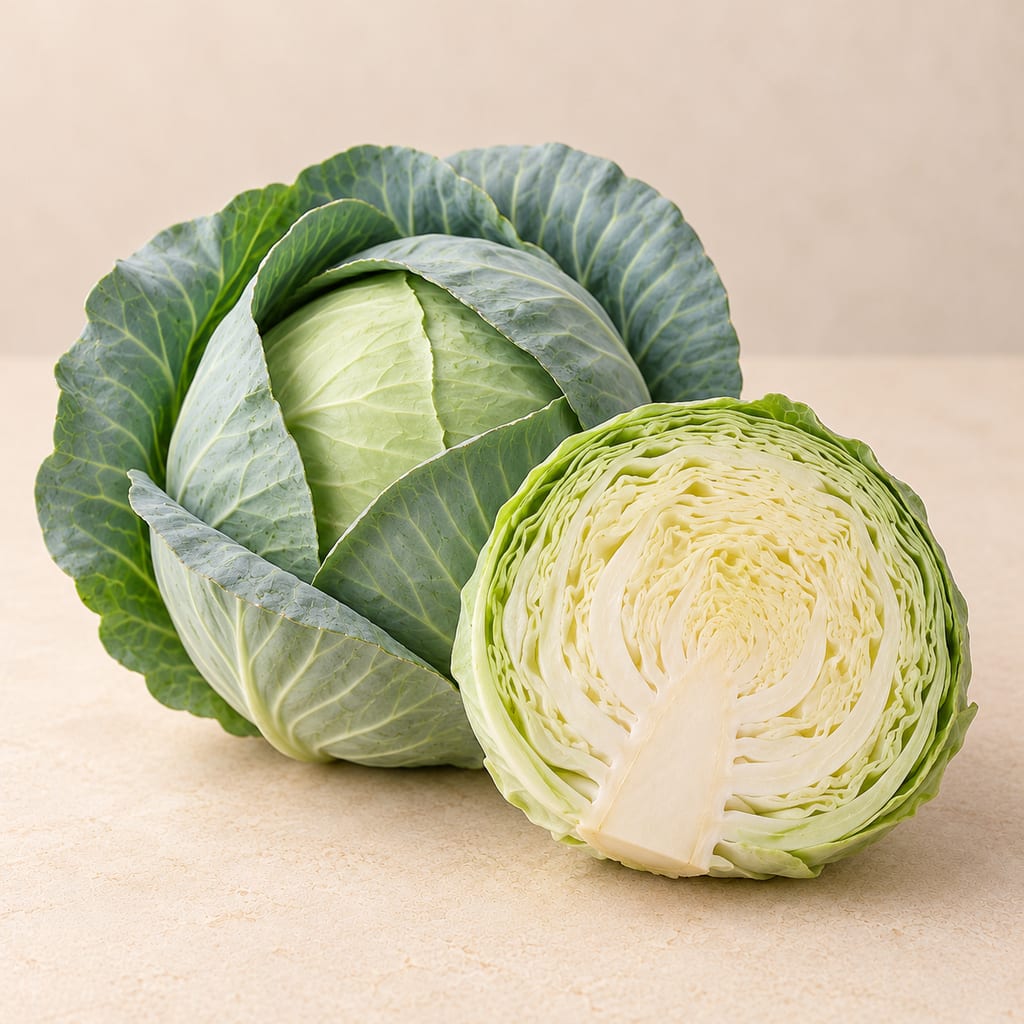
Cabbage is the dense leafy head of Brassica oleracea, a European vegetable that keeps for months and is the classic raw material for sauerkraut, with napa cabbage the base of kimchi.

Chicken eggs supply proteins and yolk fats that set and emulsify. Atlas breads use them in enriched doughs, surface washes and a sourdough pancake batter mixed after fermentation.
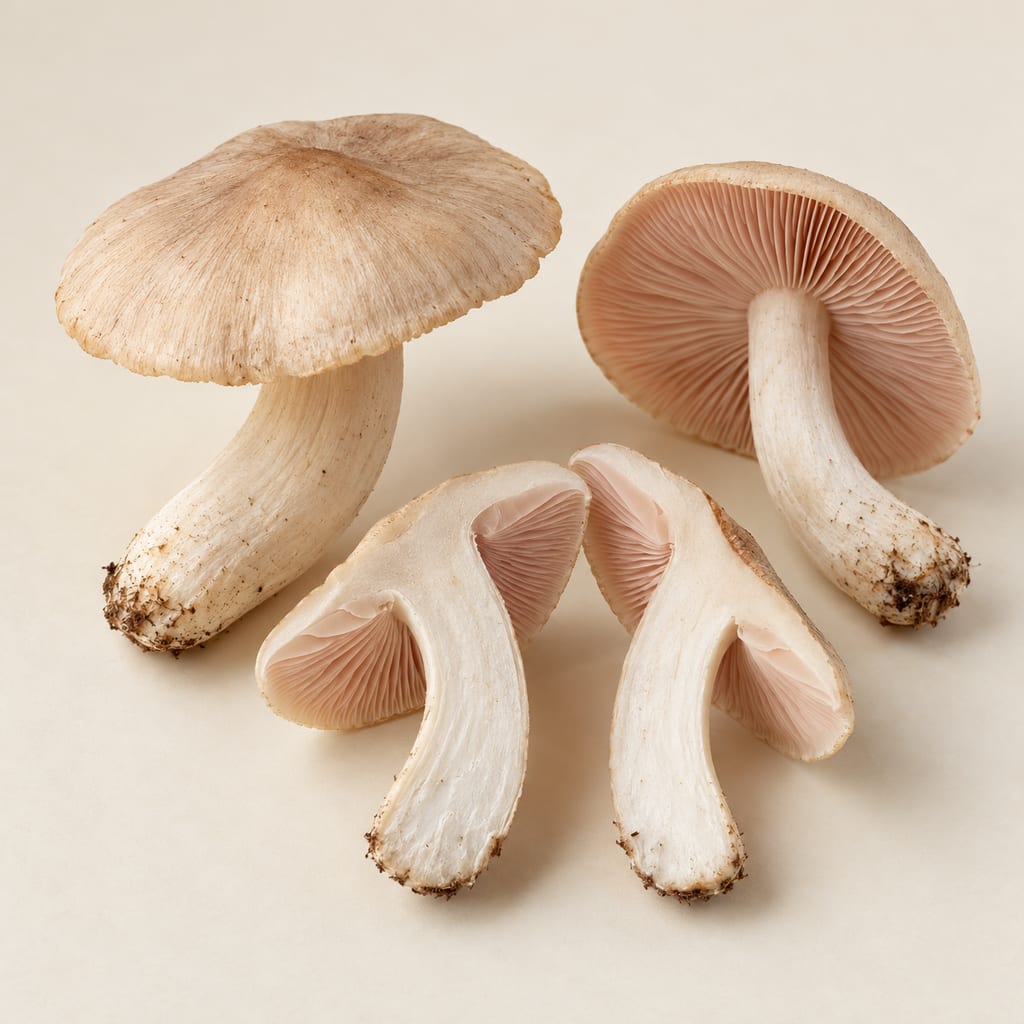
Entoloma sepium is a spring pinkgill associated with Rosaceae. Chinese and European sources list it as edible or conditionally edible, while taxonomic uncertainty and a poisonous lookalike warrant caution.
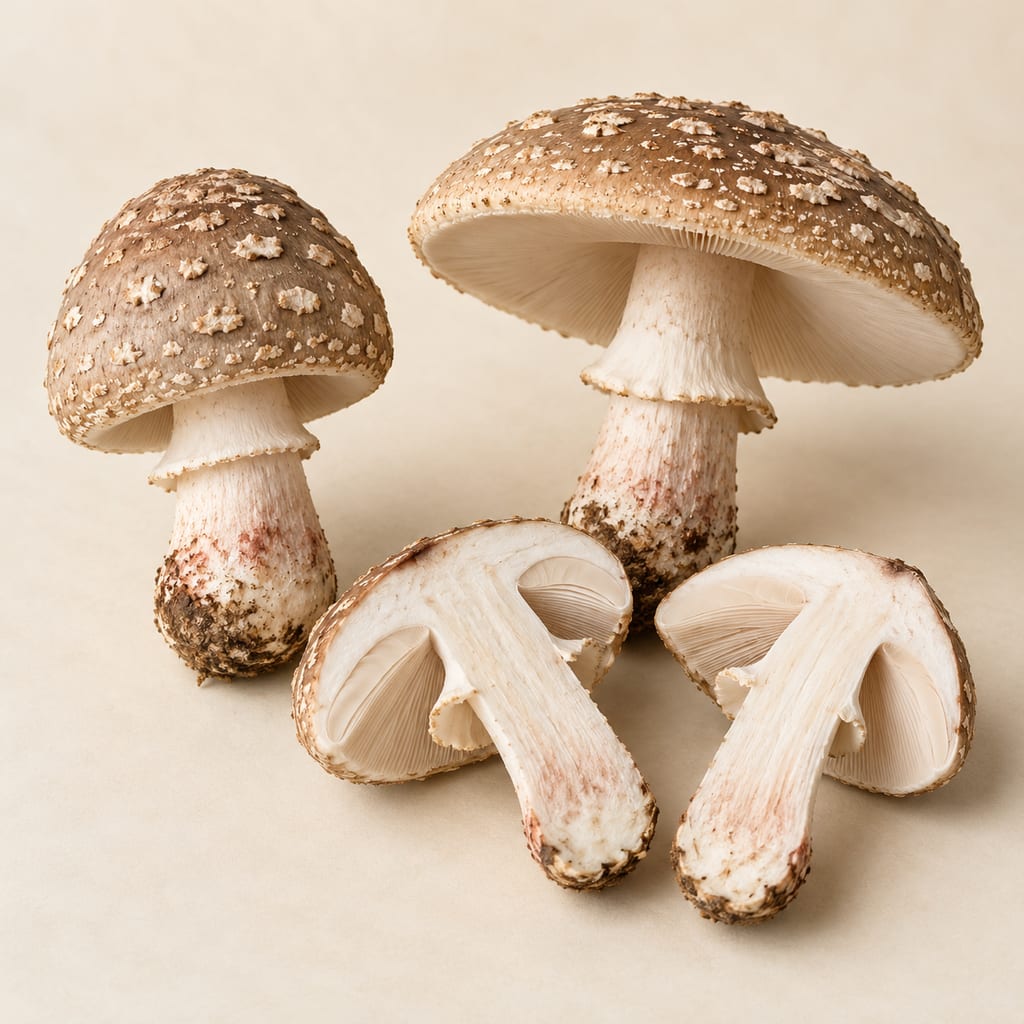
The European blusher, Amanita rubescens, is a woodland amanita whose flesh turns pink when cut. It is eaten only well cooked and is easily confused with the poisonous panthercap.
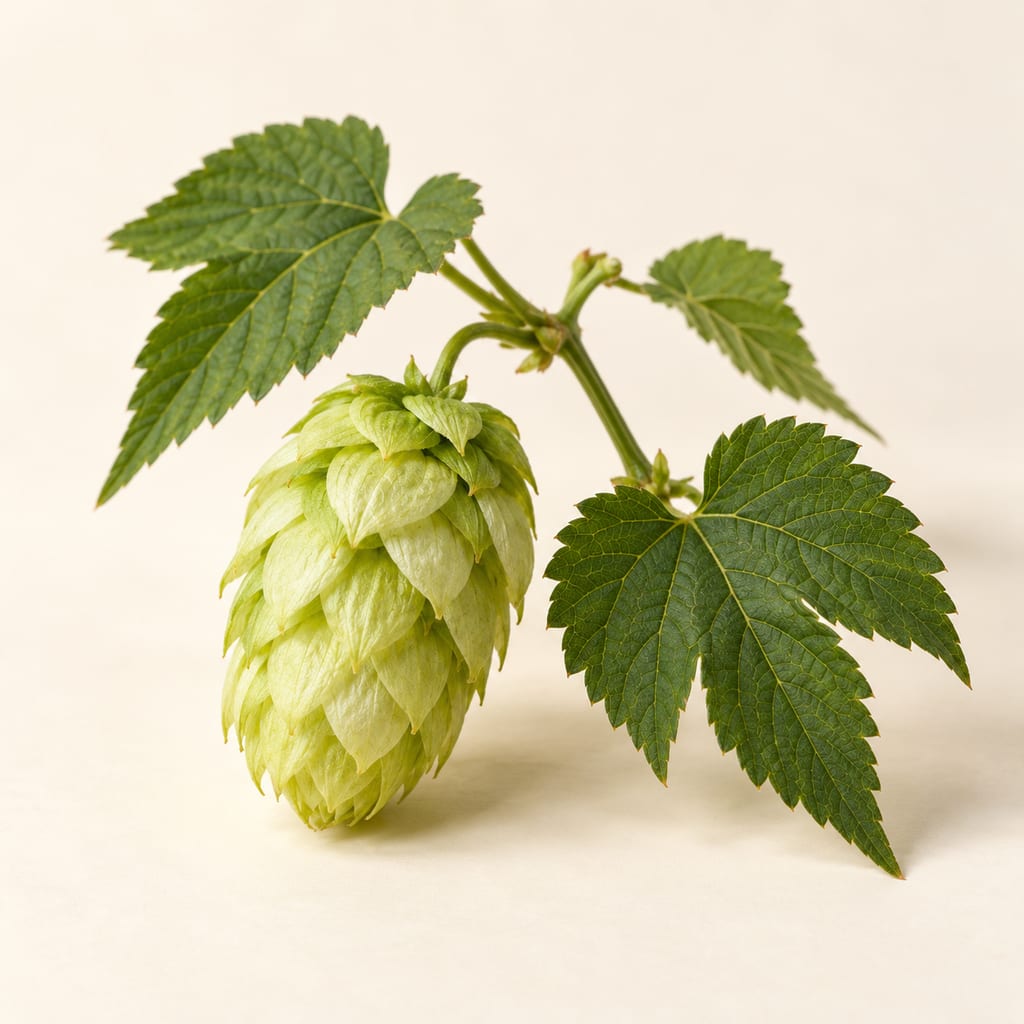
A traditional German aroma-hop land variety, associated with the Hallertau and described with herbal, spicy and floral notes. Cultivar identity, crop analysis and the growing place of a particular lot remain separate facts.
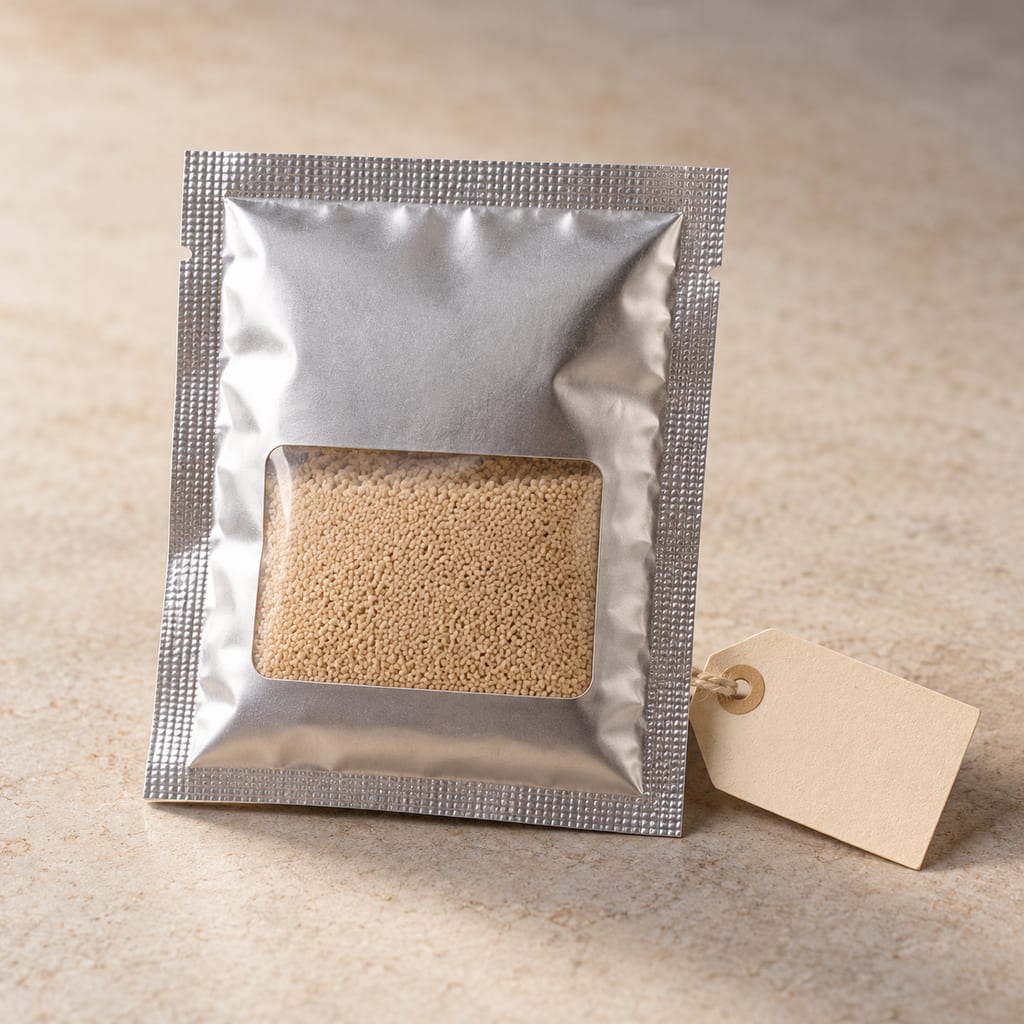
Lager yeast is the bottom-fermenting brewing yeast Saccharomyces pastorianus, a hybrid of S. cerevisiae and S. eubayanus, sold and kept as named strains that are not interchangeable.
No community contributions have been published for this entry yet.
Sign in to contribute. Published comments and photos are free to read.
White LabsIdentity · Fermentation function
WLP300 Hefeweizen Ale YeastThe current product page specifies WLP300 flavour character, low flocculation, attenuation, temperature and alcohol-tolerance ranges, and STA1-negative status. It supplies no accession or brewery genealogy.
Cited in: A named culture for wheat beer; Banana aroma without banana; Reading attenuation and flocculation
American Homebrewers AssociationIdentity · Fermentation function
Brewing with ExtractThe Weizen recipe lists WLP300 and 3068 as alternative cultures and separates wort preparation from fermentation. Its inconsistent metric conversion does not change the stated five-gallon batch.
Cited in: A named culture for wheat beer; What yeast changes in wort; Its place in the linked extract beer
White LabsIdentity · Fermentation function
The Next Generation: Better ViabilityThe manufacturer describes its pitchable-culture and PurePitch milestones and distinguishes viability estimates from measurement. These are not WLP300 isolation or release dates.
Cited in: From a maintained culture to a homebrew ingredient; Keeping the purchased culture and keeping a harvest
White LabsIdentity · Fermentation function
Grown using FlexCell TechnologyThe production handout describes culture banking, propagation, flexible reactors and quality checks. Its WLP001 example is distinct from WLP300 lot evidence.
Cited in: Propagation is a production process
FEMS Microbiology Reviews 41(Supplement 1):S95–S128Identity · Fermentation function
Physiology, ecology and industrial applications of aroma formation in yeastThe review explains ethanol and carbon dioxide formation, ester synthesis and hydrolysis, aroma perception and phenolic pathways. General yeast mechanisms do not establish WLP300’s genotype.
Cited in: What yeast changes in wort; Banana aroma without banana; Clove character comes through another pathway
Journal of Agricultural and Food Chemistry52(3):602–608Identity · Fermentation function
Ferulic Acid Release and 4-Vinylguaiacol Formation during Brewing and Fermentation: Indications for Feruloyl Esterase Activity in Saccharomyces cerevisiaeThe abstract examines ferulic-acid release and 4-vinylguaiacol formation in barley and wheat brewing systems and phenolic-off-flavour-positive fermentation. It contains no WLP300-specific measurement.
Cited in: Clove character comes through another pathway
White LabsIdentity · Fermentation function
Beer GlossaryThe glossary defines attenuation and flocculation and gives a WLP300 haze example. These measures are not safety or packaging endpoints.
Cited in: Reading attenuation and flocculation
Journal of the Institute of Brewing122:403–411Identity · Fermentation function
Gene expression in wheat beer yeast strains and the synthesis of acetate estersThe experiment compares five named TUM strains under matched conditions, with differences in acetate esters and gene expression. WLP300 is not identified as a tested strain.
Cited in: The culture and its conditions work together
Technical University of MunichIdentity · Fermentation function
Entstehung, Abbau und potentielle Verlustquellen ausgewählter Aromastoffe während der Produktion von WeizenbierenThe title and English summary discuss wheat-beer aroma formation, losses and vessel conditions. The summary does not identify WLP300 or supply its operating schedule.
Cited in: The culture and its conditions work together
White LabsIdentity · Fermentation function
Basics of Yeast Handling: Recommendations for White Labs Pitchable Yeast CulturesPurchased-culture handling guidance distinguishes refrigeration and best-before information from harvested-slurry instructions. It does not establish one storage life for every culture form.
Cited in: Keeping the purchased culture and keeping a harvest