
All-purpose wheat flour
A refined common-wheat flour blended for a broad range of baking; its protein and behavior vary with wheat, milling and market.
 FermenteaWhere food goes to change
Mushrooms
The wood hedgehog, Hydnum repandum, is a wild edible fungus with spines under the cap, widespread in European woods. Sources rate it a choice edible that turns bitter when old, and report that it accumulates caesium.
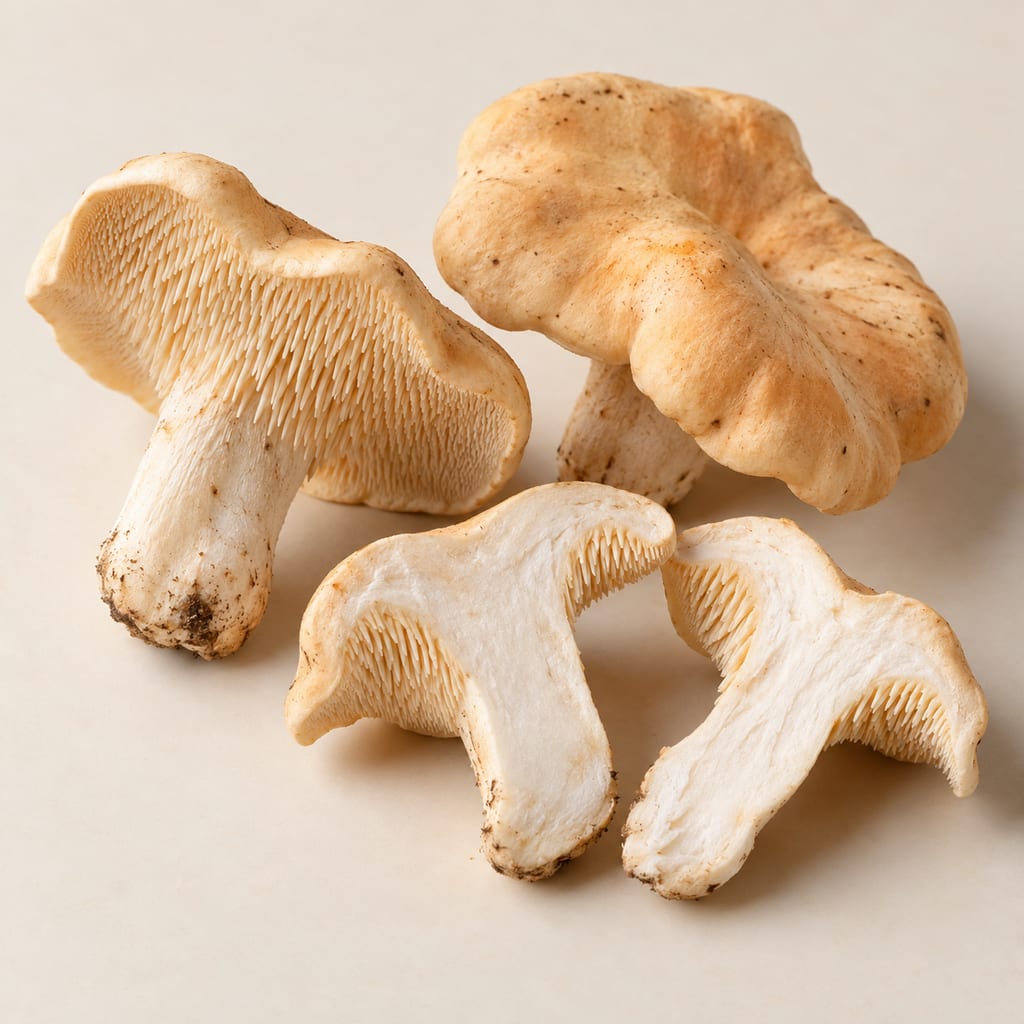
The wood hedgehog, Hydnum repandum, is a wild mushroom with a dry, smooth cap and a dense layer of whitish spines on its underside rather than gills. It forms a mycorrhizal partnership with trees in both coniferous and deciduous woods, and it grows singly, scattered or in groups, sometimes in fairy rings. In Europe it is one of the best-known wild edible fungi.
The species is described as a choice edible. Sources say its flavour is mild, sweet and nutty, and its texture firm and crunchy. Older specimens can taste bitter, so the quality of the picked fruit body matters.
Carl Linnaeus described the species in 1753, and Elias Magnus Fries sanctioned the name in 1821. It is the type species of the genus Hydnum, whose name comes from a Greek word for truffle. Older names include Dentinum repandum and Sarcodon repandus. Common names include wood hedgehog, sweet tooth, pig's trotter and yellow tooth fungus. In France it is sold as pied-de-mouton, meaning sheep's foot, and in Germany it is known as Semmelstoppelpilz.
Variety rufescens, a smaller and deeper apricot-orange form, is treated as a synonym of H. rufescens by Wikipedia. Variety album is the white form, called white wood.
The cap is orange, yellow or tan and up to 17 cm wide, though larger specimens are recorded. It is dry, smooth, often irregular, with a wavy margin. The spines are whitish, 2 to 7 mm long, and sometimes run down the stipe. The stipe is 3 to 10 cm long, white or cap-coloured, and sometimes off-centre. The flesh is white, firm and brittle, and bruises yellow to orange-brown. The spore print is pale cream, and the spores are smooth and roughly spherical to broadly egg-shaped.
The species is mycorrhizal and fruits from summer to autumn. Wikipedia names no specific host tree for Europe, and it notes an association with oaks in eastern North America. It is widely distributed in Europe, the Pacific Northwest and the Rocky Mountains, and is not recorded in Canada. Its conservation status varies: it is listed as vulnerable in the Netherlands, Belgium and Germany, and as Least Concern in Sweden.
The spines separate it from gilled species, and the sources say no poisonous mushroom shares this feature. Look-alikes named in the sources include the white hedgehog (H. albidum) and the giant hedgehog (H. albomagnum) of North America, H. umbilicatum, which has a navel-like cap and larger spores, H. rufescens, which is smaller with a deeper apricot-orange cap, and H. ellipsosporum, a German species with ellipsoid spores.
Cooks sauté or fry the fruit bodies, simmer them in milk or stock, pickle small specimens, and use them in white wine or cream sauces. The fungus freezes well. Older or wormy specimens taste bitter and have a tougher texture; boiling can remove the bitterness. Specimens under conifers can taste unpleasantly strong.
The form amarum is reported as inedible because of bitterness at every stage of growth. The sources do not give a recommended preparation for every case.
Wikipedia gives no toxicity rating for the species beyond its statement that there are no poisonous look-alikes. It also reports that European fruit bodies accumulated caesium after the 1986 Chernobyl accident, at a high rate. The sources reviewed give no safe quantity.
Appearance, smell and taste do not establish that a mushroom is safe to eat. Wild fungi can carry environmental contaminants, so identify the species with an experienced expert and follow official food safety advice before eating any wild mushroom.
The sources do not give a dated record of food use before the cookbook references, a cultivation history, or the caesium level in specimens sold today. The species is not farmed, according to the trade sources reviewed. These are unknown, not negative findings.
Widely distributed in Europe and in use as a wild food; sold as pied-de-mouton in France. The sources do not name a regional tradition beyond this.
Wikipedia lists these as distribution areas. The sources reviewed do not record food use there, so the relationship is unknown.
A refined common-wheat flour blended for a broad range of baking; its protein and behavior vary with wheat, milling and market.

Toasted almonds are whole sweet almond kernels dry-roasted until golden to brown. Heat replaces their marzipan note with a roasted, nutty one; they thicken and flavour romesco.
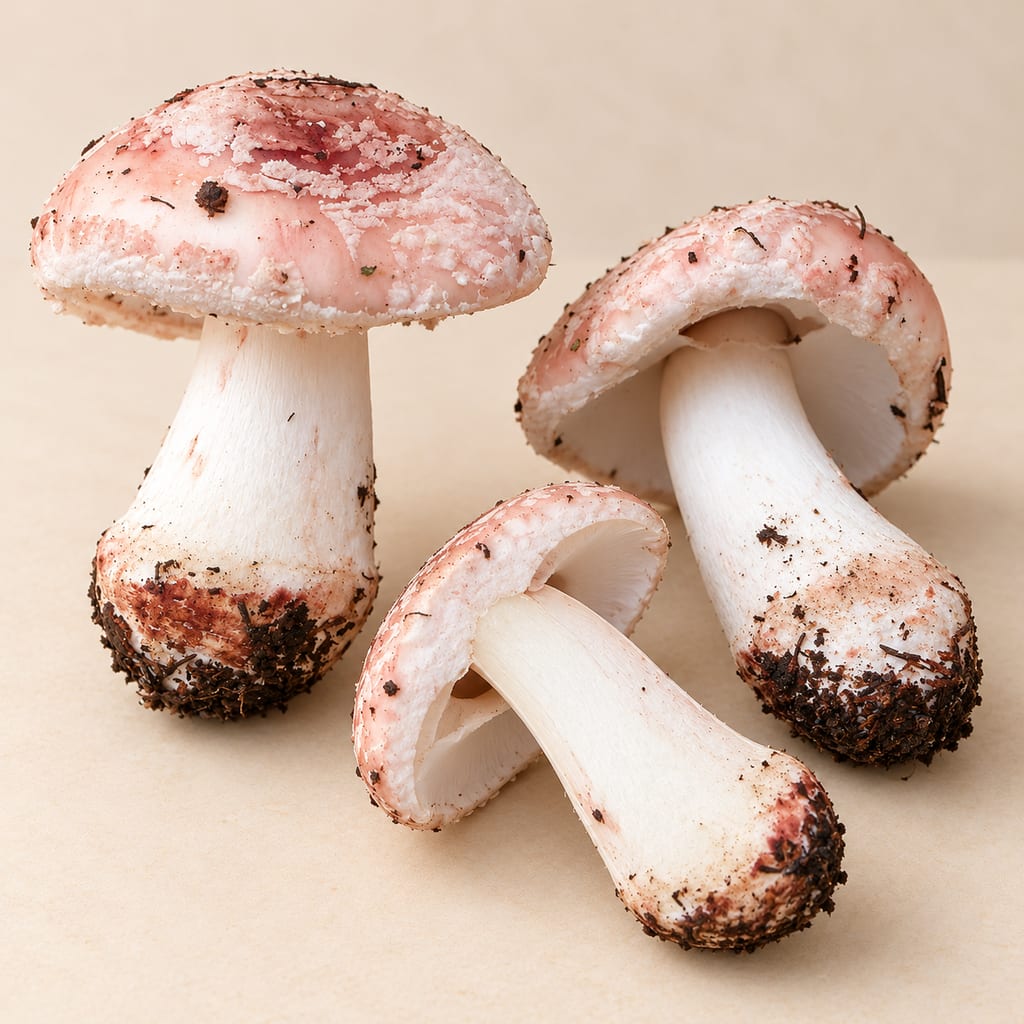
Amanita novinupta is a western North American blusher, a forest mushroom recorded as food in Mexico, and one that must be cooked because its raw flesh is toxic.
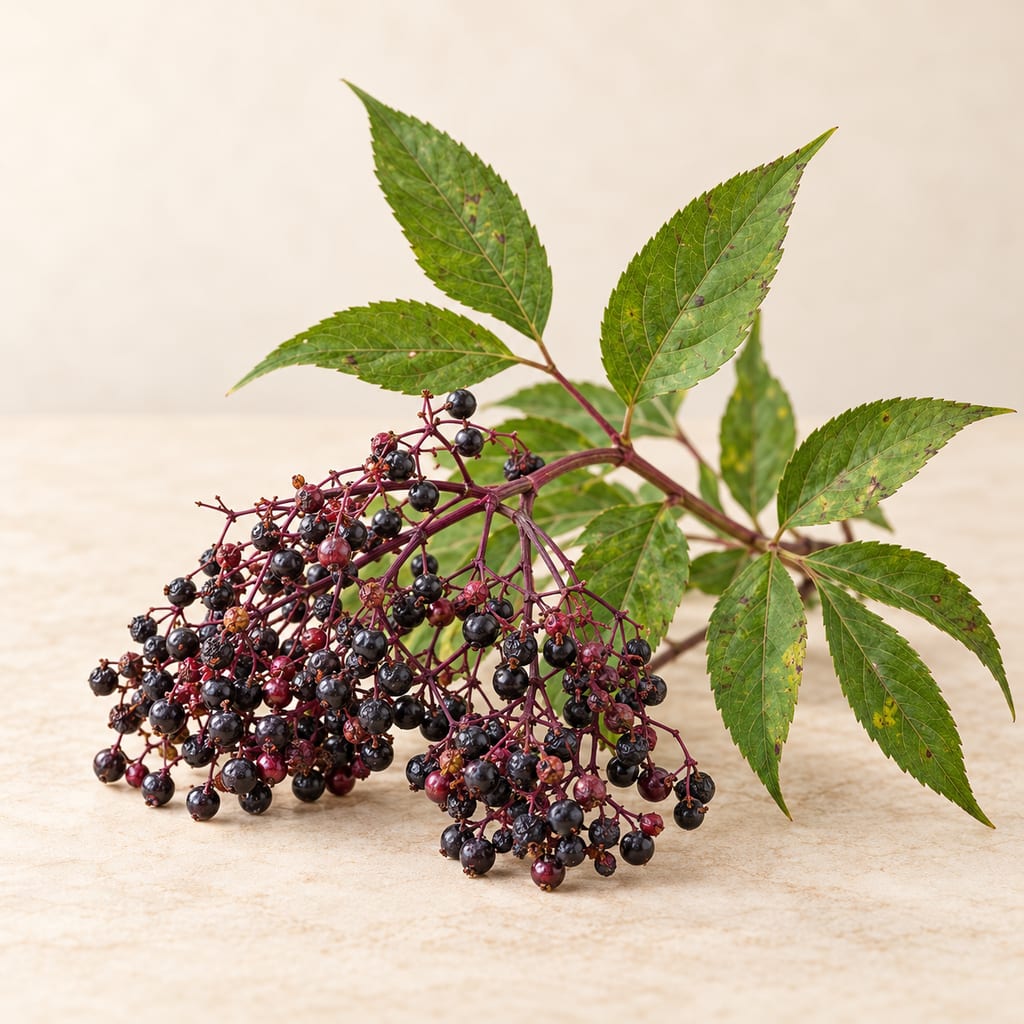
Sambucus canadensis is the accepted name used here for American elderberry. Missouri production guidance and named-cultivar studies give useful regional growing information, while food and analytical sources leave process questions open.
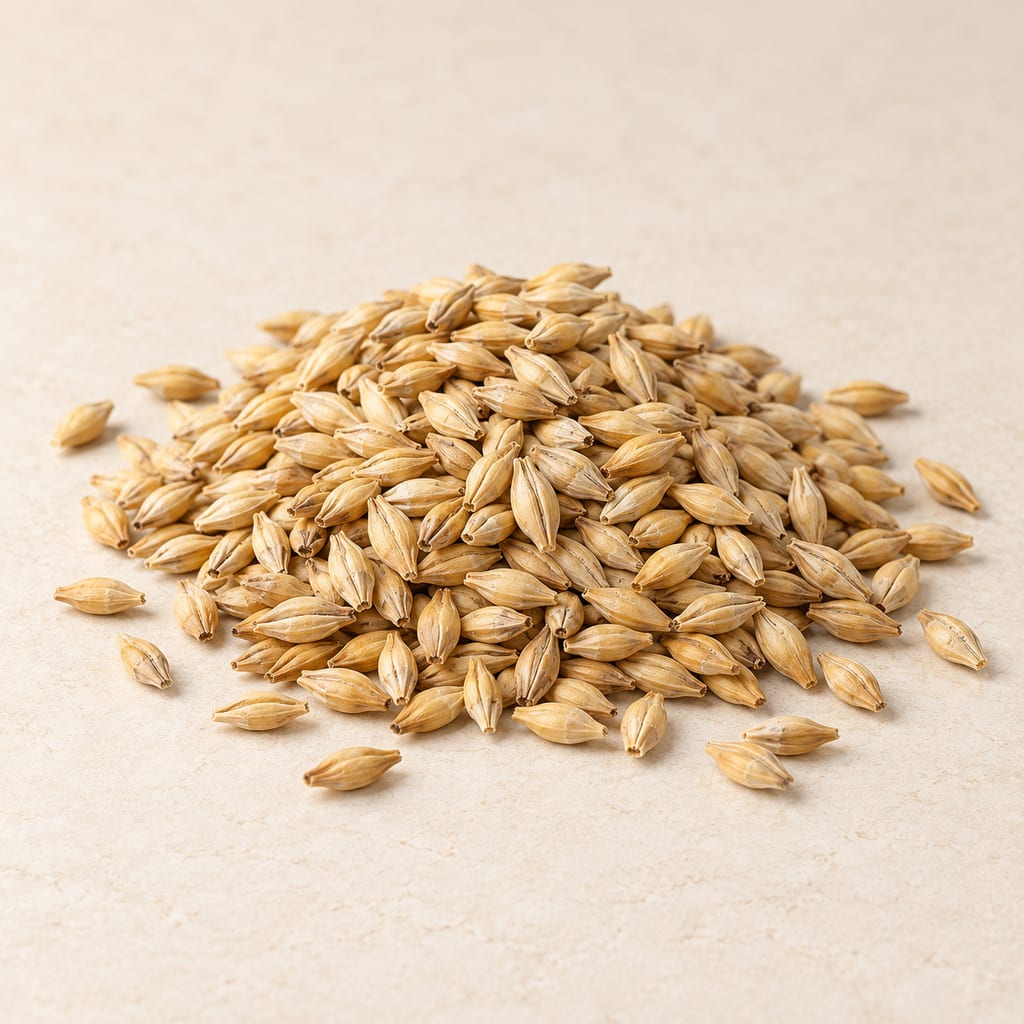
A lightly kilned brewing base made from two-row barley. It supplies starch and enzymes for the mash, with the maltster’s product and lot analysis defining its brewing properties.

Ripe avocado flesh is the soft, buttery, fat-rich pulp of Persea americana, eaten raw. It is low in acid, so it is a fresh ingredient that needs care in chilled dishes.
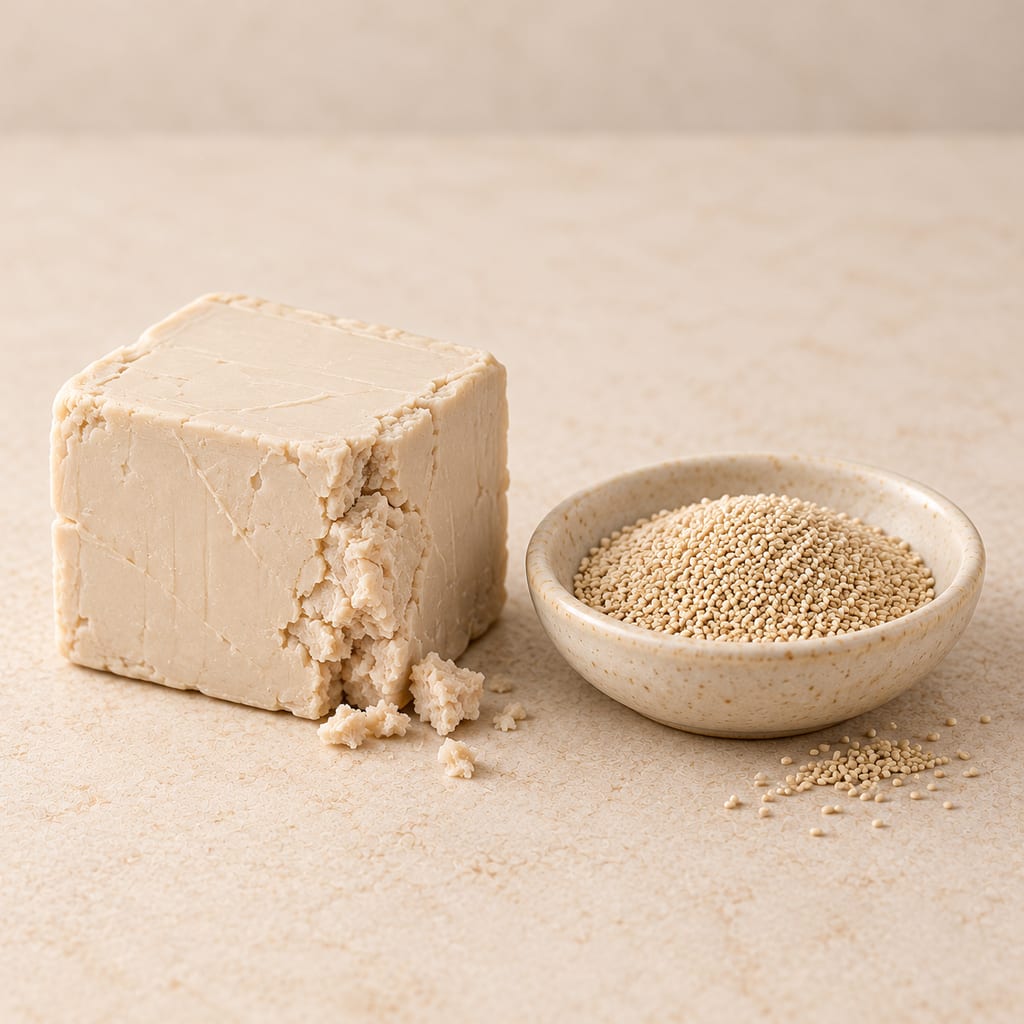
Baker's yeast is a cultivated living leavener, commonly sold fresh or dried. In dough, selected Saccharomyces cerevisiae cells make gas that can raise bread.
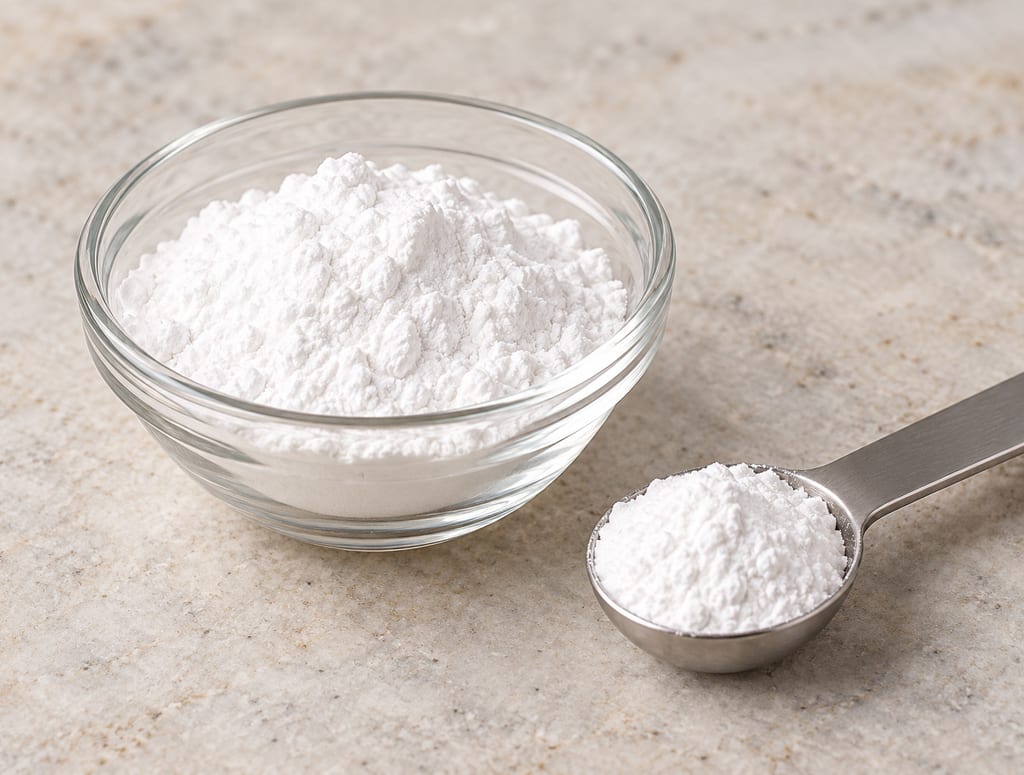
Baking powder is a dry chemical leavener that combines bicarbonate with acid-reacting ingredients and a carrier. Moisture and heat release carbon dioxide for quick breads, batters and griddle cakes.
No community contributions have been published for this entry yet.
Sign in to contribute. Published comments and photos are free to read.
WikipediaTaxonomy · Description · Habitat · Distribution · Edibility · Culinary · Safety · Conservation
Hydnum repandumDescribed by Linnaeus in 1753 and sanctioned by Fries in 1821; type species of Hydnum; synonyms include Dentinum repandum and Sarcodon repandus
Cap orange, yellow or tan, dry, smooth; spines 2 to 7 mm on the underside; stipe white or cap-coloured; flesh white, firm, bruises yellow to orange-brown; spore print pale cream
Mycorrhizal, singly or in groups in coniferous and deciduous woods, summer to autumn; widely distributed in Europe, the Pacific Northwest and the Rocky Mountains
Choice edible species, though mature specimens can develop a bitter taste; no poisonous look-alikes; boiling can remove bitterness
Sweet nutty taste and crunchy texture; cooked by pickling, simmering in milk or stock, and sauteing; freezes well
Look-alikes H. albidum, H. albomagnum, H. umbilicatum, H. rufescens, H. ellipsosporum
Caesium accumulation found in European fruit bodies after Chernobyl; listed as vulnerable in parts of Europe
Cited in: Overview; Names and taxonomy; Description; Habitat and distribution; Look-alikes; Preparation and use; Safety; Open questions
First NatureHistory · Identification · Use
Hydnum repandum L. - Wood HedgehogVery old cookbooks mention it as a good edible mushroom; eaten for centuries
Its spines distinguish it from gilled species; no toxic mushroom shares this feature
Cited in: Look-alikes; Preparation and use; Open questions