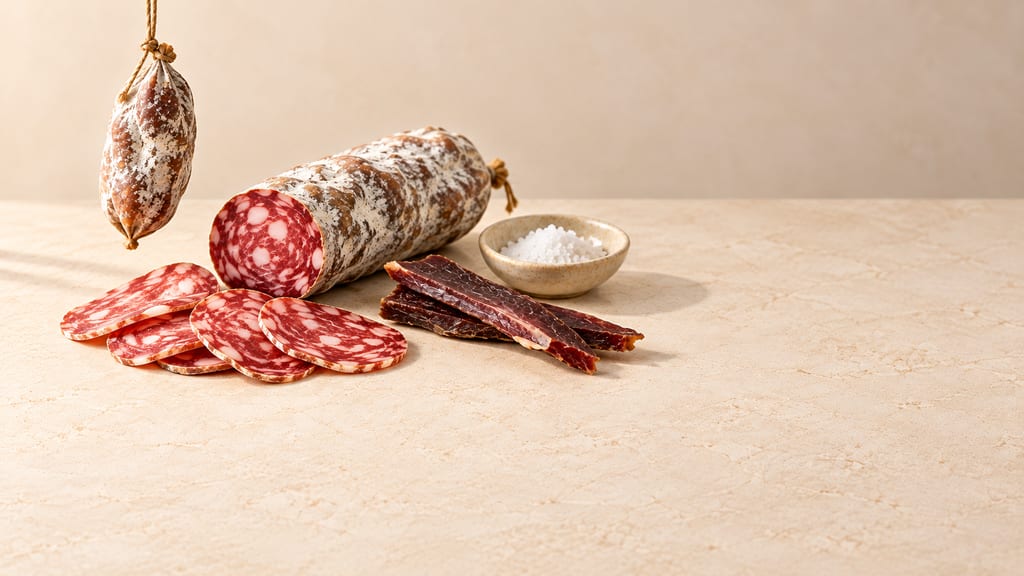
Fermented meat around the world
Dry salami, sour pork with rice, matured sheep and aged blubber follow different paths from animal to food. Their stories connect microbes with climate, slaughter, migration and the meals people share.
 FermenteaWhere food goes to change
Substrates
Yak meat is the flesh of domestic yak (Bos grunniens), eaten fresh and used in regional highland foods, including khyopeh, the fermented meat of Lachung, North Sikkim.
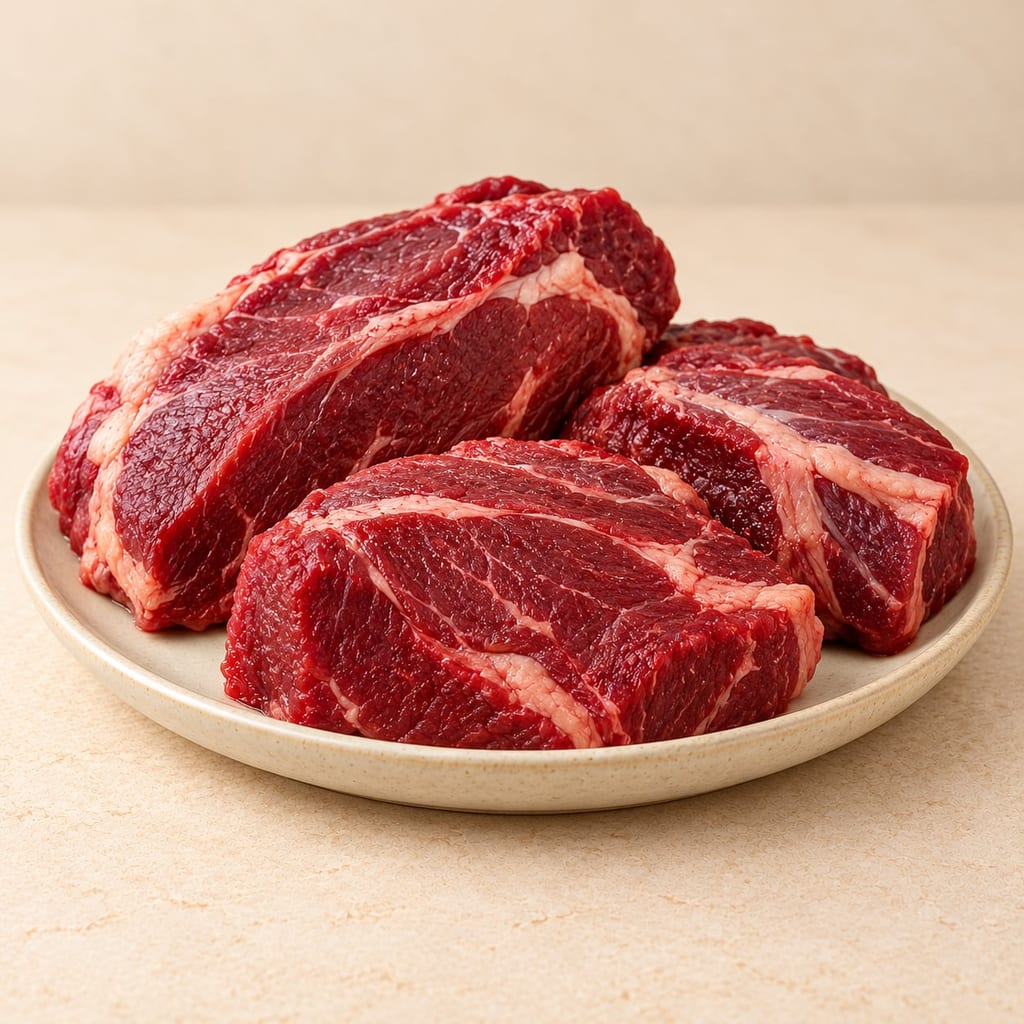
Yak meat is the flesh of the domestic yak, Bos grunniens, a large bovine adapted to high mountain environments. Yaks supply meat alongside milk, fibre, hides and transport; meat is one part of a mixed pastoral livelihood rather than the animal's only use.
Lean yak is often described as deep red, but colour, texture and fat cover vary with the animal, cut, age, feed, season and handling. The species name matters: yak meat is not beef from domestic cattle (Bos taurus or Bos indicus), and a generic label such as “red meat” does not identify which animal supplied it. Trade and restaurant descriptions should name yak where known, and a seller or source record should not infer species from appearance alone.
Yak carcasses are divided into familiar butcher's cuts, although names and butchery styles depend on local practice. A source that says only “yak meat” does not tell a cook whether the piece is a whole muscle, a minced mixture, a fatty trim or organ meat. Those forms behave differently under heat and in a fermentation, so preparation records need the source's actual material rather than a guessed cut.
Domestic yaks are kept across the high-altitude pastoral regions of the Himalaya and Tibetan Plateau. They graze alpine and subalpine pastures and tolerate conditions that limit other livestock. Families use them for milk and dairy foods, fibre, transport and meat, with the balance varying between communities and places.
Yak meat has no single supported birthplace. FAO describes use among pastoral households and commercial sale in multiple yak-keeping areas; the Leh district government likewise records yak meat as one part of Ladakh's livestock economy. Those sources support broad highland associations, not an origin claim for yak meat as a food.
A livestock map and a food-history map answer different questions. The presence of yaks in a region can establish that the animal is raised there; it cannot by itself date a meat dish, prove a local preparation or show when people first ate yak. Here, the Lachung source supports a particular traditional preparation, while regional husbandry sources support wider use without assigning a birthplace.
Yak husbandry also illustrates why meat cannot be separated from the animals' other roles. A yak may provide milk through its productive life, be used as a pack animal, and eventually supply meat. Decisions about slaughter and allocation of meat therefore sit within a pastoral economy and seasonal context; they are not simply a standardized commercial beef production chain.
In one Indian Journal of Animal Sciences study, lean yak meat averaged 76.23% moisture, 20.81% protein, 1.52% fat and 1.01% ash. The same paper found that age at slaughter affected composition and notes that differences in fat may reflect breed and management. These figures describe that study's samples. They are not a nutrition label for every yak or cut.
The amount of visible and intramuscular fat changes how a cut cooks and how a fermented mixture behaves. Khyopeh uses both meat and yak fat, while a lean steak or a dried strip is a different material. A recipe should identify the cut and fat source it actually specifies; the ingredient name alone does not supply those missing details.
A low average fat percentage in lean samples should not be confused with a claim that every yak cut is lean. A carcass includes muscles with different work, connective tissue and fat distribution. Trimmed meat, a fatty cut and an organ mixture cannot be substituted for one another without changing texture, richness, drying behaviour and the quantity of fat introduced into a mixture.
The protein and water values describe bulk composition; they do not measure the safety of a preserved product or predict how a particular cut will ferment. Nutritional composition and process control are separate questions. This study supplies no preservation recipe, cooking recommendation or universal shelf-life figure.
Khyopeh is a traditional fermented yak-meat preparation documented among the Lachungpa community in Lachung, North Sikkim. Bhutia, Thapa and Tamang's 2020 account describes preparation linked to December slaughter around Buddhist festivals. The survey records a local practice in a particular community; it does not establish when khyopeh began or claim that all yak meat is prepared this way.
For khyopeh, yak meat and fat are finely chopped and combined with salt. The account also names liver, lungs, intestines and other innards. The mixture is packed into the yak's rumen, tied, then hung above a kitchen oven or in an attic. The authors describe smoking and drying over four to six months, sometimes a year. Their report documents a traditional practice; it does not give a controlled, validated formula that can be transferred safely to a home process.
The product is described as brown and either soft or hard. It may be eaten raw or cooked with nettle leaves (Urtica dioica, locally sishnu) and boiled rice. It was prepared for household and festival consumption and was not found in local Sikkim markets in the authors' account. These details are specific to their fieldwork and should not be generalized to every yak-keeping community.
The rumen casing is part of the preparation: Bhutia, Thapa and Tamang describe it as the enclosure for a mixture that includes meat, fat and organs. This distinguishes khyopeh from a simple dried muscle strip or sausage in an intestinal casing. The paper gives the ingredients and broad household sequence but not weights, proportions or detailed controls; a reader should not fill those omissions from a different meat product.
The reported seasonal association links the practice to local slaughter and Buddhist festival timing. It describes the authors' observation of preparation in December, not a universal rule for yak slaughter or a calendar that applies throughout the Himalaya. Likewise, the account's characterization of khyopeh as rare and confined to Lachung reflects its field survey, not proof that no related products exist elsewhere.
A separate 2020 study by Bhutia, Thapa and Tamang analysed traditional Sikkim meat products, including five khyopeh samples from Lachung. It detected no enterotoxins in those samples. That is a bounded observation about the samples and tests used, not proof that the food or the traditional process is always safe. The paper also reports potentially harmful bacteria and toxins in some other products it examined, which reinforces that traditional status and sensory appearance do not replace food-safety evidence.
The available accounts describe smoking, drying and fermentation together, but they do not establish a reproducible control plan, a validated critical limit, or safety across different ambient conditions, ingredients and handling. No salt percentage, pH target, temperature, water activity, duration cutoff or storage period should be inferred from the reported household practice. A reader needs a separately validated, jurisdiction-appropriate process before attempting to reproduce a fermented meat product.
A laboratory result is attached to the particular sample, place, date and method of analysis. Different batches can carry different microbial populations, and a negative test for a selected toxin does not show that all pathogens, toxins or hazards were absent. These limits matter because the paper's sample set is small and because measured microbiology is a snapshot rather than a controlled challenge study.
The distinction between a food's cultural importance and its process validation should be explicit. Describing khyopeh as a traditional fermented food respects its documented place in Lachungpa practice; that description is not a recommendation to make it, nor evidence that a reader can reproduce its preservation safely from a short account.
Yak meat is eaten fresh as well as preserved. FAO describes household consumption and sale, while local practices vary by region. Other sources and photographs document market cuts, dried yak meat, sausages and cooked dishes, but a dried or smoked product is not automatically fermented. Classification depends on evidence for the actual process, not its name, appearance or the presence of a smokehouse.
Keep named preparations distinct. Khyopeh is a specific fermented product made with meat and fat in a rumen casing; it is not a synonym for yak jerky, dried meat or sausage. Any source that calls another yak product fermented should be checked for its own ingredients, method, community and region before linking that claim to khyopeh.
Preservation can use drying, smoking, salting, fermentation or combinations of these. These are related but distinct operations: smoke can add flavour and contribute to drying, while microbial fermentation depends on active organisms and conditions that the source must actually report. Product colour or a long hanging period does not identify which processes took place or establish that the result is safe.
The wider highland context also means that yak meat can appear in ordinary meals without any preservation step. The subject of this page is the raw animal material; dishes, sausages and preserved foods each require their own record when their ingredients and methods are documented. A photograph of a prepared dish can illustrate use, but it is not a process source.
Where it is sold, ask the seller to identify the species and the cut, and use the product's own storage and handling directions. The sources inspected here do not establish a universal retail grade, shelf life, or sensory test for good yak meat. Colour alone cannot identify the species or establish freshness and safety.
Yak is raw mammalian meat unless it has been cooked or otherwise processed. Keep it apart from foods that will be eaten without cooking; raw juices can transfer bacteria through hands, tools, counters and containers. Wash hands and clean equipment and surfaces after contact, and do not reuse a plate or utensil for cooked food before washing it. Follow current local food-safety guidance for refrigeration, cooking and leftovers; the khyopeh field description is not a household safety protocol.
When handling a whole cut and a minced or chopped mixture, keep their identities clear. Grinding or chopping spreads surface material through the mixture and adds equipment and hand contact. The available yak sources do not set species-specific cooking targets, storage times or temperature limits. This page therefore leaves those values unstated instead of borrowing limits from beef or another product.
The use of rumen and other organs in khyopeh makes careful identification particularly important. The cited traditional description names the animal tissues, but it does not explain inspection, cleaning, sanitation or organ preparation standards. Those omissions should remain visible. A traditional account cannot replace current inspection and food-safety requirements where the food is prepared or sold.
Yak meat is an animal-derived food and is unsuitable for vegetarian or vegan diets. People with alpha-gal syndrome may react to meat from mammals; CDC describes alpha-gal as present in most mammals. A person with this diagnosis should follow their clinician's advice about yak and other mammalian products. The fact that a meat is uncommon or from a different bovine species does not make it a safe substitute.
This allergy note is distinct from the risk of bacterial contamination in raw meat. One concerns an immune reaction to alpha-gal; the other concerns foodborne hazards and cross-contamination. Proper kitchen cleaning does not change an allergy, and the allergy does not remove the need to handle raw meat safely.
alpha-gal
The sources document Lachungpa preparation of khyopeh in Lachung; they do not establish that yak meat or khyopeh originated here.
District government records yak meat among the uses of Ladakh yaks; this is a regional livestock-use association, not an origin claim.
FAO describes yak meat use among highland pastoral families across yak-keeping regions; no single origin or narrower locality is claimed.
Dry salami, sour pork with rice, matured sheep and aged blubber follow different paths from animal to food. Their stories connect microbes with climate, slaughter, migration and the meals people share.

A gelling polysaccharide extracted from red seaweeds, sold as kanten strips or powder; it sets firm at a low concentration and stays solid until about 85 °C.
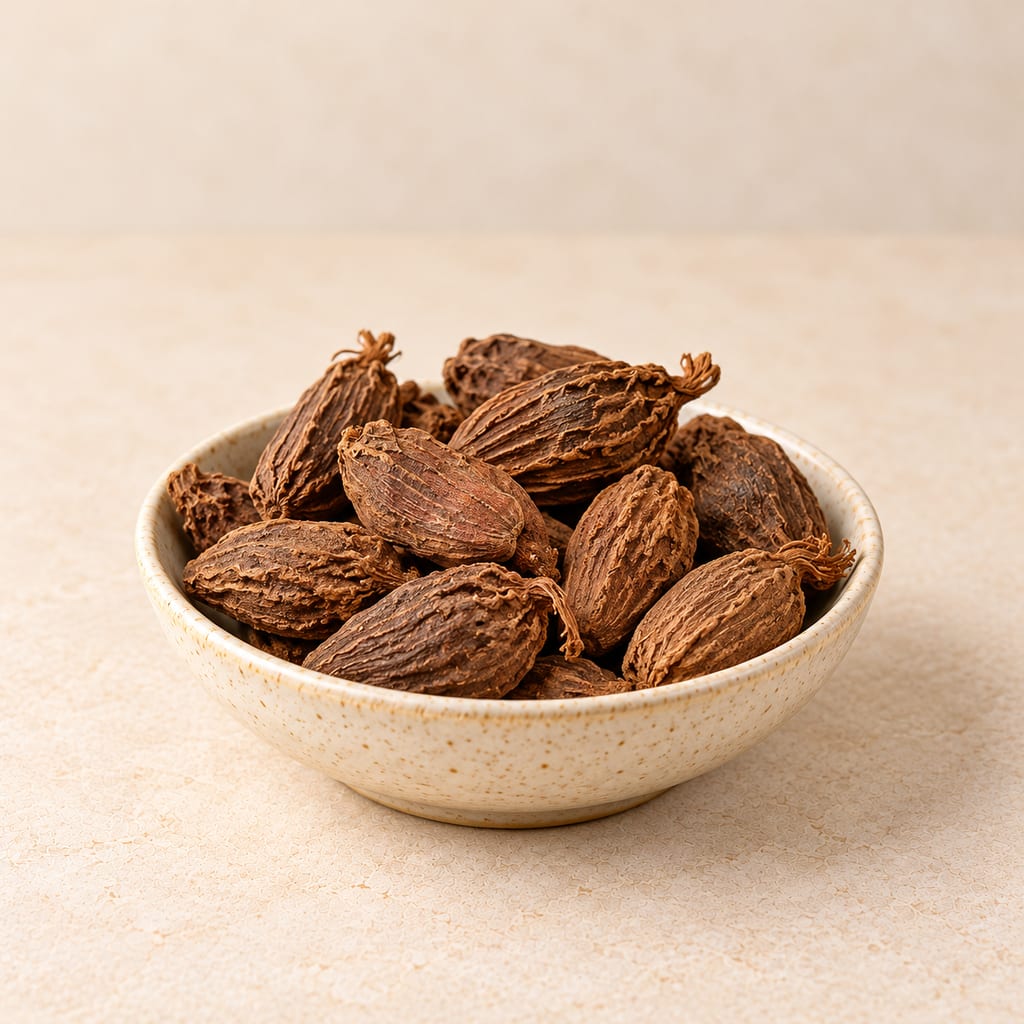
Alainchi is the large or black cardamom of the eastern Himalaya, the dark, smoke-dried pods of Amomum subulatum. Its camphor-cool, smoky seeds season Himalayan and North Indian cooking and a sweet Nepali lapsi achar.
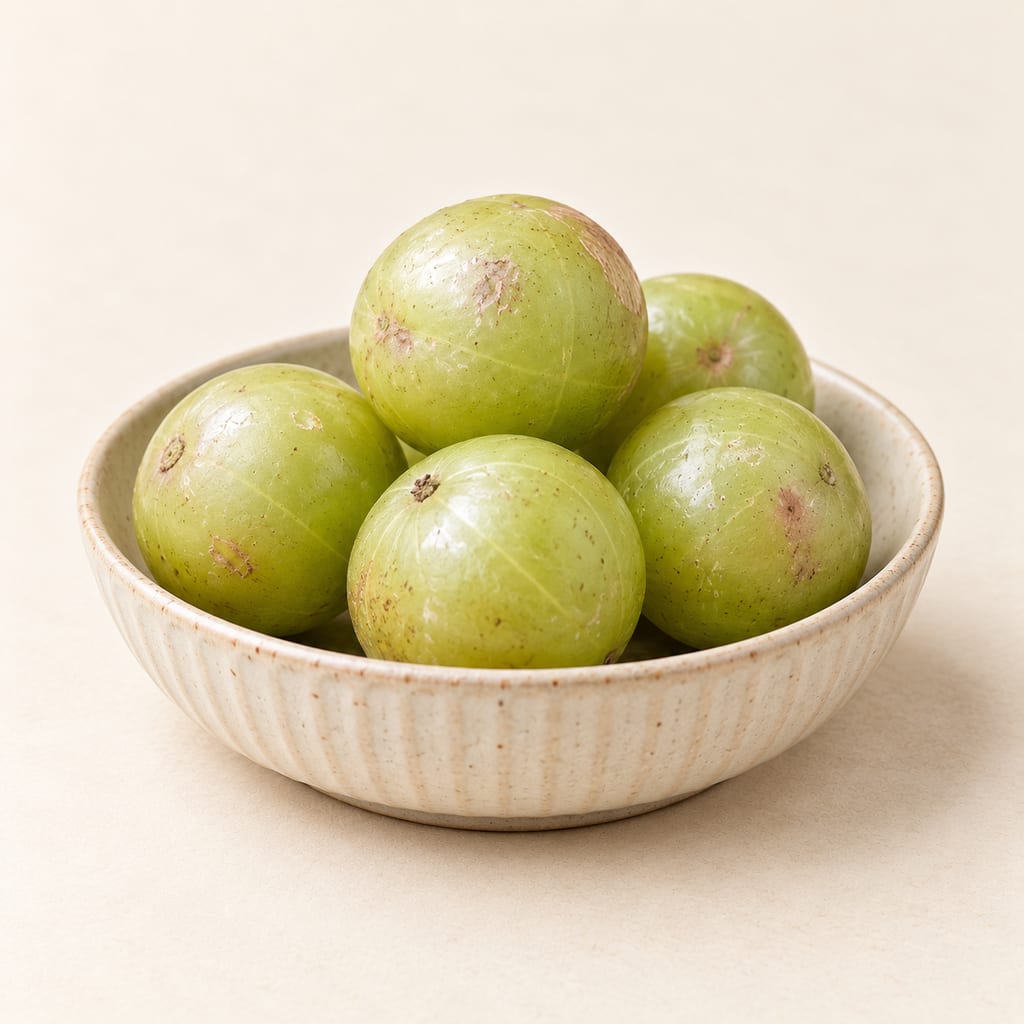
Amla is the firm, sharply sour fruit of Phyllanthus emblica. Cooks transform it into murabba, pickles, chutneys, drinks and dried snacks.

A wild Asian Amanita reported as food in regional literature and listed in China’s edible-fungi catalogue. Lookalikes include lethal species; this record is not a guide to identifying wild mushrooms.
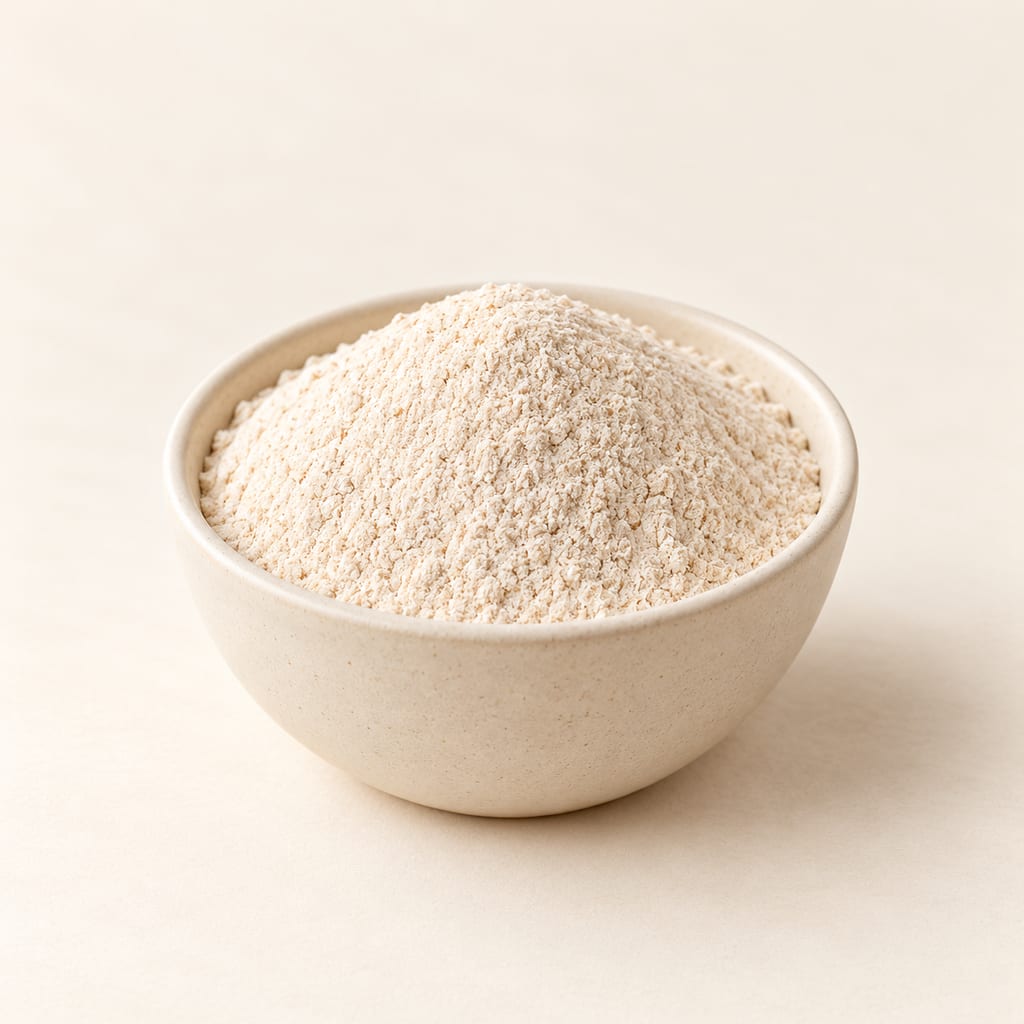
Atta is wheat flour used across South Asian bread traditions. Indian standards distinguish wheat flour (atta) from resultant atta; milling route and particle size shape its behavior in chapati dough.

Bamboo shoots are the young culms of many bamboo species, eaten after boiling or leaching in Asia, and fermented into sour and preserved foods in the Himalayas, northeast India and Burma.
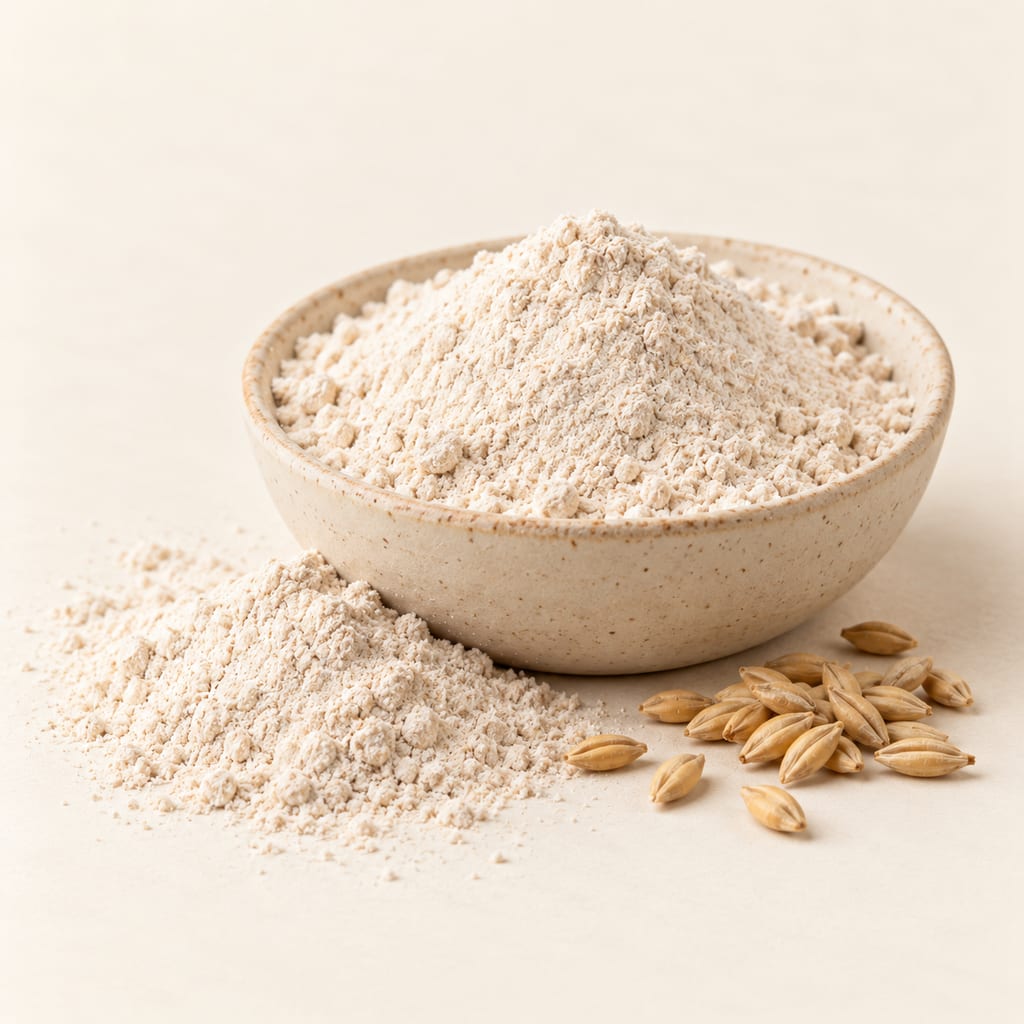
Barley flour is ground barley grain; whether it comes from pearled or hulless kernels, its milling and limited wheat-like gluten-forming ability shape the doughs and foods it can make.

Black carrot is the anthocyanin-pigmented Eastern carrot (Daucus carota var. atrorubens), the purple root that preceded orange types and still colours kanji and şalgam.
No community contributions have been published for this entry yet.
Sign in to contribute. Published comments and photos are free to read.
Indian Journal of Traditional Knowledge 19(1):187–191Identity · Traditional use · Method · Geography
Khyopeh, a traditional fermented yak meat product of SikkimKhyopeh is prepared and eaten by Lachungpa in Lachung, North Sikkim; field survey describes December slaughter around Buddhist festivals.
Yak meat and fat are chopped and salted, with liver, lungs, intestines and other innards; mixture is stuffed into the yak rumen casing, tied and hung above a kitchen oven or in an attic for smoking and drying for 4–6 months or up to a year.
The product is described as brown, soft or hard and eaten raw or cooked with nettle leaves and boiled rice; household and festival use rather than local-market sale is reported.
The study reports a limited survey and does not establish an origin date or validate a safe process.
Cited in: A measured composition, not a fixed profile; Khyopeh of Lachung; What the microbiology study can and cannot tell us; Other uses and named forms; Buying, choosing and handling
Frontiers in Microbiology 11:599606Microbiology · Safety
Molecular Characterization of Bacteria, Detection of Enterotoxin Genes, and Screening of Antibiotic Susceptibility Patterns in Traditionally Processed Meat Products of Sikkim, IndiaThe authors characterize khyopeh as fermented yak meat, traditionally smoked/dried above an earthen oven for 4–6 months.
Five khyopeh samples were collected in Lachung; no enterotoxins were detected in those samples, but the investigation is a small sampling study and does not validate the process or general safety.
The paper identifies potential foodborne hazards in traditionally processed meat products.
Cited in: Khyopeh of Lachung; What the microbiology study can and cannot tell us; Other uses and named forms
The Indian Journal of Animal Sciences 76(7)Composition
Influence of age on proximate composition of yak meatOne study reports mean lean yak meat composition of 76.23% moisture, 20.81% protein, 1.52% fat and 1.01% ash; composition changed with slaughter age and fat differences may reflect breed and management. These are study results, not universal values.
Cited in: A measured composition, not a fixed profile
Food and Agriculture Organization of the United NationsHusbandry · Composition · Geography
Meat productionYak meat is eaten by pastoral families and also sold; production varies by breed, age, sex, condition, season, location and forage.
Yak production systems use animals for meat, milk and other products in high-altitude environments; source describes regional variation rather than a single yak-meat origin.
Cited in: What yak meat is; Animals, meat and the highlands; Other uses and named forms
District Leh, Government of LadakhHusbandry · Geography
Animal HusbandryIn Ladakh, yak provides meat, milk and fibre and serves as a pack and transport animal in high-altitude pastoral life.
Cited in: What yak meat is; Animals, meat and the highlands
U.S. Centers for Disease Control and PreventionAllergy · Safety
About Alpha-gal SyndromeAlpha-gal syndrome is an allergy to a molecule found in most mammals; affected people may react to mammalian meat. Yak is a mammal, so the condition is relevant to yak meat.
Cited in: Allergy and dietary context
USDA Food Safety and Inspection ServiceSafety · Handling
Can bacteria spread from one surface to another?Raw-meat juices can spread bacteria to ready-to-eat food, hands and equipment; clean hands, surfaces and utensils and keep raw-meat contact separate.
Cited in: Buying, choosing and handling; Allergy and dietary context