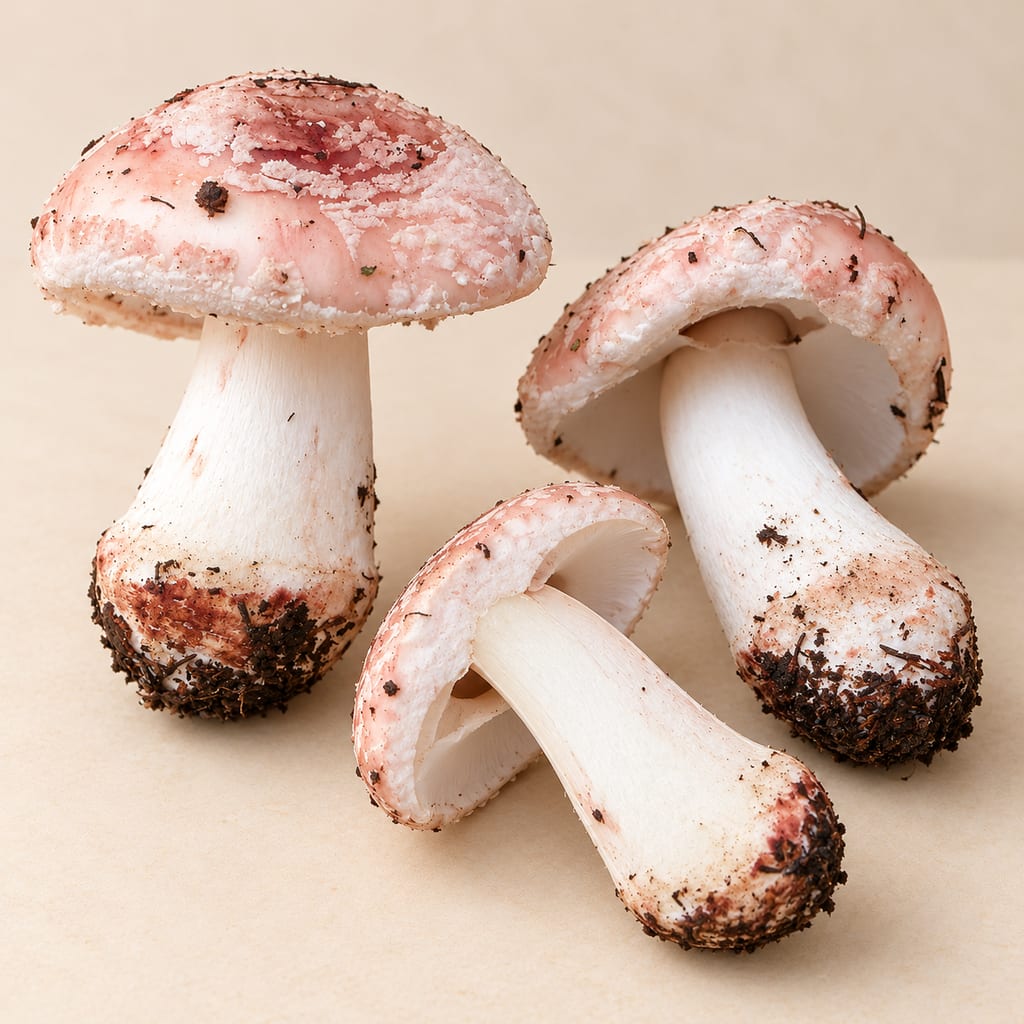
American blusher
Amanita novinupta is a western North American blusher, a forest mushroom recorded as food in Mexico, and one that must be cooked because its raw flesh is toxic.
 FermenteaWhere food goes to change
Mushrooms
Harrya chromapes, the yellow-footed bolete, is a forest bolete of the Americas. Reports call it edible but not uniformly preferred, and it is often infested with insect larvae.
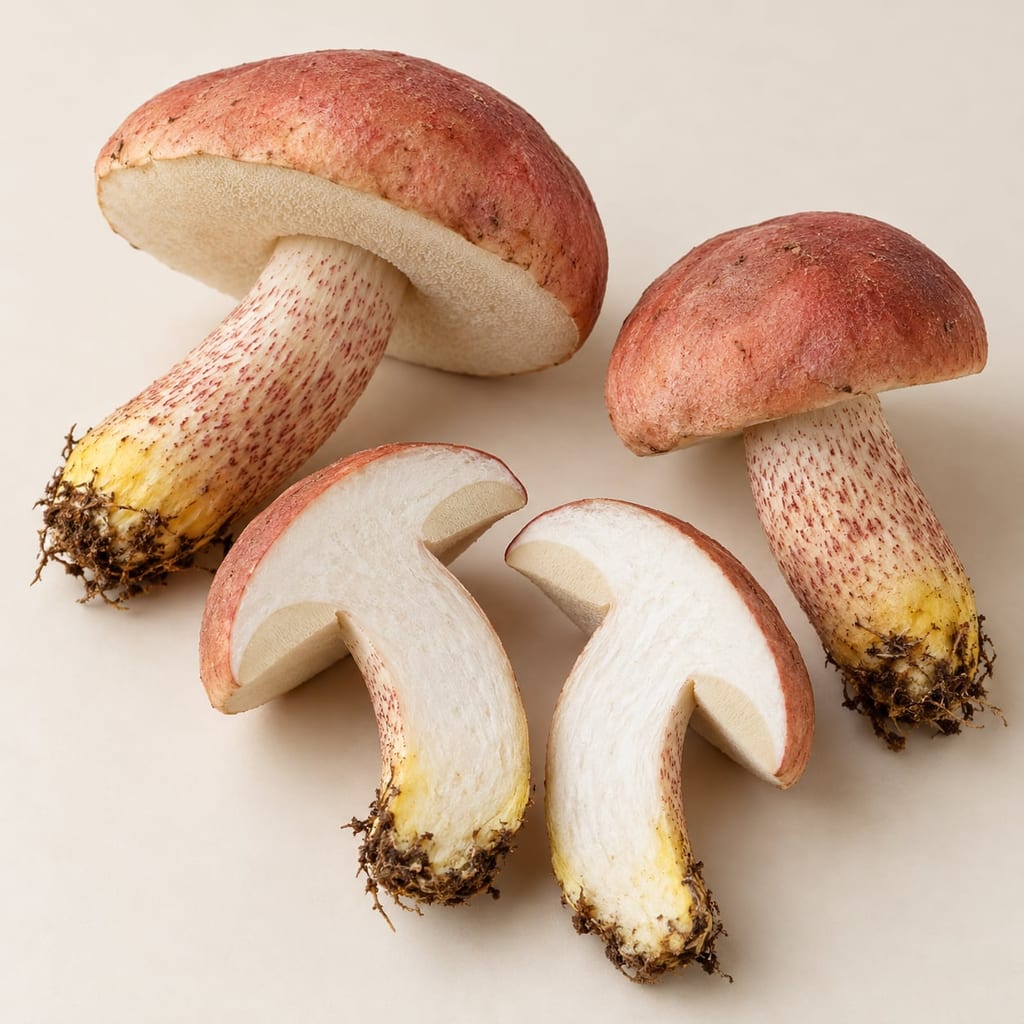
The yellow-footed bolete, Harrya chromapes, is a forest bolete with a yellow stem. It is an ectomycorrhizal fungus, growing in partnership with tree roots, and it has been known under several names. Older records use Tylopilus chromapes and Leccinum chromapes, and the catalogue lists Tylopilus chromapes as a search alias.
MushroomExpert places the species in the eastern and midwestern United States, in Texas and in Mexico. The catalogue records its food use in Mexico, and the regional record is the reason the species is on this list.
Reports describe the species as edible, but popular with insects, so the fruit bodies are often infested with maggots. The catalogue's wording, food use recorded but not uniformly preferred, reflects that mixed reception.
The catalogue cites a 2017 paper in the Journal of Ethnobiology and Ethnomedicine for the Mexican food record. That paper could not be opened for this page, so the local names, preparations and the extent of use are not recorded here.
The catalogue describes the habitat as forest and the association as ectomycorrhizal. The host trees and the fruiting season are not given in the evidence read, so neither is stated here.
Reports call the mushroom edible, but no safety assessment or toxin profile was found in the evidence read. Insect damage affects the fruit bodies and matters when the mushroom is gathered and cleaned. Boletes are hard to identify, and identification should be confirmed by a qualified expert. Nothing on this page is advice for collecting or identifying wild boletes.
Catalogue food-use record; the cited paper was not read, so no locality or tradition is recorded.
Distribution only; the sources read record no food use for this country.
Amanita novinupta is a western North American blusher, a forest mushroom recorded as food in Mexico, and one that must be cooked because its raw flesh is toxic.

Ripe avocado flesh is the soft, buttery, fat-rich pulp of Persea americana, eaten raw. It is low in acid, so it is a fresh ingredient that needs care in chilled dishes.
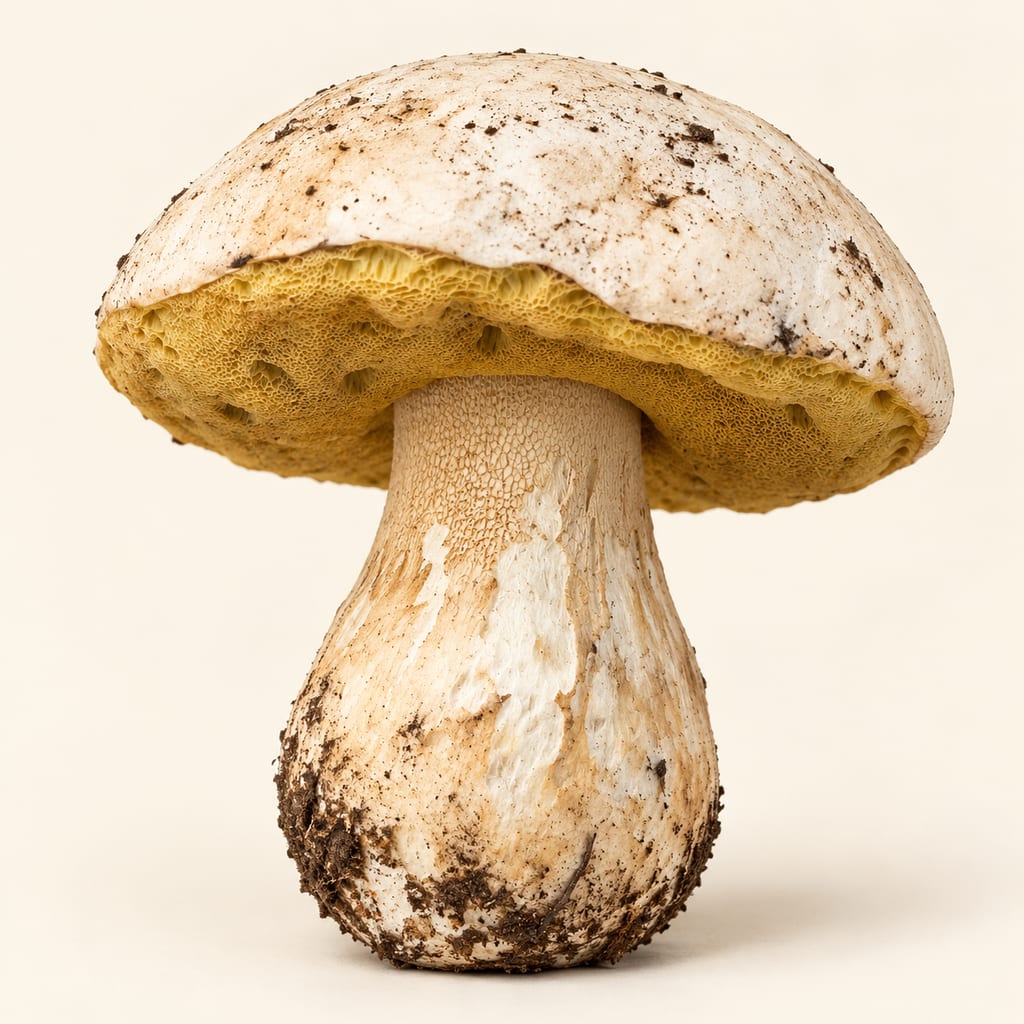
Boletus barrowsii, the white king bolete, is a western porcini relative with documented local food use in Mexico. Its pale cap and netted stem are not enough for field identification.
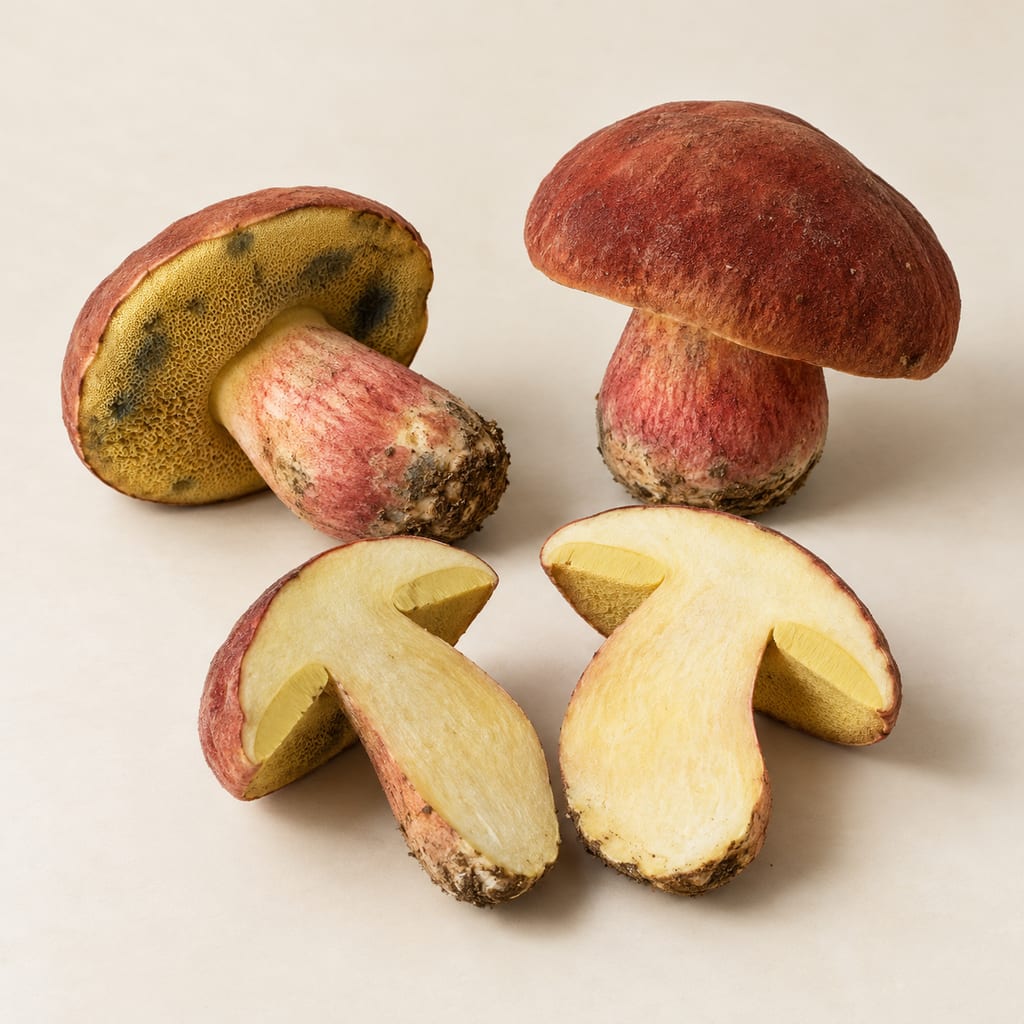
A red-and-yellow bolete described from Michigan and also listed in Mexican fungal records. Historical sources classify it as food, but its species limits, Mexican range and safe food use need careful qualification.
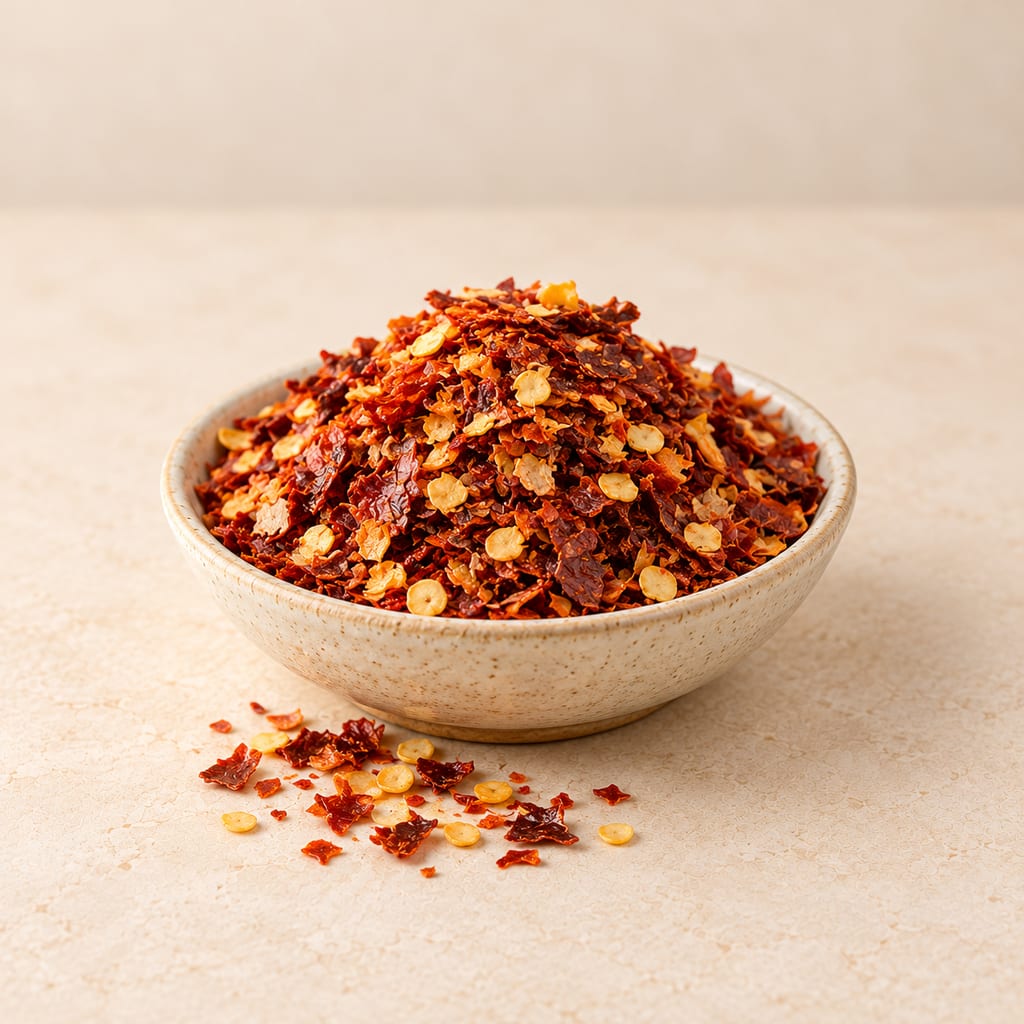
Calabrian pepper flakes are dried red Capsicum annuum from Calabria, crushed into coarse pieces; Peperoncino di Calabria is a protected geographical indication.
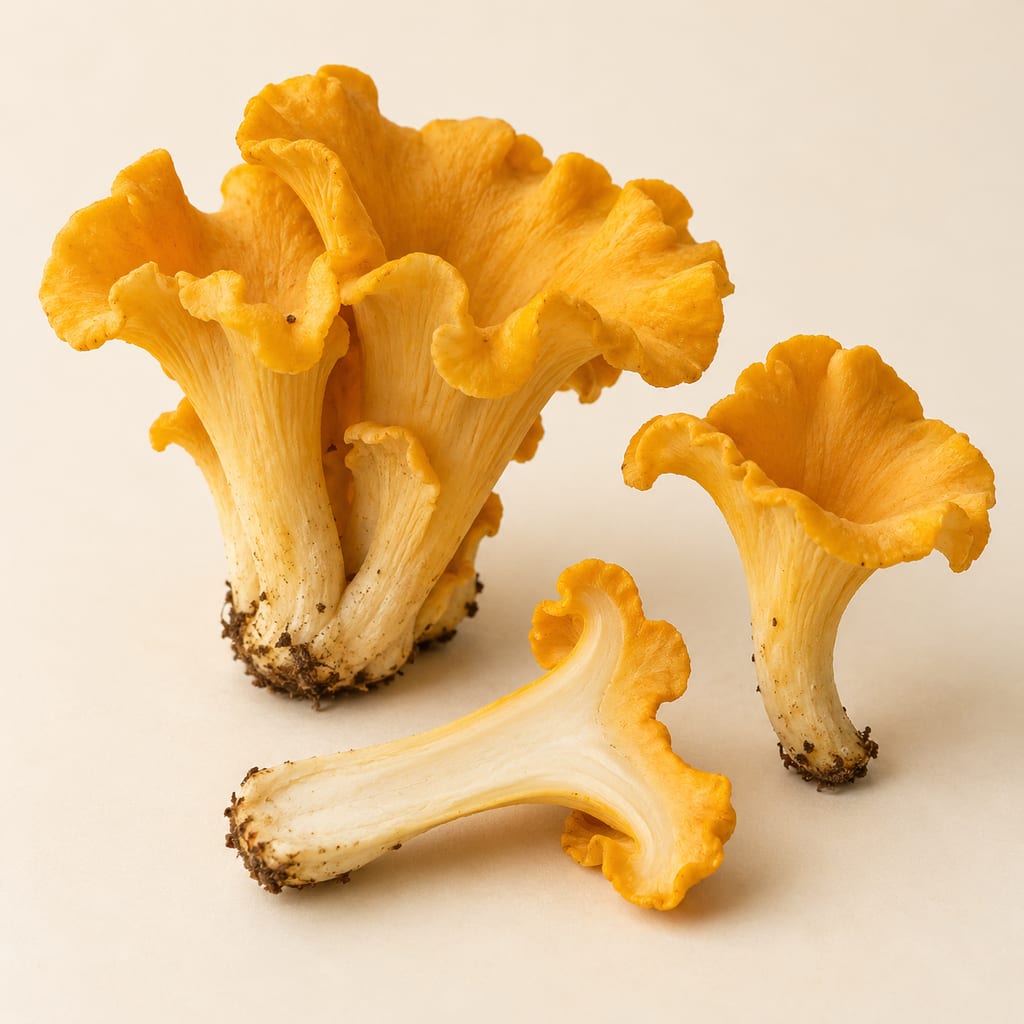
Cantharellus odoratus, the fragrant chanterelle, is a North American and Central American oak-woodland fungus. It was sold in a Veracruz market in the 1980s and in Guatemala in 2002, and its name is still disputed.
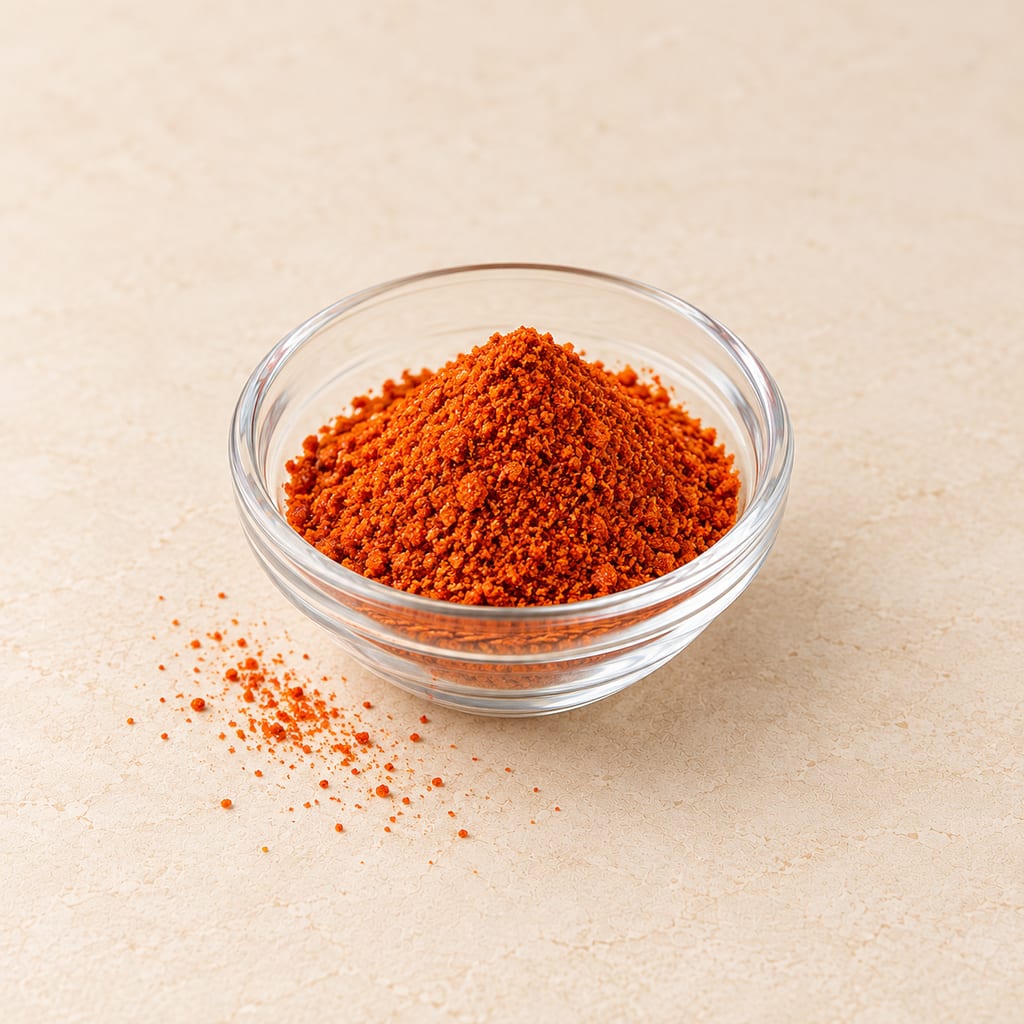
Cayenne is a very pungent red powder from dried, ground hot chilli pods, mostly Capsicum annuum, and the name of the long red peppers it comes from.
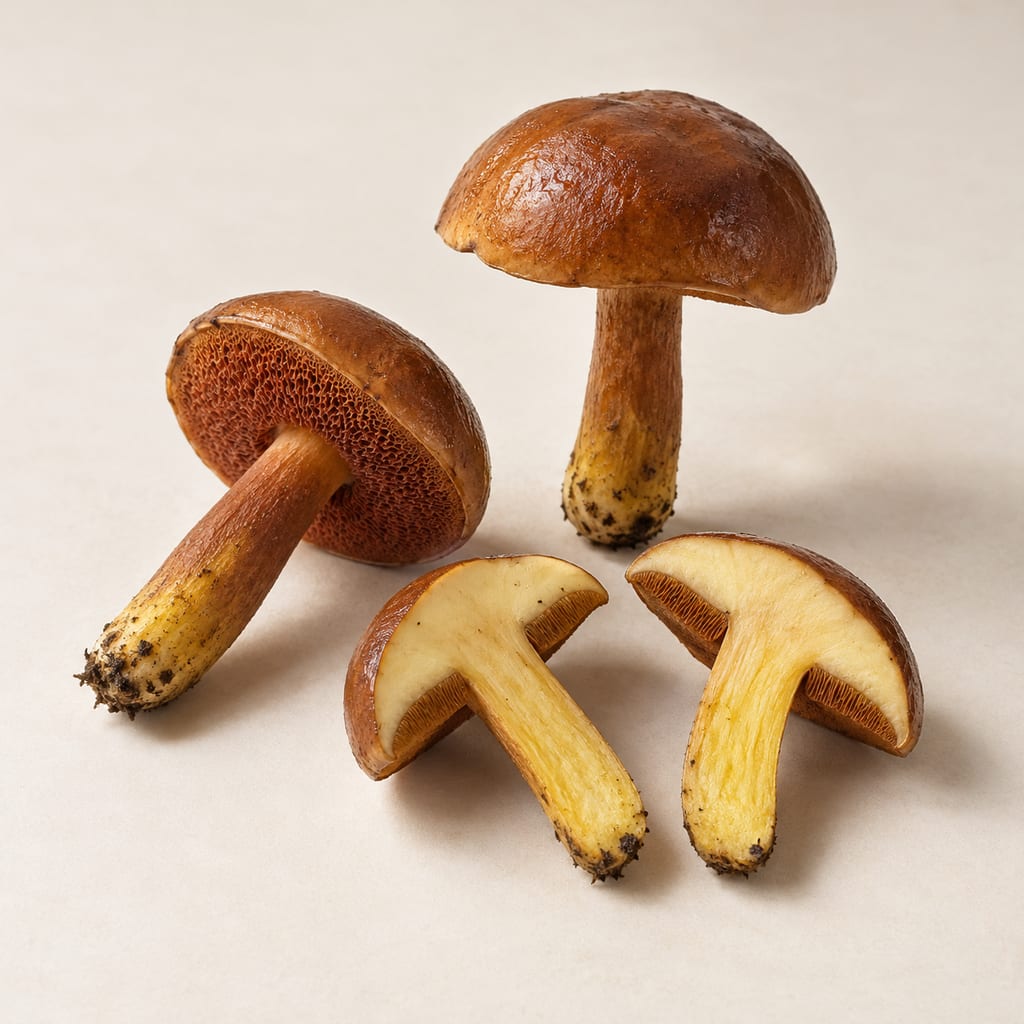
A peppery woodland bolete with historical edible labels and reported condiment use in Querétaro. Current mycological references call its edibility suspect or unestablished; this entry does not recommend consumption.
No community contributions have been published for this entry yet.
Sign in to contribute. Published comments and photos are free to read.
WikipediaIdentity · Taxonomy
Harrya chromapesForest ectomycorrhizal bolete; earlier names include Tylopilus chromapes.
Cited in: Overview; Food use and the insect problem; Habitat
MushroomExpertIdentity · Geography · Food use · Safety
Harrya chromapesDescribed as edible but popular with insects and often infested with maggots; distribution in the eastern and midwestern United States, Texas and Mexico; synonyms Tylopilus chromapes and Leccinum chromapes.
Cited in: Overview; Distribution; Food use and the insect problem; Safety and what is not known
Springer / BioMed CentralFood use · Geography
Journal of Ethnobiology and Ethnomedicine, 2017 (supplied catalogue source)Supplied source for the Mexican food-use record; the full text was not reachable for this page.
Cited in: Food use and the insect problem