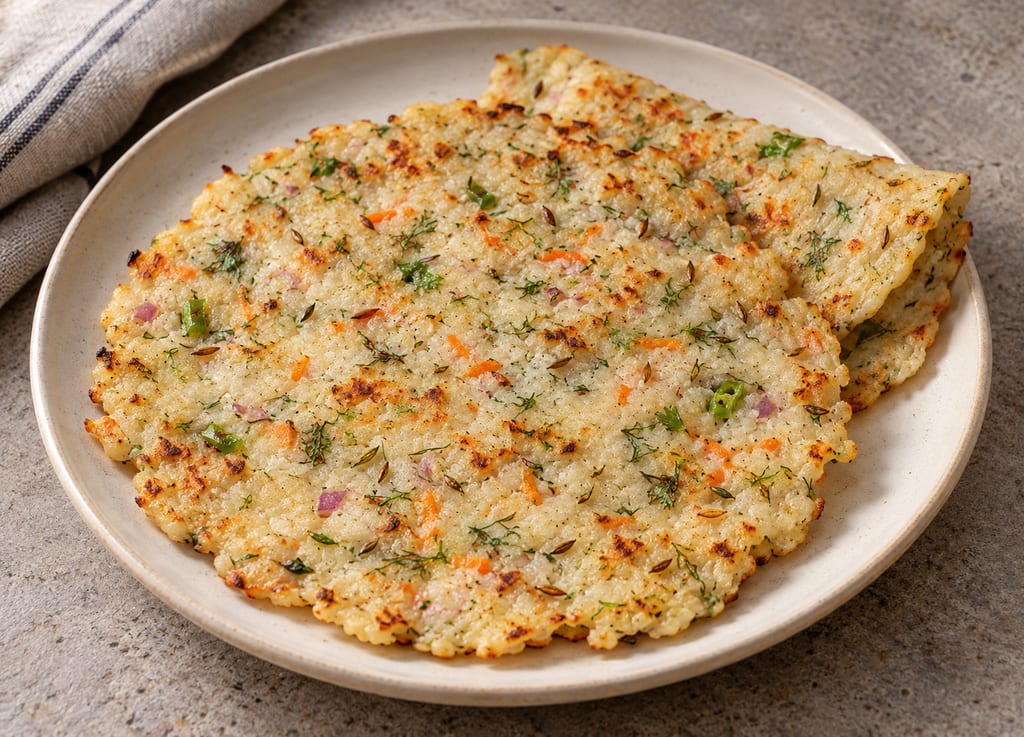
Akki rotti (Karnataka rice-flour flatbread)
This Karnataka-style akki rotti mixes fine rice flour with vegetables, coconut, herbs and spices, then hand-pats and griddle-cooks the dough.
 FermenteaWhere food goes to change
Traditional method
jolada rotti
Jowar bhakri is an unleavened sorghum flatbread, hand-patted or gently rolled and griddle-cooked across parts of Maharashtra and Karnataka.
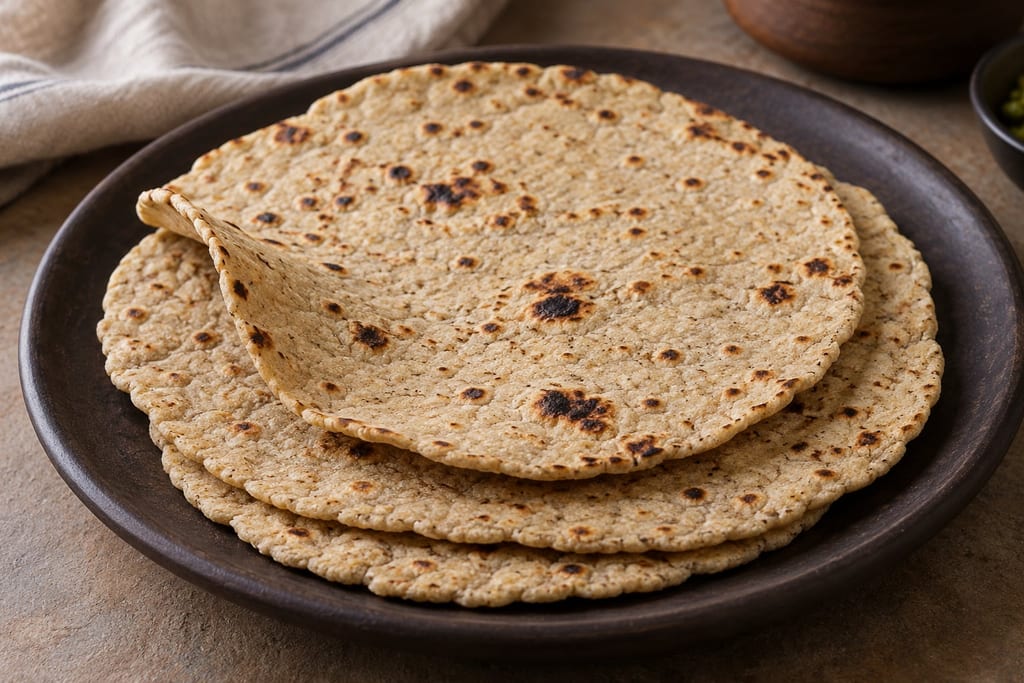
Jowar bhakri is a flatbread made from sorghum flour and water, with salt optional. Jolada rotti is a Karnataka name for a closely related sorghum bread. Sources show variation in thickness, hydration, shaping and cooking, so this entry records one all-sorghum batch rather than a definitive regional formula.
Its defining practical feature is the flour. Sorghum dough does not stretch like wheat dough, so the cook shapes it by pressing and turning. It is hand-patted or gently rolled, then griddle-cooked. There is no yeast, starter, chemical raising agent or proofing stage: this is non-fermented bread cooked soon after mixing.
This restrained ingredient list also helps identify what makes the dough cohesive. Water binds the flour into a mass; the recipe does not use a separate binder. The salt is optional seasoning rather than an agent that raises or preserves the dough. Once shaped, the round relies on its moisture and thickness to cook on the griddle, not on trapped fermentation gas. That distinction helps explain why the method has no proofing interval and why a freshly made dough can go directly to the pan.
The recipe follows Dassana Amit's formula: 100 g jowar flour, about three-quarters of a US cup of hot water and optional salt, yielding six small-to-medium rotis in about thirty minutes. Water is approximate. The source adds it gradually because absorption varies; a soft, moist, cohesive dough is a better cue than forcing in every drop.
Other published preparations remain distinct. An FSSAI example blends jowar flour with whole-wheat atta. That is a mixed-grain variant, not evidence that wheat belongs in every bhakri. Navdanya shows a plain version and a separately flavored jowar chapati. Onion, chili, herbs, milk or fat may create adaptations but change the recipe.
Sorghum flour lacks wheat's gluten network. Wheat chapati stretches because hydrated gluten forms an elastic structure; this dough is more liable to crack. Hot water and warm kneading help make a workable mass in the chosen source method, though sources provide no measured temperature or lab explanation. Hydrate gradually, knead while comfortably warm and shape with repeated pressing.
Patting lets the cook make a round while repairing edge cracks and controlling thickness. Recipes use hands, a board, parchment or damp cloth. Rolling may work with support, but the gesture cannot simply be copied from wheat dough. If an edge splits, press it together rather than pulling harder. A North Karnataka home account also describes room-temperature water, showing hot water is one approach rather than a universal test.
A tava or flat skillet gives broad contact with heat. One source method cooks a side until it starts to set, wets the exposed face, then turns the bread. Surface water is a cooking maneuver, not a soak. Light brown spots on both sides are useful cues; sources give no exact pan temperature, thickness or per-side time. Adjust heat so the bread browns without charring before the center cooks.
Some directions finish briefly over an open flame to encourage puffing; others use the pan alone. The flame is optional, not essential. Cook one round at a time so remaining portions do not dry.
Pan material and burner strength vary from kitchen to kitchen. Since the sources do not set a standardized heat value, the cook should use the stated surface changes and make small burner adjustments rather than treating a timer as a substitute for observation. Let the bread release from the pan when its first side is sufficiently set. If it sticks, forcing a turn can tear the fragile round; waiting briefly and easing the edge with a spatula is a reasonable response. Keep hands away from steam as the wet surface heats.
ICAR millet material associates jowar roti with Maharashtra and parts of Karnataka, among other Indian states. North Karnataka accounts call it jolada rotti; Marathi usage commonly calls it jowar bhakri. These names establish broad food geography, not a precise birthplace. Sorghum cultivation and the first record of a cooked bread are separate questions: crop antiquity cannot date bhakri.
No dated earliest attestation was established in consulted sources, so the period remains unknown. Evidence is stronger for a living regional tradition than an invention narrative. A Scroll excerpt from Shahu Patole's writing on Marathwada describes bhakri in everyday meals and discusses hand-patting and tools whose access varied by class and caste. This situated testimony is not a claim about every household.
North Karnataka accounts pair jolada rotti with jhunka, chutney pudi, vegetables, onion and buttermilk. Maharashtrian meals often pair bhakri with pitla, thecha, vegetables or pulses. These are examples, not requirements. Serve the bread warm and flexible; a piece can carry a thick pulse dish or scoop chutney.
Research compares household sorghum-flour processing, but it is not a nutrition trial or direct bhakri study. This entry makes no special health claim. General grain guidance that milled flour can lose quality does not establish a bhakri-specific shelf-life limit. Keep flour dry and follow supplier directions; no mill, sieve size or moisture percentage is specified here.
Watch for soft cohesive dough, a round that holds as it is patted, a base set enough to turn and light brown spots. If the round breaks, the flour may need more water or a gentler support. If it smears, add water more slowly and dust the board lightly.
No microbial starter is added: hydration, kneading and shaping are physical preparation; griddle heat cooks the bread. A fermented condiment served beside it does not make bhakri fermented. The six-piece batch is source-supported; larger scaling is not validated, so adjust water carefully and avoid leaving portions exposed to dry.
Fine flour is easier to bring into a smooth dough than coarse meal, but sources do not define a milling grade. Start with the source amount, break up lumps and keep flour dry. Because sorghum absorbs differently from batch to batch, hold some water back. If dry patches remain, add small amounts while kneading; if the dough smears, dust the work surface lightly rather than adding a lot of dry flour.
The hot-water step is a handling choice. It should not be confused with cooking the flour into porridge: the goal is a warm dough that can be kneaded and shaped. Use a spoon to combine the first water and do not put bare hands into very hot dough. Let it cool until manageable. Sources give no fixed temperature, and safe handling matters more than speed.
Divide the dough evenly so rounds cook at similar speed. Roll each piece into a ball, then press from the center outward, rotating a little after each press. Repeated pressure helps keep the round even. A small crack can be pinched shut while the dough is warm.
Some recipes use a damp cloth or sheet to support the round; others pat on a board or between palms. The support should help lift the dough without stretching it. If using parchment, peel it away gently as the bread goes onto the pan. Sources prescribe no diameter, so choose a size that fits the griddle and can be turned safely. Smaller breads are easier for a first attempt.
Preheat the skillet before cooking; the recipe specifies a hot tava but gives no temperature. If the first side stays pale and dry for too long, the pan may be cool. If dark spots appear immediately while the center is raw, lower the heat. Once the base begins to set, spread a little water on the exposed surface and turn. Stay near the pan because each thin round cooks quickly.
Brown spots are an appearance cue, not a microbiological limit. Sources treat bhakri as a cooked food and give no core-temperature reading. Let the second side finish and check the center by feel and appearance. Staying by the pan is more useful than relying on an exact time absent from the source.
Bhakri is often served with foods that bring moisture and flavor. Maharashtrian meal accounts show pitla and thecha; North Karnataka home cooking may pair jolada rotti with jhunka, chutney pudi, onion, vegetables and buttermilk. Combinations depend on household, season and meal. No one accompaniment is required.
A piece can carry a thick curry or pulse dish. This practical role helps explain why texture and size matter, but it does not mean every bhakri is made to the same thickness or eaten in the same way. Serve warm and supple. Sources favor fresh serving and do not provide a tested reheating schedule.
Sources establish current regional associations, names in use and household methods. They do not provide a dated first mention of jowar bhakri itself. The historical period is therefore unknown. This is an evidential limit, not a claim the bread is recent. Oral practice may predate documents, but assigning a century without a dated source would overstate the record.
Sorghum's crop history and a named flatbread's record are not interchangeable. Archaeological evidence for the grain cannot by itself prove that people made this particular recipe. A modern recipe page shows that its method was documented by publication, not when that method began.
Seasoning may be omitted or adjusted. Other changes are more substantive. A wheat blend changes the flour and removes the all-sorghum character; the FSSAI example is one documented blend. A flavored dough with chili, onion or herbs is a different preparation. Separate recipes can preserve their ingredients, methods and contexts instead of making one recipe carry incompatible formulas.
Pan-only cooking is sufficient; brief flame puffing appears in some instructions but is an extra step. Puffing is not a test of success. Sorghum flatbread may remain flatter than wheat roti, and sources do not require a ballooned interior.
The source quantity is modest: 100 g flour makes six small or medium rounds. It is a useful first trial without special equipment. Measure the water but reserve some until the dough shows whether it needs it. Salt is explicitly optional; omitting it does not change the bread's non-fermented status.
A larger batch needs more mixing space and a plan to cover portions while each round cooks. Sources do not test holding times or scaled ratios. Do not assume water scales perfectly or dough can rest uncovered. Work in sequence and adjust by texture. This home recipe is not a commercial production validation.
This also clarifies what the recipe does not claim: no particular pan temperature, exact diameter, universal regional shape, or fixed storage period. Those details may matter in a specific household method, but these sources do not establish a single answer for all versions. The recipe remains useful because it states its own batch, identifies adjustment points and marks the evidence boundary where local experience takes over.
Hand-patting is a skilled movement built from pressure, timing and touch. The Marathwada account describes how shaping tools and household means were unevenly available; it resists a romantic account in which every home has the same equipment or leisure. A bowl, board and flat pan are sufficient for this home recipe, but practical simplicity does not erase the repeated labor of cooking.
Regional terminology is lived rather than fixed by one glossary. Jowar bhakri and jolada rotti point to overlapping grain-and-bread traditions; local speech and household methods vary. Sources support Maharashtra and Karnataka associations and especially describe North Karnataka practice, but do not map every district or exclusive boundary.
First appearance is undated; sorghum crop antiquity cannot date this bread.
Yield 6 small-to-medium bhakri · Scaling: source batch only
Hot water and the griddle can burn; mix with a spoon and handle dough only when safe.
Regional association, not origin or uniform statewide style.
Regional association; local practices vary.
This Karnataka-style akki rotti mixes fine rice flour with vegetables, coconut, herbs and spices, then hand-pats and griddle-cooks the dough.
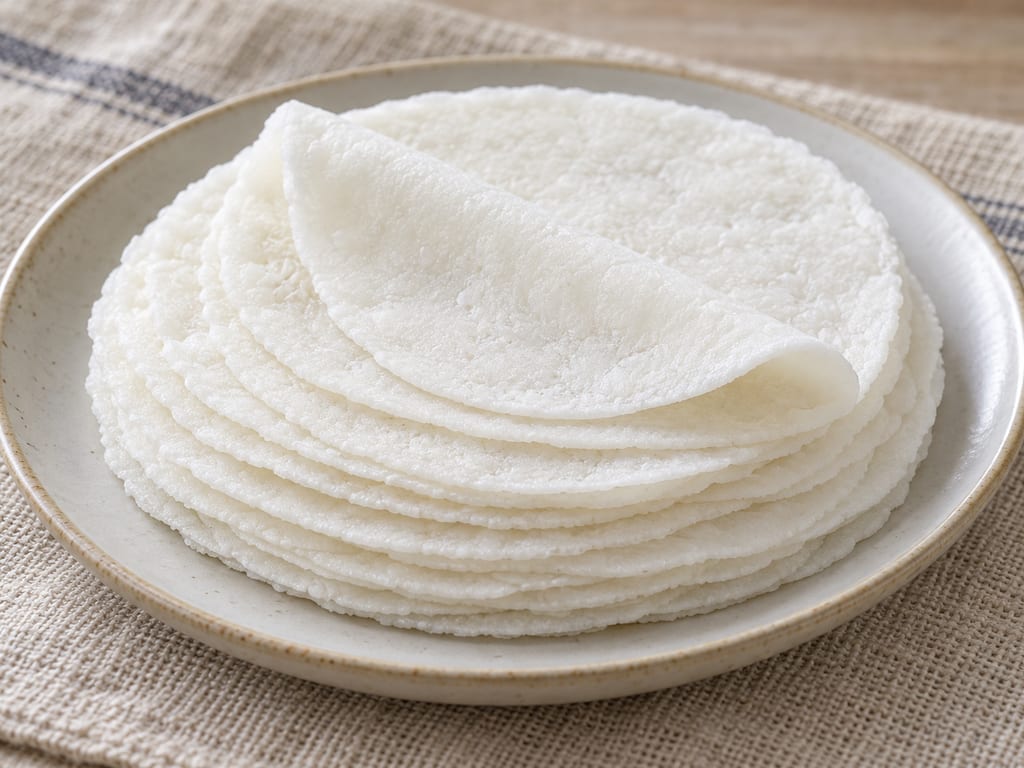
Thin Malabar rice-flour rounds made from roasted rice flour cooked into salted boiling water, kneaded after cooling, and rolled to about 1 mm. They cook on a hot griddle without taking on colour.
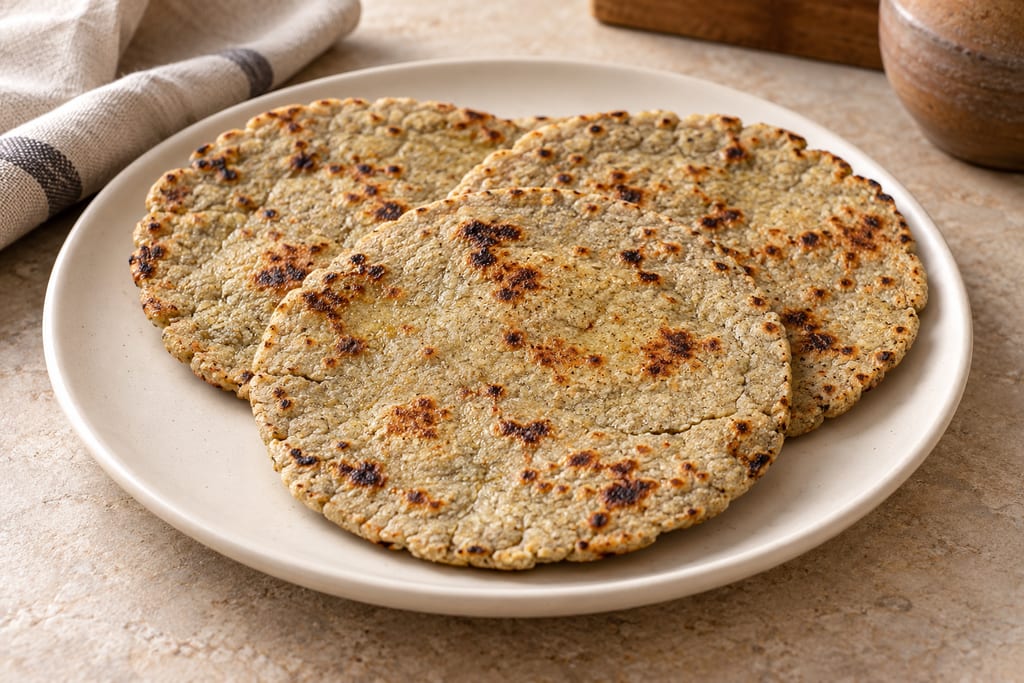
A pearl-millet flatbread shaped between sheets and cooked on a hot tawa. This home batch makes eight.
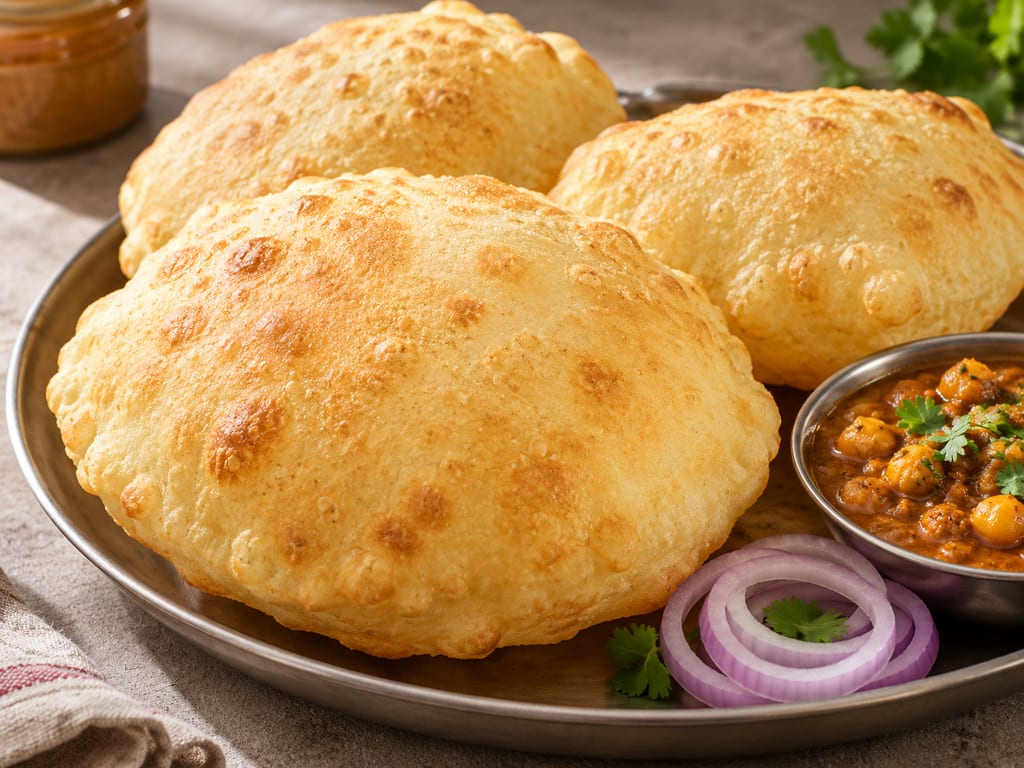
A North Indian fried bread made with yogurt, wheat flour and chemical leaveners. This source batch makes eight.
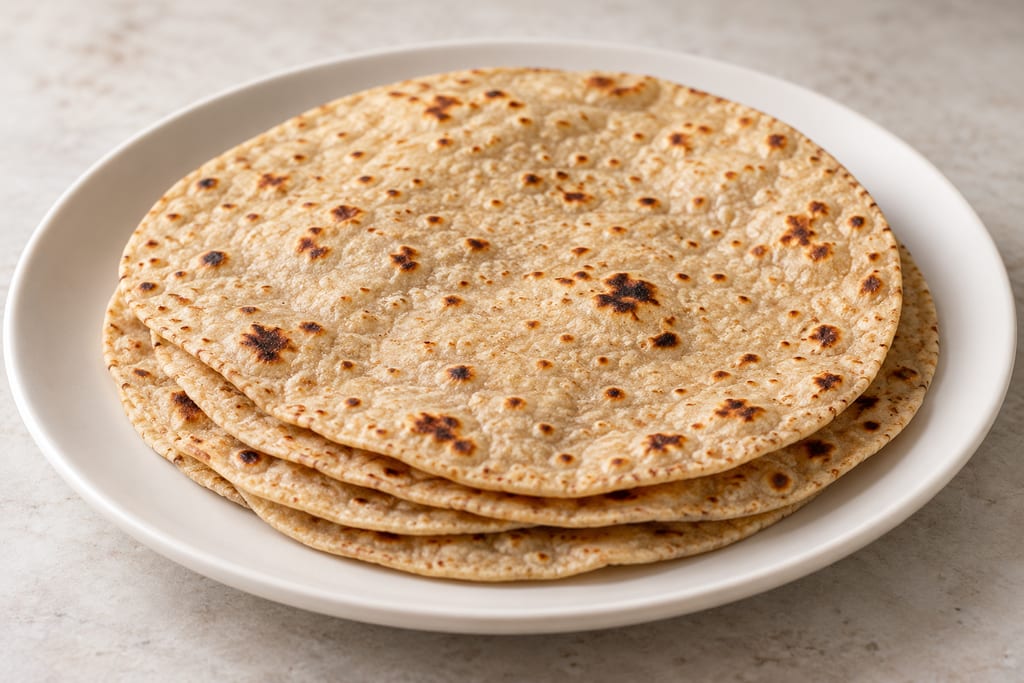
This measured chapati uses whole-wheat atta and water, with salt and oil or ghee optional. Rest the dough, roll it thin and cook through on a hot tawa; it is distinct from the partly cooked, puffed phulka route.
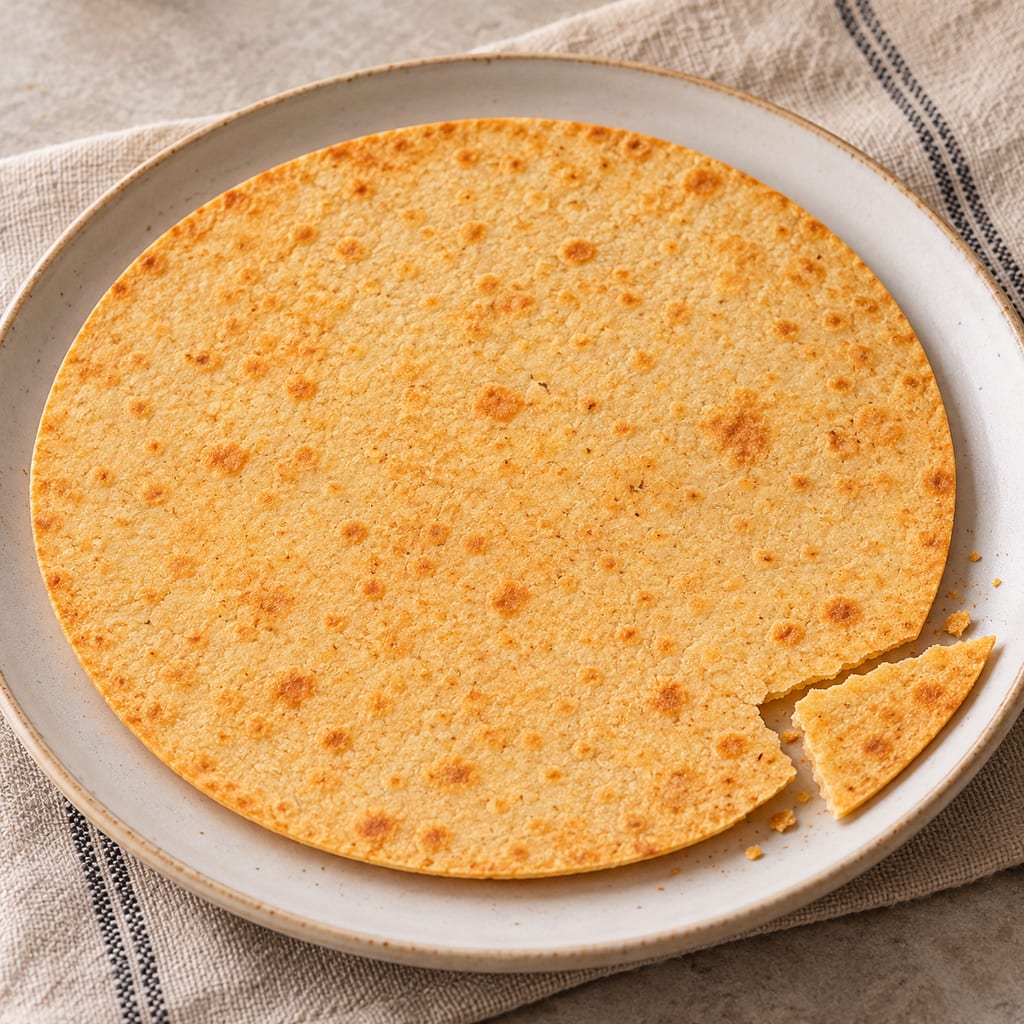
A thin Gujarati wheat flatbread, pressed and roasted over low heat until crisp and lightly browned.
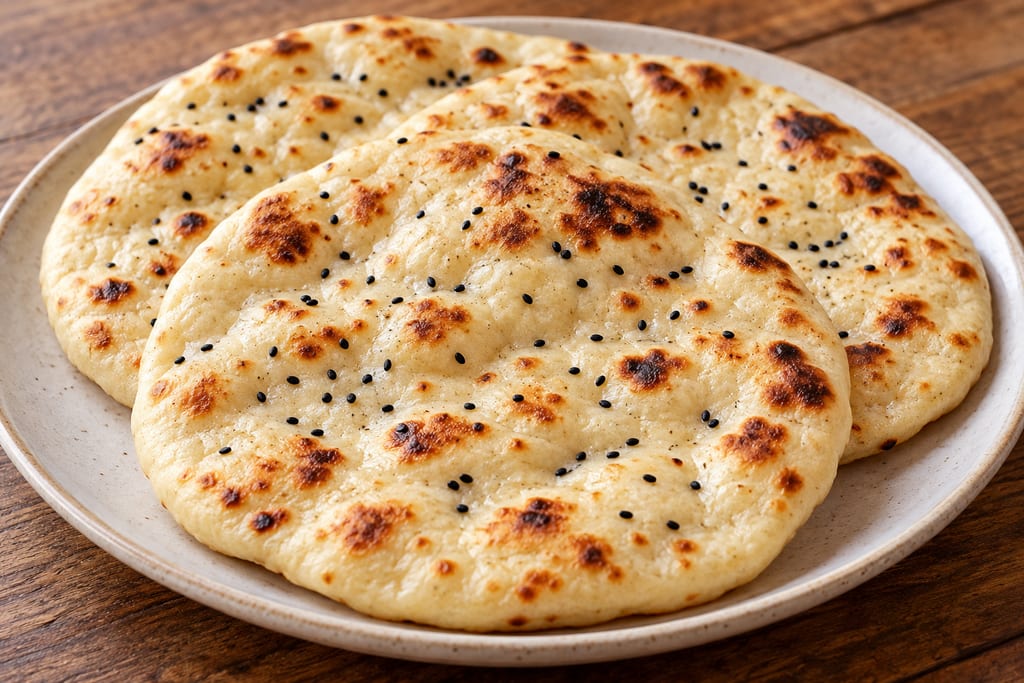
A plain North Indian kulcha uses an all-purpose wheat dough with yogurt, baking powder and soda, then rests and cooks on a hot tawa; optional seeds and roasting fat finish it.
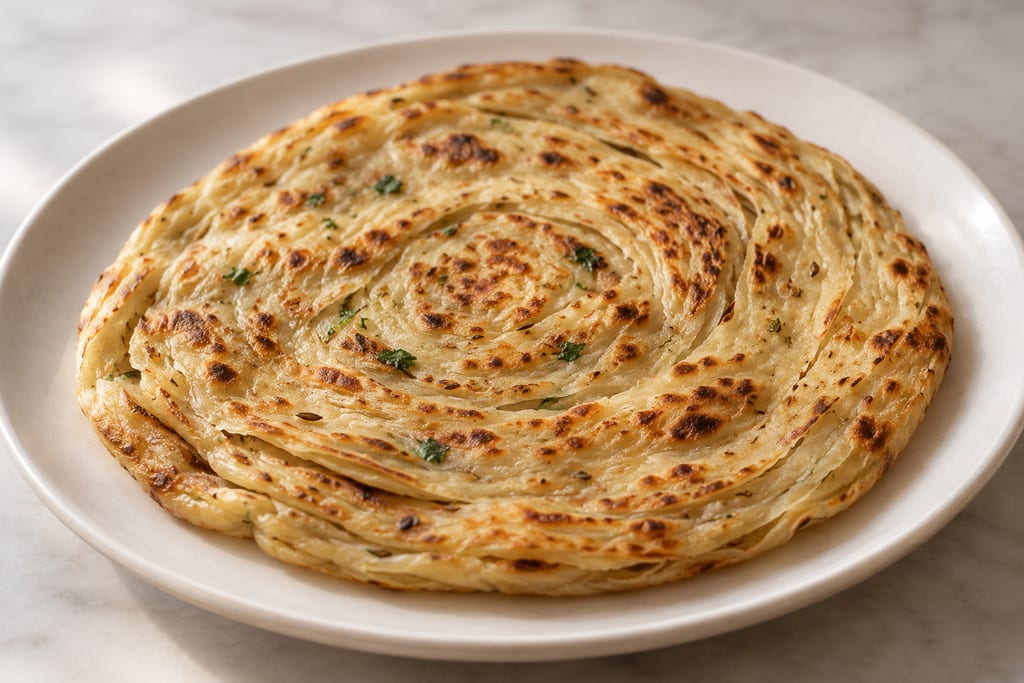
A layered wheat paratha, rolled with ghee, coriander, garlic and cumin and cooked on a tawa. This batch makes twelve.
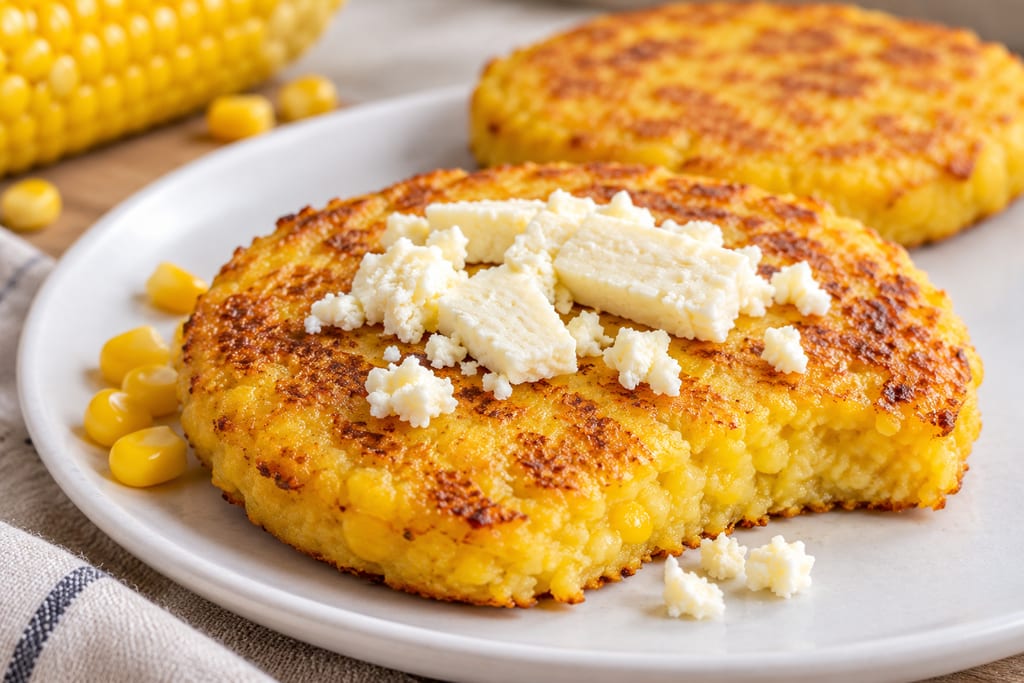
A Colombian Andean griddle cake made from fresh sweet-corn batter, cooked in butter and served with white cheese.
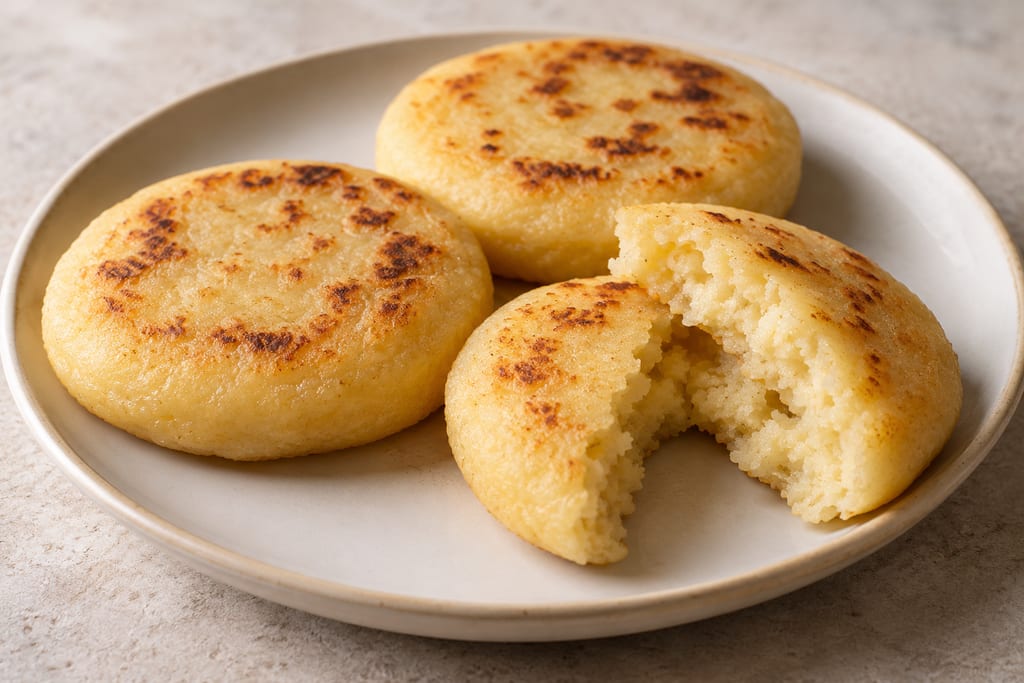
This household version combines precooked corn flour, warm water and salt, then cooks thick rounds on a lightly oiled skillet or griddle. It is one source-specific arepa method, not a universal Colombian or Venezuelan formula.
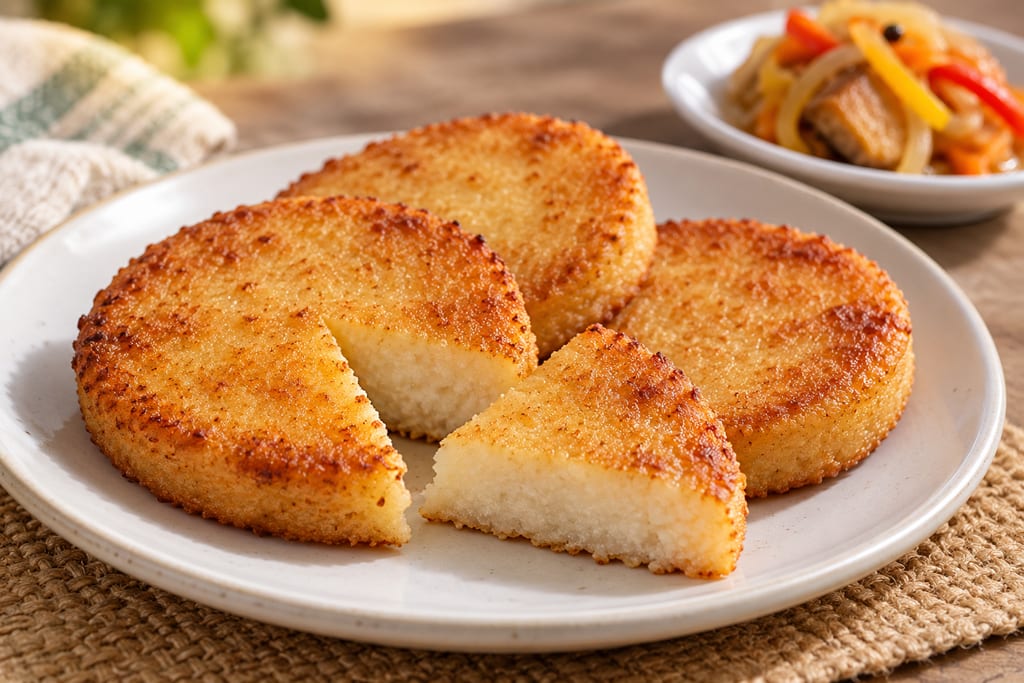
A serving method for approved, prepared bammy rounds: soak them in coconut milk and refry until golden. It does not process raw cassava.
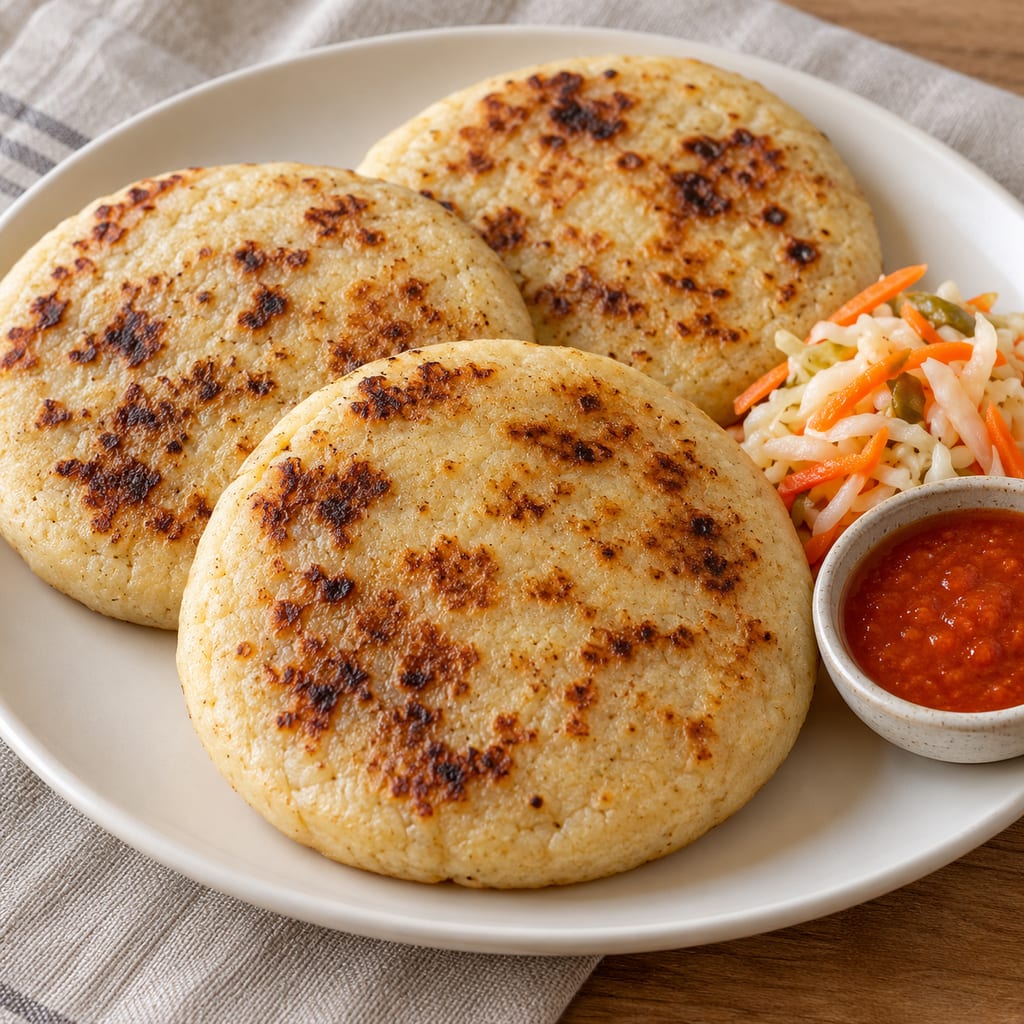
Salvadoran-style masa harina cakes filled with refried beans and cheese, sealed and cooked on an oiled skillet.
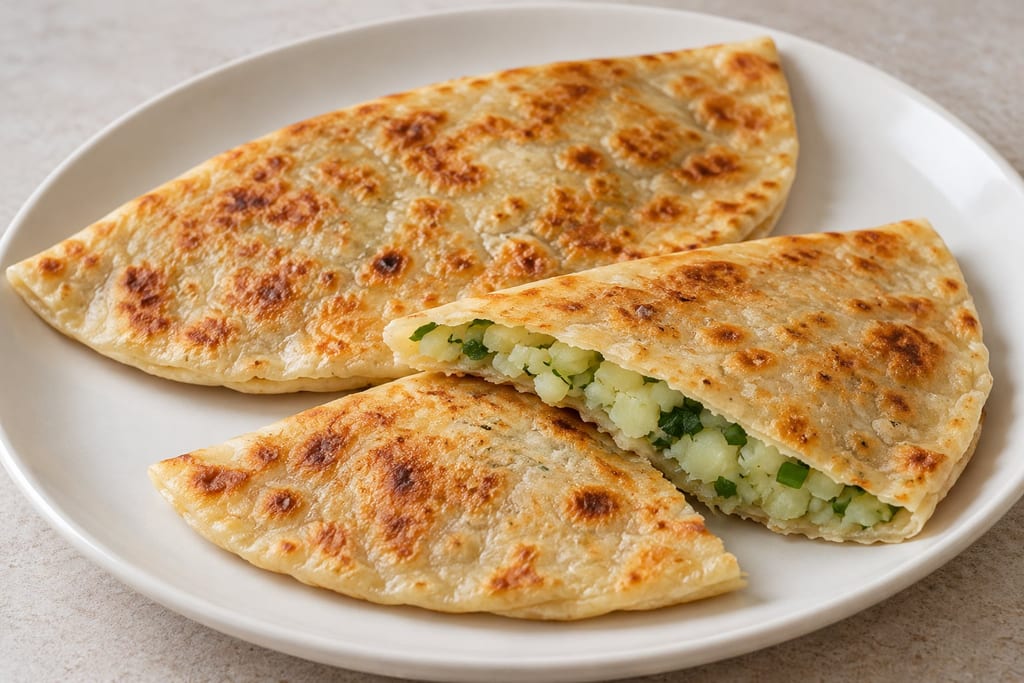
A thin, unleavened Afghan flatbread filled with mashed potato, scallion and cilantro, folded and pan-browned. This version uses a dough made from scratch.
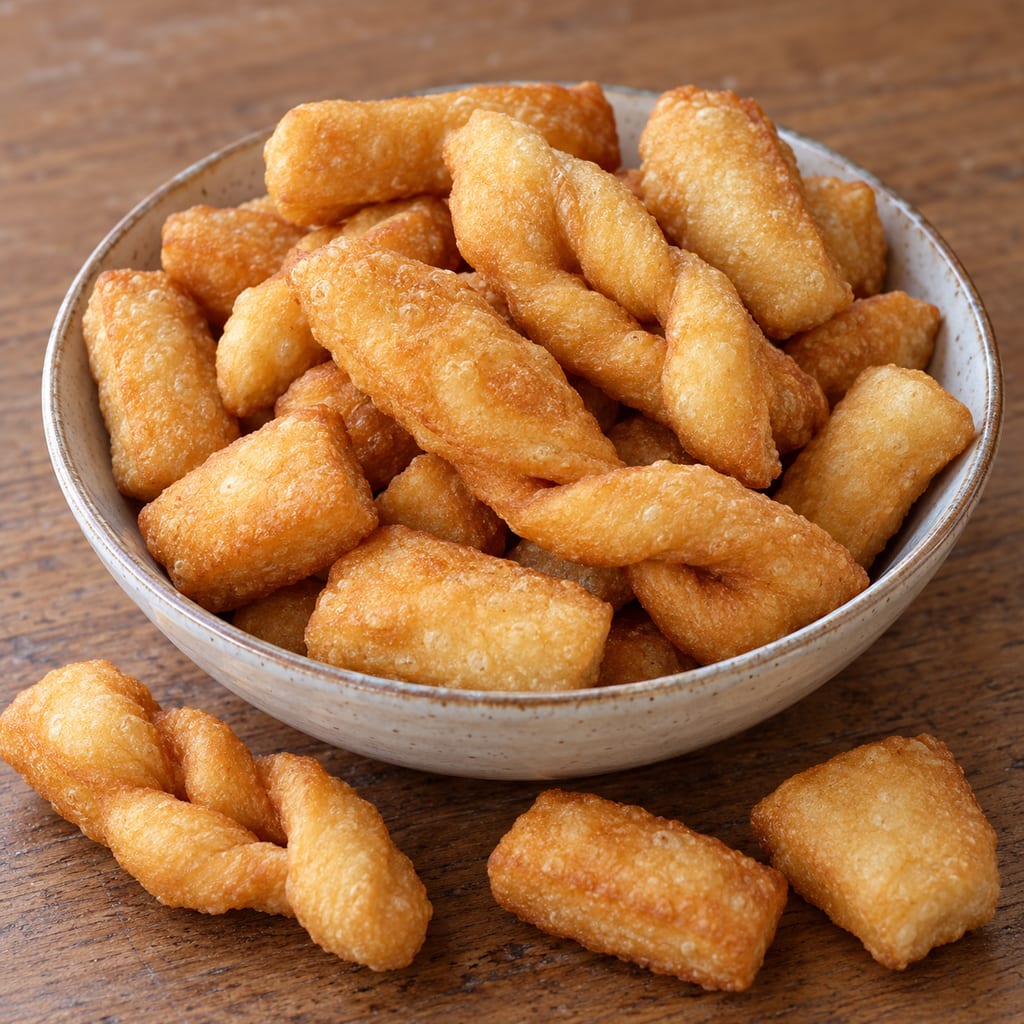
Firm Mongolian fried pastries made from an unyeasted wheat dough enriched with butter and sweetened with sugar; the dense dough is rested, cut or knotted, and fried until golden.
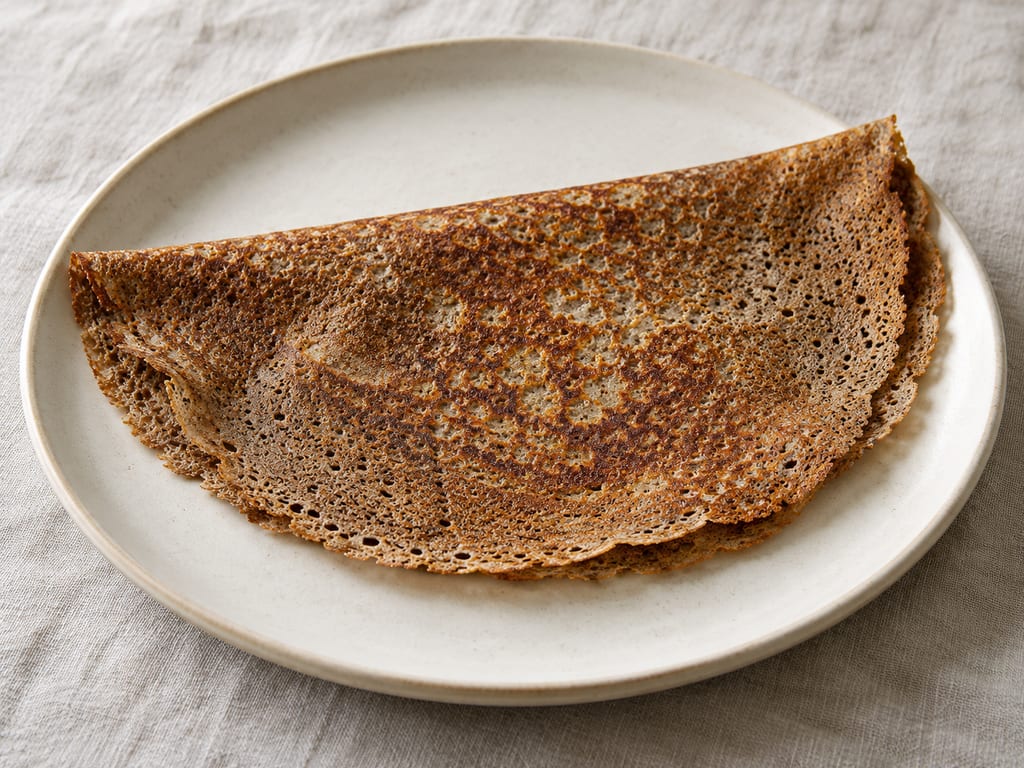
A thin Brittany galette made from buckwheat flour, water and Guérande salt. This Atelier de la Crêpe method rests the batter in a refrigerator before cooking it on a hot crêpière.
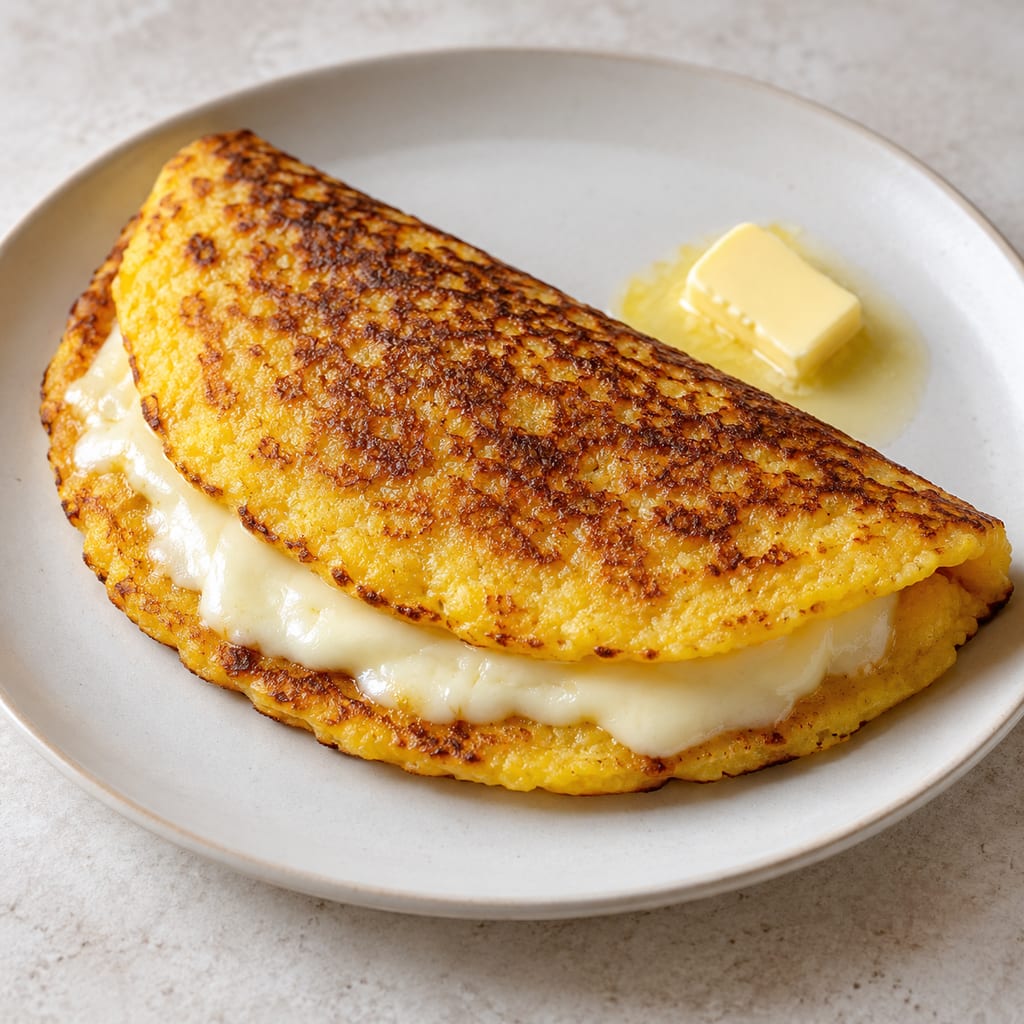
Two thick, tender Venezuelan griddle cakes made from fresh corn batter with milk, egg, cornstarch and sugar, then folded around white cheese and butter.
No community contributions have been published for this entry yet.
Sign in to contribute. Published comments and photos are free to read.
Veg Recipes of IndiaMethod · Ingredients
Jowar Roti Recipe100g flour, hot water, optional salt; six rotis; method and timing.
Cited in: A bread named for its grain; The source batch and its variants; Why it is patted; Cooking on a tava; A practical reading of the method; Choosing and handling the flour; Shaping without a gluten network; Reading the griddle cues; Variations should keep their names; A small, source-based batch
Food Safety and Standards Authority of IndiaVariant · Method
Eat Right India: Recipe BookExample mixes jowar and wheat; distinct from all-sorghum recipe.
Cited in: The source batch and its variants; Cooking on a tava; Reading the griddle cues; Variations should keep their names
Navdanya InternationalVariant · Method
Bhoole Bisre Anaj / Forgotten FoodsPlain bhakri and separately flavored jowar chapati.
Cited in: The source batch and its variants; Cooking on a tava; Variations should keep their names
ICAR-Indian Institute of Millets ResearchGeography
The Story of MilletsJowar roti associated with Maharashtra and parts of Karnataka; not exact origin.
Cited in: A bread named for its grain; Regional foodways and an unknown first date; What the evidence can and cannot date; Food, labor and regional knowledge
International Journal of Food and Nutritional SciencesIngredient context
Processing of sorghum flour and its effect on qualityFlour processing study, not nutrition or direct bhakri study.
Cited in: Eating and handling flour; A practical reading of the method
Scroll.inHistory · Food culture
How caste-based discrimination and social conditions shaped the food habits of Marathwada DalitsSituated Marathwada account of everyday bhakri, hand-patting and unequal tool access.
Cited in: Regional foodways and an unknown first date; Eating and handling flour; Pairings are part of the meal; What the evidence can and cannot date; Food, labor and regional knowledge
One Teaspoon of LifeServing · Food culture · Method
Jolada Rotti / Jowar BhakriNorth Karnataka home account of shaping and pairings.
Cited in: A bread named for its grain; Why it is patted; Eating and handling flour; A practical reading of the method; Shaping without a gluten network; Pairings are part of the meal; Food, labor and regional knowledge