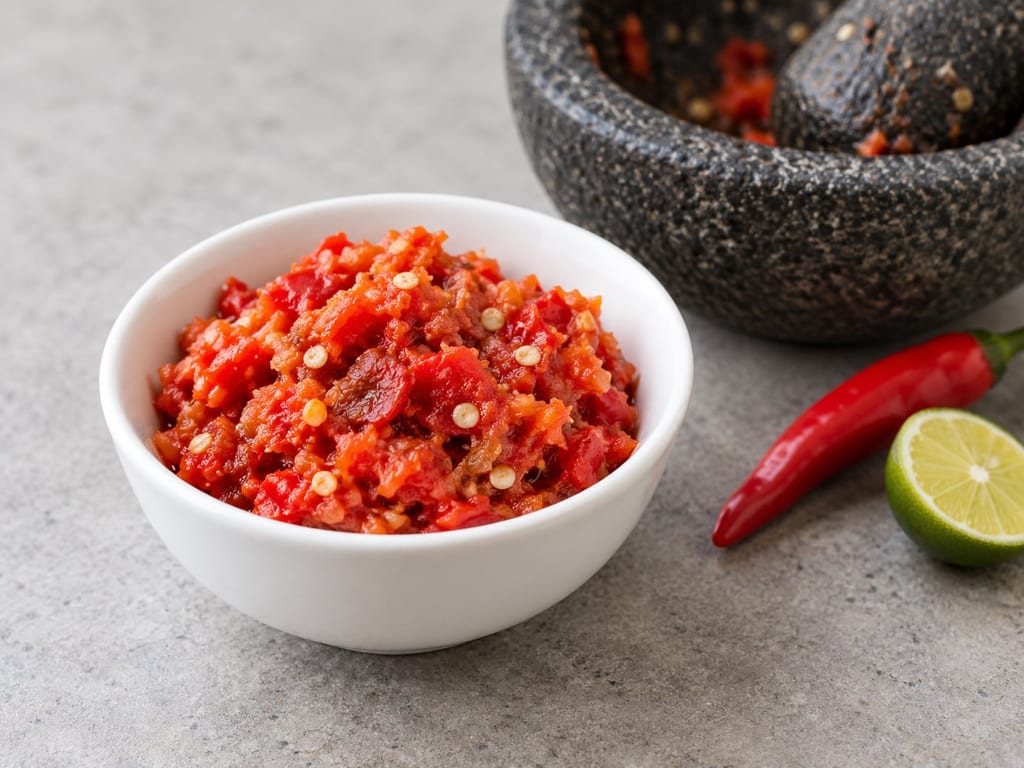
Sambal belacan-style fresh relish
Red chillies pounded with belacan shrimp paste, then mixed with lime or calamansi and sugar for a fresh relish. Contains crustacean shellfish.
 FermenteaWhere food goes to change
Traditional method
Serikaya · Srikaya · Seri kaya · Coconut egg jam
Kaya is a sweet Malay-rooted spread of eggs, coconut milk and sugar, scented with pandan and stirred over gentle heat until it thickens. In Singapore it is the filling of kaya toast.

Kaya is a sweet coconut-and-egg preparation spread on toast. The National Library Board's BiblioAsia account puts it inside serikaya, a wider family of egg-based coconut-milk confections with Malay roots. The base is three things: egg, coconut milk and a sweetener. Other dishes built on that base include kueh puteri salat, serikaya tulang, a firmer steamed custard made with sweet potato, and agar-agar serikaya.
Commercial kaya was once sold in cans and is now more often found in jars. The word kaya is also used loosely for the spread alone, so the family and the spread are worth keeping apart.
In an interview with the National Library Board, food historian Khir Johari describes kaya as part of the Malay serikaya family. He discusses regional versions, including Thai sangkhaya, and variations in eggs and sugars, steamed confections and agar-agar forms. He also raises a debated connection to Portuguese sericaia and names early Malay literary references.
That is an attributed modern interpretation. The early Malay works he names were not inspected here, and nothing in the sources fixes the first date, the place or the route by which the preparation spread.
Kaya toast is part of Singapore's familiar coffee-shop breakfast. The national heritage inventory ties it to the Hainanese migration and the kopitiam. A study of the 1960s coffee shop cautions against treating the Chinese-owned Hainanese shops as the whole story, since Malay kedai kopi and Indian teh sarabat stalls were part of the same public life. The heritage sources describe breakfast culture rather than who first made kaya, so neither names an inventor.
The BiblioAsia page notes that Ya Kun, known for coffee and kaya toast, began as a coffee stall at Telok Ayer Basin before the Second World War and was registered as a business in 1944.
The recipe above is the one printed with the BiblioAsia feature. Sugar is stirred into the eggs until partly dissolved, the coconut milk follows, then vanillin, salt and pandan juice. The strained mixture goes into the top pan of a double boiler and is stirred constantly and evenly for 1 hour 15 minutes, curdling and thickening as it goes. It is lifted off the heat and stirred on, preferably over cold water.
The pandan comes from 120 g of leaves ground with 310 mL of water and strained. About 7 tablespoons of the juice go in.
Science Centre Singapore gives a smaller batch making about 1 cup: 200 mL canned coconut cream, 4 beaten egg yolks, 50 g white sugar, 50 g palm sugar and 3 knotted pandan leaves. The cream, sugars and pandan are heated on medium until the sugar melts, a quarter of the hot mixture is mixed into the yolks, and the yolks go back into the pot to be stirred on medium heat for 8 minutes, or until thick. The kaya is cooled completely, moved to a glass jar, refrigerated and brought to room temperature before eating. The page gives no temperature in degrees and no cooling time.
The mechanism is coagulation. Heat makes the egg proteins unfold and bond, which thickens the coconut-and-sugar mixture much as heat sets a fried egg. This is thermal setting and has nothing to do with fermentation. Visual thickness is a kitchen endpoint, not a measured safety endpoint.
For safety, use a food thermometer and continue gentle heating until the egg mixture reaches 160°F (71°C). FoodSafety.gov gives this temperature for egg dishes; it is general guidance, not a kaya-specific validated process.
The BiblioAsia feature also prints serikaya tulang, a related dessert and not a spread. It uses 5 large eggs, 430 mL coconut milk, 200 g caster sugar, 2 tablespoons flour, salt and vanilla essence, strained, mixed with julienned orange sweet potato, poured into lightly buttered heat-resistant moulds and steamed for about 45 minutes before cooling and serving with bread. The batch size, the flour and the steaming set it apart from the stirred spread, so the two methods are not interchangeable.
Neither source gives a tested storage life. After cooking, refrigerate kaya within 2 hours and keep it at 40°F (4°C) or colder. Treat it as perishable; do not apply fruit-jam canning rules. These are general food-safety controls, not a validated kaya storage process.
The food historian Khir Johari describes kaya as part of a wider Malay serikaya family. Its origin and regional transmission remain open.
Scaling: source batch only
A cooked egg-and-coconut-milk mixture is a moist, low-acid food. The sources give no tested cooling endpoint or storage life.
Hazard sourceThe method relies on gentle heat to set the eggs and gives no internal temperature to confirm it.
Hazard sourceThe printed methods judge thickness by sight and do not give a safety temperature or cooling deadline. Use 160°F (71°C) as general egg-dish guidance and refrigerate within two hours; the sources do not validate a kaya-specific shelf life.
Hazard sourceCool completely, then keep in a covered glass jar in the refrigerator, as the Science Centre version does.
Control sourceCheck the thickest part with a food thermometer and continue gentle heating until 160°F (71°C), then refrigerate within two hours at 40°F (4°C) or below.
Control sourceNo inspected source gives a tested storage life or cooling endpoint for kaya, and a jam-like texture is not evidence that it keeps without refrigeration.
Kaya contains coconut milk and egg and cannot borrow canning instructions written for fruit jam.
The 160°F (71°C) endpoint and two-hour refrigeration deadline are general food-safety guidance for egg dishes, not a kaya-specific process validation. No tested storage life is established.
Kaya toast belongs to the Singapore coffee-shop breakfast; this row does not claim Singapore as the origin of kaya.
A food historian places kaya in a Malay serikaya family; this is an attributed interpretation, not a settled single-origin claim.
Red chillies pounded with belacan shrimp paste, then mixed with lime or calamansi and sugar for a fresh relish. Contains crustacean shellfish.
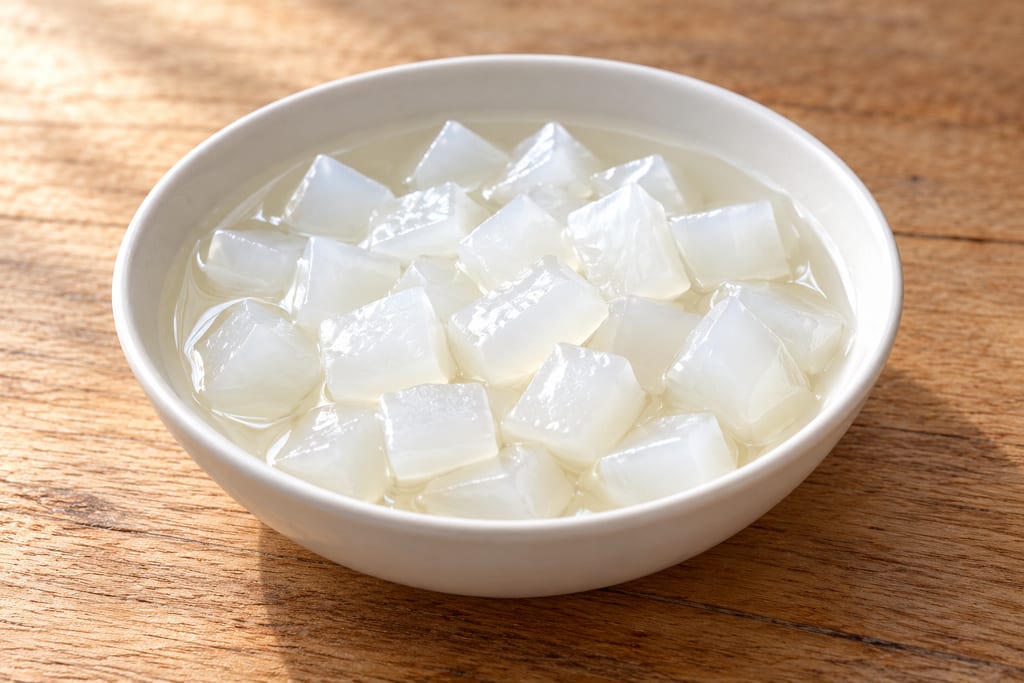
Nata de coco is a chewy, translucent dessert gel. It is cut from a cellulose pellicle that acetic acid bacteria grow on the surface of mature coconut water, then cleaned, boiled and usually stored in syrup.
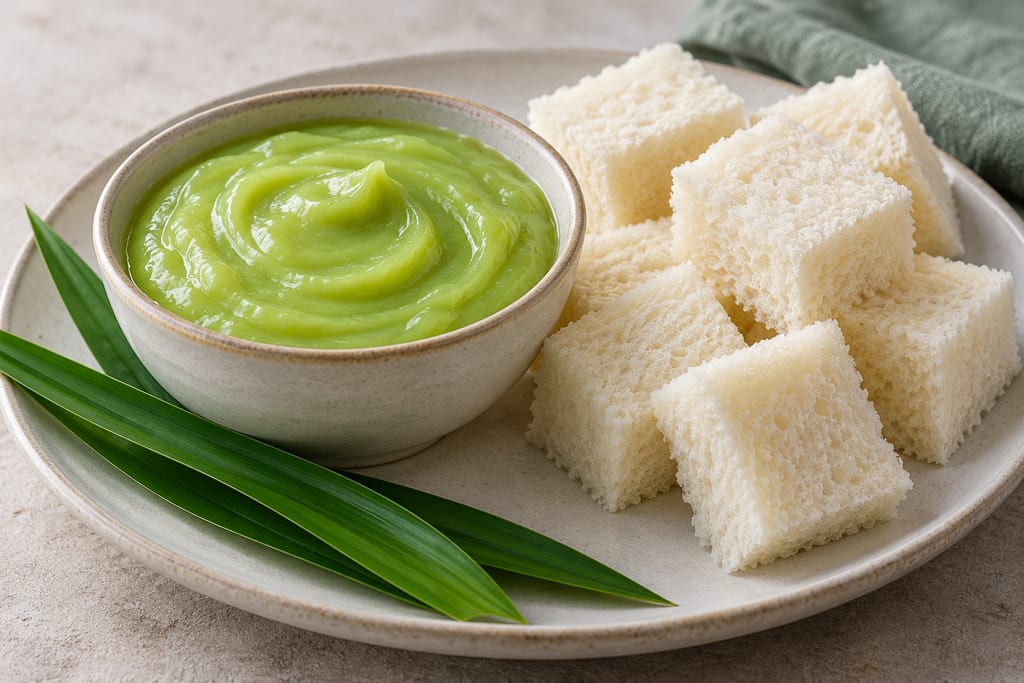
A green Thai custard of pandan juice, coconut milk, egg yolks and sugar, cooked over a water bath until it coats a spoon and served for dipping soft bread, toast or sticky rice.
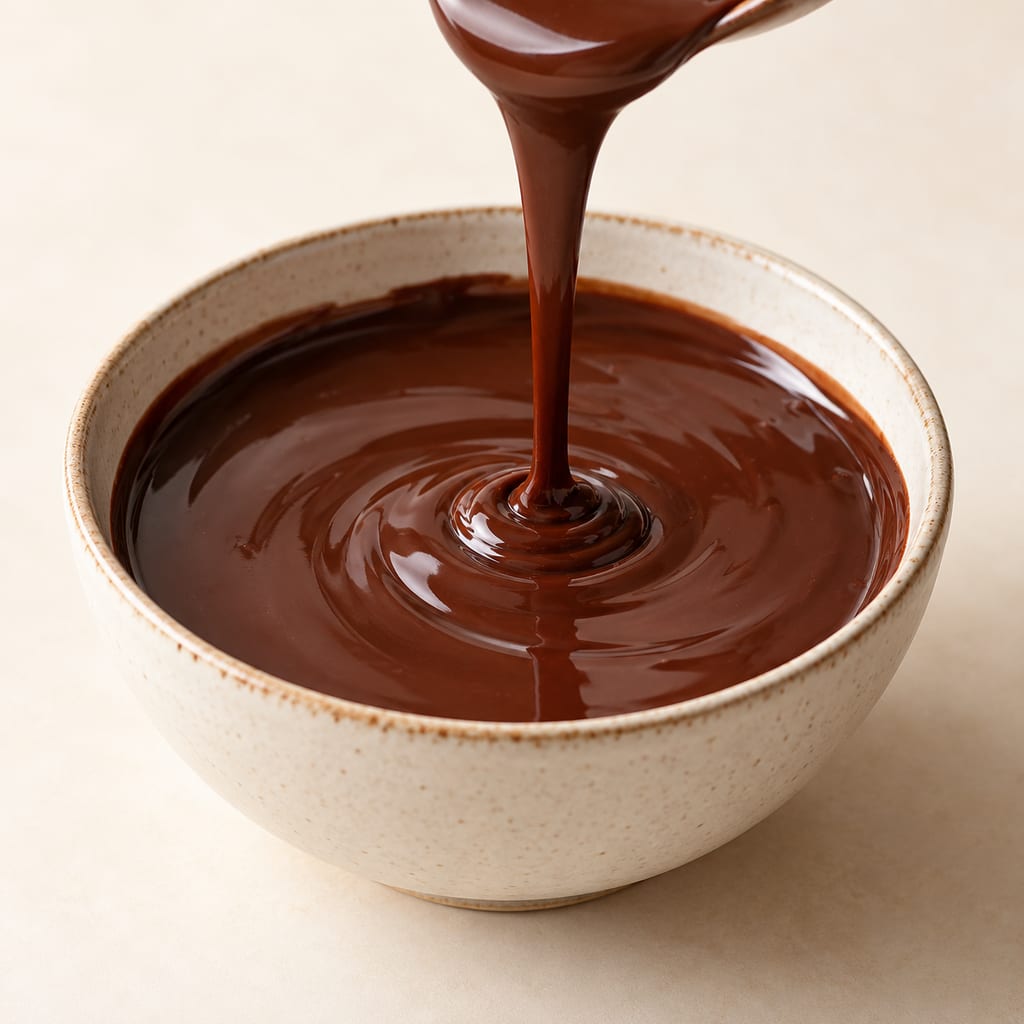
A chocolate and hot cream emulsion in a one-to-two ratio by weight, thin enough to pour, dip or drizzle, with cream and chocolate combined by whisking.
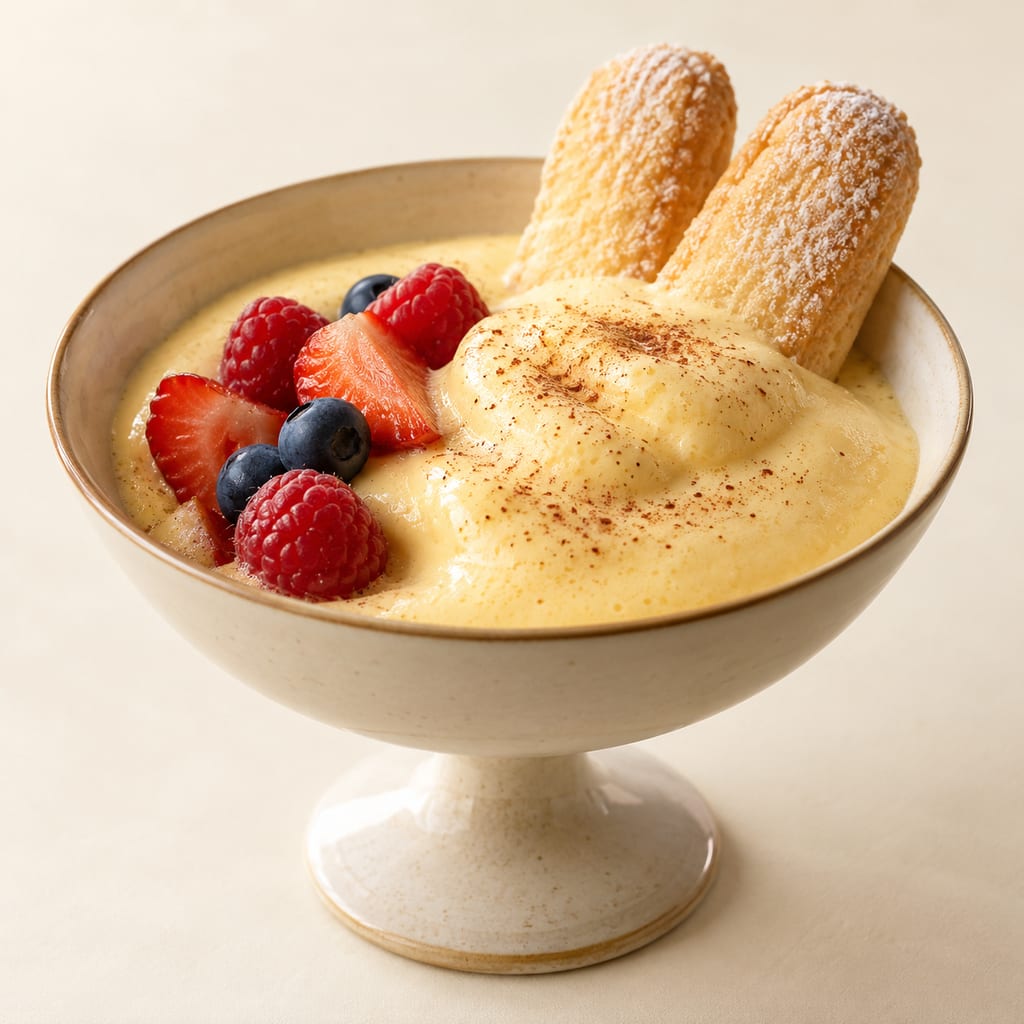
A warm foam of egg yolks, sugar and sweet wine, whisked over gentle heat in a double boiler until light, served at once with fruit or biscuits.
No community contributions have been published for this entry yet.
Sign in to contribute. Published comments and photos are free to read.
National Library Board SingaporeMethod · History
Kaya: More Than a Spread on ToastSpreadable kaya recipe and method
Serikaya tulang recipe
Serikaya family background
Cited in: A spread within a family; Singapore, kopitiam and breakfast; How the spread is made; Serikaya tulang; Keeping it
Science Centre SingaporeMethod · Safety
Sweet Science: Uncovering the Magic of Kaya Jam!Small-batch recipe
Egg protein coagulation
Cooling and refrigerating
Cited in: A smaller version, and why it thickens; Keeping it
National Library Board Singapore / BiblioAsiaHistory · Geography
Serikaya: Family of Kaya-based ConfectionsSerikaya family, regional versions, Portuguese link and early Malay references as attributed by Khir Johari
Cited in: A spread within a family; What the historian says, and what is not settled
National Heritage Board Singapore / RootsHistory · Use
Traditional Breakfast of Kaya and KopiKaya toast as Singapore coffee-shop breakfast; Hainanese kopitiam story
Cited in: Singapore, kopitiam and breakfast
National Heritage Board Singapore / Roots; MuseSGHistory
Beyond Kaya Toast: The Culturally Cosmopolitan Coffee Shop of 1960s SingaporeCoffee-shop diversity: Hainanese, Malay and Indian
Cited in: Singapore, kopitiam and breakfast
FoodSafety.govSafety
Cook to a Safe Minimum Internal TemperatureFoodSafety.gov lists 160°F (71°C) for egg dishes. Applied here as general safety guidance, not a kaya-specific validated process.
Cited in: A smaller version, and why it thickens
FoodSafety.govSafety
Warm Up with a Safely Slow-Cooked MealRefrigerate perishable cooked food within 2 hours; use a thermometer to verify safe cooking temperature.
Cited in: Keeping it