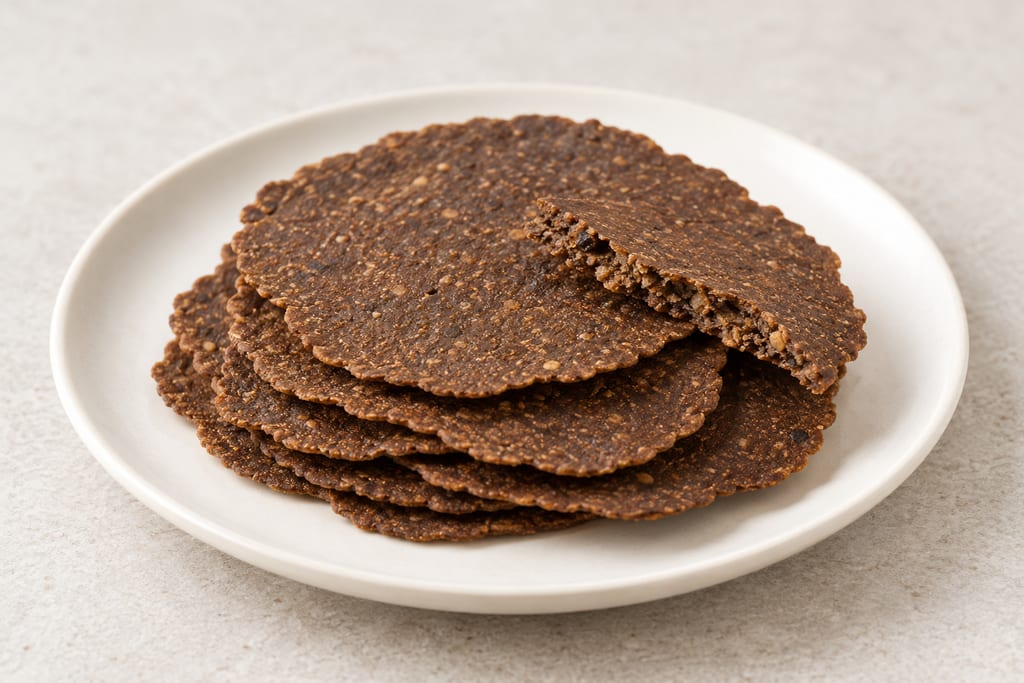
Black soybean thua nao with Bacillus subtilis
Black soybeans cooked, inoculated with a named Bacillus subtilis culture and fermented warm and humid into northern Thailand's thua nao, then optionally dried into thin discs.
 FermenteaWhere food goes to change
Modern method
สังขยาใบเตย (sangkhaya bai toey) · Thai pandan custard
A green Thai custard of pandan juice, coconut milk, egg yolks and sugar, cooked over a water bath until it coats a spoon and served for dipping soft bread, toast or sticky rice.
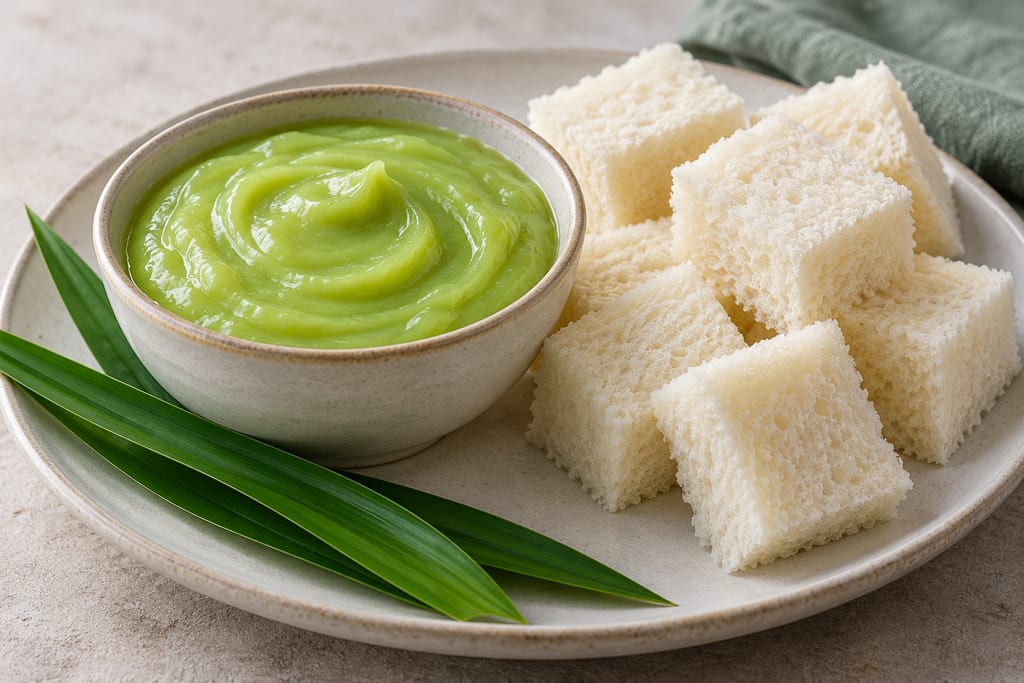
In Thai, sangkhaya names more than one custard. The pandan version on this page is the soft green cream eaten with bread. A Southern Thai cultural-encyclopedia entry records a different sangkhaya: duck or chicken eggs kneaded with finely cut lemongrass leaves and shallots, two parts palm sugar and two parts granulated sugar dissolved in, strained through fine white cloth, poured into a heated steaming tray to about three-quarters of its depth and steamed until set. Villagers there time the steaming by how long one incense stick burns. That is a set, sliceable sweet, not a spread.
Suan Dusit University's course material draws the same line. Egg sangkhaya is eaten with sticky rice, and the present soft pandan version is commonly served with steamed or toasted bread, fried dough and buns.
The version above, from Hungry in Thailand, serves four. Pandan leaves are blended with water and strained for their juice, which supplies both the green colour and the scent that the page compares to vanilla with a hint of coconut. The juice is whisked with coconut milk, egg yolks, sugar and salt, and a cornstarch slurry is added. The bowl goes over a pot of simmering water, with the water kept below the rim, and the custard is whisked on low heat for about 8 to 10 minutes until it is glossy and coats a spoon.
The author warns that high heat curdles the eggs, recommends stopping at the coating stage because the custard thickens as it cools, and loosens an over-thick batch with 1 to 2 tablespoons of warm coconut milk. Fresh leaves are preferred to bottled extract, and full-fat coconut milk for richness.
Pailin Chongchitnant's Hot Thai Kitchen recipe, written for six servings, builds a pandan-and-coconut dip from coconut milk, condensed milk, sugar, salt, cornstarch and egg yolks, with evaporated milk to adjust thickness. Pandan is blended and strained, the yolks are tempered with warmed liquid and the mixture is stirred over low heat until thick. The page could not be read again for this entry, so its exact amounts are not repeated here, and the two versions are not interchangeable.
As a dip for soft white bread it is one of the most common ways to eat it, at breakfast or as a snack even though it counts as a dessert. It also works as a spread on toast, or beside warm sticky rice. The author of the measured recipe calls it a sweet fondue for dipping. Some versions are steamed until firm and sliceable, which this one is not.
Chulalongkorn University holds a 1987 M.Sc. thesis on coconut custard spread for bread by Sumang Pawawech. Selected scans reviewed earlier cover a canned industrial formulation, a retort trial and storage experiments on that product and package. The findings concern that formulation, not the home dip, and they say nothing about its origin. No home canning process follows from them.
Refrigerate in an airtight container within 2 hours of cooking. The author gives up to 3 days, with the colour brightest on the first day. The custard firms in the fridge and loosens with 10 to 15 minutes at room temperature or a splash of warm coconut milk. This is household guidance; no source tests the keeping time.
Contemporary Thai course material describes the soft pandan version as the one now commonly served with bread. No dated origin for the bread-spread form has been established.
Yield 4 servings · Scaling: source batch only
The method sets yolks over a water bath without a stated temperature, and the finished custard is a moist, low-acid food.
Hazard sourceRefrigerate within 2 hours of cooking in an airtight container, as the author advises.
Control sourceThe author's keeping time of up to 3 days refrigerated is household advice, not a tested shelf life.
A 1987 thesis on canned coconut custard spread concerns an industrial product and package, and does not give a process for home keeping or canning.
The sources describe the pandan custard as a Thai bread accompaniment without placing it more narrowly or giving an origin.
Black soybeans cooked, inoculated with a named Bacillus subtilis culture and fermented warm and humid into northern Thailand's thua nao, then optionally dried into thin discs.
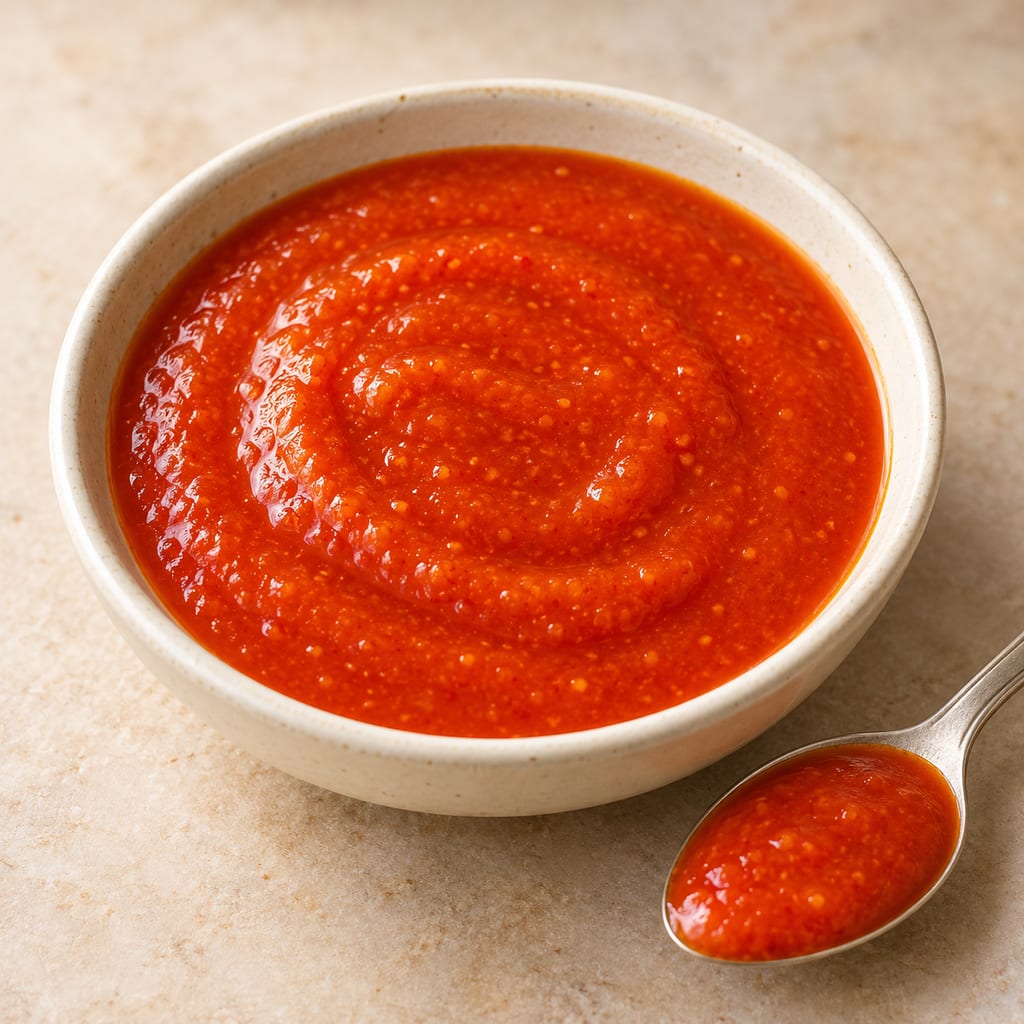
Ripe red chillies, garlic, labelled 5% vinegar, sugar, water and salt are blended, simmered and blended smooth into a cooked chilli sauce.
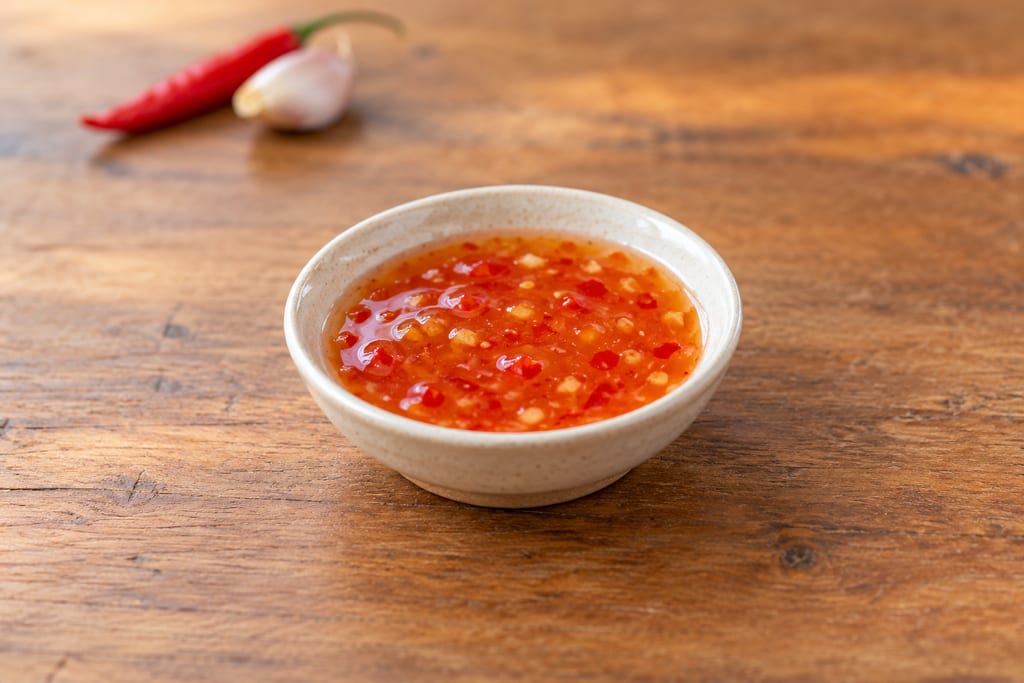
A cooked Thai-style sweet chilli dip combines red chillies, garlic, sugar and vinegar, then uses a small cornflour slurry to give this batch a glossy, spoonable body.
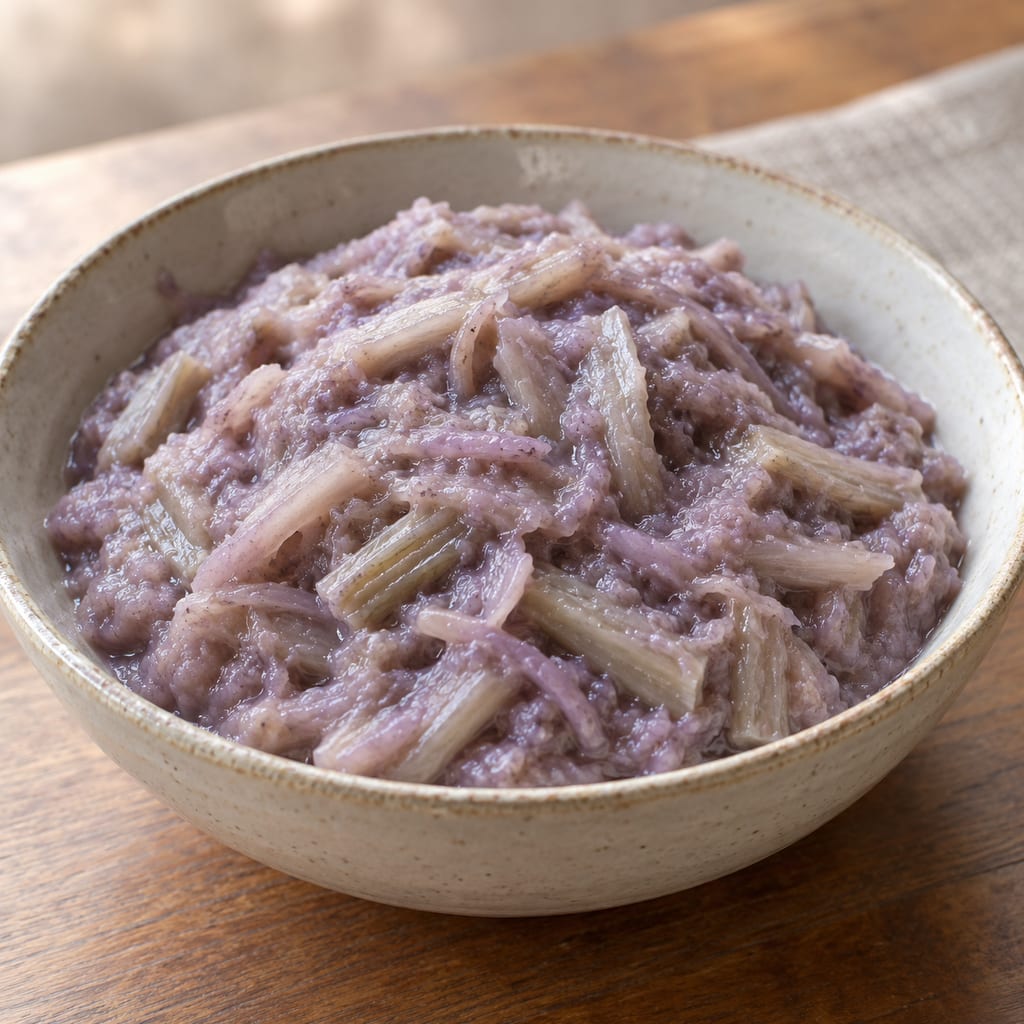
Thai pickle of young taro leaf stalks, salted, kneaded and held in rice-washing water in an earthen jar at room temperature. JIRCAS records it as a home-level product with no validated endpoint.

A cultural account of luk niang dong, a Thai djenkol-bean pickle associated with southern Thailand. Not a recipe or eating recommendation: sources do not establish that pickling controls djenkolism.
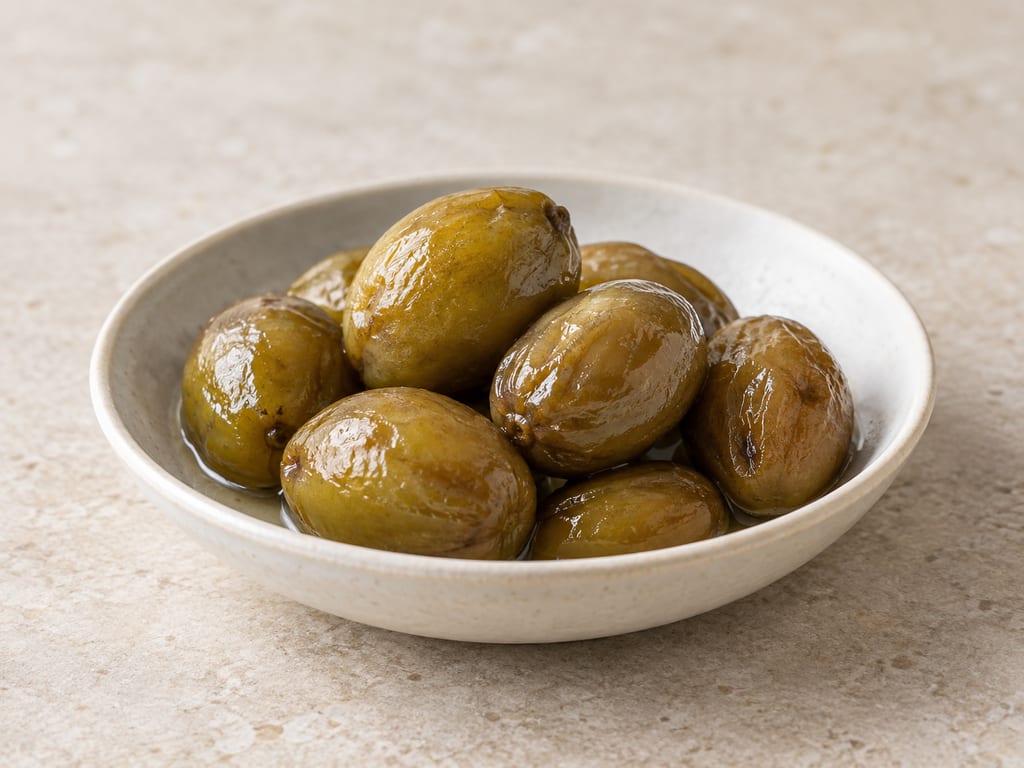
Mature Spanish plums are covered with a 20% volume salt solution and fermented under shade for ten days.

Northern Thai fermented tea leaf: Assam tea leaves tied in bundles, steamed, packed in a lined tank and held under weight for three to four months. Eaten after meals.
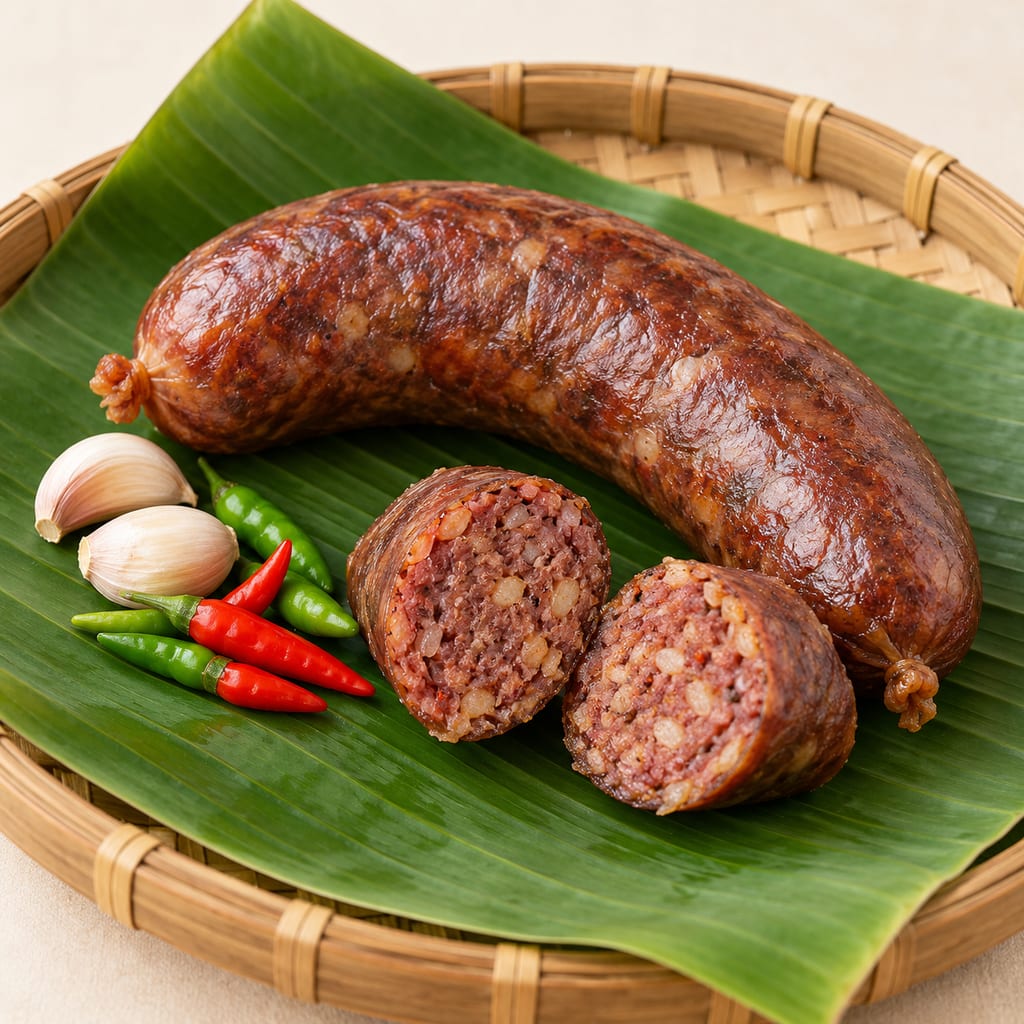
Mum is a Thai family of fermented meat preparations with distinct pork Mam-moo and beef Mam-neua forms. Sources document ingredients, casing and serving traditions, but not a validated home process.

Kaya is a sweet Malay-rooted spread of eggs, coconut milk and sugar, scented with pandan and stirred over gentle heat until it thickens. In Singapore it is the filling of kaya toast.
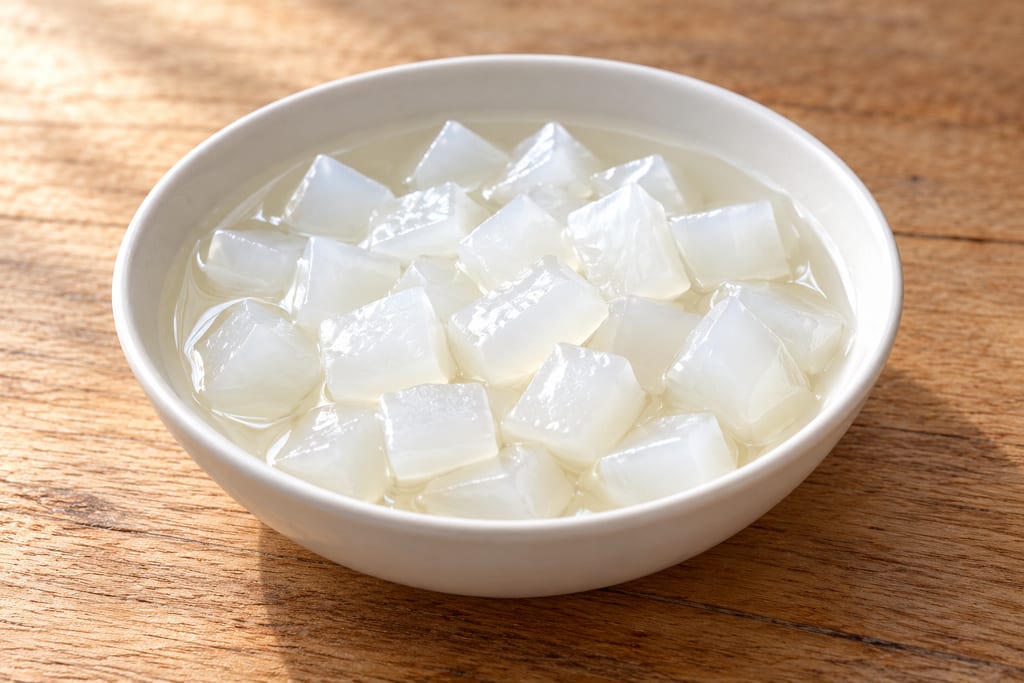
Nata de coco is a chewy, translucent dessert gel. It is cut from a cellulose pellicle that acetic acid bacteria grow on the surface of mature coconut water, then cleaned, boiled and usually stored in syrup.
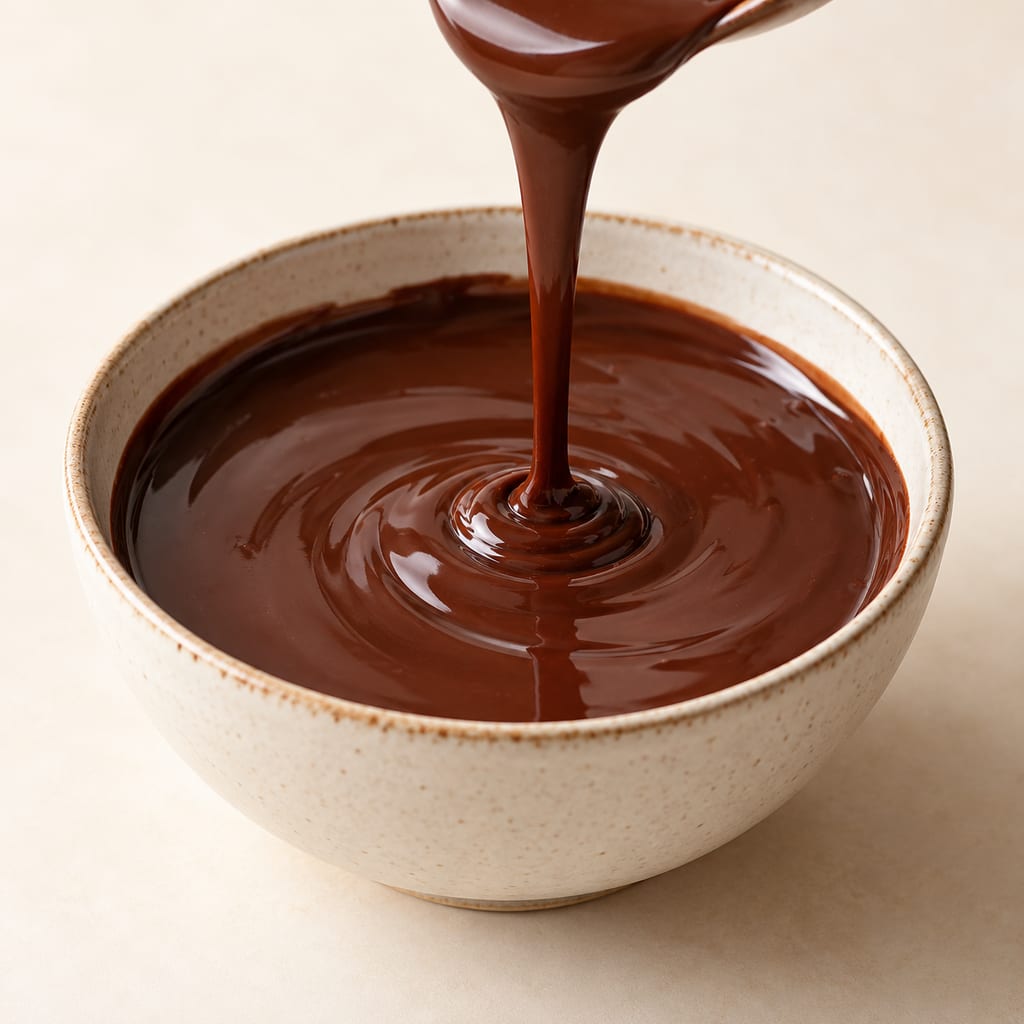
A chocolate and hot cream emulsion in a one-to-two ratio by weight, thin enough to pour, dip or drizzle, with cream and chocolate combined by whisking.
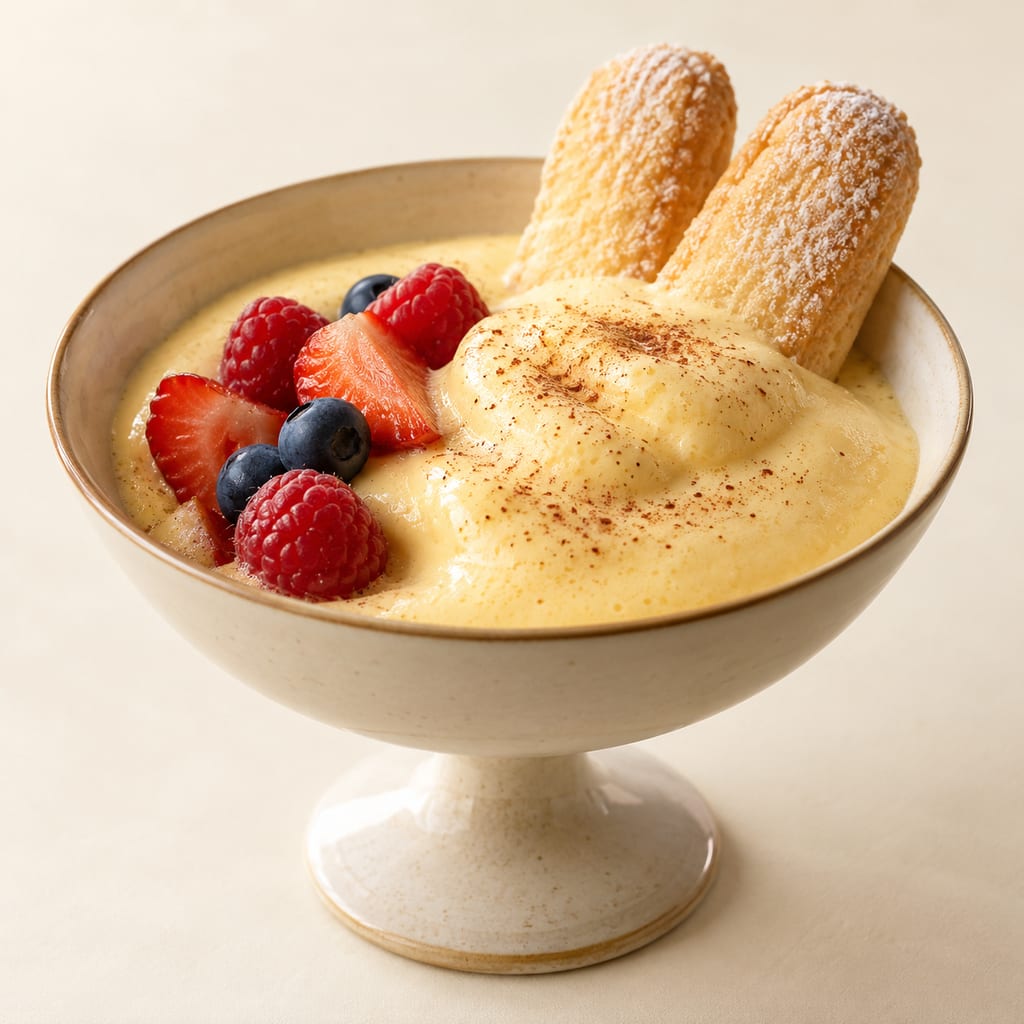
A warm foam of egg yolks, sugar and sweet wine, whisked over gentle heat in a double boiler until light, served at once with fruit or biscuits.
No community contributions have been published for this entry yet.
Sign in to contribute. Published comments and photos are free to read.
Hungry in ThailandMethod · Use · Safety
Thai Pandan Custard Recipe (Sangkhaya)Measured ingredients and method
Serving
Storage advice
Cited in: The measured recipe; Serving; Keeping it
Hot Thai KitchenMethod
Pandan Coconut Custard “Fondue” สังขยาใบเตยA six-serving pandan and coconut dip with condensed milk and yolks
Cited in: Another published version
Thailand Cultural Encyclopedia, Princess Maha Chakri Sirindhorn Anthropology CentreIdentity · Method
สังขยา, ขนม [Southern Thai custard sweet]Southern steamed sangkhaya method
Cited in: One name, several custards
Suan Dusit University, School of Culinary ArtsIdentity · Use
สารพันเมนูขนมไทยร่วมสมัย [Contemporary Thai dessert course material]Egg sangkhaya with sticky rice versus pandan version with bread
Cited in: One name, several custards
Chulalongkorn University Theses and DissertationsHistory · Safety
การพัฒนาผลิตภัณฑ์สังขยาทาขนมปัง [Product development of coconut custard spread]1987 thesis on a canned industrial custard spread
Cited in: A 1987 study of a canned custard spread