Lebben and labneh, Awassi method · Bag-drained labneh
Loading ratings…
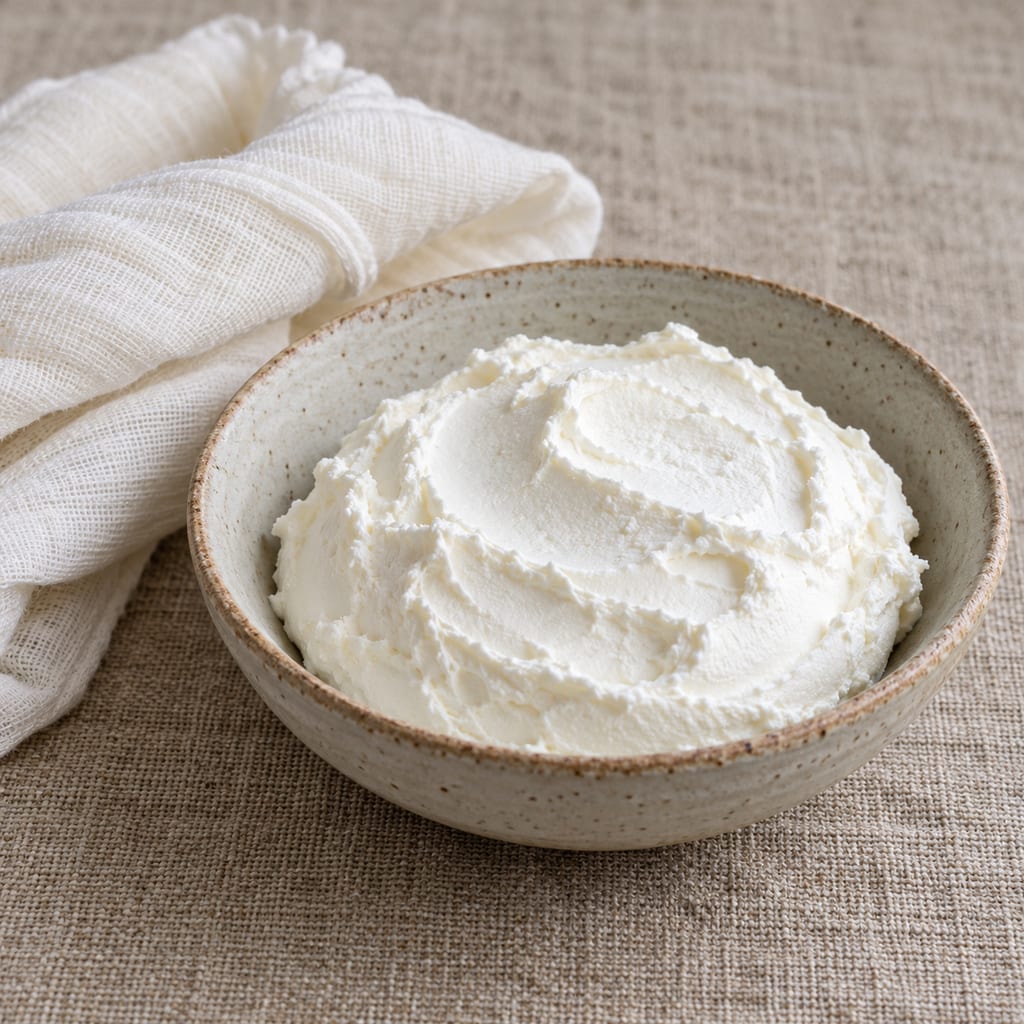
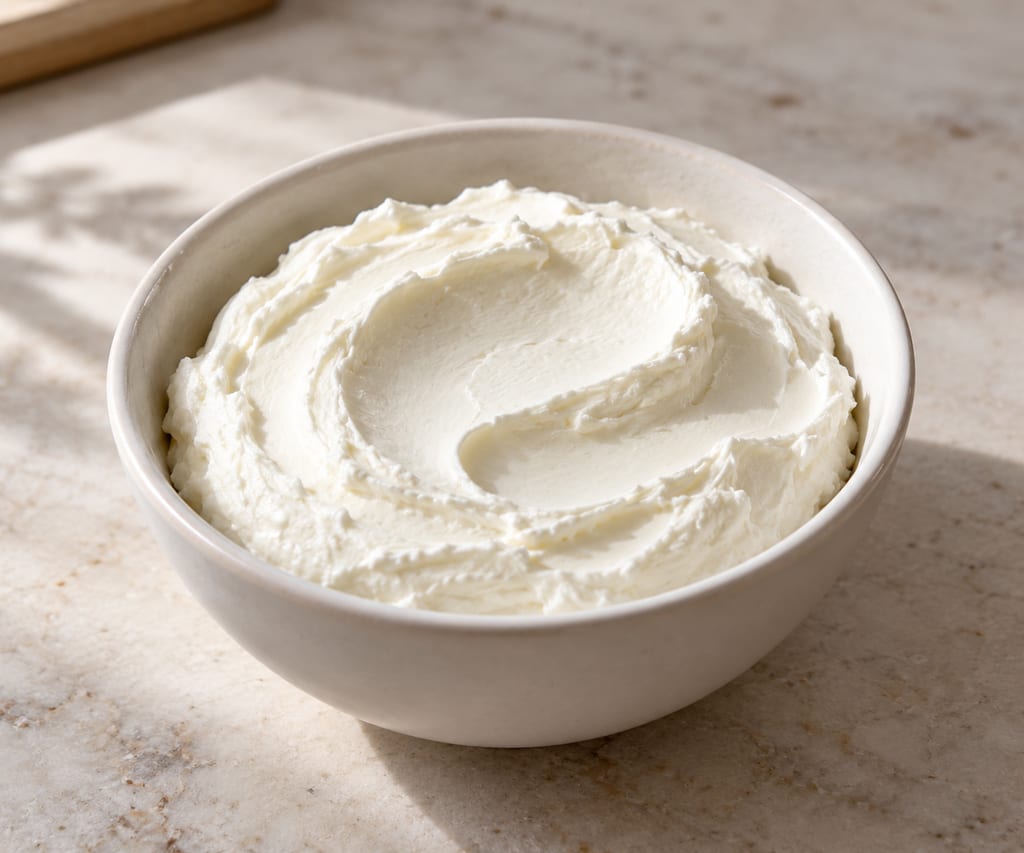
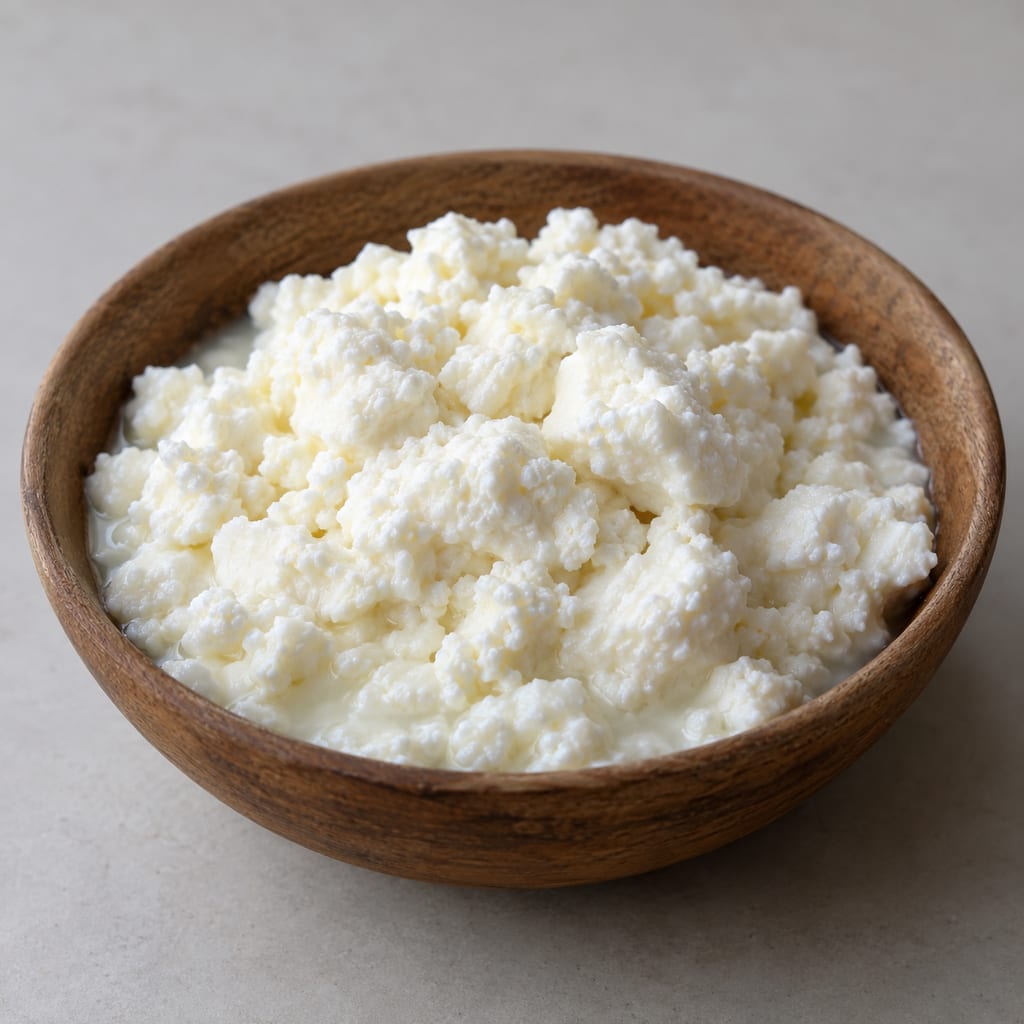
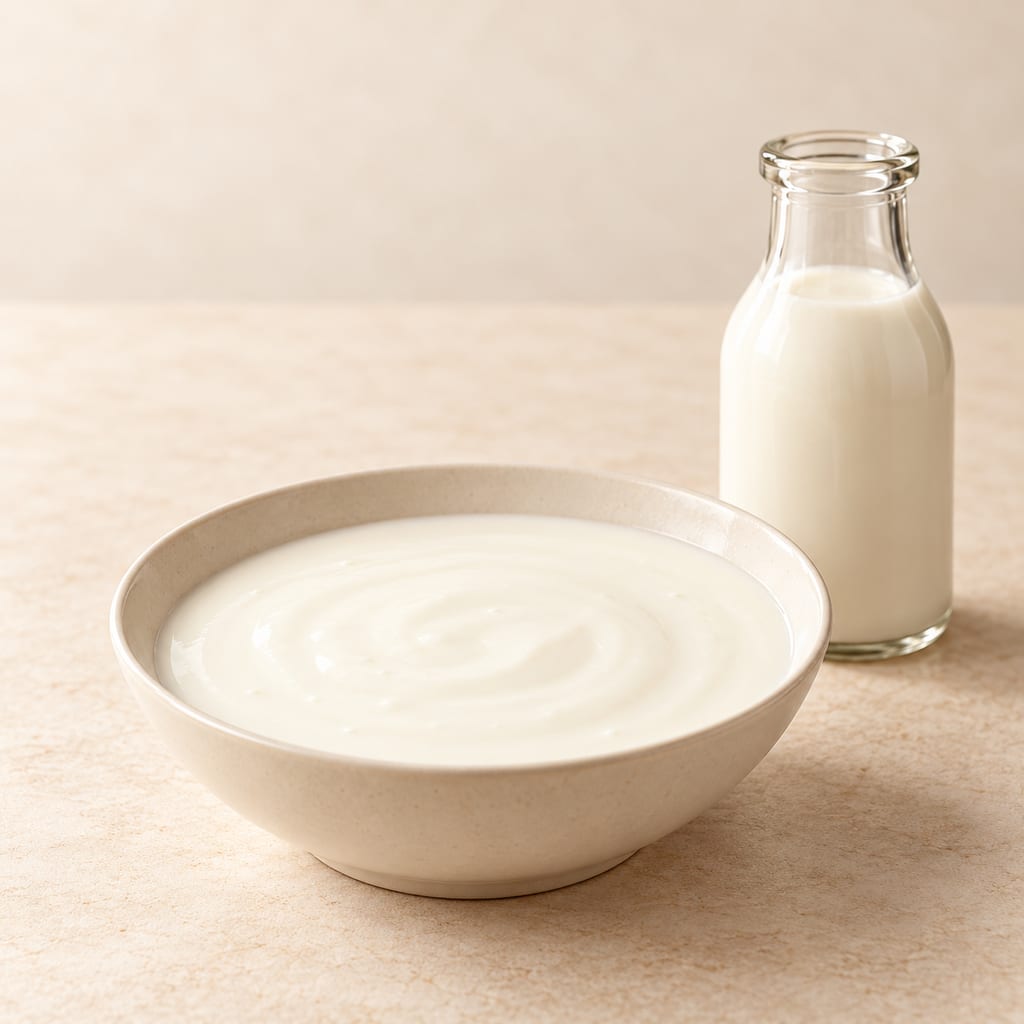
Labneh made from boiled Awassi sheep's milk, cultured with a little of the previous batch and drained in a bag for about a week, with salt added each day.
Labneh is a thick, tangy spread made by draining cultured milk or yogurt until most of the whey has gone. The name and the food are spread across the Near East, and the Food and Agriculture Organization describes it as a breakfast staple in several countries of the region. The FAO's historical origin is unknown.
This is the historical Awassi method described by H. Epstein for FAO in 1985. It begins with the milk, which is boiled, cooled to 40 to 45°C and inoculated with about two per cent of a previous batch. The culture is allowed to work for 10 to 12 hours as the milk cools gradually.
Draining and salting
The cultured milk is put into a bag and drained for about a week. The curd is mixed repeatedly during draining, and salt is added every day. The account gives no absolute milk volume or salt amount, so the proportions cannot be taken from it.
A different process from the modern batch
A modern video drains salted Greek yogurt through cloth for about 18 hours, starting from yogurt that has already been made. That is a different method and does not follow the Awassi steps. A separate FAO survey from 1990 describes prepared laban drained in a bag for about three hours at 30°C or lower. That drainage stage is not an incubation and is kept apart from this method.
Historical finishes
The 1985 account also describes sun-drying and storage in olive oil. Those are historical finishes and not current storage advice. This page does not recommend them, and it gives no shelf life.
History
FAO's Awassi account describes Bedouin and fellahin milk use. The method is a historical description; this page does not date it.
Ingredients
Scaling: source batch only
MilkAwassi sheep's milk, boiled, then cooled to 40 to 45°C.
Amount not stated
No absolute volume is given in the 1985 account.
Previous-batch laban starterAdd to the cooled milk, then allow it to cool gradually.
2 %
About 2% of the milk.
SaltAdded to the drained cheese every day during draining.
No amount is given.
Method
Risks and precautions · Standard risk
Soft dairy cheese held for several days
A soft dairy product drained for about a week has a Listeria risk, which CDC links to soft cheese and raw milk. The 1985 account does not validate the drain.
Hazard source
Pasteurised dairy, boiled milk and refrigeration of the drained cheese
Control source
The 1985 account's sun-drying and olive-oil storage are historical finishes, not storage advice.
No validated shelf life or drain endpoint is established.
Boil the milk.
Cool the boiled milk to 40 to 45°C.
Add about 2% of the previous batch as starter.
Allow the milk to cool gradually and hold it for 10 to 12 hours.
Drain the curd in a bag for about a week, mixing it repeatedly.
Add salt daily during draining.
Conditions
Fermentation10–12 h
Temperature40–45°C
Places
Near East
Documented preparation · Region evidence
FAO's 1985 account describes Awassi milk use across the Near East. It gives no single birthplace for labneh.
A cold-drained labneh method excerpted from the Soframiz cookbook: plain whole-milk Greek yogurt is lightly pressed in cheesecloth and refrigerated overnight, up to two days. This is distinct from Gavin Webber’s 2018 cupboard-drained batch.
High-fat cream scalded below boiling for at least an hour until a thick crust forms, then cooled hard so the crust sets and the cream beneath thickens.
Crème fraîche is cream soured by lactic cultures into a thick, mild topping. It suits fruit and desserts as well as soups, sauces and other savoury dishes.
Cultured butter is churned from cream soured with lactic cultures. Its lightly tart flavour comes from the cultured cream, which separates into butter grains and buttermilk.
Filmjölk is a Swedish cultured milk with mild acidity and a spoonable body. This recurring batch uses filmjölk from the previous batch to culture fresh milk.
Butter heated until most water leaves and the milk solids separate, giving a fat that keeps far longer than butter. Rendering applies the same heat to animal tissue to make lard and tallow.
Community
No community contributions have been published for this entry yet.
Share what you made
Sign in to contribute. Published comments and photos are free to read.