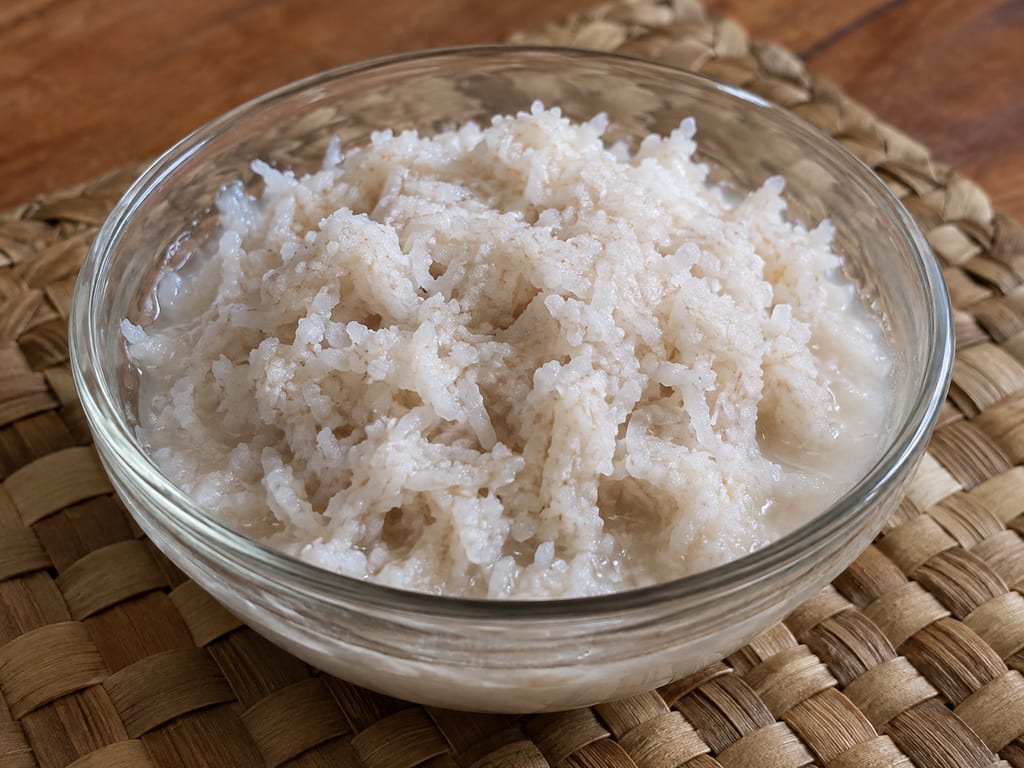
Taioro as documented in a CAPL manual
Taioro is a Polynesian condiment of grated coconut fermented with freshwater prawn heads in seawater, then rested in a cool place for a day before it is used.
 FermenteaWhere food goes to change
Miti hue · Mitihū · Miti hū · Miti hue
A documentary account of Tahitian mitihue, a fermented coconut condiment traditionally associated with freshwater prawns. It records cultural context and source-reported risks without giving a household preparation method.
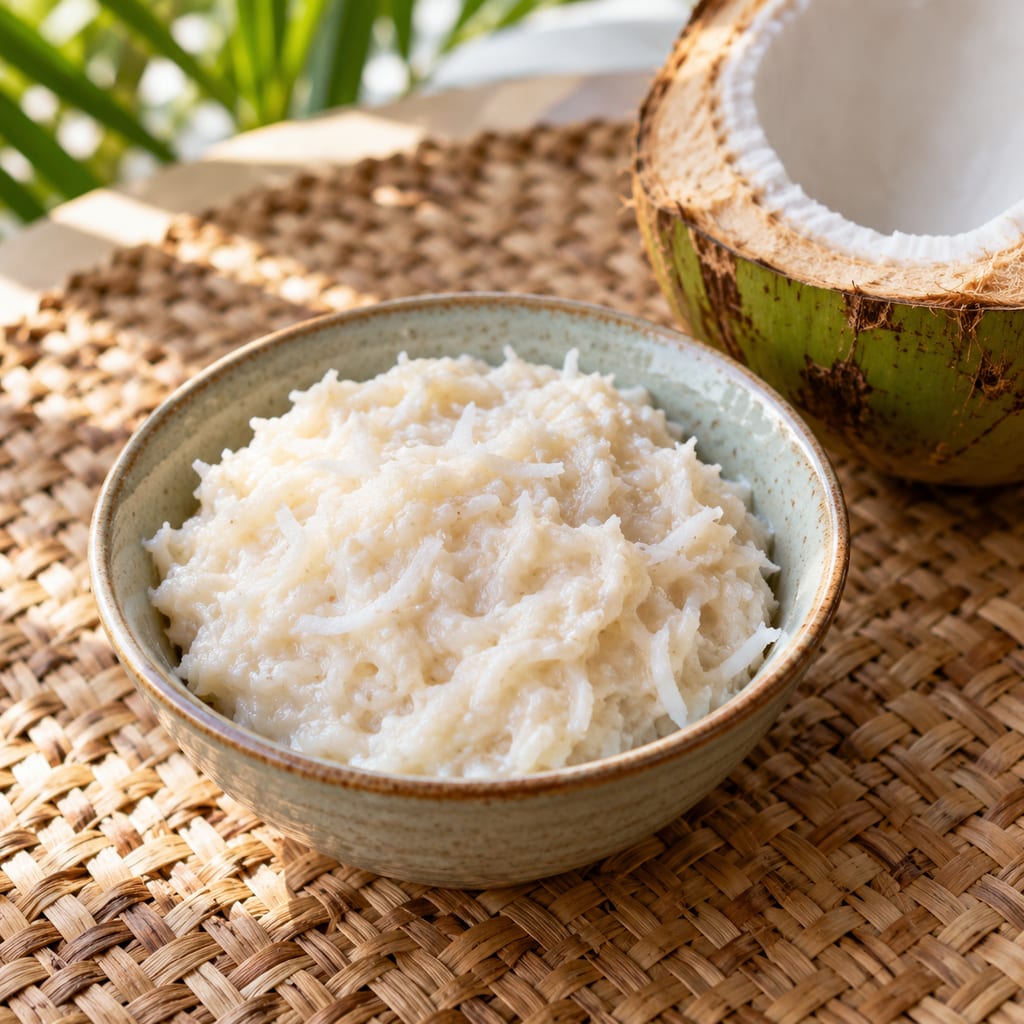
Mitihue, also written miti hue or mitihū, is documented as a coconut-based sauce associated with Tahiti and French Polynesia. The local heritage notice describes it as part of the traditional Tahitian meal ma’a tahiti, served with foods including po’e, fish, taro, banana, roast pork and especially fafaru.
The cited sources describe the traditional version as involving young coconut flesh, salt water and liquid from freshwater prawn heads. This entry records that source description as cultural context; it does not provide a household recipe or directions for making the ferment.
An encyclopaedia account distinguishes miti haʻari, a fresh coconut-milk sauce served promptly, from miti hue, a coconut preparation stored before consumption. It relates the name hue to a calabash vessel and describes mitihue as one form within a wider family of Polynesian sauces.
The same account lists tai monomono in the Cook Islands, hami in Tonga and other regional names, while noting differences in ingredients and process. Similar names do not make these preparations interchangeable; this record keeps mitihue distinct from taioro and from crustacean-free tai monomono.
The French Polynesian heritage notice warns of eosinophilic meningitis associated with raw freshwater prawn heads used to ferment coconut in mitihue and taioro. Because the cited material does not establish a validated household-safe endpoint, this public entry does not reproduce operational steps, ingredient quantities, or a claimed control.
The entry is documentary: it preserves the dish’s reported identity, cultural setting, names and source-reported hazard. It does not endorse preparation or consumption of a home-fermented raw-prawn version.
The available sources do not date the origin of mitihue or establish a single recipe used throughout French Polynesia. The local heritage notice documents contemporary cultural practice, while the encyclopaedia summarizes several regional forms and cites older works for broader coconut-and-seawater preparations.
Those distinctions leave historical questions open, including when the name mitihue first appears and how preparation varied before refrigeration. No locality more precise than Tahiti and French Polynesia is claimed here.
A French Polynesian heritage notice documents mitihue as a traditional coconut sauce served with ma'a tahiti dishes, especially fafaru. A separate encyclopaedia account distinguishes stored, fermented miti hue from fresh coconut-milk miti haʻari and describes related but distinct regional sauces. Neither source establishes a dated origin for mitihue.
Scaling: source batch only
The local heritage notice links cases to raw freshwater prawn heads used to ferment coconut in mitihue and taioro.
Hazard sourceThis documentary entry provides no directions for preparing or fermenting raw-prawn mitihue.
Recorded for French Polynesia as a whole; the sources name Tahiti and the wider territory, not a single village.
Taioro is a Polynesian condiment of grated coconut fermented with freshwater prawn heads in seawater, then rested in a cool place for a day before it is used.
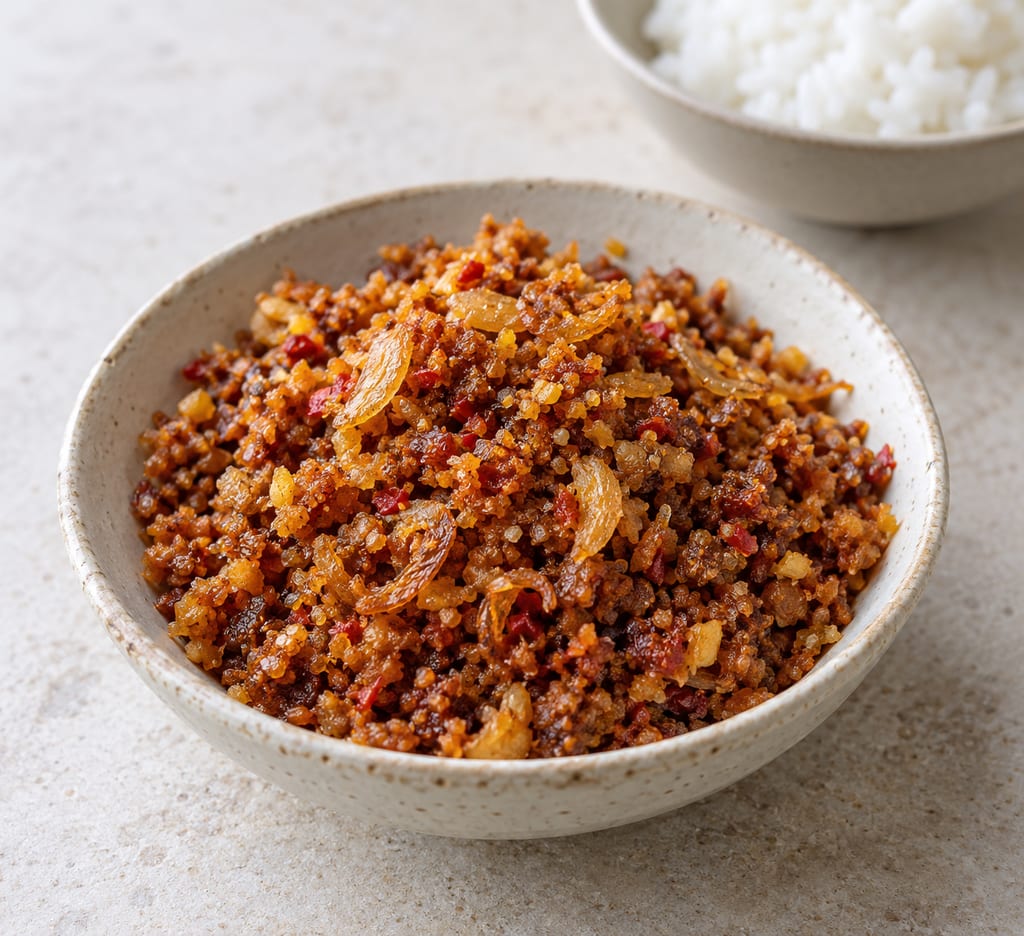
A Myanmar relish of dried shrimp, fried eschalot and garlic, chilli, turmeric, tamarind and ngapi. Naomi Duguid’s published recipe makes about 1 cup; it contains crustacean shellfish.
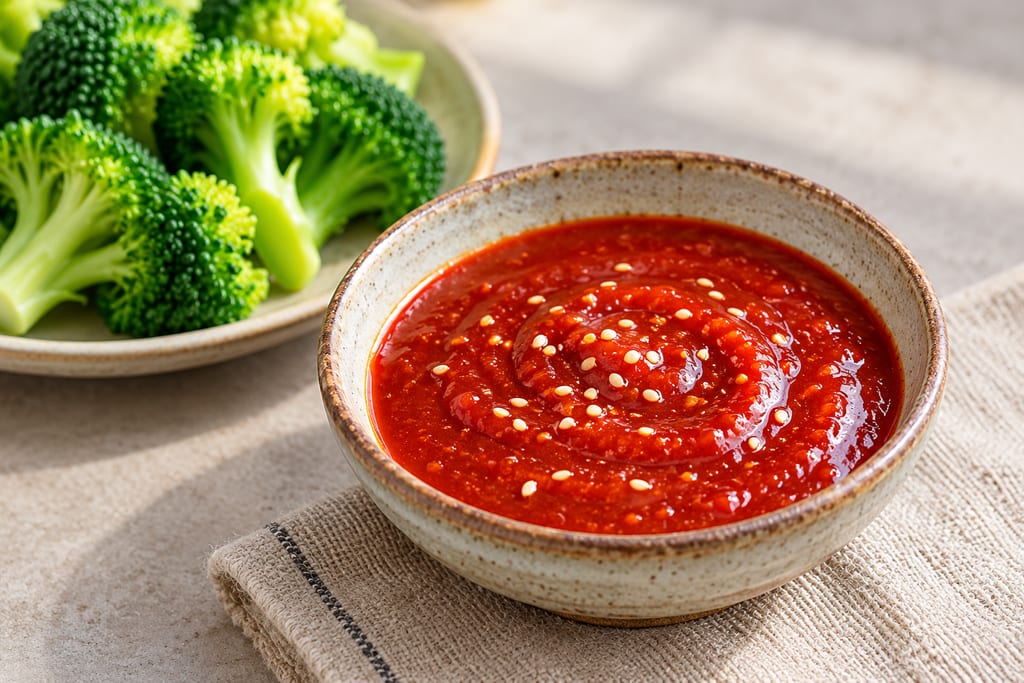
Chogochujang is a Korean sweet-sour sauce made by seasoning gochujang with vinegar and sugar. This development batch adds water and toasted sesame seeds, with optional garlic for the portion being served.
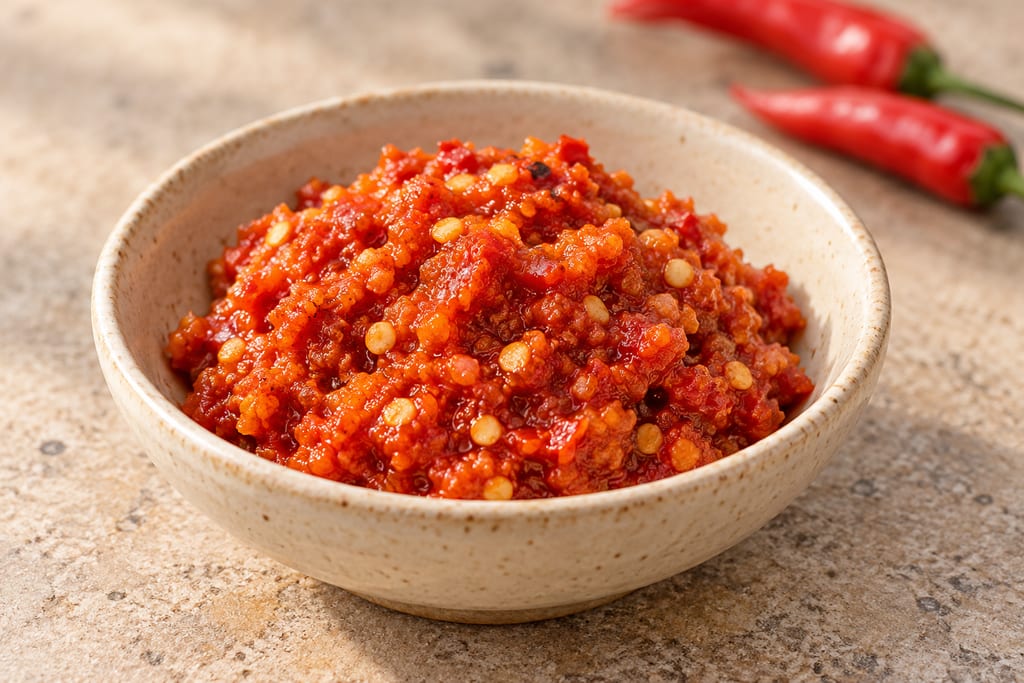
Dinanche, or donne' dinanche, is a Chamorro hot pepper paste of crushed chillies that Guam cooks use on its own or stir into fina'denne'. Its versions range from pepper alone to ones with eggplant, miso or coconut milk.
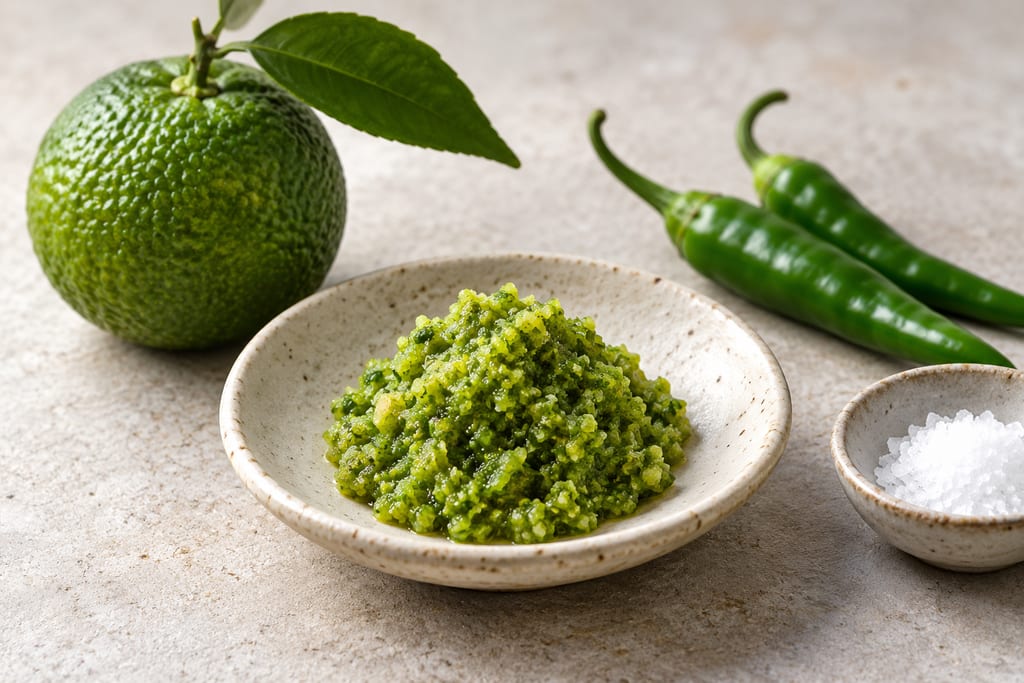
A fresh, uncooked yuzu and green chilli paste inspired by Kyushu’s yuzu kosho, made here as an untested small-batch seasoning rather than a preservation formula.
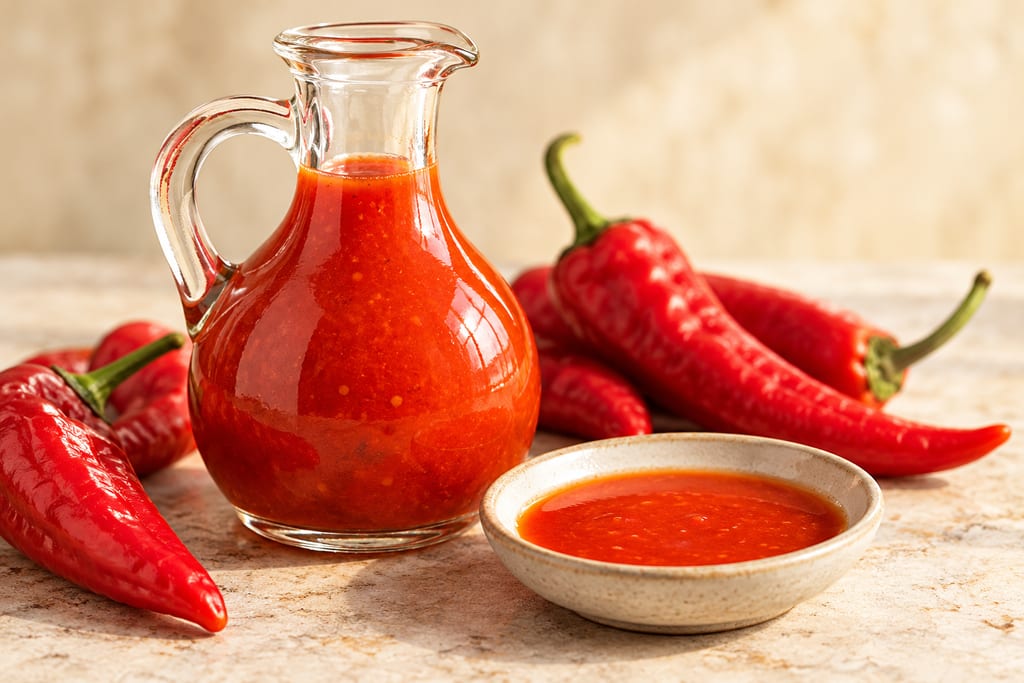
Fresh hot peppers ferment beneath a measured salt brine, then become a bright, tangy sauce blended from the peppers and their liquor.
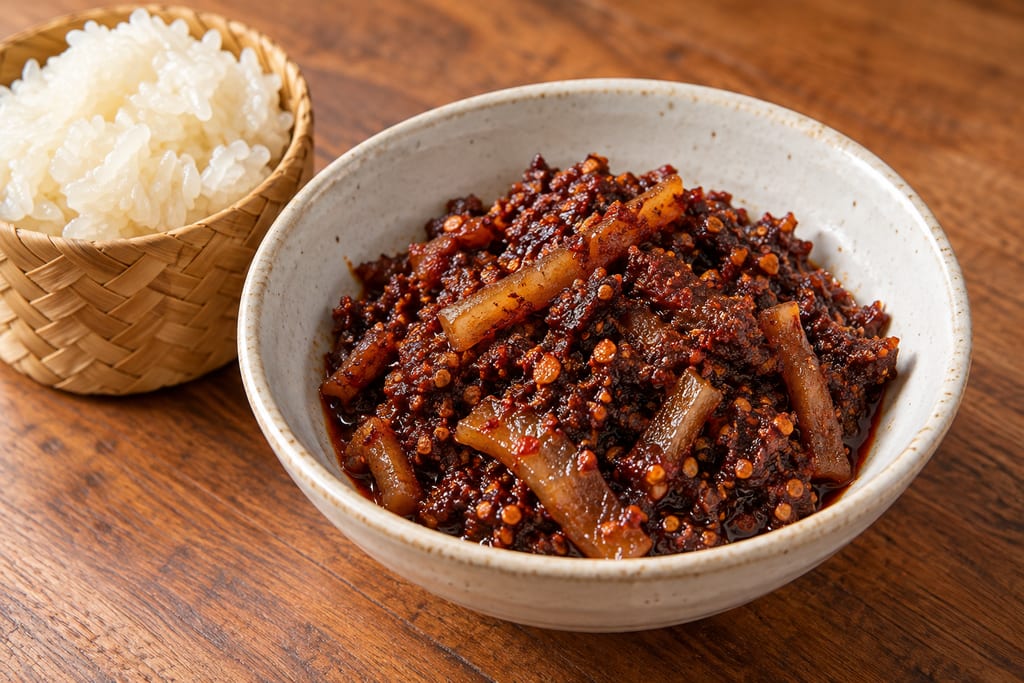
Jeow bong is a Lao paste of dried chilli, shallot, garlic and galangal cooked with buffalo or cow skin, a Luang Prabang specialty eaten with sticky rice and grilled meat.
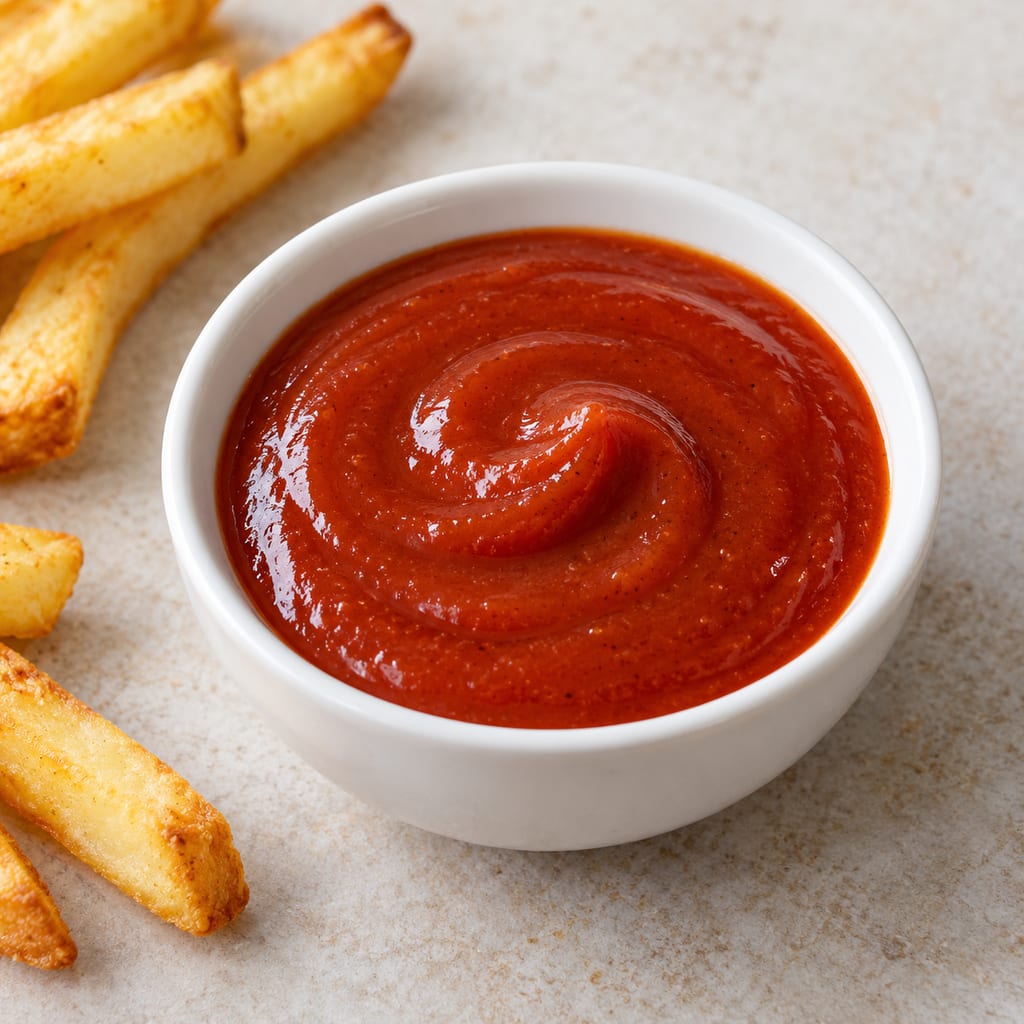
A modern tomato condiment sharpened with the spicy, savoury tang associated with kimchi; this measured version whisk-mixes prepared ketchup and commercial kimchi seasoning.
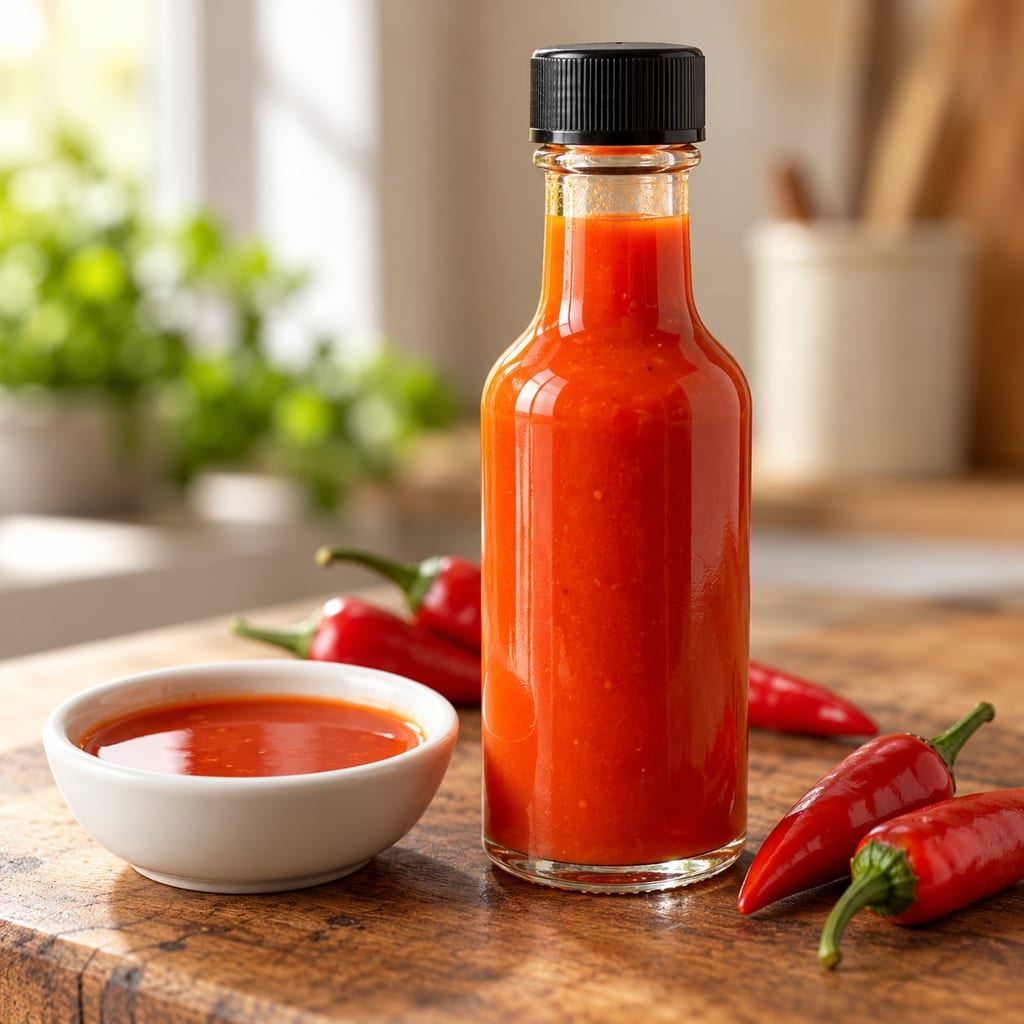
Documentary account of Louisiana pepper sauces, using TABASCO's published barrel-aged commercial process as one specific example; the source does not provide a validated home recipe.
No community contributions have been published for this entry yet.
Sign in to contribute. Published comments and photos are free to read.
Direction de la Culture et du Patrimoine, Polynésie françaiseMethod · Safety · Use
La préparation du mitihueMitihue is a coconut-based sauce served with ma'a tahiti dishes including po'e, fish, taro, banana, roast suckling pig and especially fafaru.
The local guide lists young coconut and freshwater prawn heads as ingredients, and describes crushing prawn heads in water, filtering, and using the liquid to hold the coconut.
The guide describes discarding that liquid after one day, finishing with fresh water and shaking, with optional chopped garlic.
The guide states the prawns must be frozen at least 48 hours before use, and that taioro or mitihue made with unfrozen prawns must not be eaten; it links these to eosinophilic meningitis.
Cited in: Mitihue in Tahitian food culture; Safety and scope of this record; What the available evidence does not establish
WikipediaHistory · Regional names · Method
Miti hueMiti is a Polynesian sauce of coconut flesh and salt water; in Tahitian the word originally meant brine.
Miti haʻari is coconut milk with onion and garlic, eaten at once; miti hue is stored and fermented before eating.
Miti hue is kept in a calabash (hue); it ferments a few days in the sun.
Regional names: tai monomono (Cook Islands), hami (Tonga), tähroro (Rotuma), samilolo, niu faʻapala and sogi ma le isu (Samoan islands).
The coconut-shell form in Tonga, Samoa and Rotuma ferments a few weeks; the article has no dedicated history section and cites 1866 to 1930 sources.
Cited in: Mitihue in Tahitian food culture; Names and related preparations; What the available evidence does not establish