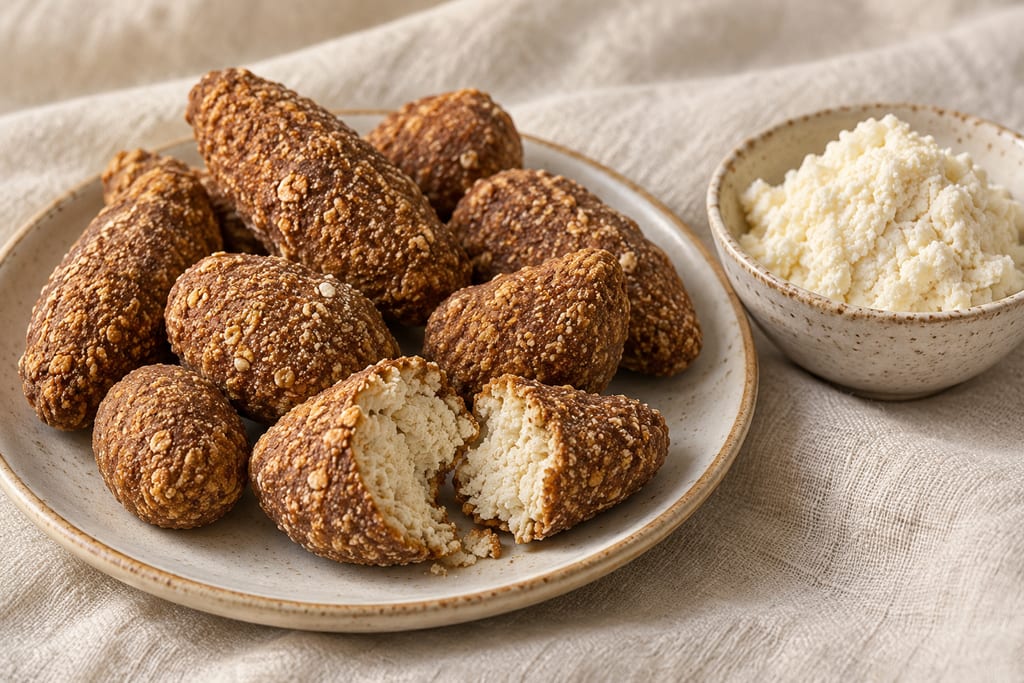
Aarchi and kurut (Altai dried curd)
A two-stage Altai dairy preparation: sour chegen is heated into soft aarchi, then portions are drained, pressed and traditionally smoked into firm kurut.
 FermenteaWhere food goes to change
Whey ricotta recovers fine curds from leftover cheesemaking whey, often with added milk, by heating the whey and acidifying it until the curds separate.
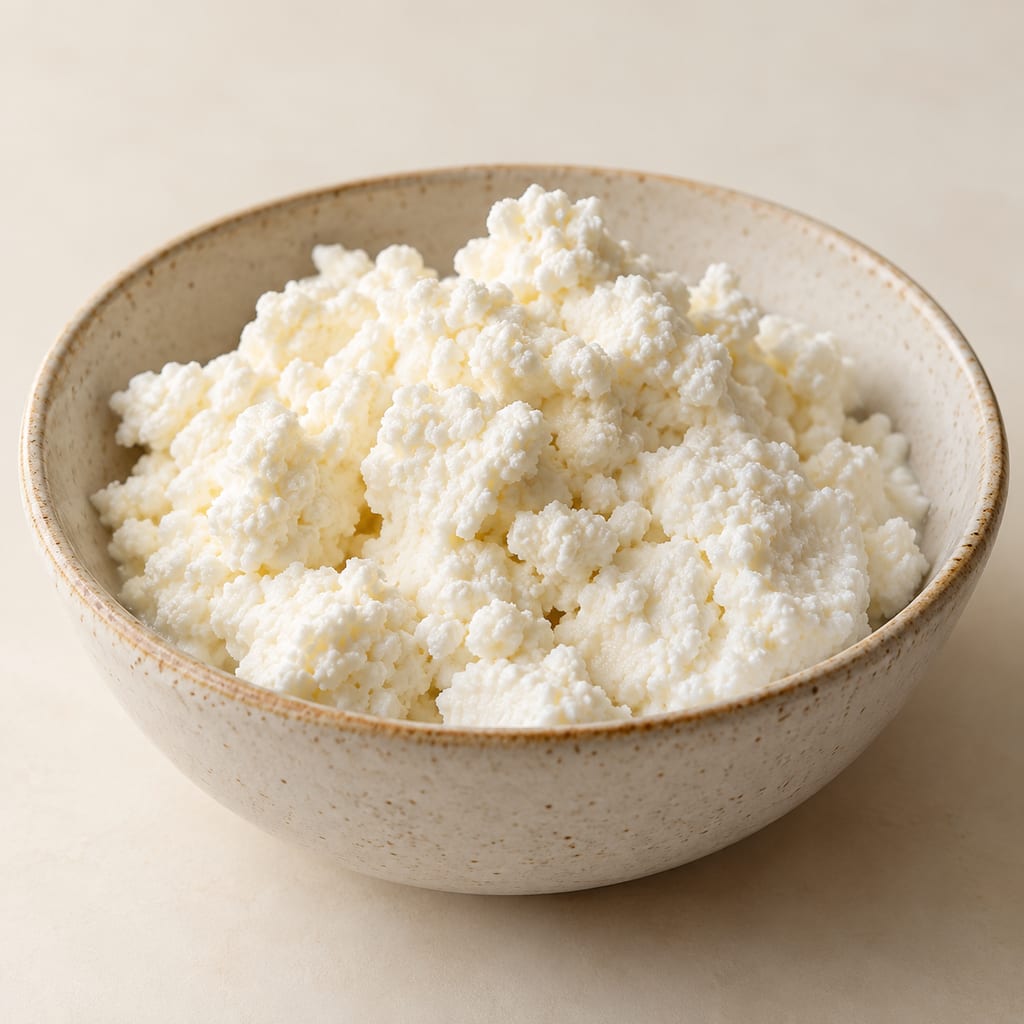
The name covers two processes in these sources. Whey ricotta is recovered from the liquid left after cheesemaking: the whey is heated, acidified and drained until fine curds separate, sometimes with milk added. A whole-milk ricotta is made directly from milk.
One creator heats 2 L of full-fat milk just below boiling, adds a quarter cup of lemon juice or vinegar and a teaspoon of salt, lets it rest about ten minutes and drains it for 20 to 30 minutes. That batch is a whole-milk acid-set curd, not whey recovery, so it is kept separate here. Another creator calls a soft-curd acid-set version of the same kind shortcut cottage cheese, though its texture is compared with ricotta.
One creator recovers curds from six litres of leftover whey with two cups of whole milk, heated to 92°C. The heat is turned off and apple-cider vinegar is added while stirring until the curds separate. The captions omit the vinegar amount, refer to a recipe shown on screen, and give no measured yield or storage duration. The curds drain for about three hours.
Cornell University's written recipe uses fresh goat whey, whole goat milk, lemon juice and salt. The whey is heated to 195°F (about 90.6°C) and drains for 25 minutes. It gives a yield of one to one and a half cups and advises using the ricotta fresh within one week or freezing it.
This is a separate whey-based batch. Its quantities are not combined with the other batches.
One creator heats the whey to 90°C and then slowly to 100°C over about an hour. The acid can be table vinegar, apple-cider vinegar, lemon juice or citric acid, or the whey can be left in a warm room for a day to sour naturally before it is boiled. The creator warns that too little acid can stop curds from forming. The whey volume and the acid dose are not given, so the caption is not a complete batch.
A Polish demonstration starts with 10 L of whey and adds milk from an opened container, but that amount cannot be recovered. The presenter heats the whey to 80–85°C before acidifying it and later to 90–93°C, stirring from time to time. Lemon juice is squeezed in without an amount.
The alternatives mentioned are 1 L of naturally soured whey for this batch, 50 mL of wine vinegar, or citric acid. Surface curds are collected and drained for several hours or overnight, with optional pressing. The missing milk and lemon amounts prevent a complete formula.
A food-series video describes regional ricotta in southern Italy and a soft version made from cow milk whey. It says whey may otherwise be reused or discarded. A later fragment mentions heating whey and adding milk and ferments, but the transcript does not keep a complete sequence. The narration also mentions 100 L of milk, of which 10 L becomes curds for another cheese; that does not establish a ricotta yield.
This is industrial context, not a household method.
The home methods use pots, heat monitoring, a stirring utensil, a skimmer or slotted spoon, cheesecloth and a strainer. One demonstration uses a thermometer and a ricotta basket. Another suggests a clean, tightly woven cotton shirt for gentle draining. The sources do not describe a dedicated chamber or a do-it-yourself build.
Fresh dairy safety still applies. The CDC advises choosing pasteurized dairy and describes the risks from soft cheese and raw-milk products. That general advice does not validate any method above, and none of the inspected sources gives a validated storage duration for whey ricotta.
The whole-milk acid-set batch gives no numeric temperature below boiling, no yield and no batch-specific storage duration. The Polish and Ukrainian demonstrations omit key amounts. The origin and the earliest attestation of ricotta are not established by these sources.
The inspected recipes document contemporary preparation, not the origin of ricotta. The sources do not establish a single origin or a seasonal pattern.
Scaling: source batch only
Soft cheeses and raw-milk products can carry Listeria and other harmful germs.
Hazard sourceChoose pasteurized dairy, as the CDC general advice recommends.
Control sourceCornell advises using its goat-whey ricotta within one week or freezing it. That is publisher advice for its own batch, not a validated limit.
The inspected sources do not establish where ricotta or whey recovery began. Insider Food describes regional variation in southern Italy.
A two-stage Altai dairy preparation: sour chegen is heated into soft aarchi, then portions are drained, pressed and traditionally smoked into firm kurut.
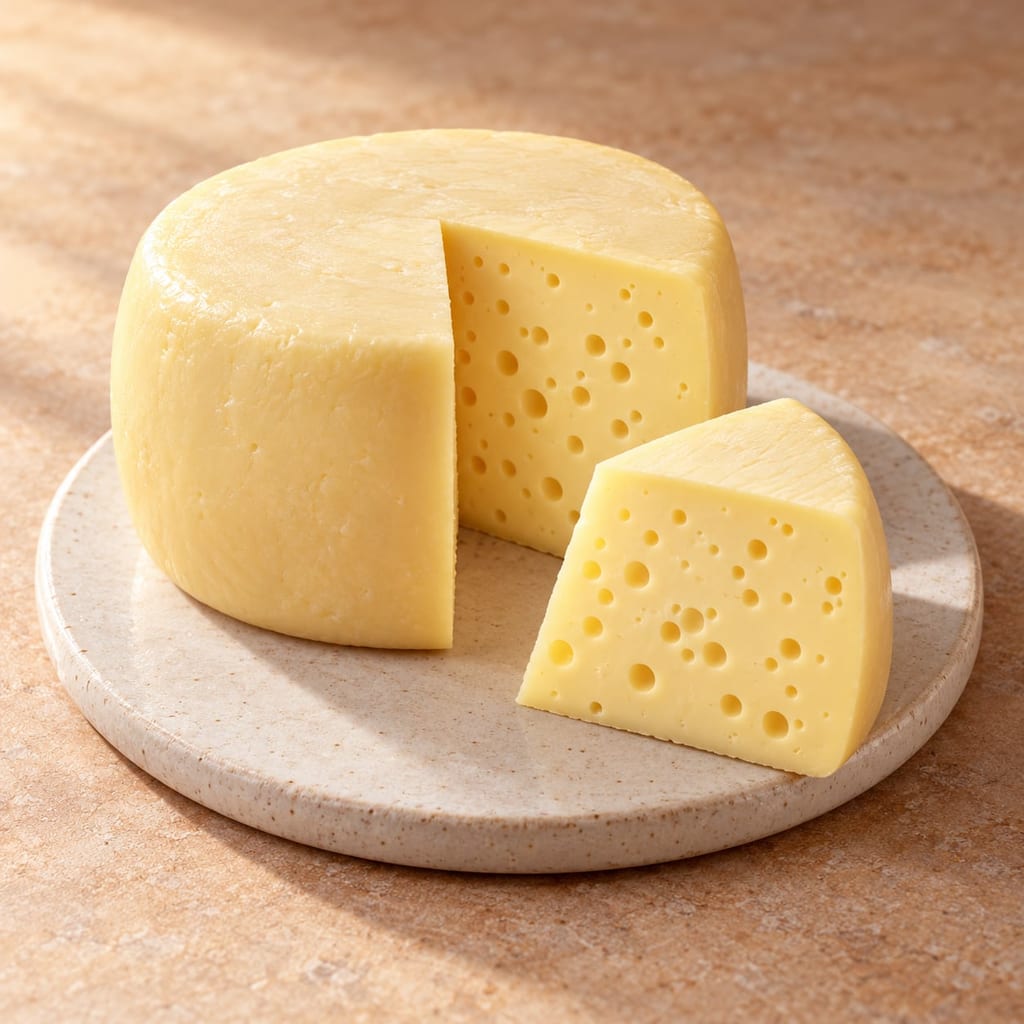
A washed-curd cheese with propionic bacteria, warmed by hot water in two steps and then held in a warm room for weeks so the bacteria can form its holes.

Beyaz peynir is a Turkish white cheese matured in brine. Sheep milk, alone or mixed with other milks, gives a close-textured cheese cut into blocks and packed in cans.
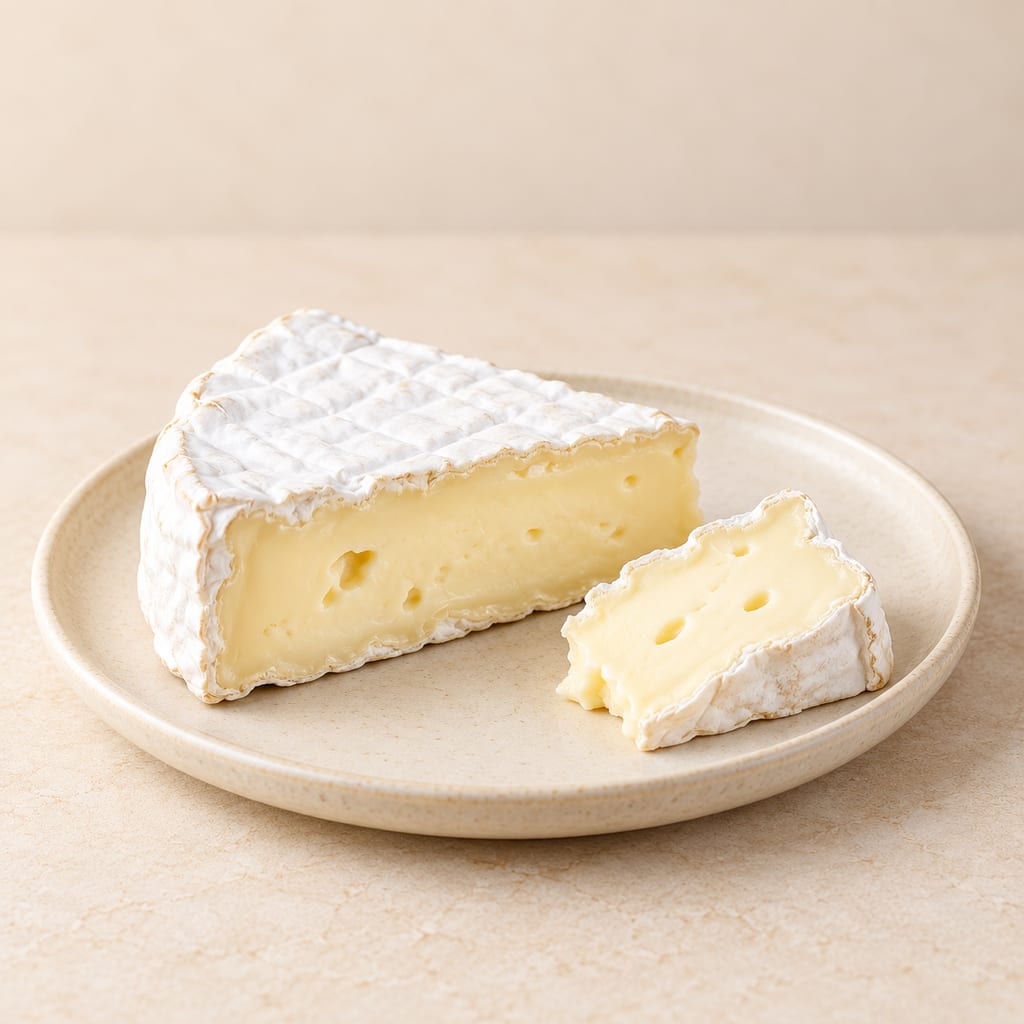
A cream-enriched Brie with a white bloomy rind and a softening center, made from pasteurized milk with lactic and surface cultures.
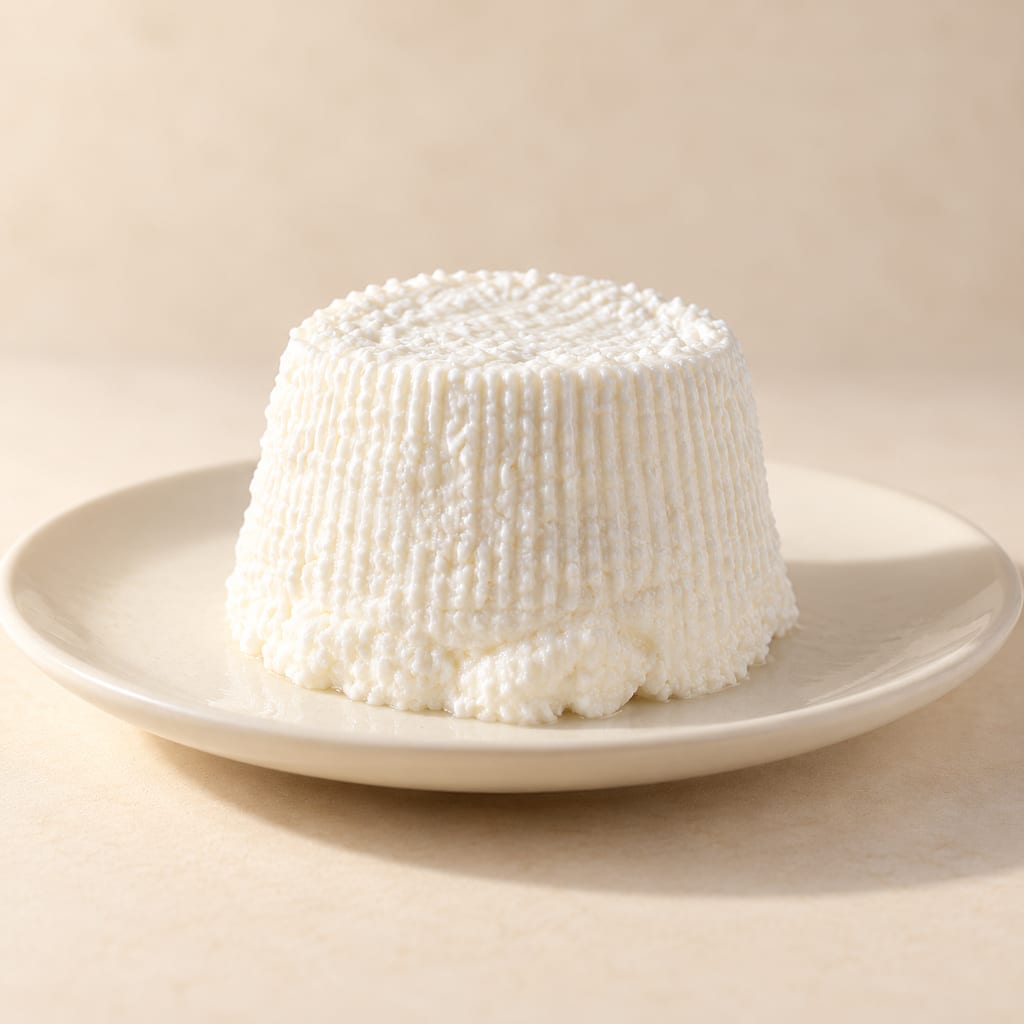
Corsican Brocciu is a whey cheese made by heating sheep's or goat's whey with whole milk and salt, then gently draining the flocculated curds. It is eaten fresh or salted and ripened as Brocciu passu.
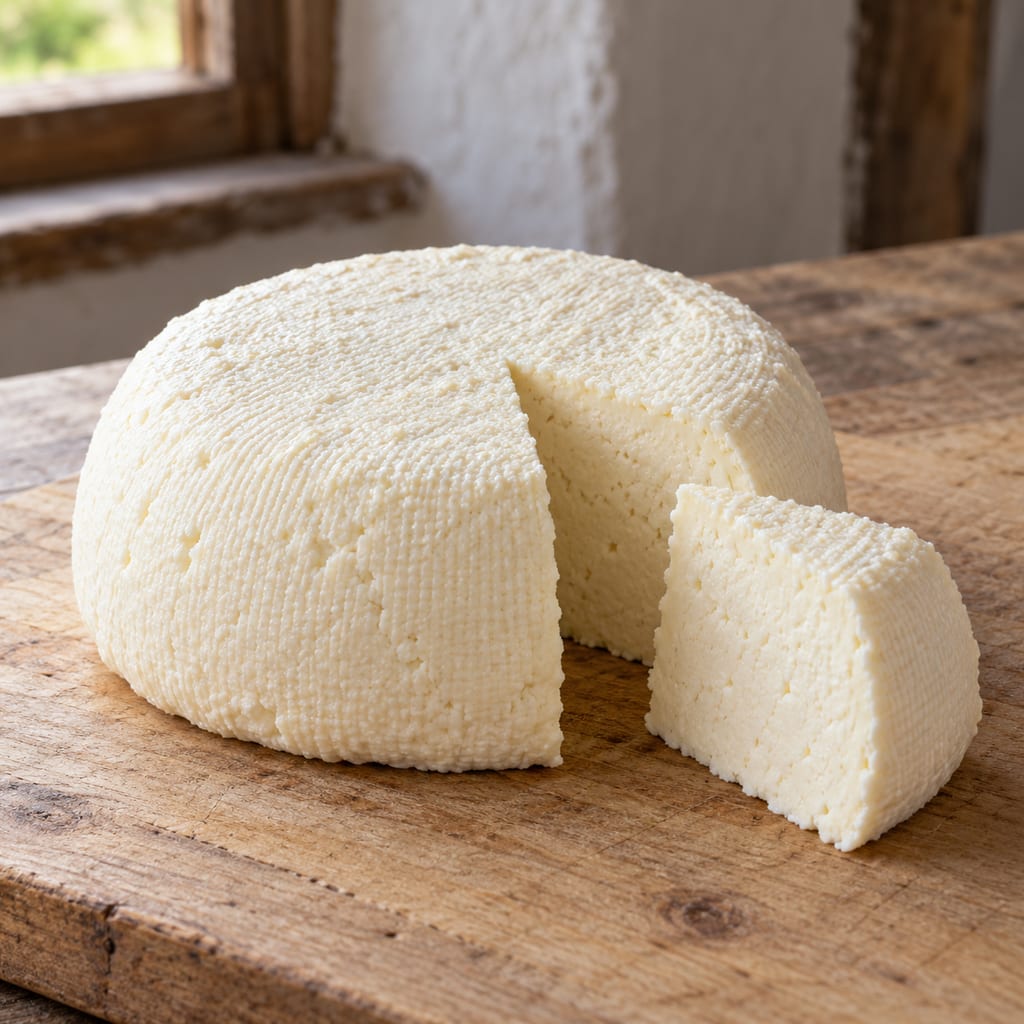
Budz is a traditional Hutsul rennet-set cheese made from sheep, cow or goat milk in the Ukrainian Carpathians, forming a fresh curd that can be eaten, smoked or processed into salted bryndza.
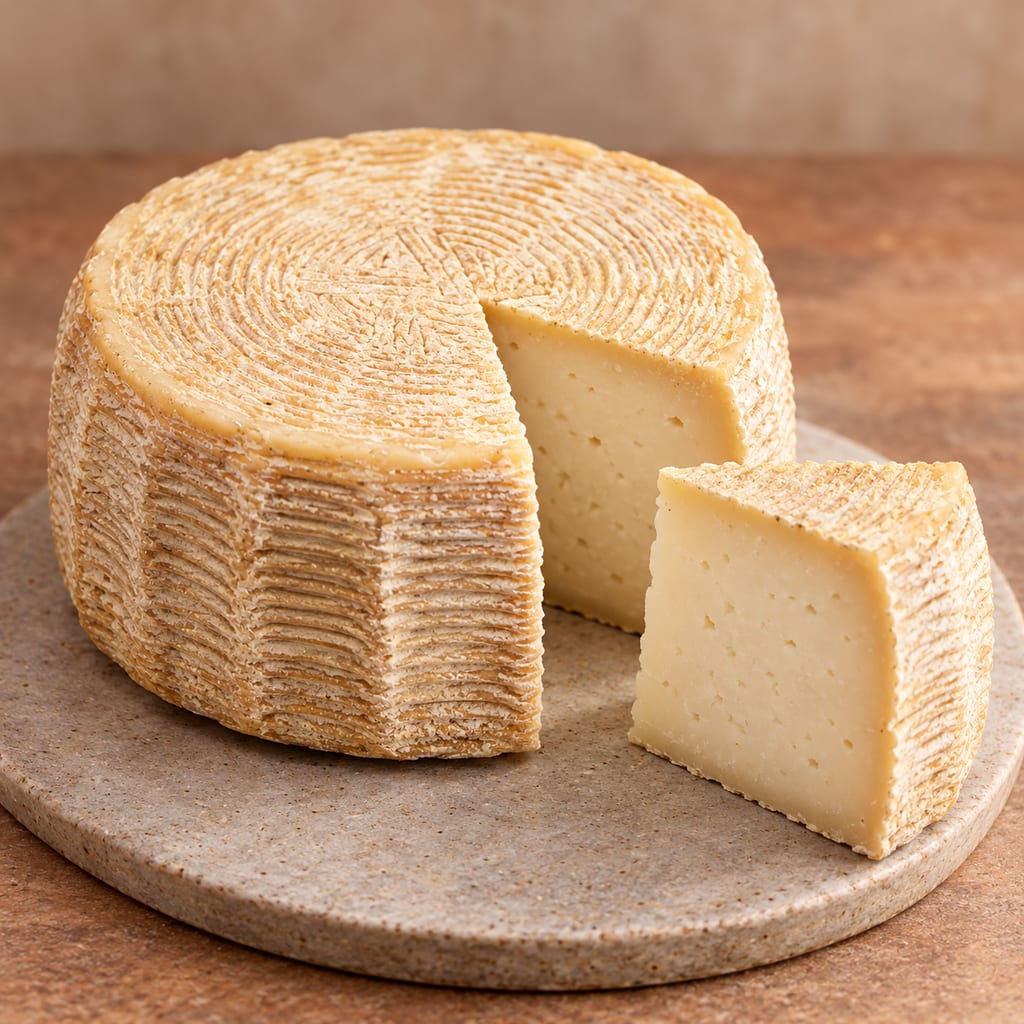
A scalded cheese moulded in baskets and re-cooked in its forms in hot whey, made alongside a ricotta from the same milk, then acidified, brined and aged for months.
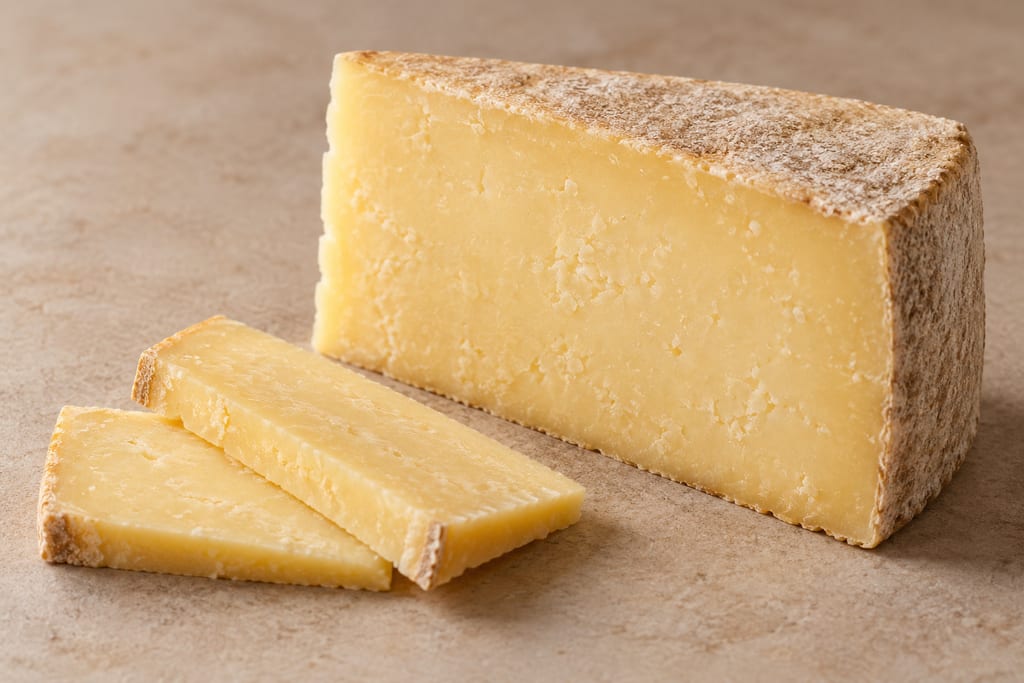
A pressed cheese whose curd is cooked slowly, then cheddared: kept warm in slabs that are turned and stacked for hours before milling, salting and pressing.
No community contributions have been published for this entry yet.
Sign in to contribute. Published comments and photos are free to read.
Gavin WebberMethod
Making Whey Ricotta at HomeGavin Webber caption: six litres leftover whey and two cups whole milk heated to 92°C; heat turned off and apple-cider vinegar added while stirring until curds separate; vinegar amount omitted; curds drain about three hours; no measured yield or storage duration.
Cited in: Recovery from six litres of whey
Natalias stricken / Knitting with love 💕Method
Сир РІКОТТА. Кілька варіантів приготування рікотти.Natalias caption: whey heated to 90°C then slowly to 100°C over about an hour; acidification with table vinegar, apple-cider vinegar, lemon juice or citric acid, or a day of natural souring in a warm room; insufficient acid can stop curds forming; whey volume and acid dose not given.
Cited in: Heat and acid, and what happens without enough of either
Siedlisko TVMethod
domowy ser RICOTTA. Prosty ser z SERWATKISiedlisko TV caption: 10 L whey with milk from an opened container (amount not recoverable); heated to 80–85°C before acidifying and later to 90–93°C; lemon juice without amount; alternatives 1 L naturally soured whey, 50 mL wine vinegar or citric acid; surface curds drained several hours or overnight, optional pressing.
Cited in: A demonstration with missing amounts; Tools and handling; What the sources leave open
pb.LifestyleandCulture; archived English caption passage, transcript-only review.Method
The Art of Home Cheesemaking | Fresh Paneer, Mozzarella, Ricotta & More 🧀pb.LifestyleandCulture caption: 2 L full-fat milk heated just below boiling, 1/4 cup lemon juice or vinegar and 1 teaspoon salt, rest about 10 minutes, drained without pressing for 20–30 minutes; labelled ricotta but a whole-milk acid-set batch, not whey recovery.
Cited in: Two different ricottas; Tools and handling; What the sources leave open
MilkslingerHistory
5 EASY Cheeses Anyone Can MakeMilkslinger caption: a soft-curd acid-set whole-milk version called shortcut cottage cheese, compared in texture with ricotta.
Cited in: Two different ricottas
Insider FoodHistory
How 20 Cheeses Are Made Around The World | Regional Eats | Insider Food MarathonInsider Food caption: regional ricotta variation in southern Italy and a soft cow-milk-whey version; whey may be reused or discarded; the industrial fragments are incomplete and are not a household method; the place name is unresolved.
Cited in: Industrial and regional context; What the sources leave open
Cornell University College of Agriculture and Life Sciences, NYS 4-HMethod · Storage
Cooking with Goat Products: RicottaCornell written goat-whey recipe: fresh goat whey, whole goat milk, lemon juice and salt; heated to 195°F; drained 25 minutes; yield 1 to 1½ cups; use fresh within one week or freeze.
Cited in: A goat-whey batch with a printed recipe; Tools and handling
U.S. Centers for Disease Control and PreventionSafety
How Listeria Spread: Soft Cheeses and Raw MilkCDC: soft cheese and raw-milk products can carry Listeria; choose pasteurized dairy. General guidance that does not validate a home method.
Cited in: Safety