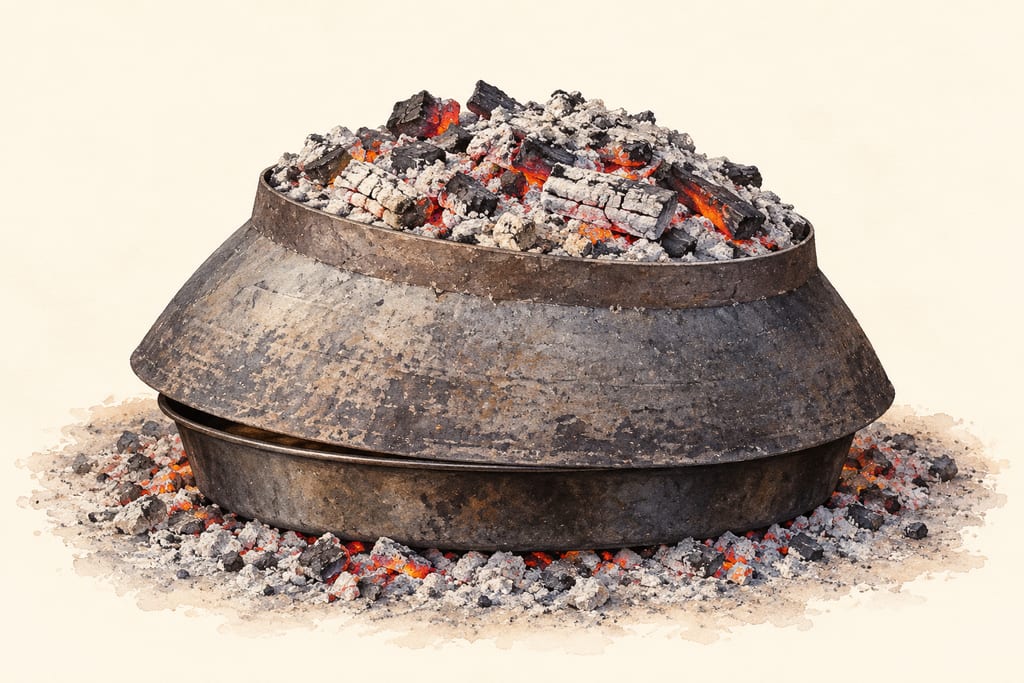
Peka
Peka names a family of hearth-baking lids: a domed clay or metal bell carries embers above food. In the later Dinaric assembly, a shallow pan sits beneath the lid, sometimes with a ring to hold coals in place.
 FermenteaWhere food goes to change
Equipment · Distillation apparatus
A copper pot still is a portable batch-distillation apparatus with a boiler, vapour path and condenser. Serbian rakija traditions and Montenegrin plum-spirit production document varied forms, not one universal blueprint.
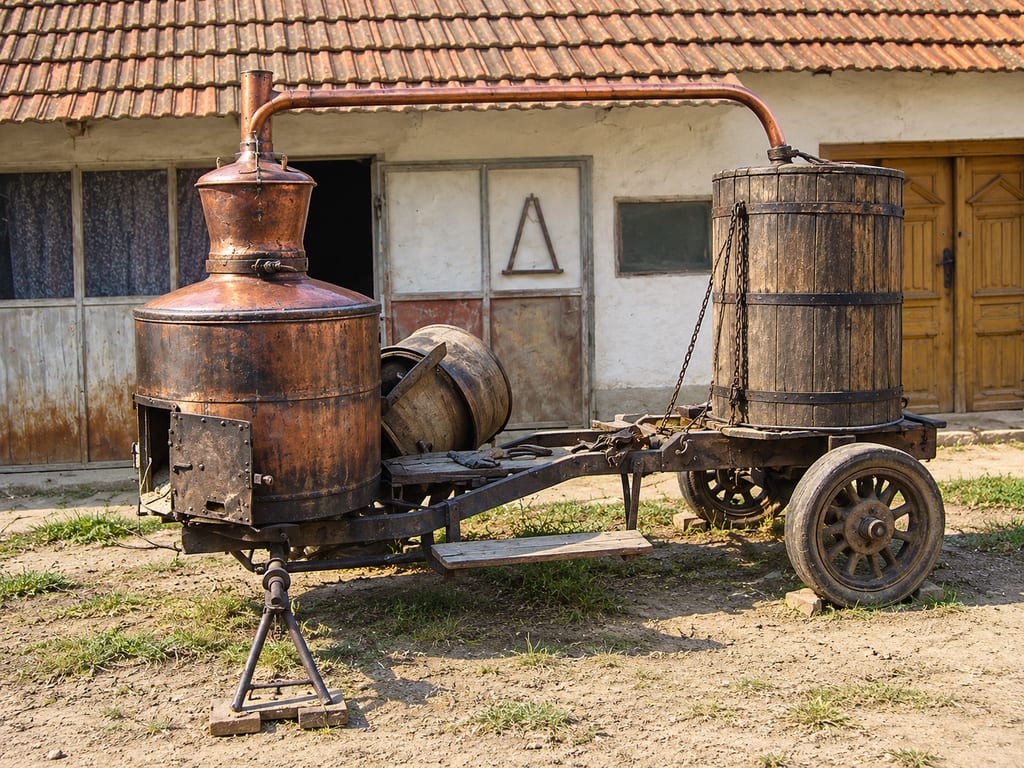
A copper pot still is a portable apparatus for batch distillation. Its basic job is to heat a fermented liquid in a boiler, carry vapour through a head and pipe, then condense it back into liquid. The name does not prescribe one exact arrangement: boilers, covers, conduits and condensers have been made from different materials and assembled in different ways.
In Serbian usage, the household brandy still is commonly called a kazan, or cauldron. A 1955 ethnographic account describes a boiler, a cover with one or two tubes, a long inclined pipe and a cooling vessel. A large wooden condenser tub called a tabarka was one recorded way to cool the pipe. The same historical account includes earthenware boilers and covers or pipes of wood and baked clay, so this page does not imply that every traditional Serbian still was made wholly of copper.
Serbia's national intangible-heritage register describes coppersmiths shaping and joining copper vessels by cutting, forging, riveting, soldering, hammering and tinning. It records the manual making of stills by artisans across the country and says the craft is commonly transferred within families. The entry was added to the register in 2015; that is a recognition date, not a date for the beginning of the trade.
The museum's earlier documentation includes captions for brandy distilling at Koviljača in 1932 and still components recorded at several Serbian locations. It shows local adaptations rather than one blueprint. A boiler could stand on a hearth and connect to a cooled pipe, while some regional arrangements substituted earthenware for copper. These accounts record particular practices and materials; they do not fix a single set of dimensions or an ideal design.
A 2025 study of small artisanal distilleries in northern Montenegro describes single and double batch distillation in copper pot stills, called alembics. Its analysis finds substantial variation among producers; it presents both approaches as practices in the region rather than one rule for Balkan plum spirits. One Charentais-type example is about 100 litres, but that measurement belongs to the study's particular apparatus, not to all pot stills.
A contemporary producer of mahia also describes using copper pot stills for its fig spirit. This is a current producer's implementation, not proof that every maker of mahia uses that equipment or that the modern arrangement is a historical Moroccan standard. The contrast helps explain why the still's use should be linked to specific documented preparations rather than treated as one universal process.
Copper is a construction material, but the sources do not establish a single alloy, joint, condenser or heating arrangement for the category. Serbia's register documents the craft knowledge involved in forming and joining copper; the mahia producer describes copper as part of its own still design. Neither makes every component copper or establishes a universal flavour effect.
A still is also separate from the vessel used to ferment fruit and the cask used to mature spirit. Serbia's heritage description distinguishes fruit preparation and fermentation from distillation, redistillation and possible oak-barrel aging. Those containers do different jobs and belong on their own pages. This entry covers only the portable distilling apparatus, not a built hearth, room or the rest of a distillery.
Sources document copper still use and hand-made stills in Serbia, and copper pot alembics in contemporary artisanal plum-spirit production in Montenegro. They do not establish a single inventor, date of origin or universal design.
The still is not a fixed all-copper design: historical Serbian accounts also record earthenware boilers and wooden or baked-clay covers and pipes.
Source →The national register documents still-making and household use across Serbia; it does not claim a single birthplace.
The paper documents copper pot alembics in regional artisanal production; this is a use record, not an origin claim.
Peka names a family of hearth-baking lids: a domed clay or metal bell carries embers above food. In the later Dinaric assembly, a shallow pan sits beneath the lid, sometimes with a ring to hold coals in place.
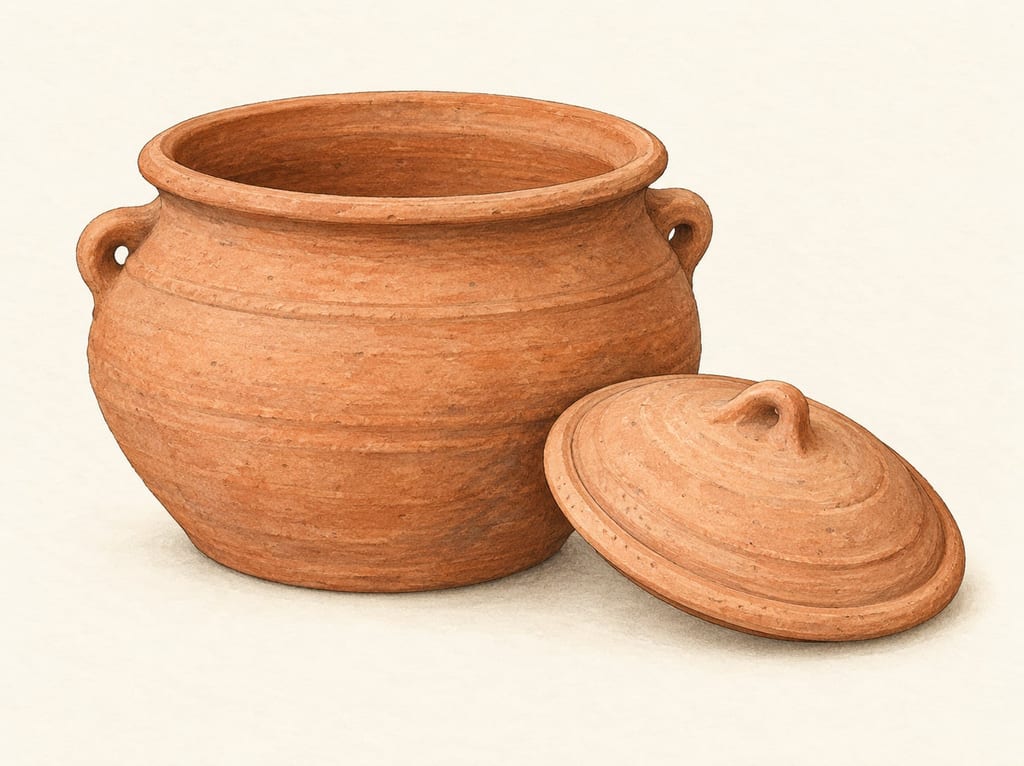
A hand-formed, unglazed clay-and-calcite cooking pot from Zlakusa in western Serbia. Potters make varied forms for cooking and baking through a living hand-wheel craft.

A Cap-Pelé boucanière is an Acadian herring-smoking building. The documented Willie Niles example is a one-storey wood-frame structure with a ridge smoke vent and interior bays for hanging fish-bearing cannes.

Achcharu is a family of Sri Lankan vinegar pickles made with mixed vegetables or seasonal fruit and a piquant spice dressing. This version is a quick, refrigerated, non-fermented mixed-vegetable pickle.

The acocote is a long, hollowed and dried gourd used to draw aguamiel from a mature maguey. It is a harvesting tool: the sap is transferred to a separate vessel before it ferments into pulque.

Adrak murabba preserves young ginger in sugar syrup, a sweet South Asian preparation recorded in Indian cookery and food-processing sources.

Parkia biglobosa seeds are fermented into regional West African seasonings, including nététou, iru, dawadawa and soumbala. The yellow fruit pulp is a separate food, and names and methods vary by place.

Japanese reddish-brown vinegar from sake lees matured about three years, turned to vinegar by acetic bacteria; the vinegar of Handa and Edomae sushi rice.

A refined common-wheat flour blended for a broad range of baking; its protein and behavior vary with wheat, milling and market.

The almond mushroom, Agaricus subrufescens, was cultivated in eastern North America in the 1800s, lost its market, and returned as a cultivated mushroom from Brazil, where it is grown under several names.
No community contributions have been published for this entry yet.
Sign in to contribute. Published comments and photos are free to read.
Ethnographic Museum in Belgrade, Glasnik Etnografskog muzeja u Beogradu 18History · Design · Materials · Geography
Pečenje rakije u našem naroduA Serbian brandy still is described as boiler, cover, sloped pipe and condenser.
Historical component materials include copper, wood, baked clay and earthenware.
Figures document brandy distilling at Koviljača in 1932 and apparatus at other locations.
Cited in: One name for a varied assembly; Copperwork and household distilling in Serbia
Center for Intangible Cultural Heritage of Serbia; Ethnographic Museum in BelgradeHistory · Manufacture · Materials · Geography
Coppersmith’s trade (Kazandžijski zanat)Coppersmiths across Serbia manually make stills and other copper goods; the craft commonly passes within families.
The register describes the copper still as a feature of traditional home distilling.
Cited in: One name for a varied assembly; Copperwork and household distilling in Serbia; What the copper can and cannot tell you
Intangible Cultural Heritage of Serbia; Ministry of Culture and Ethnographic Museum in BelgradeHistory · Use · Geography
Šljivovica — traditional plum spiritThe heritage description records household plum processing, fermentation, distillation, redistillation and oak-barrel aging.
Cited in: What the copper can and cannot tell you
Journal of the Serbian Chemical SocietyMethods · Geography · Capacity
Chemical characterization and differentiation of Montenegrin plum spirits obtained by two techniques of traditional batch distillationThe paper documents single and double batch distillation in copper pot alembics among artisanal Montenegrin plum-spirit producers.
Sampled producers are in Upper Polimlje; one Charentais-type example is approximately 100 L.
The study describes variation rather than one uniform method.
Cited in: Different plum spirits, different choices
Nahmias et FilsModern adaptation · Materials · Use
MahiaThe producer describes distilling its fig-based mahia in copper pot stills as its present family implementation.
Cited in: Different plum spirits, different choices; What the copper can and cannot tell you