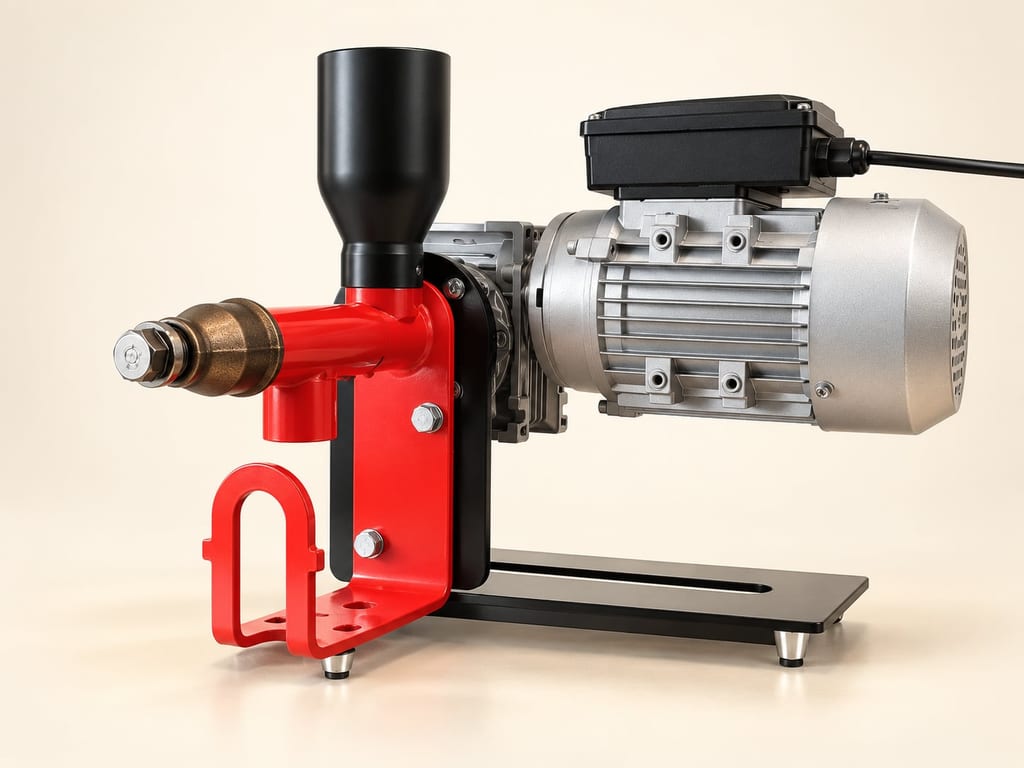
Small oil expeller
Small oil expellers use a screw to compress prepared oilseeds and nuts, separating oil from press cake. Piteba documents manual and motorized small-scale examples; their settings and feed requirements do not define every press.
 FermenteaWhere food goes to change
Equipment · Presses and weights
PITEBA electric oil press · Piteba oil expeller
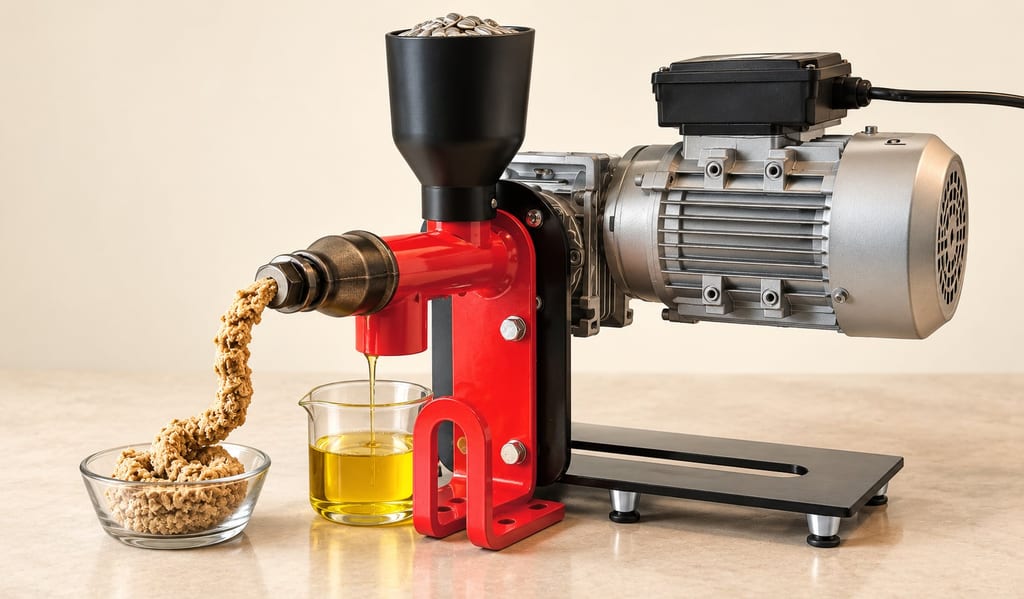
The Piteba electric oil press uses a motor-driven screw to separate oil from prepared oil-rich seeds and nuts. Oil drains through a slit; pressed cake exits the cap.
Piteba describes its oil press as a modern product inspired by traditional rapeseed presses used in the Groningen region in the early twentieth century and during the Second World War. The company says it has manufactured presses in-house in the Netherlands since 2005 and later added an electric version. That account identifies inspiration, not a direct surviving design lineage or an origin for all screw presses. Piteba reports delivery to more than 150 countries, a manufacturer statement about distribution rather than evidence that this particular configuration is used everywhere.
The electric Piteba is a named, current configuration of a compact screw oil press. Its motor and gearbox turn the same press mechanism as the hand-driven version. Prepared seeds or nuts enter through a hopper. Inside the cage, the screw compresses them; oil escapes through a narrow slit, while the more solid press cake leaves through the cap. An adjustment bolt changes the pressure at the outlet, and the correct setting depends on the material being pressed. The motor makes the operation continuous without hand cranking; Piteba lists a 0.37 kW motor on a 230 V / 50 Hz supply and reports throughput up to about 3.5 kg of material per hour, depending on seed type. Its listed weight is about 17 kg. These are specifications for the manufacturer's electric set, not a yield guarantee.
The machine is intended for oil-rich seeds and nuts; Piteba lists examples including sunflower, walnut, sesame, peanut and rapeseed, and limits its broad suitability claim to material with more than 25 percent oil. The maker's instructions call for seed moisture around 10 percent and emphasize removing grit and stones. Some materials need shelling, crushing or a slower feed; others enter the screw more readily. The adjustment bolt is therefore a working control, not a universal dial setting. Piteba publishes separate preparation notes and settings, and its own yield table distinguishes each seed rather than offering one output figure for the whole machine. The manufacturer's seed-specific table is useful as an operating reference for that press, but the numbers are not independent comparisons between presses.
The press produces two streams. Oil runs out through the cage slit; the compressed cake exits the cap. Piteba says the oil may look cloudy when first collected and can clarify after settling. The press separates oil from solids but does not refine the oil or determine how long it will keep. Its product page uses “cold-pressed” for oil it says remains below 40 °C during pressing; that is the manufacturer's stated specification, not evidence for its broader nutritional claims. Piteba also describes a small supplied burner for preheating the press before work in cooler conditions, not for use during pressing. The maker's cleaning instructions describe removing cake and seed remnants, cleaning the cap and press parts, and storing the press well oiled. Follow the instructions for the exact motor and any supplied accessories.
This is powered machinery, not a hand-operated mill. Piteba tells users to mount the press firmly, use the filling funnel so fingers cannot reach the screw, remain nearby if seed flow bridges in the hopper, and stop the motor with its switch rather than pulling the plug. The maker's hand-press manual explains that substantial force is required with some seeds; the electric configuration has a mounting base and motor and must follow its own instructions. If the optional preheating burner is supplied, Piteba says it is used before pressing and is off during pressing; follow the burner instructions. The sources do not establish one universal setting, seed preparation or throughput, and do not promise a health benefit or describe the nutrition of any particular oil.
Piteba states that it has manufactured presses in-house since 2005, later added an electric model, and drew inspiration from rapeseed presses used in Groningen around the early twentieth century and during the Second World War. This records the maker's account of inspiration, not an independently established direct lineage.
The powered screw compresses material inside the press cage; the manufacturer warns that fingers must be kept away from it.
Hazard sourceThe electric model uses mains power and an overload protection switch.
Hazard sourcePiteba says a supplied burner can preheat the press before pressing when the surroundings are cool; the flame is not used during pressing.
Hazard sourceUse the supplied filling funnel and keep hands away from the moving screw; stay near the machine while seeds are feeding.
Control sourceUse the motor's on/off switch rather than disconnecting the power cord to stop it.
Control sourceSecure the press on a stable mounting surface. If using the supplied preheating burner, follow the maker's burner instructions and do not use it while pressing.
Control sourceThe manufacturer specifies a 230 V / 50 Hz supply for this electric model; other supply variants are not established by the inspected pages.
The maker's stated throughput is up to about 3.5 kg per hour and varies by seed or nut; it is not a guarantee for every substrate.
Source →The press requires seed-specific preparation and adjustment. Piteba lists a moisture target around 10% and different settings for different materials.
Source →Piteba says the extracted oil is cloudy at first and can clarify as it settles; the press does not refine the oil or establish storage life.
Source →The maker's claims about retaining vitamins, enzymes or nutritional superiority are not adopted as established facts.
Source →Piteba identifies historic Groningen rapeseed presses as inspiration; this is not a claim that the modern Piteba press was manufactured or first used there.
The company identifies itself as Dutch and gives a Scheemda, Netherlands address; manufacture is distinct from worldwide distribution.
Small oil expellers use a screw to compress prepared oilseeds and nuts, separating oil from press cake. Piteba documents manual and motorized small-scale examples; their settings and feed requirements do not define every press.
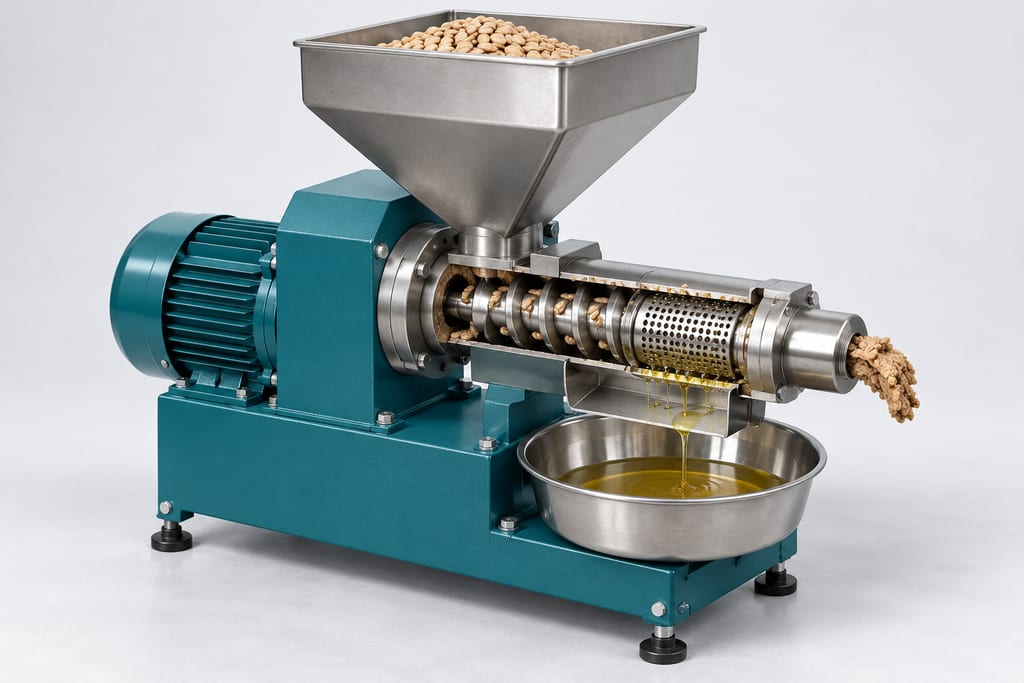
A screw press advances prepared material through a cage, squeezing out oil while solid press cake leaves separately.
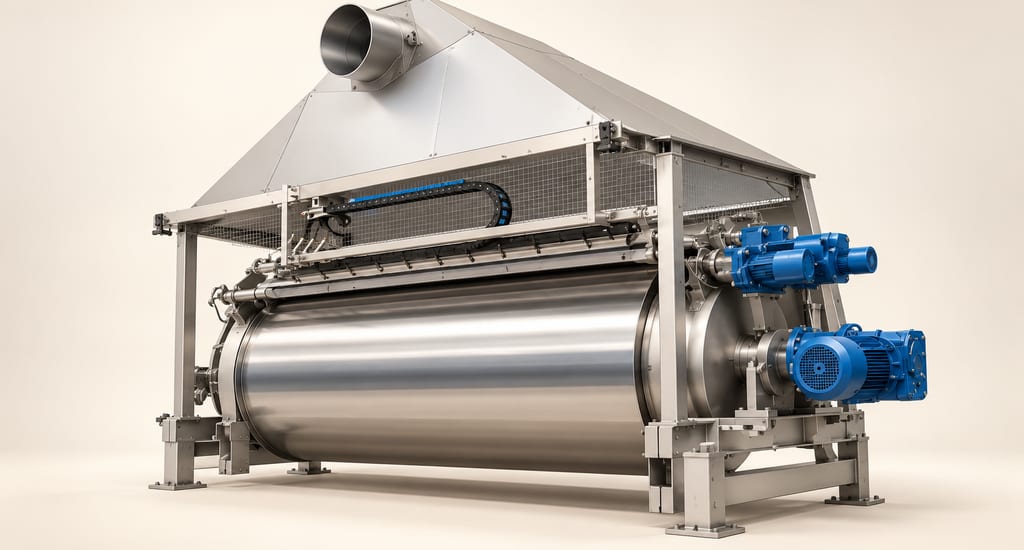
A drum dryer spreads pumpable wet food as a thin film over one or more internally heated rotating metal drums. A blade scrapes the dried layer off for flaking, milling or further blending.

Soft, spreadable Calabrian pork sausage made with a great deal of red chilli and fatty pork, stuffed into natural casings, sometimes smoked and matured while staying soft.

A way to add independent temperature logging to an existing food dehydrator without changing its built-in controls or protections. It is a monitoring method, not a rewiring plan.

Pleurotus cystidiosus is the abalone mushroom, a cultivated oyster-type fungus with dark brown caps that grows more slowly and is more demanding than other Pleurotus species.

A dark, balanced vinegar from Emilia-Romagna made by combining cooked or concentrated grape must with wine vinegar, then acetifying and refining it in wood under a protected specification.

A living dairy inoculum that starts controlled cream fermentation, developing acidity and aroma before sour cream or cultured butter is finished.

A small electric incubator holds jars at a selected temperature for yogurt and other documented warm food preparations. Controls, capacity and vessel arrangement vary by model.

Adygean salt is a seasoned table salt associated with Adygea and the wider North Caucasian culinary tradition. Salt is blended with garlic and a variable selection of herbs and spices; the exact mix depends on the named style and maker.

The African Caesar-group mushroom, Amanita masasiensis, is a wild ectomycorrhizal species of central and southern African woodlands, eaten locally. The genus contains deadly poisonous species, so identification needs care.
No community contributions have been published for this entry yet.
Sign in to contribute. Published comments and photos are free to read.
PITEBAForm · Operation · Specifications · Safety · Materials
Electric oil press. how to press oil from seeds and nutsThe electric version uses the same screw-press mechanism as the hand-operated version, driven by a slow motor and gearbox.
The company lists a 230 V / 50 Hz supply, a 0.37 kW motor, approximately 17 kg weight and throughput up to about 3.5 kg per hour depending on the seed or nut.
The screw compresses oil-rich seeds and nuts; oil exits through an oil slit and press cake through the cap.
Piteba lists oil-containing seeds and nuts above 25% oil, including sunflower, walnut, sesame, peanut and rapeseed; it specifies about 10% moisture and seed-specific preparation.
The product page says oil is cloudy at first and clears after settling; its claims that vitamins, enzymes and nutrients are preserved are not adopted.
The manufacturer warns to use the filling funnel, keep the press attended in case seeds bridge, and use the on/off switch rather than unplugging the motor.
The product photograph shows a red upright frame, black hopper, side-mounted motor and gearbox, and metal base; it is a product-specific example.
Cited in: A screw press with a motorized drive; The seed determines the preparation; Oil, cake and maintenance; Secure mounting and moving parts
PITEBAHistory · Geography · Manufacture · Reach
PITEBA – Dutch-made oil presses & nutcrackers for global impactPiteba says it is a Dutch oil-press developer and manufacturer and has manufactured presses in-house since 2005.
The company says the oil press was inspired by traditional rapeseed presses used in the Groningen region around the early twentieth century and during the Second World War.
The maker says its products are distributed to more than 150 countries; this is its own distribution claim.
The company says an electric version was later added to its product range.
Cited in: A Dutch-made modern press with a Groningen inspiration
PITEBAOperation · Safety · Care
User manual PITEBA oil press – Instructions in EnglishThe hand-driven press mechanism uses a screw, cage, adjustment bolt, hopper and oil outlet.
Piteba instructs users to secure the press firmly, check seed moisture, sift out sand and stones, and adjust pressure by seed type.
The manual says a press must be mounted securely because some seeds require considerable force.
The manual describes cleaning the cage and screw and storing the press well oiled; its hand-crank and burner details are not treated as electric wiring instructions.
Cited in: Oil, cake and maintenance; Secure mounting and moving parts
PITEBASeed variation · Operation · Limits
Get the best oil yield from seeds and nutsThe maker publishes different preparation, adjustment-bolt settings and expected extraction efficiencies for different seeds and nuts.
Seed shape, shelling, crushing, moisture and feed behavior affect the setting and operation; no single pressure setting is presented as universal.
Cited in: The seed determines the preparation
PITEBAImage reference · Form · Specifications
Electric oil press for home use – nuts & seedsThe product page shows the electric Piteba model and identifies its motor and oil-press mechanism as a sold electric set.
The page shows model-specific physical details; the image is linked to the manufacturer because its reuse license is not stated.