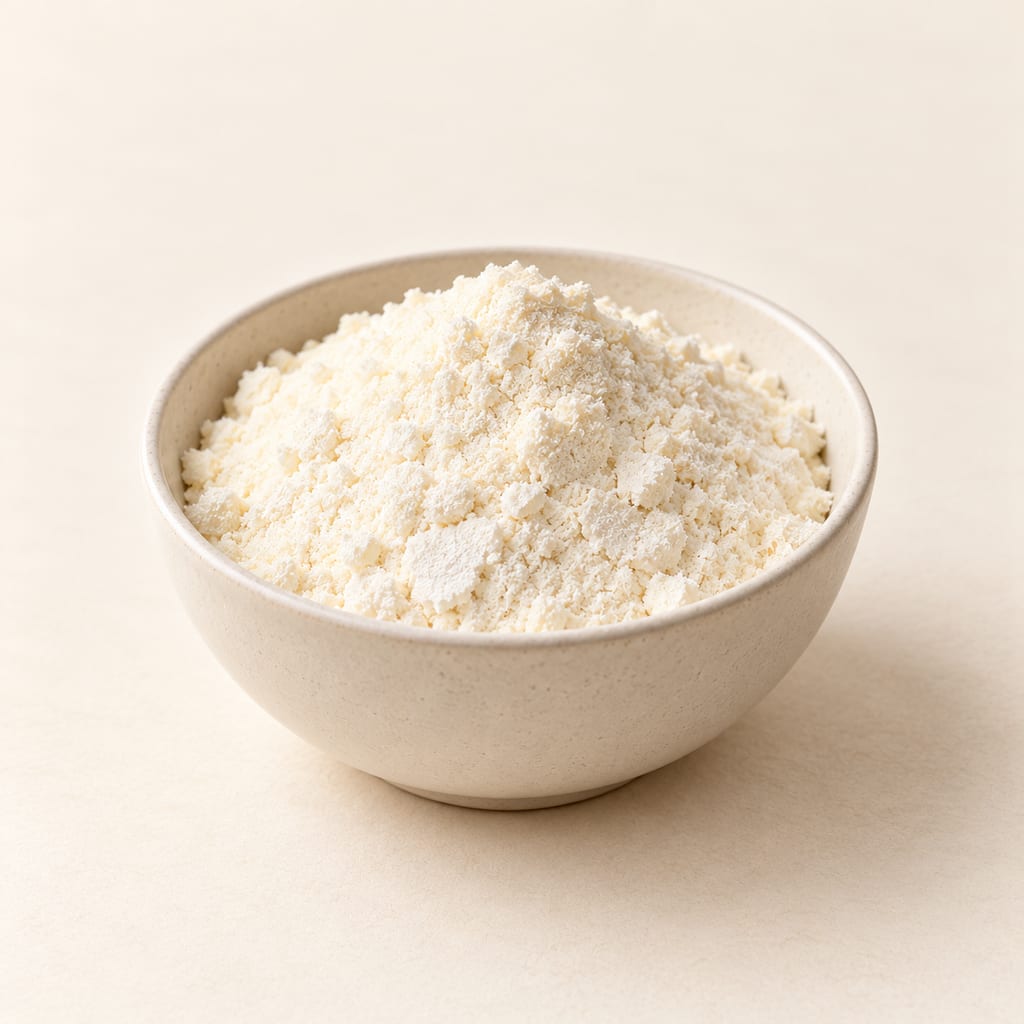
Dry milk
Dry milk is a family of dairy ingredients made by removing most water from milk or cream. The name includes distinct whole, partly skimmed and nonfat powders; fat level, heat treatment and particle form determine handling and use.
 FermenteaWhere food goes to change
Equipment · Industrial and laboratory plant
Roller dryer · Contact drum dryer
A drum dryer spreads pumpable wet food as a thin film over one or more internally heated rotating metal drums. A blade scrapes the dried layer off for flaking, milling or further blending.
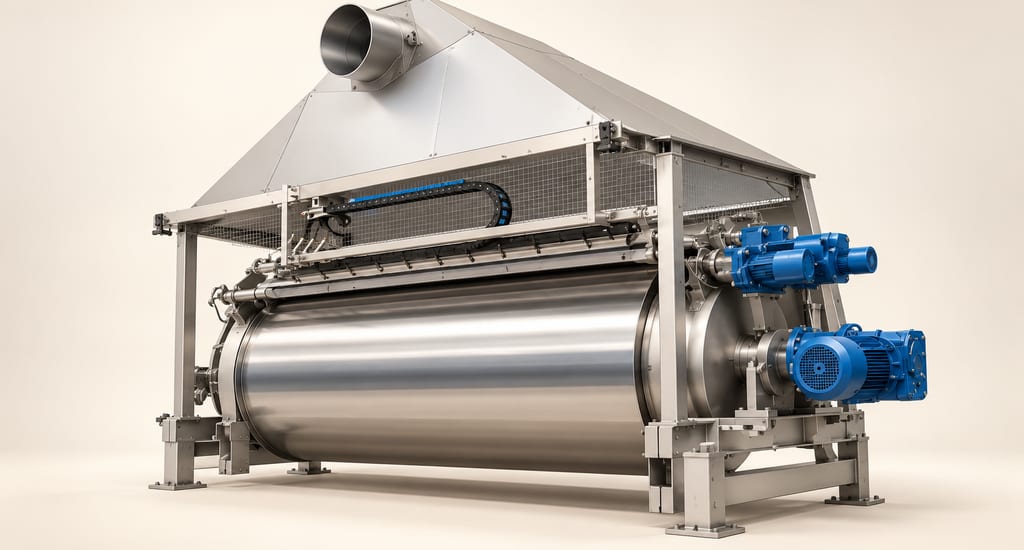
A drum dryer is a continuous contact dryer for pumpable liquids, slurries, purees and pastes. One or more heated metal cylinders rotate while a thin layer of wet material is spread over the outside. Heat crosses the drum wall into that film, water evaporates, and a stationary scraper or doctor blade removes the dried layer. The output may come away as a brittle sheet or flakes and can then be milled to a powder.
This is different from spray drying, where droplets dry while suspended in hot air, and from an air dryer that removes moisture from pieces on trays or a belt. The defining feature is the moving heated surface in direct contact with a thin product layer. Oklahoma State University's food-processing guidance describes internally heated metallic drums and notes that plant steam is a common heating medium in food applications.
A single-drum machine coats one rotating cylinder, using a feed arrangement such as an applicator roll, dip pan or other distributor. A double-drum dryer feeds wet material between two parallel heated cylinders, often with a controllable gap that helps set the film. Twin drums can be arranged with their surfaces moving differently from a conventional nip-fed pair. Vacuum drum dryers place the drying surface in a closed casing at reduced pressure; that is a separate configuration intended for particular heat-sensitive products.
These names describe arrangements, not interchangeable recipes. Viscosity and solids content influence whether the material will spread evenly, cling to the drum and release cleanly. Manufacturers use different feed systems and coatings for different products. A scraper that removes one product cleanly may not work as well for another, while film thickness, drum speed and heat supply shape the dried layer. Exact machine settings belong to the designed product process and are not a general drum-dryer instruction.
Drum dryers appear in production lines for cereal-based baby foods, potato flakes, fruit and vegetable products, milk, yeast, starch and other pumpable food materials. In one documented cereal-food line, ingredients are mixed with water, the slurry is pre-cooked, dried on the drums, milled and sifted, and then blended with ingredients added after drying before packaging. This is an industrial line design, not a home method or a universal recipe.
The hot contact surface can cook as it dries. For some cereal-based foods, ANDRITZ associates drum drying with full starch gelatinization and a characteristic reconstituted texture and taste. That effect is product-specific; the machine does not guarantee a particular result for every feed. In dairy processing, drum drying remains an option, but Tetra Pak notes that it can diminish milk powder's functional and instant properties compared with spray drying. Whey can also adhere strongly enough that scraping is difficult, illustrating why product behavior helps determine the equipment choice.
ANDRITZ Gouda's company history dates the drum dryer built by its predecessor Goudsche Machinefabriek to 1916 and places the present business in Waddinxveen, Netherlands. This is a specific manufacturer's history, not a claim that all drum dryers began there or share the same design. The record is best read as an early documented point in this manufacturer's line, alongside a technology now offered in multiple configurations by equipment makers.
ANDRITZ reports more than 500 drum dryers installed by its company and markets equipment for food producers around the world. That supports a global footprint for this maker's products, not a claim that all drum dryers are identical or that every region uses them in the same way. The photograph in the gallery is a current ANDRITZ machine; it is a reference to one manufacturer's example, not a scale drawing or universal specification.
Drum dryers are manufactured process equipment. A plant selects a configuration around its feed, desired product, available utilities, line layout and cleaning requirements. A manufacturer may integrate slurry preparation, pre-heating, the dryer, milling or sifting and later blending; not every line has the same sections. Modern hygienic systems also provide access for inspection and cleaning, but the exact cleaning and maintenance procedure depends on the machine and food.
No single capacity, diameter, power source or drum material can be assigned to the whole category. Manufacturer pages give model-specific examples, while commercial installations are engineered around throughput and material behavior. Drum drying is especially useful when a product should form a thin layer and release as flakes or powder; it is less suitable when the product's desired function or texture would be harmed by the heat-contact route. In milk powder, spray drying is more common, and Tetra Pak records the functional trade-offs of the drum-dried alternative.
ANDRITZ's company history says Goudsche Machinefabriek BV built the first drum dryer in 1916. That is a manufacturer-history claim for its Dutch predecessor, not proof that every contact dryer descended from a single model. Modern industrial equipment includes single-, double- and vacuum-drum arrangements, adapted to products and plant requirements.
For milk powder, drum drying can reduce functional and instant properties compared with spray drying; whey powder can also be difficult to scrape from the drum surface.
Source →ANDRITZ's company timeline says its predecessor Goudsche Machinefabriek BV built the first drum dryer in 1916; this is manufacturer-attributed history, not an independently established universal origin.
ANDRITZ lists its Gouda processing-machine manufacturer at Waddinxveen; this row records the named manufacturer's location, not the place of manufacture of every drum dryer.
Dry milk is a family of dairy ingredients made by removing most water from milk or cream. The name includes distinct whole, partly skimmed and nonfat powders; fat level, heat treatment and particle form determine handling and use.
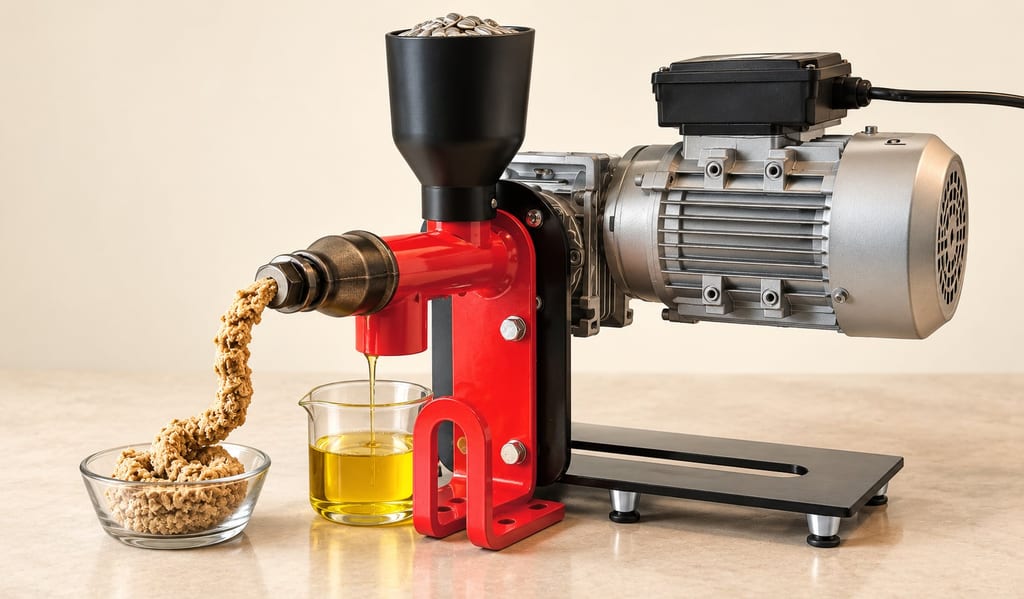
The Piteba electric oil press uses a motor-driven screw to separate oil from prepared oil-rich seeds and nuts. Oil drains through a slit; pressed cake exits the cap.
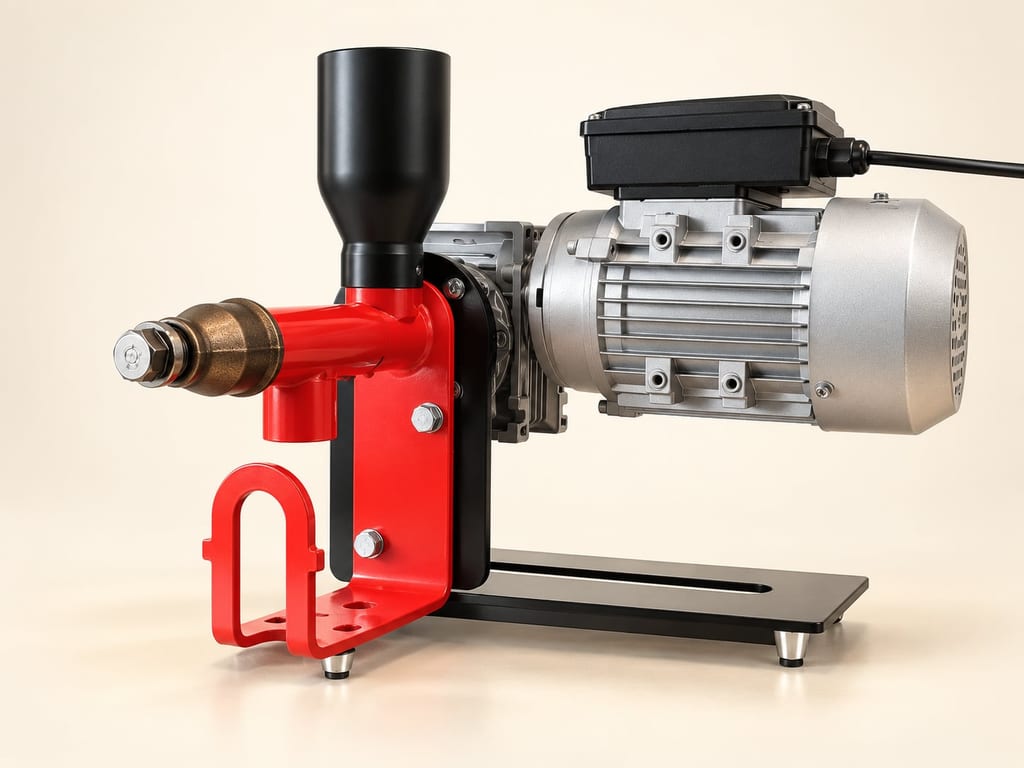
Small oil expellers use a screw to compress prepared oilseeds and nuts, separating oil from press cake. Piteba documents manual and motorized small-scale examples; their settings and feed requirements do not define every press.

A Cap-Pelé boucanière is an Acadian herring-smoking building. The documented Willie Niles example is a one-storey wood-frame structure with a ridge smoke vent and interior bays for hanging fish-bearing cannes.

Achcharu is a family of Sri Lankan vinegar pickles made with mixed vegetables or seasonal fruit and a piquant spice dressing. This version is a quick, refrigerated, non-fermented mixed-vegetable pickle.

The acocote is a long, hollowed and dried gourd used to draw aguamiel from a mature maguey. It is a harvesting tool: the sap is transferred to a separate vessel before it ferments into pulque.

Adrak murabba preserves young ginger in sugar syrup, a sweet South Asian preparation recorded in Indian cookery and food-processing sources.

Parkia biglobosa seeds are fermented into regional West African seasonings, including nététou, iru, dawadawa and soumbala. The yellow fruit pulp is a separate food, and names and methods vary by place.

Japanese reddish-brown vinegar from sake lees matured about three years, turned to vinegar by acetic bacteria; the vinegar of Handa and Edomae sushi rice.

A refined common-wheat flour blended for a broad range of baking; its protein and behavior vary with wheat, milling and market.

The almond mushroom, Agaricus subrufescens, was cultivated in eastern North America in the 1800s, lost its market, and returned as a cultivated mushroom from Brazil, where it is grown under several names.
No community contributions have been published for this entry yet.
Sign in to contribute. Published comments and photos are free to read.
Oklahoma State University ExtensionEquipment form · Heat transfer
Steam Basics for Food ProcessorsFood-process drum dryers use one or more internally heated metallic drums; wet material is applied in a thin, uniform layer.
Plant steam is often used as the heat-transfer medium in food drum-dryer applications.
Cited in: A dryer that makes contact with the food; Single, twin and double drums
Tetra Pak Dairy Processing HandbookFood application · Product limits
Milk and Whey FractionationMilk and whey can be dried in drum or spray dryers.
Drum drying can deteriorate milk powder's functional and instant properties; dried whey can be difficult to scrape from the drum, and the handbook describes bran as a processing aid in that context.
Spray drying is the most widely used method for milk and whey in the handbook's discussion.
Cited in: Foods and textures made on the drums; Choosing and maintaining a process-specific machine
ANDRITZCurrent equipment · Design variation · Materials · Process
ANDRITZ Gouda contact drum dryerThe manufacturer describes continuous indirect drying as steam heating inside the rotating drum while a thin product film dries on the outside and a scraper removes it.
Its listed configurations include single-, double- and vacuum-drum dryers, with feed/application variants.
ANDRITZ lists food applications including cereal-based baby food, milk, yeast, starch, potatoes and fruit, and drum construction/coating options specific to its models.
Cited in: A dryer that makes contact with the food; Single, twin and double drums; Foods and textures made on the drums; Choosing and maintaining a process-specific machine
ANDRITZFood application · Product context · Geography
Baby foodThe manufacturer describes a baby-food line with ingredient preparation, mixing, slurry pre-cooking, drum drying, milling, storage and packaging.
ANDRITZ reports more than 500 drum dryers installed by the company and describes its Dutch Waddinxveen site as a test location; this establishes the company's reach, not that all drum dryers are globally distributed.
Cited in: A Dutch manufacturer history and a present global industry
ANDRITZHistory · Geography · Manufacture
ANDRITZ Gouda BV, Waddinxveen, NetherlandsANDRITZ lists drum dryers among the products of its Gouda unit and gives its location as Waddinxveen, Netherlands.
The company history says Goudsche Machinefabriek BV built the first drum dryer in 1916; this is manufacturer-attributed history.
Cited in: A Dutch manufacturer history and a present global industry; Choosing and maintaining a process-specific machine
ANDRITZProcess context · Product character
Baby/infant food processing linesThe brochure describes drum-dried cereal infant foods as having a characteristic taste and porridge-forming properties, and shows the dryer within a larger mixing, pre-cooking, milling, dry-blending and packing line.
The brochure's depicted single and double drum units are manufacturer examples rather than a universal machine drawing.
Cited in: Foods and textures made on the drums