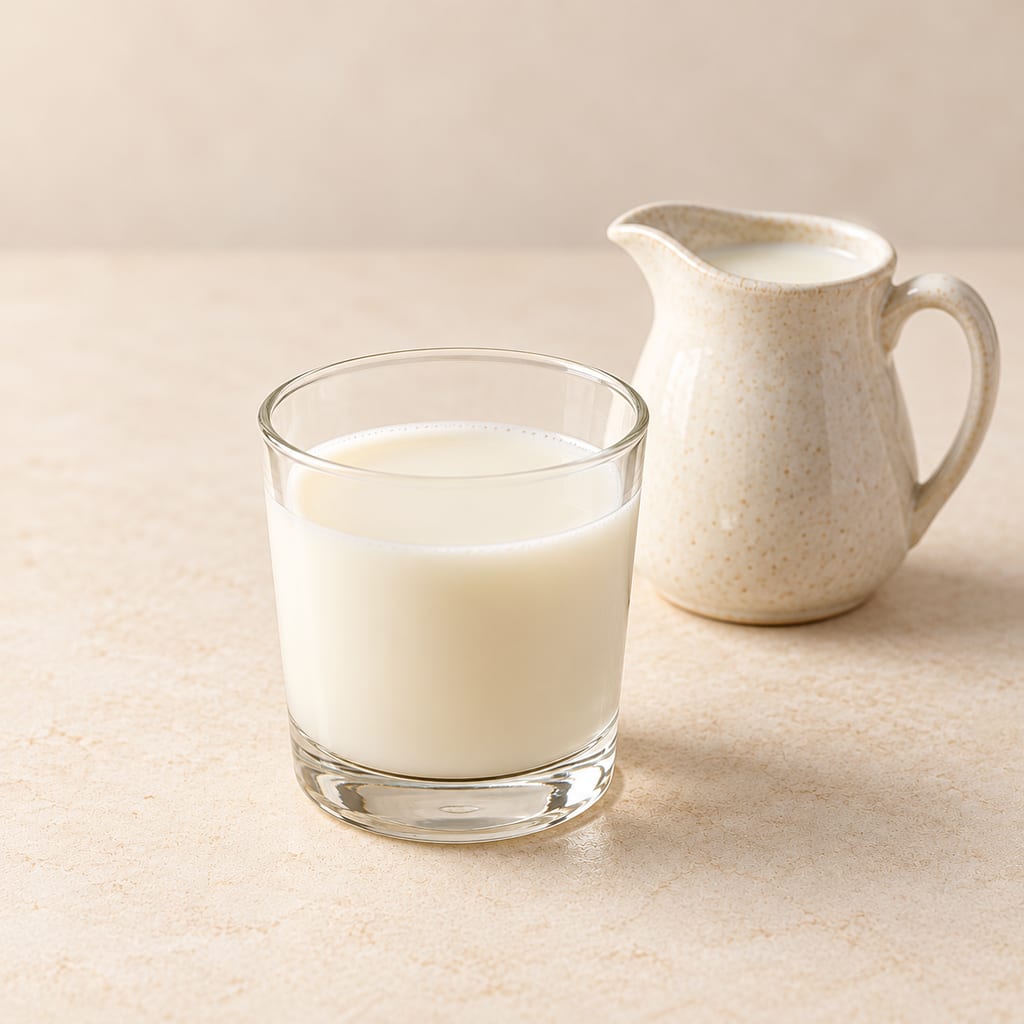
Koumiss (pasteurized mare milk)
Koumiss is a sour, lightly alcoholic mare-milk drink made by lactic bacteria and yeasts. This technical method uses pasteurized milk, a previous-batch starter and staged cooling.
 FermenteaWhere food goes to change
Equipment · Tanks and vats
тәпән · Bashkir limewood serving tub
Tepen (тәпән) is a low Bashkir hollowed-linden tub used for serving kumys. A National Museum of Bashkortostan object preserves one carved, lidded example; the taller siläk tub had a different preparation role.
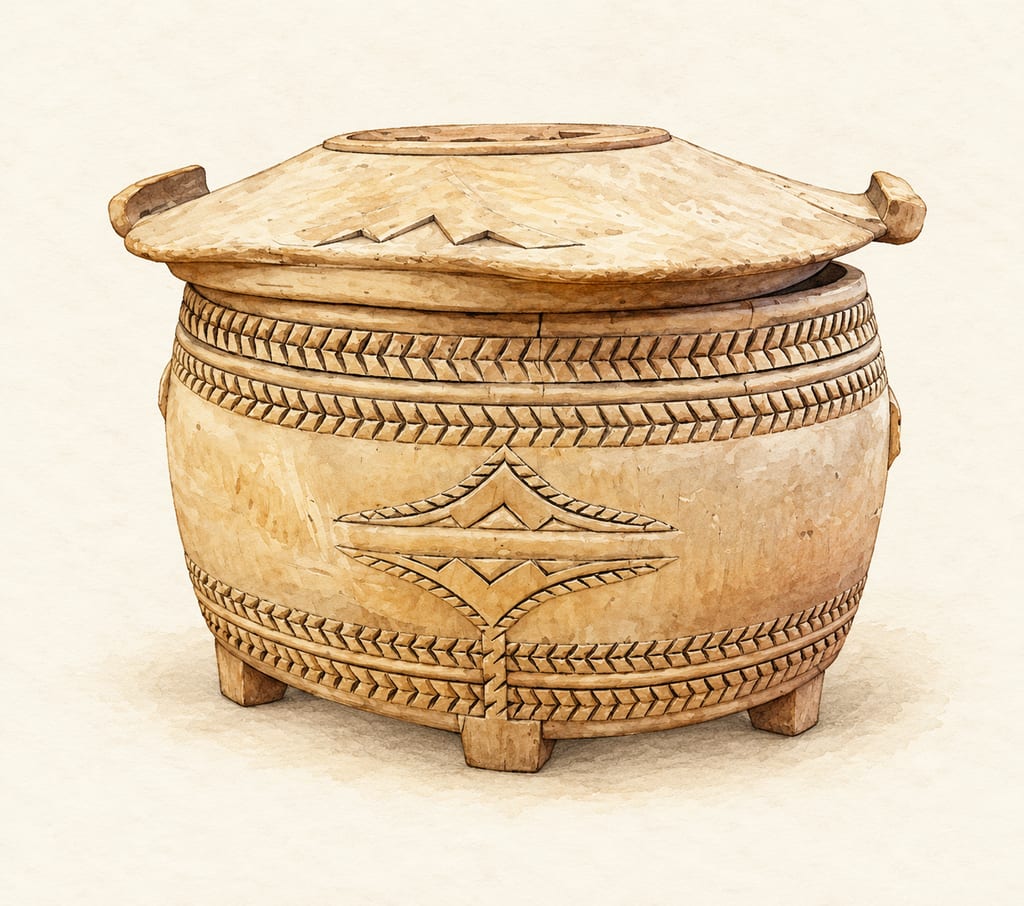
Tepen (тәпән) is a Bashkir wooden vessel used to serve kumys. The National Museum of the Republic of Bashkortostan identifies its catalogued example as a hollowed linden tub with an inserted bottom. It belongs to a broader family of hollowed vessels, but its low serving form differs from the taller siläk tubs described for preparing kumys and ayran.
That distinction matters because the museum’s account of the Bashkir yurt describes one or two limewood siläk tubs as alternatives to a large leather һаба for kumys preparation. It also places a separate vessel of soured milk nearby for making qorot. This page focuses on the named serving vessel rather than treating every Bashkir wooden tub as the same piece of equipment.
The tepen is hollowed from linden and finished with a separate bottom inserted into the wider end. In the museum’s general description of Bashkir tubs from Burzyan District, the walls are slightly convex at the middle; the low vessels have four feet and two projecting handles. The lid has its own projecting grips.
A heavy lid fits over the opening. Its groove follows the vessel’s diameter and part of the lid enters the mouth, so it sits closely in place; the source does not call it airtight. The catalog gives 28 × 37 cm for the specimen but does not label the axes. The separate general measurements for Burzyan tubs should not be mistaken for measurements of this particular artifact.
The museum describes the tepen’s decoration as two-plane carving: the background is cut down and the remaining design stands proud. Narrow raised bands resemble plaited cord, with slanting cuts that reverse direction between adjacent rows. In the recessed spaces, the lines create a herringbone-like pattern.
The catalog’s more elaborate motifs include paired stylized birds, a twisted column-like form at the base of the composition and a solar circle on the lid. These details belong to its documented carved example and the museum’s discussion of Burzyan workmanship; they are not mandatory ornament on every Bashkir tub.
Rudenko distinguishes the low tәпән from larger wooden vessels used in dairy work. A tall siläk was hollowed from a linden trunk, less often birch, with a bottom inserted into its broad end. He records siläk for preparing kumys and ayran and for keeping grain or flour. A particularly tall, narrow form called göbö served as a butter churn. Low tәпән tubs instead held water and were used to serve kumys and sour milk.
The evidence supports tepen as a serving vessel, not a fermentation chamber. The linked kumys preparation is relevant to the drink it served; it does not imply that this tub is necessary for the recipe or that fermentation took place inside the catalogued specimen.
The museum dates its tepen object to the late nineteenth or early twentieth century and records it in the National Museum of the Republic of Bashkortostan collection. That is an attestation for one surviving specimen, not a date for the invention of tepen or for all carved Bashkir tubs. Rudenko provides broader evidence for the forms and dairy uses of hollowed wooden vessels, but does not establish one universal design.
No capacity, standard size, current maker, price, cleaning method or preservation treatment is given for this serving tub. Its documented value here is its form, material, serving role and carved example; those other practical details remain unspecified.
The National Museum dates one tepen specimen to the late nineteenth–early twentieth centuries; the object date does not establish when the vessel form began.
Tepen is documented for serving kumys; the sources do not describe fermentation in it. Rudenko distinguishes it from taller siläk tubs used to prepare kumys and ayran.
Source →Regional cultural association only; the museum collection location is not treated as proof of the artifact's manufacture place.
Koumiss is a sour, lightly alcoholic mare-milk drink made by lactic bacteria and yeasts. This technical method uses pasteurized milk, a previous-batch starter and staged cooling.
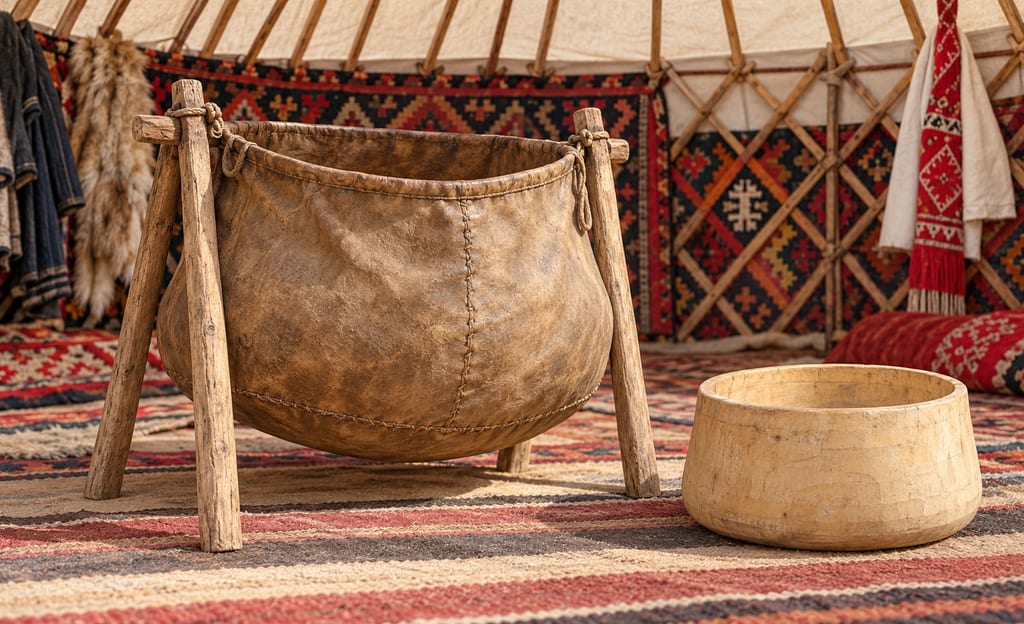
A Bashkir household account describes a large leather һаба for kumys, with one or two limewood tubs as alternatives; exact vessel dimensions and schedule are unspecified.

A Cap-Pelé boucanière is an Acadian herring-smoking building. The documented Willie Niles example is a one-storey wood-frame structure with a ridge smoke vent and interior bays for hanging fish-bearing cannes.

Achcharu is a family of Sri Lankan vinegar pickles made with mixed vegetables or seasonal fruit and a piquant spice dressing. This version is a quick, refrigerated, non-fermented mixed-vegetable pickle.

The acocote is a long, hollowed and dried gourd used to draw aguamiel from a mature maguey. It is a harvesting tool: the sap is transferred to a separate vessel before it ferments into pulque.

Adrak murabba preserves young ginger in sugar syrup, a sweet South Asian preparation recorded in Indian cookery and food-processing sources.

Parkia biglobosa seeds are fermented into regional West African seasonings, including nététou, iru, dawadawa and soumbala. The yellow fruit pulp is a separate food, and names and methods vary by place.

Japanese reddish-brown vinegar from sake lees matured about three years, turned to vinegar by acetic bacteria; the vinegar of Handa and Edomae sushi rice.

A refined common-wheat flour blended for a broad range of baking; its protein and behavior vary with wheat, milling and market.

The almond mushroom, Agaricus subrufescens, was cultivated in eastern North America in the 1800s, lost its market, and returned as a cultivated mushroom from Brazil, where it is grown under several names.
No community contributions have been published for this entry yet.
Sign in to contribute. Published comments and photos are free to read.
National Museum of the Republic of Bashkortostan via Artefact / Culture.RFForm · Materials · Use · Dimensions · History · Geography
Кадка деревянная тэпэн (Wooden tub-tepen)The artifact is identified as a lindenwood tepen for serving kumys, hollowed with an inserted bottom.
The museum dates this specimen to the late nineteenth–early twentieth centuries and records 28 × 37 cm without naming axes.
Its general description of Burzyan tubs—not a universal rule—records shallow forms, slightly convex walls, four feet, two projecting handles and a fitted heavy lid.
The museum describes raised cord-like bands, a recessed herringbone-like ground, stylized bird forms and a solar-circle lid motif.
Cited in: A low tub for the serving table; Hollowed linden and a fitted bottom; Carving that shapes the surface; Serving kumys, not fermenting it; A dated object, not a type origin
Ufa KitapForm · Use · History · Geography
Башкиры: Историко-этнографические очеркиRudenko describes siläk as a hollowed linden vessel, rarely birch, with an inserted bottom, used for preparing kumys and ayran and for storing grain and flour.
He distinguishes the tall narrow göbö butter churn from low tәпән tubs, used for water and serving kumys and sour milk.
The account describes variation among Bashkir hollowed wooden vessels and their dairy functions.
Cited in: A low tub for the serving table; Serving kumys, not fermenting it; A dated object, not a type origin
National Museum of the Republic of BashkortostanUse · Geography · Context
Башкирская юрта. Журнал «Мир музея»The museum quotes Rudenko on a large leather һаба or one/two limewood siläk tubs used to prepare kumys in a Bashkir yurt.
A separate vessel nearby held soured milk intended for qorot; this differs from tepen's serving role.
The description places equipment in a household work area but does not claim a universal arrangement or vessel standard.
Cited in: A low tub for the serving table