← Equipment

Built structures · Place · Drying kilns and dryers

Ypäjä paired grain-drying barn (paririihi)

paririihi · Ypäjä paririihi · Pappilan paririihi · Ypäjä paired riihi

Loading ratings…

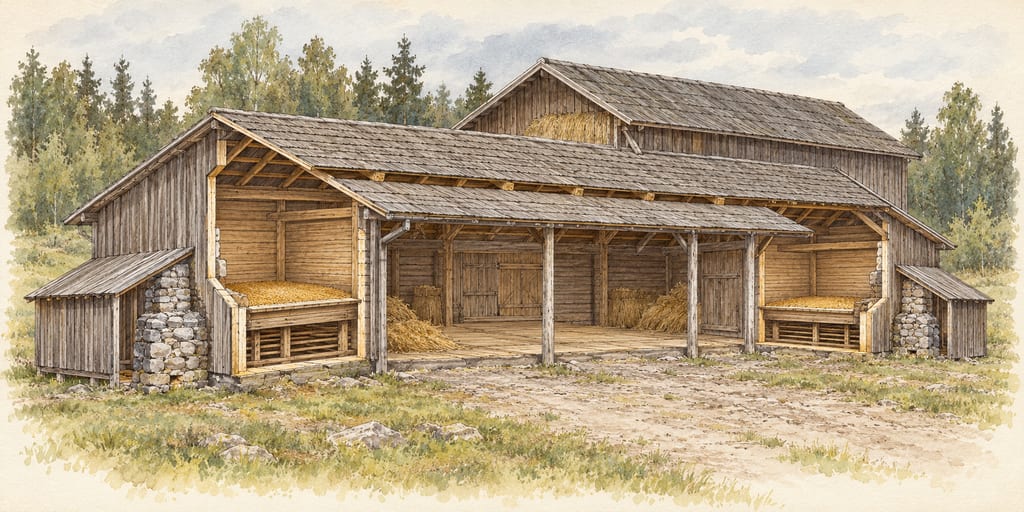
Ypäjä’s 1896 paired riihi has two grain-drying rooms flanking a central threshing room, with each stone stove heated from outside the building.

Interpretive cutaway of Ypäjä's paired riihi, showing grain-drying rooms at both ends, the central threshing room and exterior stove shelters.

A paired riihi in Ypäjä

Riihi is the Finnish name for a traditional grain-drying and threshing building. The Ypäjä local-history museum documents an unusually large example called the pappilan paririihi: a paired drying barn built in 1896 and still on its original site. The municipality cautions that it is not the type commonly found on Ypäjä farms. This page therefore describes one named building, not a standard plan for Finnish drying barns.

The building measures 25.2 metres long and 14.5 metres wide. A drying room stands at each end, with a threshing room between them; the description also identifies a front canopy and a straw barn behind. That arrangement enabled grain drying and threshing within one extended structure, while the two separate drying rooms could serve as distinct work spaces. The source does not provide a full construction record or explain whether both rooms were always used in the same way.

Sources for this section

Heating from outside

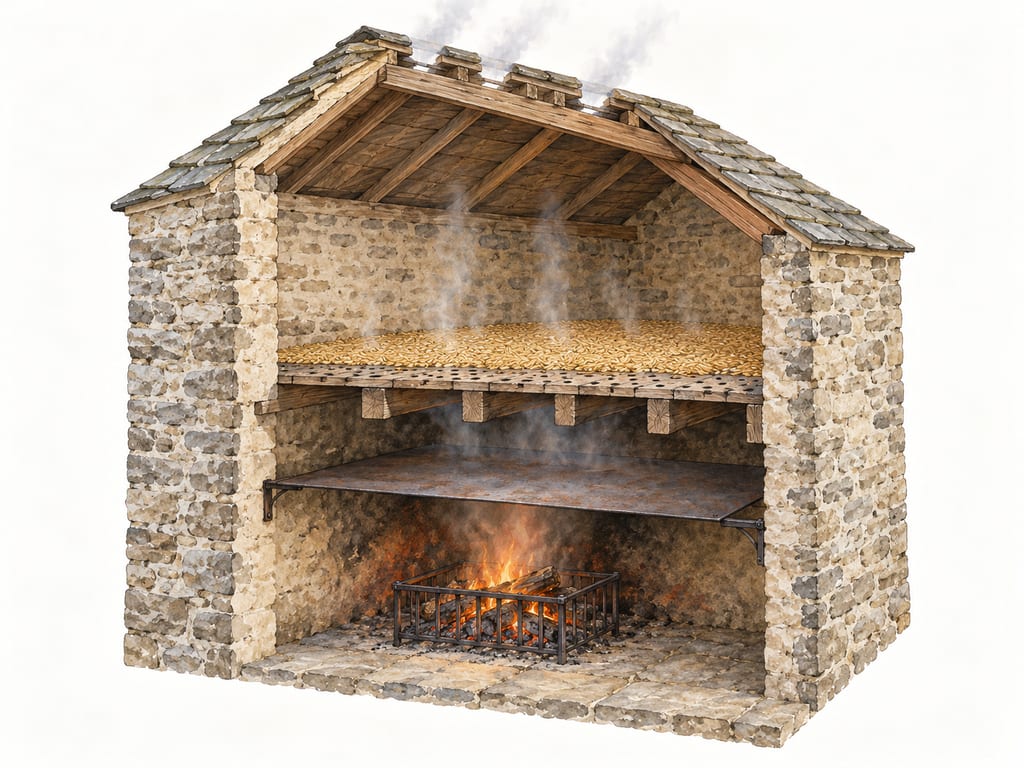
The municipality describes a stone kiuas beside the gable wall of each drying room. Each stove was heated from outside through a wooden shelter. The exterior firing arrangement is a notable feature of this building: it places the fire-tending point beyond the room where grain was dried. The source does not specify temperatures, fuel quantities or a complete operating schedule, so those details should not be inferred.

The Ypäjä account also records a change in use during the twentieth century. In the 1920s a grain-drying platform was built in one drying room; by then, grain was threshed with a machine and the kernels were dried on the platform. The earlier sheaf-based use and this later grain-platform arrangement are different documented stages of the building’s history, not one simultaneous process.

Sources for this section

Evidence and limits

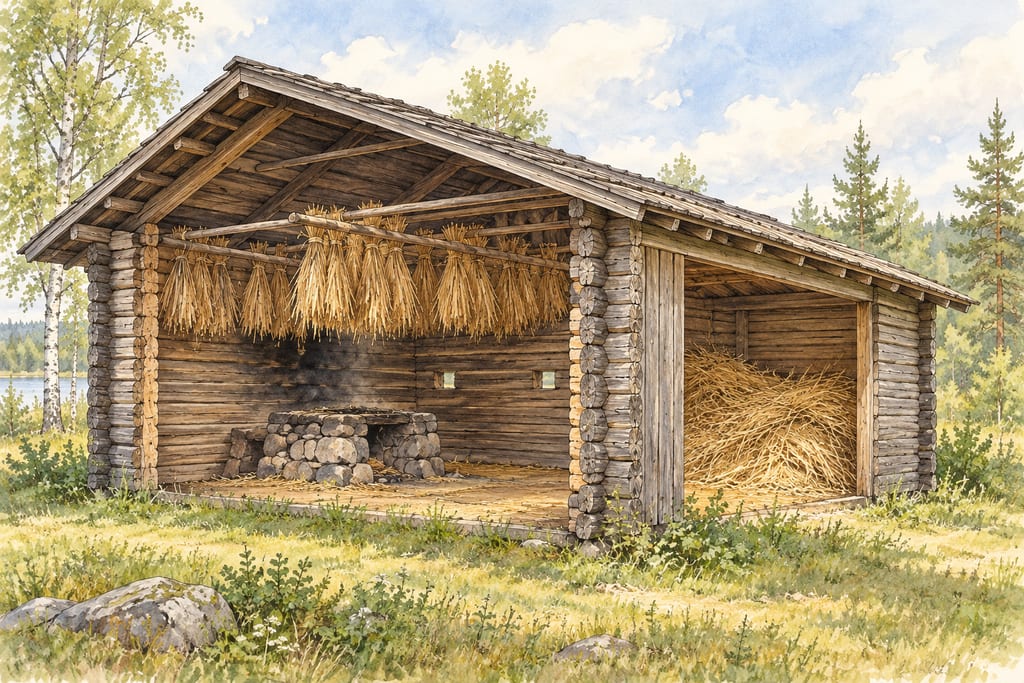
The building’s date, dimensions, paired layout and later platform are given by the Municipality of Ypäjä. The linked 1931 photograph is a different Finnish riihi, photographed by Eino Nikkilä in Luhalahti, Ikaalinen; it is shown as a general visual reference and must not be mistaken for the Ypäjä structure. The generated cutaway is an interpretive illustration of the municipal description, not a documentary image or measured plan.

Although the site record supports the building’s room arrangement and stove location, it does not establish a construction sequence, timber dimensions, roof assembly, exact stove geometry or the date when the wider riihi form began. The materials and layout notes here are limited to features the cited record identifies. This page is a sourced description of a particular historic structure, not instructions for constructing or operating a drying barn.

Sources for this section

Site

SettingA long paired riihi with a drying room at each gable end, a threshing room between them, an open canopy at the front and a straw barn behind.
GroundThe museum account says this building remains on its original site in Ypäjä.
FootprintThe municipality gives 25.2 m by 14.5 m; these are dimensions of this specific building.
NotesTwo gable-end stoves are fed from outside through wooden shelters, according to the municipal description.

A build is made where it stands: moving it means building it again.

How it is built

Materials

  • Wooden exterior stove shelters
  • Stone stove (kiuas)
  1. The municipal source documents the building's layout and historical use but no construction sequence; this is a descriptive account, not a build plan.

Places

Ypäjä

Historical attestation · Locality evidence

A specific exceptional museum building in Ypäjä, not a claim that every Finnish riihi shared this paired layout.

Related

Community

No community contributions have been published for this entry yet.

Share what you made

Sign in to contribute. Published comments and photos are free to read.

Sources