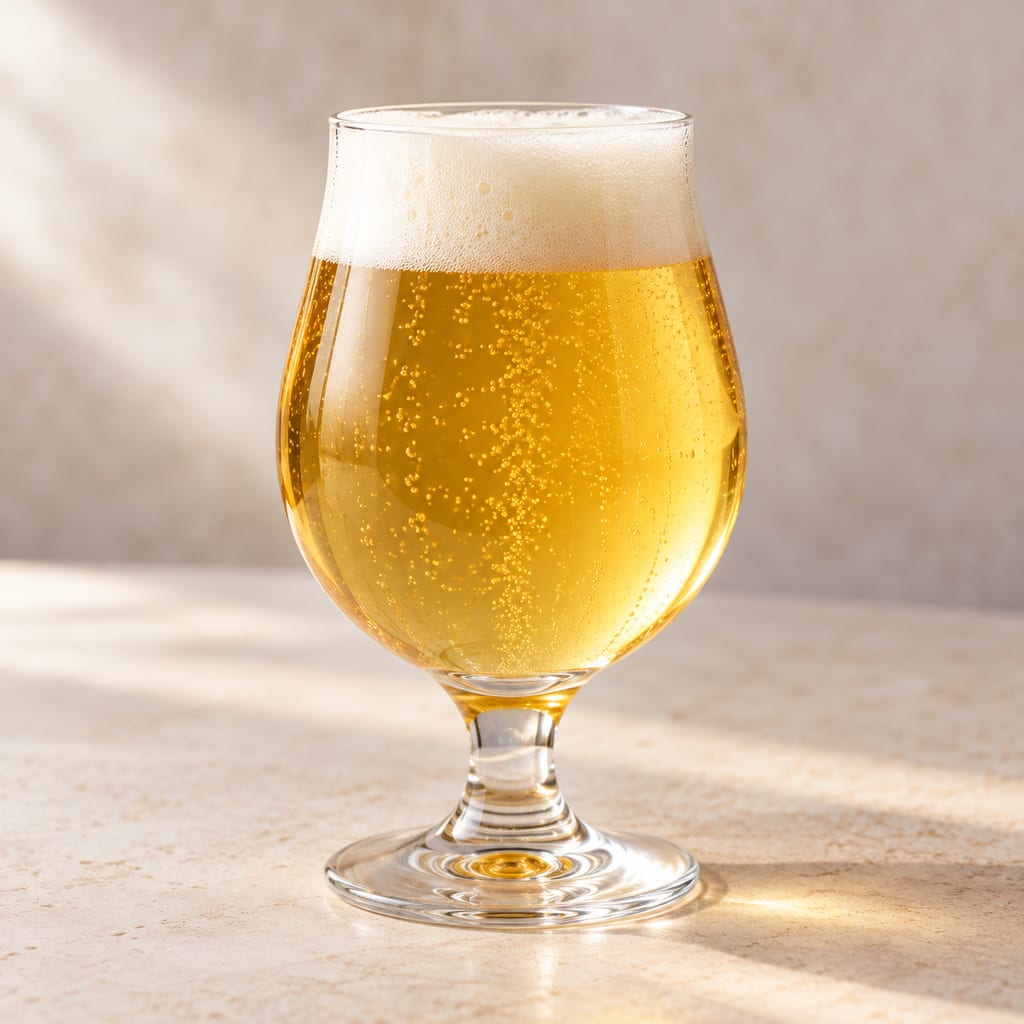
Monk’s Ration Trappist-style single
A pale Belgian-style ale with Pilsner and aromatic malts, cane sugar and Saaz hops, fermented under loose foil before an airlock is fitted.
 FermenteaWhere food goes to change
Substrates
A pale, enzyme-free barley malt made by Briess for use alongside other brewing malts, with intended contributions to beer body and foam.
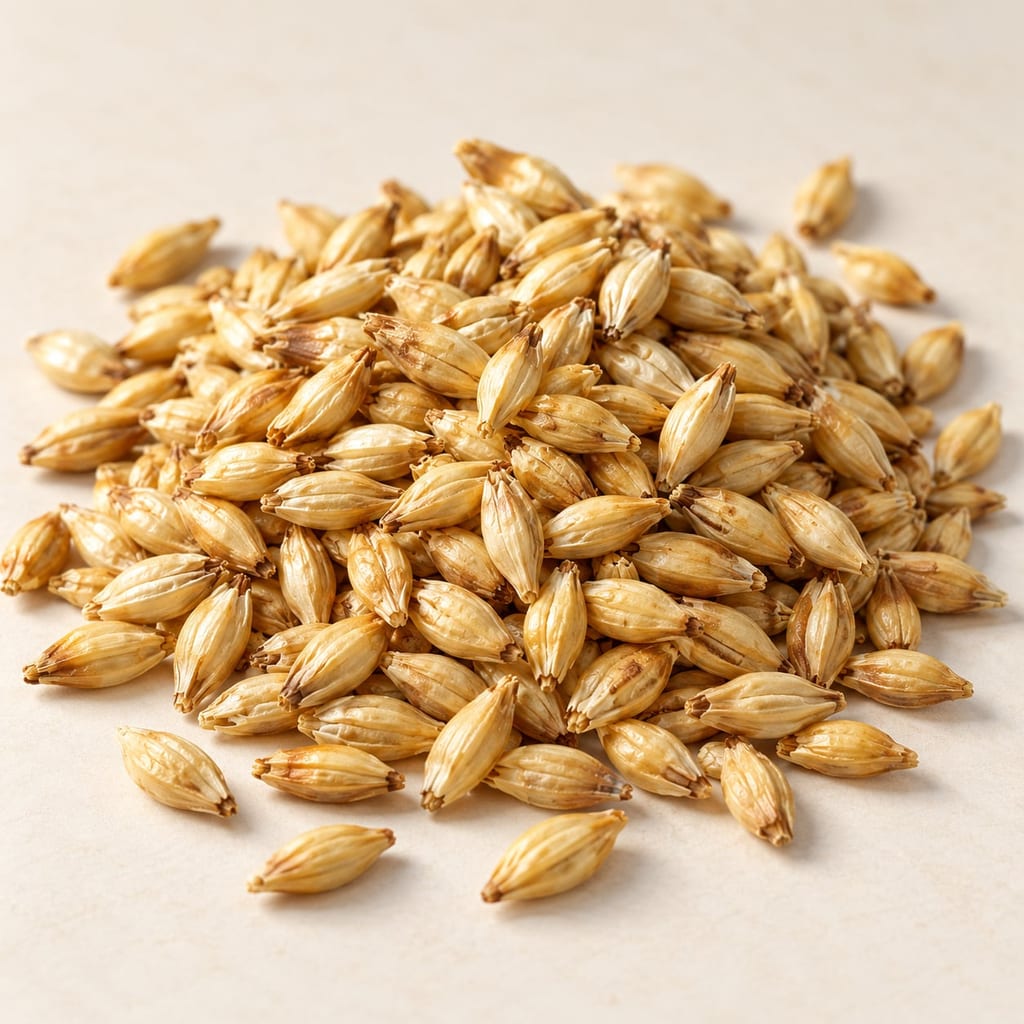
Briess Carapils is a pale barley malt sold for brewing. It belongs to the maker's dextrin-malt range and is used alongside other ingredients to influence a beer's body and foam. It is a dry brewing material, available as kernels or preground grain, rather than a finished beverage or a living starter culture.
The maker matters here. A recipe naming Briess Carapils selects a particular supplier's product, while a recipe saying only dextrin malt leaves a broader choice. Briess itself explains that dextrin-malt production differs among suppliers. A familiar category name therefore does not establish identical composition, processing or performance across bags from different companies.
The product specification describes two-row malting varieties of barley, Hordeum vulgare L., without naming a particular cultivar. That distinction carries through the ingredient's identity: barley is the grain, malting is the processing, and Carapils is the named commercial malt. None of these alone identifies the field, harvest or lot in a brewer's hands.
The Briess name also belongs to an older European malt trade. A company profile in the 1898 volume Die Groß-Industrie Oesterreichs describes Ignaz and Wilhelm Briess at Paulowitz near Olmütz, in Moravia. It dates the firm to 1873 and describes an export business that initially dealt in cereals before giving more attention to finished malt.
The account links that shift to breweries' demand for malt made outside their own premises. It records a new establishment built in 1881 and describes customers beyond Europe. Read as a contemporary industrial profile, it shows malt becoming a traded processed ingredient, with the supplier connecting grain handling to the needs of distant breweries.
The profile is celebratory company history, not an independent test of a modern malt. It does not name this Carapils product or establish where it was invented. Its historical association with Moravia belongs to the firm and its trade, rather than to the growing origin of today's barley.
Briess's modern timeline begins its family malting tradition in Moravia in 1876. That differs from the firm date in the nineteenth-century profile. The discrepancy remains unresolved, so neither date can be treated as the launch of Carapils.
The American business has a later chapter. Briess says a Wisconsin malting company was formed in 1901 and that the family acquired Chilton Malting in 1978. Its history also describes supplying specialty malts in smaller bags for the developing craft-brewing market. These milestones concern the company's business and customers, rather than a precise first production date for this malt.
The Carapils sheet identifies manufacture in the United States. It does not name the farm that grew a particular bag's barley. A corporate address or a company-wide account of grain sourcing cannot fill that gap. Manufacturing country, historical company association and crop-growing location answer different questions and should remain separate on the map.
Briess uses Carapils and Cara-Pils for its original pale malt. The spelling difference does not identify two Briess formulations. Adding the producer's name to a shopping list helps retain the intended identity when a retailer groups several dextrin malts together.
Carapils Copper is a separate Briess product. The company describes it as contributing copper or red color and a more pronounced malt and toast character. Those characteristics should not be carried into an account of ordinary Carapils. A listing that drops the Copper qualification can hide a meaningful change in what goes into the mash.
Caramel malt is another nearby category. The original Carapils kernels have a glassy interior, but Briess explicitly distinguishes this product from caramel malt. Appearance alone cannot settle the category: the maltster's product declaration is more useful than assuming that every hard, translucent-looking kernel has the same processing history or contribution to a beer.
Ordinary malting starts by wetting cleaned barley, allowing controlled germination, and drying the grain. Germination changes the kernel's internal structure and develops the enzyme system useful to brewers. Drying stops the plant's continued growth and helps establish the malt's character.
Briess's general process description shows why malt is more than dried raw grain. The maltster manages water, air and heat through several stages. The germinating seed uses its reserves, while the maltster seeks a material suited to the later brewing process. Keeping those stages under control allows different malt products to serve different purposes.
Specialty production changes the balance further. Briess describes varying the drying conditions, roasting or additional processing to develop selected properties. Its general account also describes laboratory and sensory checks on finished lots. These explain the work of a maltster; they do not disclose a manufacturing recipe for Carapils. The exact Carapils process remains proprietary, so a general malting schedule cannot be presented as its formula.
The Carapils sheet describes its typical kernel classification as entirely glassy. Briess's explainer relates that character to starch converted into dextrins and then dried. This is the producer's explanation of the finished grain's structure, rather than an invitation to reproduce its process at home.
Glassy is a description of kernel character, not a flavor verdict. In this product, the maker intends a pale addition with little effect on aroma or color. A brewer choosing it for that purpose should still distinguish the supplied material from the finished beer: the other malts, hops, fermentation and complete formulation remain part of what reaches the glass.
The maker's hot-steep sensory profile describes wort assessed by its own panel. That is useful product information with a particular setting. It does not mean that every beer containing the grain will have an identical texture or that a photograph of the kernels can establish their extract, enzyme activity or final sensory effect.
Briess describes ordinary Carapils as devoid of enzymes and suitable for either steeping or mashing. It should therefore not be counted on to provide the starch-converting enzyme supply associated with an enzymatic base malt. A pale appearance does not establish that role.
This is a useful distinction when reading a mixed grain bill. One malt may supply much of the mash's enzyme activity while another supplies selected extract, color or sensory properties. Treating every barley malt as an interchangeable source of enzymes loses the reason for using several products together.
Steeping and mashing also name different operations in a recipe. The producer's statement that this malt can be used in either does not give a universal water ratio, temperature or duration. Follow the documented method for the particular beer. Adding this ingredient to another formula is a formulation change, whose outcome cannot be predicted merely from its inclusion in a supplier's list of steepable malts.
Dextrins are carbohydrates built from linked glucose units. In brewing, starch breakdown during mashing produces a mixture of fermentable sugars and dextrins. The proportions depend on the malt, its enzymes and the conditions in the mash.
A research paper published in 2024 investigated changes to a barley-malt mash and compared dextrin patterns with commercial pilsner beers and their non-alcoholic counterparts. Its introduction distinguishes conventional brewing yeasts from diastatic strains of Saccharomyces cerevisiae: the latter are an exception to the usual persistence of dextrins through fermentation.
The study used another malt, not Briess Carapils. It supports a general explanation of why mash conditions and yeast capability matter, rather than a product-specific prediction. It also notes that a positive sensory relationship between dextrins and palate fullness has not been found consistently. The word dextrin consequently describes chemistry more securely than it promises a particular sensation in every beer.
Briess markets Carapils for body, mouthfeel and head retention. These describe related but different aspects of drinking beer. The sensation of fullness is not the same observation as a foam cap remaining on the glass, and neither is a direct measurement of a bag's composition.
The company's explainer presents a demonstration involving several beers, with photographs of retained foam. That illustrates the producer's claim. The published account does not provide enough detail about controls, recipes, measurements or replication to make it an independent comparison of the malt's performance.
For a brewer, the practical question is what happens in a particular formulation. Retaining a record of the malt and its amount allows that beer to be compared with another batch. The product name alone cannot isolate its effect from all the other changes between beers. Supplier guidance is a starting point for understanding the ingredient's intended role, while the result remains a property of the complete beer.
The information sheet gives typical values rather than a certificate for the bag being purchased. Its stated color of 1.5 SRM, moisture of 6.5% and fine-grind extract of 75.0% on a dry basis belong to that average product description. The sheet expressly says its typical analysis is not a specification or guarantee.
Each heading describes a different measurement. Extract on a dry basis is not a statement that the same percentage of an ingredient becomes fermentable sugar, nor does it predict the alcohol yield of a finished batch. Likewise, the malt's listed color should not be read as the final beer's color after the rest of the grain bill is included.
These figures help distinguish products and interpret supplier information. A lot-specific question calls for lot-specific documentation. Where the recipe identifies no harvest or analysis, the ingredient page cannot supply one by turning an average into an exact measurement.
The American Homebrewers Association's 2026 Big Brew recipe for Monk's Ration Trappist-Style Single lists Briess Carapils in its all-grain version. The specified addition is 2 oz, shown as 57 g, in a batch of 2.5 US gallons. It appears alongside a base malt and another specialty malt.
The extract version explicitly omits Carapils while making other changes to the formulation. These are two documented branches of that recipe, rather than evidence that adding the same amount to any extract beer is necessary. The recipe does not separately test or explain Carapils's contribution.
That example shows why an ingredient entry and a recipe serve different purposes. The entry identifies what the named malt is and how its documentation should be read. The recipe determines how it fits a particular beer. Neither its amount nor the supplier's general guidance should silently replace the formula a brewer has chosen.
The product sheet lists whole-kernel and preground forms. The product name can therefore remain the same while the physical material arriving at the brewery differs. A retailer's description should make the supplied form clear, especially when a recipe expects crushed grain.
Briess's dry-malt handling guidance emphasizes cool, dry storage away from excessive humidity, heat, odors and pests. It recommends inspecting deliveries and bags, rotating stock and looking for damage or infestation. These are useful routines for a dry grain supply rather than reasons to treat an unopened bag as indefinitely fresh.
Dampness, mustiness, pests or foreign material deserve investigation. Their absence does not prove safety. The product sheet's separate flavor-loss note for whole-kernel roasted malts is not a Carapils-specific expiry date, and this entry assigns none. Keep the supplier and lot information with the malt so a storage concern can be traced to the actual purchase.
This is barley malt, so it should not be treated as a gluten-free grain substitute. FDA guidance identifies barley as a gluten-containing grain and explains that fermentation and hydrolysis are not themselves processes for removing gluten. A beer's fermentation therefore does not erase the relevance of its barley ingredients.
The Carapils sheet provides no product-specific gluten concentration. Its pale color, dextrin classification or lack of active enzymes does not supply that missing measurement. Readers who need gluten-free ingredients should select products documented for that requirement rather than infer suitability from the malt's brewing role.
The same care applies when sharing a finished drink or its recipe. Retain the barley identity in the ingredient information even when the malt is a small addition. The purpose is to describe what was used clearly; the amount in a grain bill does not establish a dietary threshold or a finished-product gluten result.
barley, gluten
The product sheet identifies U.S. manufacture. It does not establish a particular facility or the growing location of a purchased lot’s barley.
A pale Belgian-style ale with Pilsner and aromatic malts, cane sugar and Saaz hops, fermented under loose foil before an airlock is fitted.

A refined common-wheat flour blended for a broad range of baking; its protein and behavior vary with wheat, milling and market.

Toasted almonds are whole sweet almond kernels dry-roasted until golden to brown. Heat replaces their marzipan note with a roasted, nutty one; they thicken and flavour romesco.
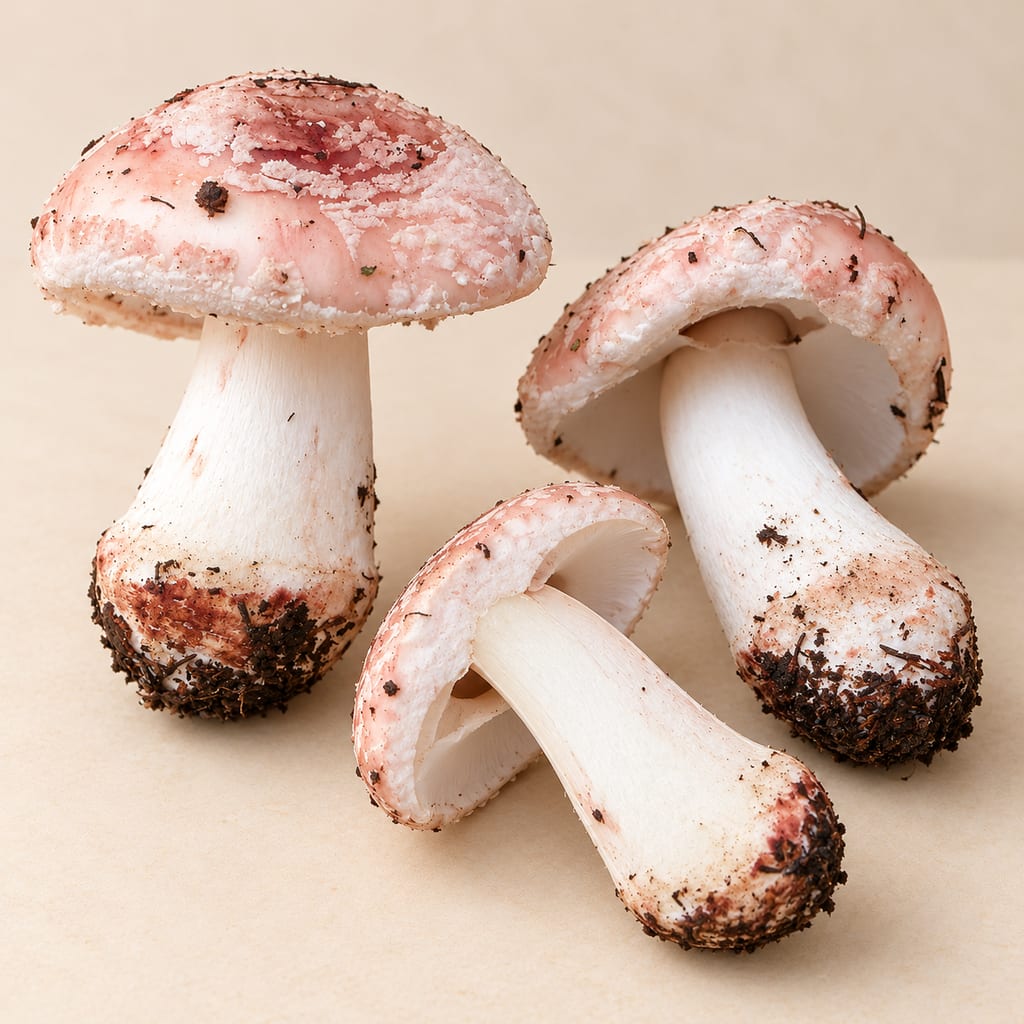
Amanita novinupta is a western North American blusher, a forest mushroom recorded as food in Mexico, and one that must be cooked because its raw flesh is toxic.
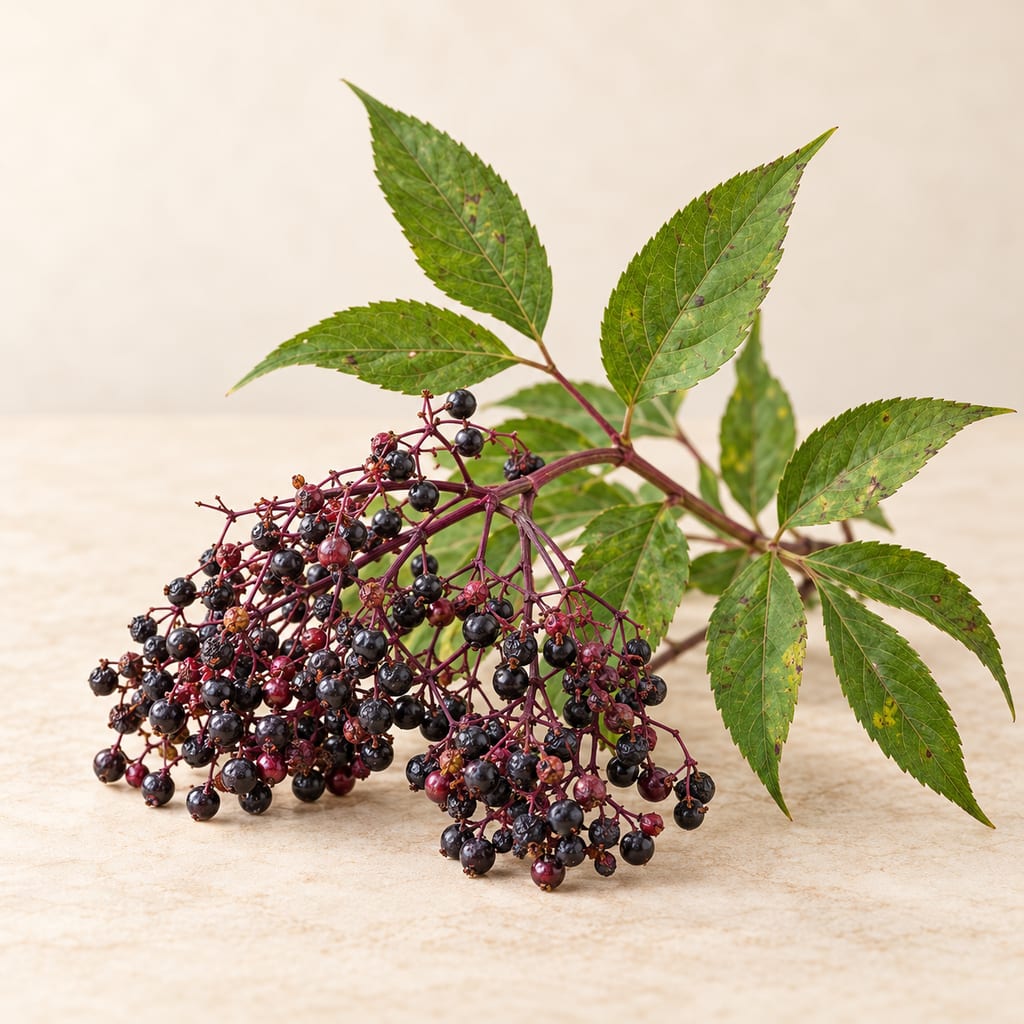
Sambucus canadensis is the accepted name used here for American elderberry. Missouri production guidance and named-cultivar studies give useful regional growing information, while food and analytical sources leave process questions open.
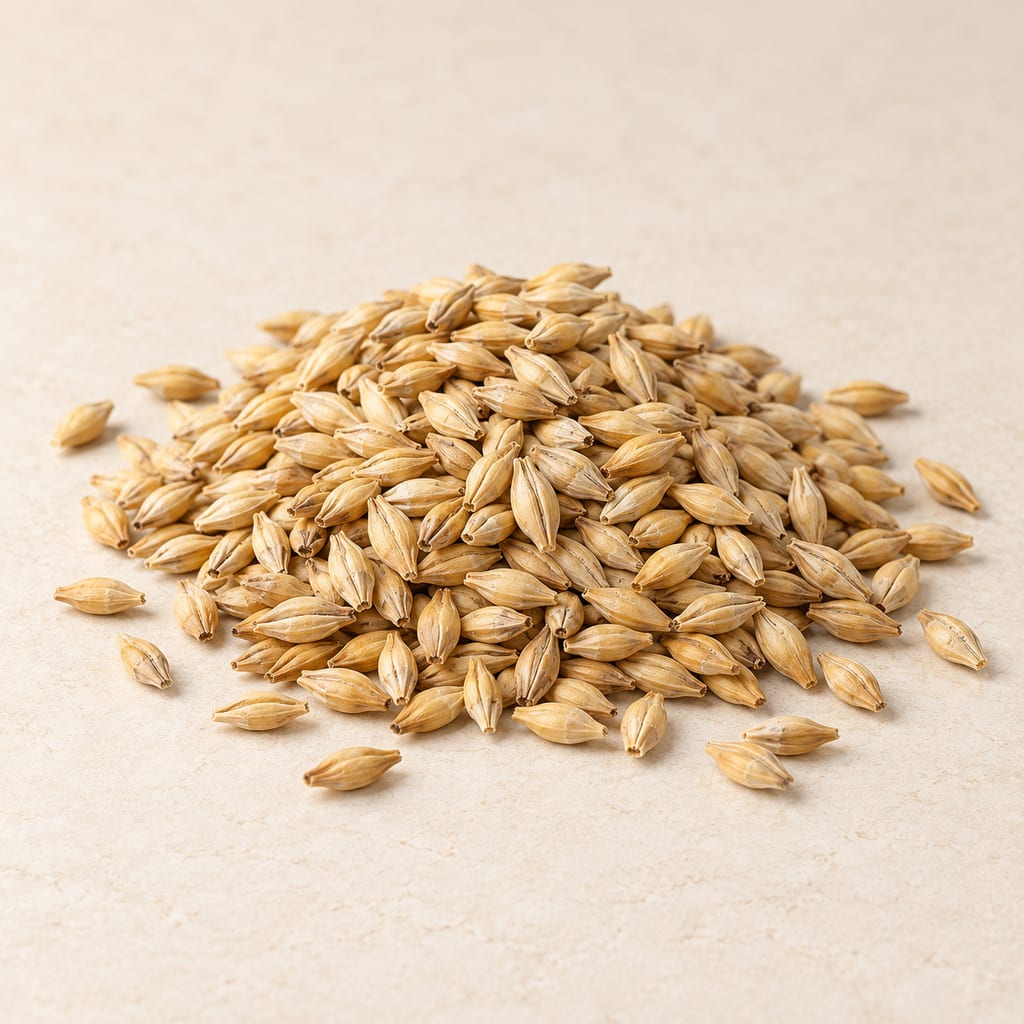
A lightly kilned brewing base made from two-row barley. It supplies starch and enzymes for the mash, with the maltster’s product and lot analysis defining its brewing properties.

Ripe avocado flesh is the soft, buttery, fat-rich pulp of Persea americana, eaten raw. It is low in acid, so it is a fresh ingredient that needs care in chilled dishes.
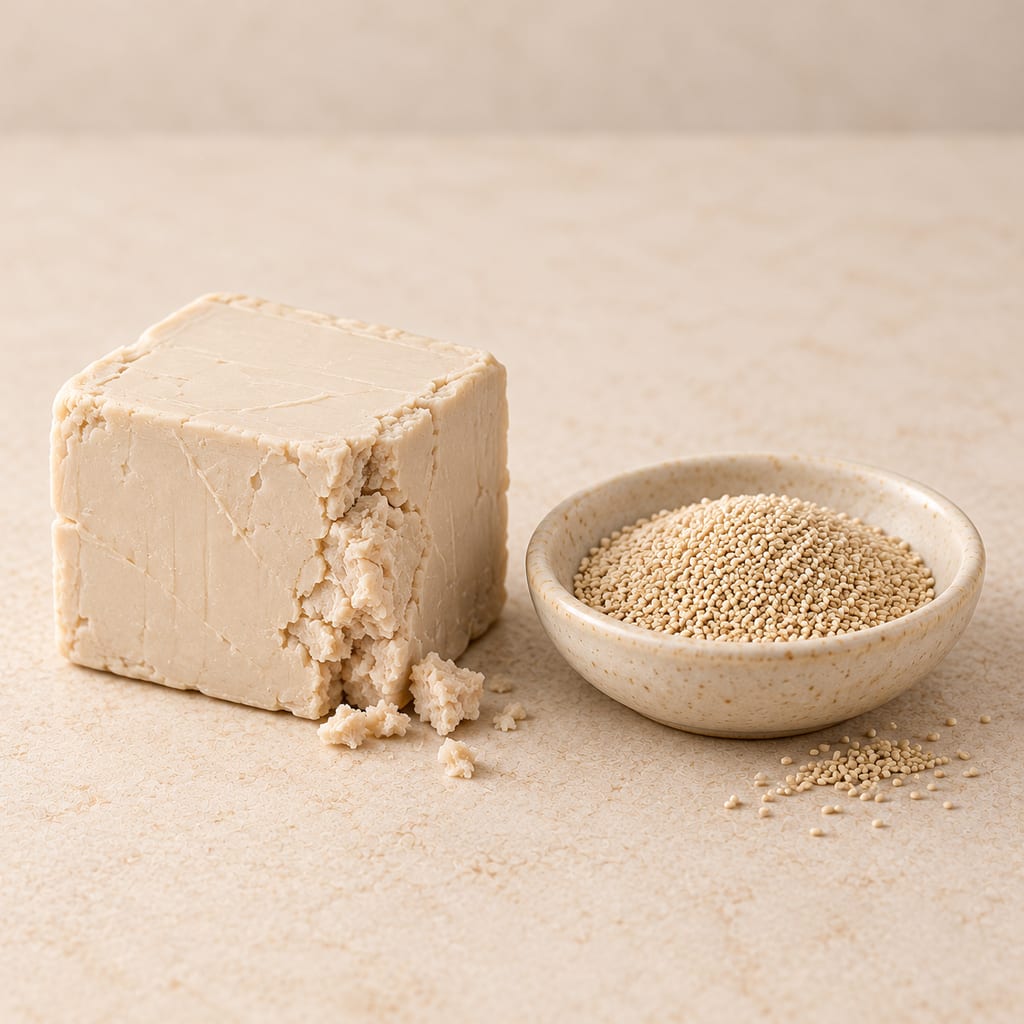
Baker's yeast is a cultivated living leavener, commonly sold fresh or dried. In dough, selected Saccharomyces cerevisiae cells make gas that can raise bread.
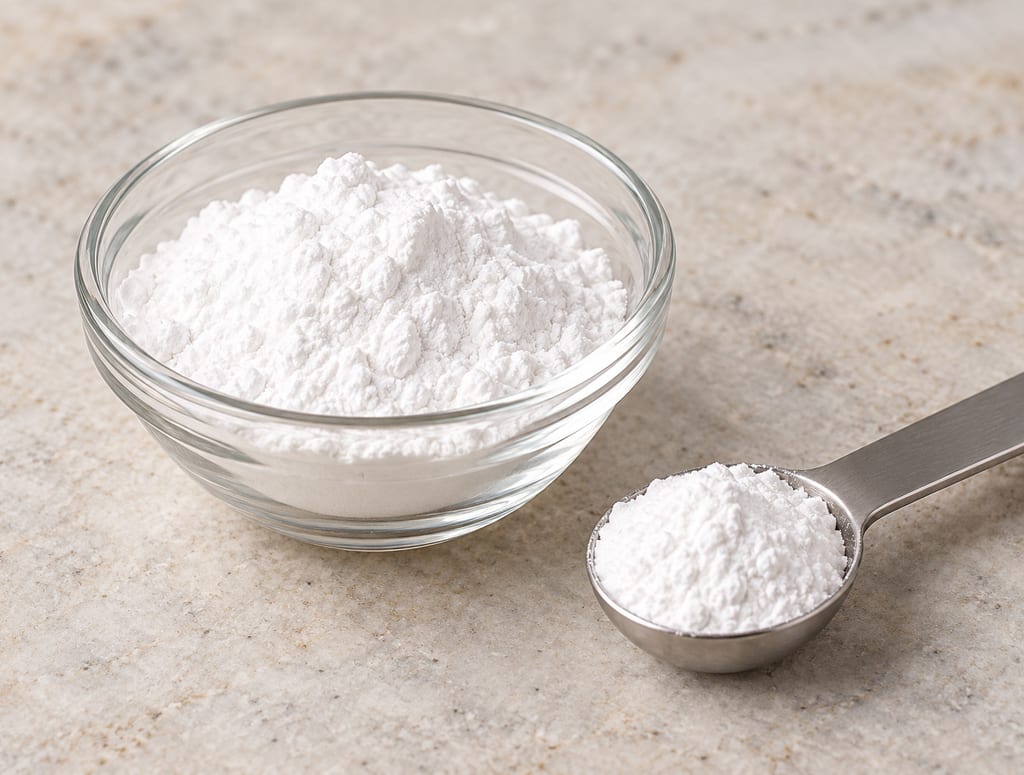
Baking powder is a dry chemical leavener that combines bicarbonate with acid-reacting ingredients and a carrier. Moisture and heat release carbon dioxide for quick breads, batters and griddle cakes.
No community contributions have been published for this entry yet.
Sign in to contribute. Published comments and photos are free to read.
Briess Malt & Ingredients
Carapils® Malt Product Information SheetThe manufacturer’s product sheet describes U.S. manufacture from two-row malting varieties, enzyme-free dextrin malt, whole and preground forms, typical analysis and handling guidance. Its average values are expressly not specifications or guarantees.
Cited in: A specialty malt with a named maker; The later American company; What a glassy kernel tells the brewer; Enzymes and the work of the mash; Reading a typical analysis; Whole grain, preground malt and storage; Barley remains relevant after malting
Brewing With Briess / Briess Malt & Ingredients
Carapils® Dextrin MaltsThe producer distinguishes original Carapils and Cara-Pils from Carapils Copper and describes the products’ intended color, aroma, body and foam contributions.
Cited in: A specialty malt with a named maker; Names that can lead to different purchases; Body, foam and the evidence behind a claim
Brewing With Briess / Briess Malt & Ingredients
Understanding Carapils® MaltThe manufacturer explains its dextrin-malt category, glassy kernel character and intended brewing effects. Its foam demonstration lacks a published controlled trial protocol and does not establish independent comparative performance.
Cited in: A specialty malt with a named maker; Names that can lead to different purchases; What a glassy kernel tells the brewer; Body, foam and the evidence behind a claim
Brewing With Briess / Briess Malt & Ingredients
The Malting ProcessThe maltster describes general steeping, germination and drying, and the distinction between enzymatic base malts and specialty processing. This is general context rather than the proprietary Carapils process.
Cited in: From grain to brewing malt; Enzymes and the work of the mash
Brewing With Briess / Briess Malt & Ingredients
Handling/Storing Dry MaltThe producer’s dry-malt handling guide covers receiving, bag inspection, dry storage, stock rotation and signs of damage or infestation; these observations do not prove safety.
Cited in: Whole grain, preground malt and storage
Technisches Museum Wien digital library; Wien: Weiß
Die Groß-Industrie Oesterreichs, Volume V — “Ignaz & Wilhelm Briess. Malz-Fabrik. Paulowitz bei Olmütz”The 1898 industrial profile on printed page 227 dates the firm to 1873, describes a shift from cereal exports toward malt and records the Paulowitz works built in 1881. It is a contemporary promotional account of the firm, without evidence about modern Carapils.
Cited in: An earlier history of selling malt
Brewing With Briess / Briess Malt & Ingredients
HistoryThe company timeline dates its Moravian family malting tradition to 1876, the Wisconsin company to 1901 and the family’s Chilton acquisition to 1978. These are company milestones rather than a Carapils launch date or crop provenance.
Cited in: The later American company
Journal of the Institute of Brewing / Institute of Brewing & Distilling
Effective strategies to maximise dextrin formation in brewingThe 2024 paper’s introduction and methods explain generic barley-malt dextrin formation, yeast qualifications and inconsistent sensory findings. Its experiments use another malt and do not test Briess Carapils.
Cited in: Dextrins in the broader brewing process
American Homebrewers Association
2026 Official Big Brew Recipes — Monk’s Ration Trappist-Style SinglePage 1 lists 2 oz (57 g) of Briess Carapils in the 2.5-US-gallon all-grain Monk’s Ration recipe and explicitly omits it from the extract branch. The recipe gives no separate test of its contribution.
Cited in: A documented place in Monk's Ration
U.S. Food and Drug Administration
Questions and Answers on the Gluten-Free Food Labeling Final RuleFDA identifies barley as a gluten-containing grain and explains that fermentation and hydrolysis are not themselves gluten-removal processes. This guidance provides no Carapils-specific gluten assay.
Cited in: Barley remains relevant after malting
Briess Malt & Ingredients
Handcrafting Specialty MaltsThe producer describes general specialty-malt processing and laboratory and sensory checks on lots, without disclosing the proprietary Carapils process.
Cited in: From grain to brewing malt
Plants of the World Online, Royal Botanic Gardens, Kew
Hordeum vulgare L.Kew accepts Hordeum vulgare L. as a species. This crop-level identification does not establish the cultivar or growing origin of a Carapils lot.
Cited in: A specialty malt with a named maker