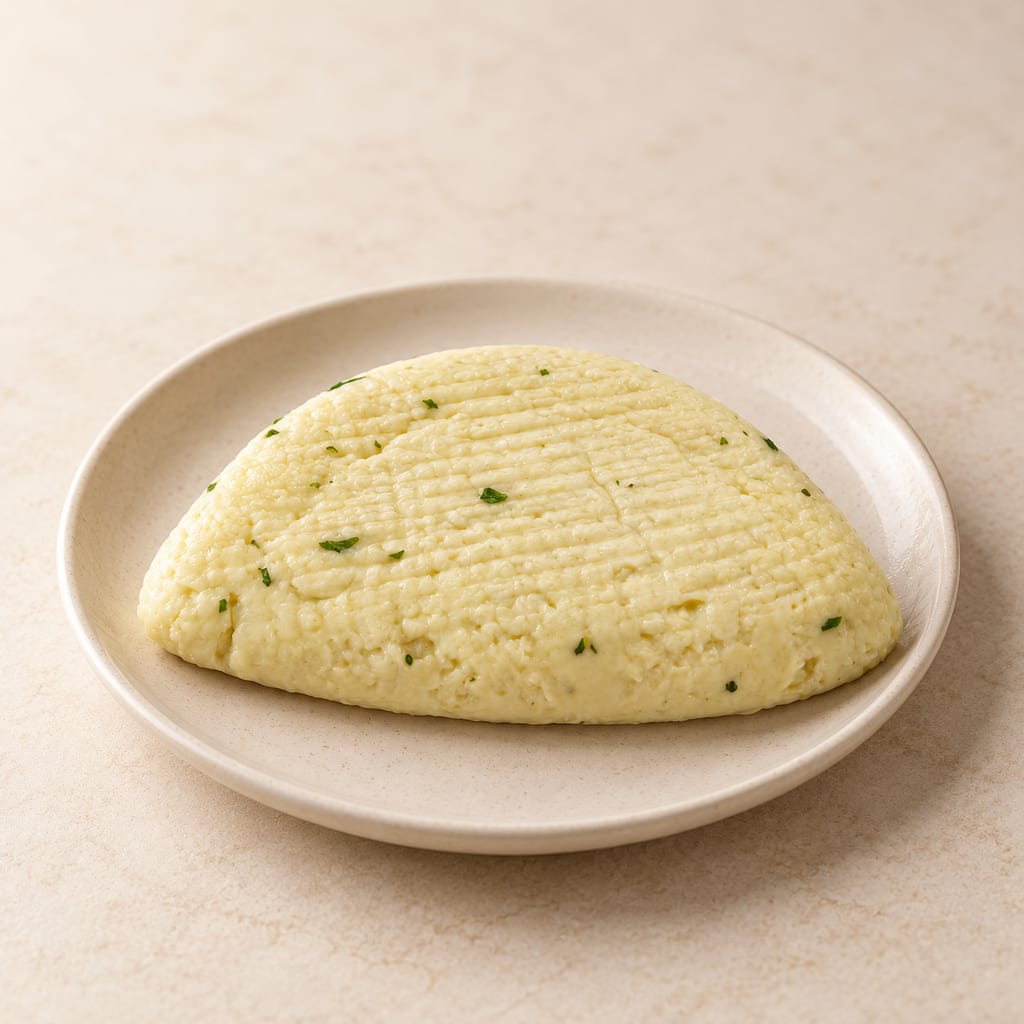
Halloumi, cow-milk method
A firm cow-milk cheese cooked in hot whey, salted and folded with optional mint. This fresh halloumi keeps its shape when grilled or pan-fried.
 FermenteaWhere food goes to change
Cultures
A freeze-dried mesophilic starter for cultured buttermilk, combining acid and aroma bacteria with a lactose carrier. Also named in specific fresh-cheese methods.
C21 is a named commercial starter for cultured buttermilk. The small packet contains freeze-dried bacteria with lactose as a carrier. Added to suitable milk, the organisms resume activity and change the liquid’s acidity, aroma and body. The packet is the ingredient; the thickened milk it produces is a separate food.
Buttermilk itself has two related meanings. Churning cream into butter leaves a liquid called buttermilk. Cultured buttermilk can instead be made by inoculating milk, commonly skim milk, without making butter at all. C21 belongs to this second route as a purchased starter, although its bacterial family has a much older connection with ripened cream and butter flavour.
The code matters when choosing it. A carton of cultured buttermilk, a packet of yoghurt culture and another supplier’s mesophilic blend are different materials. Their organisms, concentration and format can differ even when they all sour milk. A recipe that specifies C21 identifies a particular product rather than giving a general instruction to add something fermented.
Cream ripening joined the management of milk to the making of butter. Cream could develop acidity before churning, and the organisms growing in it helped determine the resulting flavour. Selecting a good starter offered a way to influence that change rather than relying entirely on the bacteria arriving with each delivery.
Vilhelm Storch’s 1893 American patent describes selecting flavour-producing bacteria from butter, ripened cream or buttermilk, growing them separately, and introducing a culture into heated milk or cream. Ripening preceded churning. Butter flavour was therefore treated as a result of microbial activity that could be selected and cultivated, alongside the mechanical work of gathering fat into butter.
The organisms in the patent were described through their behaviour and appearance using the methods of their time. They cannot simply be assigned the modern species names printed on a C21 packet. The connection is a history of deliberate starter selection, rather than a documented family tree for this particular blend.
By 1914, H. L. Russell and E. G. Hastings described both liquid and dry commercial starters in their dairy-bacteriology textbook. Liquid cultures carried growing bacteria in a nutrient medium. Dry preparations combined a culture with an absorbing material, including milk sugar, milk powder or starch, before drying at low temperatures. Drying offered a way to hold bacteria in a dormant form until use.
Their account also described the practical attraction of repeatability. A butter maker could introduce the same selected kinds of bacteria from day to day, while a naturally fermented household starter could change. Heating the cream before inoculation helped the chosen culture compete with the organisms already present. These were important developments in dairy practice, although the period’s broad claims about microbial control do not supply modern food-safety instructions.
The C21 description sheet lists Lactococcus lactis subsp. lactis, Lactococcus lactis subsp. cremoris, Lactococcus lactis subsp. lactis biovar. diacetylactis, and Leuconostoc mesenteroides subsp. cremoris. These are the names on that sheet. It calls the blend a mesophilic aroma culture, intended to produce a heavy-bodied cultured product with diacetyl flavour and carbon dioxide.
Mesophilic describes a culture suited to moderate dairy-fermentation conditions. It distinguishes this blend from the thermophilic cultures associated with warm-incubated yoghurt. The words identify different biological requirements; they do not make one household incubation schedule suitable for both.
Bacterial names can change while older names remain on technical sheets. Lactococcus cremoris is now recognized as the correct species name for the organism formerly named Lactococcus lactis subsp. cremoris. Retaining the printed formulation helps identify the purchased product, while the newer name helps a reader follow current microbiology. Neither name supplies the undisclosed strain identities or proportions within C21.
Milk contains lactose, the sugar used by its lactic acid bacteria. As fermentation produces lactic acid, acidity increases and the conditions around casein particles change. The particles aggregate into a protein network. That network gives cultured milk a soft set, rather than leaving it as the original freely flowing liquid.
Handling then changes the body. A gel left intact behaves differently from one broken by stirring. Milk composition and its treatment before inoculation also influence texture, so the starter cannot account for every difference between a thin drink and a thick spoonful. The living culture works within a prepared dairy material.
Aroma formation involves additional metabolism. Diacetyl supplies a buttery note in cultured dairy foods. In experimental buttermilk, the activity of an aroma-producing Leuconostoc strain depended on its surroundings and its association with lactococci. Citrate availability and the way the fermented milk was handled influenced the measured aroma compounds. Acid production and buttery aroma were therefore connected without being interchangeable measurements.
That experiment used selected strains, including Leuconostoc mesenteroides subsp. cremoris 91404, rather than C21. Its findings explain why culture composition and process both matter; they are not a direction to add citrate or change a packet’s instructions. C21’s own technical description identifies diacetyl and carbon dioxide as product characteristics without specifying their amounts in a finished household batch.
A direct-set packet introduces concentrated culture into the milk for the intended preparation. It removes the separate step of growing a mother starter and then measuring part of that starter into the working batch. This makes the format different from the liquid starters described in older dairy practice, even though both introduce living organisms.
Making a mother culture involves more than keeping a little sour milk. Each propagation gives organisms another opportunity to grow at different rates, and each transfer introduces another handling stage. Temperature, inoculum and contamination can alter the balance. Commercial direct-inoculation cultures make that preliminary cultivation a supplier’s task rather than a necessary household operation.
The distinction also explains why packet quantities and liquid-starter volumes cannot be exchanged by intuition. A spoonful of hydrated cultured milk carries water, milk solids and a population shaped by its own fermentation. A dry commercial packet has a different concentration and carrier. Use the amount and format specified for the actual preparation rather than converting between them by appearance.
C21 appears as an optional ingredient in a modern cow-milk halloumi method. The formula offers it or MA4002 before adding rennet and gives little time for acid development. Rennet sets the milk; cutting, heating, draining and later cooking in whey develop the curd through a very different sequence from making a cultured-milk drink.
The optional starter therefore has a limited place within this particular make. It is not presented as the cause of halloumi’s characteristic cooked-curd structure. The recipe author associates its inclusion with an enzymatic contribution during short keeping, but that explanation does not establish a general preservation treatment or a requirement for every halloumi.
The same recipe presents its all-cow-milk batch as an adaptation of a cheese associated with Cyprus. That food association does not locate the origin of the C21 strains. A contemporary American-supplied packet can participate in an adapted recipe without becoming evidence of an old Cypriot starter tradition.
The same supplier uses C21 in cream cheese, where culture has more time to develop acidity before the curd is drained. Milk provides the principal curd-forming proteins, cream changes the fat content, and a small rennet addition assists coagulation. Removing whey then concentrates the mixture into a spreadable cheese.
This makes a useful comparison with the halloumi application. Sharing a starter does not make two cheeses the same fermentation. The balance of milk and cream, the amount of enzyme, the acid development and the treatment of the curd give the culture different surroundings and the finished food a different structure.
A separate Creole cream cheese formula also names C21, with lower-fat milk and added cream. Its drained curds are served with cream, including as a breakfast or dessert food. Here the culture contributes to a fresh, tangy dairy preparation eaten with its soft curd recognizable, rather than a cheese that is folded after cooking in whey. These are documented uses of the commercial starter, each with its own complete method.
A starter supplies organisms that grow and produce acid. Rennet supplies enzymes that act on milk protein. Both can appear in one cheese formula because they do different work: introducing the culture does not make a measured rennet addition redundant, and adding rennet does not establish the intended acid development.
After coagulation, a cheesemaker cuts or drains the gel to separate whey from concentrated milk solids. The size and treatment of the curd, the retained moisture and later salting help define the food. These stages explain why a packet bearing the word buttermilk can also enter a cheese recipe. Its name describes its commercial identity and principal application, while the cheese method assigns it a particular role among other ingredients.
The older trade in starters already crossed this boundary between foods. Russell and Hastings discussed acid-forming organisms in relation to buttermilk, cottage cheese and cream ripening. Their examples place selected dairy fermentation within everyday food production as well as butter making. Modern product codes make the purchased culture more specific, but the practical question remains what change its organisms are intended to bring about in the milk.
Keep this culture dry and frozen as directed by its supplier, and check the package’s best-used-by information. The description sheet says the powder should remain free-flowing and directs users to discard a packet that has become a solid mass. Its storage specification belongs to the packaged culture, rather than the milk or cheese made with it.
The sheet also instructs direct addition to milk while avoiding foam and air introduction. A dry packet offers convenience, but opening it still brings a handling step into the dairy process. Protect the culture and the milk from contamination, use clean equipment and follow the complete recipe’s sequence. Keeping an unopened culture correctly does not establish a finished food’s storage life.
C21 contains lactose as its carrier, and both its technical sheet and current supplier listing declare milk. This matters even though only a small quantity of culture enters a much larger milk batch. The carrier belongs on the ingredient description rather than disappearing behind the bacterial names.
Milk allergy concerns reactions to milk proteins. A culture packet’s ingredient and allergen declarations remain relevant to anyone managing that allergy; fermentation should not be treated as a reason to disregard them. The culture also does not turn its milk substrate into a food with an established allergen-free status.
Match the product code, format and package directions to the recipe. The C21 sheet identifies the United States as its country of origin, but gives no strain-isolation places or commercial introduction date. Its present product geography can therefore be stated more precisely than its deeper microbial provenance.
For a dairy maker, useful preparation starts with knowing what the milk and starter are. Culture activity, milk quality, processing and curd handling all affect the result. Commercial selection helps make fermentation repeatable, while the finished food still depends on the entire method. Pasteurized milk where specified, clean contact surfaces, appropriate cooking and cooling, and protection from contamination remain parts of dairy handling rather than benefits supplied by the packet alone.
Contains milk; lactose carrier.
The commercial description sheet declares USA origin. This is current product manufacture, not strain-isolation geography.
The blend introduction date and strain-isolation places are not supplied.
A firm cow-milk cheese cooked in hot whey, salted and folded with optional mint. This fresh halloumi keeps its shape when grilled or pan-fried.

A refined common-wheat flour blended for a broad range of baking; its protein and behavior vary with wheat, milling and market.

Toasted almonds are whole sweet almond kernels dry-roasted until golden to brown. Heat replaces their marzipan note with a roasted, nutty one; they thicken and flavour romesco.
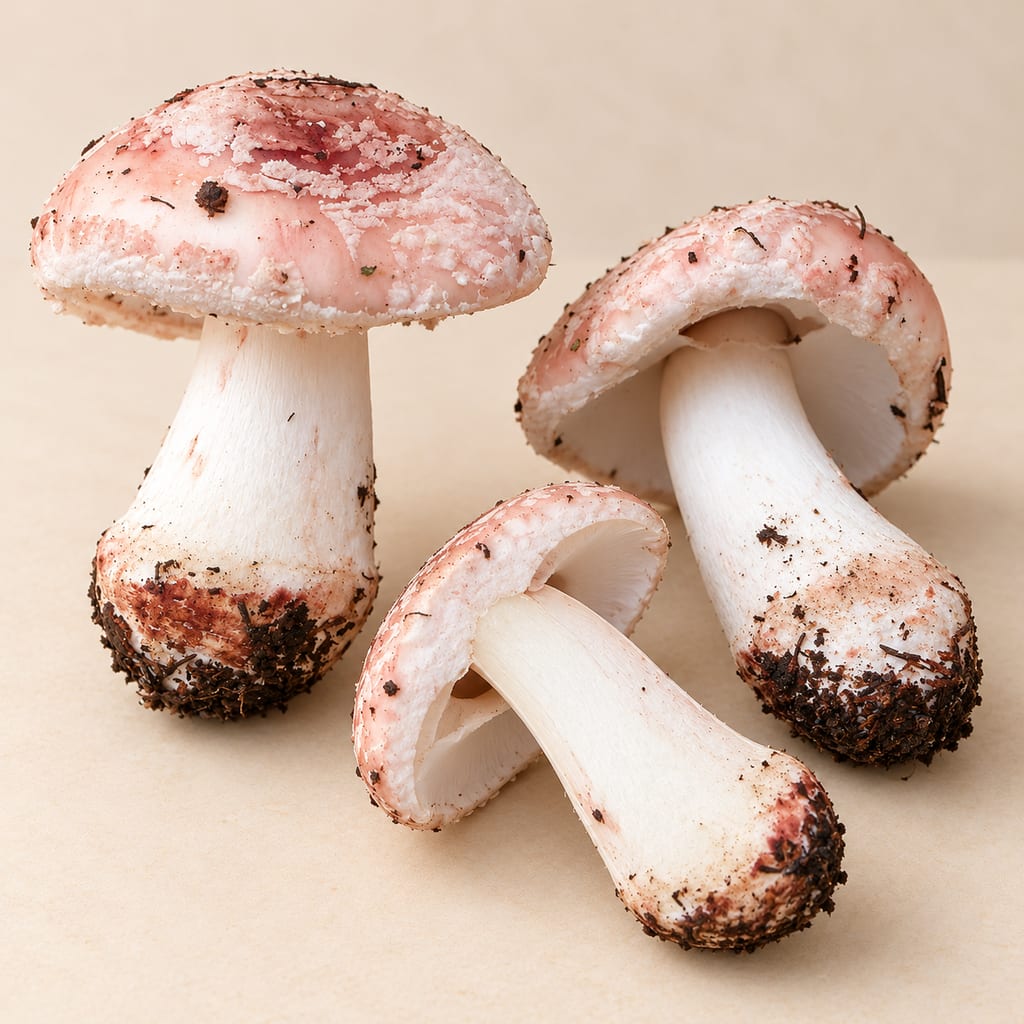
Amanita novinupta is a western North American blusher, a forest mushroom recorded as food in Mexico, and one that must be cooked because its raw flesh is toxic.
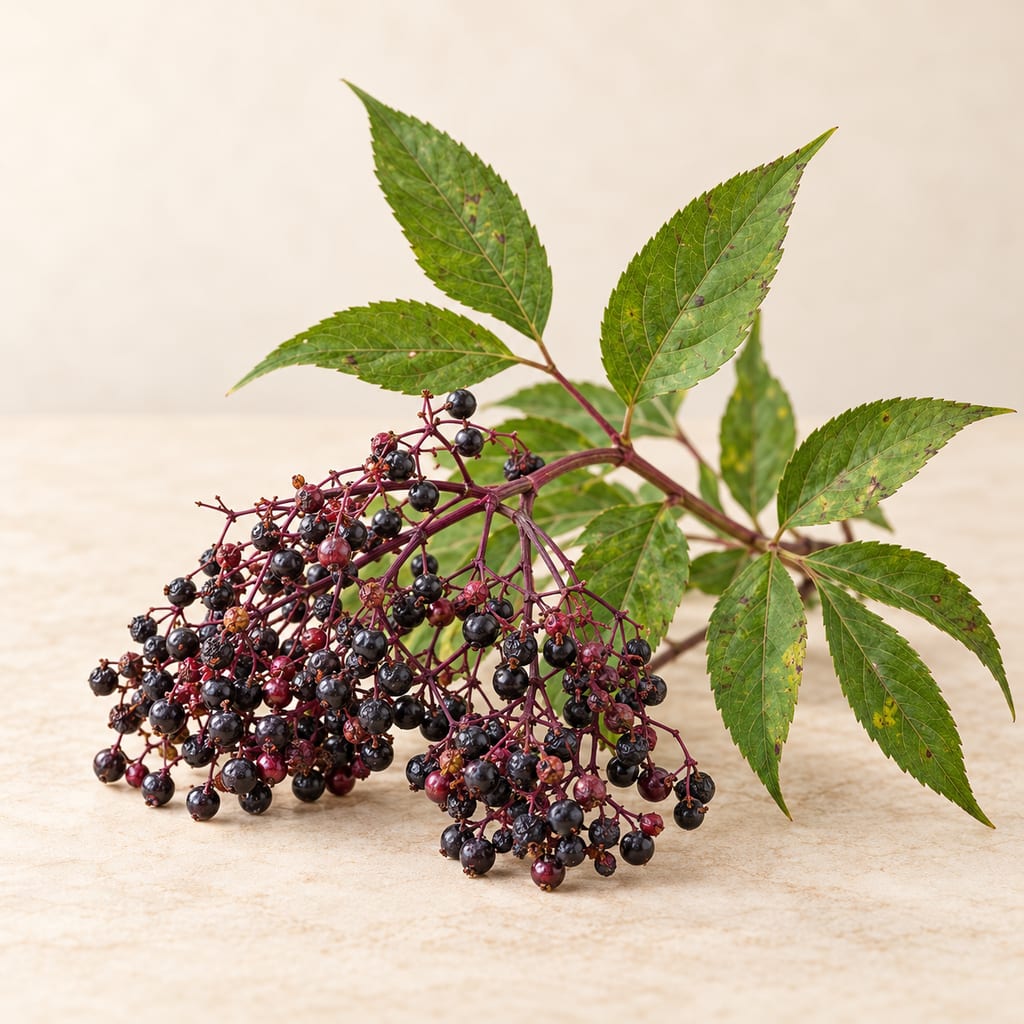
Sambucus canadensis is the accepted name used here for American elderberry. Missouri production guidance and named-cultivar studies give useful regional growing information, while food and analytical sources leave process questions open.
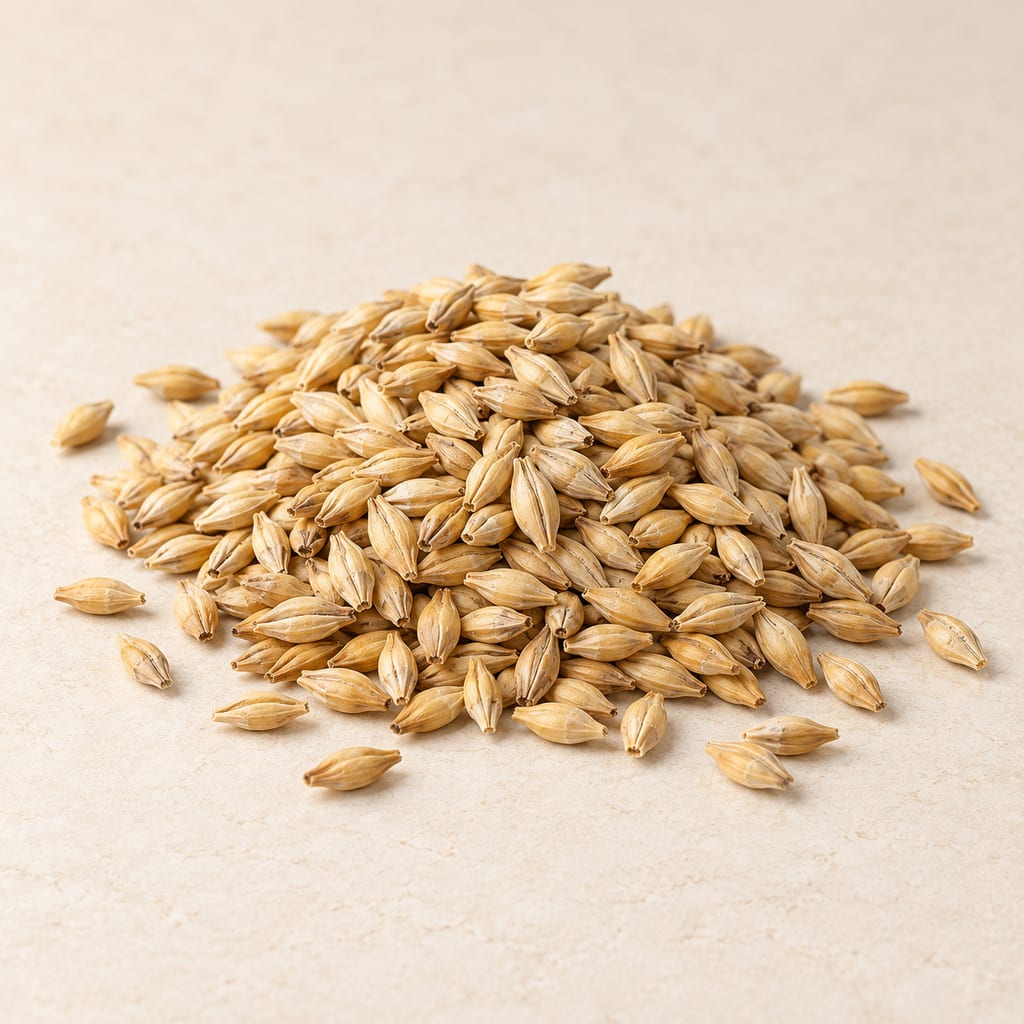
A lightly kilned brewing base made from two-row barley. It supplies starch and enzymes for the mash, with the maltster’s product and lot analysis defining its brewing properties.

Ripe avocado flesh is the soft, buttery, fat-rich pulp of Persea americana, eaten raw. It is low in acid, so it is a fresh ingredient that needs care in chilled dishes.
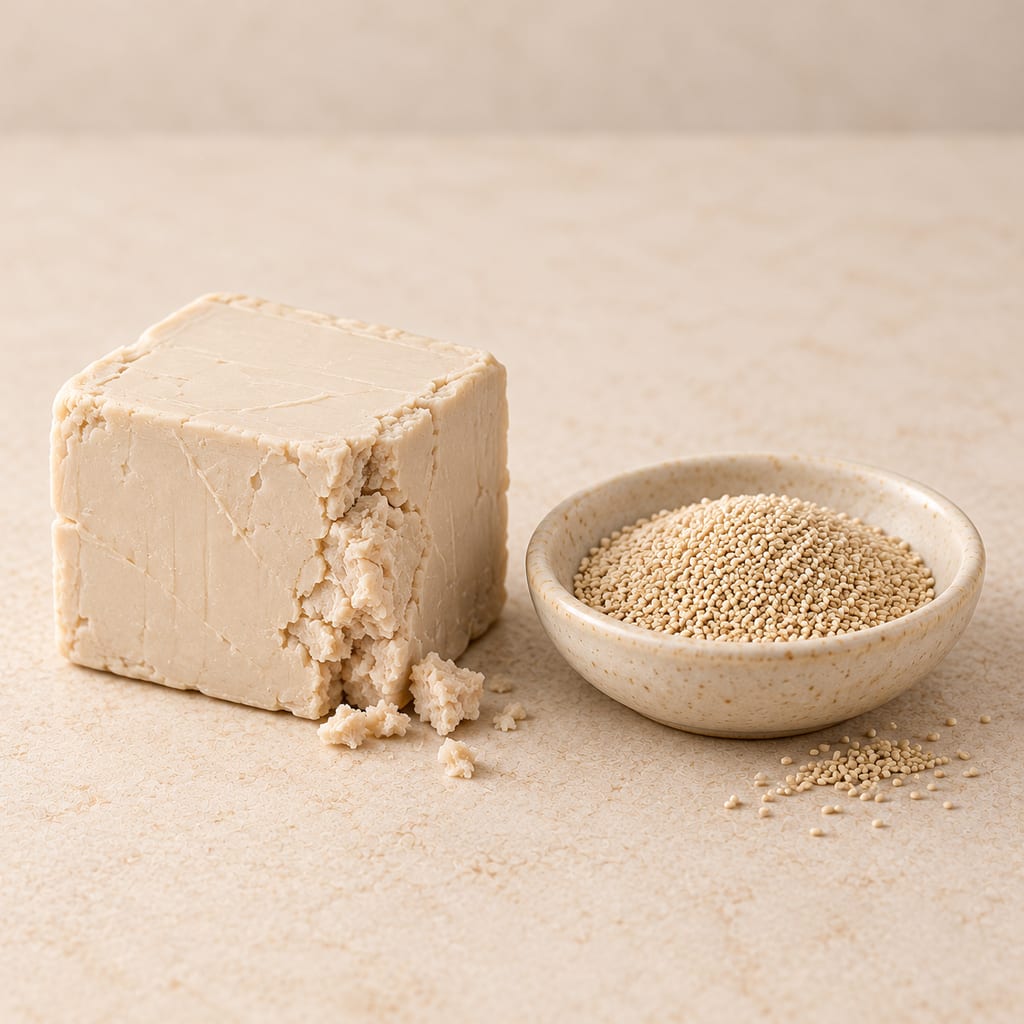
Baker's yeast is a cultivated living leavener, commonly sold fresh or dried. In dough, selected Saccharomyces cerevisiae cells make gas that can raise bread.
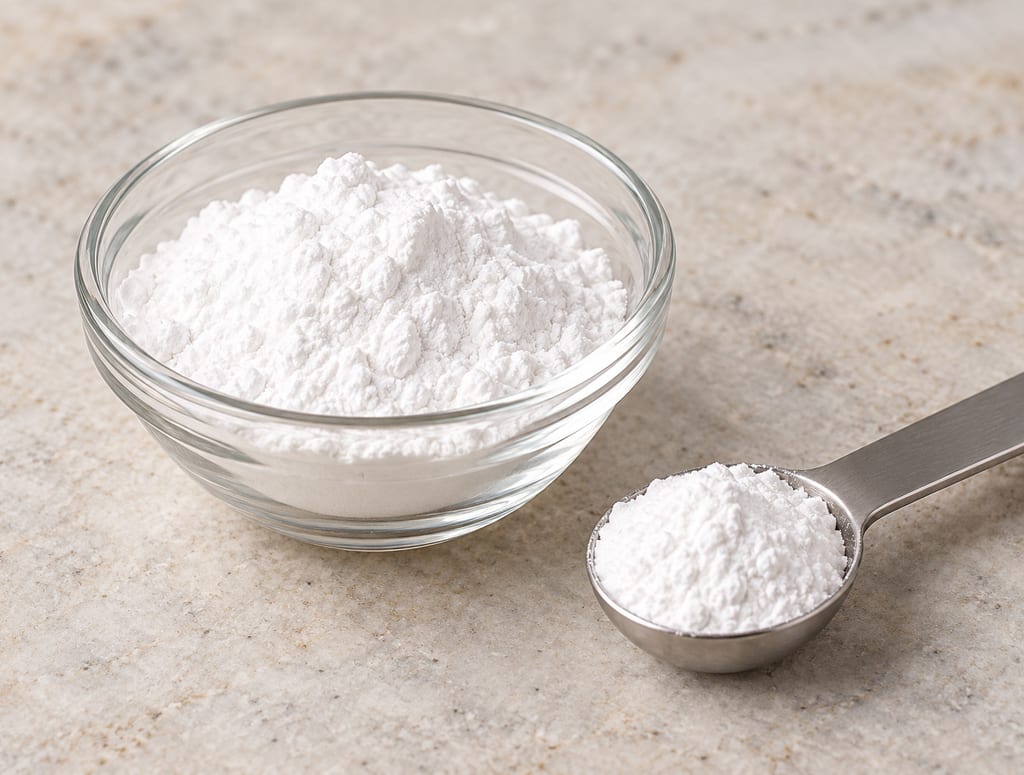
Baking powder is a dry chemical leavener that combines bicarbonate with acid-reacting ingredients and a carrier. Moisture and heat release carbon dioxide for quick breads, batters and griddle cakes.
No community contributions have been published for this entry yet.
Sign in to contribute. Published comments and photos are free to read.
Dairy Connection, Inc.
Product Description Sheet: NEC-C21 Buttermilk Starter Culture 1 Dose / CH-3224-DCProduct specification lists four organisms, a lactose carrier and milk allergen; describes a mesophilic aroma blend producing diacetyl, carbon dioxide and body, with direct-addition and dry-freezer handling instructions. The printed update string 05.12.23 has no stated date convention. USA is the declared country of origin; strain provenance and a universal dose are not supplied.
Cited in: A culture for milk, supplied dry; Four names describe the commercial blend; Acid builds the body; aroma gives another dimension; The packet needs dry, cold storage; Lactose carrier and milk declaration matter; Choosing the product for the intended food
New England Cheesemaking Supply Company
Buttermilk Starter CultureCurrent C21 commercial identity, direct-set format, listed composition, lactose, milk declaration, freezer instruction and buttermilk application.
Cited in: A culture for milk, supplied dry; The packet needs dry, cold storage; Lactose carrier and milk declaration matter
USDA National Agricultural Library
ButtermilkDistinguishes churn by-product from milk inoculated to make cultured buttermilk; no definition acidity converted into a home control.
Cited in: A culture for milk, supplied dry
United States Patent Office
Method of Making Butter, US495381AVilhelm Storch’s patent describes selecting flavour-producing bacteria from dairy foods, cultivating them separately and adding them to heated cream or milk before ripening and churning. The historical organisms are not identified as modern C21 strains.
Cited in: Butter makers selected flavour before packets became familiar
H. L. Russell, Madison, Wisconsin
Outlines of Dairy Bacteriology, 10th editionContemporary primary textbook: cream-ripening starter selection, commercial liquid/dry starter formats, absorbing carriers and dormant dry cultures, repeatability and competing flora, acid-forming organisms in buttermilk/cottage cheese. Historical medical and broad safety claims not adopted.
Cited in: Butter makers selected flavour before packets became familiar; Direct addition replaces a separate starter-making stage; Starter and coagulant make different changes
LPSN, Leibniz Institute DSMZ
Species: Lactococcus cremorisCorrect name Lactococcus cremoris and older L. lactis subsp. cremoris synonym; no inference of a changed C21 formulation.
Cited in: Four names describe the commercial blend
Journal of Dairy Science
A Method to Use Leuconostoc mesenteroides ssp. cremoris 91404 to Improve Milk FermentationsThe original abstract describes Leuconostoc 91404 with lactococci in experimental buttermilk. Citrate, acidity and handling affected measured aroma. The experiment did not test C21 or establish a household citrate dose, pH target or storage limit.
Cited in: Acid builds the body; aroma gives another dimension
Tetra Pak, Dairy Processing Handbook
Fermented Milk ProductsLactose-to-lactic-acid conversion; acidity causes casein aggregation and protein network; handling/composition affect fermented-milk texture; mesophilic versus yoghurt culture context. Numeric industrial processes and speculative first-origin narrative omitted.
Cited in: Acid builds the body; aroma gives another dimension
Tetra Pak, Dairy Processing Handbook
Cultures and Starter ManufactureBulk versus concentrated direct-inoculation cultures, cultivation and propagation stages, contamination and balance of organisms affected by conditions. No industrial doses or temperatures prescribed.
Cited in: Direct addition replaces a separate starter-making stage; Choosing the product for the intended food
New England Cheesemaking Supply Company
Halloumi Cheese Making RecipeModern cow-milk adaptation names optional C21 or MA4002; short acid development before rennet, curd handling/heating, whey cooking, folding and salting. Author enzyme explanation scoped to this recipe, not safety control. Cypriot food association does not establish culture provenance.
Cited in: A short role in a cow-milk halloumi method
New England Cheesemaking Supply Company
Cream Cheese RecipeC21 used in milk/cream fresh cheese with small rennet addition, acid development and whey drainage; milk protein and cream fat have different roles. No numerical formulation transferred into ingredient guidance.
Cited in: A longer role in soft fresh cheeses
New England Cheesemaking Supply Company
Creole Cream Cheese RecipeSupplier contemporary method uses C21 in lower-fat milk with cream; soft drained curds served with cream as breakfast/dessert. Its unsupported detailed origin history not adopted.
Cited in: A longer role in soft fresh cheeses
US Food and Drug Administration
Food AllergiesMilk allergen and protein-mediated allergy; importance of ingredient/allergen declarations.
Cited in: Lactose carrier and milk declaration matter
New Mexico State University Cooperative Extension
Making Homemade Cheese, Guide E-216Distinct starter/rennet roles, curd/whey separation and later handling; clean surfaces, appropriate cooking, cooling and contamination control. Its numerical home pasteurization and rennet equivalence claims not adopted.
Cited in: Starter and coagulant make different changes; Choosing the product for the intended food