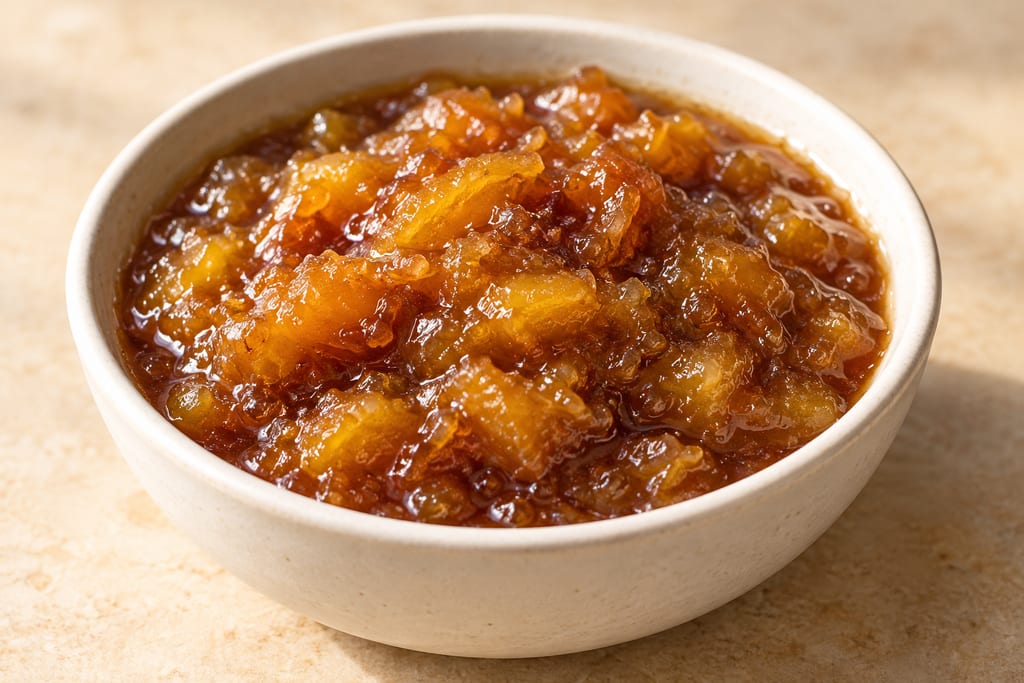
Lapsi ko achar, Suryabinayak pulp method
A Suryabinayak municipal recipe cooks ripe lapsi pulp in sugar syrup with cloves, cardamom, cinnamon, sukumel and ginger juice to make a sweet Nepali achar.
 FermenteaWhere food goes to change
Spices and aromatics
Fresh liquid pressed from ginger rhizome, used in a small amount to season a documented Nepali lapsi achar; distinct from grated ginger, powder and sweetened ginger beverages.
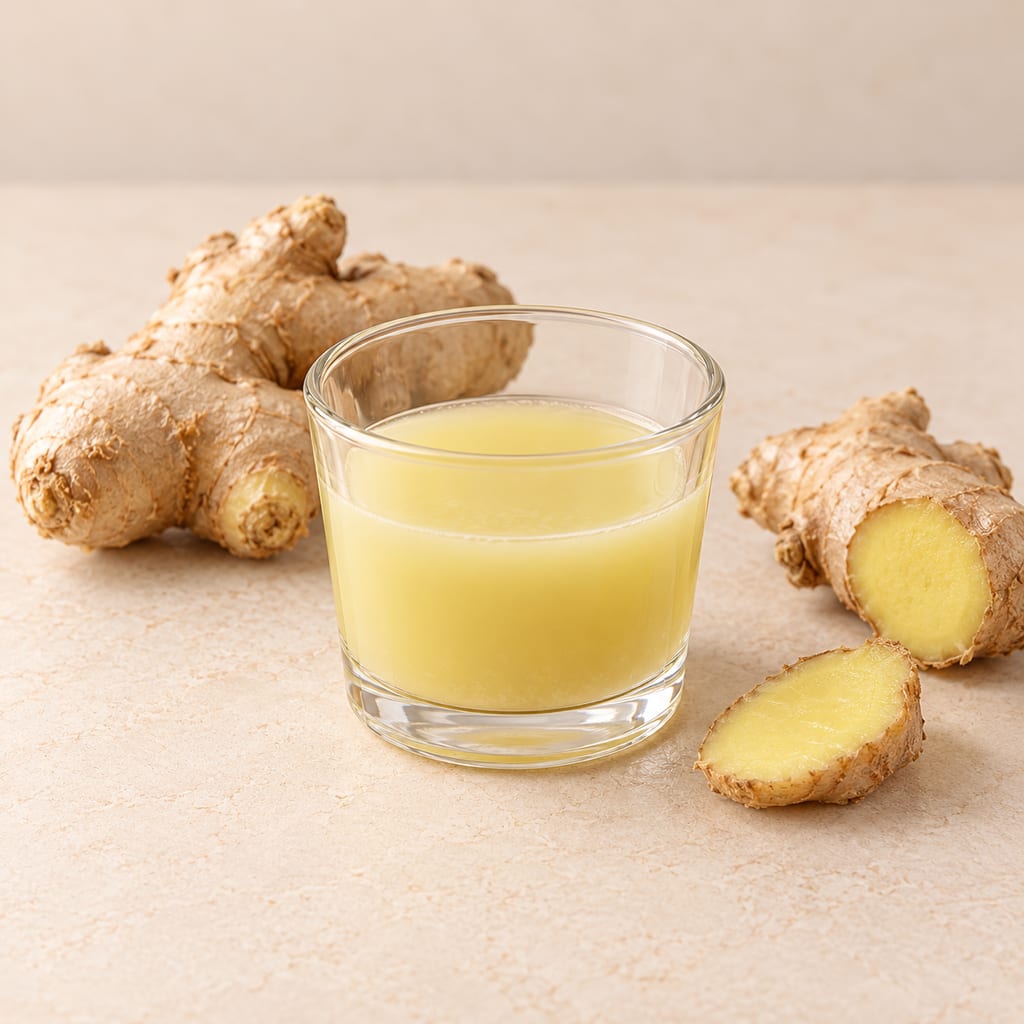
Ginger juice is the liquid pressed from fresh ginger rhizome. It carries ginger's sharpness into food without asking a diner to chew a shred of its fibrous flesh. The rhizome is the thick underground stem of *Zingiber officinale*, the accepted name in Kew's plant record. Calling it a root is convenient kitchen language; identifying the rhizome is more useful when choosing what to buy and press. This ingredient is the expressed liquid, not a tea steeped from slices, a bottled sweet ginger drink, or dried ginger powder mixed back into water. Those preparations can all taste of ginger, but their strength, texture and composition differ.
The difference shows up in the Nepali lapsi achar instructions published by Suryabinayak's agricultural service. Alongside ripe lapsi pulp, sugar, water and four whole or ground spices, the list specifies अदुवाको रस (*aduwako ras*), ginger juice, at half a gram. The ginger is a small seasoning in a much larger sweet and tart fruit preparation. It is not a second fruit base, and there is no direction to replace the recipe's measured water with juice. The same instructions make a syrup, strain it, cook the fruit and spices together, then bottle the result. Juice can be mixed into that syrup evenly without leaving conspicuous ginger threads among the pulp.
An experimental food study illustrates the physical distinction. Its authors washed and sliced mature fresh rhizomes, crushed them, pressed out liquid, separated settling starch by centrifugation and freeze-dried the supernatant for an ice-cream experiment. A home cook needs none of that equipment to understand the key operation: crushing breaks the juicy rhizome; pressure separates a flavorful liquid from most of its solid fibres. The laboratory's dried powder is a further processed product and should not be treated as the fresh juice itself.
Lapsi is a sour fruit familiar in Nepali preserves. In the Suryabinayak account, its ripe pulp leads the achar formula: one kilogram pulp, one kilogram sugar and half a litre of water. Clove, large cardamom, cinnamon and green cardamom are grouped at two grams each; the ginger juice is listed separately at half a gram. The disproportion is part of the recipe's character. A little pressed ginger can lift the fruit and warm spices, while the cooked fruit and syrup still define the spoonful. Recasting the juice as a major liquid would change both the balance and the cooking, so the printed figure deserves to remain visible even if a modern cook measures the tiny amount by a practical kitchen approximation.
The page's cultural evidence is specific rather than universal. It describes lapsi achar as a familiar Nepali preparation and says it is used beyond Nepal in Sikkim and Darjeeling. It does not establish when ginger juice first entered this preparation or prove every household makes it the same way. Nor does Kew's botanical publication date for *Zingiber officinale* date the food. Kew records the accepted species name as first published in 1807 and a native range from the eastern Himalaya toward south-central China; the agricultural page documents one food use in Nepal. These facts describe plant identity and a contemporary named preparation, not a continuous history of this exact juice recipe since 1807.
Read the Nepali instructions in the order they give. Sugar and water become a syrup, the syrup passes through a clean thin cloth, then lapsi pulp and the listed spices cook while stirred for roughly ten to fifteen minutes. Clean bottles are filled and closed. No measured final acidity, sterilisation schedule or tested storage temperature is provided. Those omissions do not erase the culinary observation: pressed ginger is treated as a seasoning that can travel through a strained syrup and coat tart fruit. The juice belongs to the aromatic architecture of the achar, while sugar, water and heat do the large-scale work of making a thick preserve.
Fresh ginger is firm and densely fibrous. Grating or crushing opens many cut surfaces, and squeezing those fragments through cloth or a fine strainer gives a liquid that can be measured, stirred or poured. This is especially convenient in a smooth syrup, sauce or drink: a small addition can be spread through the whole mixture before it is heated or served. The damp shreds left behind still smell of ginger, which is a reminder that pressing is a separation, not complete removal of all flavor from the rhizome. Pushing harder may recover more liquid and finer particles, while a coarser squeeze may leave a clearer, weaker stream. Neither appearance alone is a reliable measure of pungency.
One primary study on ginger processing follows the juice farther than a kitchen would. It crushed harvested rhizomes in a mill, used a hydraulic press and then centrifuged to separate starch before freeze-drying the liquid for ice cream. The account makes clear that starch can travel into the first pressed liquid and settle later. A glass of freshly expressed ginger juice may therefore turn cloudy or leave sediment, rather than behaving like a transparent flavored water. Stirring the sediment back in or straining more finely changes mouthfeel; it does not convert the ingredient into a fundamentally different plant. For the lapsi achar, which includes fruit pulp and spices, absolute clarity is not the point.
A more recent experiment compared juice pressed from fresh and older ginger rhizomes after different electric-field treatments. Its untreated controls and treated samples had different measured volatile and pungent-compound concentrations. The useful kitchen lesson is modest: the amount extracted depends on the rhizome and the way its cells are broken, so one spoonful from one batch need not taste as strong as the next. The electrical treatment and its numerical yields are laboratory conditions, not a home prescription. Taste the fresh juice before adding it, especially when the intended quantity is small, and keep the named recipe's ratio in view.
Ginger's smell and its bite do not come from a single compound. A study of expressed juice measured volatile aroma components, including citral and zingiberene; another tracked gingerols and shogaols, the pungent compounds often discussed when fresh ginger is heated. The terms are useful because aroma can escape with steam while pungency can remain in a cooked mixture. A juice that smells brilliantly fresh over the grater may smell different after simmering in syrup, even though the finished achar still carries ginger warmth. That is an explanation of the process, not a promise that every volatile behaves identically in every pan.
The heat experiment compared fresh and dried ginger under defined dry and moist treatments. It found gingerols converting toward shogaols as heat exposure increased, with the amount depending on temperature, time and sample form. These were controlled treatments, including far longer or hotter exposures than a brief fruit-syrup simmer. It would be misleading to take a number from that study and assign it to Suryabinayak's ten-to-fifteen-minute achar. The food-book conclusion is narrower: fresh juice and cooked juice need not have exactly the same pungent profile, and cooking time matters when judging the finished flavor. Add the juice at the point a specific recipe instructs, then taste the finished preparation rather than trying to infer its bite from raw juice alone.
The ginger-juice milk-curd experiment is another window onto what the liquid contains. Its authors measured ginger-juice volatiles and followed changes as milk curd formed. That dessert process is distinct from lapsi achar, but it demonstrates that juice has culinary functions beyond being a sharp flavoring. In hot milk, ginger juice can participate in coagulation under the recipe's conditions; in lapsi syrup its role is aromatic. One ingredient can be used for quite different effects because the surrounding food matrix, dose and temperature change what the cook sees.
Choose a firm, fresh rhizome without soft wet patches, wash away clinging soil, and trim damaged parts. Fine grating followed by squeezing in a clean cloth is a straightforward small-batch way to approximate the pressing step documented in food research. A small hand press or mortar and strainer serves the same purpose. Work over a bowl so the first drops are not lost. If the rhizome is very dry and stringy, expect less juice than from a plumper piece; use the expressed result as the ingredient rather than treating a fixed weight of whole ginger as equivalent to a fixed weight of liquid.
The Suryabinayak formula's half gram is exceptionally small beside its kilogram of fruit. A scale capable of resolving that amount is clearer than a spoon conversion, because a drop's weight varies with the tool and the liquid's suspended particles. If preparing a smaller batch, scale the juice with the pulp and other ingredients instead of adding a large splash because the number looks implausibly tiny. The published line gives the quantity, and it is the only supported quantity for this particular linked preparation. The source does not give a replacement amount for bottled ginger juice, concentrate, ginger paste or powder; each changes water and solids as well as ginger strength.
Press just before use when possible. Freshly exposed ginger releases a vivid aroma at the moment it is grated, and the small portion can be mixed directly into the syrup or fruit mixture. If straining, distinguish an intentional clear juice from a thick slurry. A fine strainer retains most visible fibres; cloth can remove still finer particles. In an achar with pulp, a little sediment is less noticeable than in a transparent drink. Either way, measure after pressing if the formula calls for a mass of juice. The fibrous leftover is not part of that mass, and adding it back would change the mouthfeel the separate ingredient name is trying to specify.
The linked lapsi achar offers one precise use: a tiny amount of juice among fruit, syrup, clove, cardamoms and cinnamon. Lapsi's sourness and the large dose of sugar frame the ginger, so a diner meets it as a warm edge to the fruit rather than a mouthful of ginger fibre. The syrup is strained before fruit and spices cook; using juice instead of grated ginger helps preserve that smoother preserve-like texture. This is a practical reading of the ingredient list and sequence, not an extra instruction printed by the municipality. The named recipe remains the authority for its proportions.
Beyond that particular fruit, pressed ginger can be stirred into other mixtures where even dispersal matters. The ice-cream research demonstrates a technically different route: pressed juice was separated and freeze-dried, then used as flavoring in a frozen dairy mixture. The milk-curd research puts ginger juice directly with milk and heat to develop a different texture. Those studies show possible food uses, but their processed powder and curd conditions should stay attached to their own methods. Fresh juice in a fruit syrup is neither interchangeable with freeze-dried extract nor guaranteed to set milk when merely poured in.
Think of the ingredient as a liquid way of carrying a fresh rhizome's character. It is useful when the dish should feel smooth, when a tiny amount must distribute through a larger batch, or when the cook wants to adjust ginger without adding strands. Whole ginger slices suit a broth that will be strained; grated ginger suits a chutney that welcomes texture; dried powder brings another form and aroma. Pressed juice occupies the narrow space between them. Its yield and intensity move with the rhizome, so the cook's control is to press a little, measure the expressed liquid and taste it in the food where it will actually be eaten.
On a label or shopping list, “ginger juice” can mean more than the ingredient used here. Commercial ginger beverages may be diluted or sweetened; a concentrated shot may include other fruits; a grated-ginger slurry may contain most of the rhizome's fibres. Those are legitimate foods, but the Suryabinayak wording calls for *ras*, juice, as a separately measured seasoning. For this page, the identity is fresh expressed ginger liquid from *Zingiber officinale*. If using a packaged product, read its ingredients and concentration before deciding that the measured amount will behave like freshly pressed juice. The preparation should not inherit a species, provenance or sweetness claim the source does not give.
The botanical and culinary records answer different questions. Kew supplies the accepted plant name and a broad native range; the Nepali agricultural page supplies a particular lapsi achar and an amount of juice. Experimental food papers explain how pressing, starch separation and heating can change the liquid, but they do not document the origin of the Nepali recipe. None of those sources yields a defensible first century for ginger juice as a culinary ingredient. Its history period therefore remains unknown here. The modern documented use is concrete enough to cook from without turning a plant-name publication date into an invented food tradition.
The most important distinction survives all those qualifications: this is a pressed fresh ingredient that disappears into a dish while leaving flavor behind. Its small role in the lapsi achar is exactly why it deserves a separate name. Without that distinction, one might add grated fibrous rhizome to a smooth preserve, pour in a sweetened bottled drink, or treat a pinch of dried powder as the same quantity. Each might make a food worth eating, but each is a variation with its own texture and concentration. Keeping the juice's physical form in view lets the recipe's fruit, syrup and spices stay in the proportions its author documented.
Suryabinayak agricultural page documents ginger juice in lapsi achar; this does not assert the juice's origin or a national uniform method.
A Suryabinayak municipal recipe cooks ripe lapsi pulp in sugar syrup with cloves, cardamom, cinnamon, sukumel and ginger juice to make a sweet Nepali achar.
Follow milk into cheese, cultured drinks, butter, dried curds and sweets: a journey through the animals, seasons and household decisions behind the world's dairy foods.
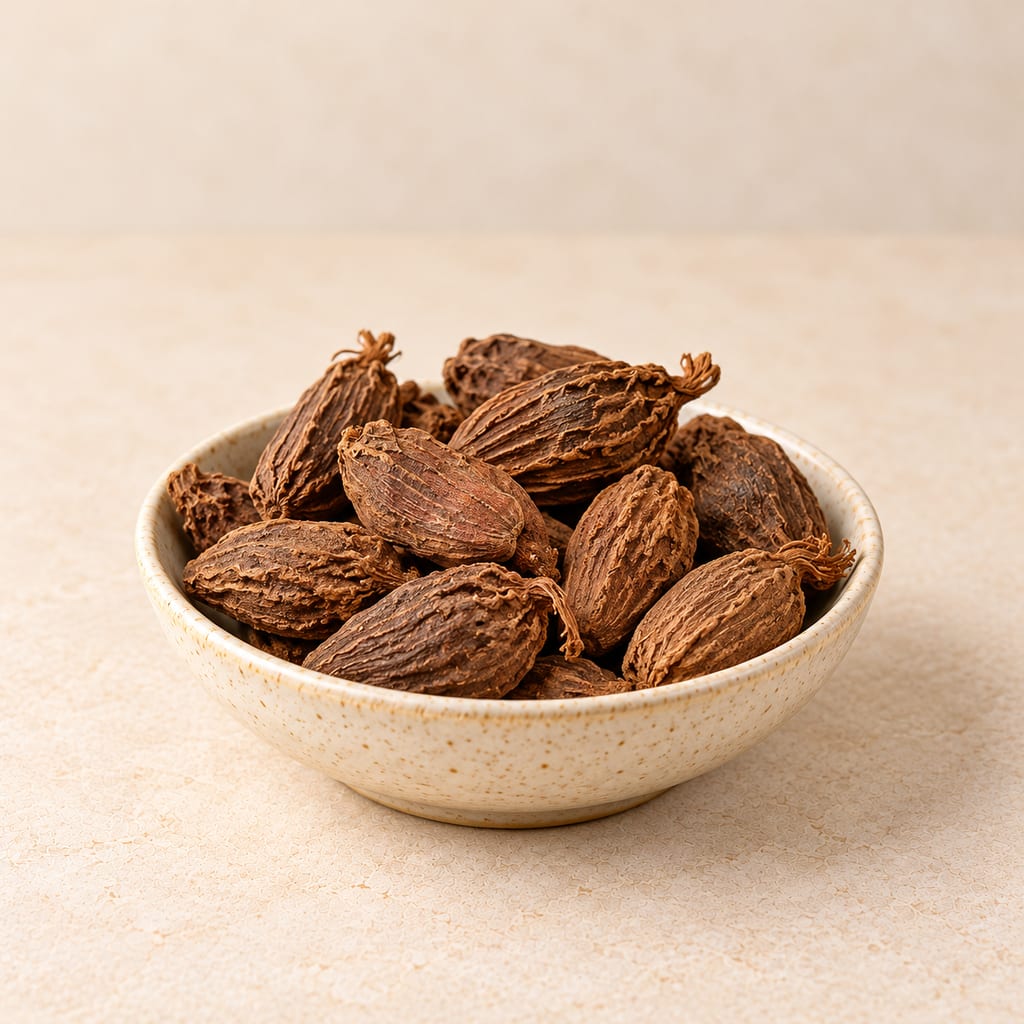
Alainchi is the large or black cardamom of the eastern Himalaya, the dark, smoke-dried pods of Amomum subulatum. Its camphor-cool, smoky seeds season Himalayan and North Indian cooking and a sweet Nepali lapsi achar.
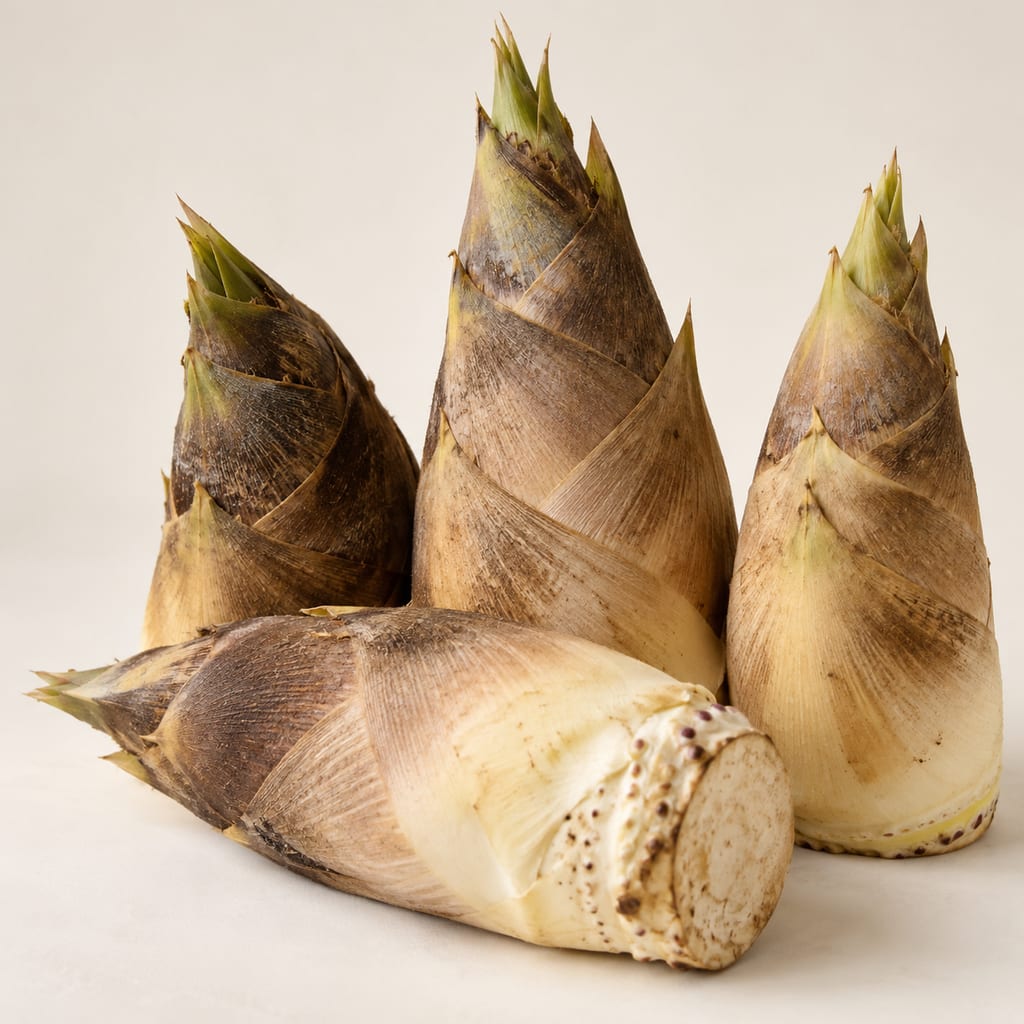
Bamboo shoots are the young culms of many bamboo species, eaten after boiling or leaching in Asia, and fermented into sour and preserved foods in the Himalayas, northeast India and Burma.
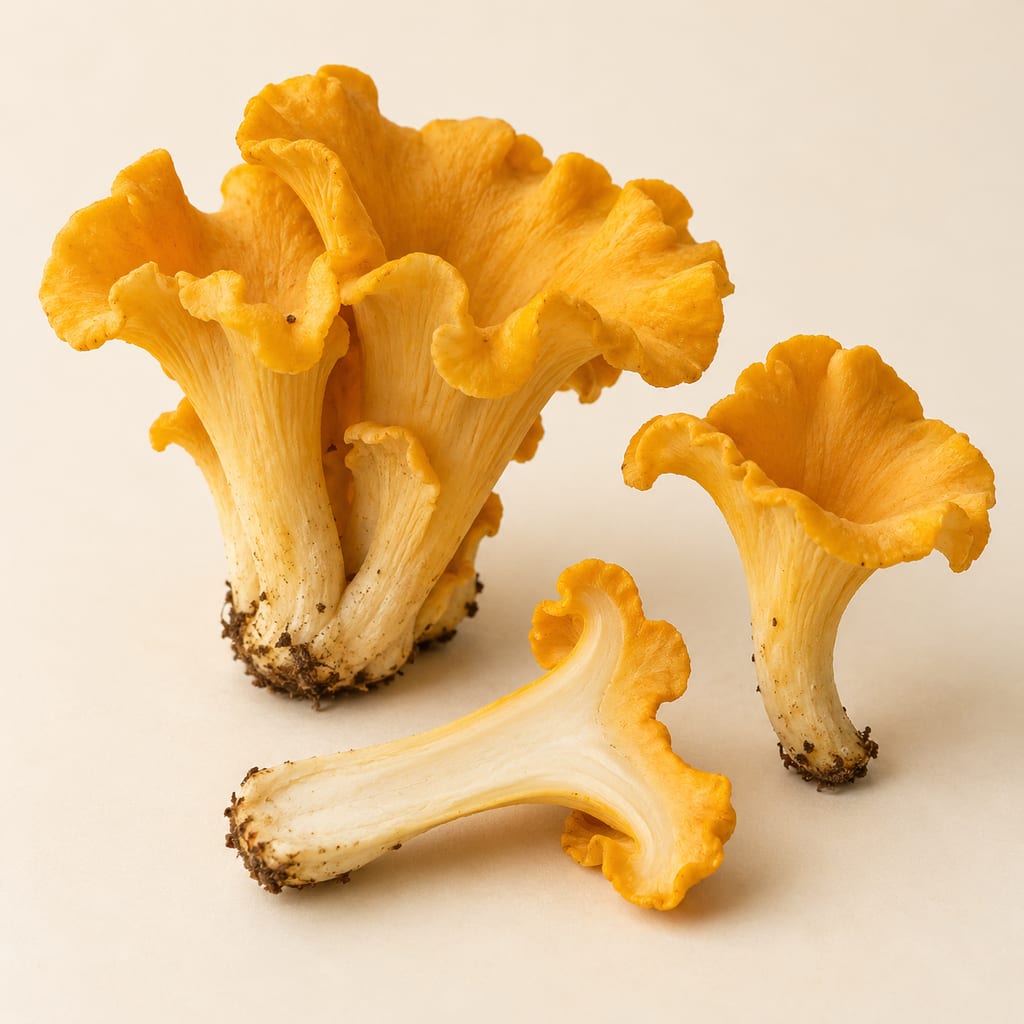
Cantharellus odoratus, the fragrant chanterelle, is a North American and Central American oak-woodland fungus. It was sold in a Veracruz market in the 1980s and in Guatemala in 2002, and its name is still disputed.
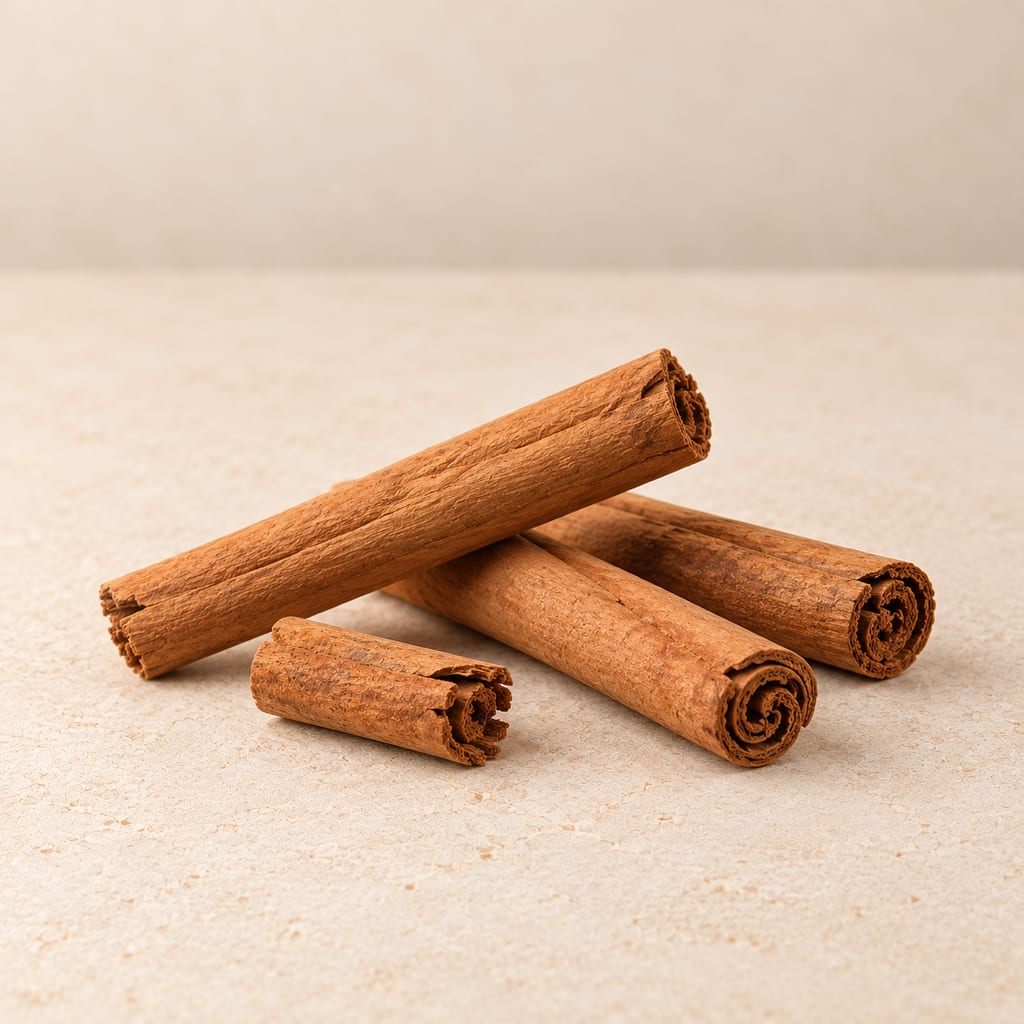
Cinnamon is the dried inner bark of Cinnamomum trees, rolled into quills or ground; Ceylon cinnamon comes from C. verum of Sri Lanka and cassia from related species.
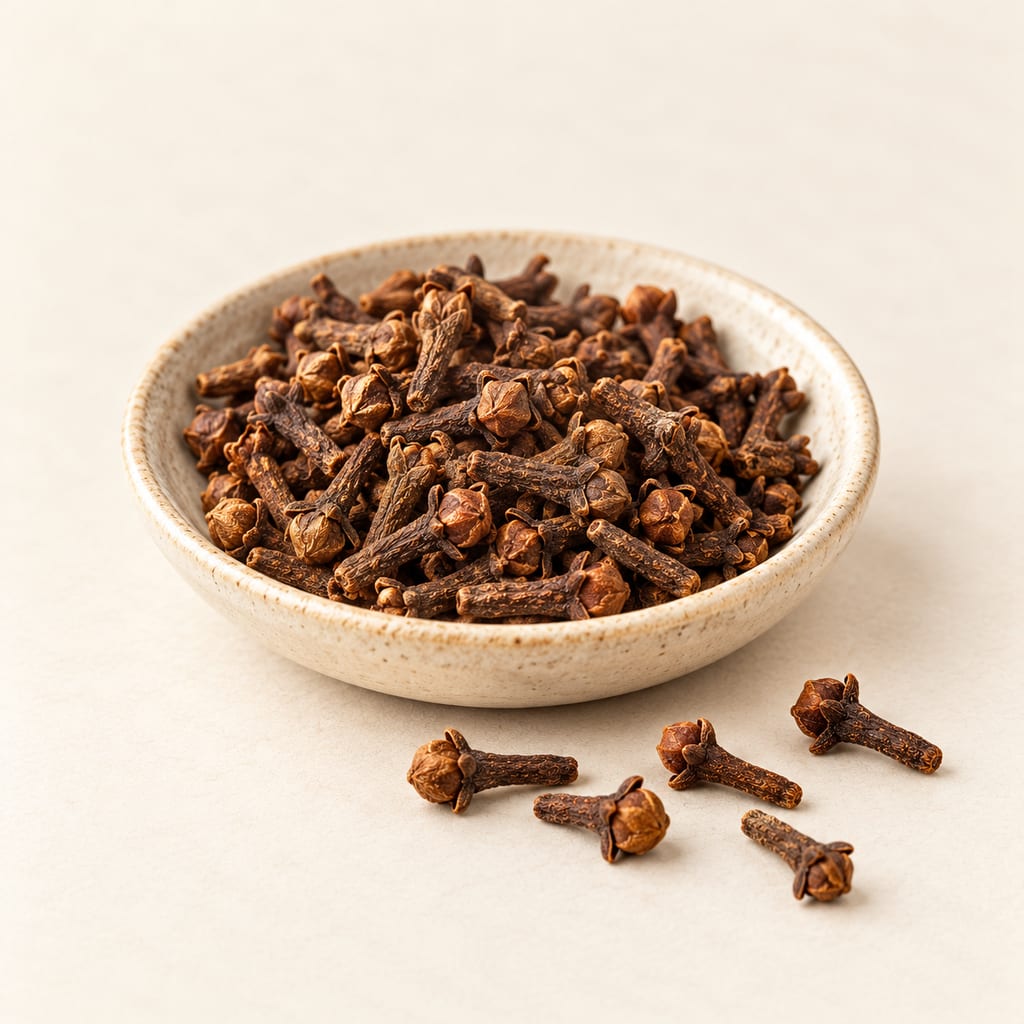
Cloves are the dried unopened flower buds of Syzygium aromaticum. Whole buds infuse liquids and can be removed; ground clove disperses its intense aroma through food.
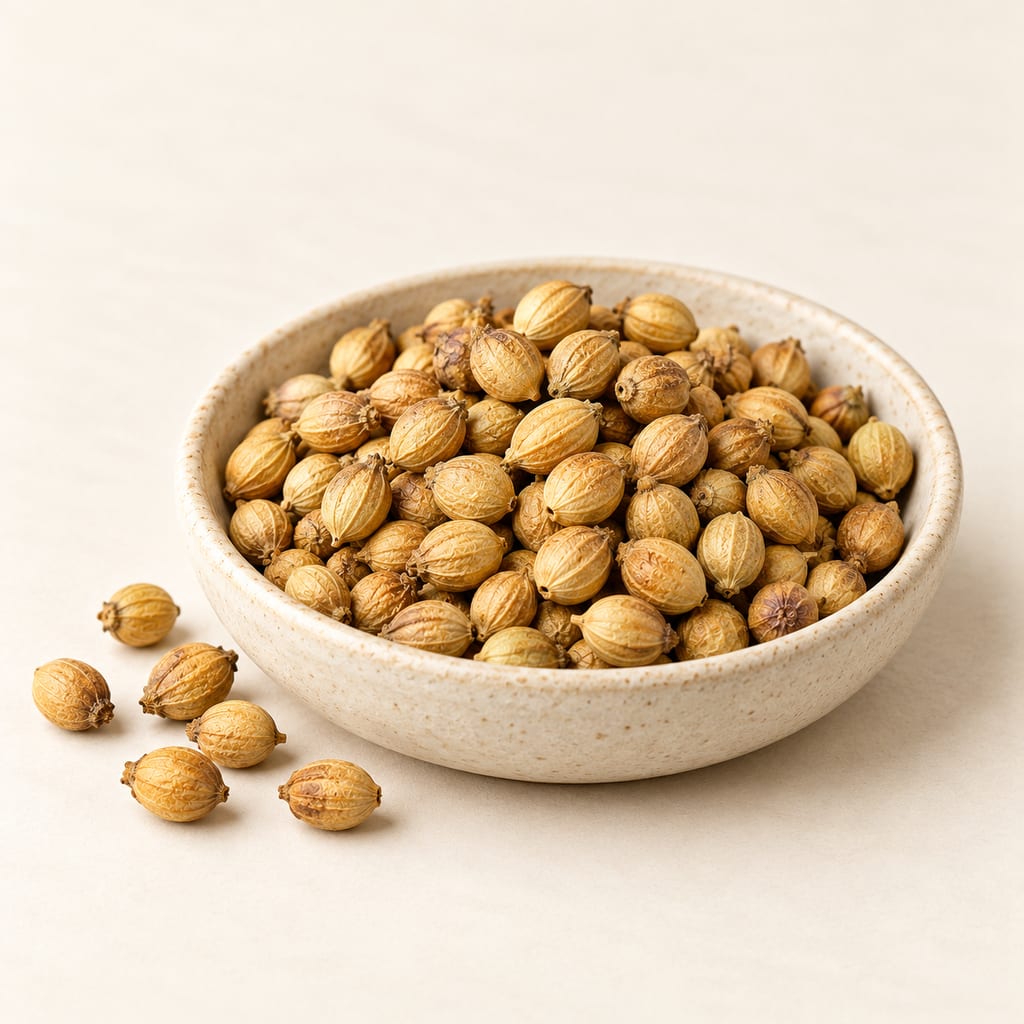
Coriander seed is the dried, aromatic fruit of Coriandrum sativum, used whole, cracked or ground in spice blends, pickles and cooked dishes.
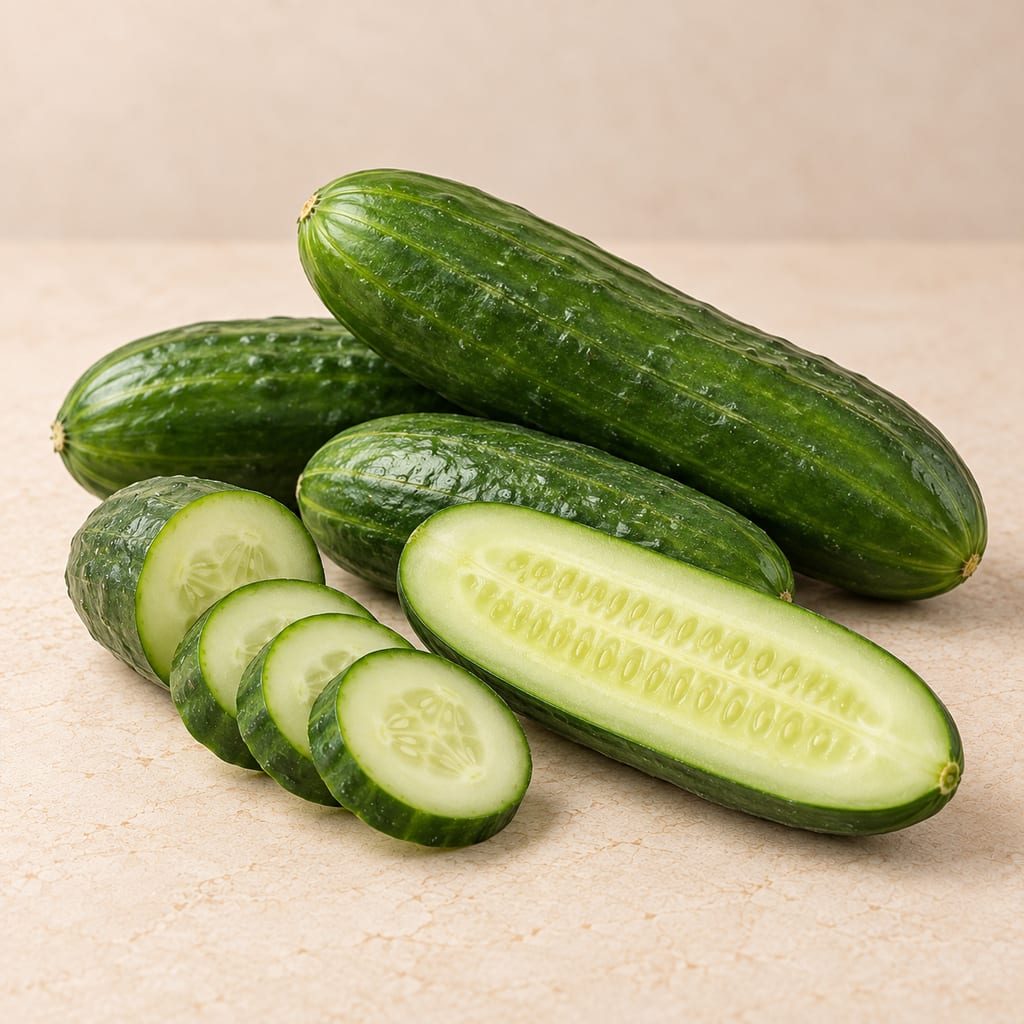
Cucumber is the watery fruit of Cucumis sativus, domesticated in India, and the classic raw material of brine pickles from New York dills to Nepali khalpi and Korean oi-sobagi.
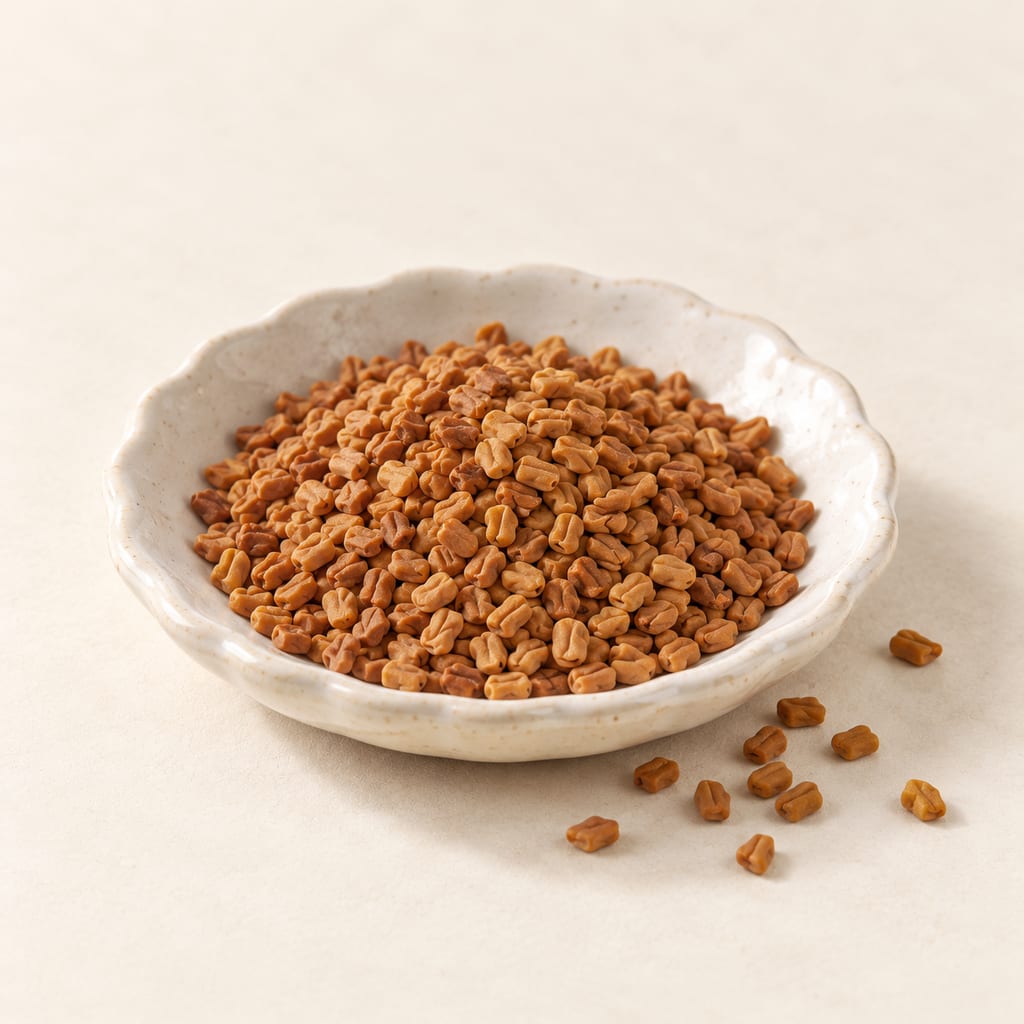
Fenugreek seed is the bitter, fragrant dry seed of Trigonella foenum-graecum, used in tempering, pickles, breads and spice mixtures.
No community contributions have been published for this entry yet.
Sign in to contribute. Published comments and photos are free to read.
Royal Botanic Gardens, Kew, Plants of the World OnlineTaxonomy · Native range
Zingiber officinale Roscoeaccepted ginger species; eastern Himalaya to south-central China native range; 1807 botanical publication, not culinary attestation
Cited in: A spoonful taken from the rhizome; A documented Nepali use, with its scale intact; The boundaries of the name
Suryabinayak municipal agricultural servicePrimary Nepali recipe · Documented use · Geography
नेपालमा व्यवसायिक लप्सी खेतिlapsi achar formula lists ginger juice at 0.5 g with 1 kg ripe lapsi pulp, 1 kg sugar, 0.5 L water and spices; syrup strained, cooked 10–15 minutes and bottled; source gives no measured storage validation
Cited in: A spoonful taken from the rhizome; A documented Nepali use, with its scale intact; Making and measuring a small fresh portion; Where the juice belongs in food; The boundaries of the name
Journal of Food Science and Technology 57(9):3371–3380 (2020); DOI 10.1007/s13197-020-04370-0Primary pressing and food use
Characterization of volatile components from ginger plant at maturity and its value addition to ice creamwashed sliced mature rhizomes crushed and hydraulically pressed; starch separated from juice before freeze-drying; powder used in ice cream study
Cited in: A spoonful taken from the rhizome; What pressing changes; Making and measuring a small fresh portion; Where the juice belongs in food
Foods 14(15):2637 (2025); DOI 10.3390/foods14152637Primary expressed juice analysis
Quantitative Analysis of Ginger Maturity and Pulsed Electric Field Thresholds: Effects on Microstructure and Juice’s Nutritional Profilerhizomes ground and pressed through muslin; volatile and gingerol profiles differ among fresh/older ginger and electric-field conditions; no home extraction yield inferred
Cited in: What pressing changes; Fragrance, heat and the sting; The boundaries of the name
Food Science and Biotechnology 27(3):687–693 (2018); DOI 10.1007/s10068-017-0301-1Primary heat chemistry
Heat-induced conversion of gingerols to shogaols in ginger as affected by heat type, sample type, temperature and timecontrolled dry/moist heat experiments show gingerol-to-shogaol conversion depends on sample, temperature and time; experimental results not applied quantitatively to short achar simmer
Cited in: Fragrance, heat and the sting
Journal of Zhejiang University–Science B 26(4):393–404 (2025); DOI 10.1631/jzus.B2400269Primary juice aroma and distinct food use
Dynamic changes in physiochemical, structural, and flavor characteristics of ginger-juice milk curdginger juice volatile profile and milk-curd formation under study conditions; not a claim that any juice dose sets milk
Cited in: Fragrance, heat and the sting; Where the juice belongs in food