
Almond mushroom
The almond mushroom, Agaricus subrufescens, was cultivated in eastern North America in the 1800s, lost its market, and returned as a cultivated mushroom from Brazil, where it is grown under several names.
 FermenteaWhere food goes to change
Mushrooms
A Neotropical wood-decay mushroom with limited food records in Martinique and São Paulo. Preparation details and a reliable harvest season remain undocumented.
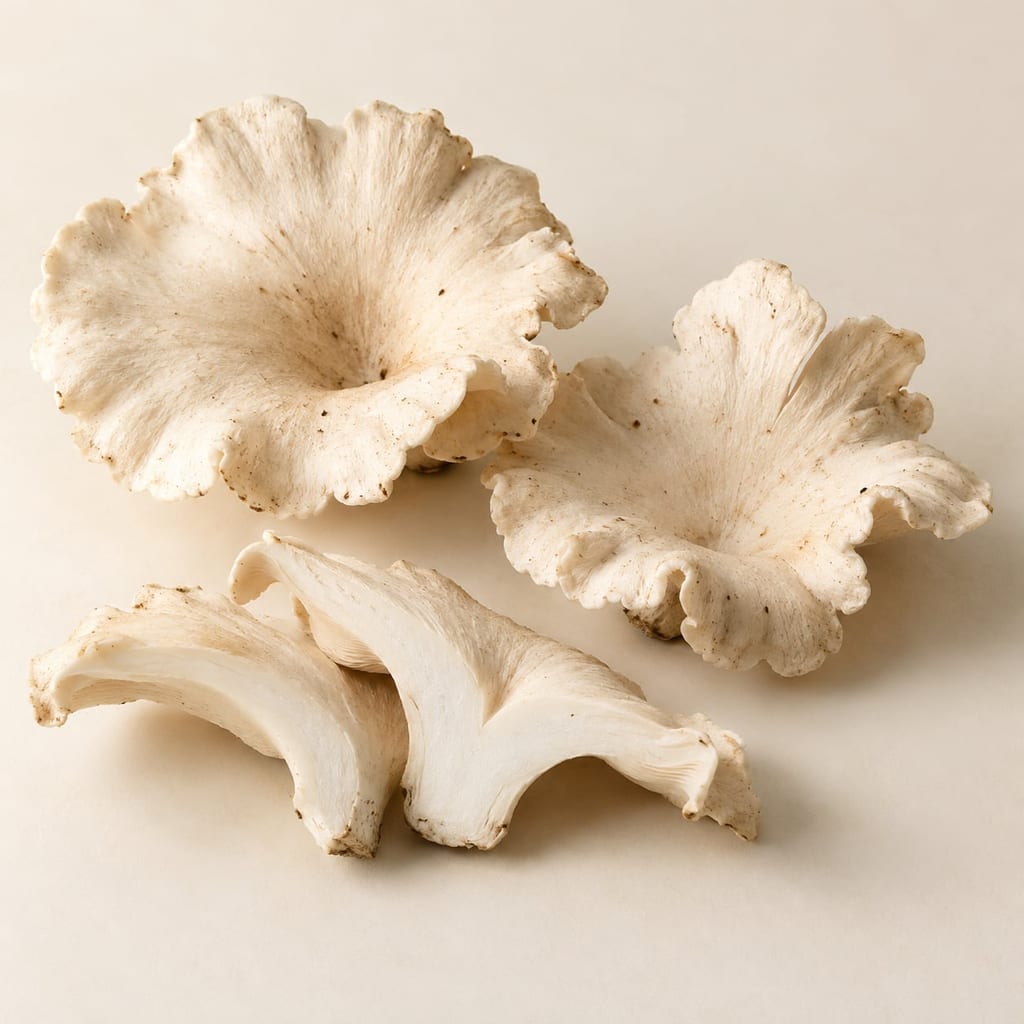
Lentinus scleropus (Pers.) Fr. is a wood-decaying mushroom in the Polyporaceae. Taxonomic collections and the 2024 IUCN assessment recognize this name, but the material also carries a history of changing labels. Older records appear under names such as Agaricus scleropus, Lentinus vellereus and Pleurotus hirtus. Those synonyms matter because a record filed under an older name can be relevant to the present species while still requiring careful interpretation. The family and Latin name are more precise than the everyday label “sawgill,” which is used for several different fungi.
The available food record is narrower than a general statement that this is a traditional food. The IUCN assessment cites an 1889 report that young specimens were used as food in Martinique. It also says that experienced mycologists consumed specimens found in an urban area of São Paulo. A 2024 evidence-based review of Brazil’s wild edible mushrooms illustrates L. scleropus and describes consumption as newly documented in its audit. These records establish that people have eaten this species in at least those contexts. They do not show widespread use across Brazil, a continuous tradition, or broad acceptance across the species’ entire range.
That distinction is particularly important for mushrooms. A species may be considered edible in a source while the number of documented meals, preparation details and geographic coverage remain small. Here, the sources do not provide a named community tradition, market chain, household survey or standardized preparation. They support a cautious account of food use, not an expansive culinary history. A report that certain specimens were eaten is not a recommendation to forage or eat mushrooms identified from a photograph.
The IUCN assessment describes L. scleropus fruiting abundantly on dead hardwood logs and reports no known host specificity. It associates the species with human-modified places as well as wooded settings, including observations in urban centres. The fungus is a decomposer of wood; its food role for people is distinct from that ecological role. The visible mushroom is the fruiting body of a fungus living in and drawing on the woody substrate.
The name sawgill can be useful as a broad descriptive label for gilled fungi with a tough, wood-associated habit, but it is not a safe identification. Several species share common names and similar general forms. The IUCN assessors note that additional molecular and phylogenetic evidence is needed to confirm taxonomic placement, alongside more sampling. That qualification should travel with the page: taxonomic names are useful tools, but historical names, distribution records and visual observations do not necessarily all represent equally verified specimens.
Research-grade photographs and the 2024 paper’s figure give examples of recorded fruit bodies, often in clusters on logs. Such images can help readers understand what sources are discussing, but a single image cannot show every feature needed to confirm a specimen. The product page should not function as a field guide. The location and image label provide the context that an observation was identified as L. scleropus by its contributor or the study, not a guarantee that a similar mushroom elsewhere has the same identity.
The best-supported food geography is specific rather than continent-wide. Patouillard’s 1889 record, as cited in the 2024 IUCN assessment, refers to young specimens eaten in Martinique. The same assessment reports food consumption by experienced mycologists of fruit bodies from an urban area of São Paulo, Brazil. The Brazilian 2024 review brings L. scleropus into a national inventory of wild edible mushrooms and documents recent consumption evidence. These records represent different periods and evidence types: one historical published report and one contemporary specialist observation.
Those sources do not tell us who gathered the Martinique specimens, how often they were eaten, what they tasted like, or how they were prepared. Nor does the São Paulo account describe a routine market or household food. It says experienced mycologists consumed specimens found in an urban setting. That is useful evidence that the species has been eaten, but the expertise and urban setting are part of the record, not incidental details to discard.
The IUCN assessment maps a much broader Neotropical range, including records from Mexico, Central America, the Caribbean and South America. It lists occurrence records across places such as Brazil, Barbados, Cuba, Dominica, Guadeloupe, Martinique, Nicaragua and Paraguay, and notes other South American records in the wider data compilation. These are distribution reports, not separate food-use attestations. A range map should not be read as a food map: an observation of a fungus in a country does not tell us whether people there consume it.
The directly documented food detail is modest. The Martinique citation refers to young specimens used for food; the São Paulo account refers to consumption by experienced mycologists. Neither source provides a recipe, named dish, seasoning, cooking time, market price, preservation method or portion size. The 2024 review places the mushroom among the wild edible records it reassesses, but its summary and figure do not turn the São Paulo observation into a country-wide recipe tradition.
Because the sources do not describe a preparation, this page does not invent one. It cannot responsibly suggest frying, boiling, drying or another technique based on the cooking habits of a different Lentinus, a related mushroom or a broad regional cuisine. The term edible records that some experienced people have used the species as food; it does not provide enough information for a safe method or establish suitability for every specimen, region or person.
The article’s broader discussion of Brazilian edible fungi explains why records must be interpreted with care: the field combines older literature, new collections and taxonomic updates, and the authors distinguish stronger records from names needing further confirmation. The L. scleropus entry is a limited newly recorded consumption case in the audit. It should be presented as such, without implying that communities across Brazil share a long-standing use or that a reader can reproduce the observation safely.
No reliable species-specific harvest season was established in the sources reviewed. The IUCN account describes range, abundance and substrate but does not provide monthly fruiting data. The historic Martinique food citation gives no date within the year, and the São Paulo consumption record does not give a harvest period. For those reasons, this page cannot say that L. scleropus is a rainy-season, summer or year-round food.
Observation dates in citizen-science records are not a substitute for a fruiting calendar. The reviewed open-license observations include records from Panama, Costa Rica, Brazil and Puerto Rico at different points of the year, but these entries are opportunistic observations. They do not measure how often the fungus fruits, when it is most abundant, how collectors schedule trips or whether the species is gathered for food. They show that contributors reported the species at those places and dates, nothing more.
Availability depends on the local forest, deadwood, weather, and the ability to recognize and access fruiting bodies. These are general ecological considerations, not a measured seasonal model for this species. Until local voucher-backed observations or ethnomycological data provide dated collection histories, season remains unknown. A source that documents consumption without dates is valuable, but it cannot be stretched into a calendar.
This page is an evidence summary, not an identification or foraging guide. The images and scientific name should not be used to decide whether a wild mushroom is safe to eat. Several fungi may share a broad common name, and Lentinus species can be difficult to separate from an image alone. The IUCN assessment itself calls for additional molecular and phylogenetic data to confirm taxonomic placement and for wider sampling to improve knowledge of the range.
The food reports refer to young specimens in Martinique or specimens consumed by experienced mycologists in São Paulo. Neither report supplies a diagnostic protocol for the general public. They also do not say that every specimen identified as L. scleropus in an online observation or field photograph has been verified with the same level of evidence. Do not taste a mushroom because it resembles a source image or bears a familiar name. A qualified local mycologist should assess the whole specimen and its context; if identity is uncertain, do not consume it.
No storage duration, spoilage indicator, safe cooking method or preservation instruction specific to L. scleropus was located. The page therefore makes no promise about handling a collected mushroom or about how cooking changes risk. Food-use documentation is not equivalent to a food-safety assessment. Its appropriate value here is historical and evidentiary: it records that some people have eaten this fungus in specific contexts while leaving many practical questions unanswered.
The reviewed record establishes a wood-associated fungus with a broad reported Neotropical range and a small number of food-use accounts. It does not establish a detailed culinary tradition, commercial supply, cultivation method, preservation practice or seasonal collection cycle. It also cannot assign every historical synonym or regional observation to one taxonomic concept without further examination. The page keeps these boundaries visible so readers can see what the sources support and where they stop.
Useful future evidence would include voucher-backed local studies that pair identifications with interviews, dated collection records, market observations and descriptions of food preparation. Molecular work could test whether specimens called L. scleropus across the range belong to one coherent species. Such research might clarify local names, seasonality, the distribution of food use and whether the old synonym-rich record needs revision. Until then, country-level presence and food use should remain separate claims.
The most defensible description is therefore a wild edible species with limited direct documentation: an 1889 Martinique report for young specimens, and a recent São Paulo specialist observation included in the Brazilian audit. That is enough to preserve the record, but not enough to turn it into advice. Readers should treat the photos as documented observations, the common name as non-specific, and the unknowns as part of the account.
The evidence also differs in how close it is to actual use. A historical citation may preserve a brief food report, while a modern assessment may summarize it alongside ecological and collection records. The Brazilian audit combined field material, literature review and searches of sequence databases; the species is shown among Brazil’s edible mushrooms, yet its newly recorded food evidence remains limited. The São Paulo account is explicitly tied to experienced mycologists, while the Martinique record is an older report about young specimens. Neither account describes a general population sample. This difference in scale is why the page gives both locations without implying equal amounts of evidence or the same kind of culinary practice.
Likewise, the open photo references have research-grade status and creator-assigned licenses, but they are not taxonomic vouchers reviewed as part of this food study. Their value is to show how observations attributed to the species have been recorded in different places. They do not confirm that every similarly shaped mushroom is L. scleropus, and their observation dates do not define a harvest season. Keeping the image, date, place, rights and evidence type attached to each reference helps readers distinguish documentation from proof of edibility or identification advice.
The IUCN assessment reports that L. scleropus fruit bodies found in an urban area of São Paulo were consumed by experienced mycologists. This does not establish broader household use or a commercial market.
Historical edible-use report cited in the 2024 IUCN assessment; the original source provides no preparation or frequency details in the material reviewed.
Type locality from the species description, not an edible-use location.
The IUCN assessment compiles records from tropical and subtropical parts of the Americas. These are distribution records, not all confirmed food-use localities.
The almond mushroom, Agaricus subrufescens, was cultivated in eastern North America in the 1800s, lost its market, and returned as a cultivated mushroom from Brazil, where it is grown under several names.
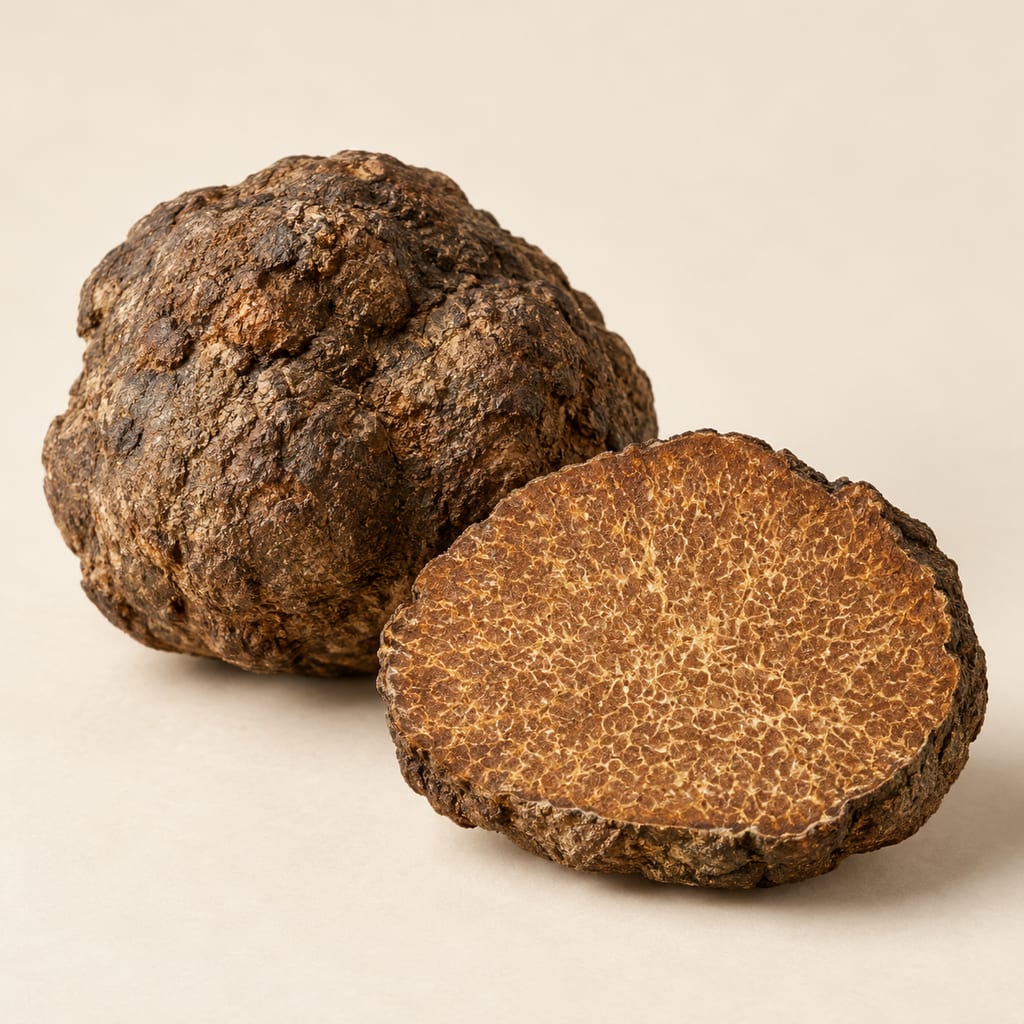
Polyporus indigenus, a polypore of the Brazilian Amazon. Its underground sclerotium, not the fruiting body, is the part people eat, and it is known locally as pão do índio.
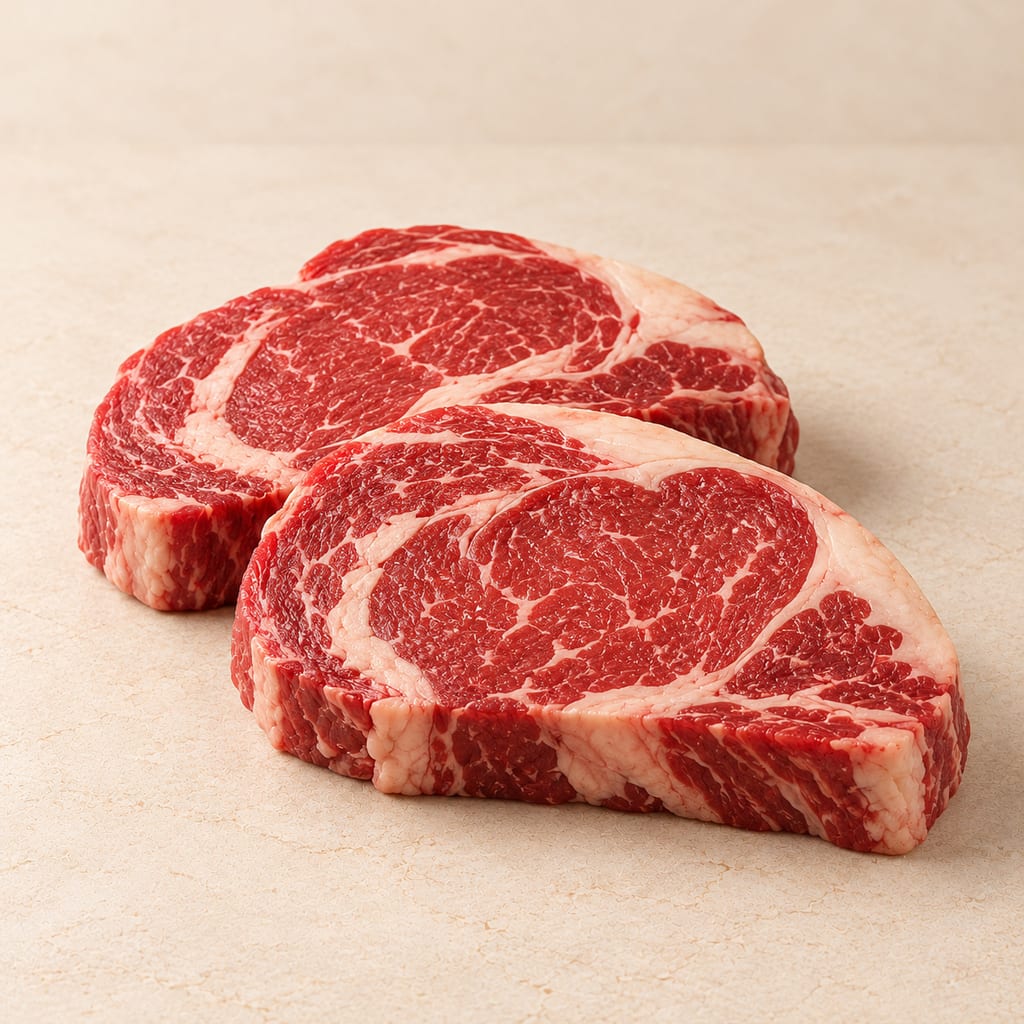
Beef is the meat of domestic cattle, Bos taurus and Bos indicus, sold as steaks, roasts, ground meat and cured products, and used in broths, salami and koji seasonings.
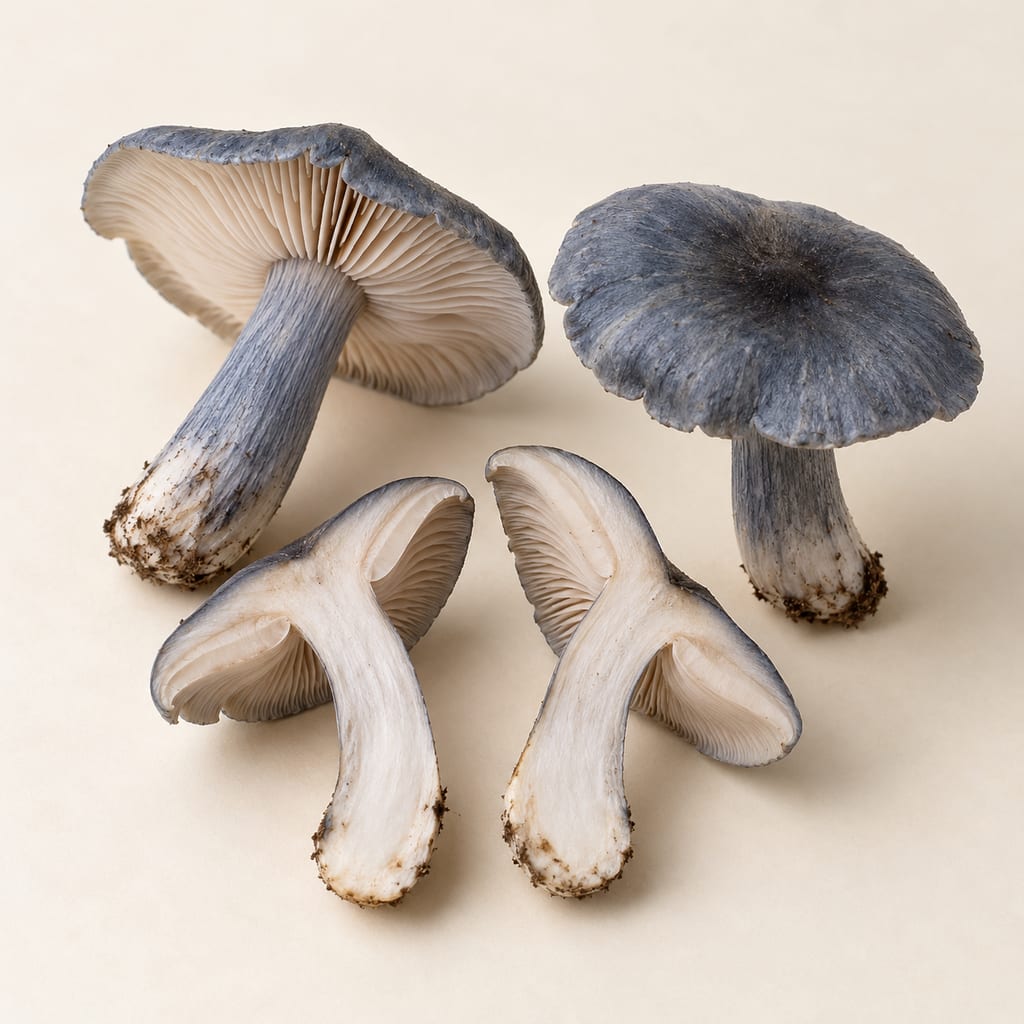
Bloxam's entoloma is a rare pink-gilled mushroom of old grasslands. Historical sources call it edible, but food-use evidence and older identifications remain uncertain; this does not recommend gathering or eating it.
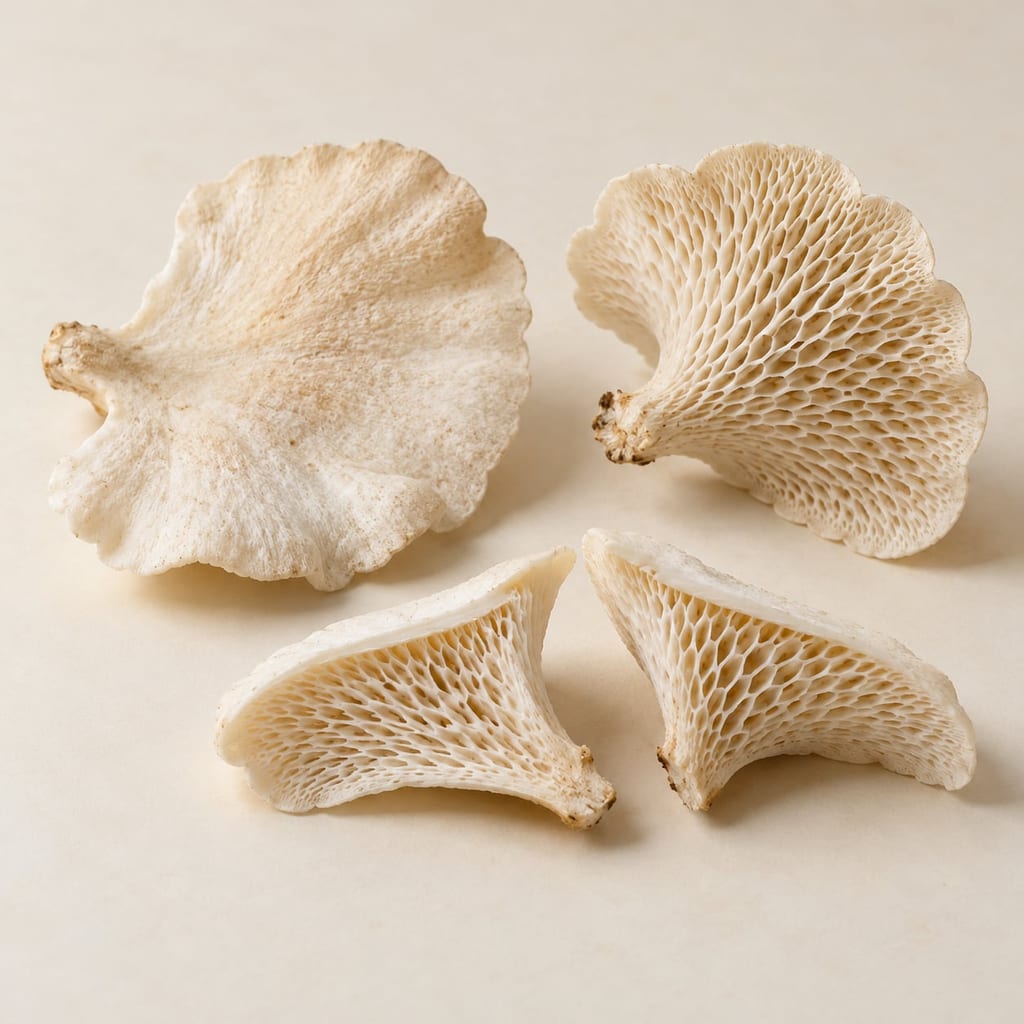
Brazilian honeycomb polypore, Favolus brasiliensis, is a wood-growing fungus of tropical forests recorded as food in Brazil and Guyana. It has no standardized food-safety assessment.
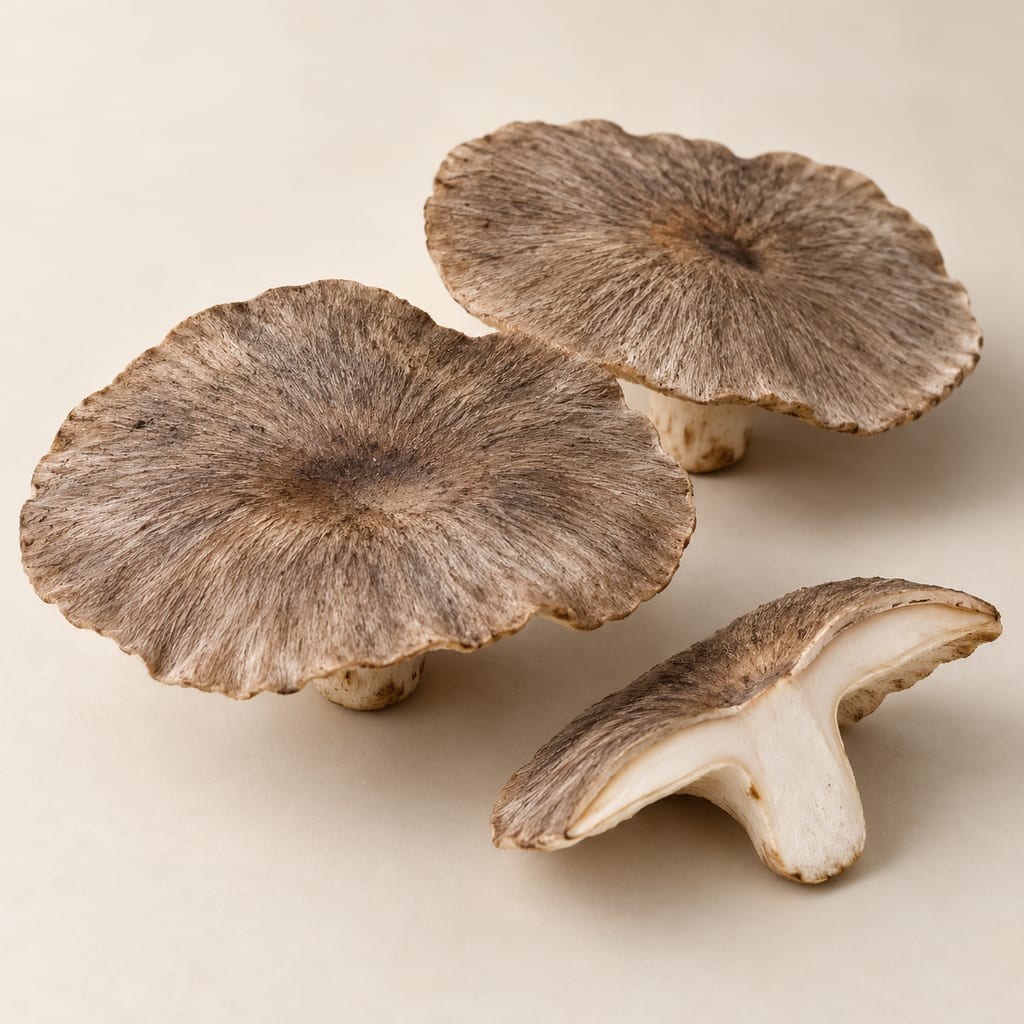
Bresadolia paradoxa is a large fungus of dead hardwood logs in Amazon and Atlantic Forest sites in Brazil and Colombia. Its only edibility source is a conservation assessment, so the claim is lightly documented.
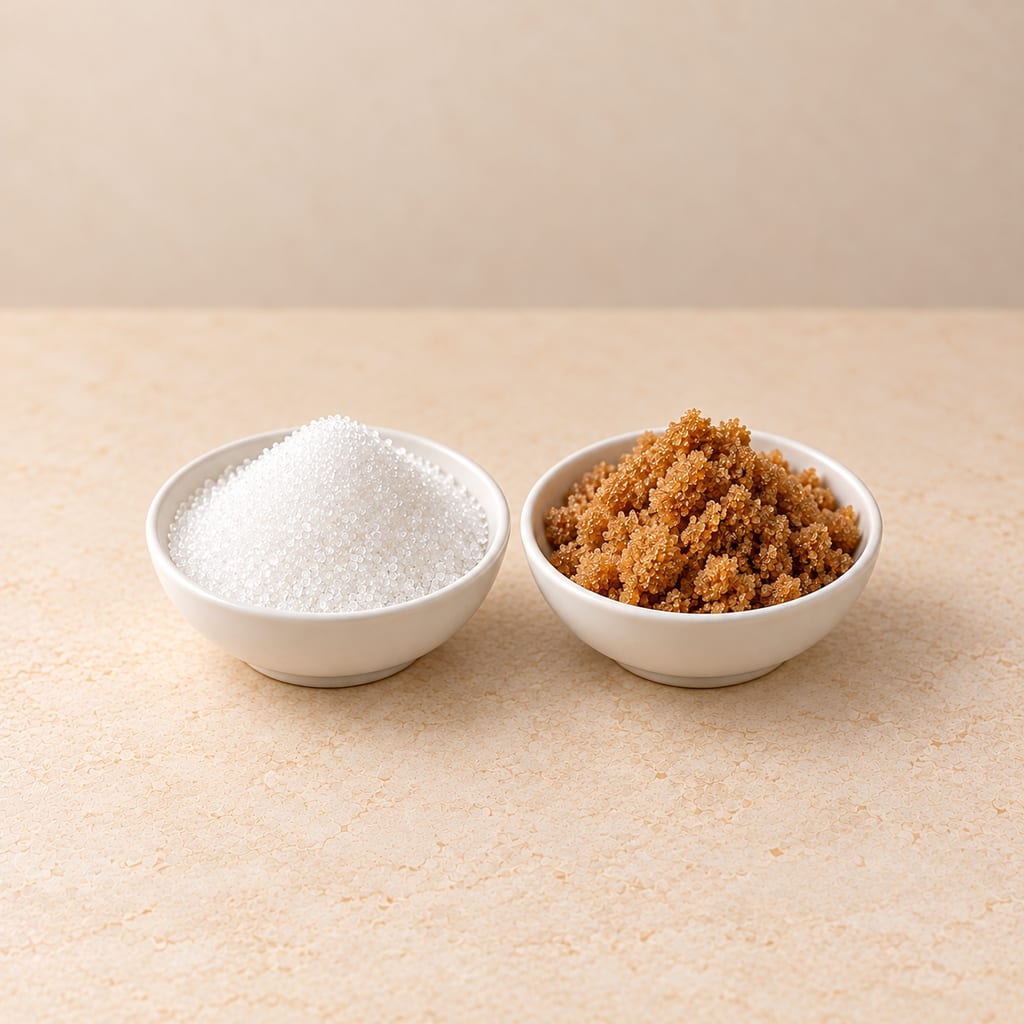
White sugar is refined sucrose, almost pure; brown sugar is sucrose with molasses, left in or added back. Molasses makes brown sugar moister, darker and more strongly flavoured.
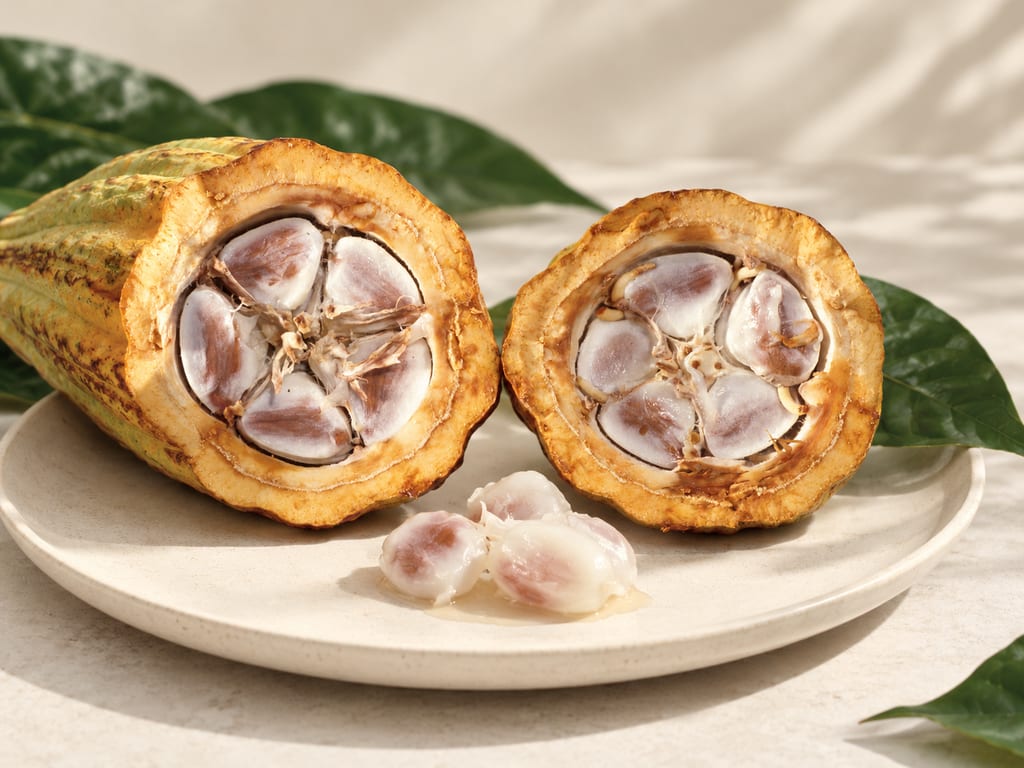
Cacao pulp is the moist, sweet-acid mucilage around cacao seeds. It fuels bean fermentation and can be extracted for fruit drinks, wine and vinegar.
No community contributions have been published for this entry yet.
Sign in to contribute. Published comments and photos are free to read.
IMA Fungus 15, article 40 (2024)Food use · Taxonomy · Images
Over 400 food resources from Brazil: evidence-based records of wild edible mushroomsThe review based on new samples, bibliographic review and GenBank searches reports 409 edible mushroom species in Brazil, and notes that many names still require taxonomic confirmation.
Lentinus scleropus is illustrated in Figure 5 as a wild edible mushroom occurring in Brazil; the pictured voucher-like specimen is credited to Marina Corrêa-Santos.
The species’ consumption was newly documented in the audit; the record does not establish widespread Brazilian tradition, a named community, cooking method, or seasonal calendar.
Cited in: A name with a limited food record; Wood, habitat and visible fruiting bodies; Places where food use is documented; Food uses and the limits of culinary detail; Identity and food safety; What remains to be learned
The IUCN Red List of Threatened Species 2024, e.T265094980A265150983Taxonomy · Distribution · Habitat · Food use · Conservation
Lentinus scleropus — IUCN Red List assessmentThe assessment calls Lentinus scleropus a wild edible species and describes it as abundant on dead hardwood logs, with no known host specificity.
The species is reported mainly in the Neotropics, especially Mexico, Central America and the Caribbean; its records include Brazil, Martinique and elsewhere across the Americas.
The assessment cites young specimens used for food in Martinique in Patouillard (1889) and fruit bodies consumed by experienced mycologists in an urban area of São Paulo, Brazil.
The assessment says molecular and phylogenetic work is needed to confirm its taxonomic placement and notes more sampling is needed to refine range.
Cited in: A name with a limited food record; Wood, habitat and visible fruiting bodies; Places where food use is documented; Food uses and the limits of culinary detail; Seasonality and availability; Identity and food safety; What remains to be learned
Mycology Collections PortalTaxonomy · Synonyms
Lentinus scleropus — Mycology Collections Portal taxon pageThe portal lists Lentinus scleropus (Pers.) Fr. in Polyporaceae and records multiple historical synonyms including Lentinus vellereus, Pleurotus hirtus and Agaricus scleropus.
Cited in: A name with a limited food record; Identity and food safety; What remains to be learned
Species Fungorum, Royal Botanic Gardens, KewTaxonomy · Synonyms
Lentinus vellereus — Species Fungorum name recordSpecies Fungorum records Lentinus vellereus as a synonym of Lentinus scleropus and gives a Cuban wood locality for the synonym’s type.
Cited in: A name with a limited food record; What remains to be learned
iNaturalistImage reference · Distribution
Observation 388293507: Lentinus scleropusResearch-grade observation in Panama City, Panama, dated 2026-08-04; photo licensed CC BY.
Cited in: Seasonality and availability
iNaturalistImage reference · Distribution
Observation 327888573: Lentinus scleropusResearch-grade observation in Bocas del Toro, Panama, dated 2025-11-23; photo licensed CC BY.
Cited in: Seasonality and availability
iNaturalistImage reference · Distribution
Observation 313185443: Lentinus scleropusResearch-grade observation in Guapimirim, Rio de Janeiro, Brazil, dated 2025-09-11; photo licensed CC BY.
Cited in: Seasonality and availability
iNaturalistImage reference · Distribution
Observation 311146026: Lentinus scleropusResearch-grade observation in San Isidro de El General, Costa Rica, dated 2025-09-02; photo licensed CC BY.
Cited in: Seasonality and availability
iNaturalistImage reference · Distribution
Observation 272268964: Lentinus scleropusResearch-grade observation in Cidra, Puerto Rico, dated 2025-04-20; photo licensed CC BY-SA.
Cited in: Seasonality and availability
iNaturalistImage reference · Distribution
Observation 263545880: Lentinus scleropusResearch-grade observation in El Yunque National Forest, Puerto Rico, dated 2025-03-01; photo licensed CC0.
Cited in: Seasonality and availability