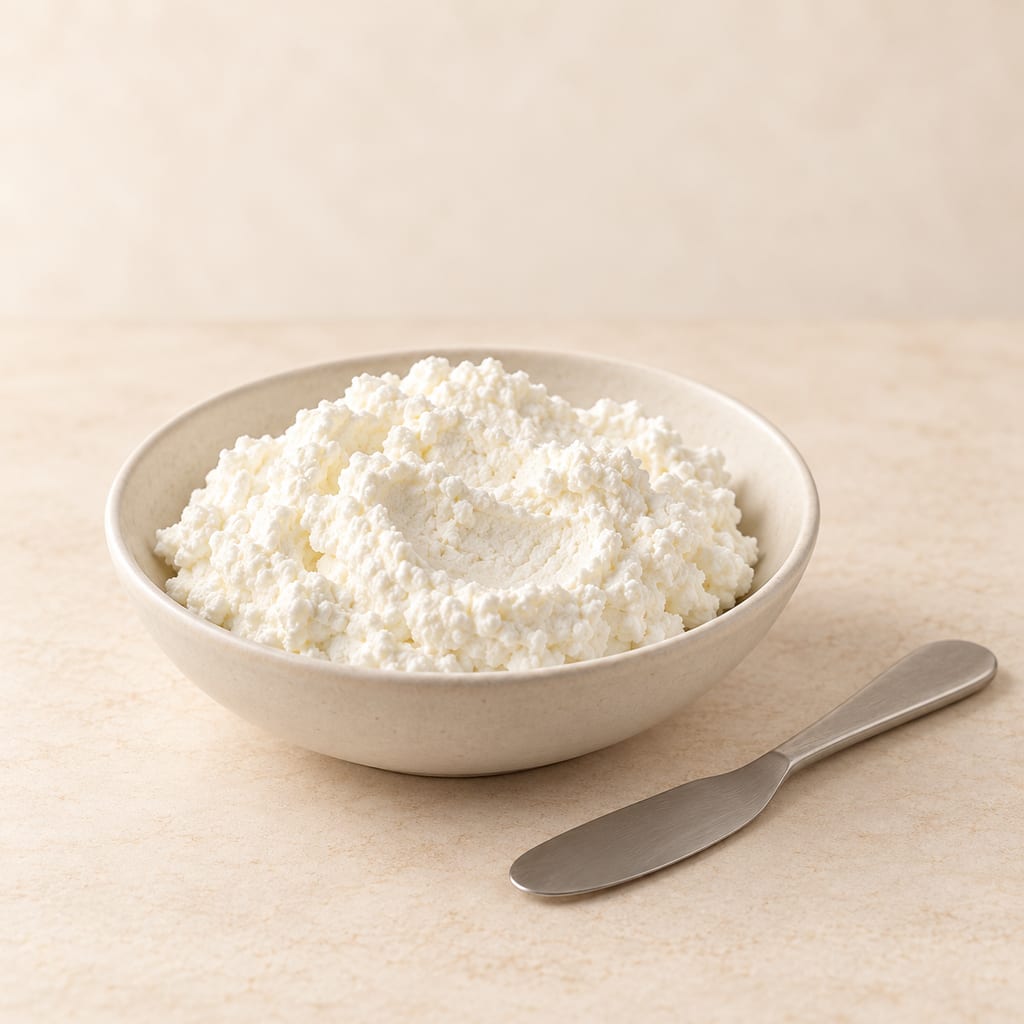
Quark
Quark is a soft, fresh curd cheese used in spreads and desserts. This small home batch sets milk with mesophilic culture and rennet before refrigerated drainage.
 FermenteaWhere food goes to change
Cultures
Mesophilic dairy starters are live bacterial cultures selected to acidify milk at moderate temperatures. Their organisms, aroma production, strength and handling vary by product.
Mesophilic dairy starter is a preparation of living bacteria selected to grow in milk and guide its souring. It may arrive as a concentrated powder, a frozen culture or an active liquid. The word mesophilic describes a temperature preference; it does not name a species, a fixed mixture or a particular strength. Two sachets bearing that word can serve different purposes, even when both are sold for cheesemaking.
A starter gives the maker a chosen beginning. Milk supplies the food on which the bacteria grow, and their activity changes the milk. That is why a small addition can matter throughout a much larger batch. The culture is not simply an ingredient that contributes its own flavour in proportion to its weight. It multiplies and carries out reactions during the process.
The quark preparation linked here calls for a tiny pinch, or half a “drop” spoon, in one litre of milk. It names no brand, organisms or activity specification. That wording identifies the ingredient only at the level of mesophilic starter. It does not establish a weight, nor a dose transferable to an arbitrary commercial culture.
Dairy starters belong to a history of keeping a successful fermentation going. Transferring fermented milk to a fresh supply allowed makers to begin with an active community rather than wait for whatever happened to grow. Commercial cultures introduced another possibility: obtaining selected bacteria, then using those bacteria to begin the dairy's own starter. These practices overlapped; a laboratory culture did not immediately replace every inherited or locally maintained culture.
In The Story of Milk, published in 1919, Johan D. Frederiksen described culture selection as a practical part of buttermaking. His account connected V. Storch's Danish investigations with the recognition that butter aroma came from bacterial activity in the milk and cream, rather than from butterfat alone. He also named H. W. Conn's work in the United States. Frederiksen worked in the commercial dairy-culture industry, so his book records that industry's view of a change already under way.
The distinction mattered to a creamery. Cream ripening and churning do different work: bacteria sour the watery part of the cream and contribute aroma, while churning gathers the fat into butter. Selecting a ripening culture gave a maker a way to influence the first operation before undertaking the second. This is a documented Danish and American scientific and commercial history, not a birthplace for every mesophilic dairy fermentation.
The same 1919 account shows how much work stood between a packet and a vat. A commercial dry culture or household tablet was first introduced to a small quantity of treated milk. A portion of the resulting culture went into a larger quantity, and a portion of that was retained for another propagation. A dairy could therefore maintain a mother starter while preparing enough active culture for the day's cream or cheese milk.
Scale shaped the arrangement. A creamery needed sufficient starter for its production, while a household making a small amount of cultured buttermilk could carry culture directly from one finished batch to the next. Those were different working systems, even when both relied on transferring living bacteria. The name mother starter described the culture's place in the production chain rather than a separate bacterial species.
Frederiksen also recognised that repeated handling could introduce unwanted organisms. He contrasted laboratory isolation with propagation in a dairy or home, where utensils and surroundings made absolute exclusion of other microbes unrealistic. His detailed temperatures, renewal intervals and keeping advice belong to a historical manual. They explain the labour and concerns of that period; they are not handling instructions for a modern unidentified sachet. The enduring practical question is which culture is being maintained, in which medium, for which product.
In dairy language, mesophilic starters favour lower fermentation temperatures than the thermophilic cultures used in many warmer cheesemaking and yoghurt processes. The categories describe useful tendencies. Individual strains differ, and a temperature at which growth is fastest is different from one at which a cell can merely survive. A culture that survives a warm stage may perform very differently during it.
This makes the finished product's method part of culture selection. A fresh cheese, a cream fermentation and a cheese with a heated curd do not ask the bacteria to experience the same conditions. Nor does a room described as warm supply a controlled temperature. Choose a culture intended for the preparation and follow its particular directions together with the recipe's process. The broad category supplies no universal incubation schedule.
Lactose is milk sugar. Starter bacteria take up sugars and use enzyme-controlled pathways to obtain energy, producing lactic acid as a major end product. Glycolysis, the breakdown of sugar through a series of reactions, produces an intermediate called pyruvate. In lactic fermentation, conversion of that intermediate to lactate allows the cell to keep its sugar metabolism running. The accumulation of acid lowers the milk's pH.
That pH change affects more than sourness. Casein, the principal family of milk proteins, is organised into particles called micelles. Acidification changes the mineral balance and the interactions that help those particles remain dispersed. As acidification proceeds, a protein network can form and hold water and fat. The final texture also depends on the milk and on heating, coagulants and drainage. The starter helps create the conditions for a curd; it does not alone determine how wet, firm or smooth that curd becomes.
A culture and rennet can therefore appear together without duplicating one another. Rennet is an enzyme preparation that acts on milk protein, while a bacterial starter produces acid through growth and metabolism. In a quark method that uses both, the eventual set reflects their combined effects and the subsequent handling. Neither ingredient should be silently substituted for the other.
Sugar metabolism also differs among bacteria. Homofermentative activity produces mainly lactic acid, whereas heterofermentative pathways produce other end products as well, including carbon dioxide and, depending on the pathway, ethanol or acetic acid. These terms describe metabolism. They do not turn every mixed commercial culture into the same mixture, or imply that all gas in a dairy fermentation is desirable.
Some mesophilic dairy blends combine strong acid producers with organisms chosen for aroma. Lactococcus lactis and the organisms traditionally described in dairy literature as L. lactis subsp. cremoris are familiar acid-producing examples. Citrate-utilising lactococci and some Leuconostoc cultures contribute a different set of reactions. These are examples within the category, not a list of organisms established for the unnamed quark culture.
Citrate is another compound present in milk. Bacteria able to use it bring it into the cell and split it through reactions that lead to pyruvate. Subsequent reactions can produce diacetyl and acetoin, compounds associated with dairy aroma. Carbon dioxide can also be formed. The familiar buttery note of diacetyl is thus a product of particular bacterial metabolism, rather than something automatically delivered by any starter labelled mesophilic.
The balance depends on the organisms and their conditions. Acidity, available sugars and other features of the fermentation influence which reactions proceed and which products accumulate. A blend selected for a closed-textured cheese has different priorities from one intended to contribute aroma and small openings. Choosing a culture by the desired food is more informative than choosing by the temperature class alone.
A growing bacterial cell needs more than sugar. Milk contains protein, but much of its nitrogen is bound in large molecules rather than freely available as the smaller compounds the cell needs. Proteolytic enzymes cut proteins into peptides, and further enzymes cut peptides into smaller fragments and amino acids. Bacteria can then take up and use suitable products of that breakdown.
Proteolysis connects growth with flavour. Amino acids nourish the culture and can become starting materials for further flavour-forming reactions. Different strains have different enzyme capabilities, so equal acid production does not guarantee equal flavour development. This helps explain why selecting a culture involves more than asking whether it makes milk sour.
The distinction is especially useful when comparing fresh and ripened cheeses. A fresh cultured curd and a cheese matured with additional bacteria, yeasts or moulds do not acquire all their character in the same stage. Starter activity begins changes that later organisms and enzymes may continue. It would be misleading to credit a mesophilic sachet with every aroma, rind or texture of a finished cheese.
Commercial concentrates allow a maker to inoculate production milk directly. Freeze-dried powder and concentrated frozen culture are two forms; neither form by itself identifies the strains inside. The terms direct vat set and direct vat inoculation describe this direct-use arrangement. A propagated bulk starter is instead an active culture grown in a larger quantity of medium before it enters production.
Making bulk starter adds a production stage. The medium is treated, cooled, inoculated and incubated, then cooled and held for use. Those steps give the bacteria a suitable start while limiting contamination. They also create opportunities for a culture's balance to change. An industrial propagation system is not equivalent to leaving an unidentified powder in milk for an arbitrary time.
The CHOOZIT MM 101 product description provides a concrete example of a freeze-dried direct-vat culture. It lists three Lactococcus entries and sucrose and maltodextrin carriers, with application-specific doses expressed in DCU. Those facts belong to that named product. They show why a spoon measure, a culture's activity units and a mass are different specifications, rather than identifying MM 101 as the ingredient in the linked quark.
Use the directions for the exact culture purchased, including its storage conditions and date. Frozen and freeze-dried products have different handling requirements. A supplier may specify how a cold sachet should be brought to opening conditions, what the material should look like and whether an opened pack can be kept. None of those details follows from the word mesophilic alone.
Contamination and loss of activity are separate problems. Unwanted yeasts or moulds can enter during handling, while bacteriophages, viruses that infect bacteria, can disrupt a starter's performance. Cleaning residues can also inhibit a culture. Professional dairies manage these risks through their culture and hygiene systems. For a cook, the useful starting point is a suitable, identified food culture and clean equipment, with the particular supplier's instructions kept alongside the recipe.
Fresh cheeses, cultured cream and butter illustrate different uses of mesophilic dairy cultures. In fresh cheese, acidification helps establish the curd that will be drained. In cream ripening, acidity and aroma develop before the cream is used or churned. In a ripened cheese, the initial starter works within a longer sequence of coagulation, whey removal and maturation. A culture suitable for one application is not automatically a replacement in another.
The linked quark keeps the choice deliberately broad: mesophilic starter, with rennet listed separately. When using a commercial product, establish that it is intended for that kind of preparation and resolve its dose from the product instructions. The original tiny-pinch measure cannot reveal the activity of a different packet.
Check the exact culture's ingredients and allergen information as well as the milk used in the recipe. Carriers and production media differ. A small culture addition does not make a dairy preparation milk-free, and lactose fermentation does not establish that the finished food is lactose-free. Choosing bacteria for fermentation performance is a different decision from establishing whether the whole preparation suits a person's dietary needs.
Culture carriers and production media vary; check the exact product. Dairy preparations made with milk remain milk-containing.
Storch and Danish cream-ripening culture work described in the 1919 account; not a universal origin.
Conn and commercial culture work described in a 1919 American industry account; not a birthplace claim.
Quark is a soft, fresh curd cheese used in spreads and desserts. This small home batch sets milk with mesophilic culture and rennet before refrigerated drainage.

A refined common-wheat flour blended for a broad range of baking; its protein and behavior vary with wheat, milling and market.

Toasted almonds are whole sweet almond kernels dry-roasted until golden to brown. Heat replaces their marzipan note with a roasted, nutty one; they thicken and flavour romesco.
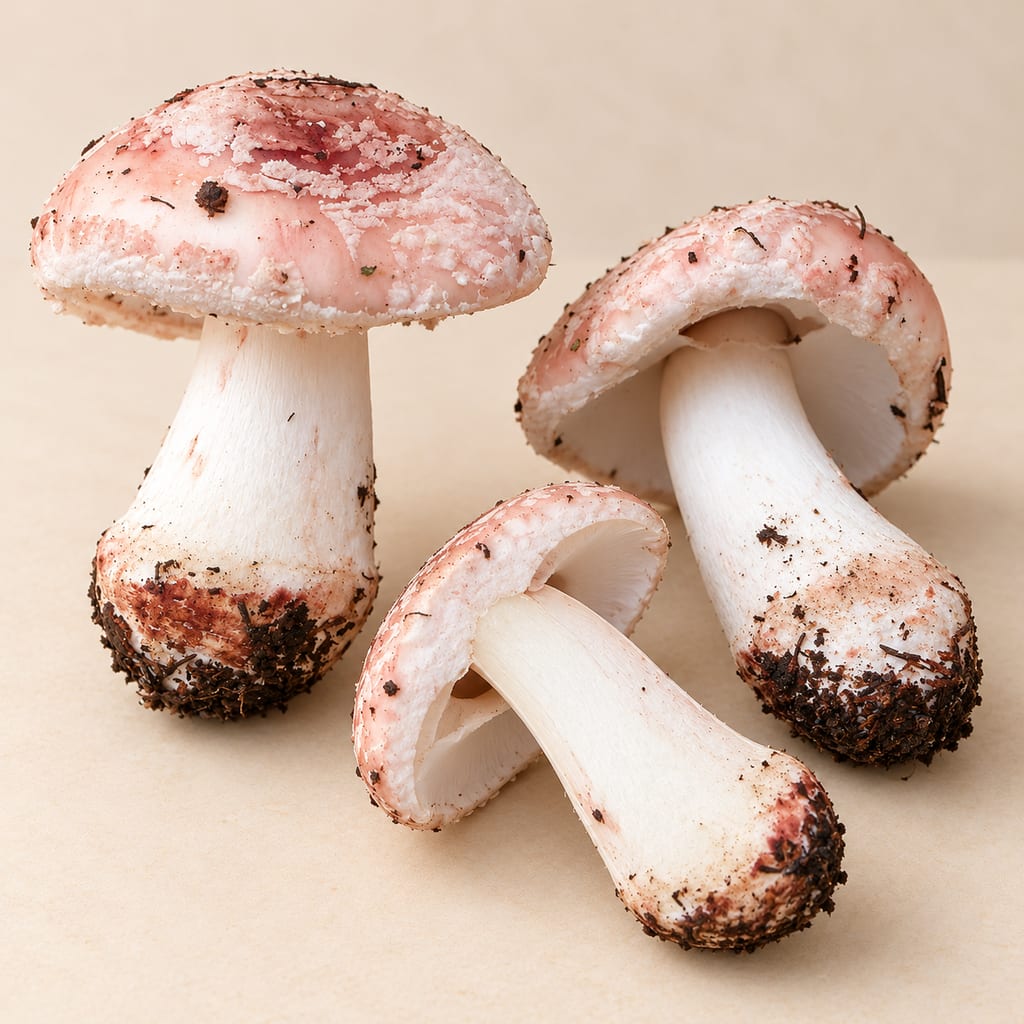
Amanita novinupta is a western North American blusher, a forest mushroom recorded as food in Mexico, and one that must be cooked because its raw flesh is toxic.
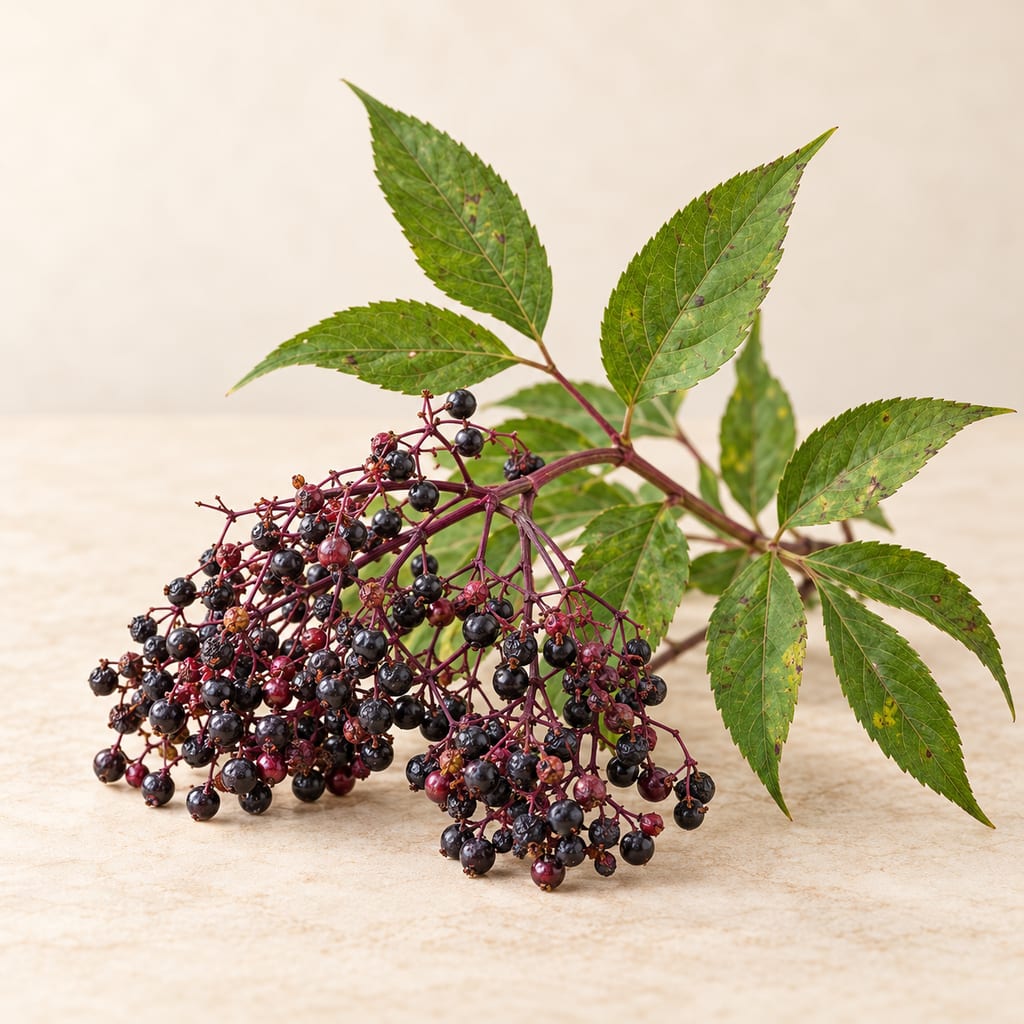
Sambucus canadensis is the accepted name used here for American elderberry. Missouri production guidance and named-cultivar studies give useful regional growing information, while food and analytical sources leave process questions open.
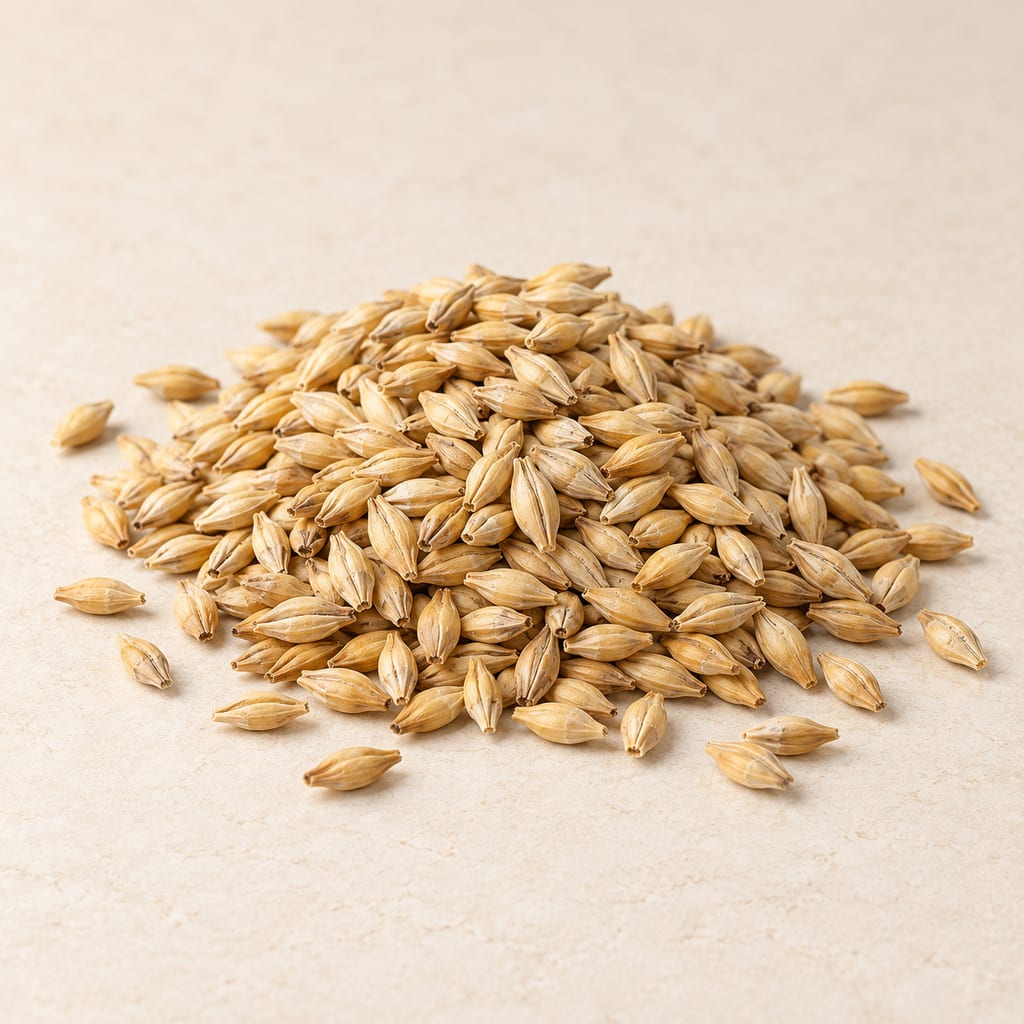
A lightly kilned brewing base made from two-row barley. It supplies starch and enzymes for the mash, with the maltster’s product and lot analysis defining its brewing properties.

Ripe avocado flesh is the soft, buttery, fat-rich pulp of Persea americana, eaten raw. It is low in acid, so it is a fresh ingredient that needs care in chilled dishes.
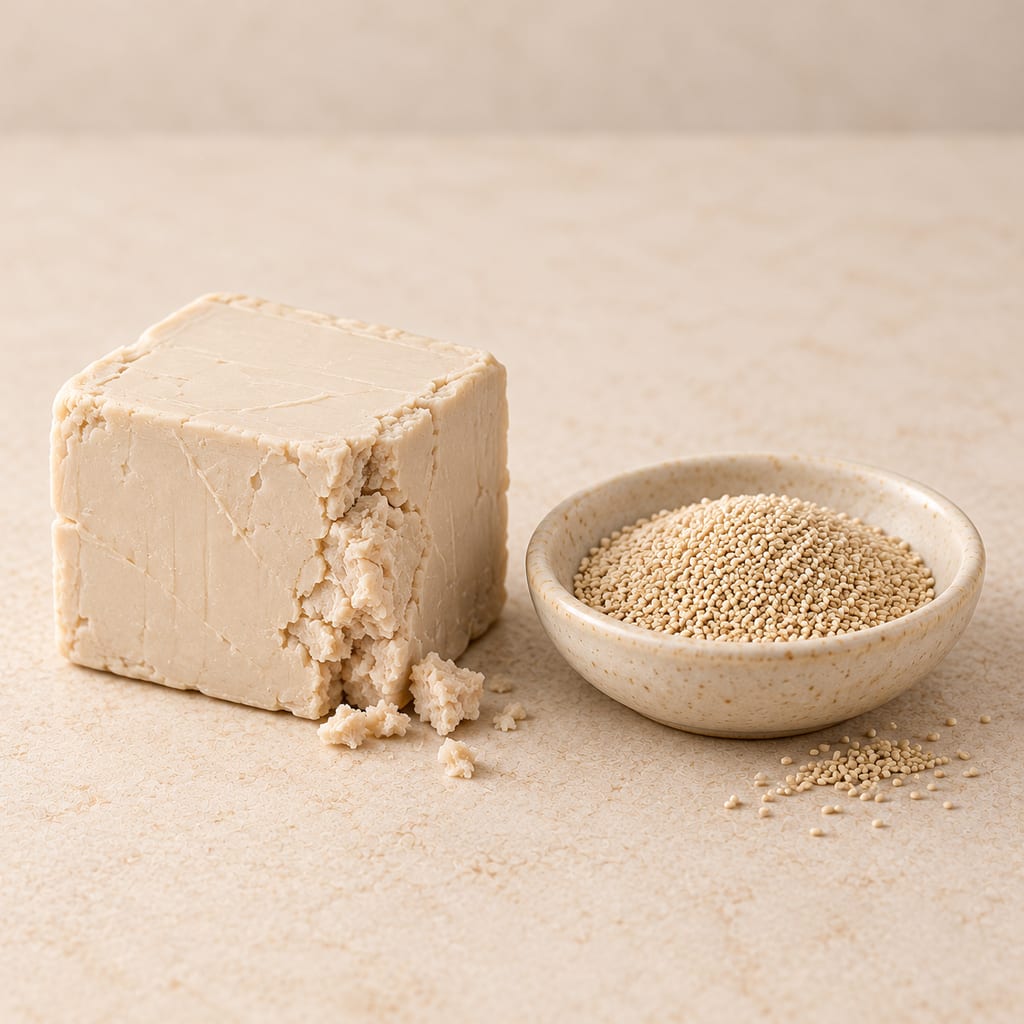
Baker's yeast is a cultivated living leavener, commonly sold fresh or dried. In dough, selected Saccharomyces cerevisiae cells make gas that can raise bread.
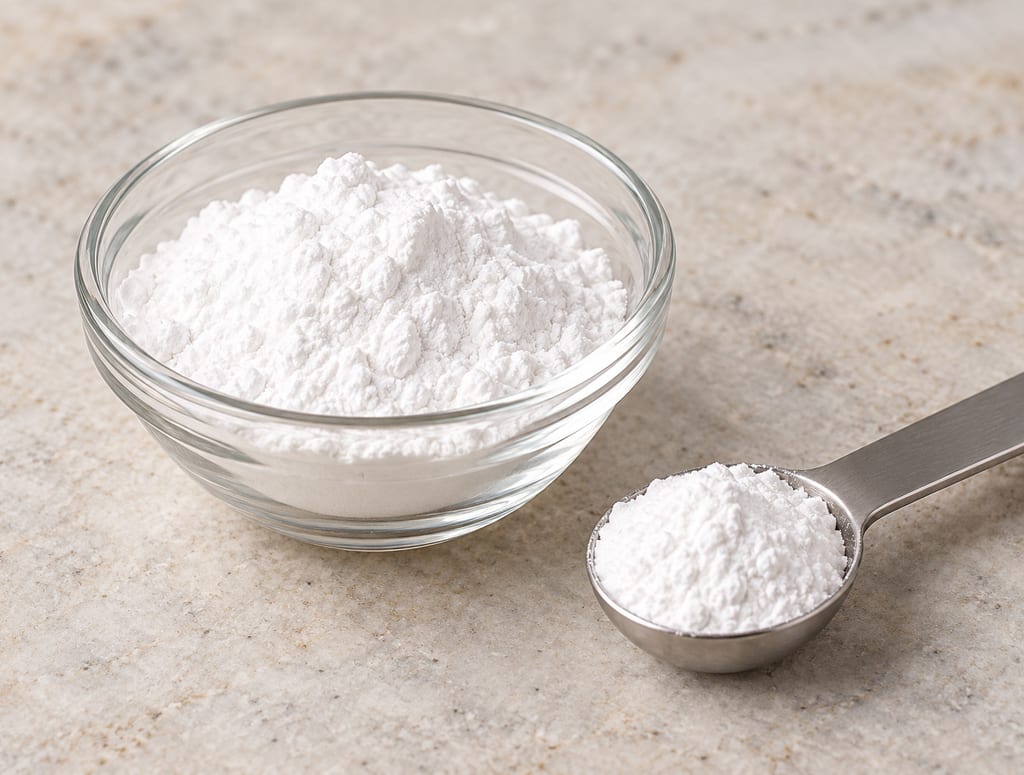
Baking powder is a dry chemical leavener that combines bicarbonate with acid-reacting ingredients and a carrier. Moisture and heat release carbon dioxide for quick breads, batters and griddle cakes.
No community contributions have been published for this entry yet.
Sign in to contribute. Published comments and photos are free to read.
American Society for MicrobiologyIdentity · History · Fermentation function
Mesophilic and Thermophilic Cultures Used in Traditional CheesemakingStarter selection and history; industrial temperature classification and strain variability
Cited in: A culture chosen for the milk; From soured milk to selected cultures; Moderate warmth is a preference, not a recipe
Food and Agriculture Organization of the United NationsIdentity · Forms · Process
Small-Scale Dairy Farming Manual, Volume 1, Technology Unit 10.1: Starter CulturesPages 181–187: culture forms, controlled souring, mother-culture context
Cited in: A culture chosen for the milk; Moderate warmth is a preference, not a recipe; Powders, frozen cultures and active liquid
Omnom CheeseRecipe use · Ingredient identity
QuarkOne litre milk; tiny pinch or half drop-spoon mesophilic starter; rennet listed separately; no brand, strain or activity specified
Cited in: A culture chosen for the milk; Choosing for the food and the people eating it
The Macmillan CompanyHistory · Historical attestation
The Story of MilkPrinted pages 30–34: pure cultures, Storch and Conn, mother starters and daily propagation; pages 71–73: cream ripening before churning; historical practice, not current handling instructions
Cited in: From soured milk to selected cultures; The mother starter and the daily dairy
AIMS MicrobiologyFermentation function · Identity
Lactic acid bacteria as starter cultures: An update in their metabolism and geneticsSections 2.1 and 2.3 and 3.1: sugar and citrate metabolism, diacetyl and acetoin, protein breakdown and strain differences; review names retained in context
Cited in: A culture chosen for the milk; Turning lactose into acid; Acidity and buttery aroma are different jobs; Milk protein also feeds the bacteria; Choosing for the food and the people eating it
American Society for MicrobiologyFermentation function
The Basics of CheesemakingAcidification and rennet coagulation; casein micelle mineral changes; later whey removal affects texture
Cited in: Turning lactose into acid; Choosing for the food and the people eating it
Tetra Pak, Dairy Processing HandbookForms · Process · Fermentation function
Cultures and Starter ManufactureTables 12.1–12.2: culture examples and applications; direct-set and bulk forms; controlled propagation and hygiene; storage differs by product form
Cited in: Acidity and buttery aroma are different jobs; Powders, frozen cultures and active liquid; Keeping the culture fit for its purpose; Choosing for the food and the people eating it
Danisco Cultures DivisionProduct example · Forms · Handling
CHOOZIT MM 101 LYO 50 DCU, Product Description PD 205521-6.0ENPages 1–3: named product composition and carriers; application-specific DCU dose; product-specific storage and handling; not identification of the unnamed quark starter
Cited in: Powders, frozen cultures and active liquid; Keeping the culture fit for its purpose; Choosing for the food and the people eating it