Recipes

1504 records with their sources, across 11 categories.

All vegetables14Adjacent and excluded5Lactic-fermented vegetables and shoots5Acid and oil pickles1Condiments and enzymatic seasonings1Fruit preserves1Grain and starch ferments1
Filtered to

Recipes

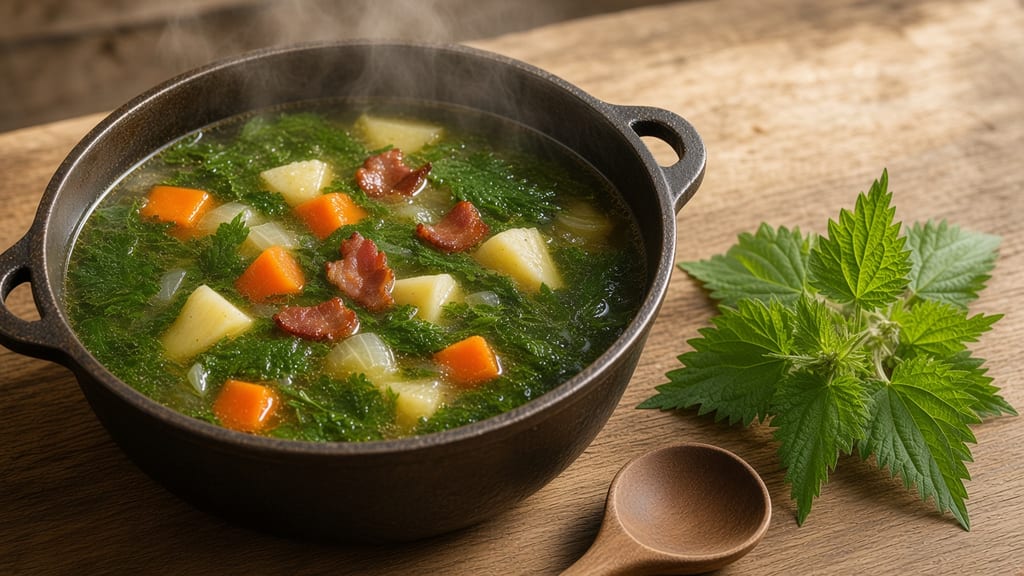
An iron pot of nettle soup with root vegetables and bacon beside fresh nettle tops.
Elevated risk

Spring nettle pottage (modern reconstruction)

Young stinging nettle shoots cooked with bacon, onion, garlic and three roots into a thick spring soup, from a Danish Viking museum's recipe, with a meat-broth variation and ember-baked turnips.
Ribe · Modern adaptation
· Vegetables
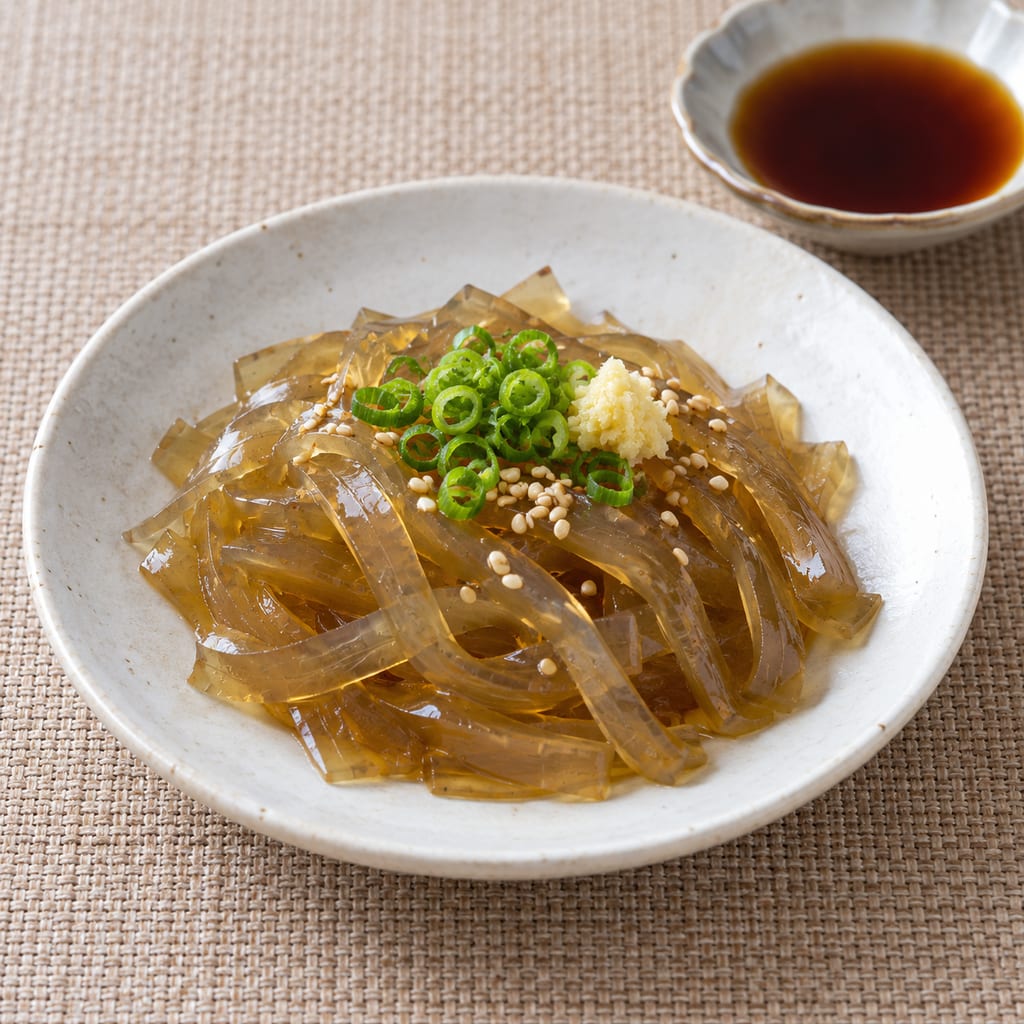
Illustrative Fukuoka okyuto served in narrow translucent seaweed-jelly ribbons with green onion, ginger and sesame; a separate soy-vinegar dressing is shown.

Okyūto (Fukuoka Egonori Seaweed Jelly)

A traditional Fukuoka seaweed jelly made by boiling dried egonori, sometimes with igisu, until it forms a thick extract that sets into soft sheets, eaten cold with soy sauce, vinegar and aromatic condiments.

Fukuoka City and Hakata · Traditional method
· Vegetables
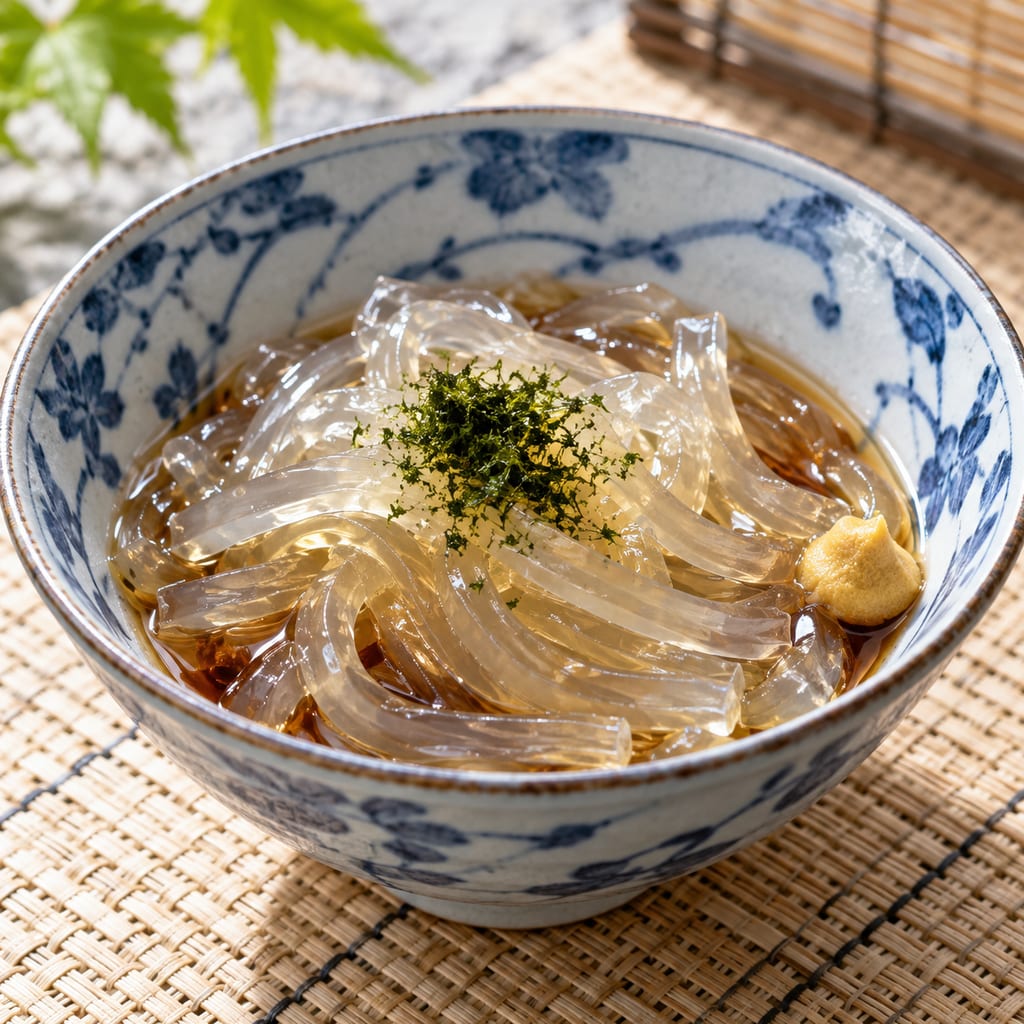
Translucent tokoroten strands in a blue-and-white bowl, lightly dressed with vinegar-soy sauce and topped with green laver and mustard.
Elevated risk

Tokoroten (Japanese Seaweed Jelly)

A Japanese jelly made by boiling agar-rich red seaweed, straining the extract and letting it set, then pressing it into strands served with vinegar-soy sauce or sweet syrup.

Japan · Traditional method
· Vegetables
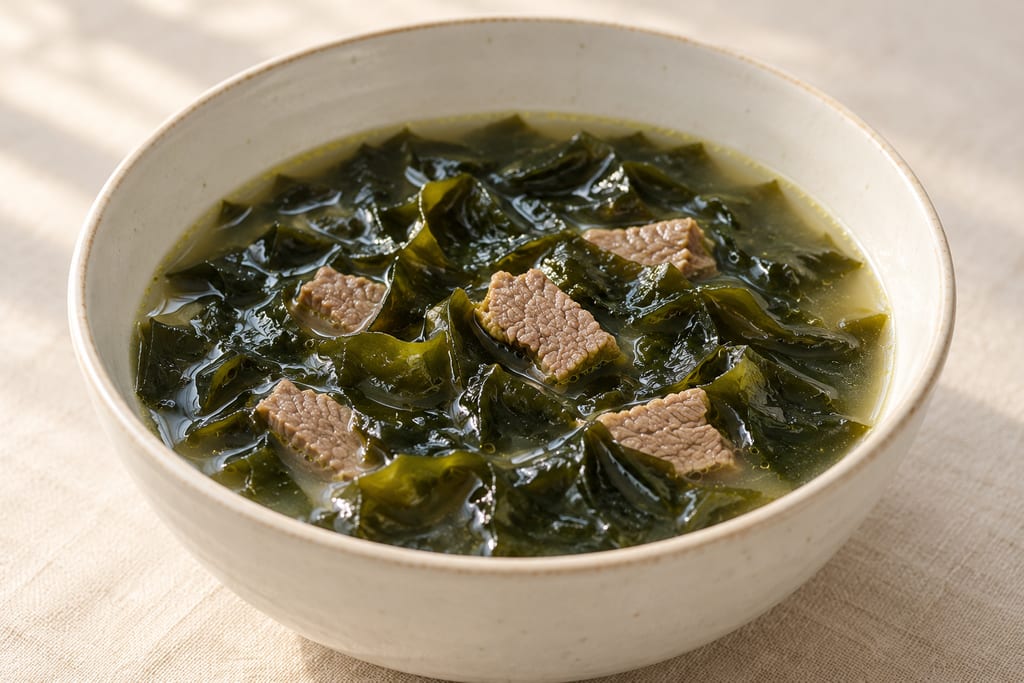
A bowl of Korean miyeok-guk with glossy dark sea mustard and tender beef in clear broth.

Miyeok-guk (Korean Seaweed Soup)

A Korean soup of rehydrated brown seaweed simmered with beef, seafood or a plain seasoned broth, traditionally served after childbirth, on birthdays and as an everyday meal.

Goryeo kingdom, Korean Peninsula · Modern adaptation
· Vegetables
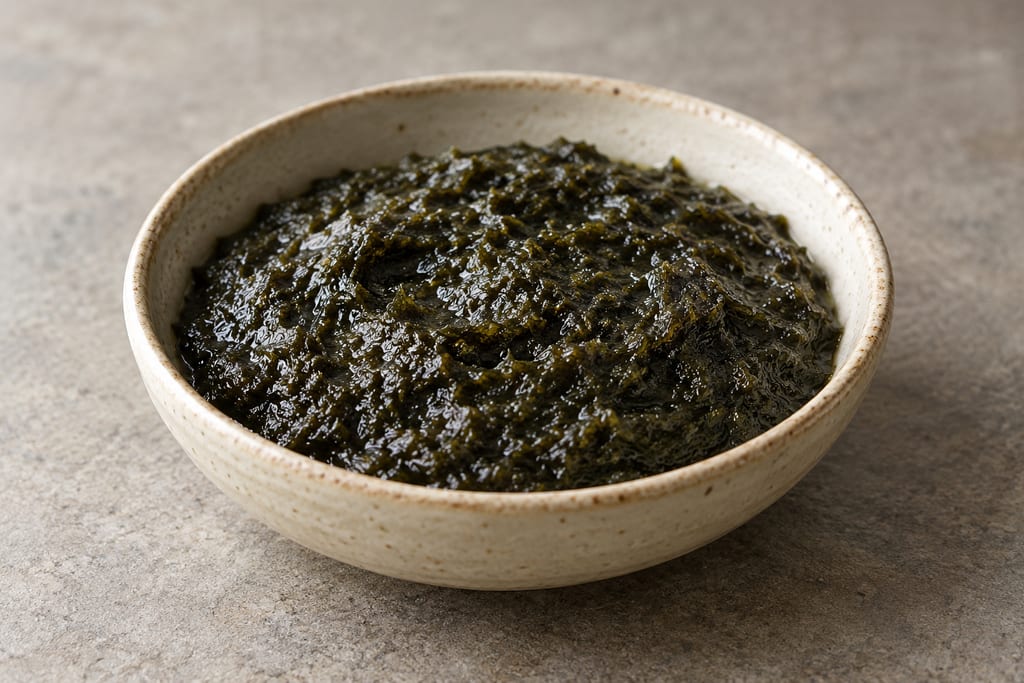
A bowl of cooked Welsh laverbread paste, dark olive green to nearly black with a moist, softly textured surface.
Elevated risk

Welsh Laverbread

Welsh laverbread is hand-gathered purple laver slowly cooked to a dark green-black paste, eaten with oatmeal, bacon and cockles or on toast.

Wales · Traditional method
· Vegetables