Dushan chousuan with pork intestines
A Dushan restaurant dish of pork large intestine cooked with the fermented condiment chousuan.
 FermenteaWhere food goes to change
独山臭酸 · 臭酸 · stinky sour · stinky acid
A pungent fermented vegetable condiment from Dushan, Guizhou, made in a documented traditional pattern with impatiens and other plants.
Dushan chousuan, 臭酸, is a pungent fermented vegetable condiment associated with Dushan County in southern Guizhou. Its name means stinky sour: the smell and the acidity both matter to its identity. A study of market samples describes a green, sticky product used to season meat, tofu and hot pot. A small amount of this concentrated preparation can enter a cooked dish, while a restaurant may also serve the sour uncooked as a condiment.
The county has several named sours. The Dushan study groups stinky sour with shrimp sour and yan sour as three regional fermented foods. Sharing a name for sourness does not make their ingredients interchangeable. Chousuan is the vegetable preparation described here; shrimp sour is a separate seafood preparation. The sources do not establish when chousuan was first made or identify a single inventor.
The Dushan study names its main plant impatiens, Impatiens balsamina L. Garden balsam is the English name given in the filmed visit. The study provides a relevant scientific identification for its described traditional ingredient, but the footage and captions do not independently identify the plant in that particular workshop. Nor does the paper specify which parts of the impatiens plant are used. The plant name alone is not a basis for selecting or gathering a plant for food.
The paper also names mustard greens, Brassica juncea L.; bamboo shoots; pungent litse fruit, Litsea pungens Hemsl.; and fried wheat. It describes makers adjusting their ingredient ratios. These are ingredients of the traditional pattern the researchers report; the paper does not give a weighed formulation or establish the composition of each of the 42 individual samples. It calls the litse material fruit, so the more familiar translation seed should not be substituted without evidence about the material a maker uses.
The named ingredients contribute different materials to a mixture rather than forming a simple single-vegetable pickle. The paper records the aromatic litse fruit and fried wheat as additions, but does not measure what each one contributes to fermentation or quantify its share. In particular, fried wheat is not evidence of an added microbial starter. The authors describe the fermentation as natural, with no starter introduced.
The researchers describe washing and draining the impatiens and greens, cutting them, and combining them with chopped bamboo shoots, fried wheat and litse fruit. The mixture is packed and compacted into pottery jars, which are sealed and kept in the shade for natural fermentation. Their general account gives approximately one month and says ratios vary with the maker. It cites an earlier review for the method; the original review was not inspected for this draft.
This is a description of an established practice, not a complete reproducible batch. The paper does not provide ingredient weights, the plant parts, a salt quantity, an actual temperature range, a measurement-based endpoint or a validated storage period. Shade describes where the jar is kept; it does not specify a temperature. Approximately one month is the authors’ reported duration, not a universal safety threshold. These omissions matter when attempting to reproduce the food, and a measured method and qualified process assessment are needed before turning the description into home instructions.
The physical stages still explain the form of the food. Cutting makes pieces that can be packed together, while compaction places the mixture inside the vessel before the long fermentation. The finished material has a sauce-like consistency; the sampled market products were green and sticky. Neither a particular colour nor a strong smell establishes that an unknown batch is suitable to eat.
The researchers bought 42 chousuan samples from Dushan agricultural markets in February 2023. They measured acidity and microbial counts, sequenced bacterial and fungal marker regions, and used electronic nose and tongue instruments to compare the samples. The samples varied in microbial composition and in sensor responses. This snapshot shows diversity among products available at the time; it does not trace every jar from fresh ingredients to completion or establish a recipe for all local makers.
Lactic acid bacteria were among the organisms detected, and the authors discuss their potential relationship with sourness. Sequencing reports the genetic signatures found in samples; it does not by itself show which organisms were active at each stage or prove that any one organism caused a particular flavour. The researchers also found statistical associations between microbial groups and electronic taste or aroma readings. Those correlations suggest questions for experiments rather than proving that adding or removing a named culture will reliably change a batch.
The electronic nose had a strong response from a sensor sensitive to sulfides; the paper also notes that this sensor responds to nitrogen oxides. It does not identify a particular odor molecule by that measurement alone. Across the sampled products, acidity and microbial counts had negative associations. Those observations are useful for understanding variation, but they are not a tested safety limit, a home fermentation target, or a substitute for knowing the raw materials and process.
In the filmed Dushan restaurant visit, the finished sour appears in two different dishes. One is described as raw, with chilli and tomato. The speaker is uncertain whether the crunchy addition is peanut or toasted soybean; the caption should not be silently changed into a confident statement that both are present. Whole mujiangzi are also mentioned. The transcript does not give amounts or a full restaurant recipe.
The second dish is the sour cooked with pork large intestine. The speakers describe it as stir-fried, and their reactions indicate a less dramatic taste than the raw serving they had just tried. That is a comparison made by those diners, not a guarantee that heating removes the smell or makes a batch safe. The study’s mentions of meat, tofu and hot pot offer other examples of culinary use, without providing separate recipes for them.
The raw dip and the cooked dish begin with a prepared sour. Chilli and tomato in the restaurant serving cannot automatically be read back into the original fermentation. Likewise, the transcript’s discussion of rice-based white sour and chilli sour concerns other preparations. A tomato sour soup study describes its own tomato, rice-flour and liquor tradition; its formulation is evidence of that different sour, not a missing ingredient list for chousuan.
The strongest subject-specific evidence here is the Dushan market study and the observed restaurant descriptions. The first provides a named set of ingredients and a general account of fermentation, plus measurements on finished samples. The second shows how diners encountered the sour but does not reveal how its particular batch was prepared. These sources support a substantial account of the food and its uses, while leaving an exact method unresolved.
A separate regional Chinese account appeared in search results but could not be opened, so its reported alternatives and timing are not incorporated as verified instructions. Further work should inspect a maker’s full method and identify the food plant and its parts in that context. A dependable recipe would also need its quantities, handling, fermentation conditions, endpoint and storage assessed together. Until then, this entry records the practice without pretending that its missing measurements can be reconstructed from a photograph, an aroma, or a different sour.
Reported as a traditional fermented food of Dushan; its origin date is not established.
No reproducible ingredient list is recorded.
The sources do not give enough detail for preparation directions.
Documented local production, not a claim of exclusive origin.
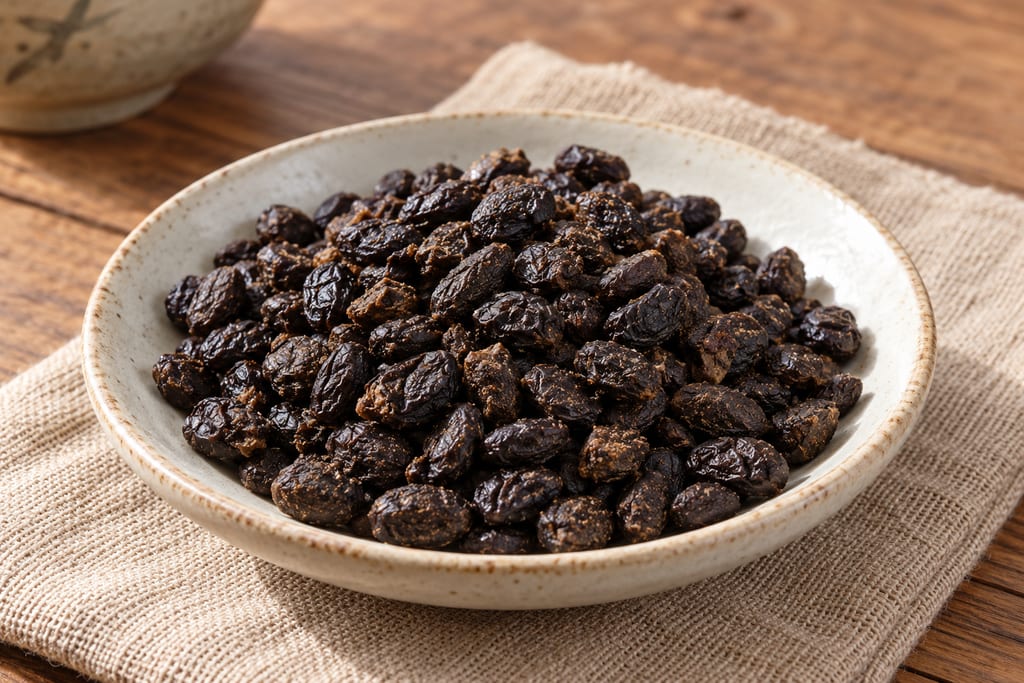
A Chinese fermented soybean condiment in which Bacillus-led bacteria, not moulds, drive the fermentation. Documented in Zunyi, Guizhou, and kept separate from mould-led douchi.
A fermented freshwater-shrimp condiment from Dushan, Guizhou, matured with salt and liquor and later seasoned with chilli, garlic and sweet rice wine.
A fermented tomato and chilli sour from Guizhou, used as a cooking base for fish, beef, hot pots and other dishes.
Beef and fresh mustard greens in a sour broth made with an already fermented chilli base.
A Guizhou fermented sour liquid made in distinct traditions from rice-washing water, rice soup or flour soup.
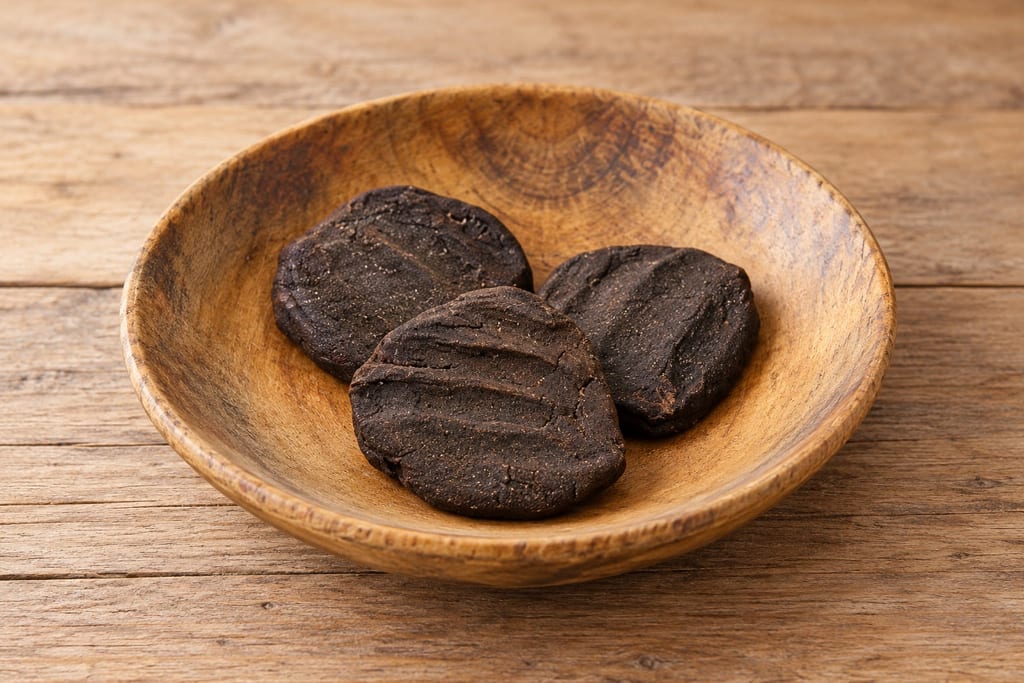
Dried cakes of pounded taro leaves from the Ao Naga in Nagaland, yellowed in a bag, then dried by hot ash or sun and used to flavour meat dishes.
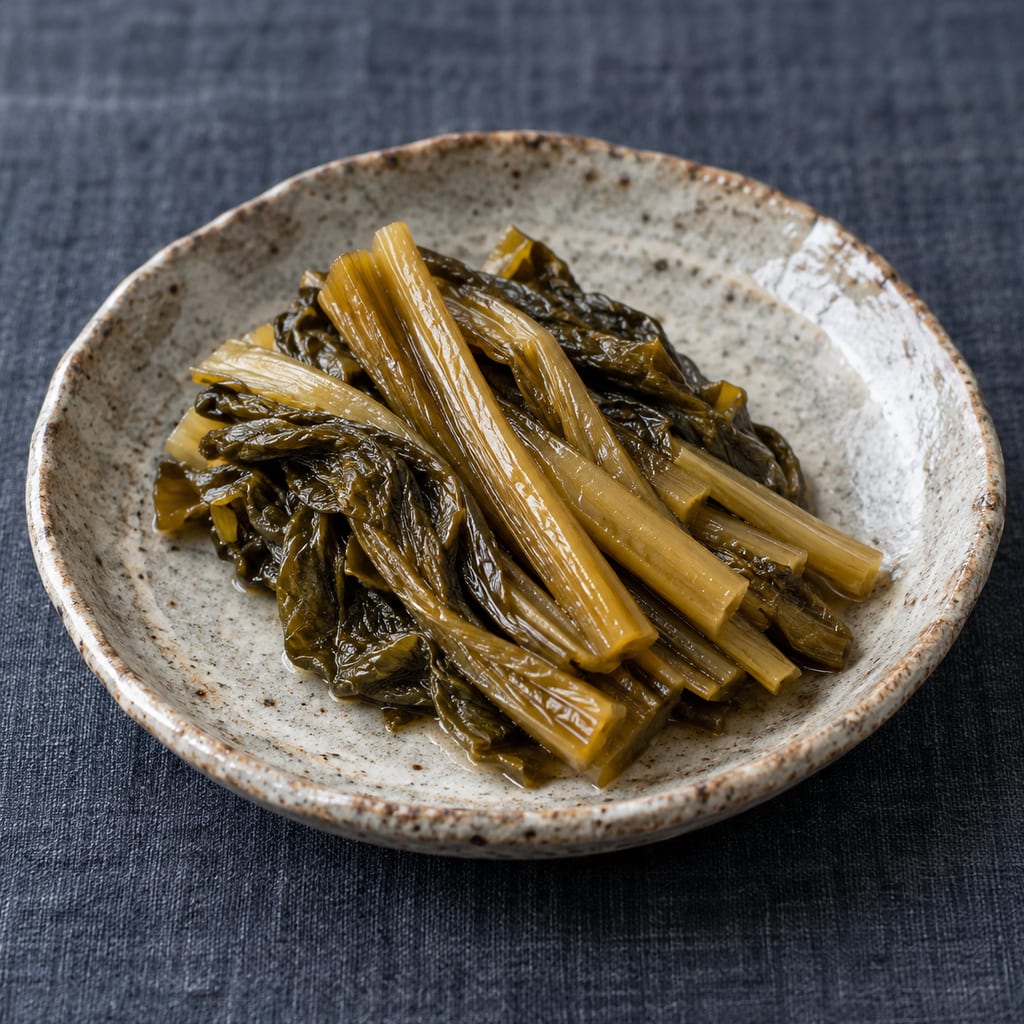
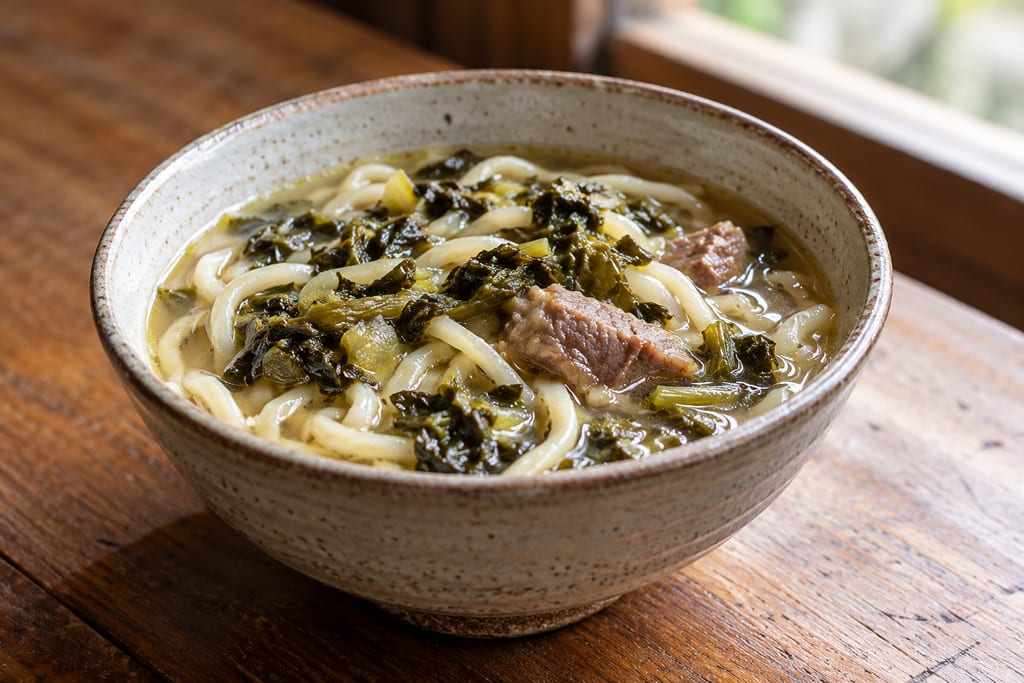
Takana mustard greens from Aso in Kumamoto are salted and pressed into a fresh spring pickle, or aged into a sour furuzuke that is fried and mixed into takana rice.
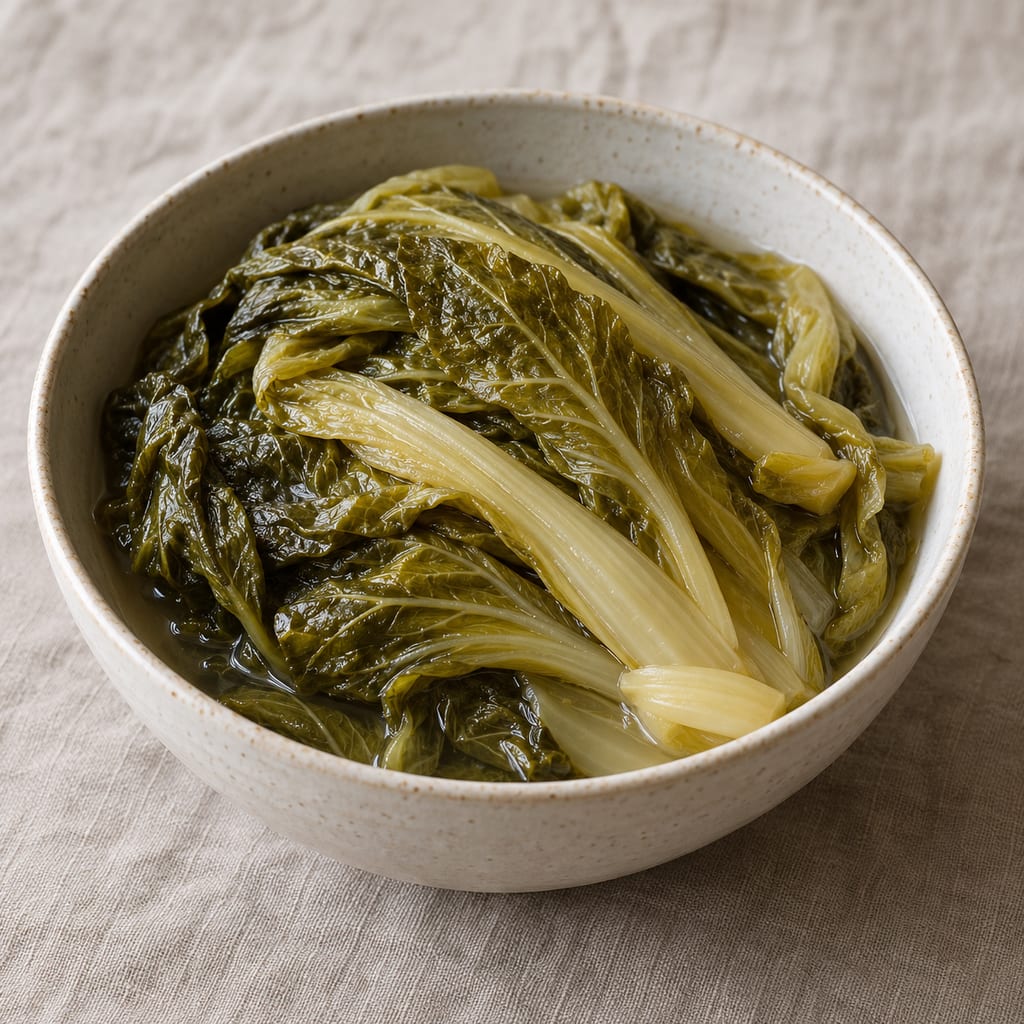
Wilted flat mustard leaves ferment with rice water and salt as a Filipino appetizer and cooking ingredient.
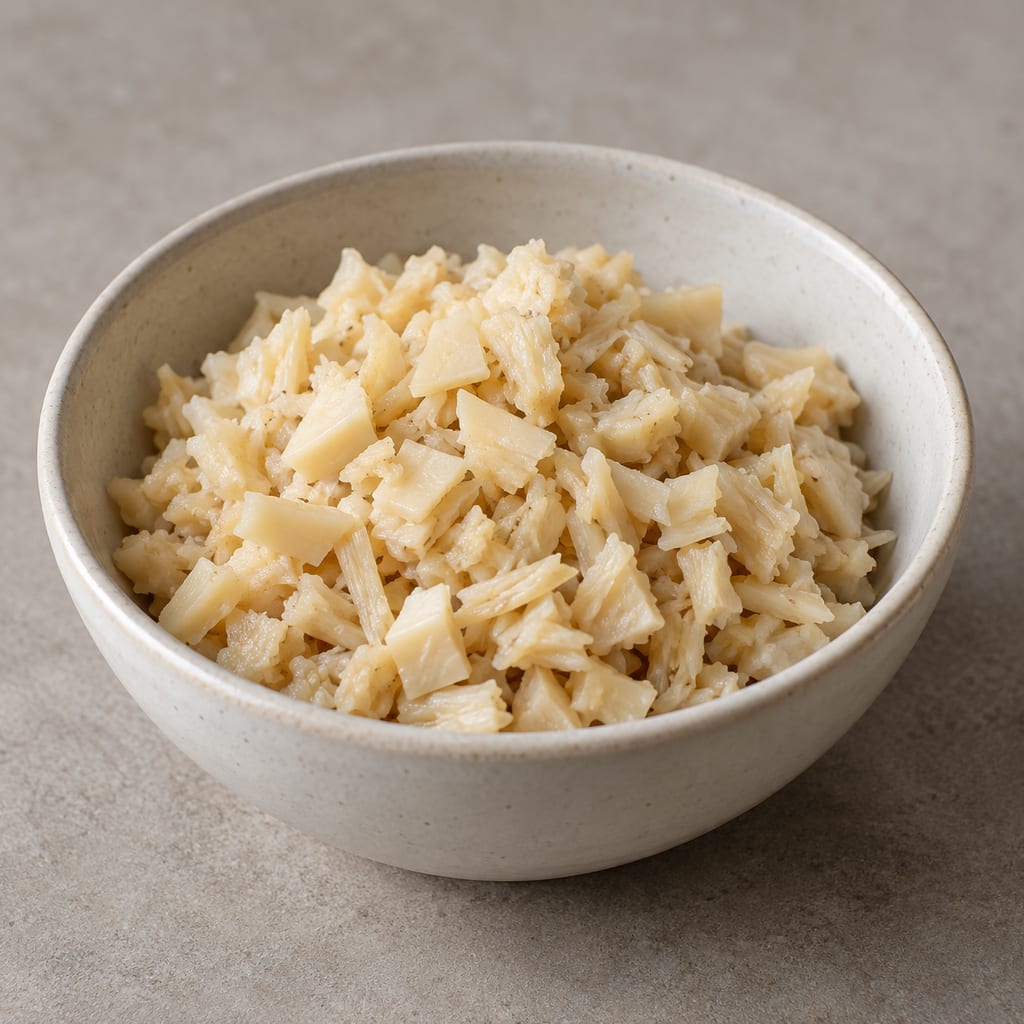
Finely chopped young bamboo shoots packed in leaf-lined baskets, sealed in a forest pit and weighted for one to three months, from Arunachal Pradesh.

Pit-fermented bamboo shoots from Arunachal Pradesh, cut smaller and sun-dried for five to ten days, used in curries.
Goyang is a Sherpa fermented wild leafy food of the Darjeeling hills and Sikkim. Rainy-season magane-saag leaves are packed in a bamboo basket, held at room temperature for about a month, then eaten fresh or dried and used in soup.
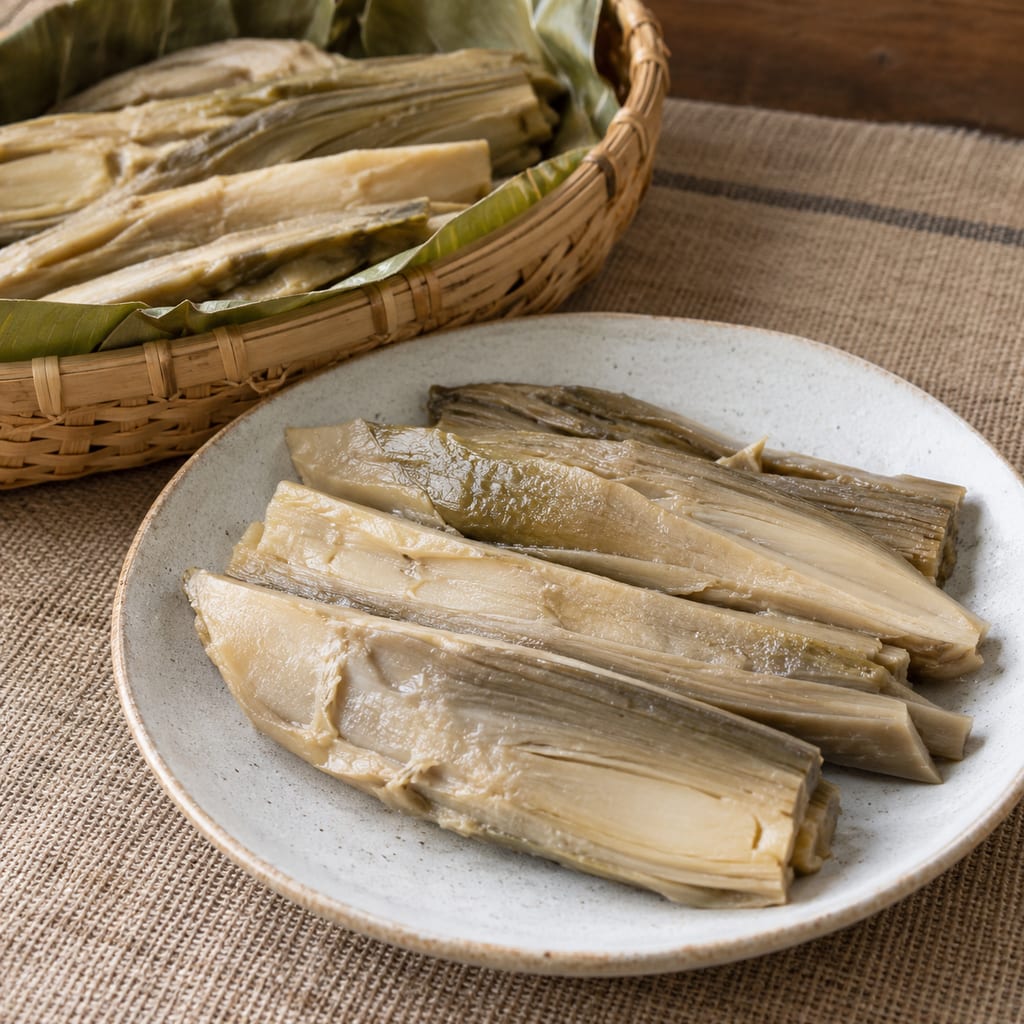
Upper tender bamboo-shoot tips, split or flattened, pit-fermented one to three months in Arunachal Pradesh and eaten in curries.
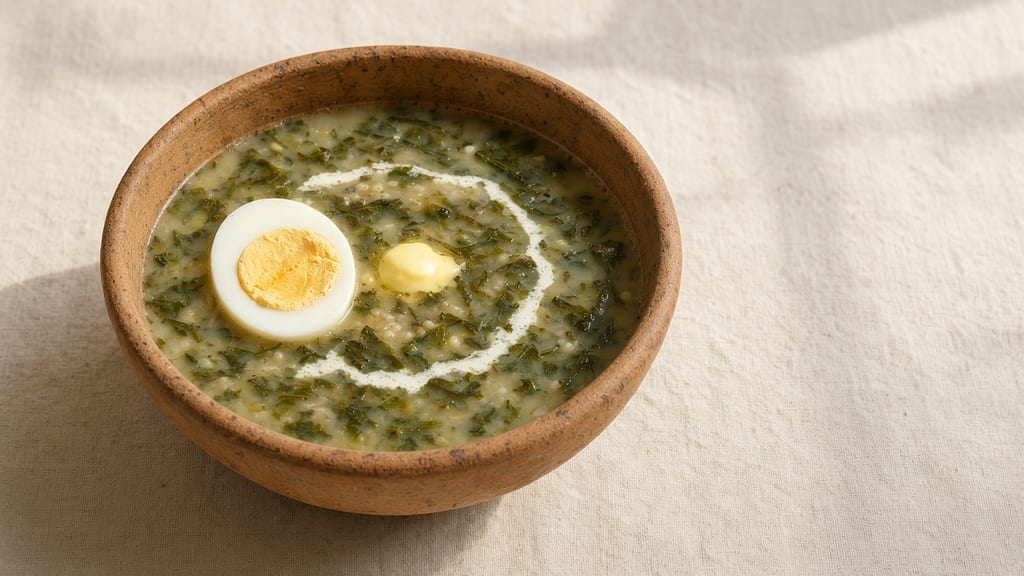
The original Polish barszcz: young hogweed leaves soured in warm water for a few days, then boiled into soup with egg, butter, cream or millet. Recorded from 1595, with warnings about the sap and lookalikes.
No community contributions have been published for this entry yet.
Sign in to contribute. Published comments and photos are free to read.
Food Chemistry: XMethod · Science · History
Characterization and correlation analysis of microbial flora and flavor profile of stinky acid, a Chinese traditional fermented condimentTraditional ingredients and general method
42 market samples and measured microbial and sensory variation
Regional and culinary context
Cited in: A sour with its own place; The plant and the other ingredients; How the reported preparation is made; What the study measured; At the table; Reading the evidence
YouTubeContext
Guizhou fermentation videoSupplied transcript: workshop sour and restaurant servings
Cited in: A sour with its own place; The plant and the other ingredients; At the table; Reading the evidence
Microorganisms, 2022Context
Comparison of Fermentation Behaviors and Characteristics of Tomato Sour Soup between Natural Fermentation and Dominant Bacteria-Enhanced FermentationSeparate tomato sour soup process
Cited in: At the table