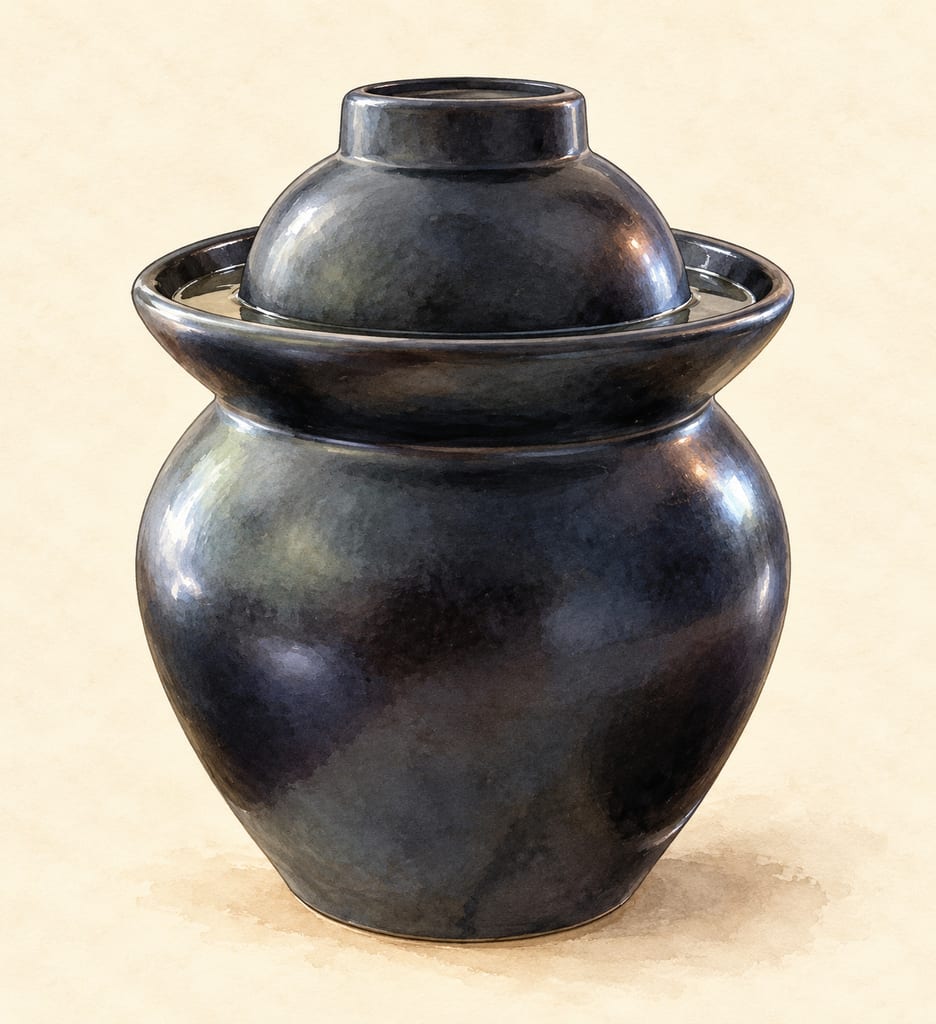
Paocai water-seal jar
The Sichuan paocai jar is a pottery or ceramic crock with a broad body, narrow neck, and annular water trough around its rim. An inverted lid rests in the trough; the seal is separate from the food brine.
 FermenteaWhere food goes to change
白酸汤
A Guizhou fermented sour liquid made in distinct traditions from rice-washing water, rice soup or flour soup.
White sour soup, 白酸汤 (bái suān tāng), is a fermented sour preparation associated with Guizhou in southwest China. It is a liquid base or condiment: its name does not necessarily mean that the contents of the fermenting vessel are already a complete soup ready to serve. It can become one component of a cooked dish. The distinction matters when following a source: a list of ingredients for a finished soup does not by itself tell us what went into its fermented base.
Traditional white sour soup is described as being made from rice-washing water, rice soup or flour soup. These starting liquids share a connection with grain, but they are not the same material. Washing water has been in contact with uncooked grain; rice soup is associated with cooked rice; flour soup starts with milled grain. They can differ in the amount and condition of suspended starch and in their microbial starting communities. A description of one cannot supply the missing measurements for another.
The sources examined here document the general practice and a particular rice-washing-water example, but do not supply a complete, independently validated household process. This entry therefore records what is known without presenting ingredients and steps as instructions. The name is useful for recognising a family of preparations; it is not a promise that every household uses one identical formula.
Sour soup is associated with the foodways of Guizhou, including Miao and Dong communities. A research paper identifies naturally fermented sour soup as a traditional condiment of these communities, while another describes continuing household and small workshop production of white sour soup. These sources support a regional association and a living practice. They do not establish which community first made the preparation, or the date of its invention.
One account connects the place of sour flavours in the region to difficulties obtaining salt and to transport. That explanation is reported in modern scientific writing; it is not, on its own, a dated record proving the origin of this particular ferment. Sourness can be important in a cuisine for many reasons, including taste and customary use, and a single explanation should not replace the histories of individual households and places.
In the supplied video transcript, a speaker lists white sour as rice fermentation among several kinds of sour preparation. The same account describes a vegetable soupy ferment called ān tāng and a red hot sour separately. The English transcript may mishear names, and it does not give dependable Chinese characters for ān tāng. It is evidence that the speaker distinguishes these foods, not enough to write a recipe for one from the description of another.
Rice-washing water is the water collected after contact with rice. A study of samples from Kaili describes using the washing water of glutinous rice, filtered through two layers of gauze before it enters an earthenware jar. The authors also describe ordinary rice washing water in their general account. Their description leaves out the amount of rice and water used to obtain the liquid, so it does not establish a reproducible concentration of starch or a complete batch size.
Rice soup is a different starting point. The account of white sour soup lists it alongside rice-washing water, but does not provide the amount of grain or water, the cooking process, or the treatment before fermentation. Those missing details matter: cooking changes rice starch, and a liquid taken from cooking rice should not be assumed to have the same composition as a rinse from uncooked rice. The fact that both can be called white sour does not establish that a method for one works for the other.
Flour soup is also listed as a possible substrate. Flour begins with milled grain rather than intact rinsed grains. The account does not specify the flour, proportions or complete preparation in the passage available here. In particular, it does not authorise adding flour to the Kaili washing-water method or replacing its liquid with flour soup at an invented ratio. These distinctions are useful even when a cook eventually chooses a single version: they explain why a broad name is not a formula.
The Kaili comparison describes glutinous rice washing water filtered through double-layer gauze and placed in a traditional earthenware jar. The described jars have a water-filled groove at the mouth, and this particular preparation ferments for approximately seven to ten days. It describes the washing water as being at ambient temperature, approximately 15–20 °C. This is a description associated with the paper’s particular local samples and cited practice, not a tested instruction for an arbitrary kitchen.
The water in the groove belongs to the jar closure, rather than being a measured addition to the sour liquid. The paper uses both anaerobic and semi-anaerobic descriptions for the fermentation environment; those terms should not be turned into an unsupported claim that all oxygen is absent. Filtering removes visible bran and other particles in the reported procedure, but the paper does not establish that filtering makes the ferment safe.
The account is not sufficient to calculate an ingredient list, yield, or safe finished product. It does not give the rice-to-water quantity, a verified endpoint, a safe storage period or a complete hazard-control procedure. A calendar duration and a temperature observed in a regional account cannot fill those gaps. They are retained here to make the source’s description useful, not to suggest that waiting a certain number of days makes a batch safe.
A separate laboratory study examined twenty traditional white sour soup samples, then compared experimental preparations. For its laboratory material, the authors report soaking glutinous rice for twelve hours and mixing it with deionised water at a rice-to-water ratio of 1:4 by weight to volume. This experimental substrate should not be quietly treated as the missing quantity in the Kaili washing-water account. The materials and the purpose of the two descriptions differ.
The laboratory compared an untreated, spontaneously fermented group with an inoculated group that received heat treatment and selected microbial strains. Such comparisons can help researchers examine how a defined starting community changes measured acidity, microbial profiles and flavour-related compounds. They do not establish that a home cook can reproduce the laboratory conditions, nor do they turn the selected organisms into a generally available or safe household starter.
The authors reported a lower measured nitrite level and different microbial results in their selected-starter group than in their experimental spontaneous group. These results concern those specific samples, conditions and tests. They are not a guarantee for another batch or proof that all possible hazards have been controlled. The results also cannot be used to assign a safe pH or fermentation duration to a household rice-washing-water preparation.
Naturally fermented white sour soup contains communities of microorganisms rather than a single guaranteed culture. In the twenty samples examined in one study, the authors found substantial differences among samples and reported Lactobacillus among the dominant bacterial genera, with Geotrichum and Pichia among the fungal genera. A genus name covers many organisms; finding its genetic signature does not prove that a particular species is alive, beneficial or safe in a given jar.
Microorganisms can make organic acids as they grow and use available nutrients. The accumulation of acids contributes to sour taste and a fall in pH, while other metabolites can contribute to aroma. The available grain material gives the community a substrate, but the proportions of rice particles and dissolved material depend on how the starting liquid was made. This is one reason the composition and flavour of a rice rinse cannot simply be assumed to match those of a cooked rice or flour preparation.
The Kaili comparison found differences between the bacterial communities of its white and red samples. Its functional results are predictions made from sequencing data, rather than direct measurements of effects in the human body. The paper itself notes that it did not distinguish pathogenic and probiotic types or test toxin genes. Neither an identified genus nor a predicted microbial function is evidence of a health benefit from eating the food.
White and red sour soups are related regional categories, but the names should not erase their differences. The comparative study describes a white example based on rice-washing water. Its red example combines tomato, red chilli and ginger with glutinous rice-washing water. A separate discussion describes red sour soup as often made with peppers or tomatoes. The ingredients and colours in these examples provide a practical distinction without proving that every producer follows the same formula.
The comparative paper records its own red mixture as approximately three parts tomato, one part red chilli, half a part ginger and five parts rice-washing water by volume. That ratio describes the red example only. It is not an ingredient list for white sour, and using it here as one would change the identity of the preparation. Other red methods may ferment components separately or use different proportions; a red sour recipe needs its own source and process.
The video transcript describes chilli sour being used to flavour a beef sour soup. It also lists white rice sour separately. This is useful evidence that a fermented sour can function as a base for a cooked dish, but it does not establish the ingredients or proportions for a white-sour beef soup. A finished dish and the sour base it uses deserve separate descriptions, so the cook can see which flavour comes from fermentation and which ingredients were added later.
The spontaneous fermentation study reported organisms the authors considered potentially harmful in some traditional samples, alongside organisms associated with fermentation. The sequencing results do not themselves identify the safety of every member of a genus, but they do show why a diverse natural community should not automatically be described as harmless. The authors also measured nitrite in their experimental groups. Both observations are reasons to seek a specific, validated process before giving practical instructions.
A sour smell, a pleasing taste, bubbles, cloudiness or the passage of a customary number of days cannot establish that a batch is safe. Nor does a named clay jar substitute for verified preparation, handling and storage controls. The present sources do not provide a complete recipe with those controls, so this record leaves its ingredient list and steps empty and makes no shelf-life or storage claim.
Further work should document one household or producer’s complete preparation, including the exact starting material and quantities, and obtain independent process validation appropriate to that method. A verified image of the finished white base would help distinguish the liquid from its raw ingredients and from a finished, seasoned dish. Until then, the reported jar practice and laboratory study explain the subject but should not be assembled into a new recipe.
A traditional Guizhou preparation associated with Miao and Dong foodways; earliest attestation and origin are not established.
No reproducible ingredient list is recorded.
Naturally fermented samples can contain potentially harmful microbial genera; the study does not validate a home process.
Hazard sourceThe experimental comparison measured nitrite in its samples; levels cannot be inferred for a different batch.
Hazard sourceThe sources do not give enough detail for preparation directions.
Regional association, not a demonstrated point of origin.
The Sichuan paocai jar is a pottery or ceramic crock with a broad body, narrow neck, and annular water trough around its rim. An inverted lid rests in the trough; the seal is separate from the food brine.
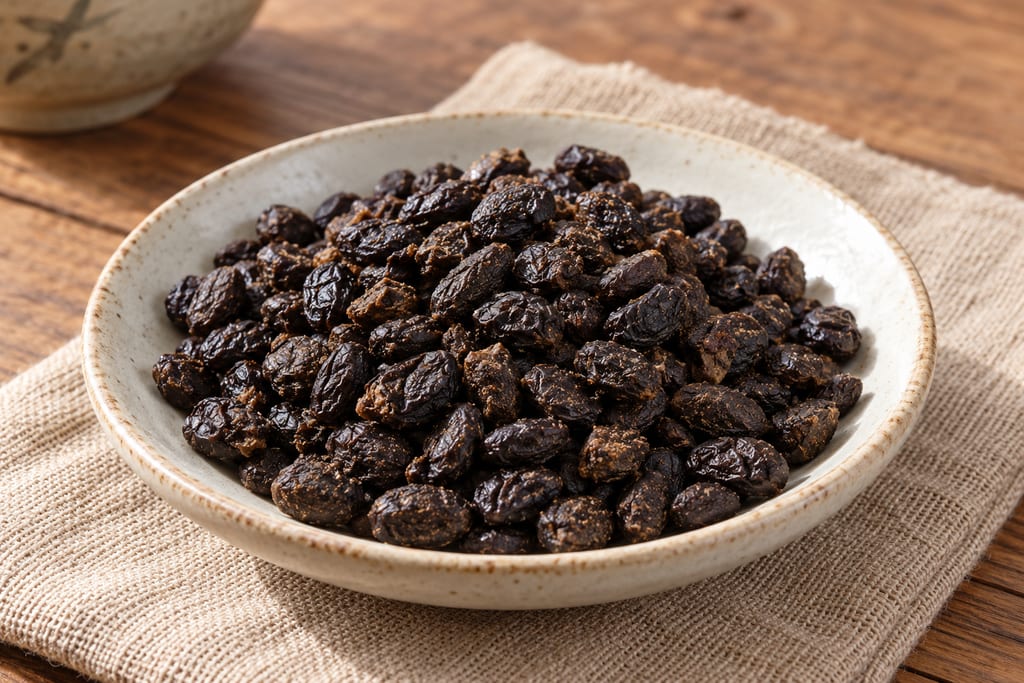
A Chinese fermented soybean condiment in which Bacillus-led bacteria, not moulds, drive the fermentation. Documented in Zunyi, Guizhou, and kept separate from mould-led douchi.
A pungent fermented vegetable condiment from Dushan, Guizhou, made in a documented traditional pattern with impatiens and other plants.
A Dushan restaurant dish of pork large intestine cooked with the fermented condiment chousuan.
A fermented freshwater-shrimp condiment from Dushan, Guizhou, matured with salt and liquor and later seasoned with chilli, garlic and sweet rice wine.
A fermented tomato and chilli sour from Guizhou, used as a cooking base for fish, beef, hot pots and other dishes.
Beef and fresh mustard greens in a sour broth made with an already fermented chilli base.
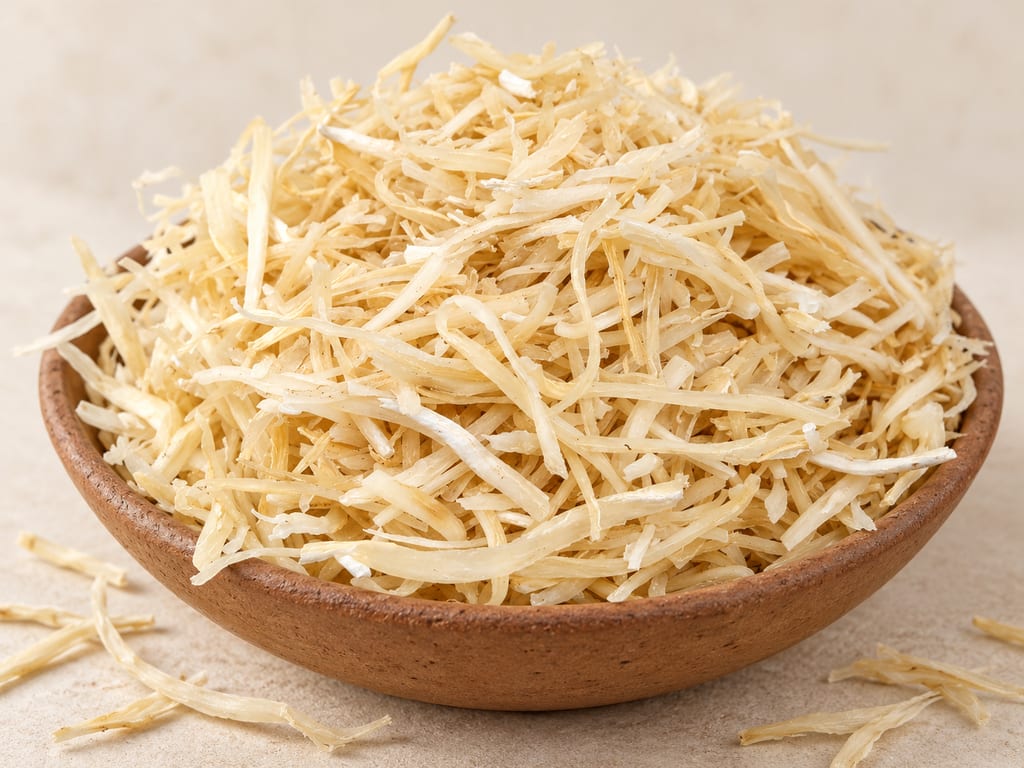
Abacha is a fermented cassava-strip preparation from southeastern Nigeria, sold wet or dried and later rehydrated for meals such as African salad.
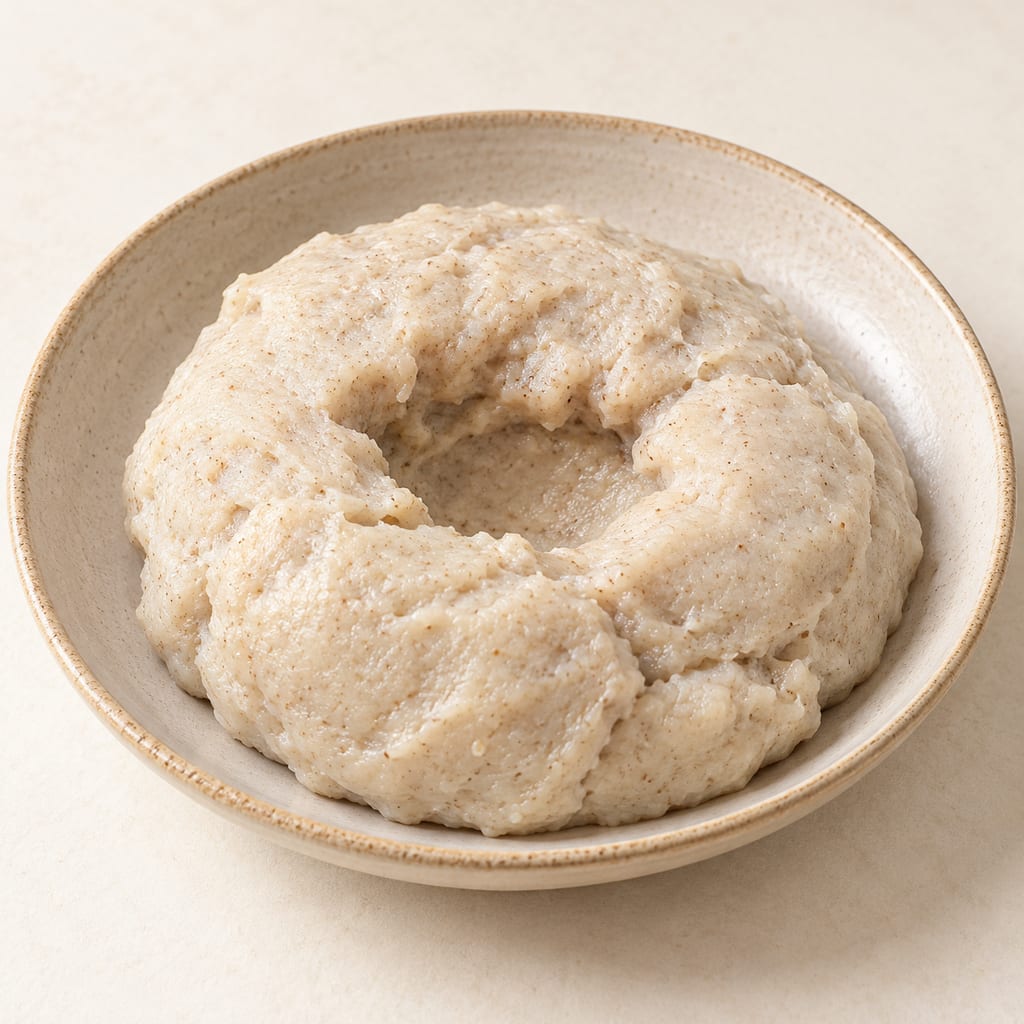
Aceda is Sudan’s firm cereal porridge, commonly made from sorghum and shaped into a smooth mound. Some versions use fermented dough; fermentation is not universal.

Ghanaian sour cassava dough fermented with traditional inoculum and drained during fermentation. It is used as a base for cooked foods such as banku and akple; process variants and safety outcomes differ.

Appam, or hoppers, are South Indian and Sri Lankan rice pancakes made from a fermented coconut-and-rice batter and cooked in a curved pan to a crisp lacy rim and a soft, spongy centre.
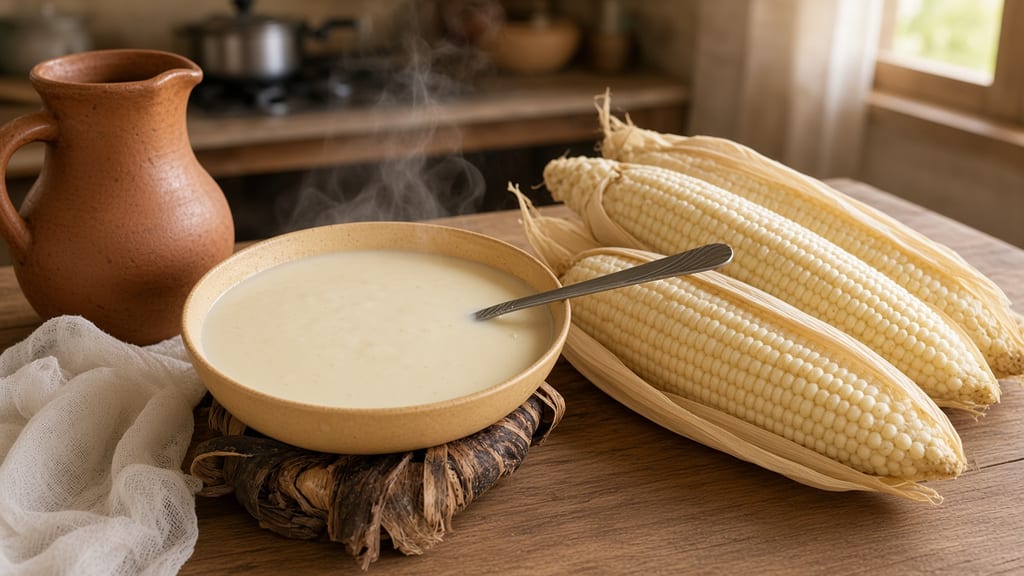
A hot, sour maize drink from Tabasco made from maize that is not lime-cooked. The ground grain sours for half a day, then makers strain it and boil it until thick.
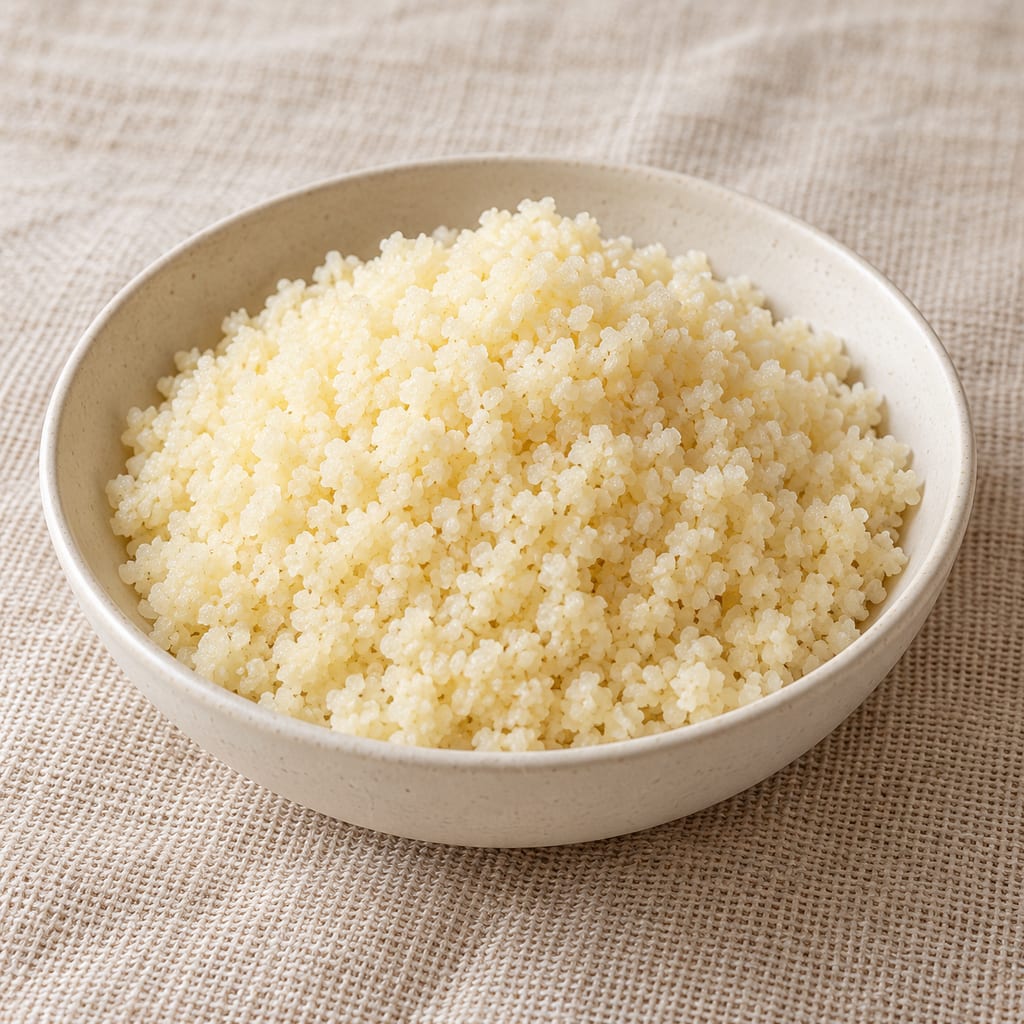
Ivorian cassava semolina: grated cassava is fermented overnight with a traditional inoculum, pressed, sieved into granules, dried and steamed. Documented in a 2006 field study; no sole original process is established.
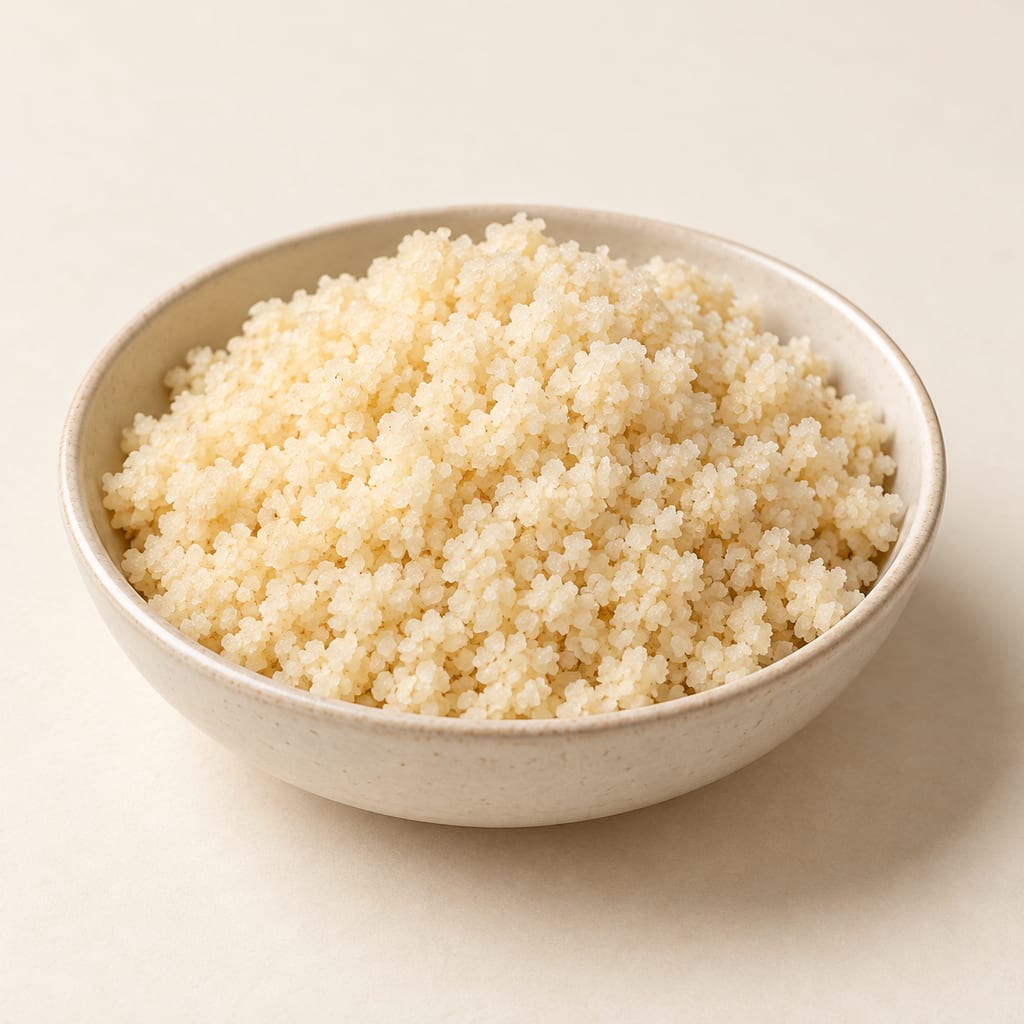
Attiéké is an Ivorian staple of grated cassava fermented with a traditional inoculum, then pressed, sieved, granulated, dried and steamed into fine couscous-like grains.

Crushed or milled barley cooked in water until the starch softens and the mixture thickens, the plainest way a northern household turned stored grain into a meal, here with apple and hazelnut.
No community contributions have been published for this entry yet.
Sign in to contribute. Published comments and photos are free to read.
Food Chemistry: XResearch
Microbial community structure analysis and screening of dominant strains in Guizhou white sour soup: enhancing safety, improving flavor, and shortening fermentation cycleSubstrate variants, experimental methods and sample microbiology
Cited in: A sour liquid with a life beyond the pot; Where the sour belongs; Three different starting liquids; What the laboratory studied; How fermentation changes the liquid; Reading the evidence safely
AMB ExpressResearch
Bacterial community and functional prediction differences between white and red sour soupKaili sample method and comparison limits
Cited in: Three different starting liquids; One reported jar practice; How fermentation changes the liquid; White sour and red sour; Reading the evidence safely
MicroorganismsResearch
The Role of the Bacterial Community in Producing a Peculiar Smell in Chinese Fermented Sour SoupRegional association and red sour distinction
Cited in: A sour liquid with a life beyond the pot; Where the sour belongs; White sour and red sour
YouTubeInspiration
Guizhou fermentation videoDistinction between white sour, chilli sour and ān tāng in supplied English transcript
Cited in: Where the sour belongs; White sour and red sour