Months in a jar, minutes in the wok
Guizhou’s sour ferments make quick dinners possible. Behind the hot wok are rice liquids, tomato and chilli sours, a freshwater-shrimp paste and the powerful plant condiment chousuan.
 FermenteaWhere food goes to change
红酸汤 (hóng suāntāng) · Guizhou red sour soup base
A fermented tomato and chilli sour from Guizhou, used as a cooking base for fish, beef, hot pots and other dishes.
Guizhou red sour soup is a fermented tomato and chilli base used to give a larger dish its sourness, colour and depth. It is associated with Qiandongnan in Guizhou, including the foodways of Miao and Dong communities. The name describes the prepared sour as well as its eventual place in a soup: a spoonful or larger portion of the base can become one component of a pot with meat, fish or vegetables. The base and the meal made with it are different preparations.
The condiment may be liquid or semi-solid. Tomatoes and red peppers give it a bright red colour, while ginger, salt and baijiu appear in regional descriptions. The fruit supplies the material for fermentation as well as the base’s colour; the resulting sourness becomes part of the seasoning for a larger dish.
White sour soup is a related but distinct Guizhou sour. It can begin with rice-washing water, rice soup or flour soup, while red sour is associated with tomato and chilli. A chilli sour can also stand on its own or become one component of a red sour.
One documented way to make red sour is to ferment tomato and chilli separately, then combine the resulting tomato sour and chilli sour and continue fermentation. Researchers call this split fermentation. They contrast it with a mixed method, in which tomato, chilli and other ingredients enter one fermentation together. Both methods have the same broad culinary destination, but the order changes the materials and microbial communities that meet at each stage.
In the split process, each vegetable first develops as its own sour; the later mixture brings their flavours together. At one Guizhou producer, researchers sampled tomato sour, chilli sour and the mixture at middle and later stages. The components differed in acidity and microbial composition, and the mixed component became more acidic in the later stage measured.
Traditional descriptions also name glutinous rice, white liquor, salt and garlic. The ingredients and their proportions vary with the preparation. Tomato sour and chilli sour each have their own character before they meet in the red base.
At one Qiandongnan manufacturer, cleaned fresh tomatoes are combined with salt and held until the mixture thickens, a first stage reported as two to three months. The product is then beaten, and 20 percent old sour soup is added for a second round. The older sour brings a portion of an established ferment into the new mixture.
In a separate laboratory comparison, researchers inoculated a mixture of 93.55 percent beaten tomato, 2 percent prepared culture, 2 percent glutinous rice flour, 1.45 percent salt and 1 percent liquor. They held it in sterile tanks at approximately 25 °C. This experimental tomato sour used a selected strain and was not the factory batch.
Another research team compared natural fermentation with selected bacteria and yeast in a mixture of tomato, chilli, glutinous rice, salt, ginger and garlic. These examples show the range of ingredients and the distinction between a producer’s process and experimental fermentations.
As microorganisms use available materials in the vegetables, organic acids accumulate and the sour changes in taste and acidity. Lactic acid is one of the acids measured in tomato sour soup. Sourness is one part of the flavour, not a synonym for every strong sensation in the jar. Aroma compounds, the natural flavours of tomato and chilli, salt and later cooking all contribute different qualities.
In the Qiandongnan tomato study, Lacticaseibacillus became prominent in the sampled fermentation, alongside yeasts and other fungi. A laboratory batch inoculated with a selected strain acidified faster than the comparison in that experiment. The microbes and their activity change with the materials and conditions of a batch.
In the split-fermentation study, tomato, chilli and mixed components had different microbial profiles. Acidity in the mixed samples rose later, while total free amino acids fell. Fermentation time therefore did not increase every measured component in the same way.
Researchers have also identified volatile compounds in natural and inoculated experimental red sours. These compounds contribute to the complex aromas of fermented food, alongside the flavours of the original ingredients and whatever is added during cooking.
Accounts of Guizhou food often connect the prominence of sour flavours with preservation and historically limited access to salt. A study of Kaili red sour packaging repeats the explanation that salt was scarce and costly in parts of the region. It is one account of a wider sour-food tradition; an earliest date for the present tomato-and-chilli preparation remains unestablished.
Kaili and Qiandongnan are strong contemporary associations for the base, alongside the Miao and Dong communities named in fermentation research. Household cooks and producers make related sours in different ways, bringing tomato and chilli together either before or after their first fermentation.
Red sour is used in sour fish and sour beef, as well as in hot-pot seasonings and stews. In these dishes it supplies a concentrated sour element that is dispersed through a larger quantity of liquid and other ingredients. The resulting bowl is not simply the fermented base served alone: the choice of fish, meat, vegetables and seasonings changes both its texture and flavour.
A ready-made base may already combine fermented components and seasonings. A cook adds this finished sour to a pot, where it mingles with broth and the ingredients chosen for the meal. Fresh chilli can add another layer of heat and texture at the table or during cooking.
The tomato and chilli base brings colour and acidity, while the fish, beef or vegetables give each dish its own character. In a rich meal, the sour seasoning provides a bright counterpoint to the other ingredients.
Reported traditional fermentation periods span one to twelve months across different practices. The factory account does not state the amount of salt, and the sources do not together provide a complete household method with a verified endpoint and storage conditions. These descriptions show how particular producers and researchers work; they are not instructions for making the base at home.
The tomato study measured nitrite as well as acidity and microbial changes. Sour taste, bubbles, aroma or a thick texture cannot establish that a batch is safe. A usable method needs a complete source-specific batch and qualified safety review. Local usage of the tomato names 毛辣角 and 毛辣果, and the relationship of 糟辣椒 to particular red-sour preparations, also need direct regional evidence.
Contemporary research documents red sour soup in Guizhou; the earliest dated attestation of the tomato-and-chilli preparation remains unestablished.
No reproducible ingredient list is recorded.
The tomato sour study observed changing nitrite and microbial populations during its sampled process.
Hazard sourceThe sources do not give enough detail for preparation directions.
A documented regional association, not a precise birthplace.
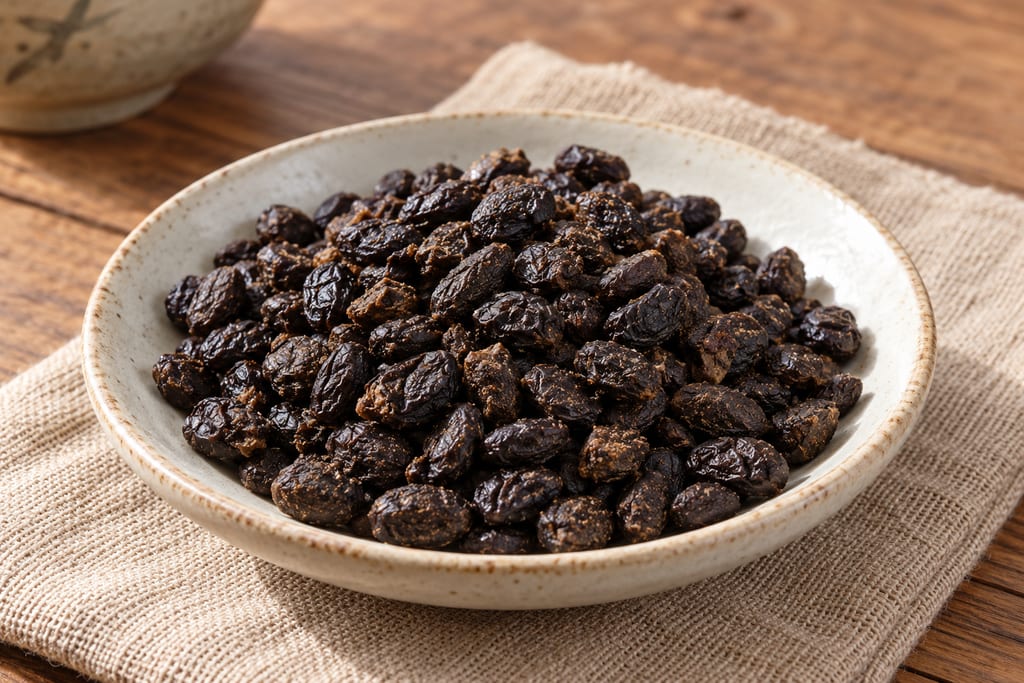
A Chinese fermented soybean condiment in which Bacillus-led bacteria, not moulds, drive the fermentation. Documented in Zunyi, Guizhou, and kept separate from mould-led douchi.
A pungent fermented vegetable condiment from Dushan, Guizhou, made in a documented traditional pattern with impatiens and other plants.
A Dushan restaurant dish of pork large intestine cooked with the fermented condiment chousuan.
A fermented freshwater-shrimp condiment from Dushan, Guizhou, matured with salt and liquor and later seasoned with chilli, garlic and sweet rice wine.
Beef and fresh mustard greens in a sour broth made with an already fermented chilli base.
A Guizhou fermented sour liquid made in distinct traditions from rice-washing water, rice soup or flour soup.
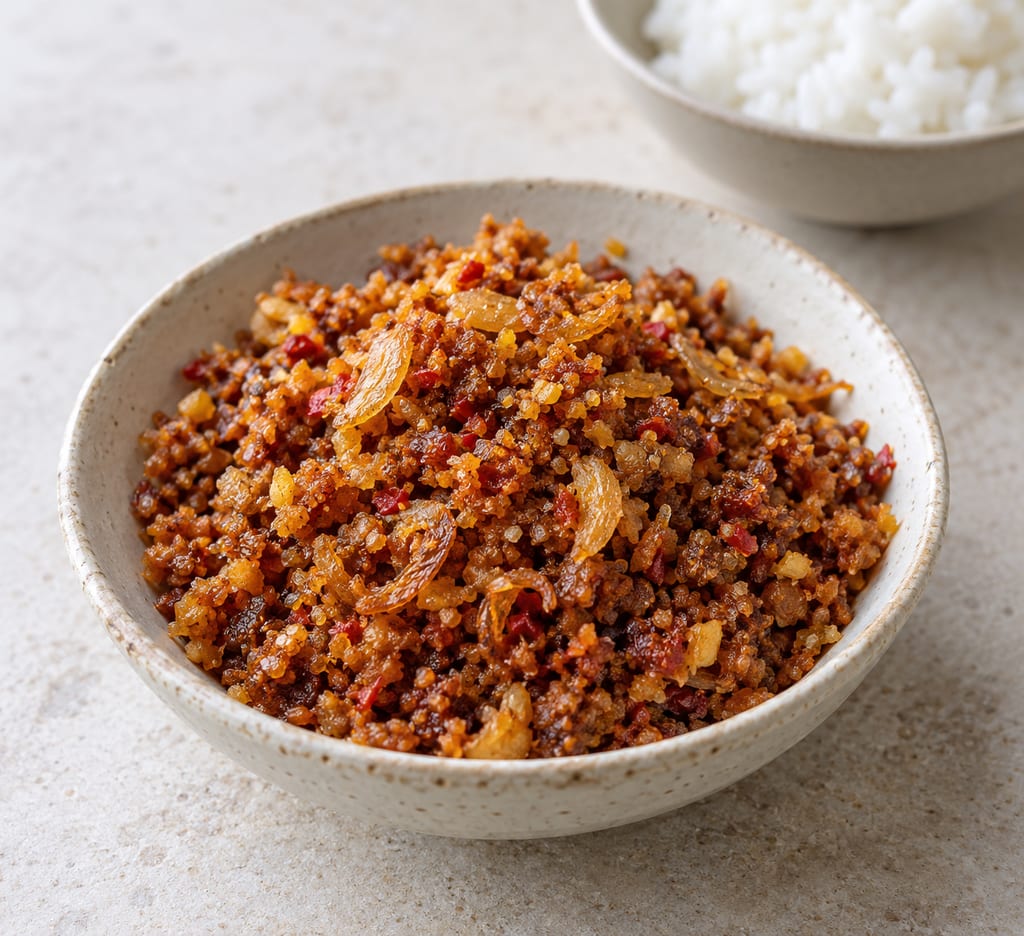
A Myanmar relish of dried shrimp, fried eschalot and garlic, chilli, turmeric, tamarind and ngapi. Naomi Duguid’s published recipe makes about 1 cup; it contains crustacean shellfish.
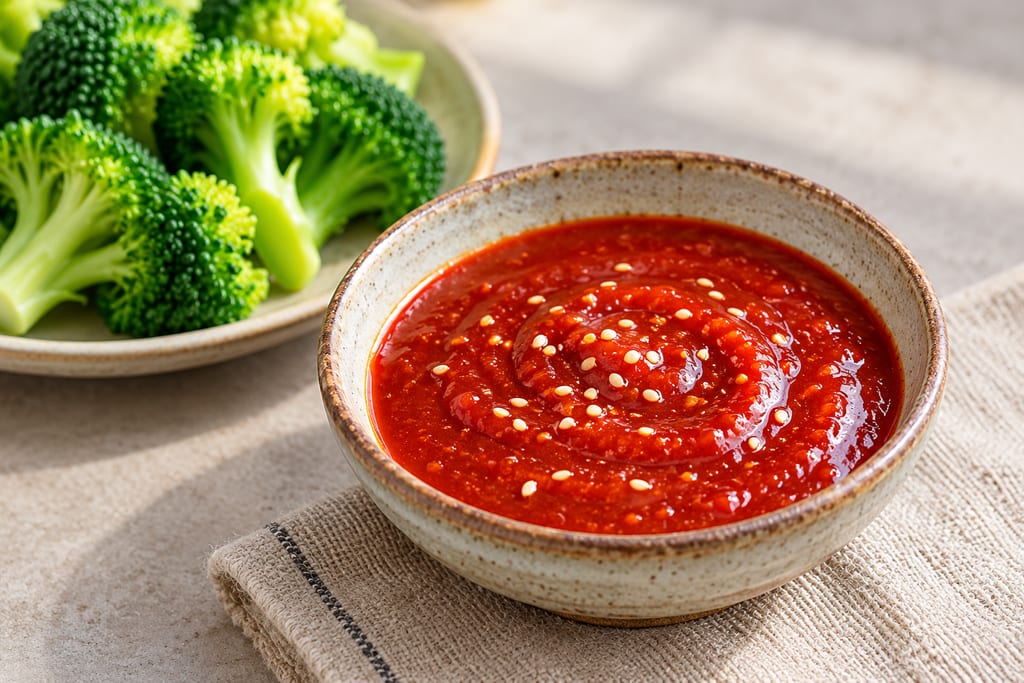
Chogochujang is a Korean sweet-sour sauce made by seasoning gochujang with vinegar and sugar. This development batch adds water and toasted sesame seeds, with optional garlic for the portion being served.
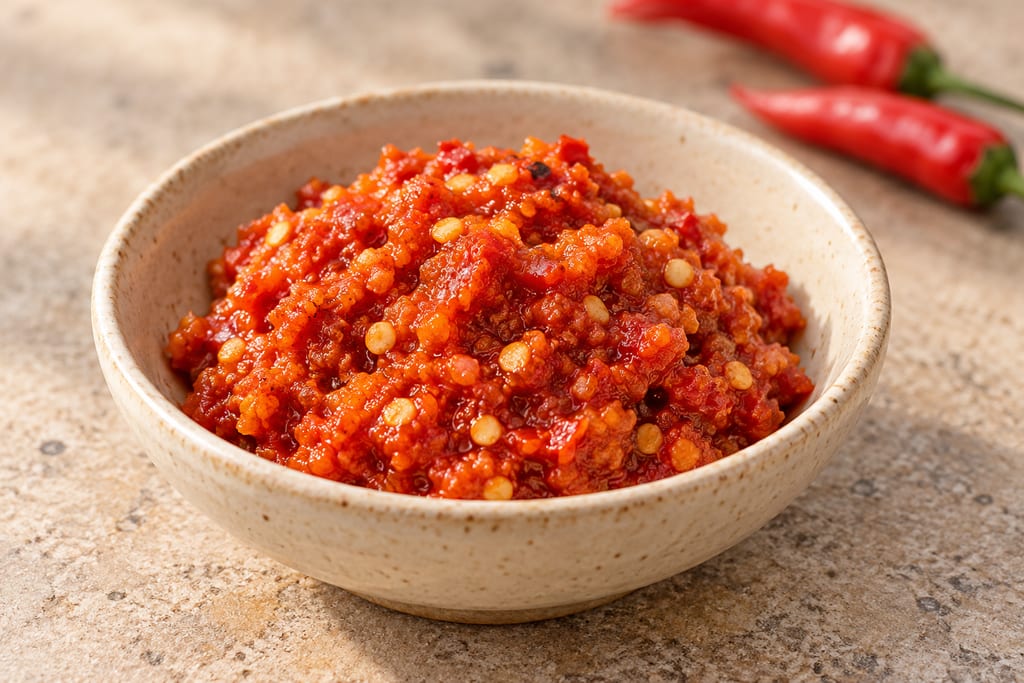
Dinanche, or donne' dinanche, is a Chamorro hot pepper paste of crushed chillies that Guam cooks use on its own or stir into fina'denne'. Its versions range from pepper alone to ones with eggplant, miso or coconut milk.
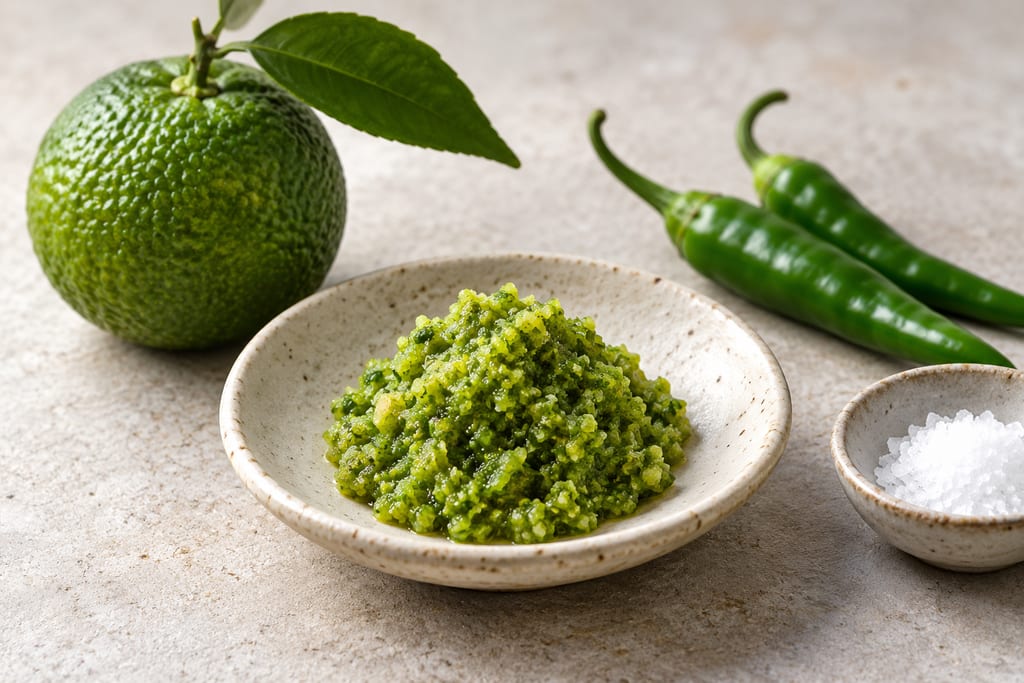
A fresh, uncooked yuzu and green chilli paste inspired by Kyushu’s yuzu kosho, made here as an untested small-batch seasoning rather than a preservation formula.
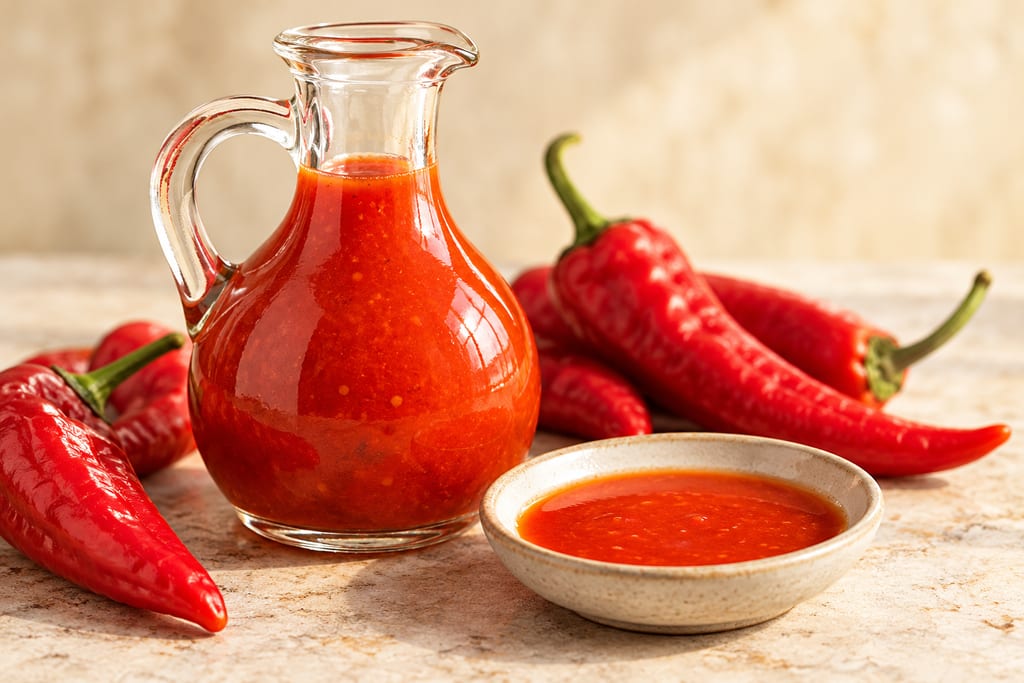
Fresh hot peppers ferment beneath a measured salt brine, then become a bright, tangy sauce blended from the peppers and their liquor.
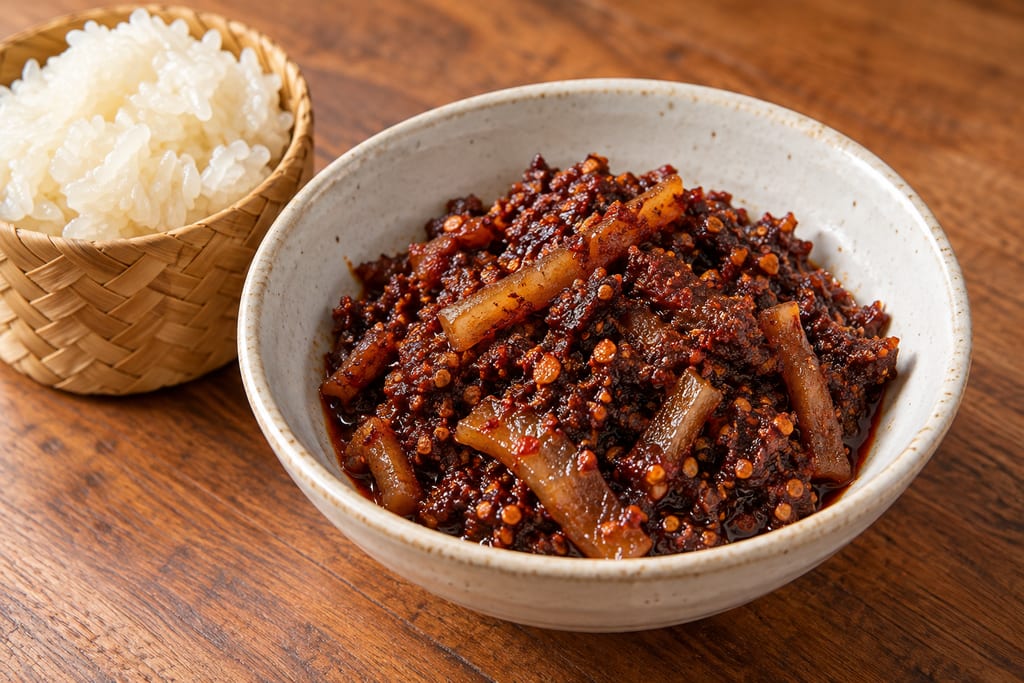
Jeow bong is a Lao paste of dried chilli, shallot, garlic and galangal cooked with buffalo or cow skin, a Luang Prabang specialty eaten with sticky rice and grilled meat.
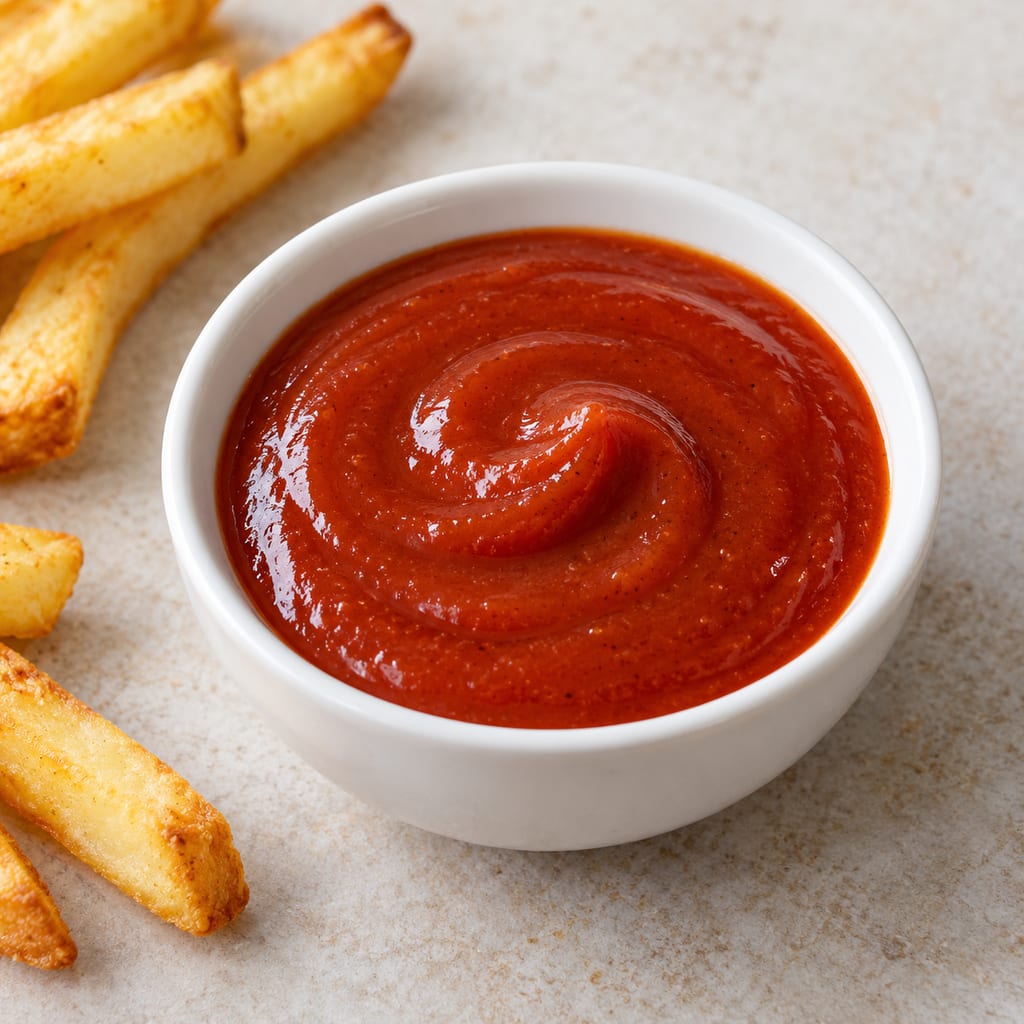
A modern tomato condiment sharpened with the spicy, savoury tang associated with kimchi; this measured version whisk-mixes prepared ketchup and commercial kimchi seasoning.
Documentary account of Louisiana pepper sauces, using TABASCO's published barrel-aged commercial process as one specific example; the source does not provide a validated home recipe.
No community contributions have been published for this entry yet.
Sign in to contribute. Published comments and photos are free to read.
Microorganisms, 2022Research
Comparison of Fermentation Behaviors and Characteristics of Tomato Sour Soup between Natural Fermentation and Dominant Bacteria-Enhanced FermentationFactory tomato sour, laboratory comparison and measured changes
Cited in: A sour base for the pot; A factory account and a laboratory comparison; What fermentation changes; A regional sour tradition; From the jar to a meal; What the production accounts leave open
FoodsResearch
Effects of Lentilactobacillus buchneri and Kazachstania bulderi on the Quality and Flavor of Guizhou Fermented Red Sour SoupExperimental red sour ingredients and volatile compounds
Cited in: A factory account and a laboratory comparison; What fermentation changes
FoodsResearch
Satisfying Consumer Preferences: The Packaging Design of Guizhou Red Sour SoupKaili association, appearance, ingredients and reported history
Cited in: A sour base for the pot; A regional sour tradition; From the jar to a meal; What the production accounts leave open
Food Science & NutritionResearch
The quality characteristics and microbial communities of three components in traditional split-fermented red sour soupSplit and mixed processes, uses, samples and measurements
Cited in: A sour base for the pot; Tomato sour and chilli sour; What fermentation changes; A regional sour tradition; From the jar to a meal; What the production accounts leave open
Food Chemistry: XResearch
Microbial community structure analysis and screening of dominant strains in Guizhou white sour soup: enhancing safety, improving flavor, and shortening fermentation cycleRice-washing water, rice soup and flour soup as white sour substrates
Cited in: A sour base for the pot