
Axone
Soybeans boiled soft and fermented in a leaf-lined basket by the hearth, then in many Naga households pounded, wrapped in leaves and fermented again into a dark, pungent seasoning paste.
 FermenteaWhere food goes to change
Modern method
自家製納豆の作り方
A 250 g soybean batch uses one of nine retail-natto portions and a towel-wrapped oven-light setup; the thermometer location and starter-pack mass are unknown.
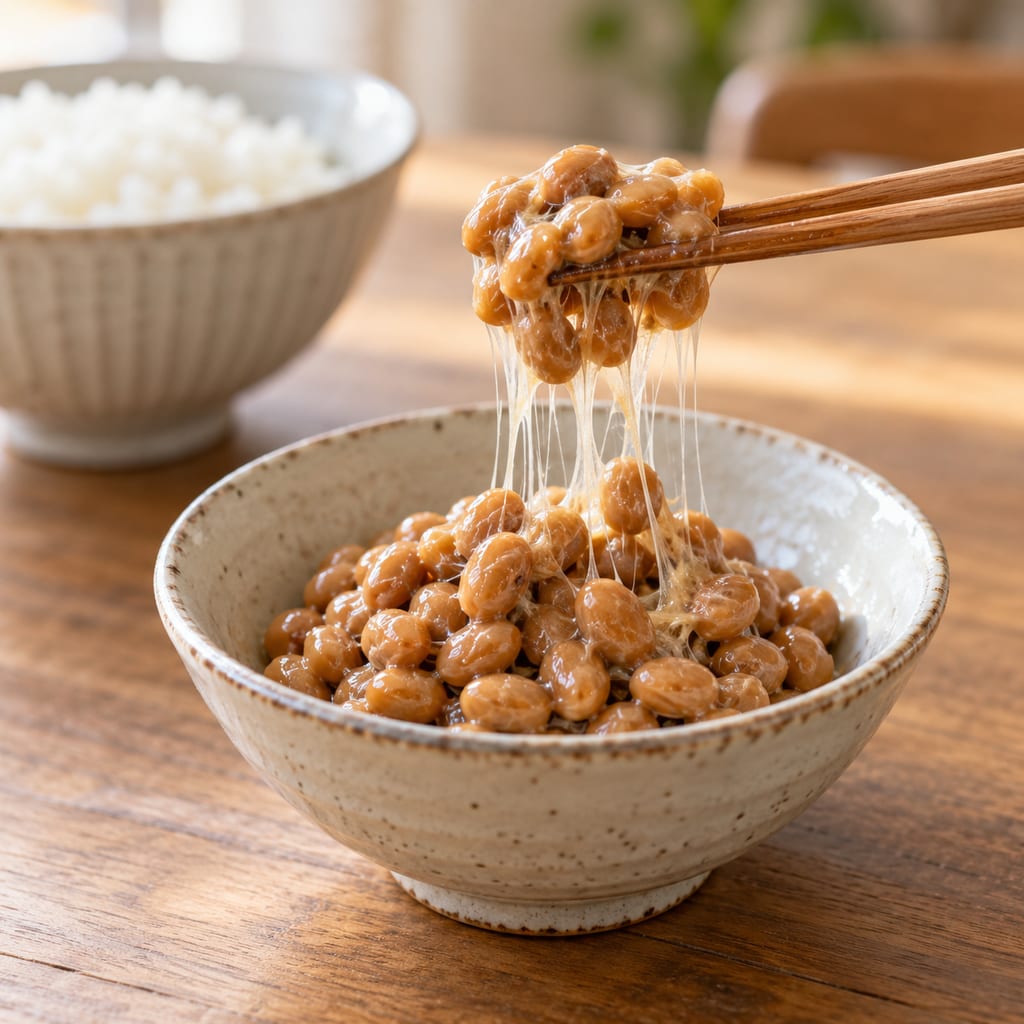
Natto (Japanese: 納豆; なっとう) is a traditional Japanese food made by fermenting cooked soybeans with bacteria associated with Bacillus subtilis var. natto.
Its most recognisable characteristics are the sticky threads that form when the beans are stirred, an intense aroma and a savoury taste.
Unlike sauerkraut or yoghurt, natto is not primarily a sour lactic-acid ferment.
Its characteristic microbiology involves a spore-forming bacterium that produces enzymes and a sticky extracellular polymer.
The process changes soybean proteins and other compounds, creating a food substantially different from ordinary cooked beans.
The recipe preserved here is a modern home preparation using retail natto as the starter and the light inside an oven as part of an improvised incubation system.
It is not a description of traditional straw-wrapped fermentation.
Natto is strongly associated with Japanese breakfast and everyday meals.
It is frequently eaten over steamed rice.
Its flavour and texture are distinctive enough to divide opinion, even within Japan.
The sticky threads can stretch between the beans, chopsticks and bowl.
These threads are part of the food's identity rather than an accidental defect.
Natto is also valued because it transforms inexpensive soybeans into a highly flavoured, ready-to-eat fermented product.
The soybean is Glycine max (L.) Merr.
Soybeans have been important in East Asian food systems for a long period.
They are used to produce tofu, miso, soy sauce and other fermented or non-fermented foods.
Natto is distinctive because its microbial ecology and texture differ from those of most other soybean preparations.
Natto's exact origin is uncertain.
Traditional stories connect its accidental discovery with warm cooked soybeans packed in rice straw.
One well-known legend involves the military commander Minamoto no Yoshiie during the Heian period.
In the story, cooked beans packed in straw for horses became fermented, and people discovered that they were edible and appealing.
This is a cultural origin story, not a securely demonstrated invention event.
More concrete written evidence appears later.
A historical compilation identifies a reference to stringy soybeans in a diary dated 1405.
The term associated with stringy natto appears in another literary source around 1450.
By the Edo period, 1603–1867, natto had become an established commercial and household food.
Vendors sold natto in Japanese towns.
Its regional associations include eastern Japan and particularly Ibaraki Prefecture.
These written references establish continuity without requiring the legendary discovery to be treated as fact.
Mito, in Ibaraki Prefecture, has a particularly strong association with natto.
The region became known for small-soybean natto.
Smaller beans can mix readily with rice, making them convenient for everyday consumption.
Commercial distribution expanded through transport networks.
The Japanese Ministry of Agriculture records that natto became a recognised regional product after sales began at railway stations following the opening of the Mito railway in 1889.
Natto became a familiar souvenir as well as a household food.
Traditional straw packaging remained an important cultural image.
Modern natto is commonly sold in small polystyrene or paper containers, often in multipacks.
The change in packaging reflects industrial standardisation rather than the disappearance of the traditional food identity.
Earlier natto methods used cooked soybeans wrapped in rice straw.
Straw could naturally carry Bacillus spores.
Under favourable conditions, the spores germinated and the bacteria multiplied on the warm cooked beans.
However, straw is not a purified starter culture.
It can carry other microorganisms and environmental contamination.
Modern commercial production generally uses selected starter cultures to improve consistency.
The shift from spontaneous straw fermentation to controlled inoculation was an important part of industrial development.
It allowed producers to manage flavour, texture and microbiological quality more reliably.
The present recipe uses an existing retail natto product as an inoculum rather than straw.
That is a modern backslopping approach.
The bacterium responsible for characteristic natto fermentation is generally identified as Bacillus subtilis var. natto.
It is a Gram-positive, spore-forming organism.
Spores can survive environmental conditions that would kill many vegetative bacterial cells.
During fermentation, the organism grows on the cooked soybean substrate.
It produces extracellular enzymes that break down proteins and other compounds.
It also produces polymers that contribute to the characteristic sticky texture.
Unlike many lactic-acid bacteria, natto organisms are strongly associated with aerobic growth.
Oxygen availability is therefore important.
This helps explain why traditional and modern methods pay attention to ventilation and the depth of the bean layer.
The sticky material is associated particularly with poly-γ-glutamic acid, commonly written γ-PGA.
This is a polymer composed of glutamic-acid units linked through gamma peptide bonds.
Its structure differs from ordinary proteins.
The polymer can retain water and form viscous strands.
When natto is stirred, the strands become visible.
The stringiness is therefore a biochemical product of bacterial metabolism.
It is not simply the result of soybean starch becoming gelatinous.
Soybeans contain comparatively little starch compared with rice or maize.
The sticky structure is produced principally through microbial polymer formation.
The amount and texture of the polymer depend on the organism, substrate and fermentation conditions.
Soybeans are rich in protein.
During fermentation, B. subtilis produces proteases that break soybean proteins into peptides and amino acids.
These changes contribute to flavour and can alter digestibility.
Some amino acids provide savoury or bitter tastes.
Other compounds can participate in further reactions.
Ammonia may be released during protein metabolism.
This contributes to natto's characteristic strong smell.
The fermentation can become more alkaline rather than more acidic.
This is why it should not be classified as ordinary lactic-acid fermentation.
A strong ammonia-like aroma can be characteristic of natto, but odour alone does not prove that a homemade batch is safe.
The distinction between normal fermentation character and contamination requires a validated process and appropriate raw-material control.
The mass of the original retail natto pack is not specified.
Consequently, the weight of one-ninth of the pack cannot be calculated reliably.
The source also does not identify the retail starter's brand or bacterial strain.
These omissions matter because the starting inoculum and its viability affect fermentation.
Dry soybeans contain relatively little free water.
Their proteins and structural components are enclosed within hard seed tissues.
Soaking hydrates the beans.
Water enters the seed, causing it to swell.
The recorded soak is approximately 15 hours.
Afterward, the beans were roughly twice their original size.
The exact increase depends on the soybean variety and conditions.
Hydration makes the beans more suitable for subsequent cooking.
It does not itself ferment them.
Long soaking also creates a food-safety consideration because microorganisms may grow if beans are held under unsuitable conditions.
The source does not provide a controlled soaking temperature.
Cooking softens the soybeans and changes their internal structure.
Proteins denature.
Cell-wall materials soften.
The beans become much easier to crush.
The source uses a pressure cooker with approximately 1½ cups water.
It describes heating until steam flows and then pressure-steaming for 40 minutes.
The cooker is allowed to stand for 15–20 minutes afterward.
The beans should crush easily between the fingers when sufficiently cooked.
This is an important culinary criterion because hard beans are a poor substrate for the desired finished texture.
However, finger-crushability is not a microbiological safety test.
The pressure-cooker model, actual pressure and validated heat process are not specified.
The source begins with a frozen retail natto pack.
It is cut into nine portions.
One portion is used for the batch.
The remaining portions are kept frozen.
The thawed portion is mixed with one teaspoon of cooled soybean cooking liquid.
This distributes the starter before it is introduced to the cooked beans.
The source uses the cooking liquid after it has cooled to lukewarm.
Adding the starter to excessively hot beans could damage living bacteria.
The source does not specify a numerical inoculation temperature.
It describes allowing the cooked beans to lose some heat before mixing.
1. Rinse the dry soybeans. Use 250 g and remove damaged beans.
2. Soak overnight. The recorded soak is approximately 15 hours, using an unmeasured quantity of water.
3. Rinse again. Remove the soaking water and prepare the beans for pressure cooking.
4. Pressure-steam. Use approximately 1½ cups water and the source's pressure-cooker settings, cooking for 40 minutes after steam flow begins.
5. Allow pressure release. The recorded wait is 15–20 minutes after turning off the heat. A cooker must not be opened until pressure has safely released.
6. Check softness. The cooked beans should crush easily.
7. Prepare the equipment. The creator scalds utensils and the heat-safe dish with boiling water, then allows them to cool. Scalding is not equivalent to laboratory sterilisation.
8. Prepare the starter. Thaw one of nine retail-natto portions and mix with one teaspoon cooled cooking liquid.
9. Arrange the cooked beans. Use a shallow heat-safe dish. The source warns against a deep layer.
10. Inoculate. Distribute the starter mixture through the cooked beans.
11. Cover while permitting air exchange. The creator uses pierced plastic film and additional covering to reduce drying while allowing oxygen.
12. Incubate. The source uses an oven light, towel and hot-water bottle, targeting 35–40°C for approximately 18–22 hours.
13. Cool and mature. Refrigerate the finished product for 24 hours before serving.
The steps document one contemporary demonstration. The improvised incubation system has not undergone professional validation.
The source records several temperature measurements during incubation.
These include 38°C, 41.2°C, 39.9°C and 41.5°C.
The stated target was 35–40°C.
Therefore, some observed values exceeded the target.
The exact position of the thermometer was not documented.
An oven's air temperature may differ from the temperature inside the soybean mass.
Similarly, a hot-water bottle or oven lamp can create local warm areas.
This is a significant limitation.
A source describing an incubator temperature does not automatically establish that every bean remained within that range.
The modern commercial process uses controlled environments rather than relying solely on an oven light.
Natto bacteria require oxygen for characteristic growth and metabolism.
The arrangement of the beans affects oxygen access.
A deep mass may limit oxygen penetration into its interior.
A shallow layer exposes more material to air.
The source's pierced covering is intended to balance oxygen access against drying.
Too much exposure may dry the bean surfaces.
Too little oxygen can alter bacterial growth.
However, plastic film directly contacting moist cooked beans can also create local environmental differences.
The source does not validate that its arrangement reliably provides uniform oxygen conditions.
After the warm incubation, the source transfers the natto to refrigeration for 24 hours.
Cooling slows microbial activity.
The creator describes this stage as reducing the ammonia-like smell and improving the product before eating.
Refrigeration also changes the texture and ongoing biochemical development.
The source recommends consuming refrigerated portions within approximately one week and freezing additional portions.
A separately published Cookpad version mentions 7–10 days.
These are creator recommendations, not independently validated shelf-life studies for the improvised incubator process.
Natto is commonly stirred before serving.
Stirring develops the visible strings and distributes the sticky polymer.
A familiar serving combines natto with soy sauce, Japanese mustard (karashi) and chopped green onion.
The mixture is spooned over hot rice.
Natto also appears in natto-maki, sushi rolls with a natto filling.
It can be added to miso soup or combined with other foods.
Some contemporary preparations use natto in pasta, salads or toast.
Its strong aroma and texture may be challenging to people unfamiliar with it.
However, the same qualities make it valued by regular consumers.
Natto varies in soybean size.
Mito is known for small-bean natto.
Other producers use larger beans.
Some products use chopped beans, creating a finer texture.
Traditional straw-wrapped natto remains a recognisable product category.
Modern products use selected cultures and controlled packaging.
Different soybean varieties can influence texture and flavour.
Research has also investigated natto made from legumes other than soybeans.
These experiments demonstrate the possibility of adapting the process, but a different legume may require different preparation and safety assessment.
Natto is often discussed in relation to vitamin K₂, protein, microbial activity and an enzyme called nattokinase.
These are legitimate subjects for nutritional and biochemical research.
However, the presence of a compound in natto does not automatically establish a clinical benefit from eating an arbitrary homemade batch.
Nattokinase content can vary among products.
Likewise, live bacteria in a fermented food do not necessarily constitute a clinically validated probiotic treatment.
Vitamin K content may be relevant to people taking certain anticoagulant medications, so individual medical advice can matter.
Such considerations should be treated separately from the food's culinary and technological description.
The intended result has sticky threads, a characteristic fermented aroma and recognisable soybean structure.
However, stickiness alone does not prove that the desired organism grew without contamination.
Cooked soybeans are nutrient-rich.
Holding them warm in an uncontrolled environment can support undesirable microorganisms.
Some Bacillus species, including B. cereus, can cause foodborne illness.
Using retail natto as starter provides a culture source, but does not guarantee that every batch is free from competing organisms.
The oven-light method requires process validation and is not a guaranteed safe home protocol.
A contemporary preparation does not establish earliest attestation or origin.
Scaling: source batch only
Retail natto is one of nine portions from a pack, but pack mass and product identity are not stated.
The source reports warm-incubation observations, surface film and refrigerated/freezer storage claims; none is qualified process validation.
Captions do not establish batch location or food origin.
Soybeans boiled soft and fermented in a leaf-lined basket by the hearth, then in many Naga households pounded, wrapped in leaves and fermented again into a dark, pungent seasoning paste.
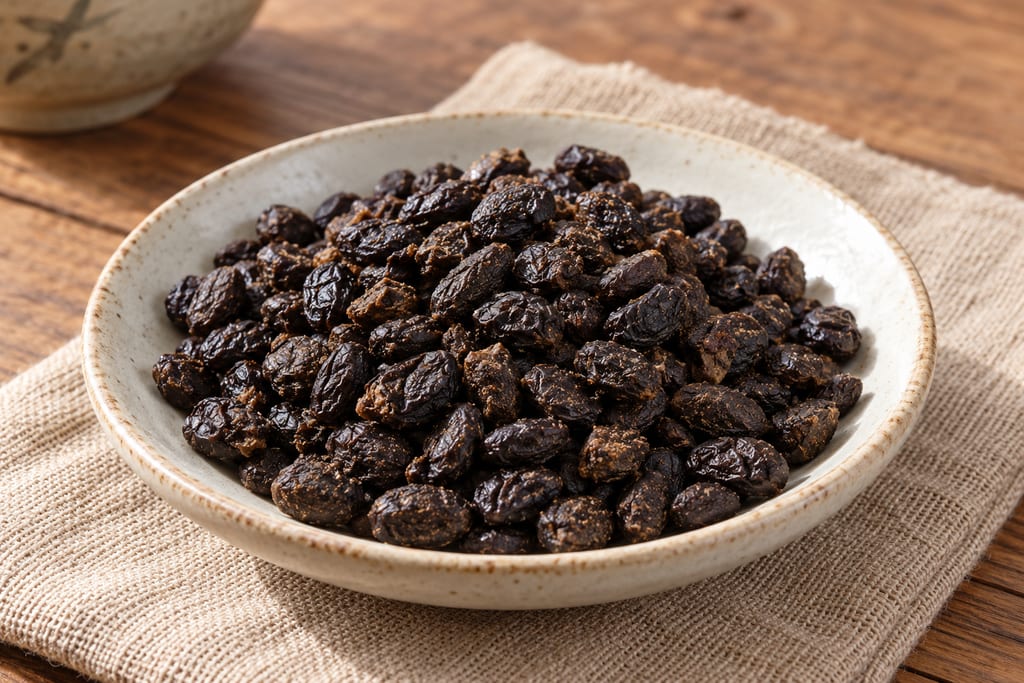
A Chinese fermented soybean condiment in which Bacillus-led bacteria, not moulds, drive the fermentation. Documented in Zunyi, Guizhou, and kept separate from mould-led douchi.
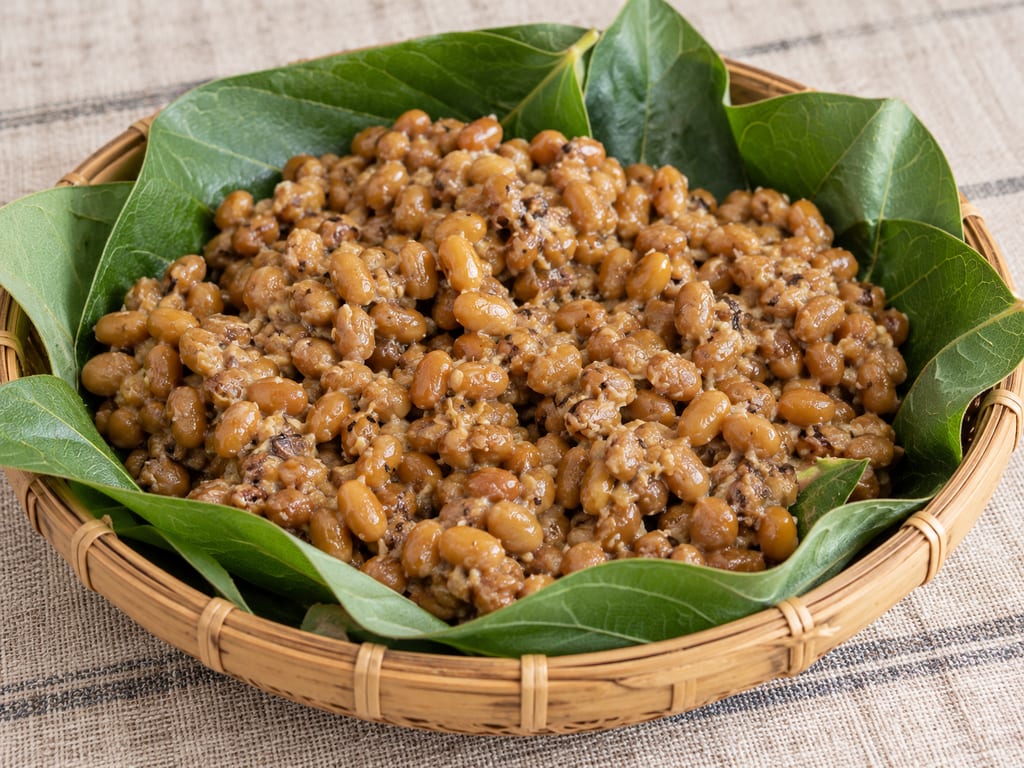
A Mizo alkaline soybean ferment made by holding cooked beans in leaf-lined containers, sometimes with wood ash, until they turn sticky, soft and pungent; eaten fresh or used as a seasoning.
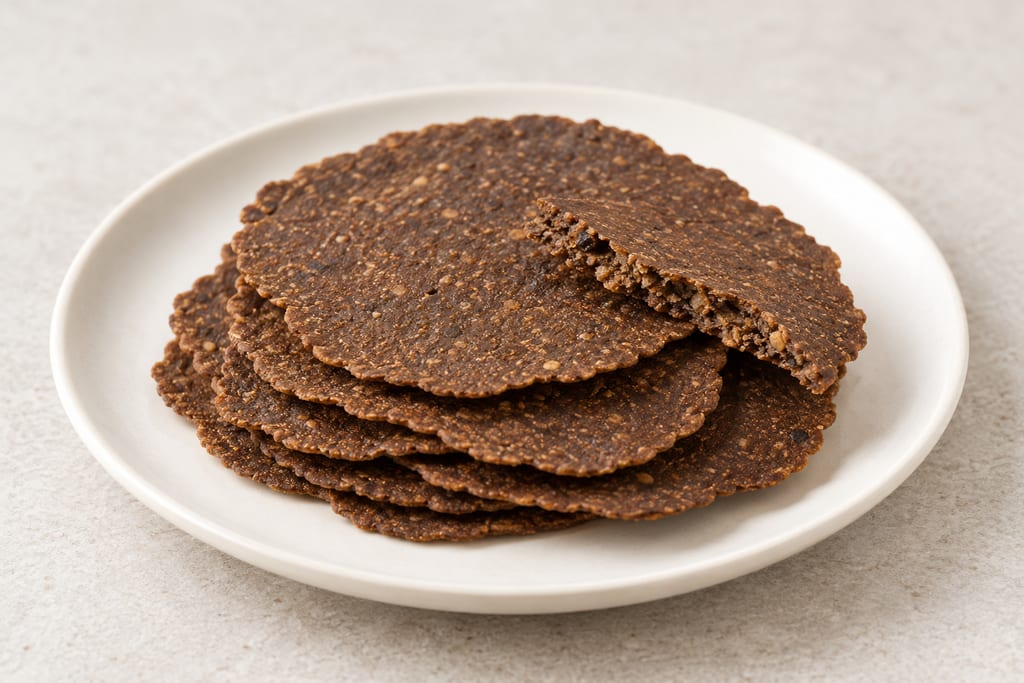
Black soybeans cooked, inoculated with a named Bacillus subtilis culture and fermented warm and humid into northern Thailand's thua nao, then optionally dried into thin discs.
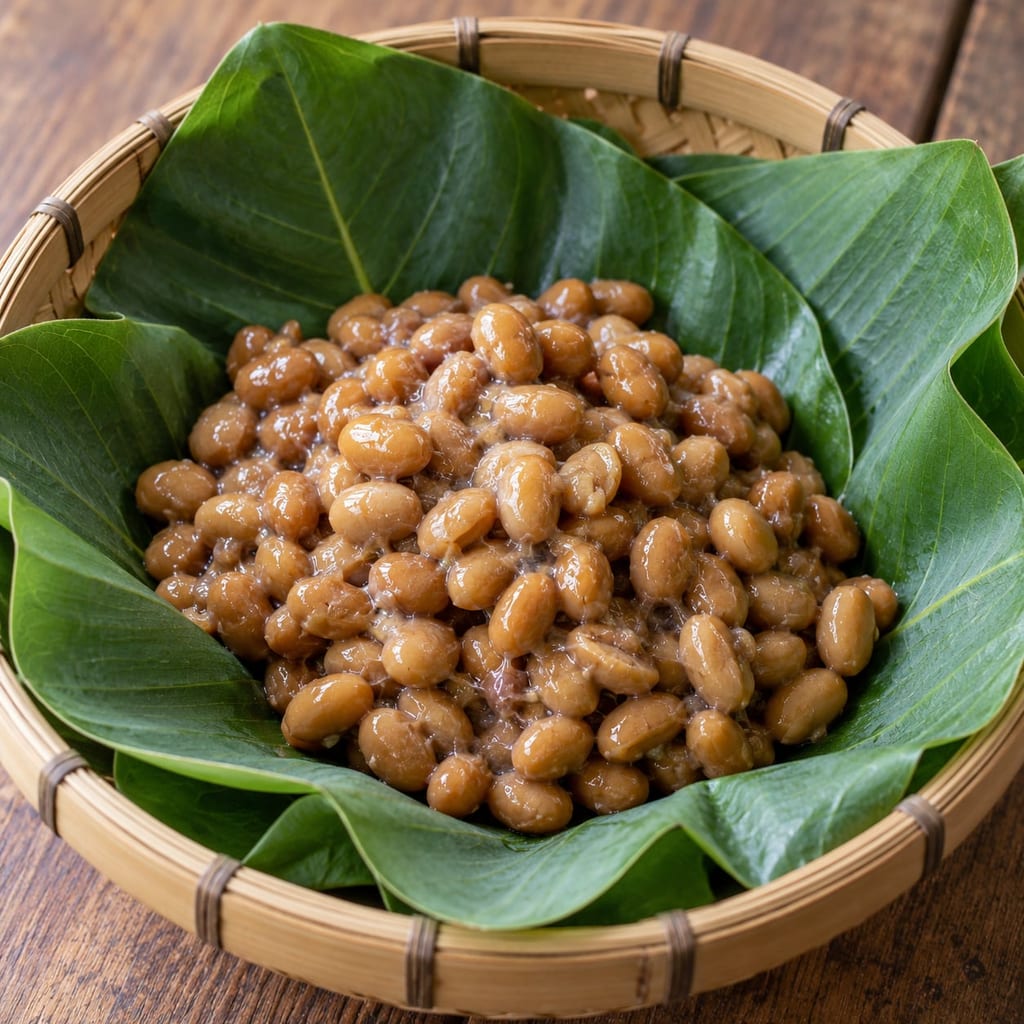
A sticky fermented soybean food of Manipur, made by packing cooked soybeans in leaf-lined bamboo baskets and keeping them warm, related to but distinct from Bekang and Akhone.
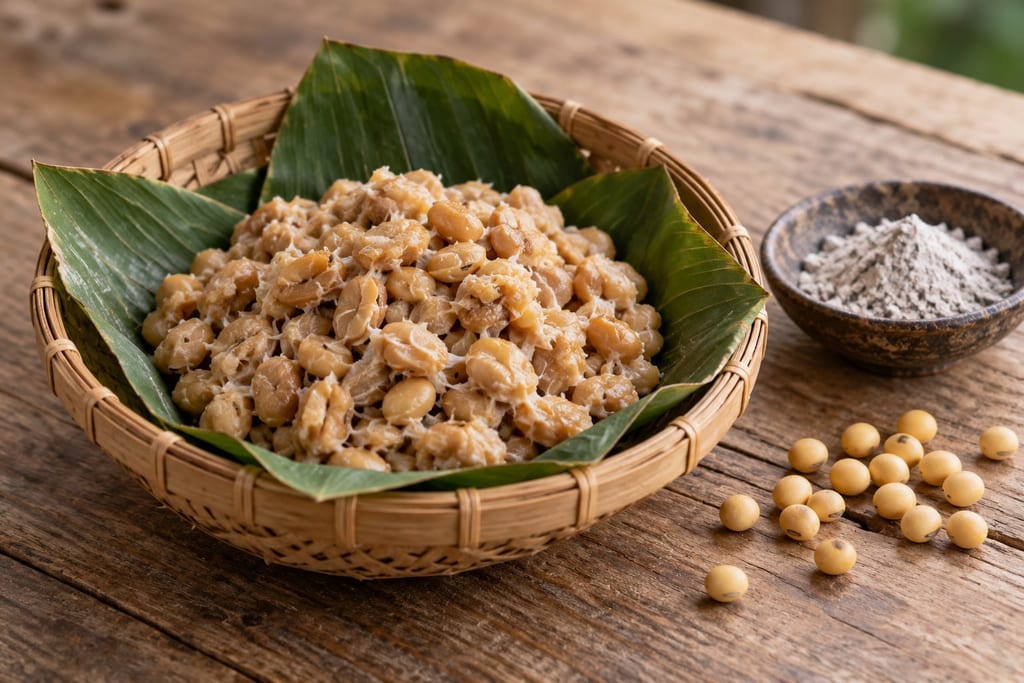
A sticky fermented soybean food of the eastern Himalaya, made here with a measured addition of firewood ash as an alkaline aid to the bacteria that drive it.
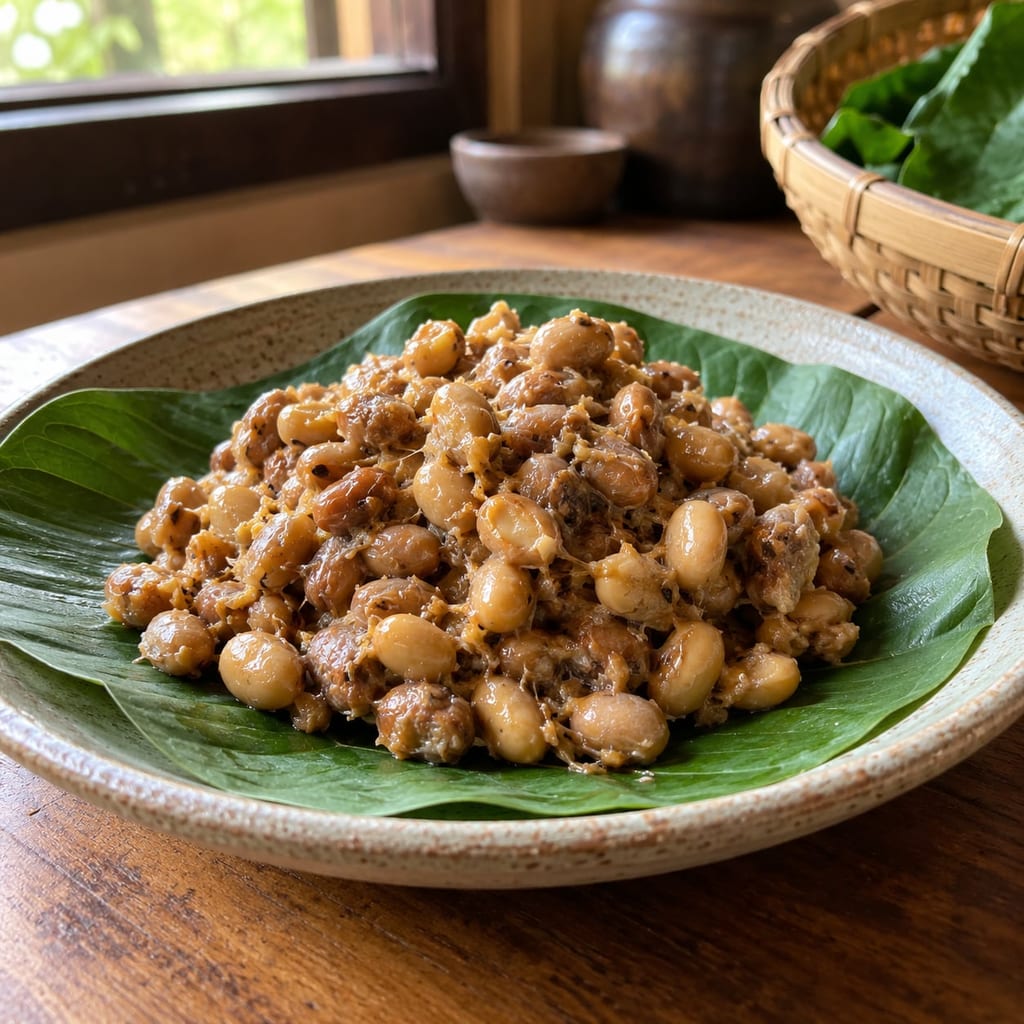
A home kinema made from overnight-soaked white soybeans, cooked, drained hot, wrapped in cloth and insulated to ferment for about a week.
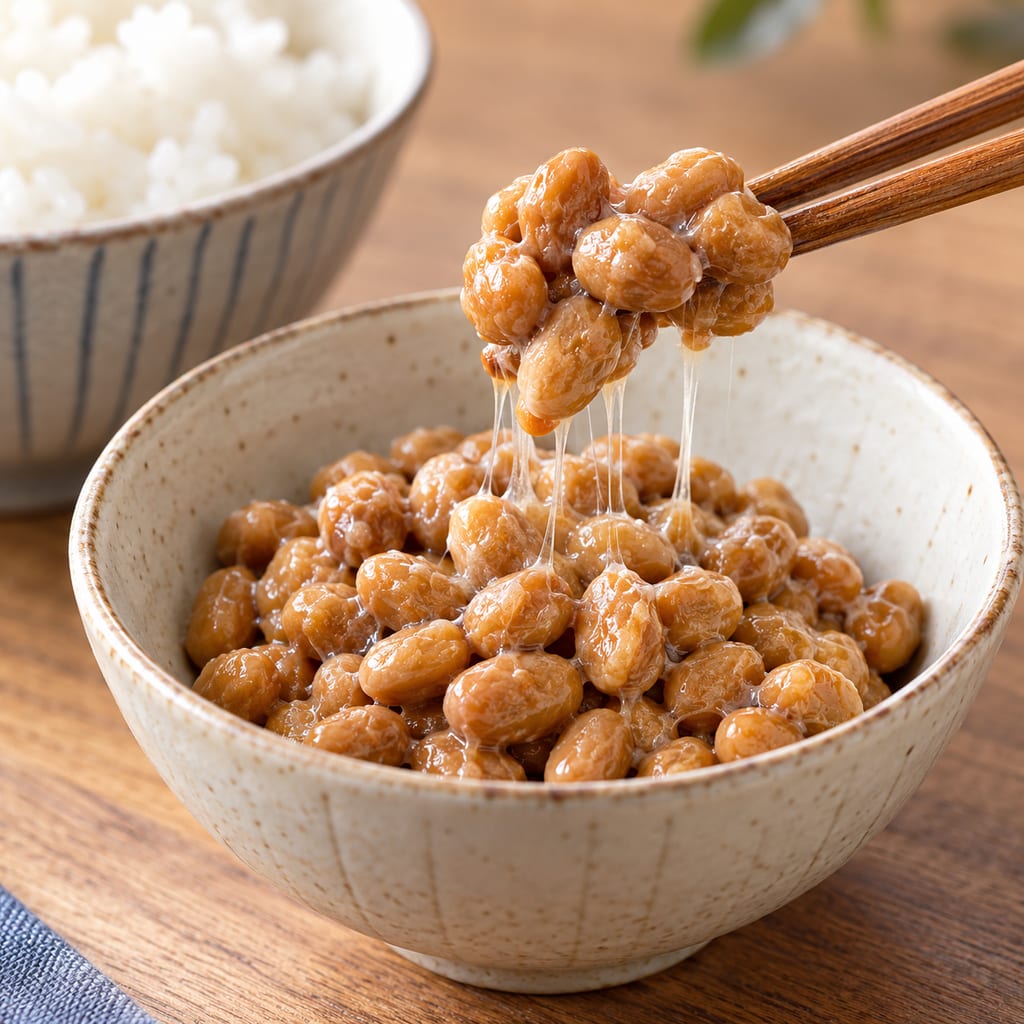
Natto is a Japanese fermented soybean food with a sticky coat and long strings, made by steaming soybeans and inoculating them with a natto Bacillus starter, then keeping them warm.
No community contributions have been published for this entry yet.
Sign in to contribute. Published comments and photos are free to read.
Mariko VeganProcess · Ingredients · Identity · Equipment · Timing · Storage
自家製納豆の作り方Archived ja caption JSON read to its final segment; caption review only, no audiovisual review. Published 2023-01-07.
250 g dry beans, rinsed and soaked about 15 h. Pressure-cooker water: about 1.5 cups. After pressure, steam 40 min on medium, then switch off and allow 15–20 min pressure release; confirm full release and crushable beans (01:16–05:21). Creator scalds utensils with boiling water and cools them (04:37–05:00). Frozen retail natto is divided into nine portions; one portion is mixed with 1 tsp lukewarm-cooled soybean cooking liquid; the remaining eight portions go back to the freezer (03:44–05:43). Beans move to a shallow 20 cm heat-safe baking dish. A film layer contacts the beans, a second layer is fitted over it, and many holes are made in the outer film (04:19–07:31). A towel-wrapped dish is placed in an oven with its light on and a hot-water bottle. Creator states about 35–40°C, records 38°C, 41.2°C, 39.9°C and 41.5°C at different checks, expects 18–22 h and reports about 20 h (07:35–10:00). The thermometer location is not stated. Creator observes surface film and stickiness (10:11–11:02), then covers and refrigerates for 24 h; says to eat the fridge portion within a week and freeze remaining portions in 50 g units with wax paper (11:16–11:55). Retail pack mass, brand and storage validation are absent.
Cited in: Overview; Natto and its place in Japanese food culture; The historical evidence; Natto in Mito and Ibaraki; Traditional straw fermentation; The key microorganism; The chemistry of sticky threads; Protein breakdown and aroma; Ingredients — the original recorded batch; Why the beans must be soaked; Pressure cooking and texture; Preparing the retail starter; The documented preparation; The actual temperature observations; Why oxygen is important; Why the finished beans are refrigerated; How natto is eaten; Regional variations; Health claims and scientific limits; Quality and safety
Mariko VeganMethod
Mariko Vegan — Homemade NattoCited by the written account for this record.
Cited in: Ingredients — the original recorded batch; Why the beans must be soaked; Pressure cooking and texture; Preparing the retail starter; The documented preparation
MAFF JapanHistory
MAFF Japan — Natto Traditional Food, IbarakiCited by the written account for this record.
Cited in: Natto and its place in Japanese food culture; The historical evidence; Natto in Mito and Ibaraki; Traditional straw fermentation; How natto is eaten; Regional variations
KikkomanHistory
Kikkoman — Natto in Japanese Food CultureCited by the written account for this record.
Cited in: Natto and its place in Japanese food culture; The key microorganism; The chemistry of sticky threads; Protein breakdown and aroma; How natto is eaten
SoyInfo CenterHistory · Science
SoyInfo Center — History of Natto and Its RelativesCited by the written account for this record.
Cited in: The historical evidence; Traditional straw fermentation
Science
Development of Novel Natto Using European LegumesCited by the written account for this record.
Cited in: The key microorganism; The chemistry of sticky threads; Protein breakdown and aroma; Why oxygen is important; Regional variations; Health claims and scientific limits
UK Health Security AgencySafety
UK Health Security Agency — Bacillus Species and Food PoisoningCited by the written account for this record.
Cited in: Quality and safety