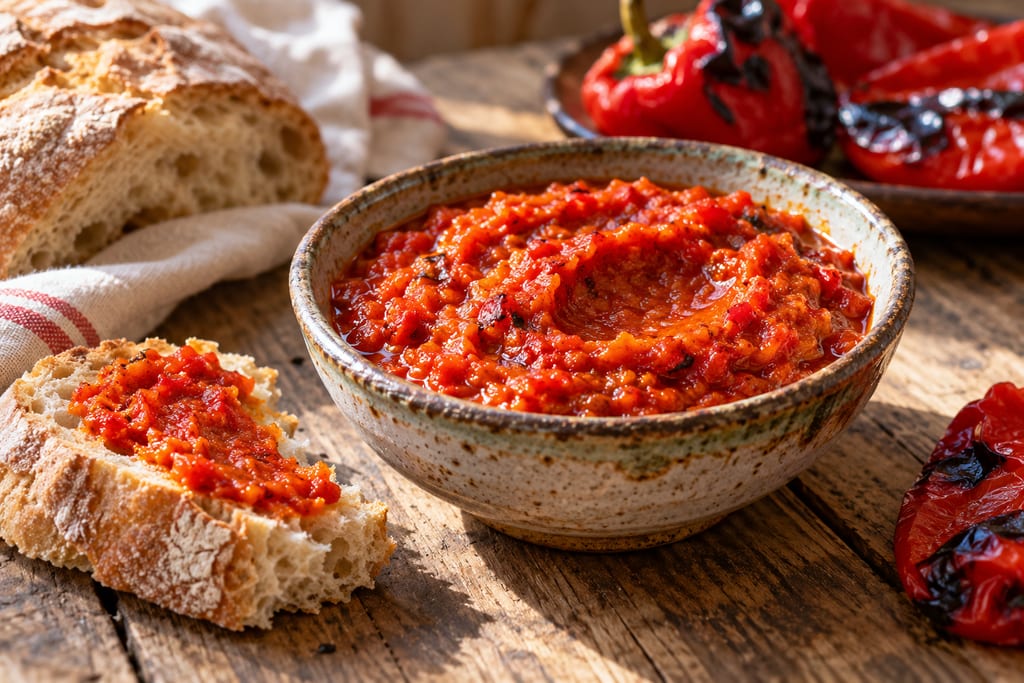
Ajvar
Ajvar is a cooked Balkan pepper preserve built around roasted red peppers, peeled, drained, ground and slowly fried with oil and seasoning. Leskovac’s protected version is a pepper specialty; regional versions vary.
 FermenteaWhere food goes to change
A quick Southeast Asian inspired peanut sauce combines peanut butter or ground roasted peanuts with coconut milk, soy, sugar, lime and chilli.
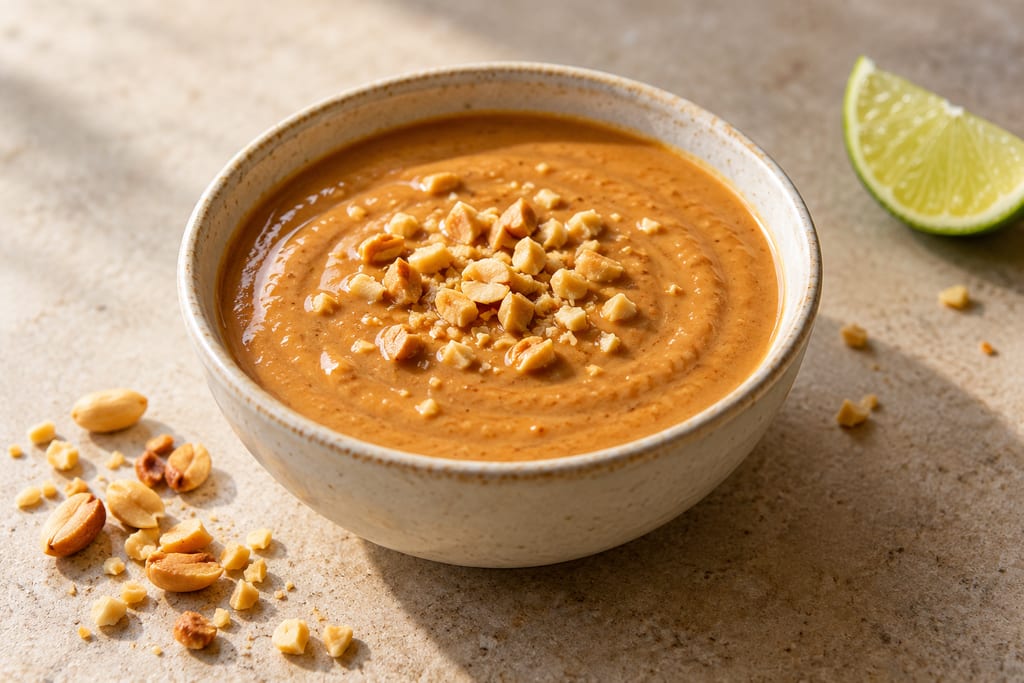
This recipe record describes a modern development formula rather than a recovered traditional recipe. Its source labels the inspiration broadly as Southeast Asian peanut dipping sauce and explicitly cautions that it is not a single national satay recipe. The seven ingredient lines, quantities and short method belong to the report's own untested proposal. They should not be presented as the definitive sauce of Indonesia, Malaysia, Thailand or any other country.
There is related historical context in Indonesian food culture: a 2019 article discusses satay served with peanut sauce and connects that tradition to Java. That evidence describes a regional food association; it does not prove that this particular balance of coconut milk, soy sauce, sugar, lime and chilli was used there, nor does it establish a birthplace for the present formula.
The formula starts with either smooth peanut butter or freshly ground roasted peanuts. Peanut butter disperses ground peanut solids in oil; research on peanut butter shows that formulation and stabilizers can change texture and viscosity. In this sauce, the report expects freshly ground peanuts to leave a more granular result than smooth peanut butter, but it does not specify a grind or promise a particular thickness.
Water loosens the concentrated peanut base. Coconut milk contributes another liquid and a creamy character, while soy sauce supplies a salty, savoury seasoning. The formula allows palm sugar or brown sugar, so it does not establish one required sweetener or a regional identity from that choice. A small amount of chilli paste brings heat, but the paste itself is unspecified; its ingredients and strength depend on the product used. Lime juice goes in after the pan leaves the heat, preserving a separate final sour note rather than cooking it through.
Whisk the peanut base, water, coconut milk, soy sauce, sweetener and chilli paste in a small saucepan. The source instructs a gentle simmer until the ingredients combine evenly, with extra water if needed. It then calls for lime juice to be stirred in off the heat. No numerical temperature, endpoint test, finished yield or detailed stirring schedule is supplied, so this record retains those gaps instead of supplying false precision.
The source gives ten minutes as the preparation time and calls 300 g the starting mass. It does not report a tested finished yield or a scaling study. The method may need adjustment for different peanut butters, grinds or chilli pastes; this draft does not establish measured texture targets or batch-size conversions.
This is a hydrated sauce made with peanut and coconut ingredients and briefly heated; no shelf-stable preservation process is described. The source's 48-hour working window is expressly a planning convention borrowed from general leftovers guidance, not a measurement of this recipe's shelf life. Do not treat it as a validated discard time, and do not store the sauce at room temperature or home-can it.
Cool and refrigerate promptly in shallow containers at or below 40°F (4°C), following general FoodSafety.gov guidance for perishable foods. The report suggests freezing portions while fresh for later use and whisking after thawing; freezing does not destroy germs, and the cited guidance does not validate a storage duration for this formula. The recipe contains peanut and soy. Check labels for allergens, including possible wheat in soy sauce and any additional ingredients in the chilli paste.
This dipping sauce is a flexible peanut and coconut preparation inspired by Southeast Asian family cooking. It is not one national satay sauce. Peanut butter or freshly ground roasted peanuts give the body; coconut milk, soy sauce and palm or brown sugar give the savoury and sweet balance; lime and chilli paste finish it. The formula is a development recipe, and its proportions are a starting point rather than a standard.
Peanut sauces appear across Indonesian, Malaysian and Thai cooking in many forms, and the archive uses the family of sauces as the reference rather than any single recipe. A satay dip is usually thicker and sweeter than a salad dressing, and the proportion of coconut milk changes that balance.
The sauce contains peanut and soy, and most soy sauce also contains wheat. Anyone with a peanut or soy allergy should not use it without checking every ingredient label, including the chilli paste. The allergen notes in the record are a starting point, not a complete list for every commercial brand.
Whisk the ingredients except the lime in a small saucepan and simmer gently until evenly combined, adding water if the sauce is too thick. Remove it from the heat and add the lime. The sauce thickens as it cools, so loosen it with a little warm water when serving.
This is a perishable, water-containing sauce. Refrigerate it promptly in small clean containers. The archive applies a conservative 48-hour working window, which is a planning convention and not a measured shelf life. Freeze portions if they will not be used in that time, and whisk the sauce well after thawing. Do not store it at room temperature or in a home canning process.
The formula is an untested modern development inspired broadly by Southeast Asian peanut dipping sauces; the report explicitly does not identify it as one national satay recipe.
Yield 300 g · Scaling: source batch only
The formulation contains peanut and soy ingredients; check ingredient labels for additional allergens.
Hazard sourceThis cooked sauce contains hydrated peanut and coconut ingredients and is not a shelf-stable product.
Hazard sourceRefrigerate promptly in shallow containers at 40°F (4°C) or colder. Freeze promptly if keeping portions for later; freezing does not destroy germs.
Control sourceContains peanut and soy; check labels for wheat and other allergens, especially in soy sauce and chilli paste.
Do not store at room temperature or home-can this sauce. The report's 48-hour working window is a planning convention, not a measured shelf life.
The formula is a modern development with broad Southeast Asian inspiration; no specific national or local origin is established.
Ajvar is a cooked Balkan pepper preserve built around roasted red peppers, peeled, drained, ground and slowly fried with oil and seasoning. Leskovac’s protected version is a pepper specialty; regional versions vary.
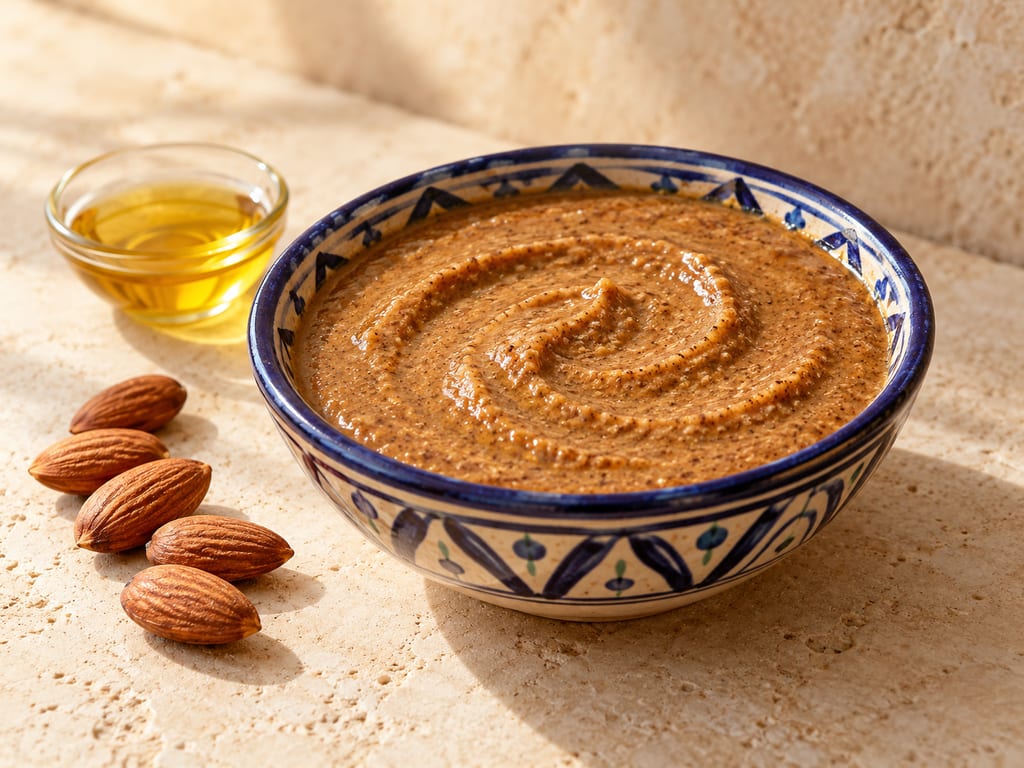
Amlou is a nutty, lightly sweet Moroccan spread of roasted almonds, culinary argan oil and honey. The almonds are ground first, then loosened with oil and sweetened; the balance can range from a thick spread to a dip.
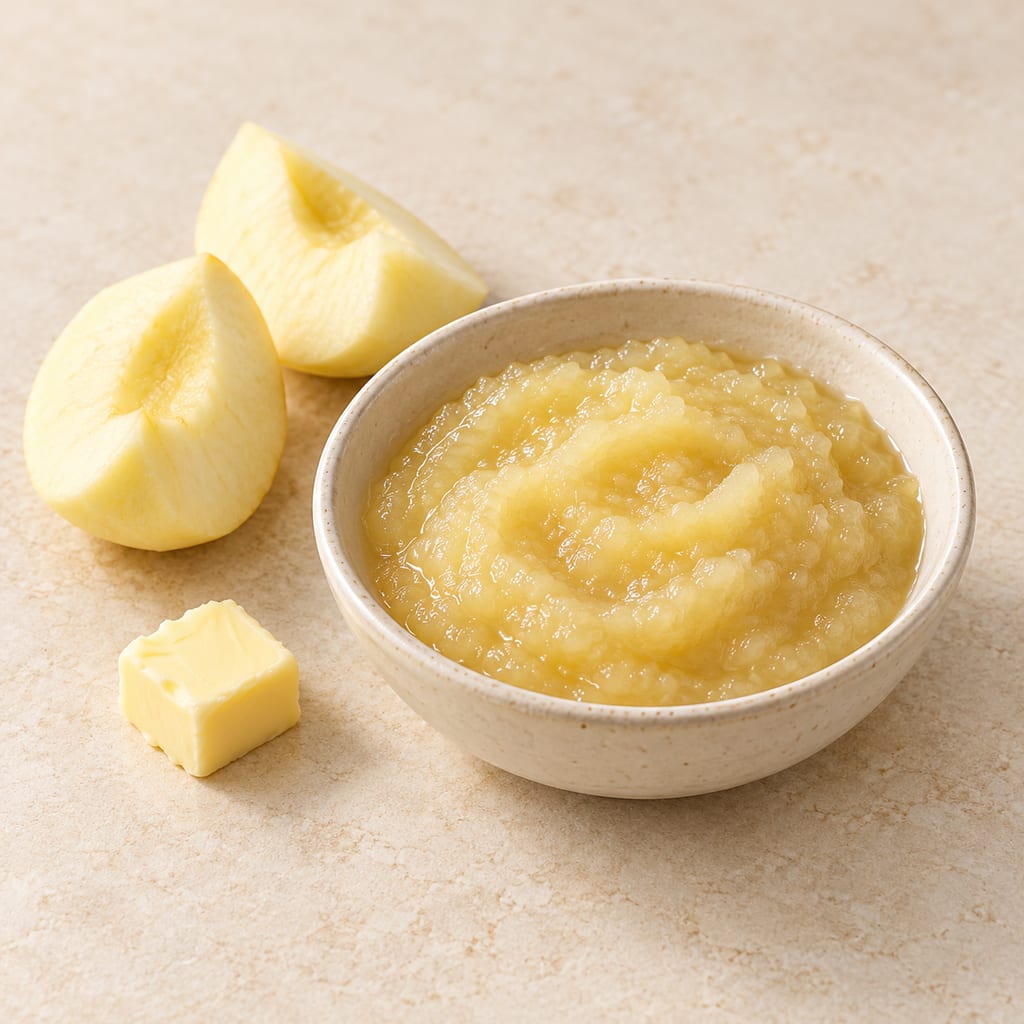
Apple sauce for goose and pork is a plain English accompaniment: cooked apples pulped with water, then sweetened with sugar and finished with a little butter.

A warm dip of garlic, anchovy and olive oil, often enriched with butter, that Piedmont serves over a flame with raw and cooked vegetables and bread.
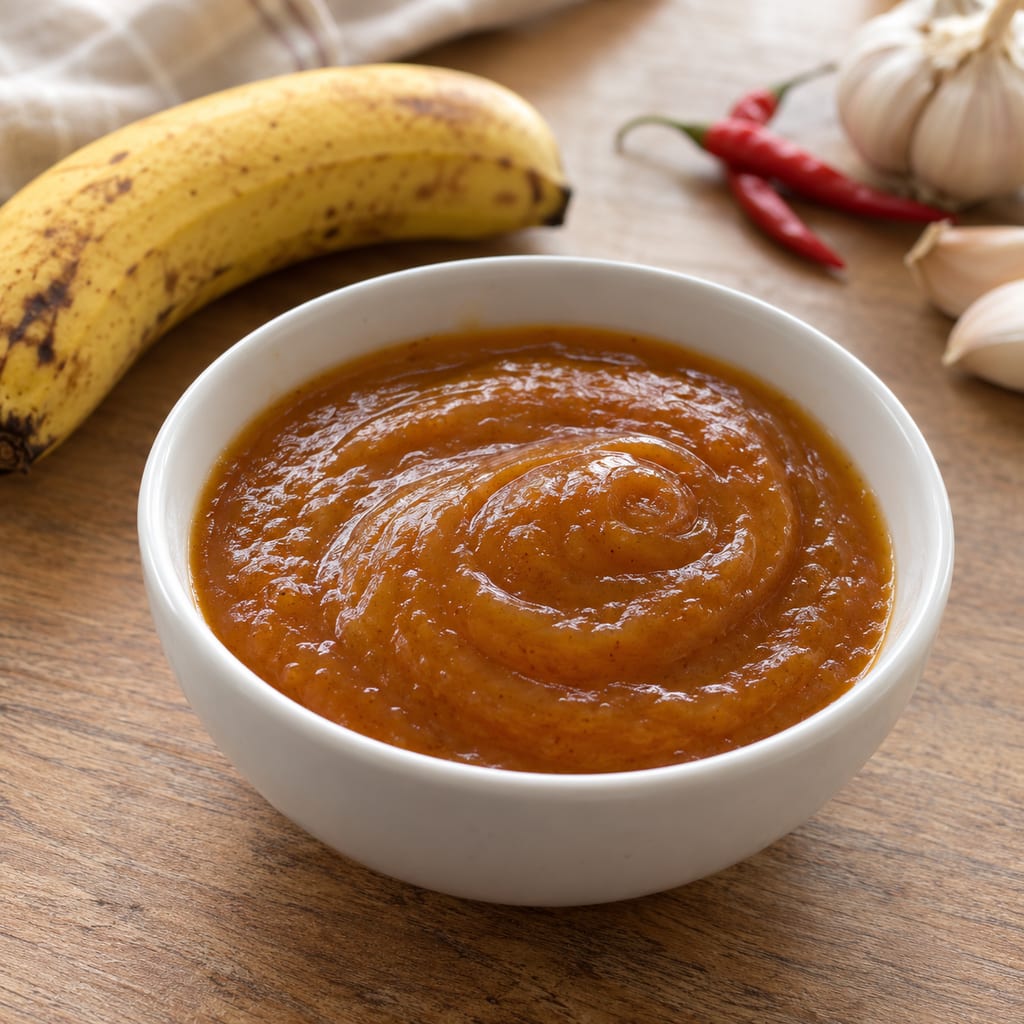
A sweet-hot table sauce of ripe banana simmered with vinegar, sugar, onion, garlic and fresh chilli, in the manner of Philippine banana ketchup. An untested development batch of about 500 g.
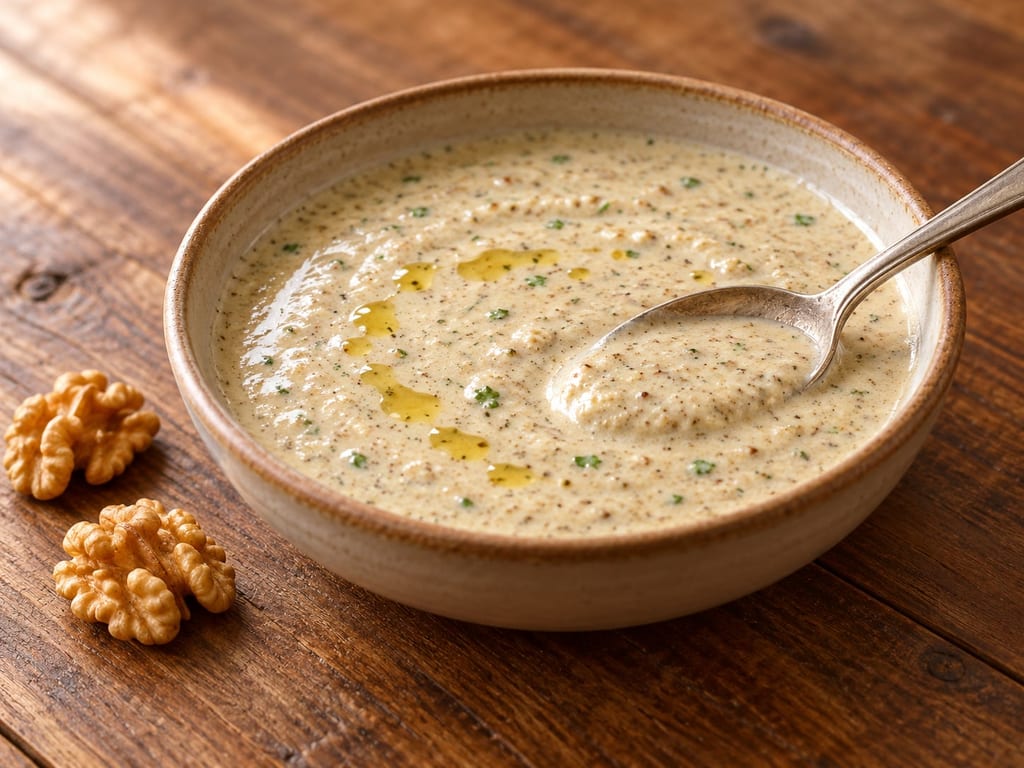
A Georgian walnut sauce of ground walnuts, garlic, vinegar and spices, thinned with water or broth. It is served with poultry, vegetables and bread, and is the sauce of the dish satsivi.
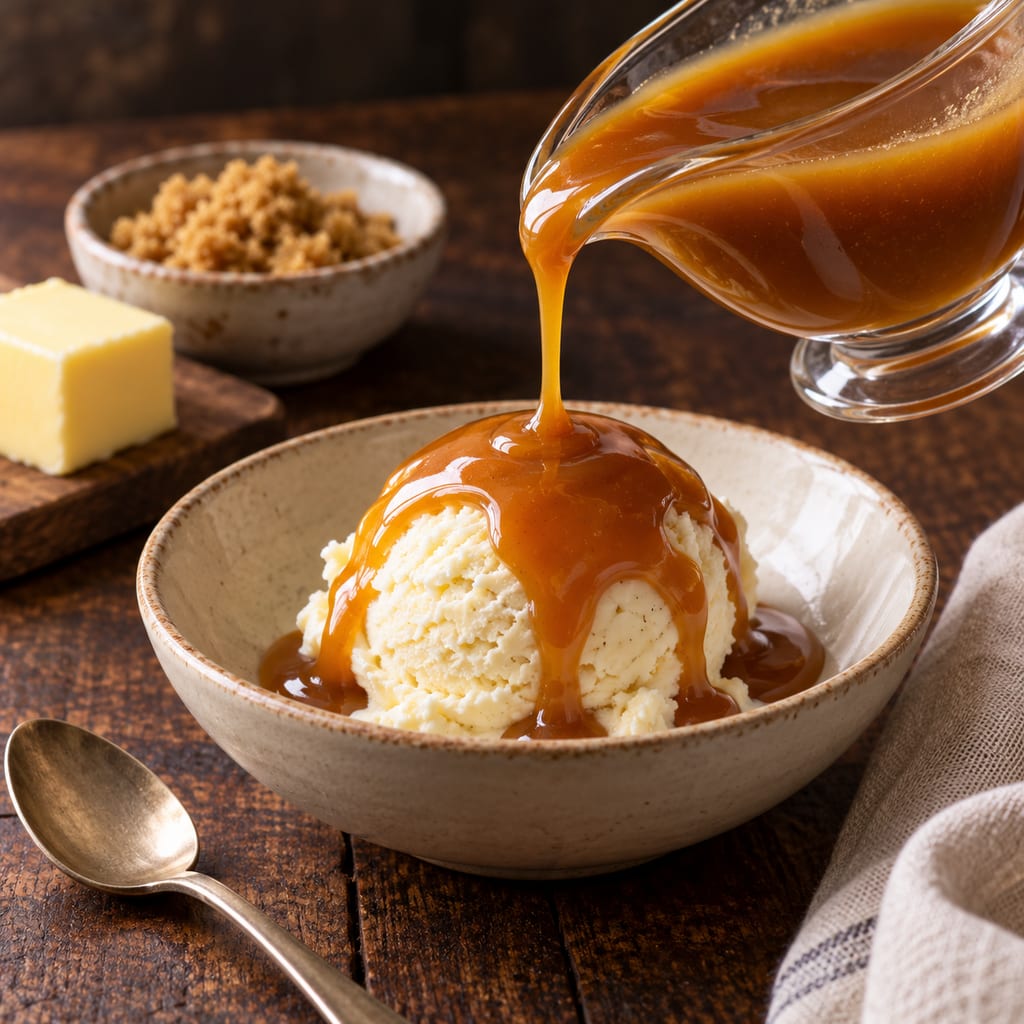
A pourable dessert sauce of brown sugar, butter and cream, with a little corn syrup and salt. It is the sauce form of the butterscotch confection and is made without water, unlike caramel.
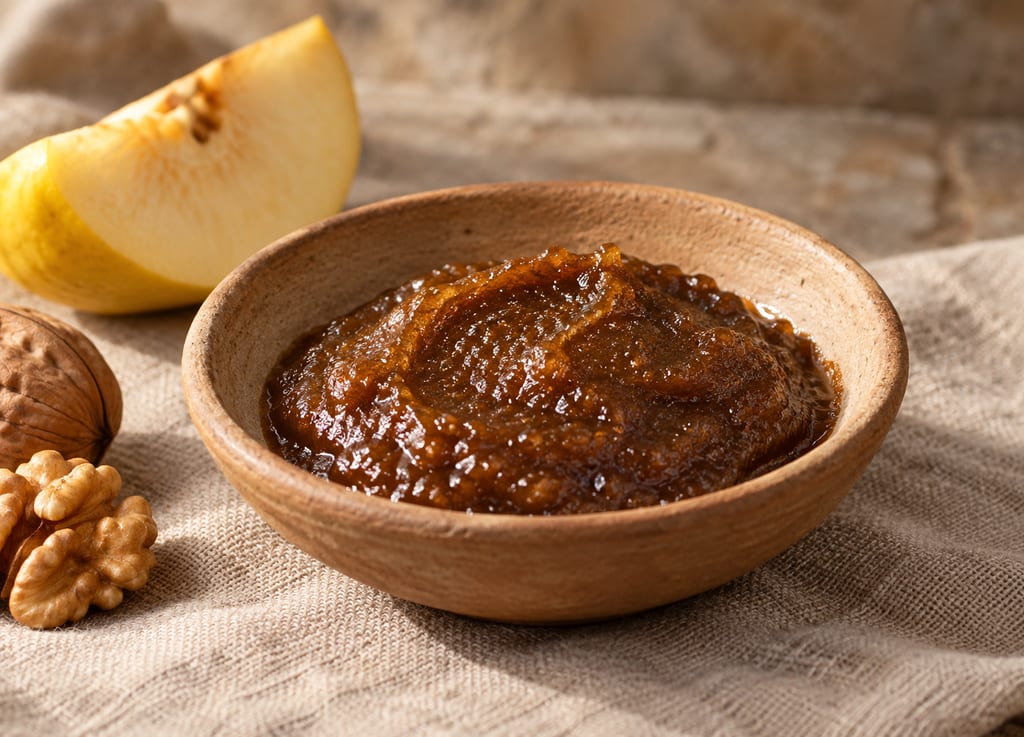
Byzantine murrī is a cooked imitation of murrī from the medieval Arabic repertoire, made from scorched honey, toasted bread, walnuts, quince, carob and spices rather than from a long grain fermentation.
No community contributions have been published for this entry yet.
Sign in to contribute. Published comments and photos are free to read.
Journal of Ethnic Foods / Springer NatureHistorical context
Indonesian food culture mapping: a starter contribution to promote Indonesian culinary tourismThe article discusses satay with peanut sauce in Indonesian food culture and associates the cited satay and sauce tradition with Java; this is context and does not establish this development formula's origin.
Cited in: A broad inspiration, not a national formula; A flexible peanut sauce; Heating, cooling and storage
Peanut ScienceIngredient science
Effect of Stabilizer Levels and Storage Conditions on Texture and Viscosity of Peanut ButterPeanut butter is a dispersion of peanut oil and peanut solids produced by grinding roasted peanuts; formulation and stabilizers affect texture and viscosity. This does not establish the texture of the finished sauce.
Cited in: How the ingredients shape the sauce; A short stovetop method with open texture questions
FoodSafety.govSafety
4 Steps to Food SafetyPerishable food should be refrigerated promptly; shallow containers support faster cooling; refrigeration should be at or below 40°F (4°C); freezing does not destroy germs. This source does not establish this sauce's shelf life.
Cited in: Storage and allergens
U.S. Food and Drug AdministrationSafety
Food Allergies: What You Need to KnowPeanuts and soy are among the major food allergens in U.S. labeling law; wheat may depend on selected product labels.
Cited in: Storage and allergens; Peanut, soy and allergens