
Bagna cauda
A warm dip of garlic, anchovy and olive oil, often enriched with butter, that Piedmont serves over a flame with raw and cooked vegetables and bread.
 FermenteaWhere food goes to change
Rouile · Provencal rouille · Fish-soup rouille
A strongly flavoured Provencal garlic sauce of chilli or cayenne, saffron, olive oil and bread or egg, served on bread with fish soup and bouillabaisse.
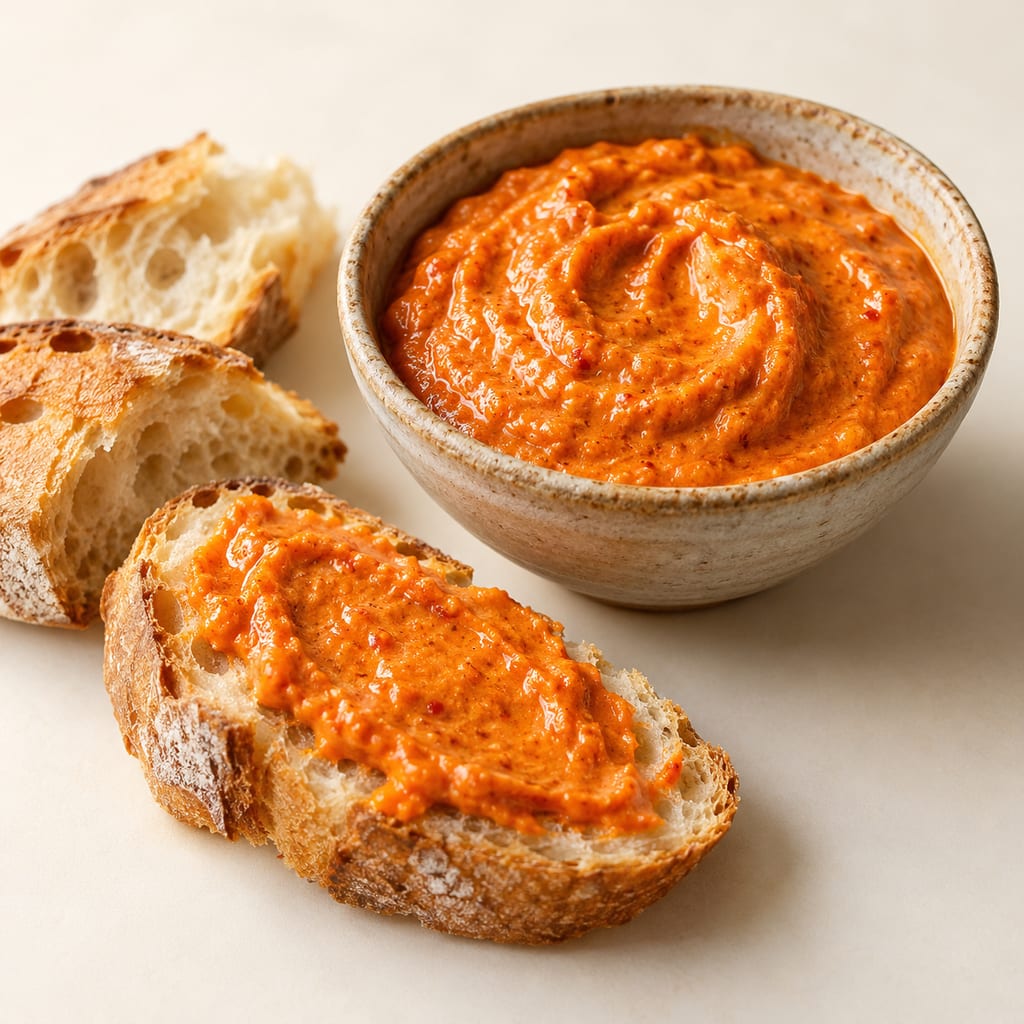
Rouille is a brick-red sauce of garlic, chilli or cayenne, saffron and olive oil, thickened with bread or egg. It is spread on toast or spooned into fish soup, and its heat and garlic are meant to stand up to the broth. The name means rust in Provencal, referring to its colour.
Two technical families are described in the sources: an egg-based emulsion and a bread or potato thickened sauce. The cited entries name egg yolk and breadcrumbs as the thickeners, so the bread version is the one with the clearest support here.
The cited entry gives the Provencal name as rolha and the translation rust. Its only dated source is Sharon Tyler Herbst's The New Food Lover's Companion, second edition, 1995. The entry says it is a stub and needs more information.
Rouille is tied to the fish-soup tradition of the Provencal coast, especially bouillabaisse. Published accounts read here do not date that association, and the cited entry gives no origin date for the sauce.
Garlic is the main flavour in the cited list. Saffron gives the colour and an aromatic note. Olive oil forms the body of the sauce. Breadcrumbs act as the thickener, and egg yolk is named as a thickener in the cited entry, which lists both. The entry gives no quantities for any of them.
The chilli is named as cayenne pepper in the entry, which is a dried chilli spice. Fresh or dried red chilli in the same role is a documented variant in other sources but is not confirmed by the entry read.
The cited entry gives no method, quantities or timing. Published accounts read here do not establish how the sauce is made, so the emulsion technique is not recorded as sourced practice.
The cited entry describes rouille as a garnish with fish and fish soup, especially bouillabaisse, and says it is most often used in Provencal cuisine. It is spread on toasted bread that is set in the soup, or served alongside it.
The cited entry gives no storage advice. An egg-based sauce with garlic and oil is a food-safety concern if it is left out or kept warm. Refrigeration and prompt use are the controls this page records. No safe holding time is established by published accounts read.
The origin date, the bread and potato variants, quantities, and the storage limits are not established by the entry read. The entry is a stub with one dated source. A Provencal food-history source and a tested recipe would be the next research steps.
Rouille is a Provencal sauce served with fish soup and bouillabaisse. The cited entry gives the Provencal name as rolha with the meaning rust, from the colour of the sauce. The entry is a stub, and its only dated source is the 1995 cookbook. Published accounts for thickening with bread or potato, and the variants found in other sources, are not established here.
Scaling: source batch only
An egg-yolk emulsion with garlic and oil is a food-safety concern when raw egg is used and the sauce is kept warm or at room temperature. The cited entry gives no safety control.
Hazard sourceRefrigerate the sauce after making it
Control sourceEgg-yolk rouille is a raw-egg sauce. Refrigerate it and use it promptly.
The cited encyclopedia entry says the sauce is most often used in Provencal cuisine. It gives no narrower place.
A warm dip of garlic, anchovy and olive oil, often enriched with butter, that Piedmont serves over a flame with raw and cooked vegetables and bread.
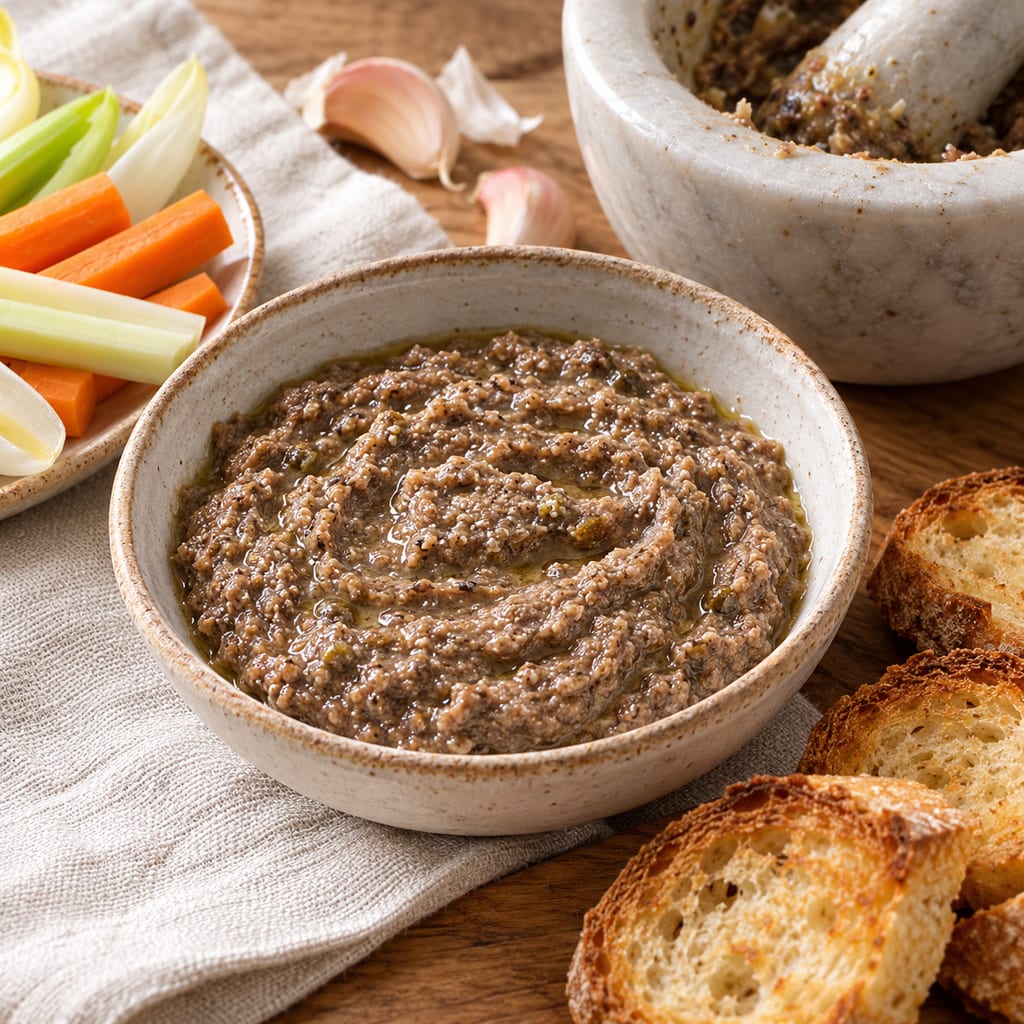
A Provencal dip of anchovies, garlic, capers and olive oil, pounded or blended to a creamy paste and served with raw vegetables, bread and eggs.
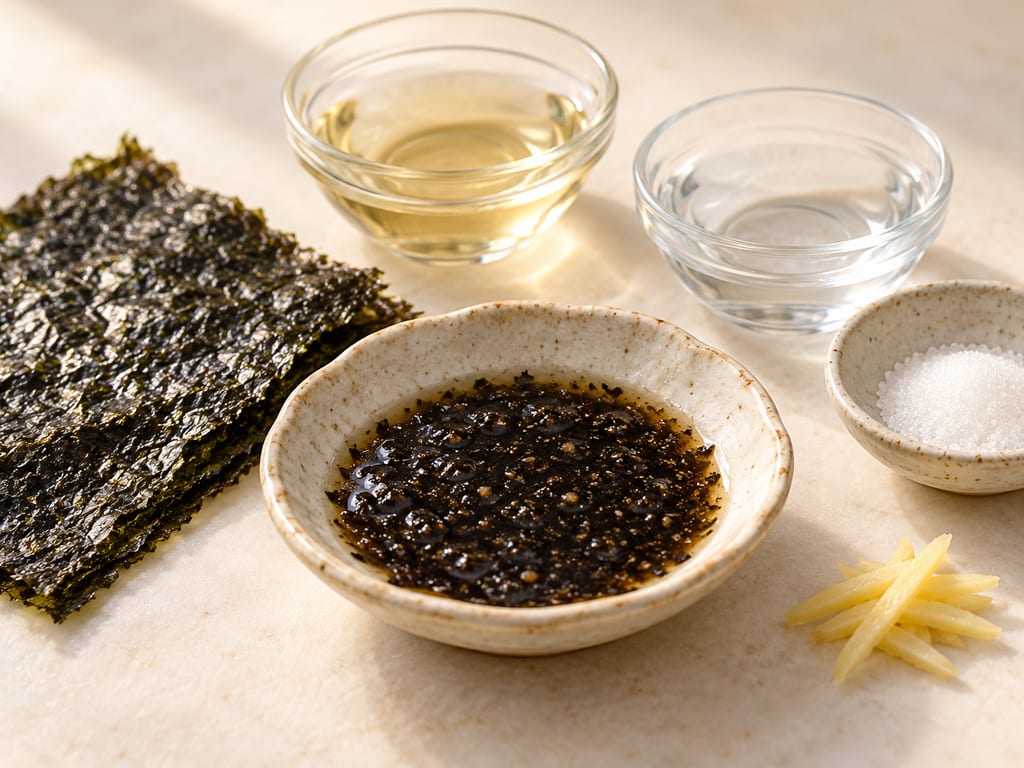
A fresh condiment in which crumbled nori softens in lightly sweetened vinegar and water. It is not vinegar fermented from seaweed.
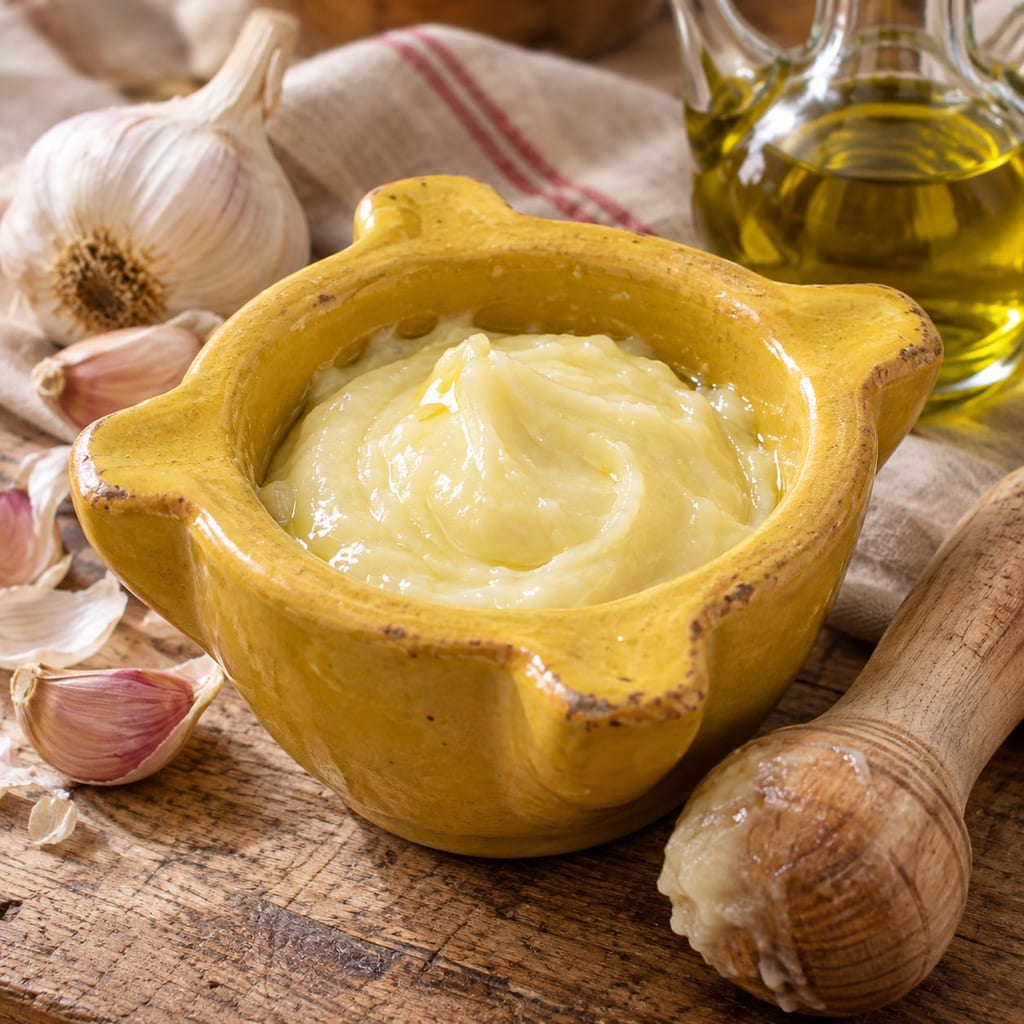
Traditional Catalan allioli is a dense emulsion of garlic, olive oil and salt made slowly in a mortar. This measured Barcelona-style version keeps egg-based garlic mayonnaise distinct.
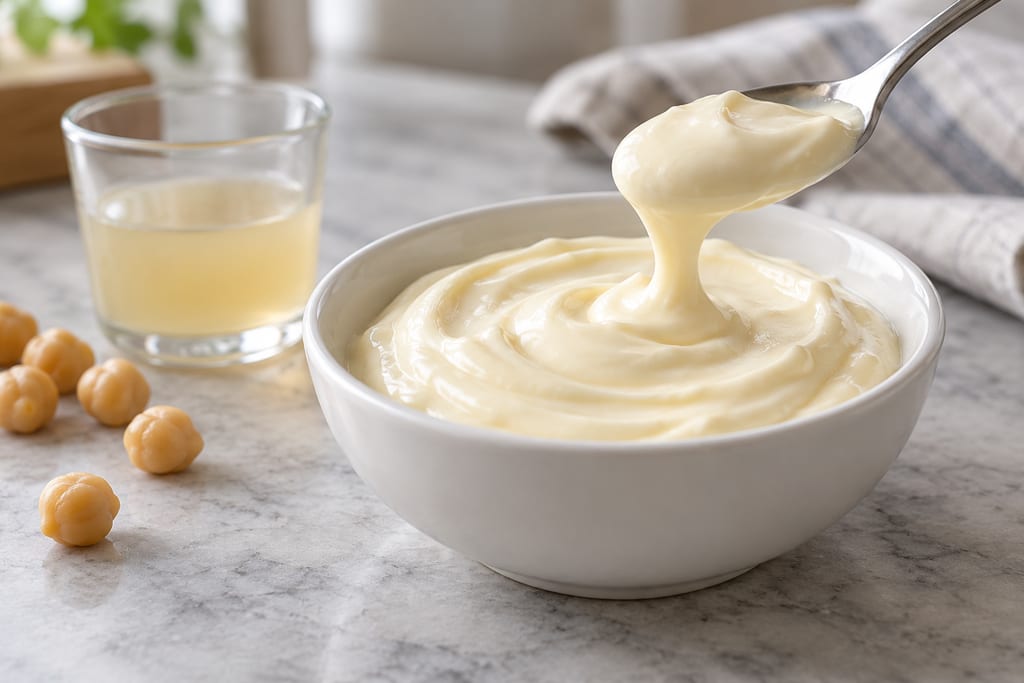
An eggless, untested emulsion made with canned chickpea liquid. Nominal yield 255 g.
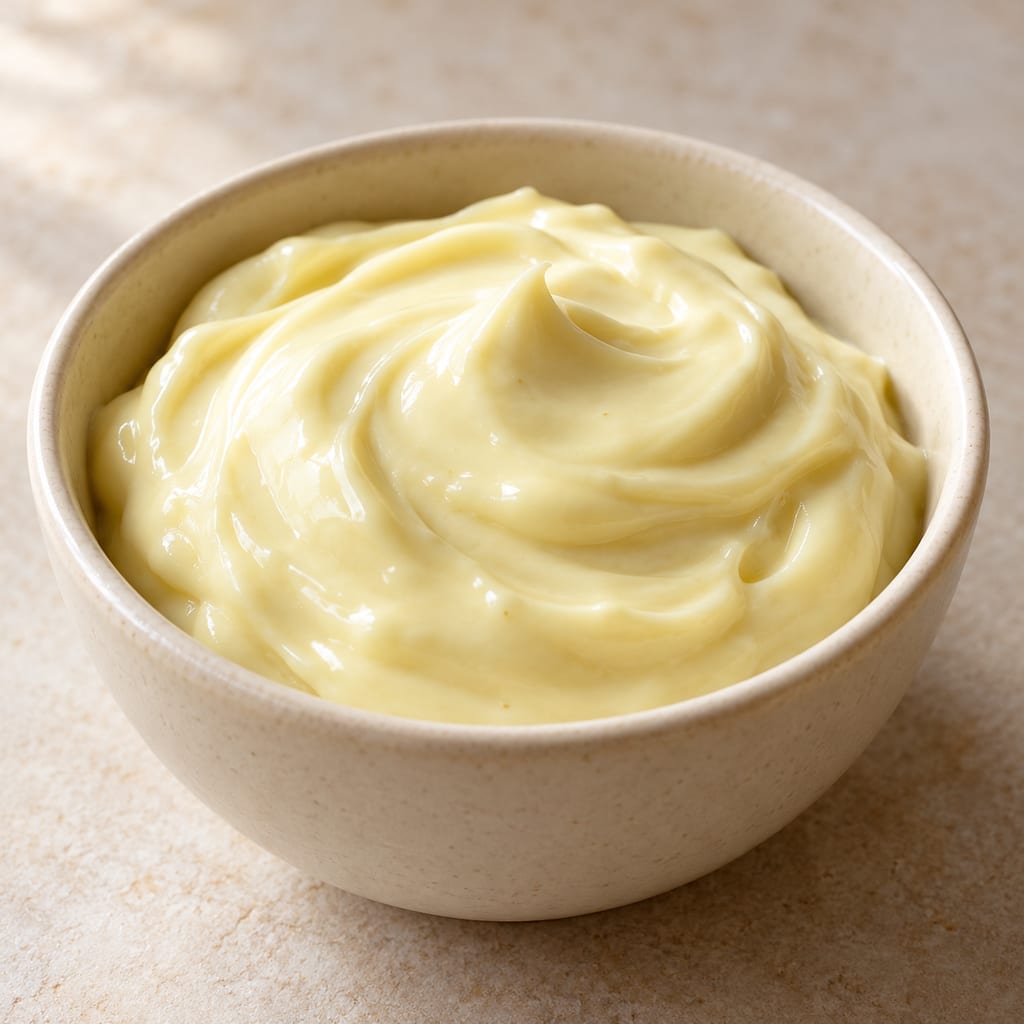
Avocado-oil mayonnaise is an ordinary egg-and-oil emulsion in which avocado oil supplies the oil phase. The oil changes flavour and colour, and it does not preserve the sauce.

Bechamel is a white sauce of milk thickened with a butter and flour roux, one of the French mother sauces, and the base from which Mornay and other cheese and cream sauces are made.
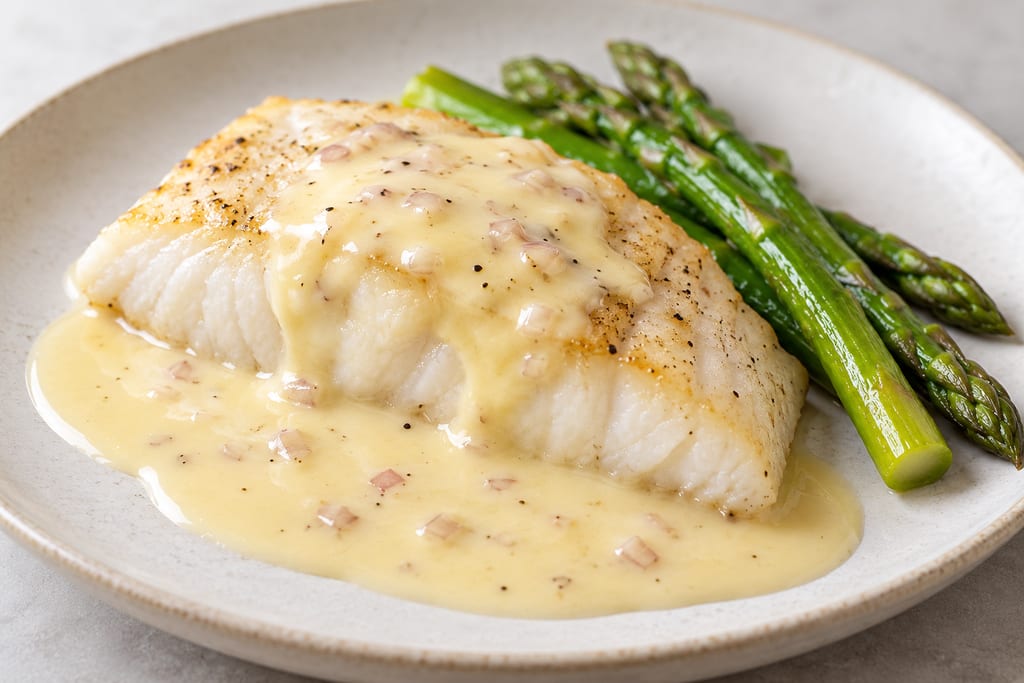
Beurre blanc is a warm emulsion of cold butter whisked into a reduction of white wine, vinegar or lemon juice and shallot, a sauce from the Loire Valley and its red-wine version, beurre rouge.
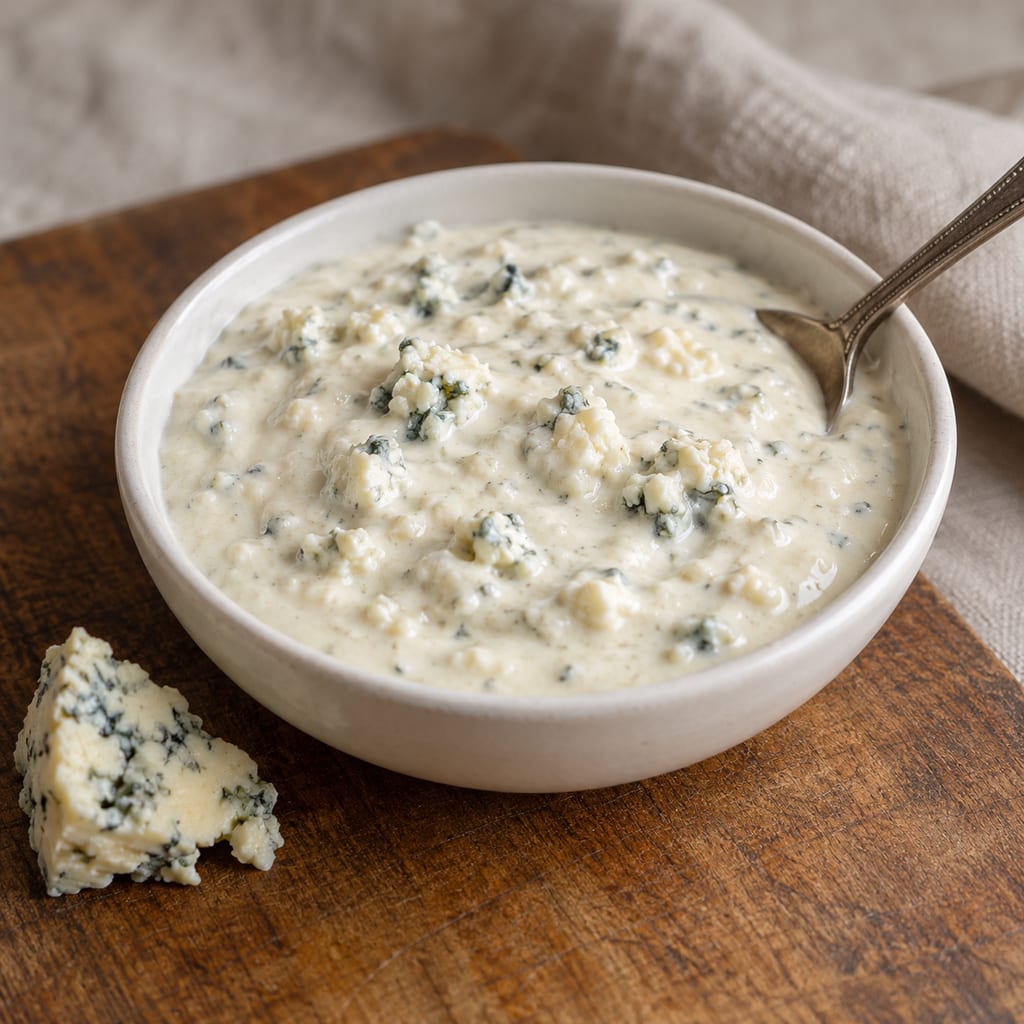
Blue cheese dressing is a creamy dressing built on crumbled blue cheese mashed into buttermilk, with sour cream, mayonnaise, vinegar and seasoning, and kept cold for up to two weeks.
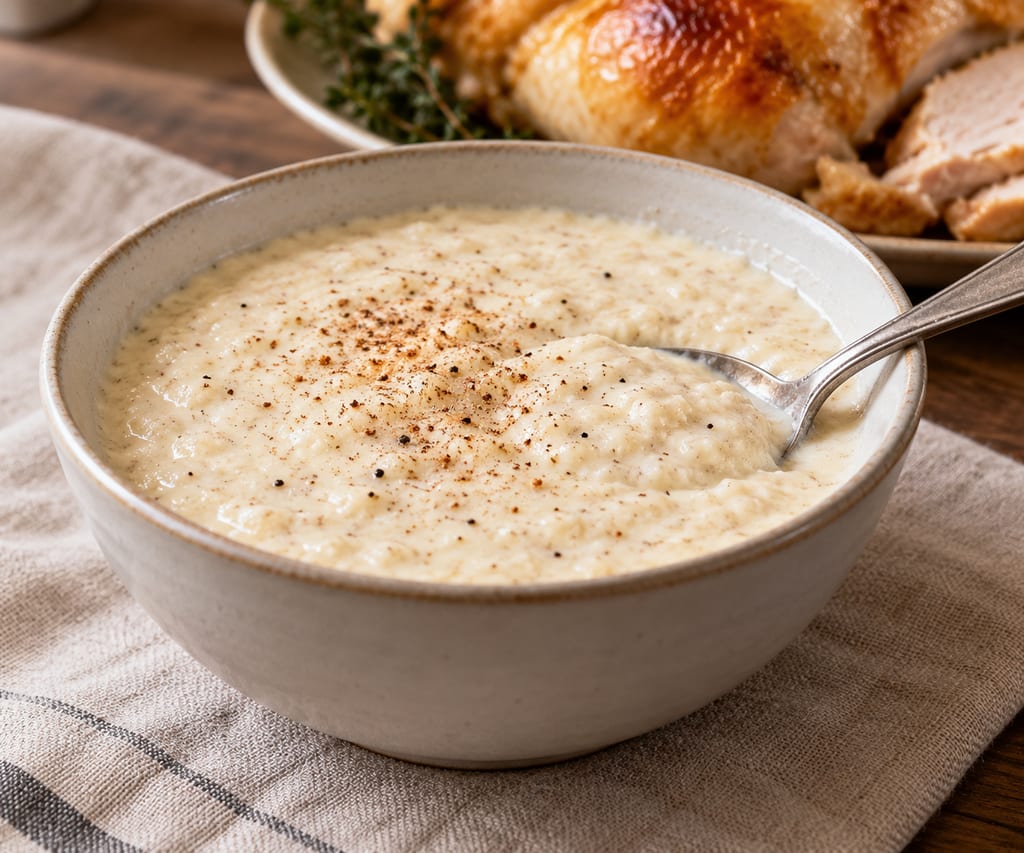
Bread sauce is a British sauce of milk infused with onion, clove and bay, thickened with stale breadcrumbs and finished with butter, served with roast chicken or turkey.
No community contributions have been published for this entry yet.
Sign in to contribute. Published comments and photos are free to read.
WikipediaHistory · Method · Serving
RouilleIngredients: egg yolk, olive oil, breadcrumbs, garlic, saffron and cayenne pepper; no method given
Served as a garnish with fish and fish soup, notably bouillabaisse; most often used in Provencal cuisine
Provencal name rolha, meaning rust; only dated source is the 1995 New Food Lover's Companion
Cited in: Overview; Name and history; Ingredients and their roles; Method; Serving; Storage and safety; Unknowns