
Rice koji
Rice koji is steamed white rice through which koji mold has grown. It carries the enzymes that turn rice starch into sugar, and it is the starting point of sake, sweet miso, amazake and shio koji.
 FermenteaWhere food goes to change
Mixed-bean miso · Bean miso with rice koji
A home miso made from equal parts soybeans, chickpeas and Great Northern beans, cooked and mixed with rice koji and salt, then aged in a crock.
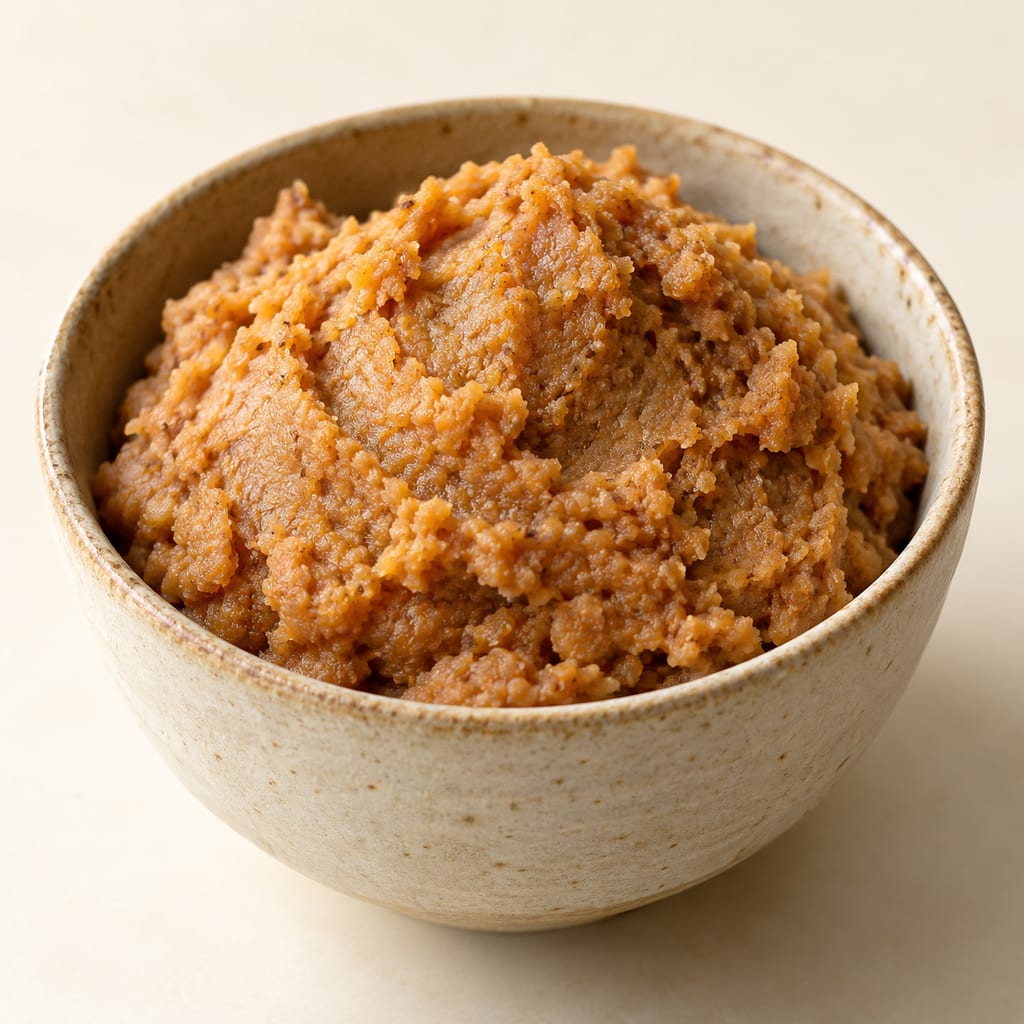
Miso is a fermented paste made from cooked beans or grains, koji and salt. Koji is steamed rice or another grain that has been inoculated with a mould, and it provides the enzymes that break down starch and protein during maturation. This page records a contemporary home miso that uses a three-bean blend: soybeans, chickpeas and Great Northern beans in equal parts.
The blend is a home choice. The video does not name a local version of this miso, and it does not establish a regional tradition for it. Japanese miso has many documented regional varieties, but that wider context does not show where this batch comes from.
The three beans are cooked together in ten cups of water until they make four cups of cooked beans. About four and a half cups of cooking liquid are kept, and the creator says the batch needs four cups of it. Five cups of rice koji are mixed with the cooked beans. The captions do not say whether the koji is fresh or dried.
The salt is where the source fails. The ingredient passage gives 20 g, a later mixing passage gives 18 g, and the packing stage says two tablespoons were reserved for the crock. The captions do not reconcile the three figures, so this page does not choose one.
The paste is packed into a non-reactive crock with a fitted cover, a weight and salt on the surface. The creator checks the batch after one week and removes the liquid he calls tamari, and he shows a batch at about a year. Those are observations from the video, not maturation rules.
The creator uses the finished paste in soups, dressings, marinades and braises, and keeps the liquid by-product for rice or fish. The video shows no custom equipment, and the crock and its cleaning are the creator's own practice.
A non-acid miso relies on its salt for control. Because the salt amount is unresolved in the captions and the surface growth is removed rather than validated, this record is held until a qualified reviewer has settled the formula and the surface-mould practice.
Japanese miso has documented regional varieties, but that context does not establish the origin of this three-bean blend.
Scaling: source batch only
The salt ratio is the principal control in a non-acid miso. The captions disagree on it, so no safe ratio is established.
Hazard sourceThe video removes surface growth, but the reviewed material does not establish that as a safe intervention.
Hazard sourceResolve the salt quantity against a qualified miso method before making a batch
Control sourceDo not make this batch from the captions until the salt amount is resolved.
The creator's observations of tamari and aged paste are not safety endpoints.
The video does not identify where the batch was made. It presents a contemporary home blend, not a regional miso.
Rice koji is steamed white rice through which koji mold has grown. It carries the enzymes that turn rice starch into sugar, and it is the starting point of sake, sweet miso, amazake and shio koji.
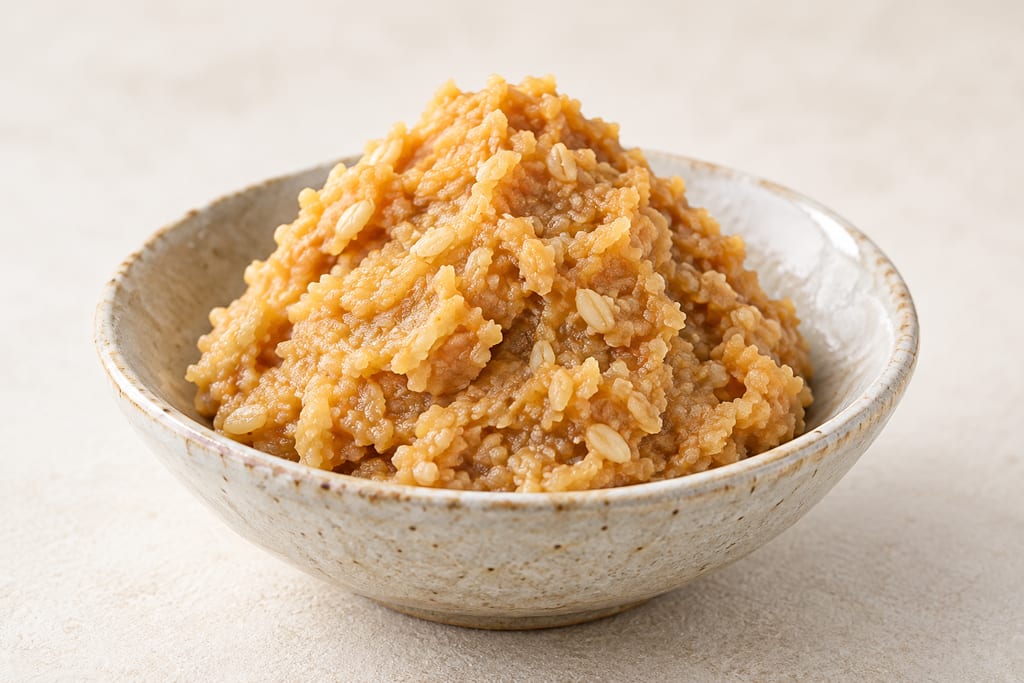
A Japanese soybean paste fermented with barley koji and salt, made mostly in Kyushu, Shikoku and western Japan. It is sweet, savoury and grainy.
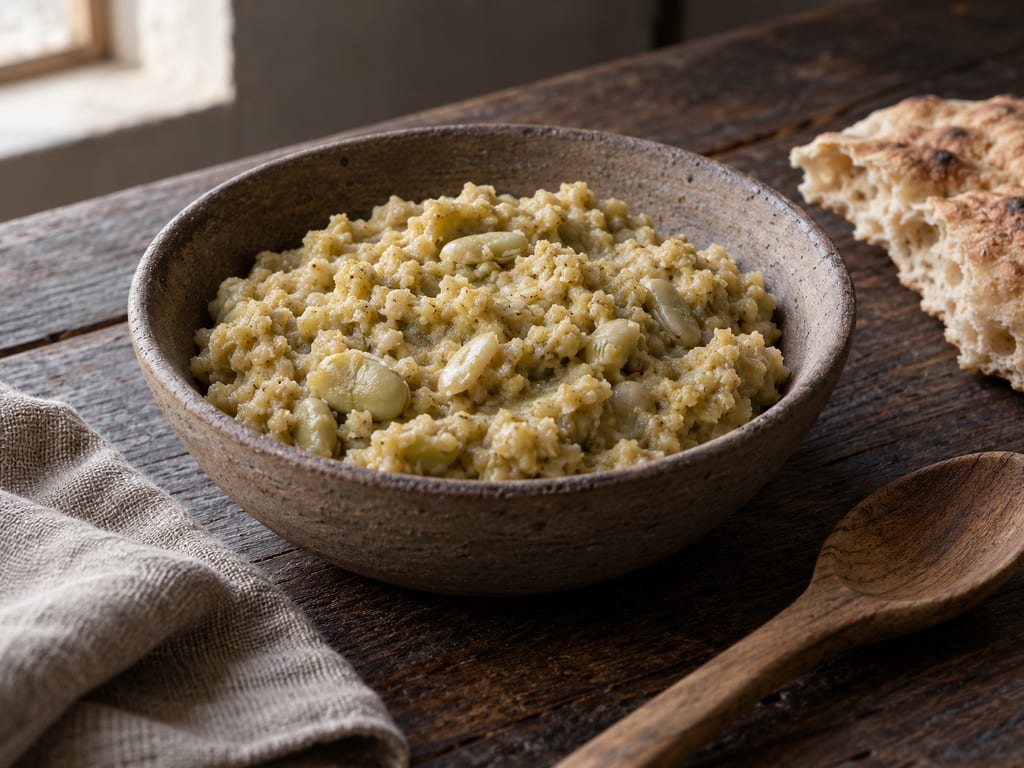
Cooked broad beans crushed to a thick paste with garlic and salt, a museum preparation built on the one European pulse that was already old when the Viking Age began.
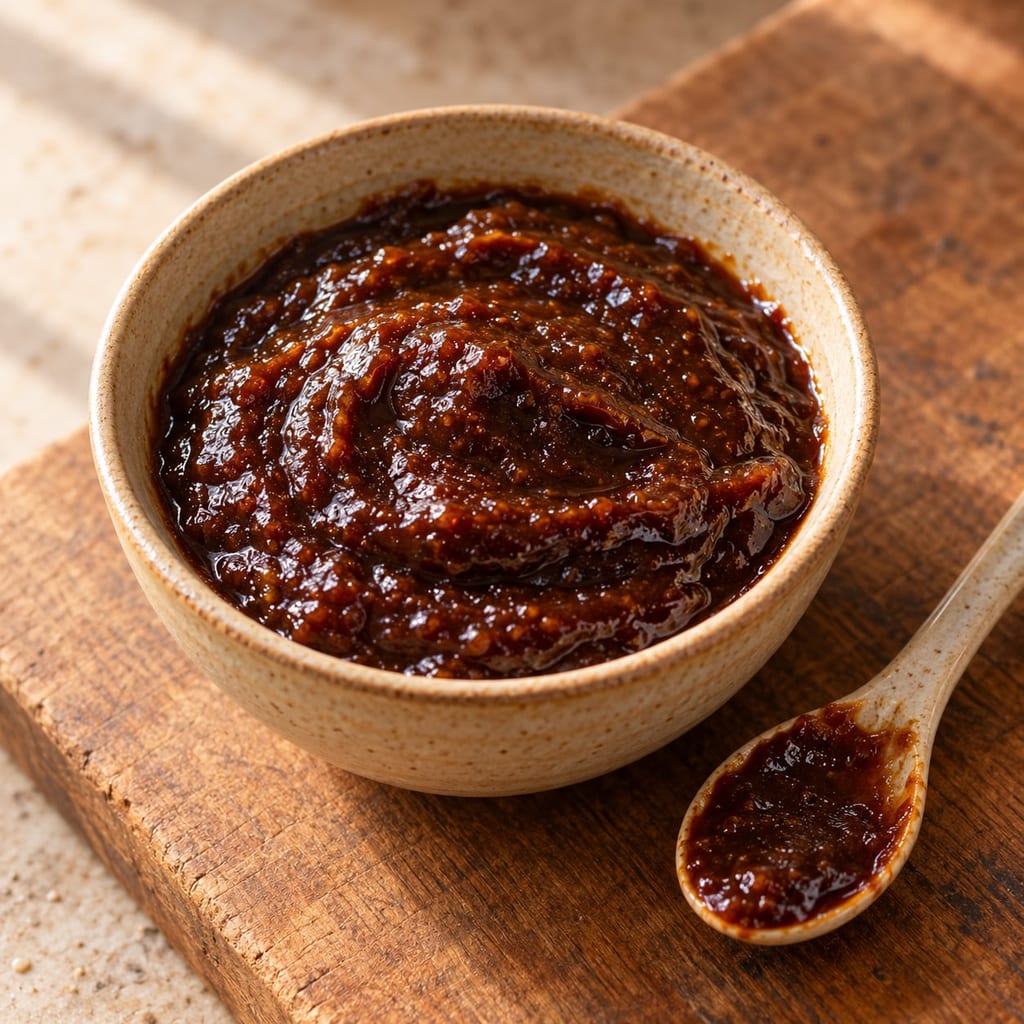
Chu hou is a sweet, savoury Cantonese paste of fermented soybeans, fermented bean curd, garlic, ginger and sesame, used mainly to braise meat.
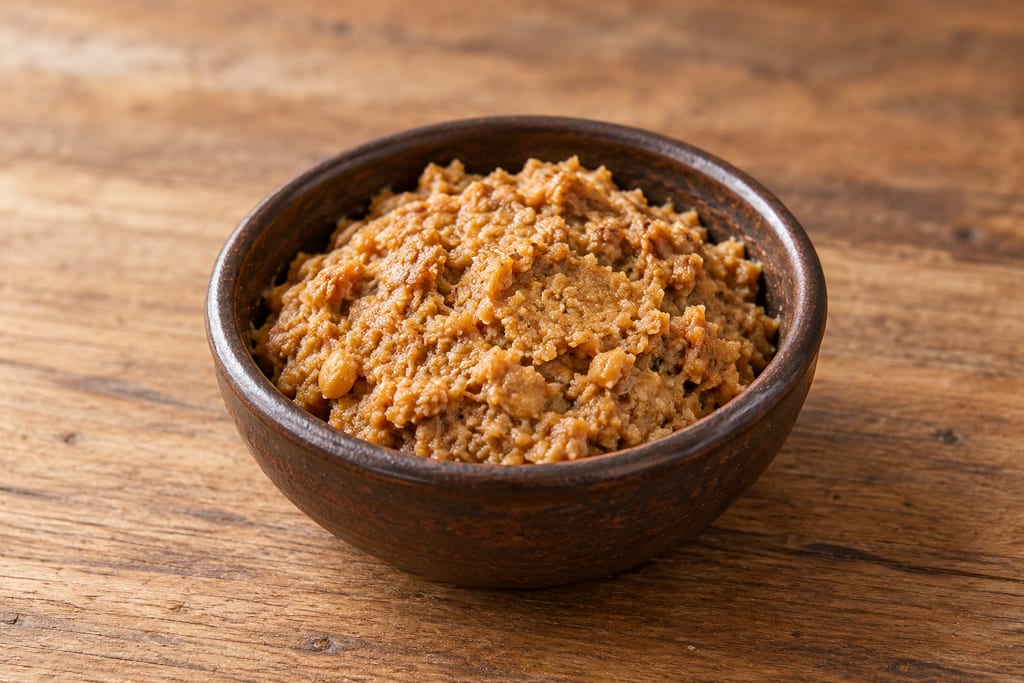
Doenjang (된장) is a Korean fermented soybean paste made by brining meju, separating ganjang, then mashing and aging the solids. This recipe follows one documented Sunchang processing study.
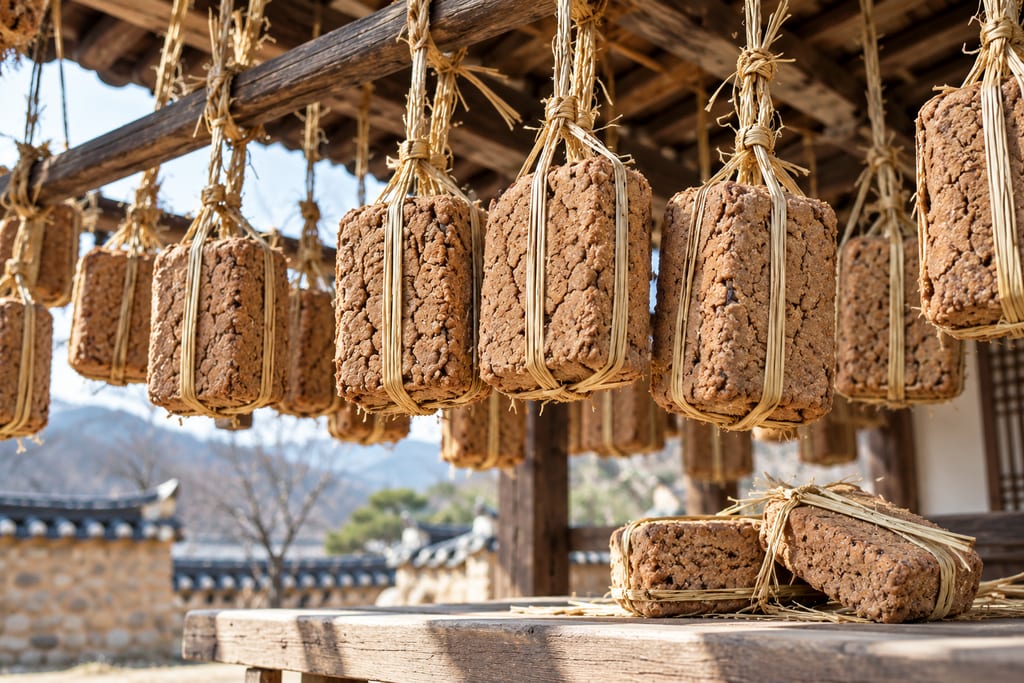
A cooked soybean brick, shaped and dried, that is fermented as a solid and later brined to make the Korean soy paste doenjang and the soy sauce ganjang.
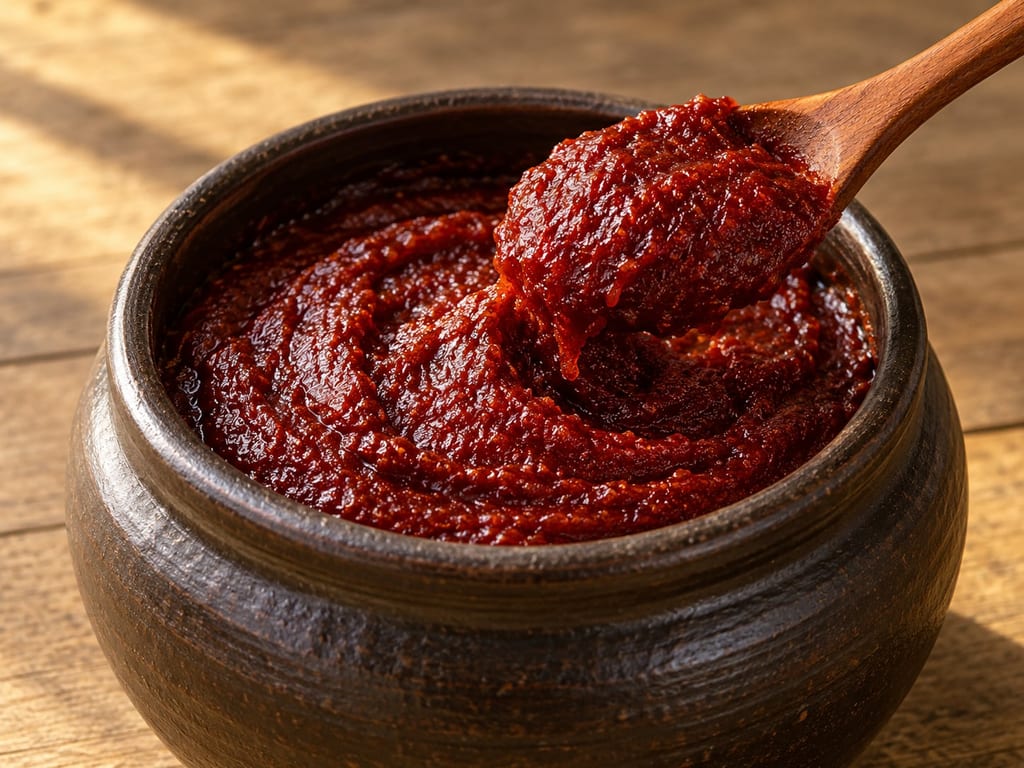
Korea’s sweet, savoury and fiery red paste of glutinous rice, barley-malt enzymes, fermented soybean meju powder and chilli powder, matured in earthenware.
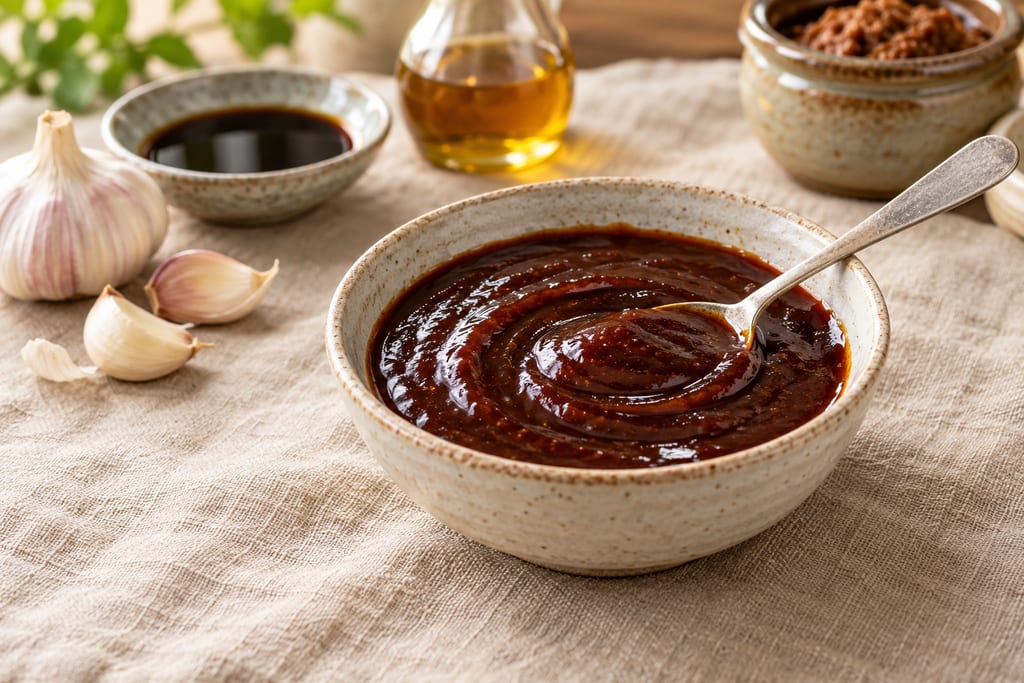
A thick, dark, sweet-salty Chinese condiment built on fermented soybean paste. This page gives one quick home version and records how commercial formulas differ.
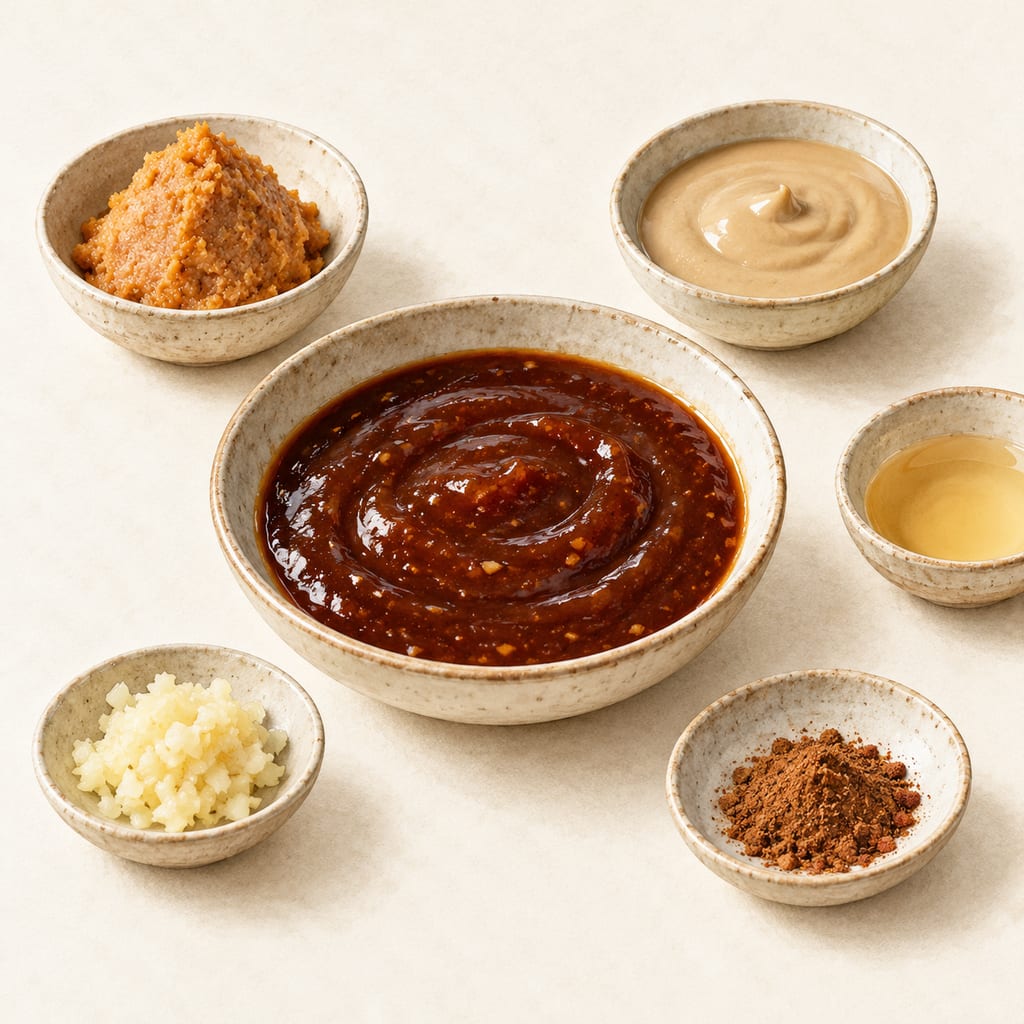
An untested modern miso-based sauce inspired by hoisin's sweet, savory profile; this prototype is not traditional hoisin or a copy of a commercial brand.
No community contributions have been published for this entry yet.
Sign in to contribute. Published comments and photos are free to read.
Bon AppétitMethod
Brad Makes Miso Paste | It's Alive | Bon AppétitEqual parts soybeans, chickpeas and Great Northern beans; ten cups water; four cups cooked beans; five cups koji
Unresolved salt: 20 g, 18 g, two tablespoons reserved
Crock, weight, one-week check, tamari, about one year
British Columbia Centre for Disease ControlSafety
Fermented Foods Guideline 3.10: Koji and MisoMiso as a non-acid fermentation with control points
Ministry of Agriculture, Forestry and Fisheries, JapanHistory
Traditional Japanese Food: Soy Sauce and MisoJapanese miso has regional varieties
Journal of Fungi (Yamashita, 2021)Method
Koji Starter and Koji World in JapanKoji as grain inoculated with mould, distinct from a starter culture